Artwork
Flori
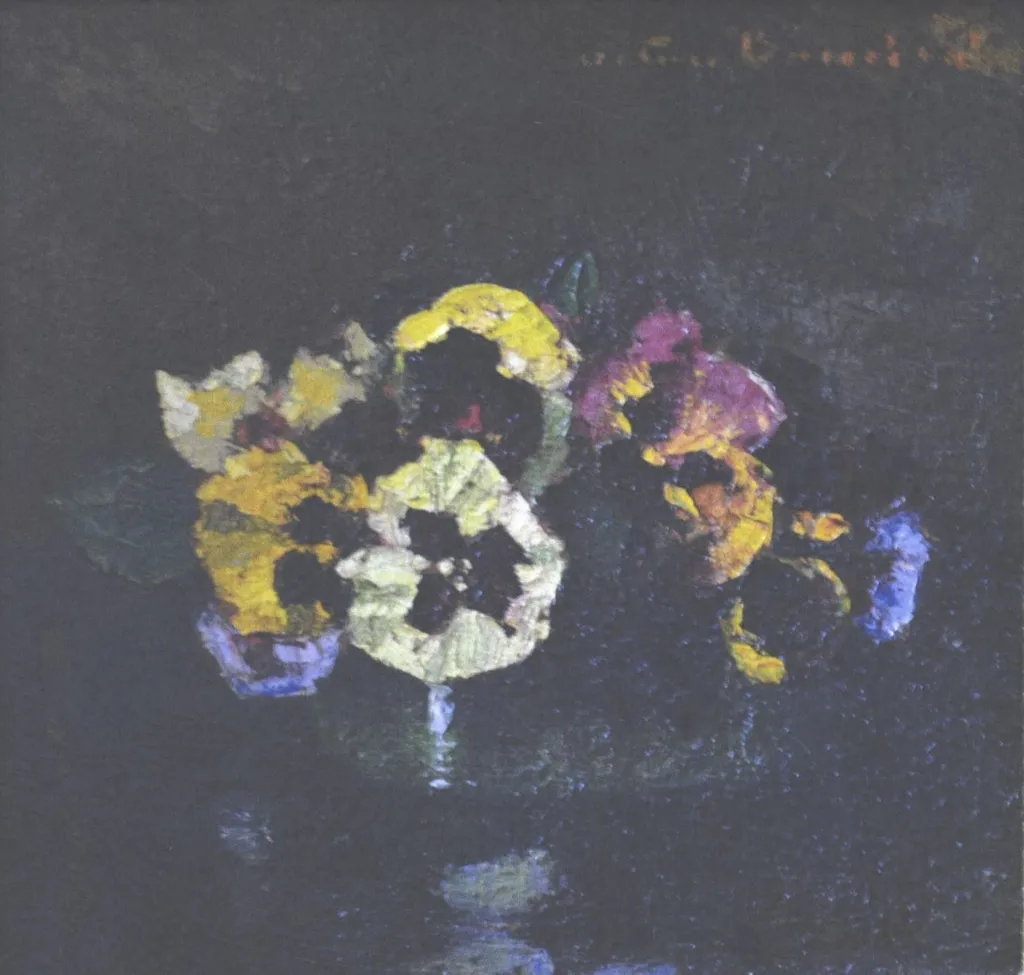
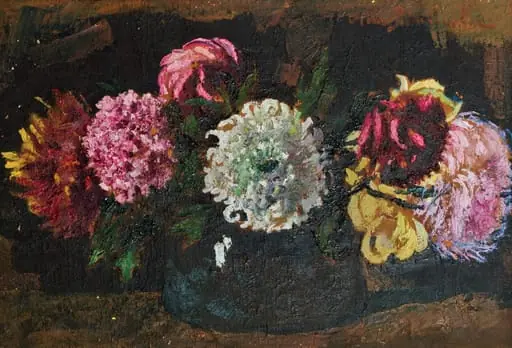
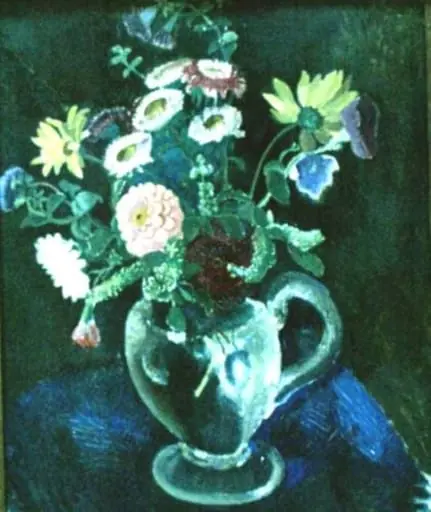
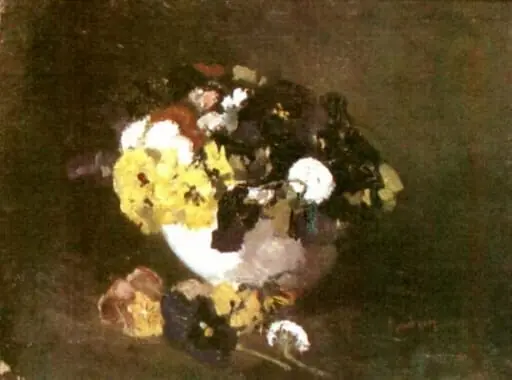
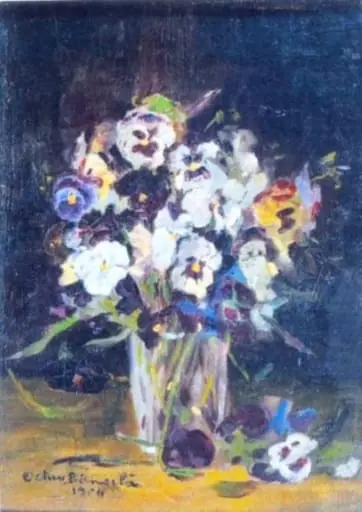
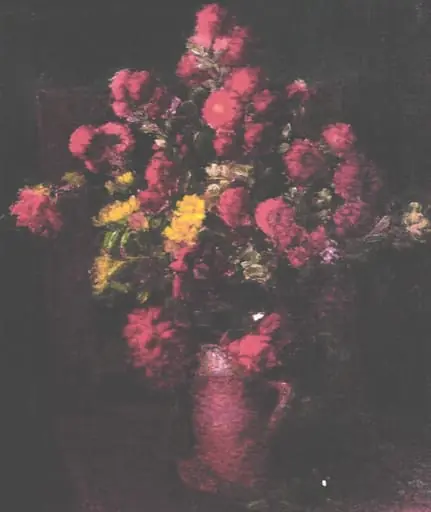
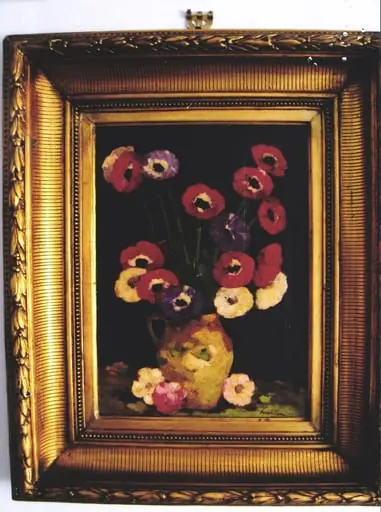
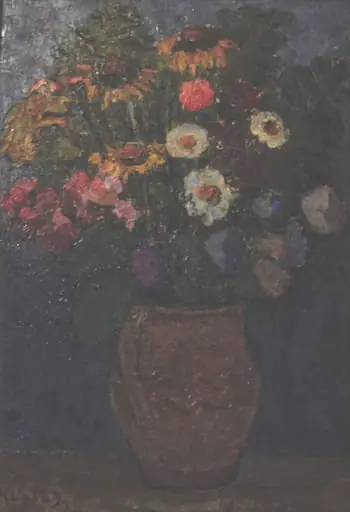
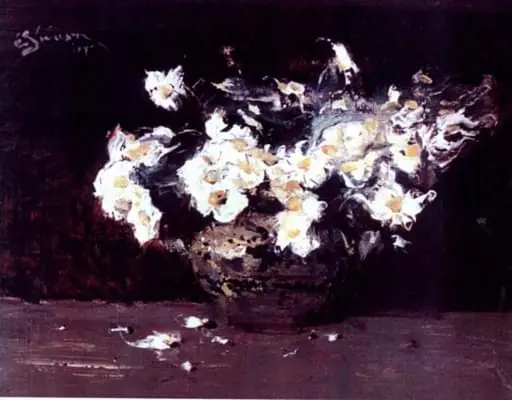
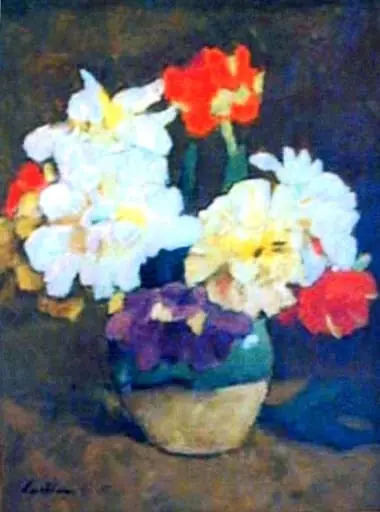
Flori is an unspecified painting by Octav Băncilă. It is held in the collection of the Bucharest Municipality Museum. This painting depicts three flowers rendered with vigorous brushwork and heightened color contrast.
About this work
Overview
Set against a deep, near-black background, the blooms appear to emit light through their intense hues of yellow, pink, and purple.
This painting depicts three flowers rendered with vigorous brushwork and heightened color contrast. Set against a deep, near-black background, the blooms appear to emit light through their intense hues of yellow, pink, and purple. The paint is applied thickly, creating a tactile surface that emphasizes texture over refinement. The composition is simple yet striking, focusing attention entirely on the floral forms without contextual elements.
Subject & Meaning
The subject is limited to three unnamed flowers, their identity obscured by the abstract treatment of form and color. Their isolation against the dark ground suggests a meditation on transience or presence. The lack of leaves or stems removes them from any natural setting, heightening their symbolic weight as isolated entities. The rough application implies urgency or emotional intensity rather than botanical accuracy.
Technique & Style
The artist employs impasto techniques, building up paint in thick, uneven layers that catch light and cast subtle shadows. Brushstrokes are directional and unrestrained, with pigment often overlapping in raw, unblended patches. Greens and reds are mixed directly into the petals, disrupting color purity and adding visual tension. The dark background enhances the chromatic intensity, making the flowers seem to glow from within.
History & Provenance
The painting’s origin and early ownership are undocumented. It was likely created in the late 19th or early 20th century, during a period when artists increasingly favored expressive brushwork over academic precision. Its survival in private hands suggests it was not widely exhibited or published at the time, remaining a personal or experimental work rather than a public statement.
Context
This work aligns with broader trends in post-impressionist and early modernist painting, where emotional expression took precedence over realistic representation. Artists across Europe were experimenting with color and texture to convey inner states, often using nature as a vehicle rather than a subject. The painting’s intensity reflects a shift away from traditional still-life conventions toward more subjective interpretations.
Legacy
Though not widely known, the painting exemplifies a quiet but persistent strand of modernist practice that valued materiality and emotional resonance over narrative clarity. Its approach to color and texture anticipates later developments in abstract expressionism. It remains a modest but compelling example of how simple forms, when treated with raw technique, can evoke complex emotional responses.
Artist & collection
Artist
A painter rooted in rural life, Octav Băncilă’s canvases bring the Romanian countryside to life.