Artwork
George Enescu
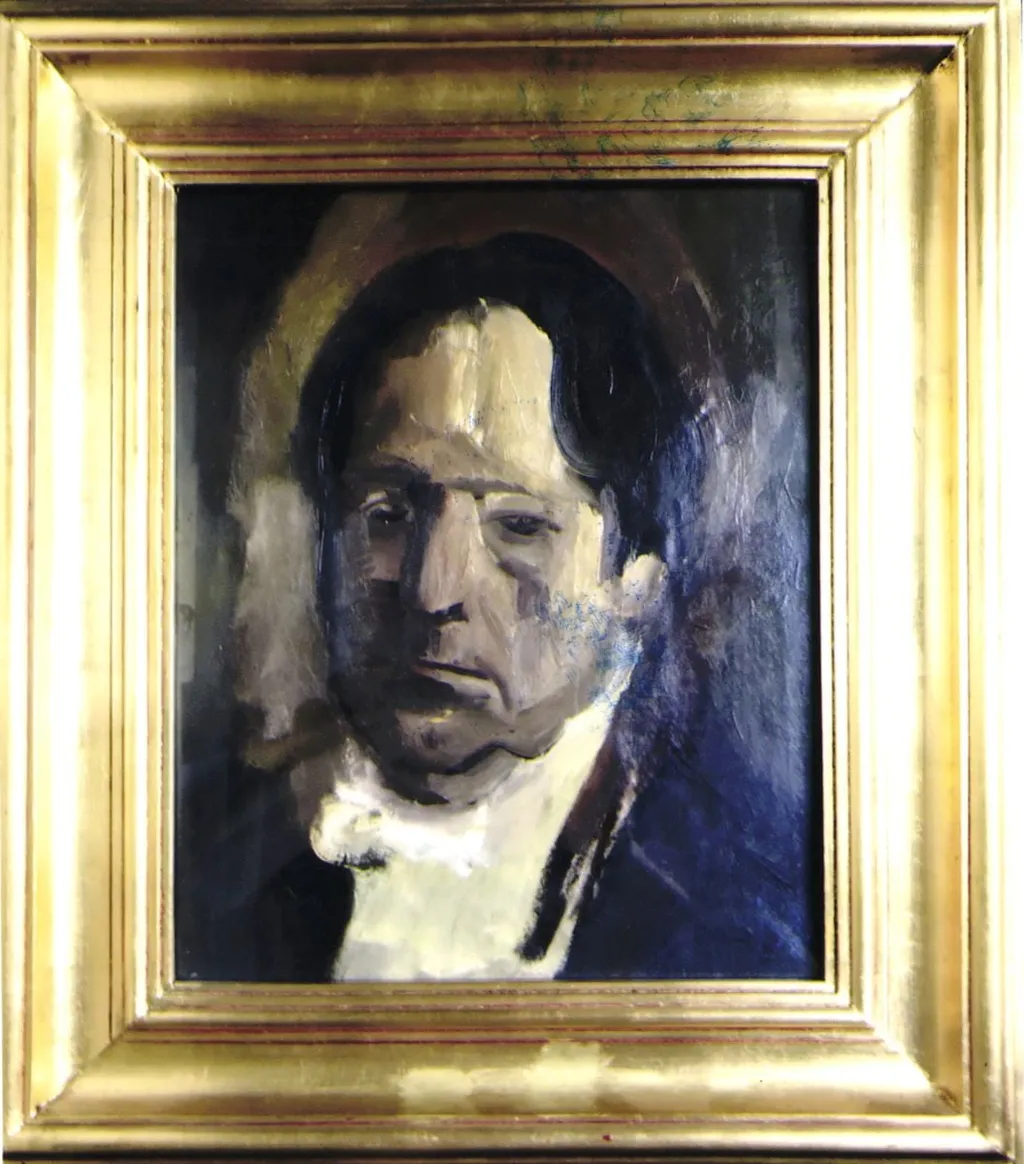
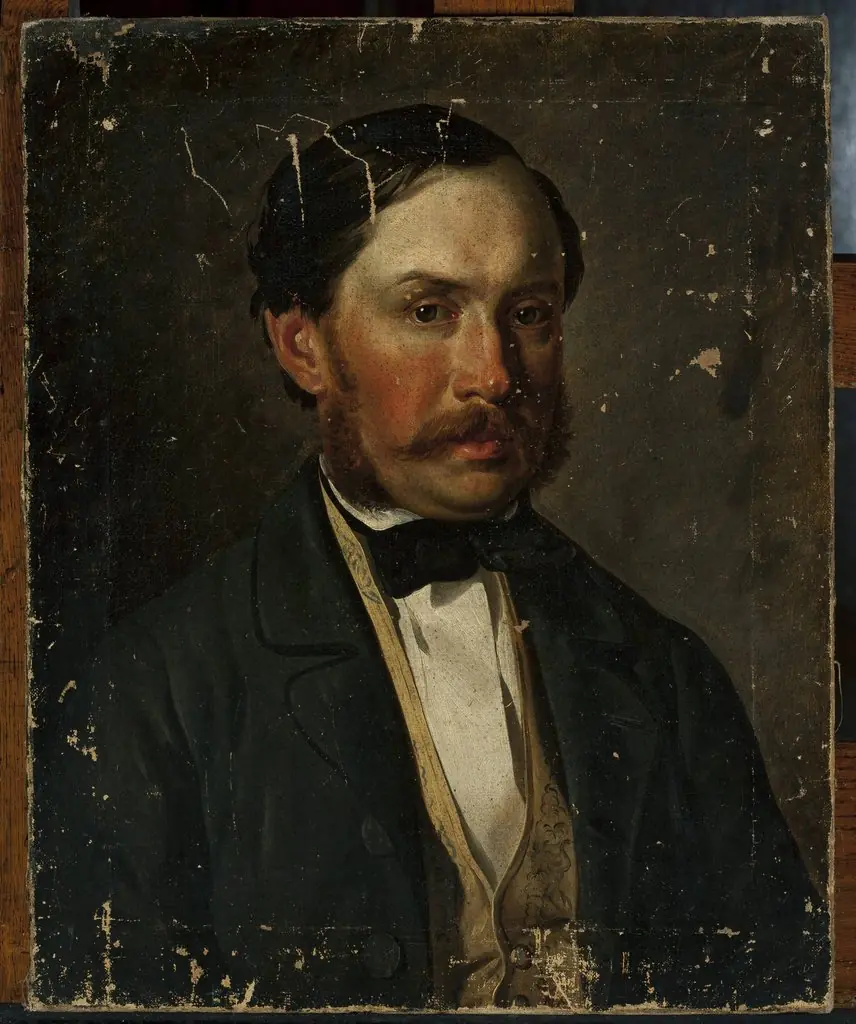
George Enescu is an unspecified painting by Corneliu Baba. It dates from 1985 and is held in the collection of the Vasile Grigore - Painter and Collector Art Museum.
About this work
Overview
Painted in 1985 by Corneliu Baba, this portrait depicts the Romanian composer George Enescu. Rendered in oil on canvas, the work captures Enescu’s likeness with a focus on his facial features and attire. It is part of the collection at the Museum of Ethnography, where it serves as a visual record of a significant cultural figure from Romania’s artistic heritage.
Subject & Meaning
The portrait presents Enescu in a contemplative, unadorned manner, emphasizing his intellectual presence. His trimmed beard and mustache, along with the plain white collar, suggest formality and dignity. The absence of symbolic elements or setting directs attention to his expression, conveying quiet authority and introspection rather than public persona or achievement.
Technique & Style
Sharp lighting creates pronounced shadows and highlights, reinforcing the sculptural quality of Enescu’s features through deliberate, tactile paint application.
Baba employed thick, expressive brushwork, particularly on the face, using impasto to build texture and depth. The dark background isolates the figure, while the contrast between the pale collar and dark clothing enhances spatial definition. Sharp lighting creates pronounced shadows and highlights, reinforcing the sculptural quality of Enescu’s features through deliberate, tactile paint application.
History & Provenance
The painting was completed in 1985, near the end of Baba’s career, and entered the Museum of Ethnography’s collection shortly thereafter. It was not commissioned for public display but likely produced as part of the artist’s ongoing engagement with Romanian cultural icons. Its preservation in an ethnographic institution reflects its role as a document of national identity.
Context
During the 1980s in Romania, state-supported cultural institutions often emphasized national figures as symbols of continuity. Enescu, a revered composer and violinist, represented artistic excellence under difficult political conditions. Baba’s restrained approach aligns with a broader trend in Romanian portraiture that favored psychological depth over political glorification.
Legacy
The portrait remains a key representation of Enescu in visual art, valued for its emotional restraint and technical precision. While not widely exhibited internationally, it is referenced in Romanian art histories as an example of Baba’s mature style and his commitment to portraying cultural figures with sincerity rather than idealization.
Artist & collection
Artist
Corneliu Baba made prints and paintings that feel like quiet stories, often borrowing from older art.
Museum
Vasile Grigore - Painter and Collector Art Museum
Continue through works from the same source collection.
 Προσωπογραφία του Αλεξάνδρου Μαυροκορδάτου
 Portrait of Antoni Olechowski
 Julius Geber (1816-1876), wholesale dealer, banker, married to Hilda Philipson
 Gentleman in his study
 Pieter Onderwater
 The German Painter Marcus Johann Heaselich
 Portrait of a Man
 Portretul arhitectului Ziegfried Kofsinski
 Προσωπογραφία γυναίκας ώριμης καθιστής
 Sven Grönvall
 The German Painter Marcus Johann Heaselich
 Portrait of Aleksander Odrowąż Bębnowski