Artwork
Convoi de prizonieri
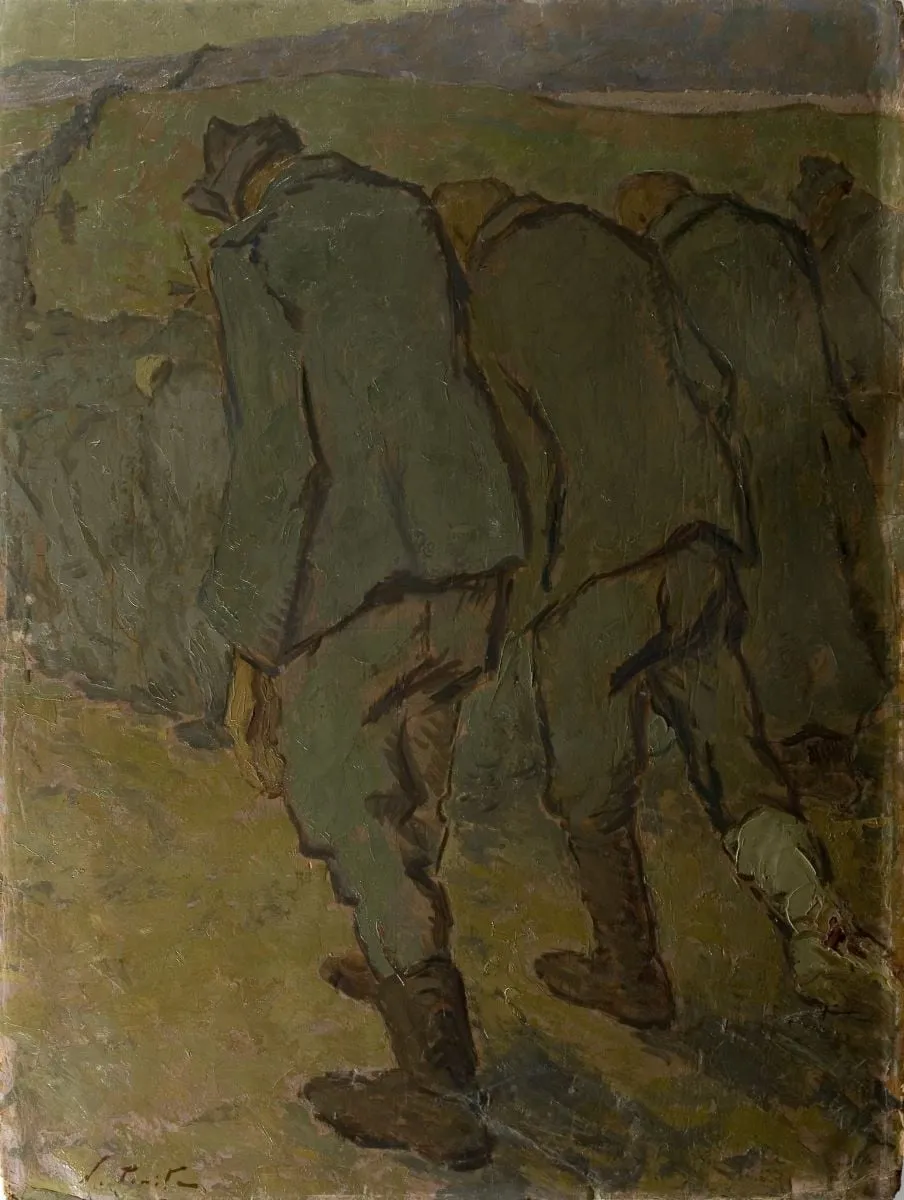
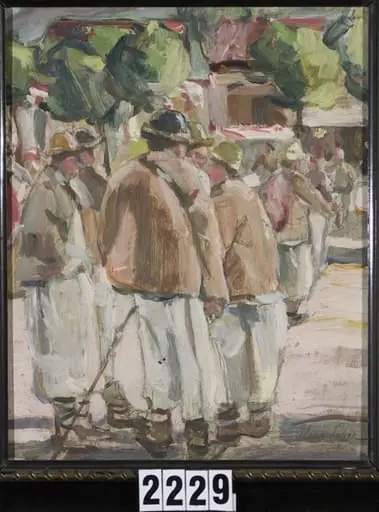
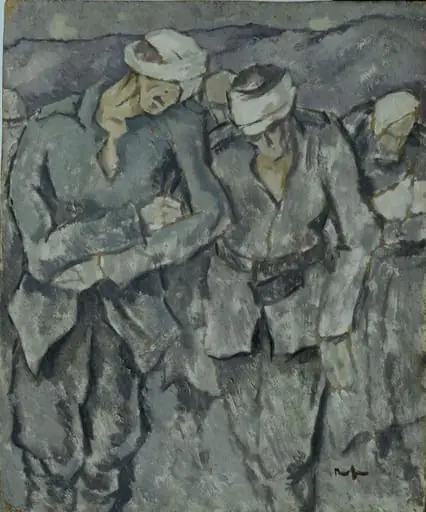
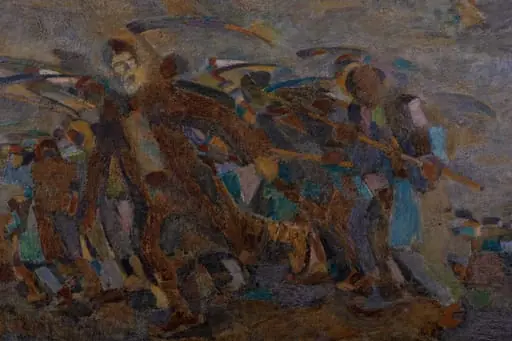
Convoi de prizonieri is an unspecified painting by Nicolae Tonitza. It dates from 1919 and is held in the collection of the National Museum of Art of Romania.
About this work
Overview
Created in 1919 by Romanian artist Nicolae Tonitza, Convoi de prizonieri is a painted depiction of a line of individuals moving in unison, their backs turned to the viewer. Rendered in muted earth tones and heavy brushwork, the composition emphasizes physical exhaustion and anonymity. The background is minimal, allowing the figures to dominate the space with their somber presence.
Subject & Meaning
The painting portrays a group of prisoners or displaced persons, their identities obscured by posture and blurred features. The uniformity of their movement suggests forced labor or deportation, evoking the collective suffering common in post-war Eastern Europe. Tonitza avoids narrative detail, instead conveying emotional weight through posture and tone.
Technique & Style
Tonitza employs thick, textured brushstrokes characteristic of impasto, giving the figures a tactile, almost sculptural quality. The palette is restrained—dominated by greens, browns, and grays—with subtle light accents on clothing to suggest surface variation. Facial features are deliberately indistinct, reinforcing the loss of individuality among the subjects.
History & Provenance
Painted shortly after World War I, the work reflects the social upheaval and human displacement experienced in Romania during that period. It entered public collections in the mid-20th century and remains part of Romania’s national art heritage, often cited in discussions of interwar realism and social commentary in Romanian painting.
Context
Tonitza created this piece amid widespread economic hardship and political instability following the war. The image aligns with broader European artistic trends that turned toward human suffering and the dignity of the marginalized. Unlike heroic war imagery, it offers a quiet, unglorified view of civilian trauma.
Legacy
Convoi de prizonieri is recognized as a key example of Tonitza’s engagement with social themes. Its emotional restraint and expressive technique influenced later Romanian artists seeking to depict everyday hardship without sentimentality. The work endures as a quiet testament to the visibility of the unseen in wartime society.
Artist & collection
Artist
Nicolae Tonitza painted quiet still lifes and village scenes, often showing colorful vegetables on a table or blooming flowers in simple pots.