Artwork
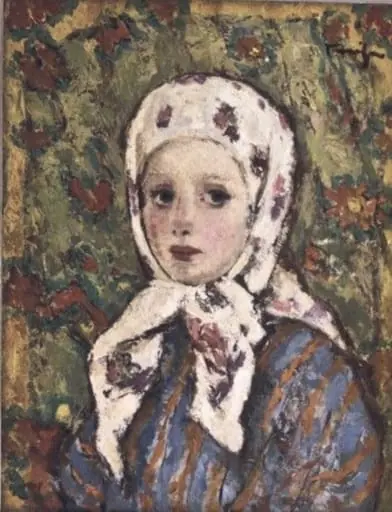
Cap de fetiță
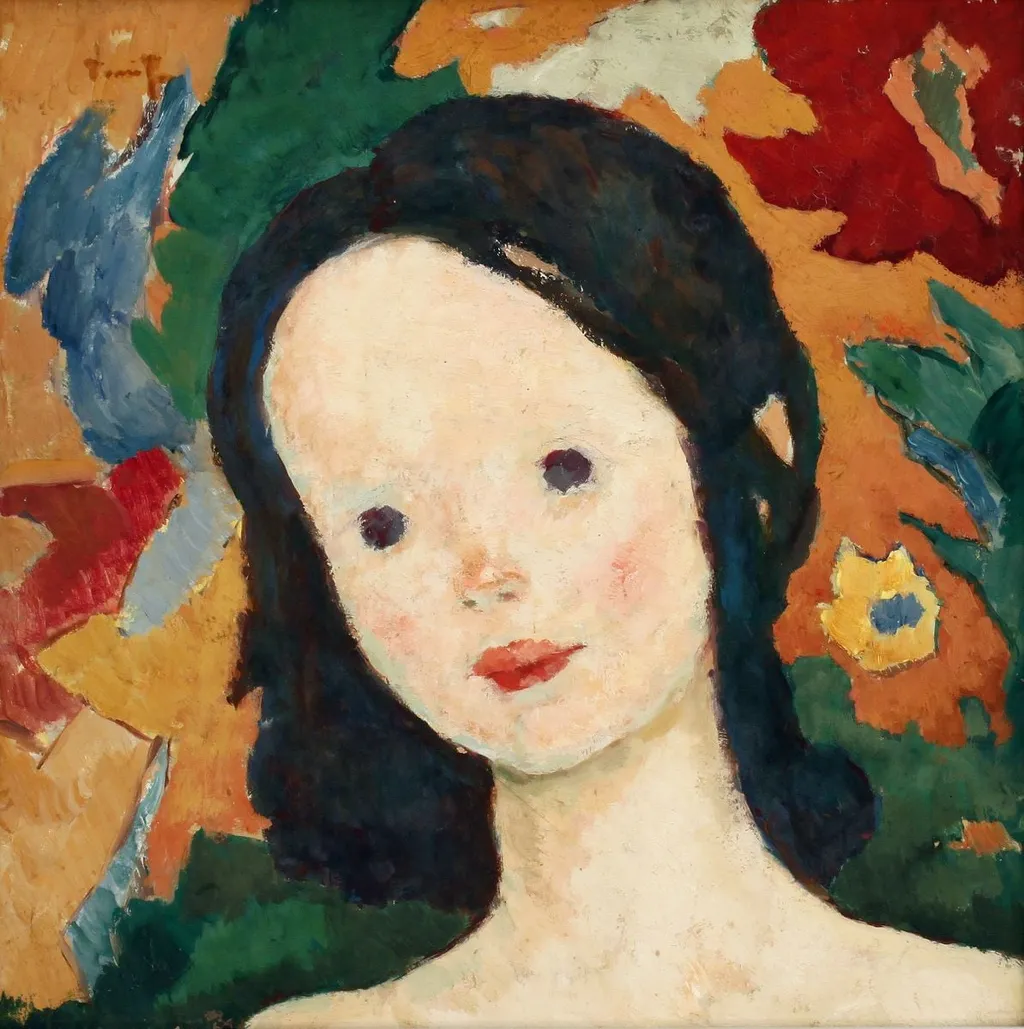
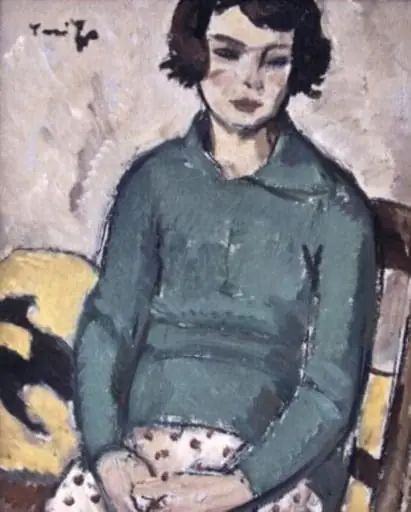
Cap de fetiță is a print by Nicolae Tonitza. It dates from 1923 and is held in the collection of the Art Museum of Constanta.
About this work
Overview
Cap de fetiță, painted around 1923 by Romanian artist Nicolae Tonitza, is a portrait of a young girl rendered in oil on canvas.
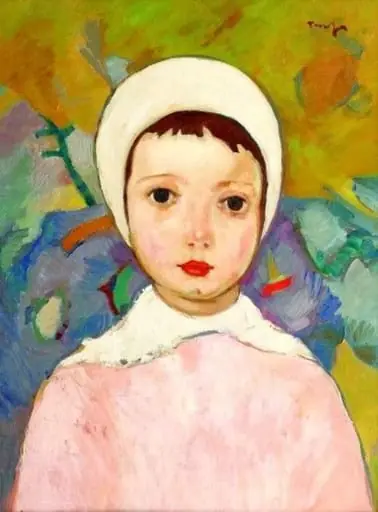
Cap de fetiță, painted around 1923 by Romanian artist Nicolae Tonitza, is a portrait of a young girl rendered in oil on canvas. The work is part of the collection at the Museum of Ethnography in Bucharest. Its composition centers the child’s face and upper torso, framed by an energetic, non-naturalistic background that contrasts sharply with the calm of her features. The painting exemplifies Tonitza’s early modernist tendencies, blending figurative clarity with expressive abstraction.
Subject & Meaning
The subject is a young girl, her gaze direct yet neutral, suggesting quiet introspection rather than narrative. Her dark hair is neatly drawn back, emphasizing the purity of her pale skin and the vivid red of her lips—a subtle focal point. The absence of contextual details or clothing shifts attention to her presence alone. The work avoids sentimentality, instead presenting childhood as a quiet, almost sculptural form, detached from idealized tropes of youth.
Technique & Style
Tonitza employed impasto to build the background, applying paint thickly and irregularly in strokes of green, orange, and blue, creating a tactile, almost chaotic surface. This textured field contrasts with the smooth, finely modeled face, which is rendered with minimal brushwork and soft transitions. The deliberate disparity between the turbulent backdrop and the serene countenance heightens the psychological tension, anchoring the figure in a world of emotional and visual dissonance.
History & Provenance
The painting was created during Tonitza’s formative years as a modernist, following his exposure to European avant-garde movements. It entered the Museum of Ethnography’s collection in the mid-20th century, likely through institutional acquisition or donation. Its placement in an ethnographic context, rather than a fine arts museum, reflects early efforts to document Romanian cultural expression beyond traditional folk art, aligning the work with broader national identity projects.
Context
Painted in the early 1920s, Cap de fetiță emerged amid Romania’s cultural renaissance, when artists sought to reconcile local traditions with modern European styles. Tonitza, influenced by Post-Impressionism and Expressionism, moved away from academic realism toward emotive, textured compositions. This work reflects a broader trend among Romanian painters to explore psychological depth and formal experimentation, using the human figure as a vessel for aesthetic innovation.
Legacy
Though not among Tonitza’s most widely reproduced works, Cap de fetiță remains a key example of his early modernist phase. Its fusion of intimate portraiture with abstracted surroundings influenced later Romanian artists exploring emotional expression through texture and color. The painting’s presence in an ethnographic museum underscores its role in shaping how Romanian modernism was framed within national cultural narratives, bridging personal vision and collective identity.
Artist & collection

Artist
Nicolae Tonitza was a Romanian painter, engraver, lithographer, journalist and art critic. Drawing inspiration from Post-Impressionism and Expressionism, he had a major role in introducing modernist guidelines to local art.