Artwork
Natură moartă cu pâine
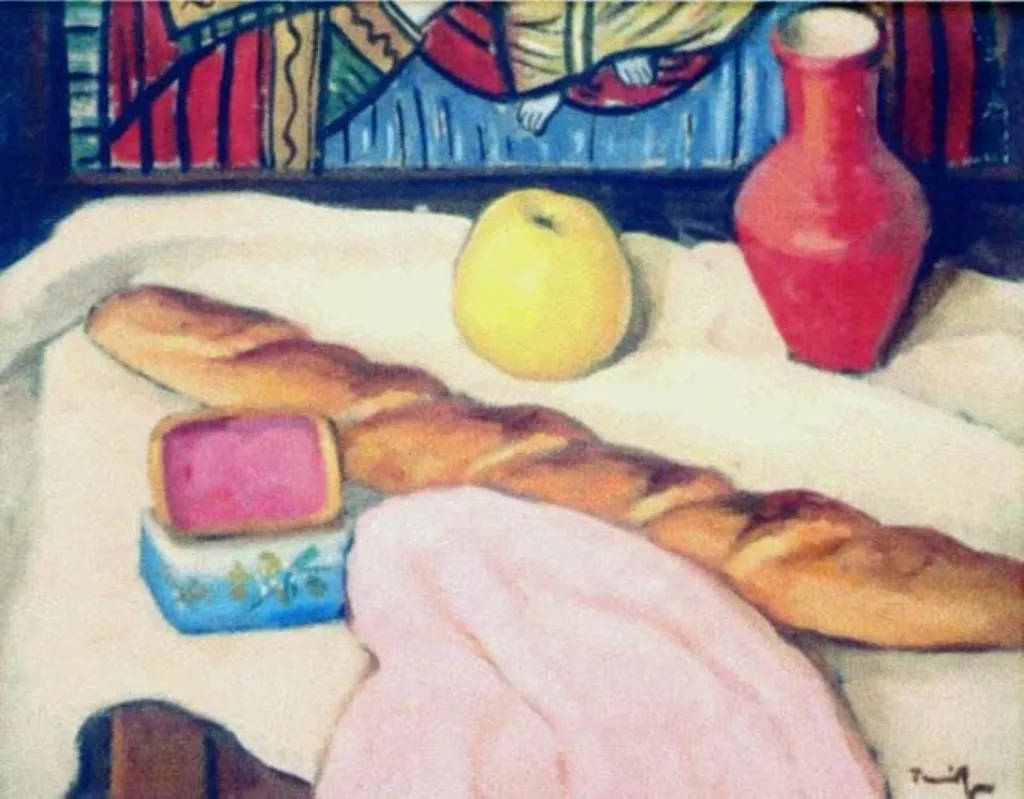
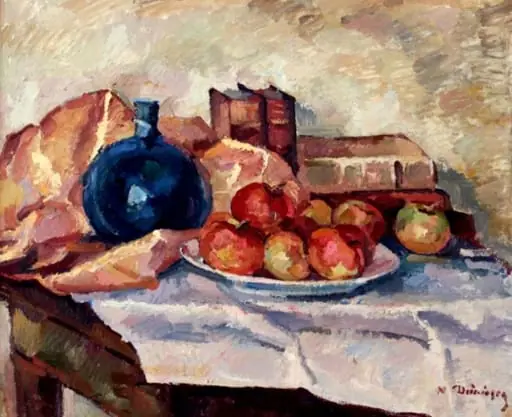
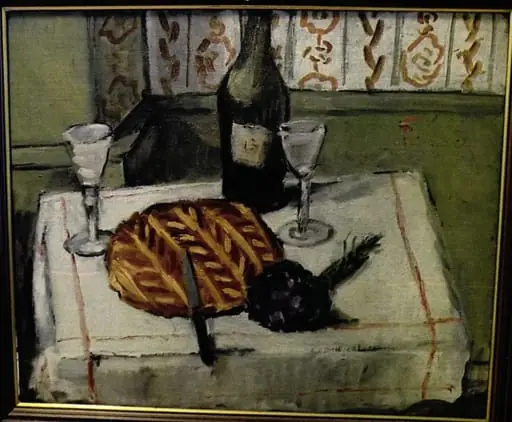
Natură moartă cu pâine is an unspecified painting by Nicolae Tonitza. It dates from 1927 and is held in the collection of the Art Museum of Constanta.
About this work
Overview
Its composition centers on bread, fruit, and a simple vessel arranged on a table, set against a non-representational background of vivid geometric forms.
Natură moartă cu pâine, painted around 1927 by Nicolae Tonitza, is a still life composed of everyday domestic items. The work is part of the collection at the Museum of Ethnography. Its composition centers on bread, fruit, and a simple vessel arranged on a table, set against a non-representational background of vivid geometric forms. The painting reflects Tonitza’s interest in balancing realism with expressive abstraction.
Subject & Meaning
The painting presents humble food items—freshly sliced and whole loaves of bread, a single apple, and a vase—elevated through careful arrangement. These objects suggest themes of sustenance and quiet domesticity. The absence of human presence invites contemplation of ordinary life, while the vibrant colors and simplified forms hint at emotional resonance rather than literal representation.
Technique & Style
Tonitza employs bold, flat areas of color and simplified shapes to define the objects and background. The bread is rendered with soft modeling to suggest texture and warmth, while the background breaks from realism into abstract patches of red, blue, and yellow. This contrast between naturalistic detail and expressive abstraction reflects a synthesis of Post-Impressionist and early modernist tendencies.
History & Provenance
Created circa 1927, the painting entered the collection of the Museum of Ethnography in Romania, where it remains today. Its acquisition reflects institutional interest in modern Romanian art that engaged with national identity through everyday subjects. No significant changes in ownership are documented, and the work has been consistently exhibited as part of Tonitza’s still life series.
Context
In the 1920s, Romanian artists like Tonitza were exploring ways to merge local traditions with European modernism. This painting emerged during a period when still life offered a means to experiment with form and color without overt political or narrative content. Tonitza’s approach aligned with broader regional trends that valued emotional expression through simplified, symbolic compositions.
Legacy
Natură moartă cu pâine exemplifies Tonitza’s contribution to Romanian modernism through its quiet innovation. It influenced later generations of artists who sought to infuse mundane subjects with psychological depth and formal rigor. The work continues to be referenced in studies of interwar Romanian art as a model of restrained yet expressive still life painting.
Artist & collection
Artist
Nicolae Tonitza painted quiet still lifes and village scenes, often showing colorful vegetables on a table or blooming flowers in simple pots.