Artwork
Bătrâni la cafenea (Interior cu personaje)
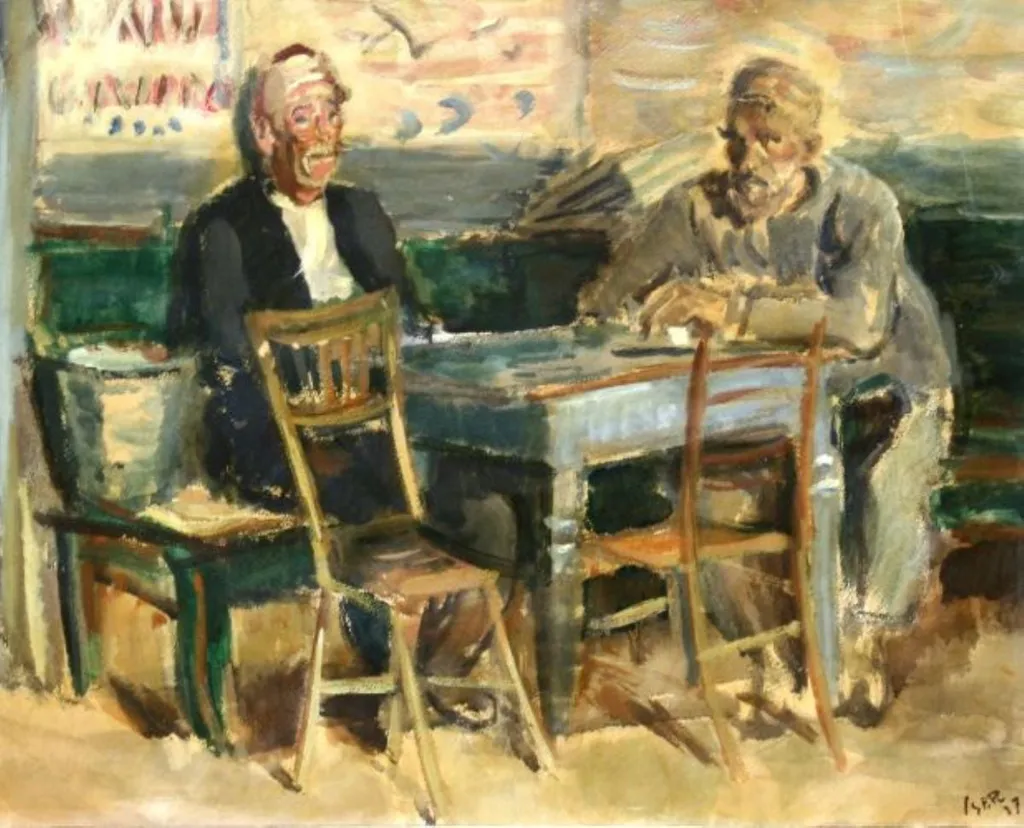
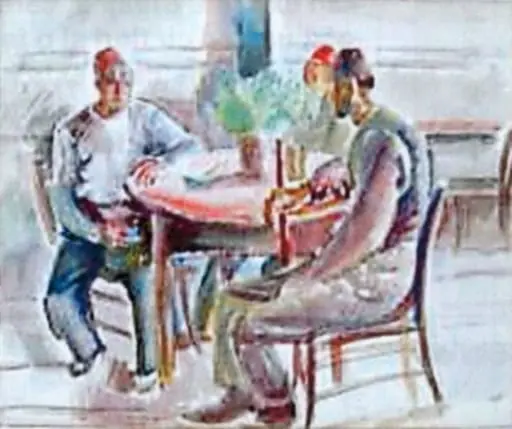
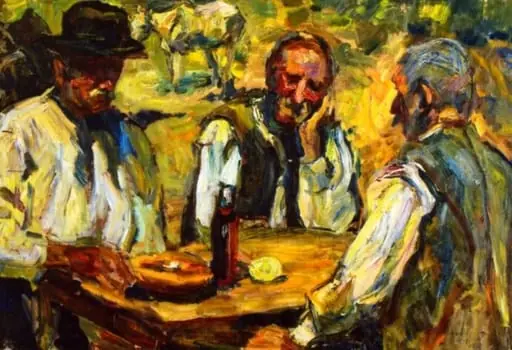
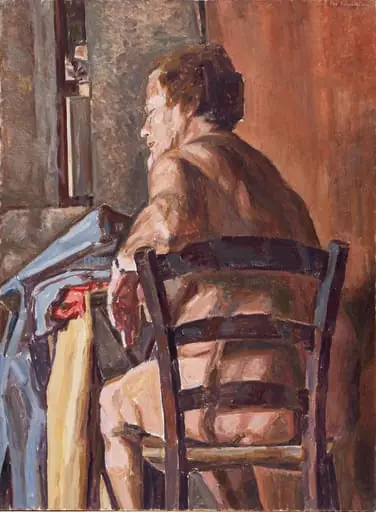
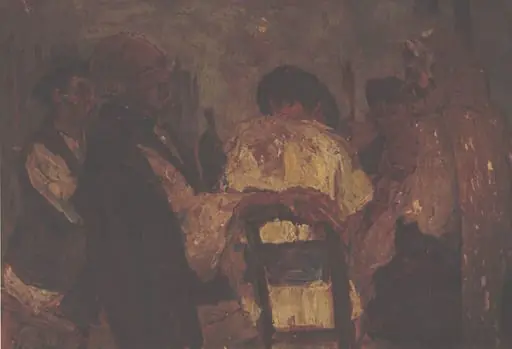
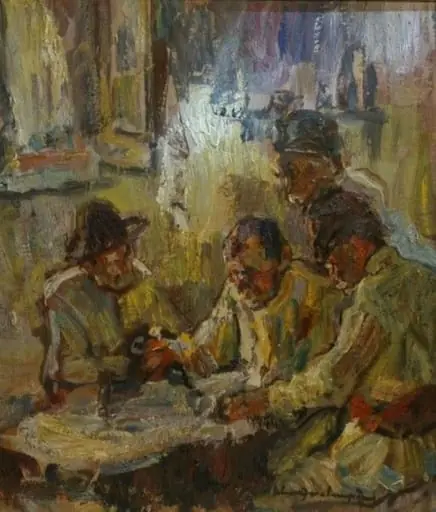
Bătrâni la cafenea (Interior cu personaje) is an unspecified painting by Iosif Iser. It dates from 1937 and is held in the collection of the Gavrilă Simion Eco-Museum Research Institute Tulcea - Art Museum.
About this work
Overview
Painted in 1937 by Iosif Iser, this work depicts an intimate interior scene of two elderly men in a modest café setting. Executed with thick, expressive brushwork, the painting captures a fleeting, unposed moment. It resides in the collection of the Museum of Ethnography, reflecting Iser’s interest in everyday life and the quiet dignity of ordinary people in interwar Romania.
Subject & Meaning
The two figures, one laughing with head tilted back and the other bent over a folded paper, suggest a quiet exchange—perhaps shared memory or quiet resignation. Their postures and expressions convey solitude within companionship. The dim interior and blurred window hint at isolation from the outside world, reinforcing themes of aging, routine, and the passage of time without overt sentimentality.
Technique & Style
Iser employed heavy impasto and loose, urgent brushstrokes to build texture and atmosphere. Paint is applied thickly, especially on clothing and surfaces, creating a tactile sense of age and wear. The rough handling of form and muted palette avoid idealization, favoring immediacy. The blurred background and uneven lighting suggest a transient moment, as if the scene was recorded in passing.
History & Provenance
The painting was completed in 1937 and entered the Museum of Ethnography’s collection shortly thereafter. Its preservation there underscores its value as a document of social life rather than a purely aesthetic object. No significant changes in ownership are recorded, and it has remained in institutional care since its acquisition.
Context
Created during a period of social change in interwar Romania, the work reflects a broader artistic turn toward realism and the depiction of working-class life. Iser, influenced by European modernism, avoided grand narratives, instead focusing on unremarkable moments. The café setting was a common social space for older men, making this scene both personal and culturally resonant.
Legacy
The painting is recognized for its unembellished portrayal of aging and solitude, distinguishing Iser from more romanticized contemporaries. Its emphasis on texture and emotional restraint influenced later Romanian realists who sought authenticity over ornament. Though not widely exhibited, it remains a quiet reference point in studies of 20th-century Romanian genre painting.
Artist & collection
Artist
Iosif Iser painted everyday life with a focus on people and places. His 1933 work *Paris. Strada Mouffetard* shows a lively street scene in Paris, while *Nud pe fotoliu* depicts a seated nude figure. His brushwork…
Museum
Gavrilă Simion Eco-Museum Research Institute Tulcea - Art Museum
Continue through works from the same source collection.