Artwork
Două balerine
Două balerine is an unspecified painting by Iosif Iser. It dates from 1850 and is held in the collection of the National Museum of Art of Romania.
About this work
Overview
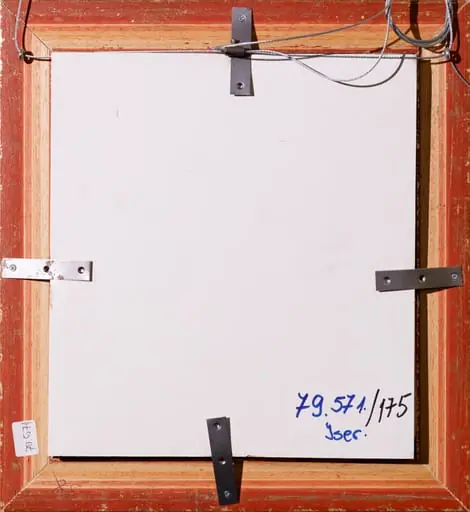
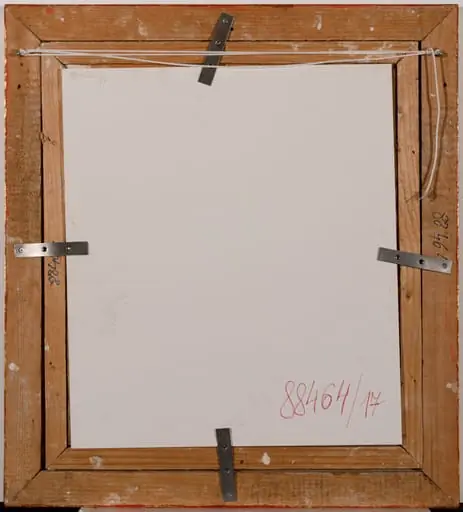
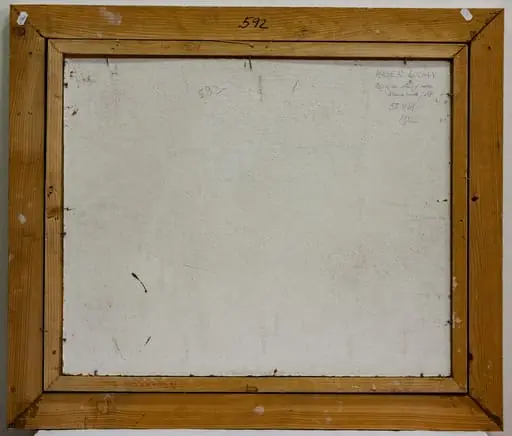
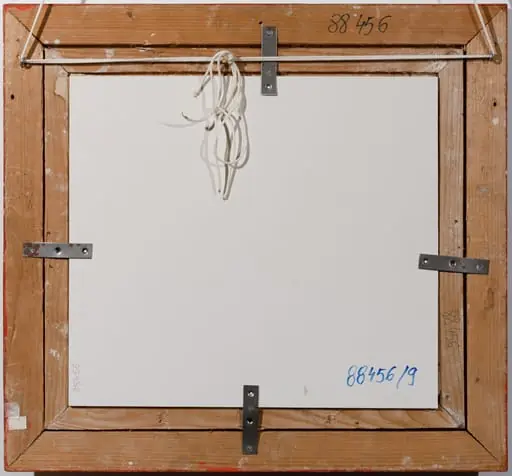
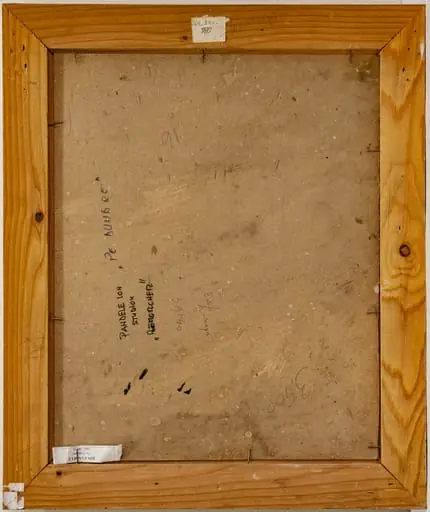
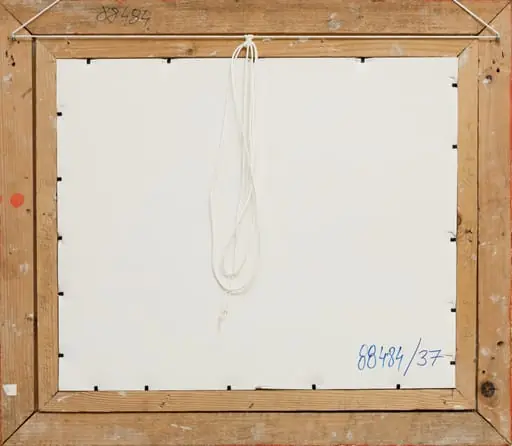
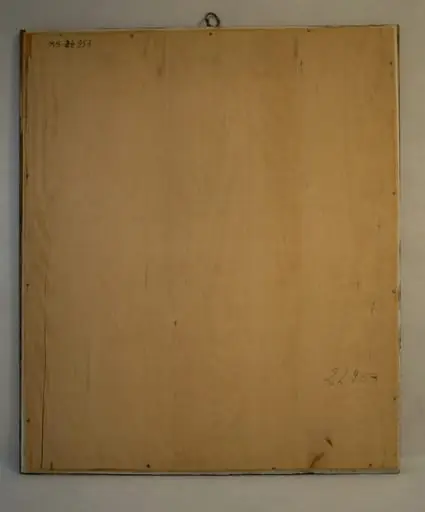
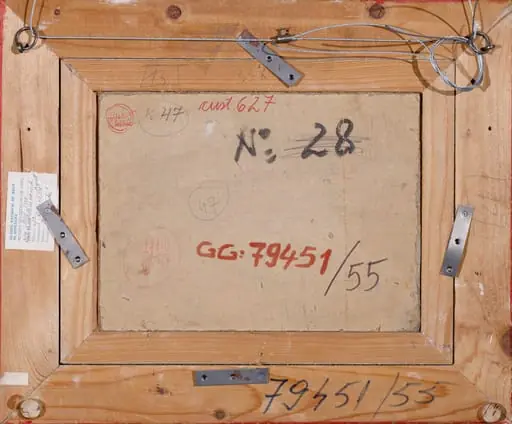
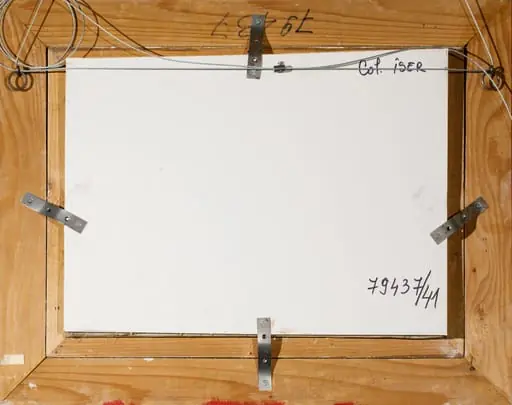
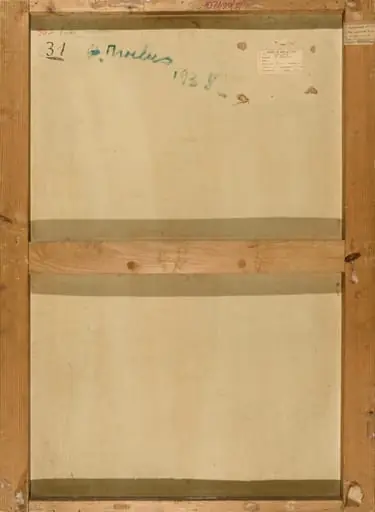
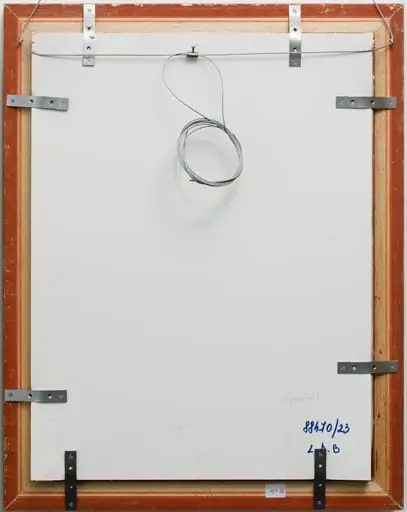
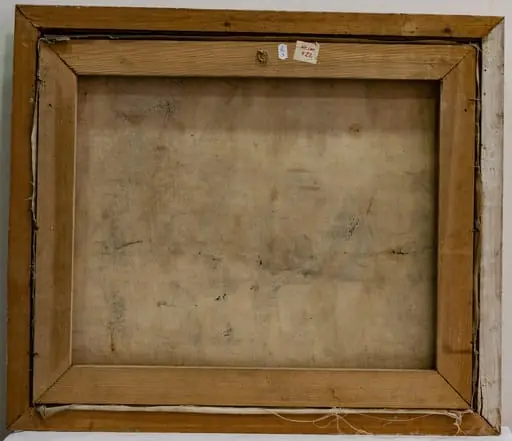
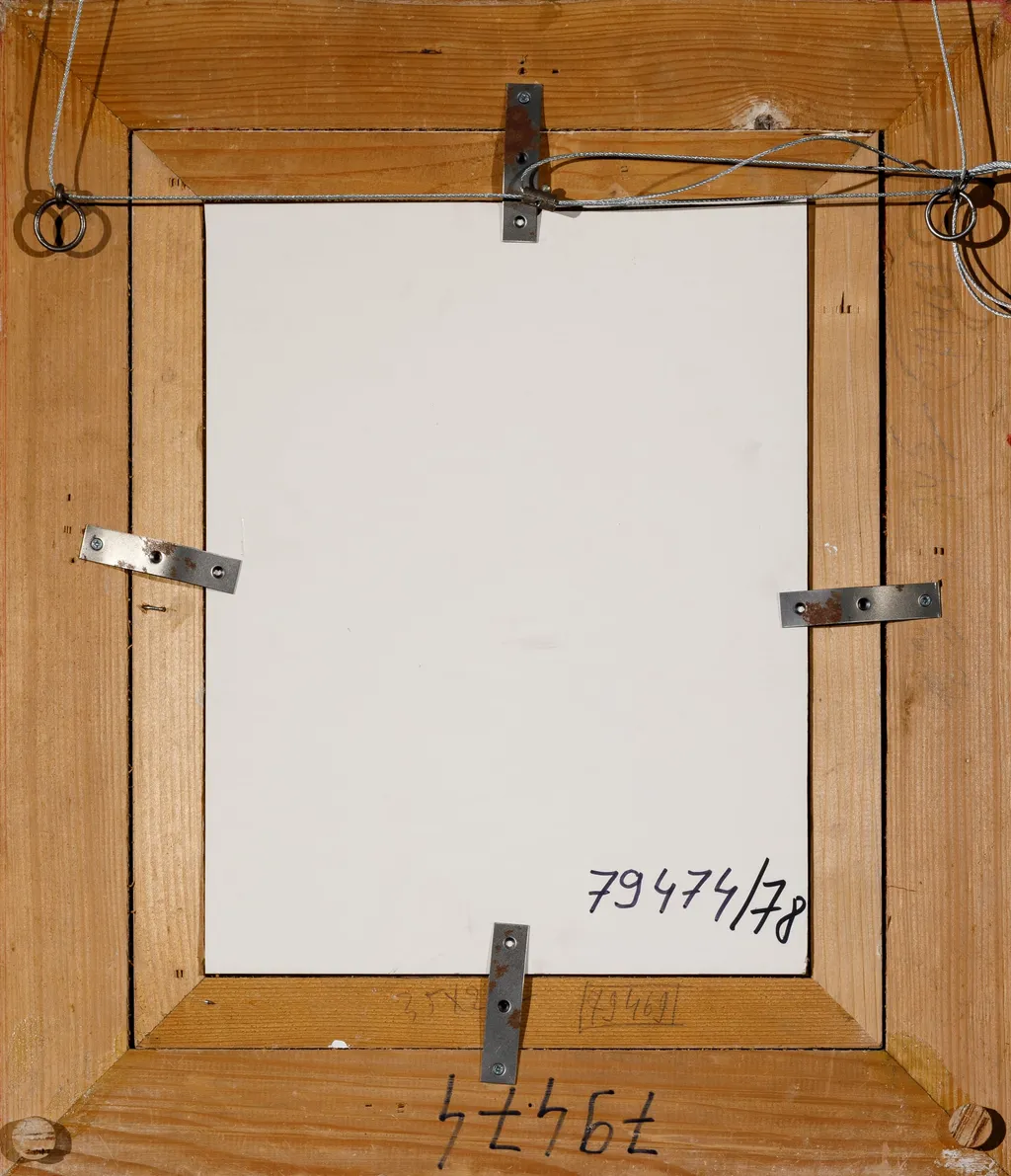
What remains is an empty wooden frame with a blank canvas, its simple construction marked by metal brackets and worn edges.
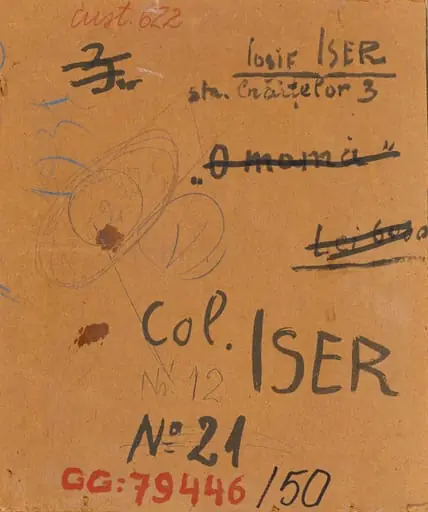
Două balerine is an unfinished or lost work attributed to Iosif Iser, dated around 1850. What remains is an empty wooden frame with a blank canvas, its simple construction marked by metal brackets and worn edges. A handwritten numeral on the lower right suggests it was once cataloged or stored systematically. The absence of imagery transforms the frame into a silent testament to an incomplete artistic act.
Subject & Meaning
The title, meaning 'Two Ballerinas,' implies a scene of dance and movement, typical of Iser’s interest in theatrical subjects. Yet the canvas holds no trace of figures or composition. The void may reflect abandonment, damage, or deliberate omission. The work’s meaning now resides in its absence—inviting reflection on impermanence and the fragility of artistic legacy.
Technique & Style
No paint or brushwork survives to indicate Iser’s technique. The frame, constructed with basic wood and wire reinforcements, reflects utilitarian craftsmanship rather than ornate display. Its plainness contrasts with the elaborate frames often used for finished works of the period, suggesting either economic constraint or a provisional state before completion.
History & Provenance
The work’s history is obscured by its incomplete state. The handwritten number implies it was once part of a collection or studio inventory, but no records confirm its creation, exhibition, or loss. No other known works by Iser from this period survive in comparable condition, leaving its origin and fate uncertain.
Context
In mid-19th century Romania, artistic training often involved studying European models, including ballet scenes popularized in French and Italian art. Iser, active in this milieu, likely intended to engage with such themes. Yet the lack of finished work here may reflect broader challenges faced by artists outside major cultural centers—limited resources, unstable patronage, or shifting priorities.
Legacy
Două balerine endures not as a completed image but as a physical fragment of artistic process. Its emptiness invites questions about what was lost, why, and how such traces shape our understanding of lesser-known artists. It stands as a quiet reminder that artistic history is often built on fragments, not just finished objects.
Artist & collection
Artist
Iosif Iser painted everyday life with a focus on people and places. His 1933 work *Paris. Strada Mouffetard* shows a lively street scene in Paris, while *Nud pe fotoliu* depicts a seated nude figure. His brushwork…