Artwork
Femeie cu cobză
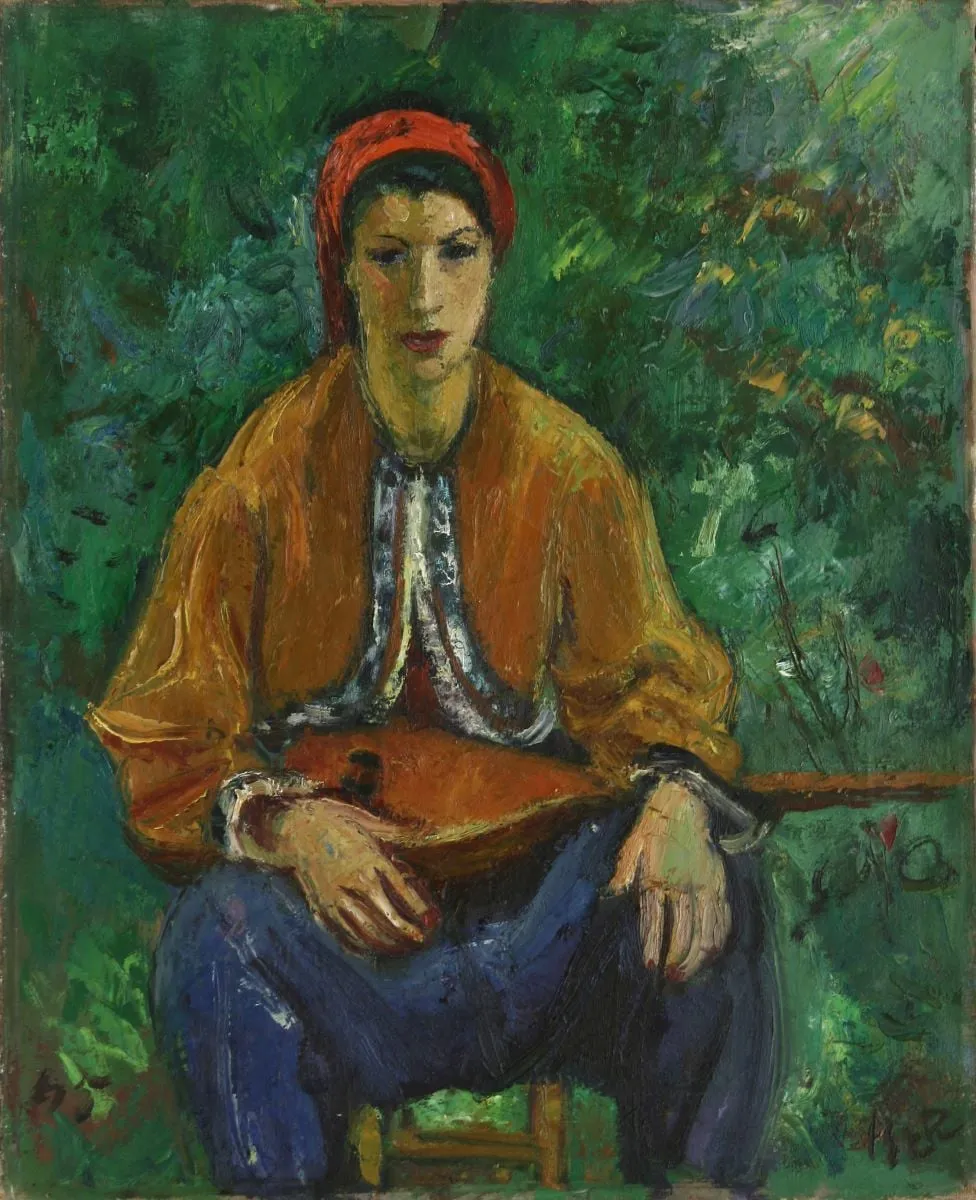
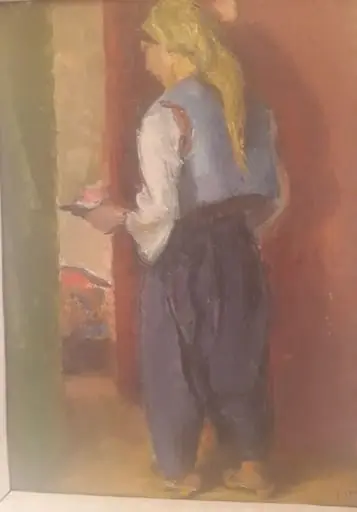
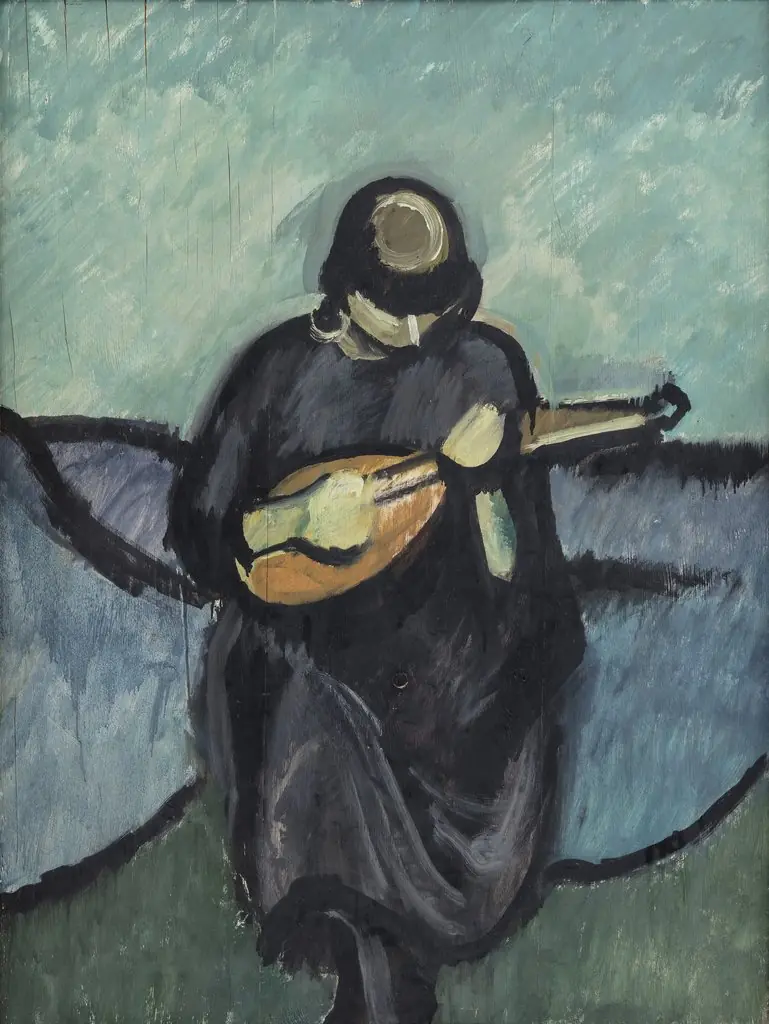
Femeie cu cobză is an unspecified painting by Iosif Iser. It dates from 1945 and is held in the collection of the Gavrilă Simion Eco-Museum Research Institute Tulcea - Art Museum.
About this work
Overview
The work is part of the Museum of Ethnography’s collection and reflects Iser’s interest in everyday life among Romania’s peasant communities.
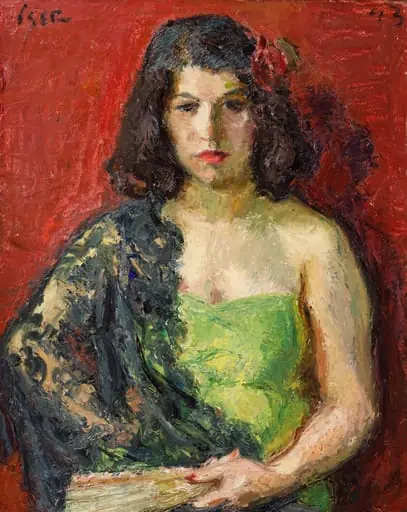
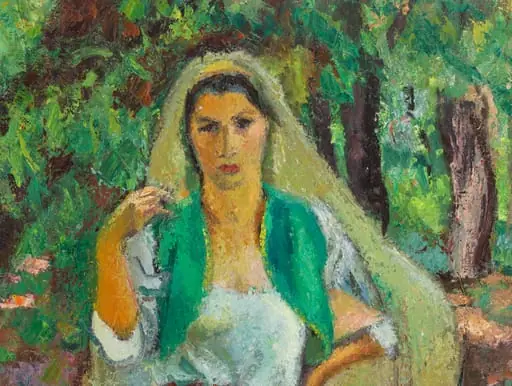
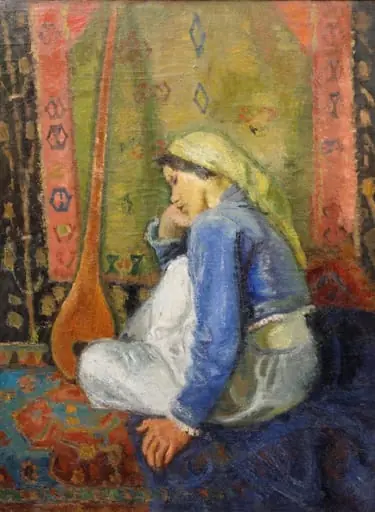
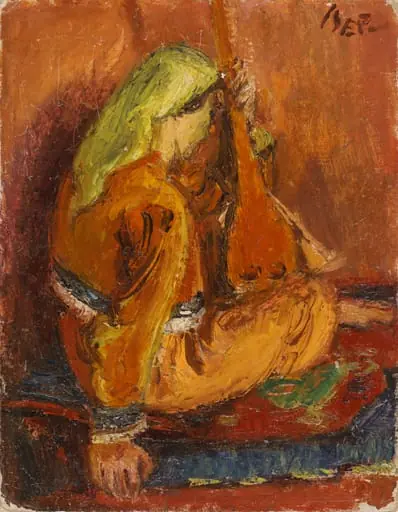
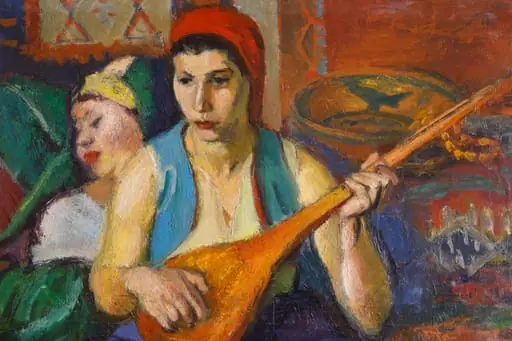
Painted in 1945 by Iosif Iser, Femeie cu cobză depicts a rural woman in a moment of quiet stillness. The work is part of the Museum of Ethnography’s collection and reflects Iser’s interest in everyday life among Romania’s peasant communities. Rendered with expressive brushwork, the painting captures a sense of intimacy without narrative drama, focusing on the figure’s presence and the instrument she holds.
Subject & Meaning
The woman, seated outdoors, holds a cobză—a traditional Romanian lute associated with folk musicianship. Her attire, including a red headscarf and earth-toned garments, suggests regional dress, grounding the image in local culture. The calm posture and undisturbed gaze imply a private, unperformed moment, perhaps between songs or in quiet contemplation. The instrument becomes a silent witness to personal rhythm rather than public display.
Technique & Style
Iser employs thick, visible brushstrokes to build form and texture, avoiding fine detail in favor of emotional resonance. The background dissolves into soft greens, suggesting foliage without defining it, drawing attention to the figure. Color is restrained yet deliberate: the red scarf contrasts subtly with the muted tones of her clothing. The handling of paint conveys immediacy, aligning the work with post-war expressive realism.
History & Provenance
Created shortly after the end of World War II, the painting emerged during a period when Romanian artists increasingly turned to indigenous subjects as cultural identity was being redefined. It entered the Museum of Ethnography’s collection in the mid-20th century, where it remains as part of a broader effort to document rural traditions. No record of prior ownership or exhibition exists beyond its institutional acquisition.
Context
The cobză, a bowed or plucked lute, was historically played by itinerant musicians in Wallachia and Moldavia, often accompanying ballads and dance tunes. Iser’s choice to depict a woman with the instrument challenges the male-dominated narrative of folk performance. The painting reflects a broader postwar interest in preserving vanishing rural customs, even as urbanization accelerated across Eastern Europe.
Legacy
Femeie cu cobză endures as a quiet testament to the dignity of ordinary life in mid-20th century Romania. It contributes to a visual archive of folk culture, valued not for its novelty but for its unembellished observation. While not widely reproduced, it continues to inform scholarly and curatorial approaches to Romanian modernism and ethnographic representation in art.
Artist & collection
Artist
Iosif Iser painted everyday life with a focus on people and places. His 1933 work *Paris. Strada Mouffetard* shows a lively street scene in Paris, while *Nud pe fotoliu* depicts a seated nude figure. His brushwork…
Museum
Gavrilă Simion Eco-Museum Research Institute Tulcea - Art Museum
Continue through works from the same source collection.