Artwork
Cobra blanc
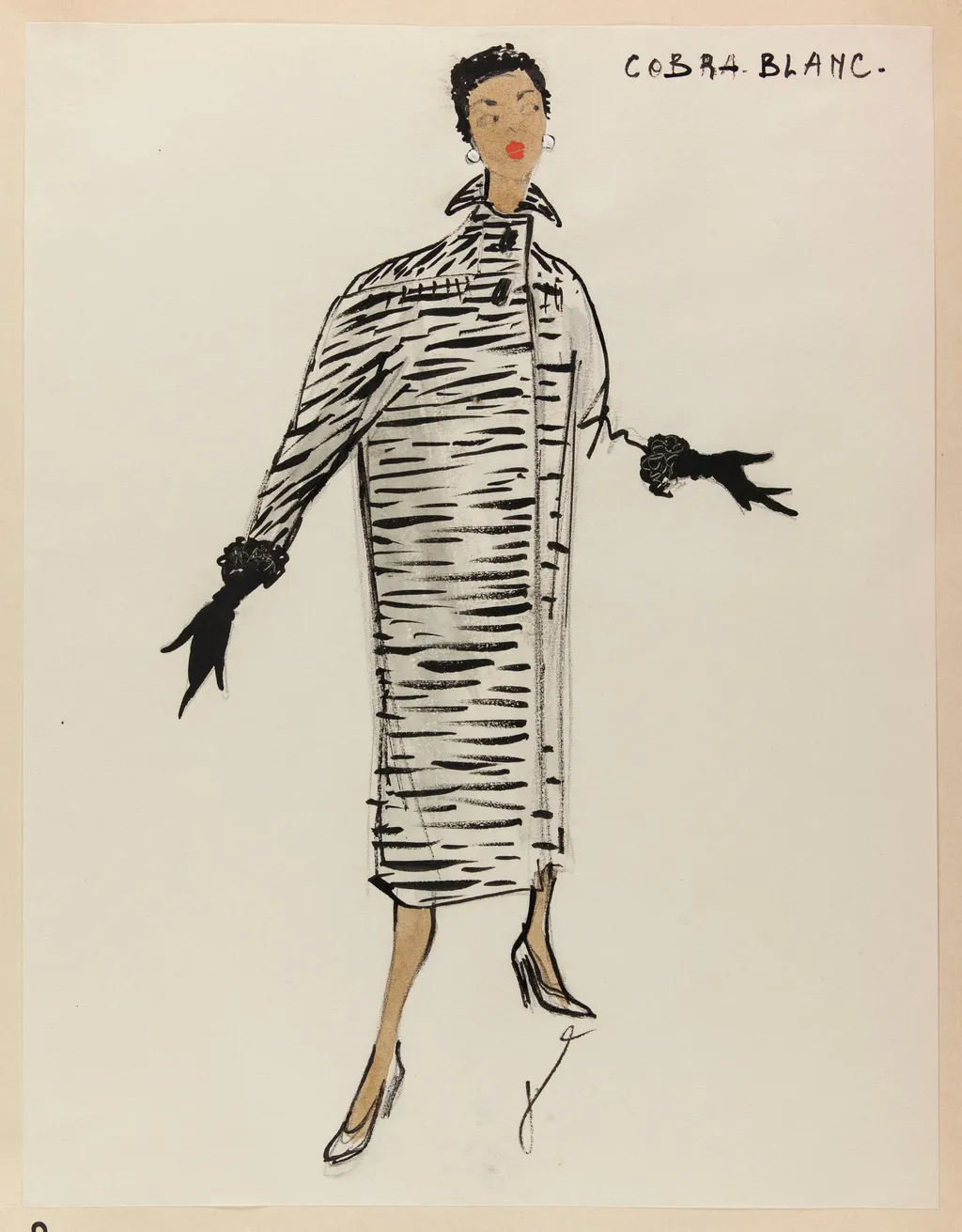
Cobra blanc is a drawing by Marie-Louise Carven. It dates from 1952 and is held in the collection of the Palais Galliera - Musée de la Mode de la Ville de Paris.
About this work
Overview
Though not a finished garment, it captures a moment in her creative process, reflecting her interest in lightweight silhouettes and graphic patterns.
Created around 1952 by French designer Marie-Louise Carven, *Cobra blanc* is a pencil sketch on paper, part of her design archive. Though not a finished garment, it captures a moment in her creative process, reflecting her interest in lightweight silhouettes and graphic patterns. The sketch is held in the Museum of Ethnography’s collection, where it serves as a record of mid-century fashion design practices.
Subject & Meaning
The figure depicts a slender woman in a long, high-contrast black-and-white striped dress, holding two small black purses. Minimal facial features and simple accessories suggest an emphasis on form over individuality. The title, *Cobra blanc*, may reference the dress’s bold, sinuous patterning, evoking the movement of a snake, while the white ground implies purity or restraint in an otherwise dynamic composition.
Technique & Style
Carven rendered the sketch with rapid, fluid pencil strokes, using overlapping lines to build tonal depth in the dress’s stripes rather than solid shading. A few red dots suggest blush, adding subtle life to the figure. The loose, unrefined quality conveys immediacy—this is a working drawing, not a polished presentation piece. The technique prioritizes movement and structure over detail.
History & Provenance
Marie-Louise Carven founded her fashion house in 1945 and was among the first French couturiers to develop a ready-to-wear line. *Cobra blanc* dates from the early years of this expansion, when she was refining designs for a broader market. The sketch entered the Museum of Ethnography’s collection as part of a broader effort to document fashion as cultural artifact, not merely luxury object.
Context
In the early 1950s, Parisian fashion was transitioning from haute couture exclusivity toward accessible design. Carven’s focus on petite figures and breathable fabrics responded to postwar needs for practical elegance. *Cobra blanc* reflects this shift: its graphic simplicity and functional details align with emerging prêt-à-porter ideals, bridging artisanal craft and mass production.
Legacy
The sketch endures as evidence of Carven’s role in democratizing fashion. Its unembellished style and emphasis on wearable form anticipate later trends in minimalist design. While not widely exhibited, it remains a quiet testament to how design thinking in mid-century France moved beyond ornament toward clarity and accessibility.
Artist & collection
Artist
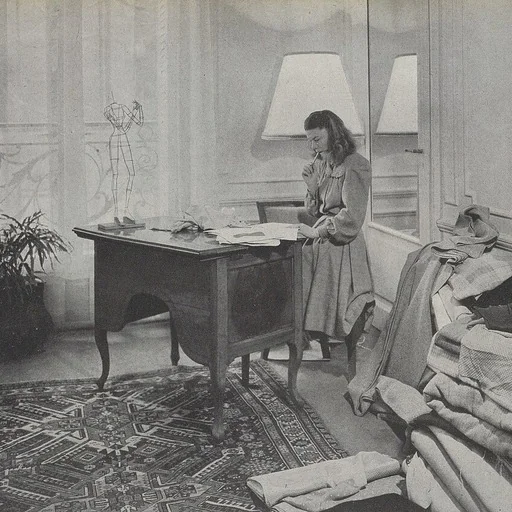
Marie-Louise Carven (31 August 1909 – 8 June 2015), born Carmen de Tommaso, was a French fashion designer who founded the house of Carven in 1945.
Museum
Palais Galliera - Musée de la Mode de la Ville de Paris
Continue through works from the same source collection.
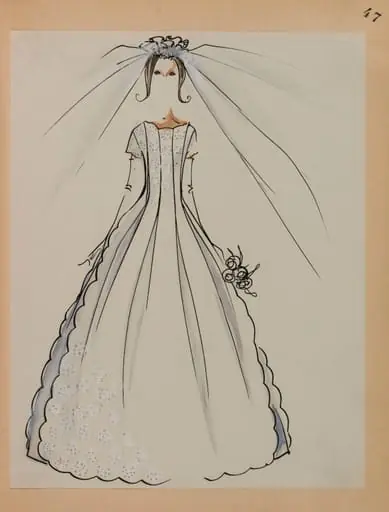 Robe de mariée festonnée et son voile
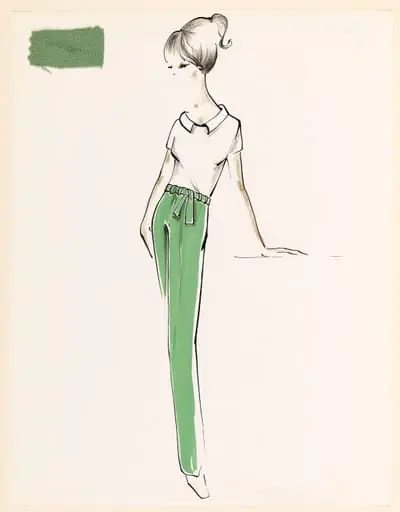 Haut blanc à manches courtes et pantalon vert à ceinture nouée
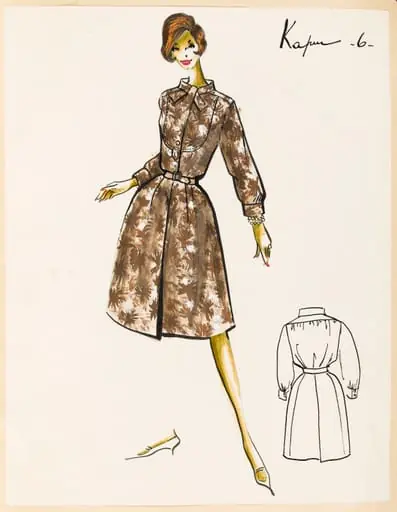 Kapur
Kapur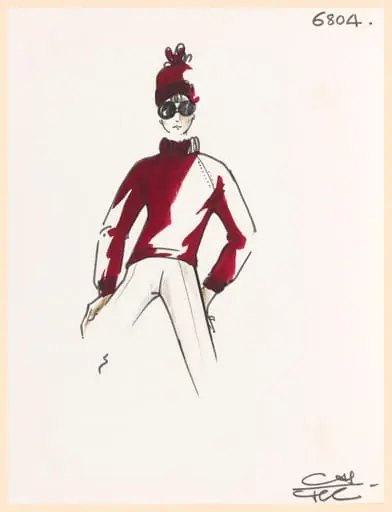 Pull-over à manches longues pourpre, bonnet assorti, pantalon et lunettes de soleil
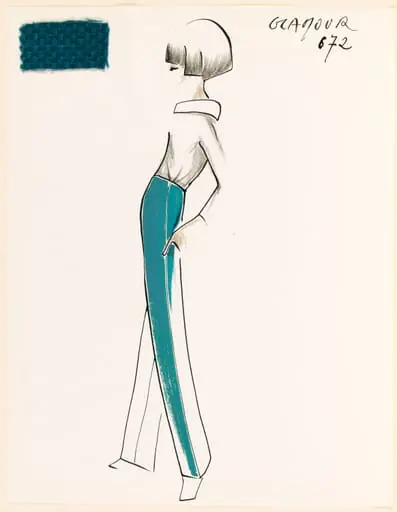 GLAMOUR
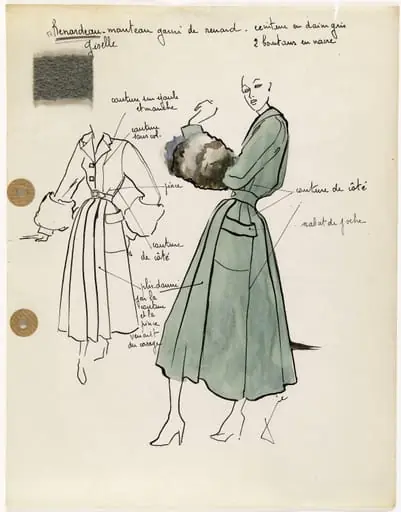 'Renardeau'
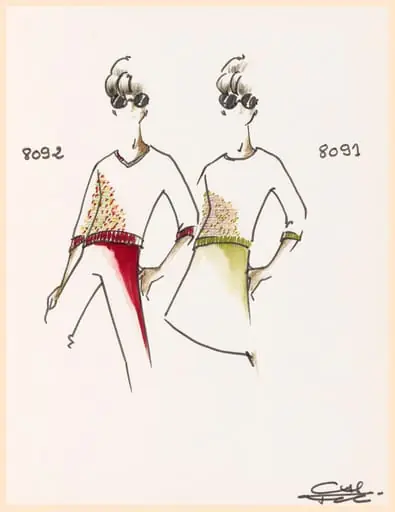 Pull-over à manches trois quarts et à encolure V à motifs multicolores, pantalon cerise et lunettes de soleil
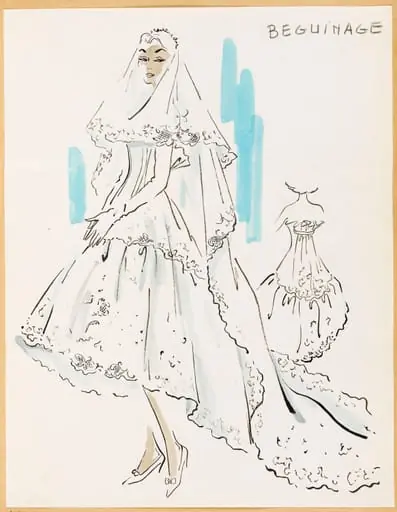 Béguinage