Artwork
Black and white
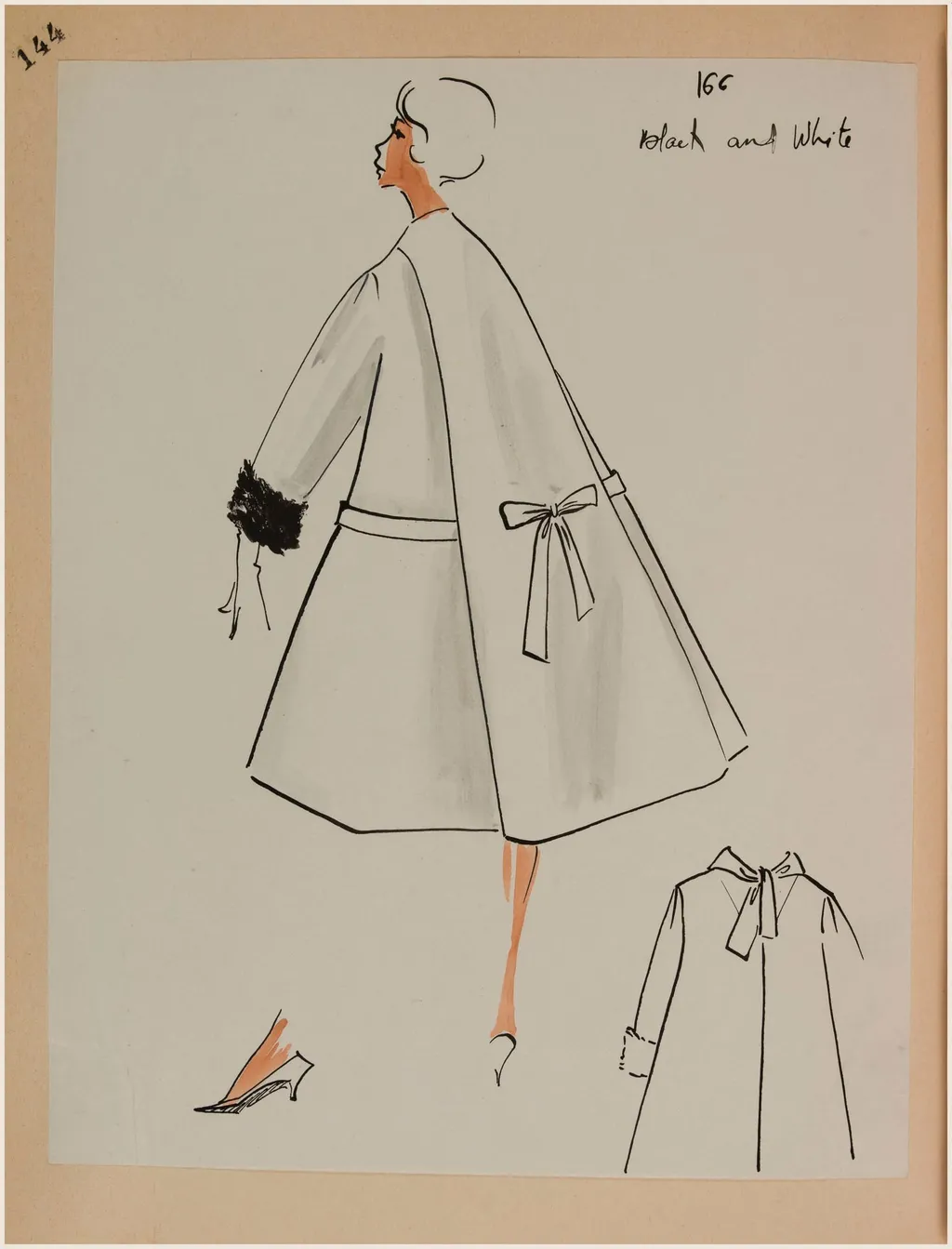
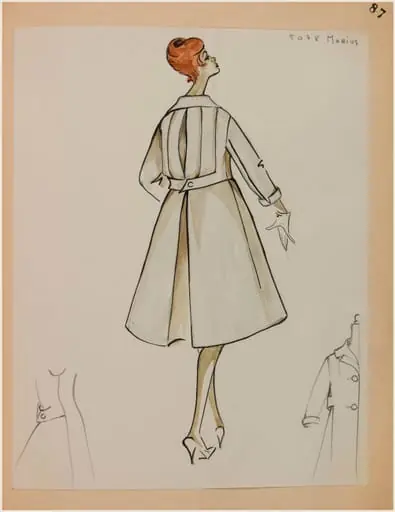
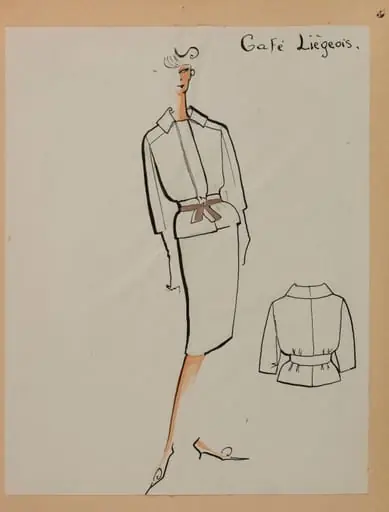
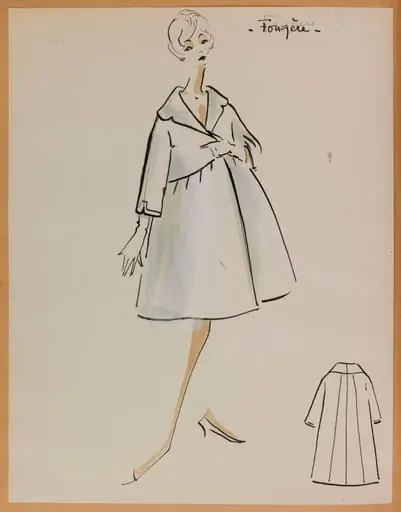
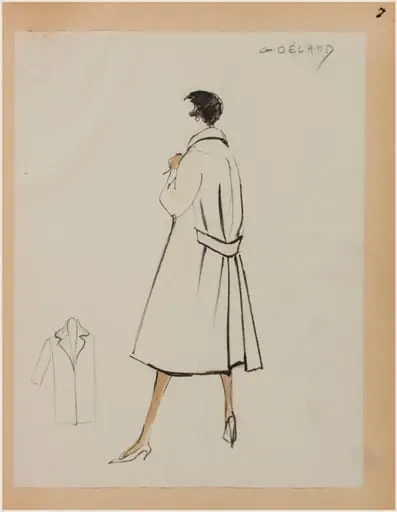
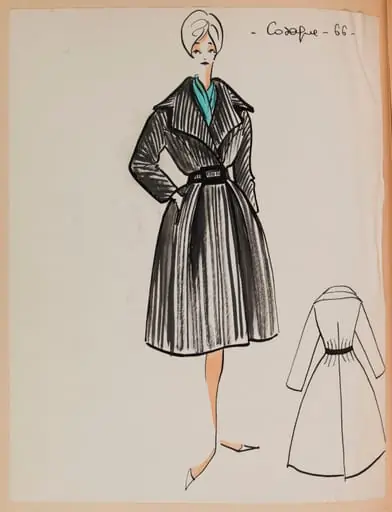
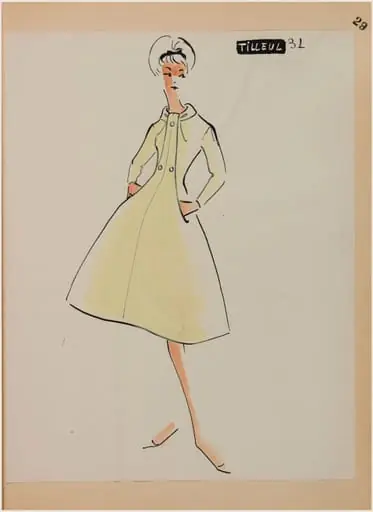
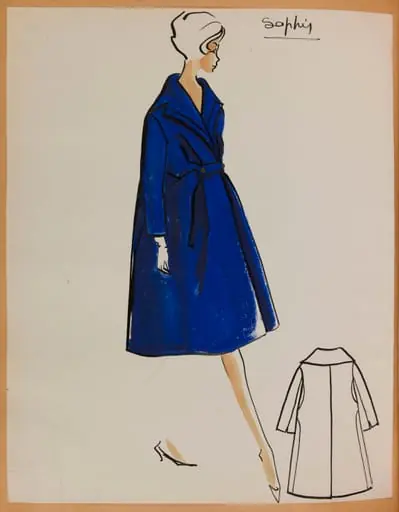
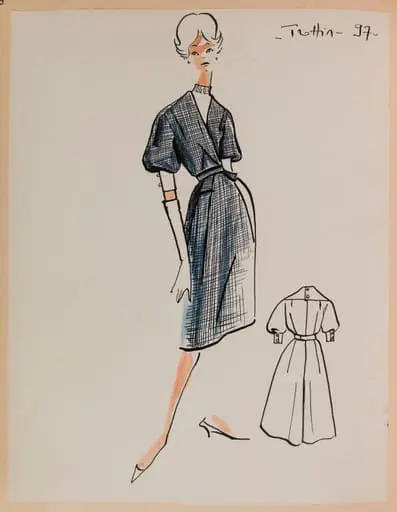
Black and white is a drawing by Marie-Louise Carven. It dates from 1958 and is held in the collection of the Palais Galliera - Musée de la Mode de la Ville de Paris.
About this work
Overview
It is held in the collection of the Museum of Ethnography, where it is preserved as a record of mid-century French fashion practice rather than as a garment.
Created around 1958, this ink drawing is attributed to Marie-Louise Carven, a French fashion designer who founded her eponymous house in 1945. The work reflects her interest in clean lines and accessible design, aligning with her pioneering role in introducing ready-to-wear fashion in Paris. It is held in the collection of the Museum of Ethnography, where it is preserved as a record of mid-century French fashion practice rather than as a garment.
Subject & Meaning
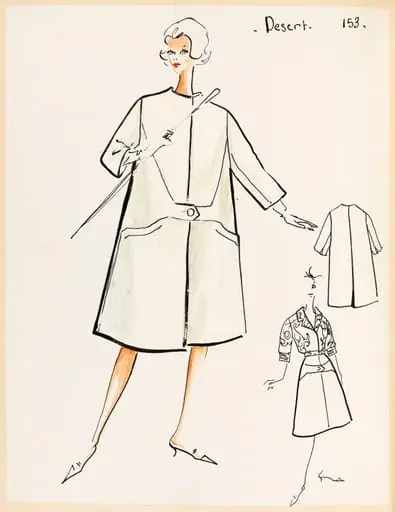
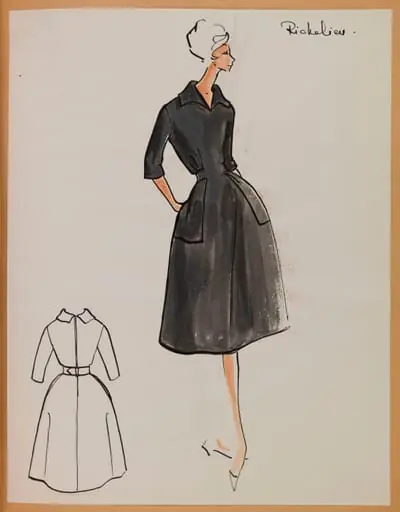
The drawing depicts a woman in a tailored white coat with a bow at the back, matching skirt, and high heels, her short bob hairstyle suggesting modernity. The all-white ensemble, paired with a small bag, conveys a sense of refined simplicity. The inclusion of a sketch of the coat’s back suggests an emphasis on construction and detail, reflecting Carven’s focus on fit and functionality for petite figures, rather than ornamentation.
Technique & Style
Rendered in black ink on a light beige ground, the drawing uses precise, economical lines to define form and structure. The framing border in a slightly darker tone draws attention to the central figure. A small technical sketch at the lower right indicates an analytical approach, blending aesthetic presentation with design documentation. The title and number '166' are inscribed in the upper right, suggesting this was part of a cataloged series.
History & Provenance
The drawing originated in Carven’s design studio during the late 1950s, a period when she was expanding her prêt-à-porter line. It was later acquired by the Museum of Ethnography, likely as part of an effort to document the evolution of French fashion design. Its preservation in an ethnographic context, rather than a fashion museum, underscores its value as a cultural artifact of everyday style and production.
Context
In postwar Paris, Carven stood out for designing practical, elegant clothing for women with smaller frames, countering the dominant silhouette of the time. Her move into ready-to-wear challenged the exclusivity of haute couture. This drawing, though modest in scale, reflects a broader shift toward democratizing fashion—where design sketches served both creative and commercial purposes in a rapidly changing industry.
Legacy
Though Carven’s name is less prominent today, her contributions to accessible fashion design influenced later generations of designers who prioritized wearability and proportion. This drawing remains a quiet testament to her method: combining elegance with utility, and elevating the sketch from mere planning tool to a document of aesthetic intent in mid-century French fashion.
Artist & collection
Artist
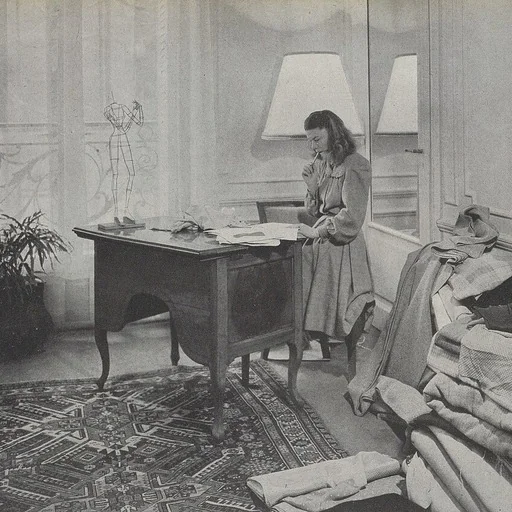
Marie-Louise Carven (31 August 1909 – 8 June 2015), born Carmen de Tommaso, was a French fashion designer who founded the house of Carven in 1945.

Museum
Palais Galliera - Musée de la Mode de la Ville de Paris
Continue through works from the same source collection.
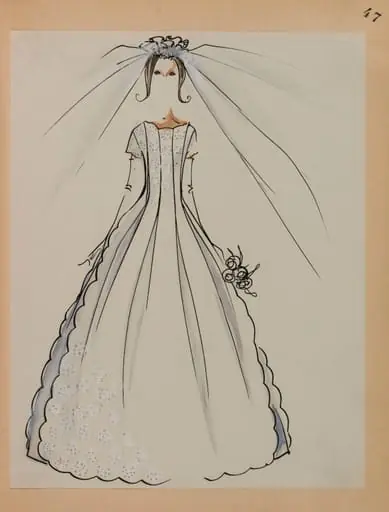 Robe de mariée festonnée et son voile
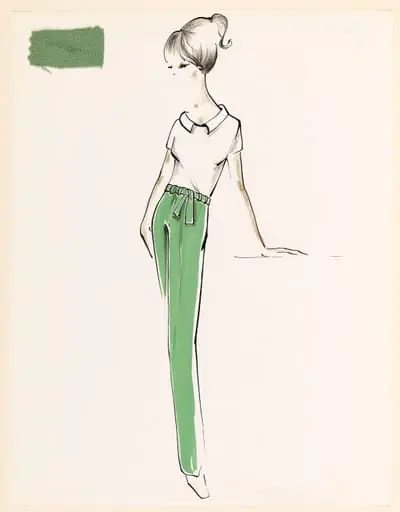 Haut blanc à manches courtes et pantalon vert à ceinture nouée
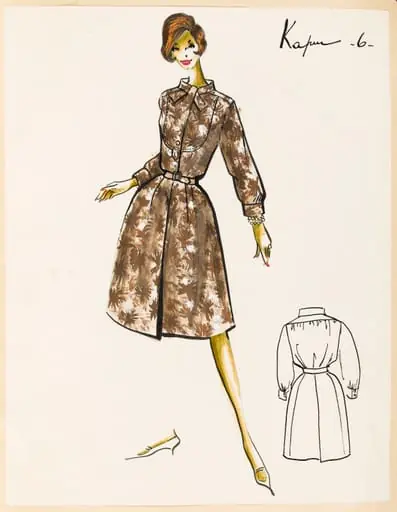 Kapur
Kapur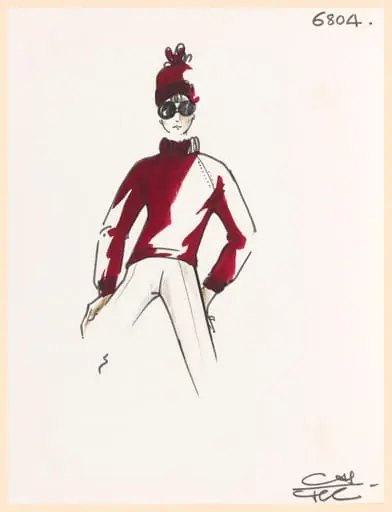 Pull-over à manches longues pourpre, bonnet assorti, pantalon et lunettes de soleil
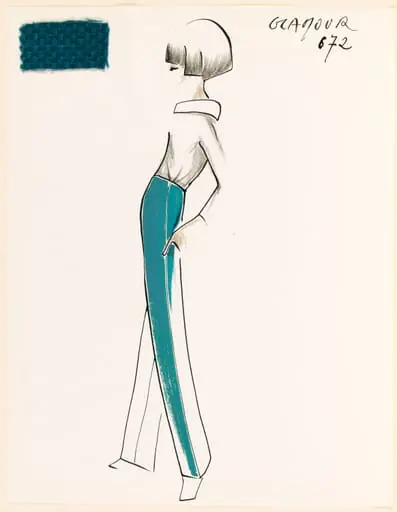 GLAMOUR
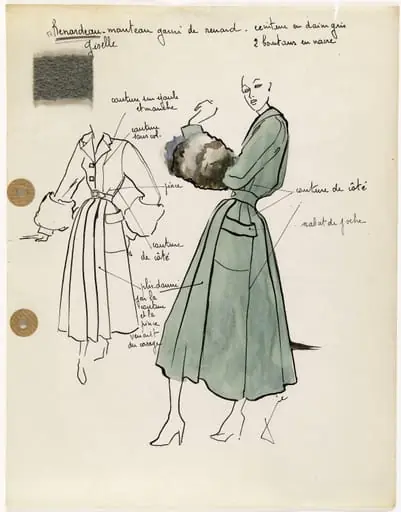 'Renardeau'
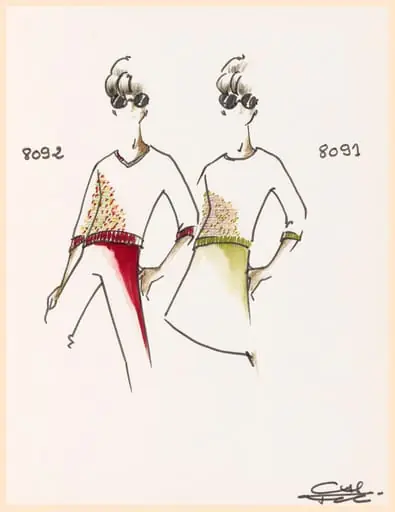 Pull-over à manches trois quarts et à encolure V à motifs multicolores, pantalon cerise et lunettes de soleil
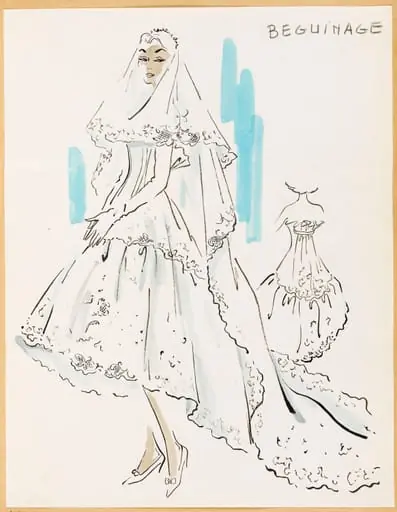 Béguinage