Artwork
Flamand rose
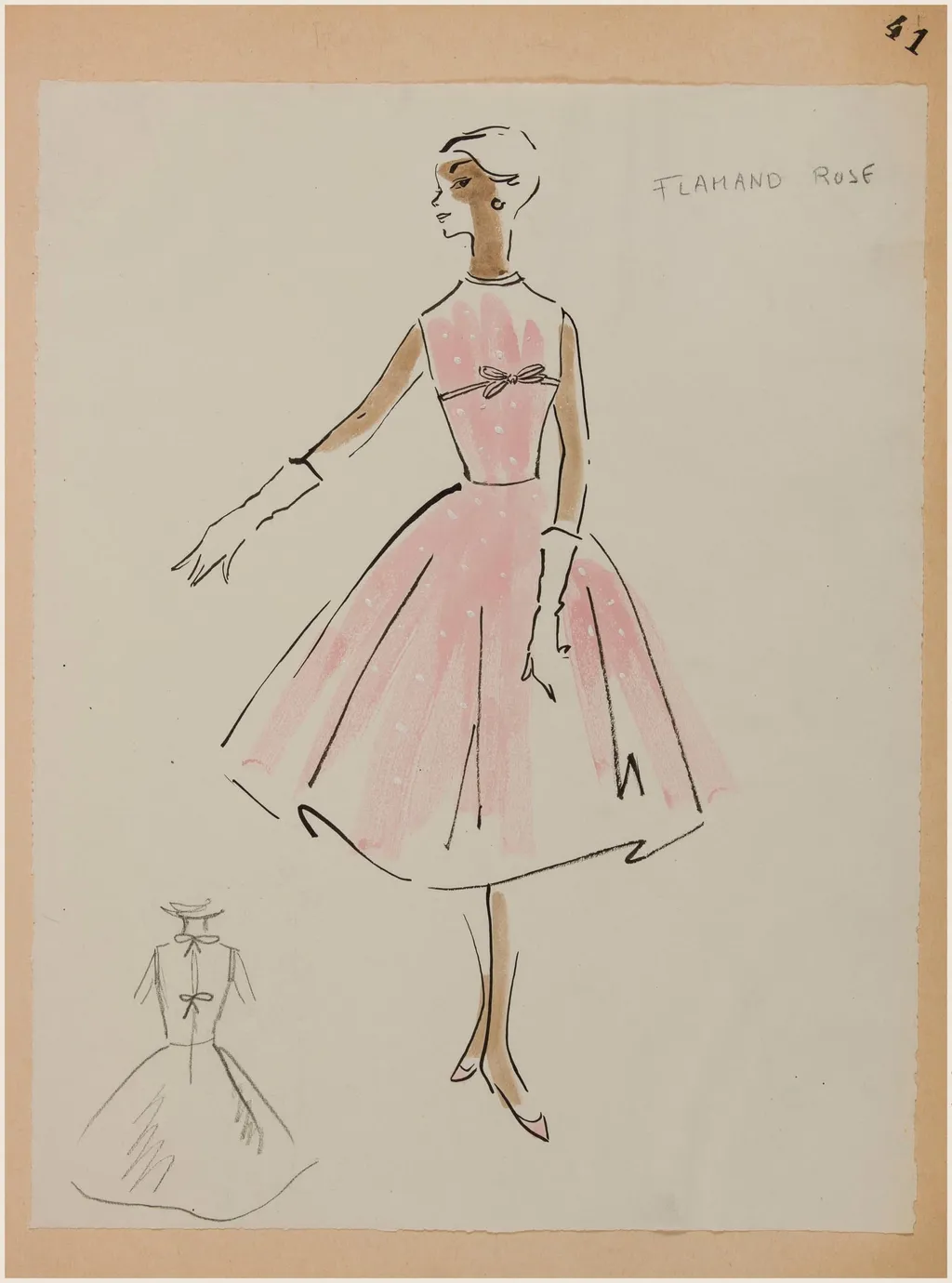
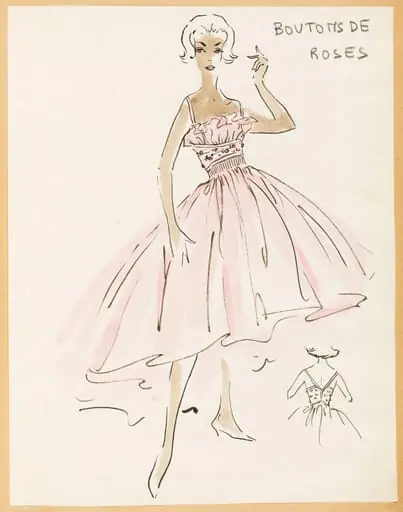
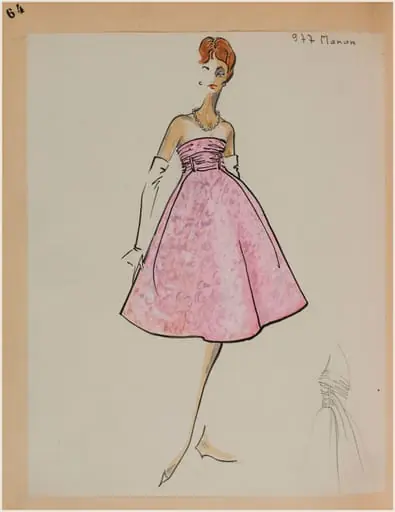
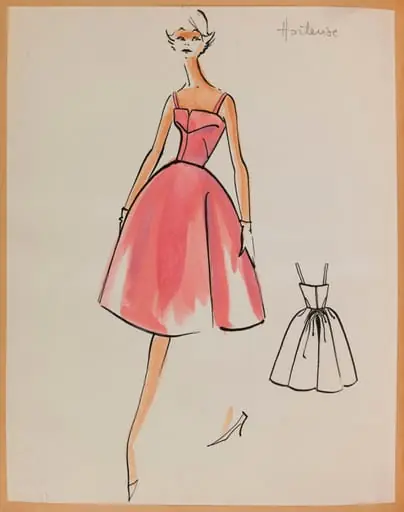
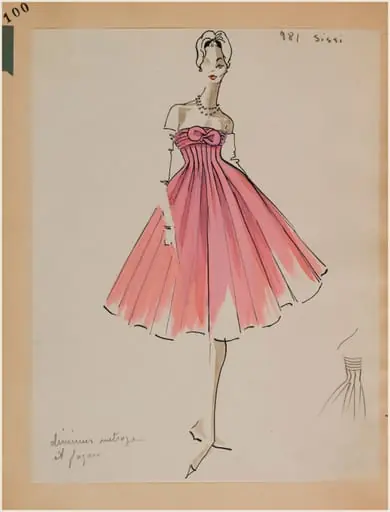
Flamand rose is a drawing by Marie-Louise Carven. It dates from 1958 and is held in the collection of the Palais Galliera - Musée de la Mode de la Ville de Paris.
About this work
Overview
It belongs to the Museum of Ethnography’s collection and reflects Carven’s approach to combining elegance with practicality for smaller frames.
Created around 1958, *Flamand rose* is a fashion sketch by Marie-Louise Carven, founder of the Parisian label Carven established in 1945. The work captures a dress design in a spontaneous, fluid style using watercolor techniques. It belongs to the Museum of Ethnography’s collection and reflects Carven’s approach to combining elegance with practicality for smaller frames. The piece bridges haute couture and early ready-to-wear design practices.
Subject & Meaning
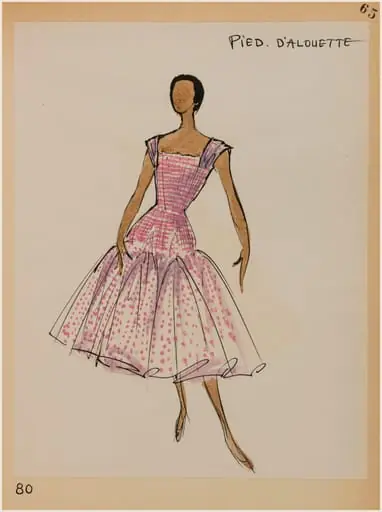
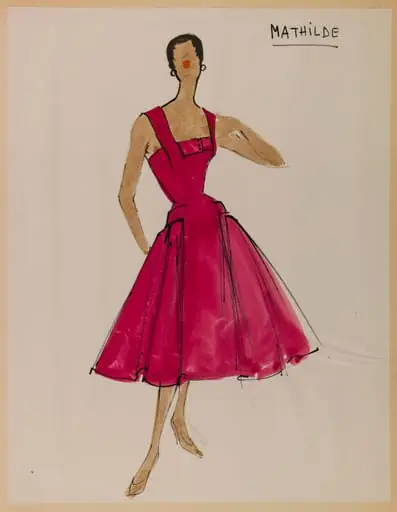
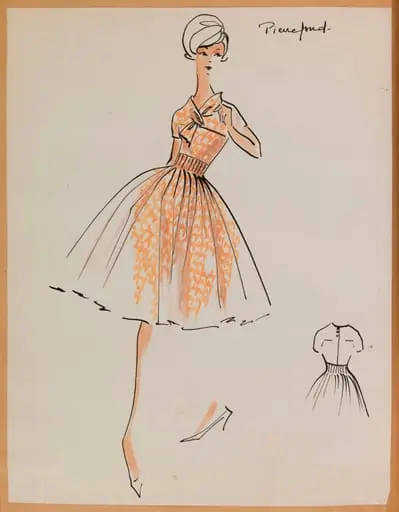
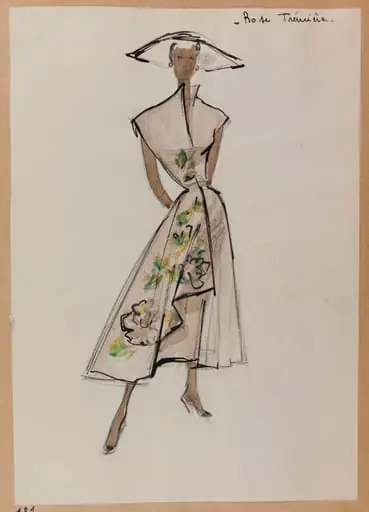
The sketch depicts a woman in a dress with a fitted bodice and flared skirt, adorned with a waist bow and small polka dots. The outstretched arms suggest movement and ease, aligning with Carven’s emphasis on wearable, feminine silhouettes. The title *Flamand rose* may reference a soft pink hue or Flemish-inspired delicacy, hinting at a subtle nod to European textile traditions without overt symbolism.
Technique & Style
Carven rendered the design with loose, rapid brushwork and translucent watercolor washes, creating a sense of lightness and motion. The dress is shown in profile with a secondary front view beneath, functioning as both artistic expression and technical guide. The minimal detailing and uncluttered lines reflect a design philosophy prioritizing clarity and wearability over ornate decoration.
History & Provenance
Produced during Carven’s active years as a couturier and pioneer of prêt-à-porter, the sketch was likely used internally to communicate design intent. It entered the Museum of Ethnography’s holdings as part of a broader collection documenting 20th-century fashion as cultural artifact. Its preservation underscores the growing recognition of fashion as a legitimate field of material culture study.
Context
In the late 1950s, Parisian fashion was transitioning from exclusive couture to accessible ready-to-wear. Carven, one of the first to launch a commercial prêt-à-porter line, responded to postwar demands for practical yet stylish clothing. *Flamand rose* exemplifies this shift—delicate in appearance but grounded in usability, reflecting changing social norms around women’s dress and mobility.
Legacy
The sketch stands as a quiet testament to Carven’s influence in democratizing fashion without sacrificing refinement. Though not widely exhibited, its presence in an ethnographic museum signals a broader scholarly acknowledgment of fashion design as a form of cultural expression. It remains a representative artifact of mid-century French design ethics.
Artist & collection
Artist
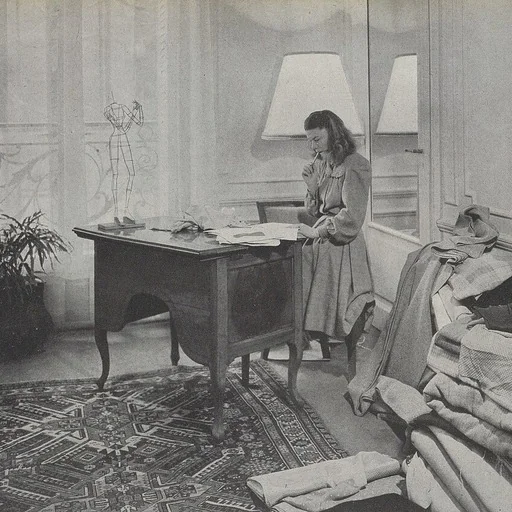
Marie-Louise Carven (31 August 1909 – 8 June 2015), born Carmen de Tommaso, was a French fashion designer who founded the house of Carven in 1945.
Museum
Palais Galliera - Musée de la Mode de la Ville de Paris
Continue through works from the same source collection.
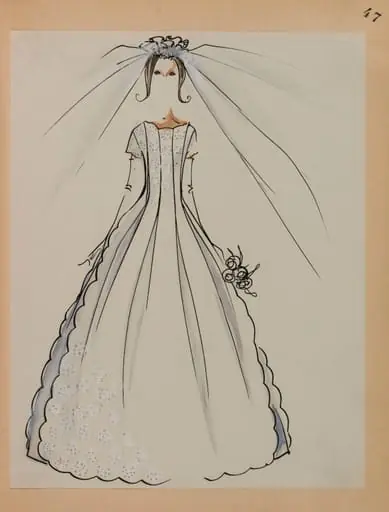 Robe de mariée festonnée et son voile
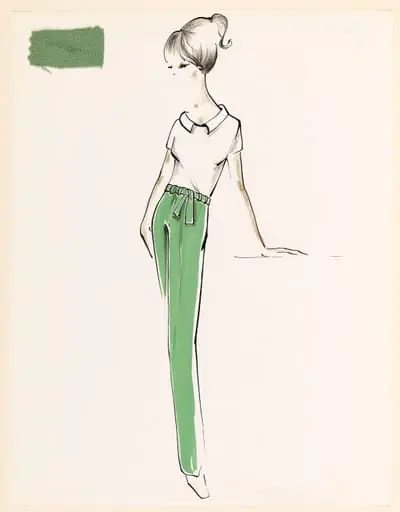 Haut blanc à manches courtes et pantalon vert à ceinture nouée
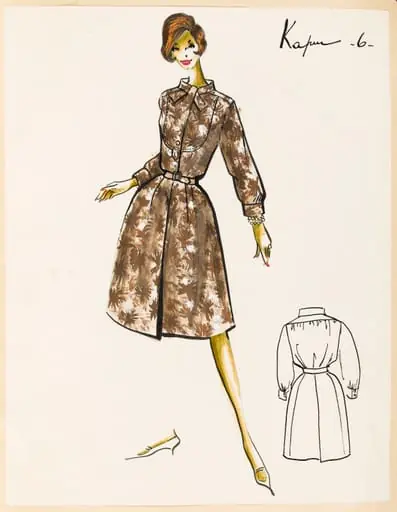 Kapur
Kapur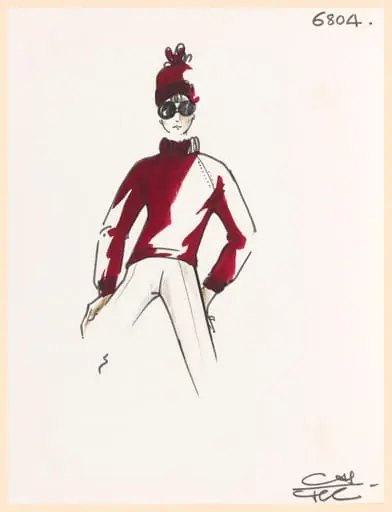 Pull-over à manches longues pourpre, bonnet assorti, pantalon et lunettes de soleil
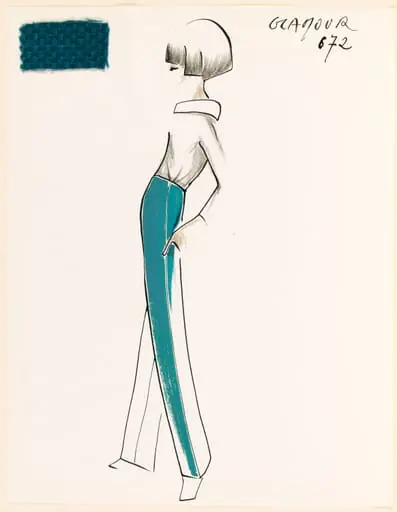 GLAMOUR
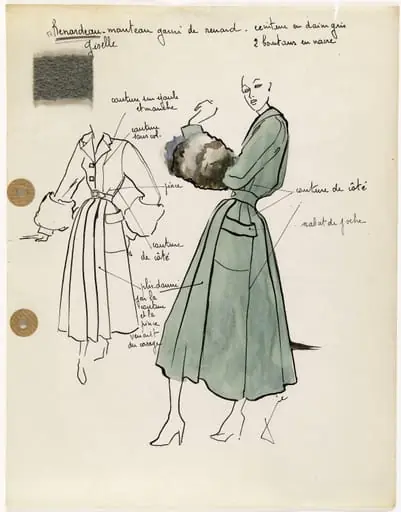 'Renardeau'
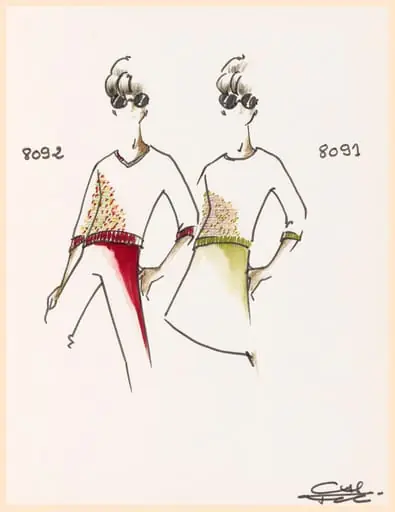 Pull-over à manches trois quarts et à encolure V à motifs multicolores, pantalon cerise et lunettes de soleil
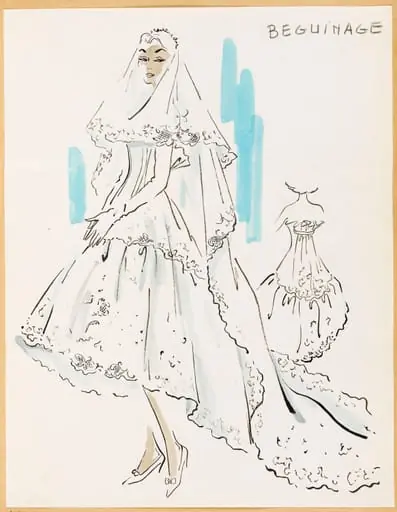 Béguinage