Artwork
'Grisaille'
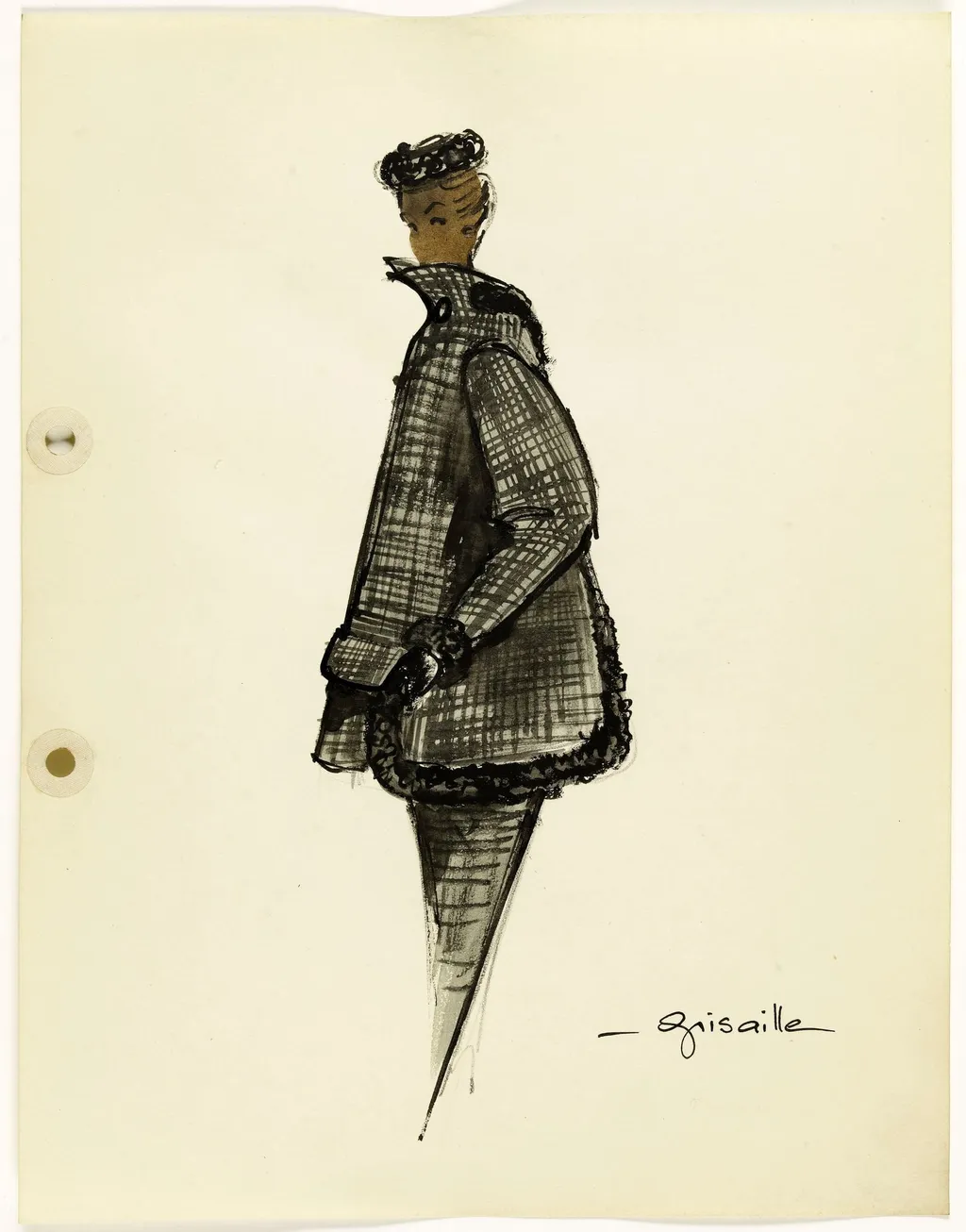
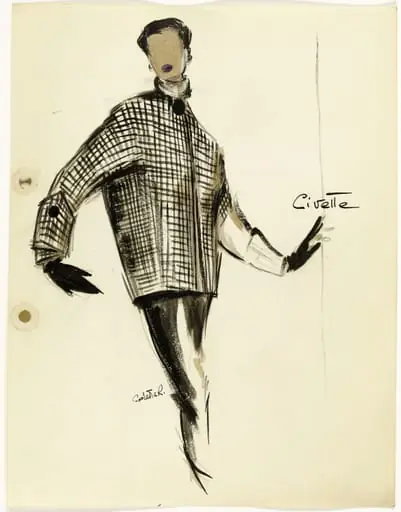
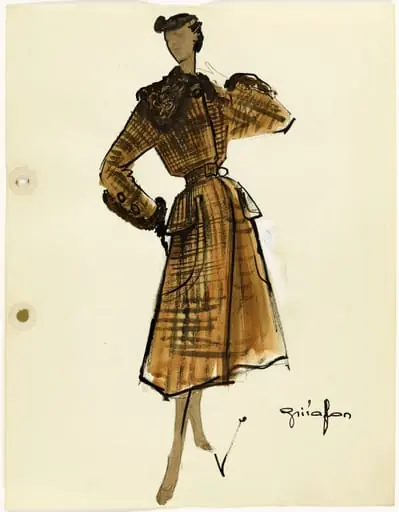
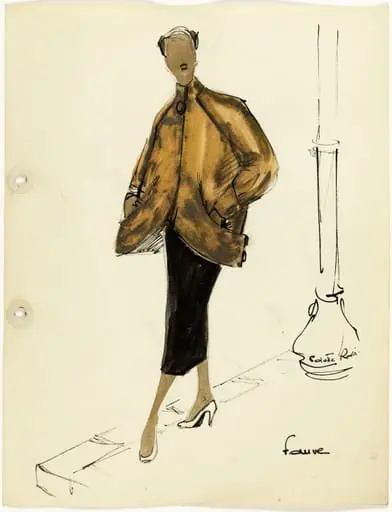
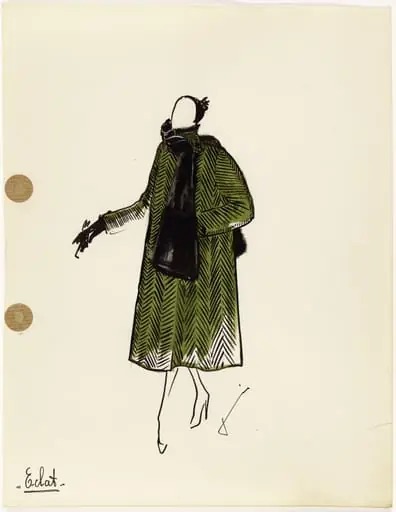
'Grisaille' is a drawing by Marie-Louise Carven. It dates from 1951 and is held in the collection of the Palais Galliera - Musée de la Mode de la Ville de Paris.
About this work
Overview
The sketch is part of the Museum of Ethnography’s collection, underscoring its role as a cultural artifact of mid-century fashion design.
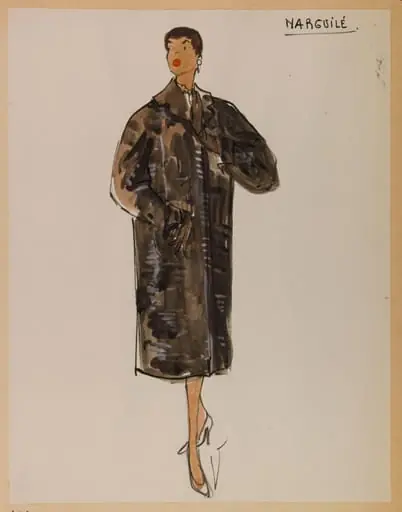
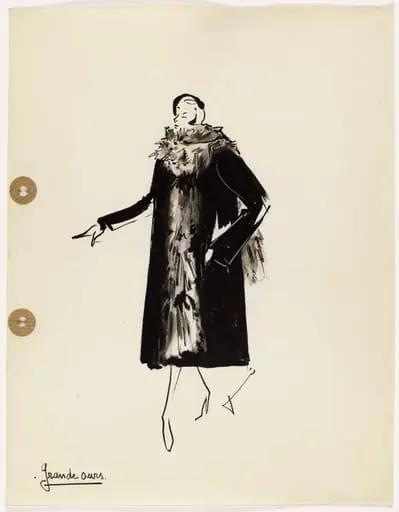
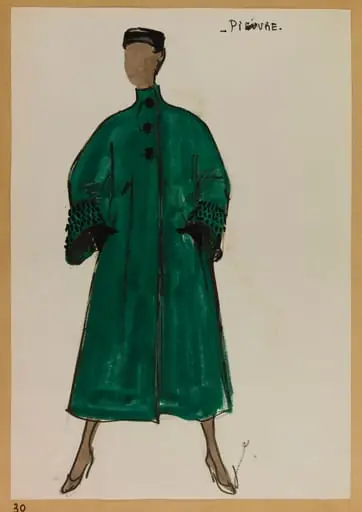
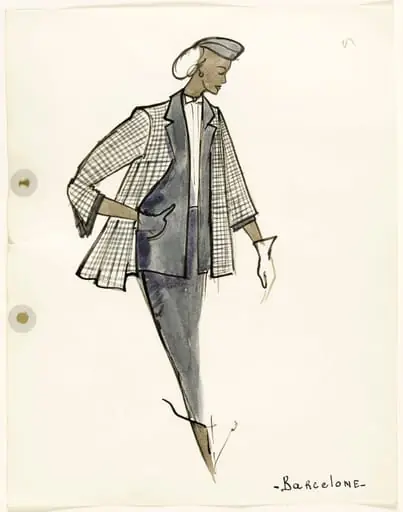
Created around 1951, *Grisaille* is a fashion sketch by Marie-Louise Carven, founder of the Parisian house Carven established in 1945. Executed in monochrome ink, the drawing captures a tailored outer garment with distinctive checkered patterning. Though labeled as an image, it functions as a design study, reflecting Carven’s interest in accessible, wearable silhouettes. The sketch is part of the Museum of Ethnography’s collection, underscoring its role as a cultural artifact of mid-century fashion design.
Subject & Meaning
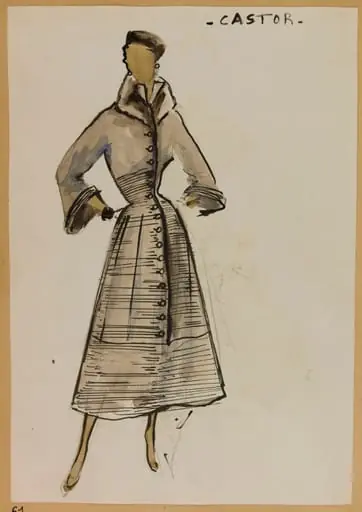
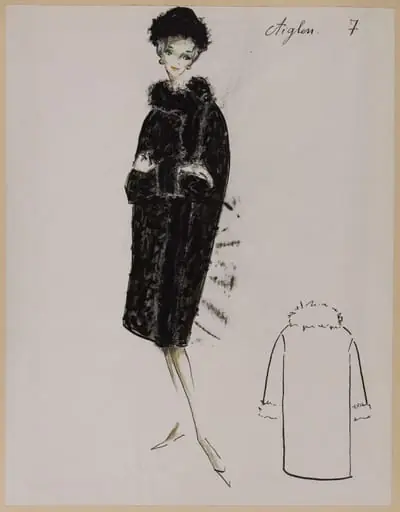
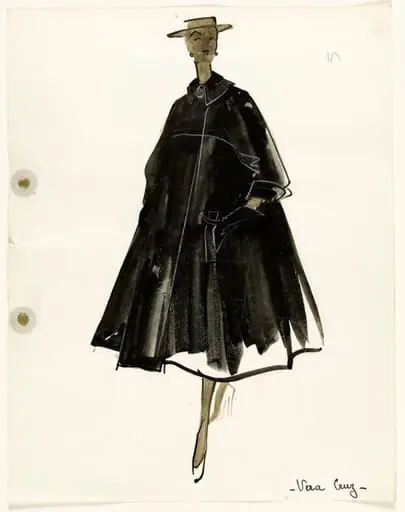
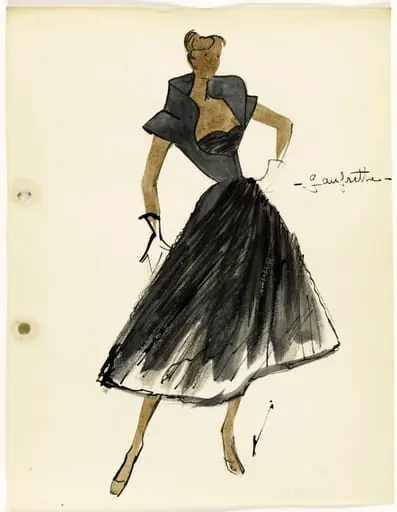
The figure wears a long, loose coat with a broad collar and a narrow, flared skirt, suggesting a balance between structure and movement. The small hat adorned with a floral detail adds a touch of femininity without ornamentation. The design reflects Carven’s focus on flattering proportions for petite frames, emphasizing practical elegance. The title *Grisaille*—referring to gray monochrome—hints at the restrained palette and the drawing’s function as a technical study rather than a finished garment.
Technique & Style
Carven employed rapid, expressive ink lines to suggest texture and form, using cross-hatching to imply the checkered fabric’s depth and shadow. The sketch’s loose, gestural quality conveys movement and fabric drape without detailed rendering. The signature 'Grisaille' in the corner functions as both a label and a stylistic marker, aligning the work with the tradition of monochrome design drawings used in couture ateliers. The absence of color directs attention to silhouette and structure.
History & Provenance
The sketch originated in Carven’s design studio during the early 1950s, a period when she was expanding her brand into prêt-à-porter. It was later acquired by the Museum of Ethnography, likely as part of a broader effort to document everyday fashion as cultural expression. Its preservation there reflects a shift in institutional interest toward wearable art and the role of designers in shaping modern identity, beyond haute couture’s exclusivity.
Context
In postwar France, fashion was redefining itself through accessibility and functionality. Carven was among the first to bridge haute couture and ready-to-wear, making stylish clothing available to a wider audience. *Grisaille* embodies this ethos—its restrained palette and practical cut align with the era’s emphasis on utility and quiet sophistication. The sketch stands as a quiet testament to the democratization of fashion in the mid-20th century.
Legacy
Though not a finished garment, *Grisaille* preserves the design process of a pioneering female couturier who challenged industry norms. Its inclusion in a museum of ethnography signals recognition of fashion as material culture. The sketch continues to inform studies on mid-century design practices, particularly how women designers translated everyday needs into refined, wearable forms without overt spectacle.
Artist & collection
Artist
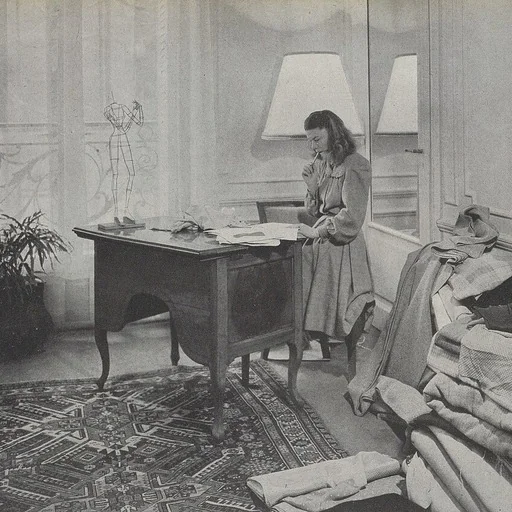
Marie-Louise Carven (31 August 1909 – 8 June 2015), born Carmen de Tommaso, was a French fashion designer who founded the house of Carven in 1945.
Museum
Palais Galliera - Musée de la Mode de la Ville de Paris
Continue through works from the same source collection.
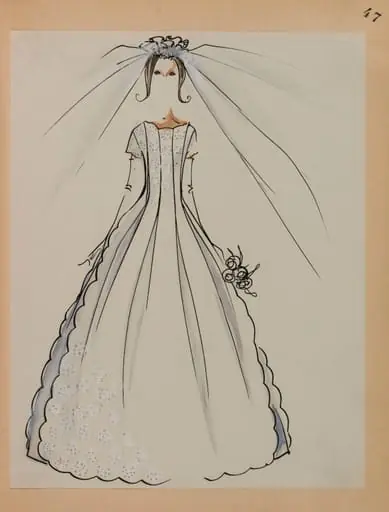 Robe de mariée festonnée et son voile
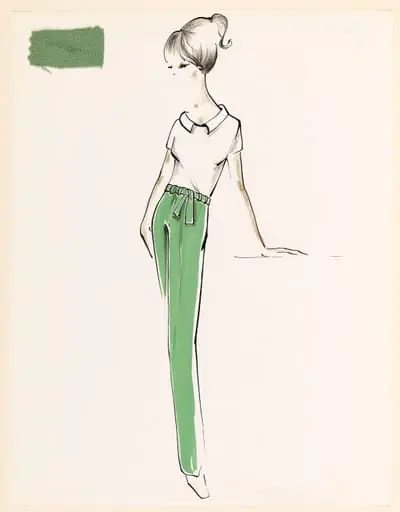 Haut blanc à manches courtes et pantalon vert à ceinture nouée
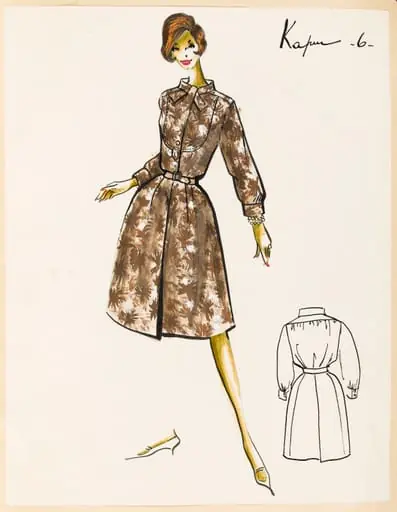 Kapur
Kapur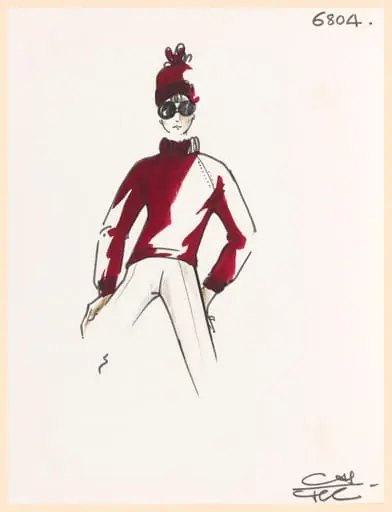 Pull-over à manches longues pourpre, bonnet assorti, pantalon et lunettes de soleil
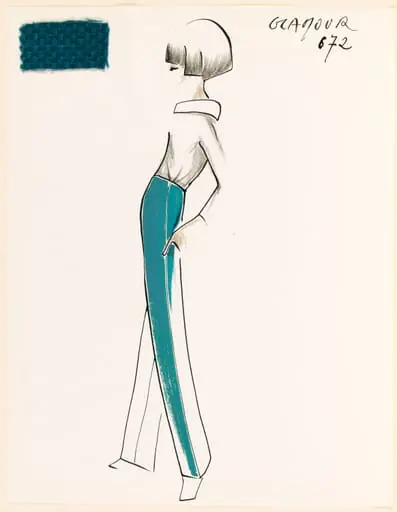 GLAMOUR
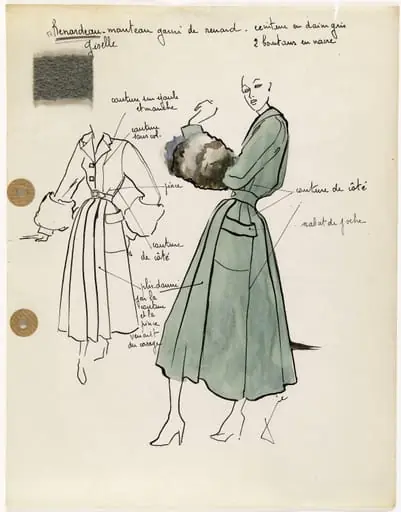 'Renardeau'
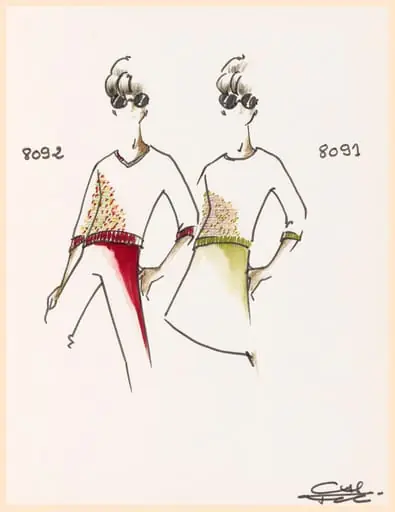 Pull-over à manches trois quarts et à encolure V à motifs multicolores, pantalon cerise et lunettes de soleil
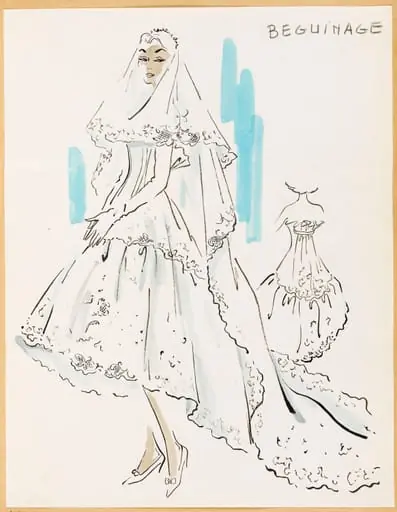 Béguinage