Artwork
'Nagne'
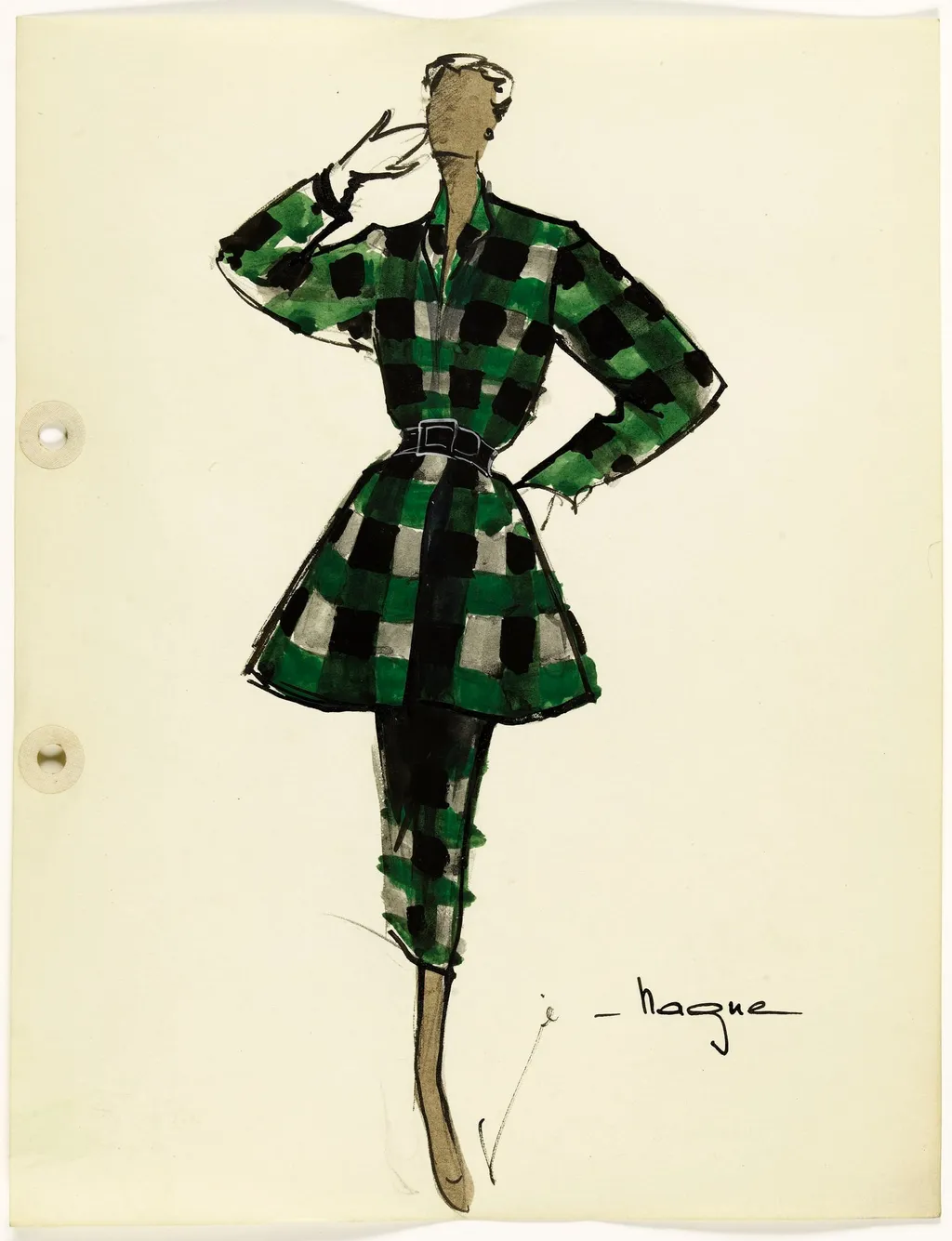
'Nagne' is a drawing by Marie-Louise Carven. It dates from 1951 and is held in the collection of the Palais Galliera - Musée de la Mode de la Ville de Paris.
About this work
Overview
The drawing, held by the Museum of Ethnography, reflects Carven’s approach to design: playful, accessible, and attuned to the petite silhouette.
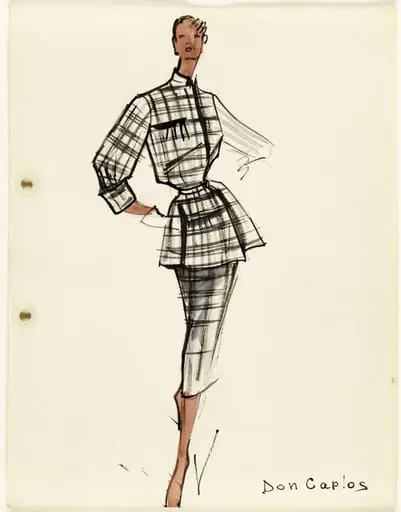
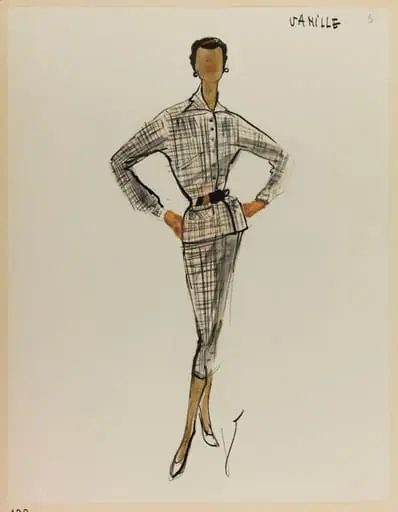
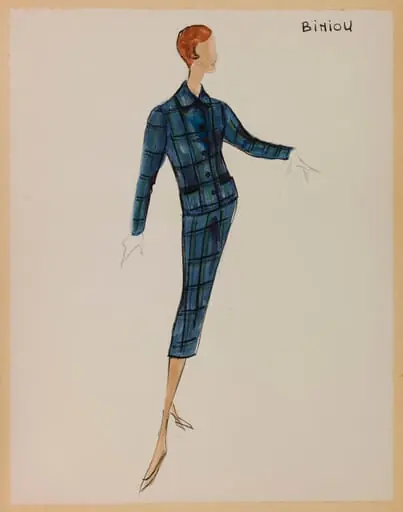
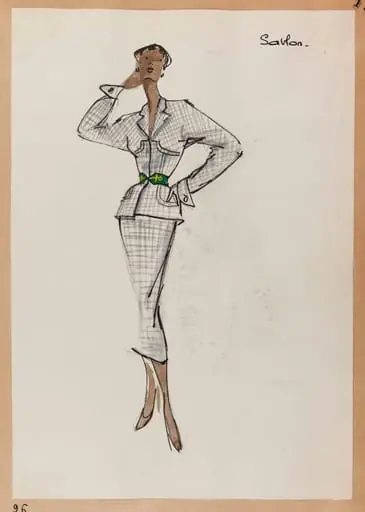
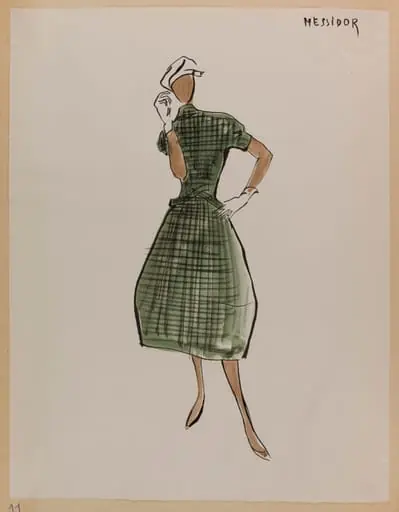
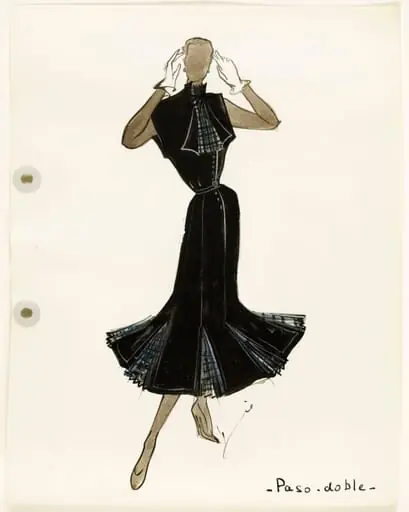
Nagne is a fashion sketch from circa 1951, attributed to Marie-Louise Carven, founder of the Parisian house Carven. Executed in ink and pencil, it captures a stylized female figure in a coordinated checkered ensemble. The drawing, held by the Museum of Ethnography, reflects Carven’s approach to design: playful, accessible, and attuned to the petite silhouette. Its informal execution suggests a working study rather than a finished presentation piece.
Subject & Meaning
The figure in Nagne stands with one hand on her hip, exuding casual confidence. Her outfit—green-and-black checkered jacket and skirt—evokes a youthful, sporty aesthetic, reminiscent of schoolwear or leisure attire. The small bag she holds reinforces a sense of everyday practicality. The title ‘Nagne’ may refer to the model or the design itself, hinting at Carven’s personal connection to her wearers and her interest in individual expression over rigid formality.
Technique & Style
The sketch employs loose, energetic brushwork with minimal pencil detailing to define features and folds. The bold, unrefined lines convey immediacy, typical of design studies meant to capture mood rather than precision. The checkered pattern is rendered with rhythmic simplicity, emphasizing its graphic impact. This technique aligns with Carven’s broader aesthetic: lightness, movement, and an avoidance of excessive ornamentation.
History & Provenance
Created around 1951, Nagne emerged during Carven’s early years as a pioneer in ready-to-wear fashion. The sketch entered the collection of the Museum of Ethnography, likely as part of a broader effort to document postwar French design. Its preservation underscores its value as a record of how couturiers transitioned from exclusive tailoring to mass-producible styles, bridging haute couture and emerging consumer culture.
Context
In the early 1950s, French fashion was redefining itself after wartime austerity. Carven stood apart by focusing on smaller frames and lightweight materials like cotton and lace. Nagne’s sporty checkered pattern reflects a broader cultural shift toward casual, active lifestyles among women. The design resonated with a generation seeking freedom and functionality, aligning with the rise of suburban living and leisure-oriented dress.
Legacy
Nagne exemplifies Carven’s role in democratizing fashion through accessible silhouettes and bold, wearable patterns. Her early adoption of prêt-à-porter influenced later designers who prioritized practicality without sacrificing style. The sketch remains a tangible artifact of how postwar women’s fashion moved away from formality toward personal expression, laying groundwork for modern ready-to-wear traditions.
Artist & collection
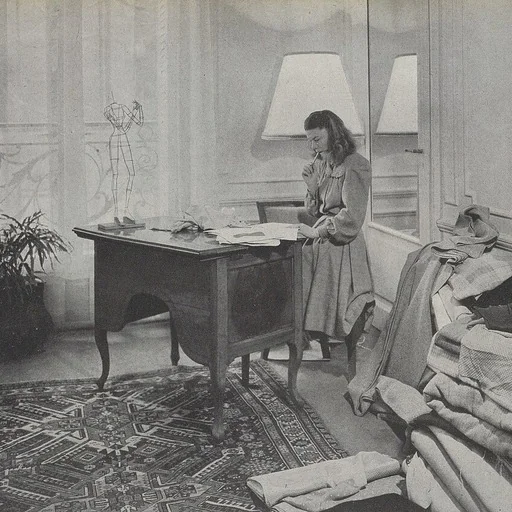
Artist
Marie-Louise Carven (31 August 1909 – 8 June 2015), born Carmen de Tommaso, was a French fashion designer who founded the house of Carven in 1945.
Museum
Palais Galliera - Musée de la Mode de la Ville de Paris
Continue through works from the same source collection.
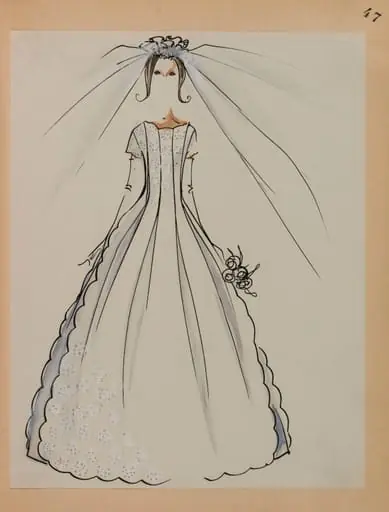 Robe de mariée festonnée et son voile
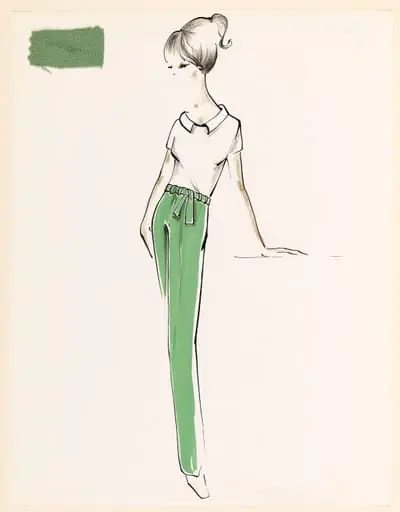 Haut blanc à manches courtes et pantalon vert à ceinture nouée
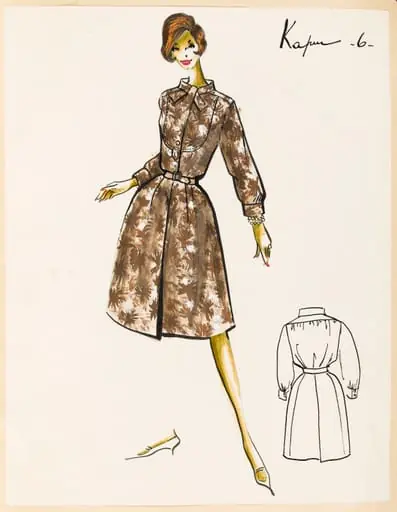 Kapur
Kapur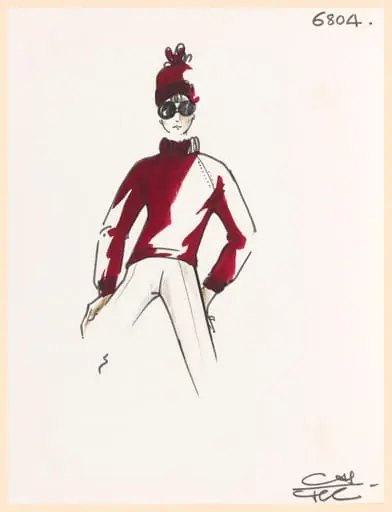 Pull-over à manches longues pourpre, bonnet assorti, pantalon et lunettes de soleil
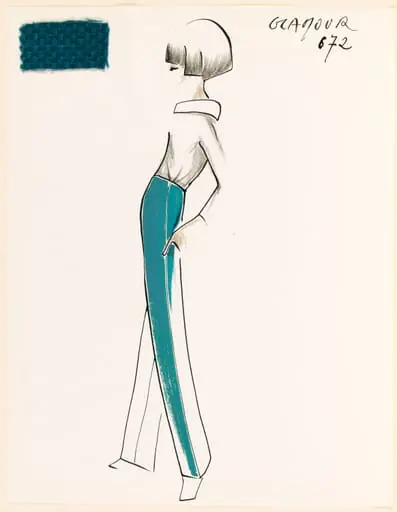 GLAMOUR
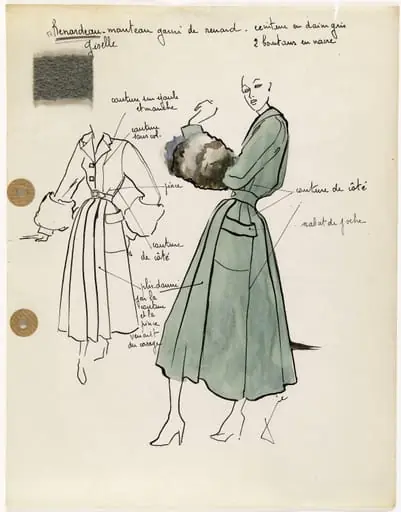 'Renardeau'
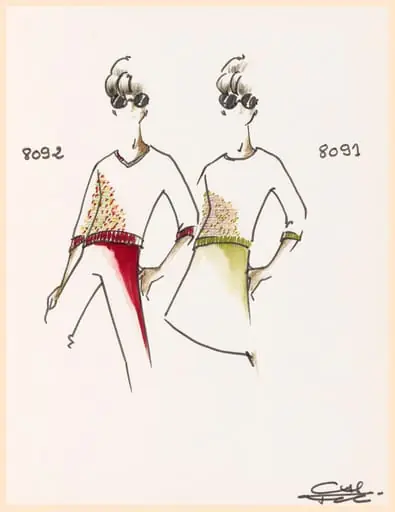 Pull-over à manches trois quarts et à encolure V à motifs multicolores, pantalon cerise et lunettes de soleil
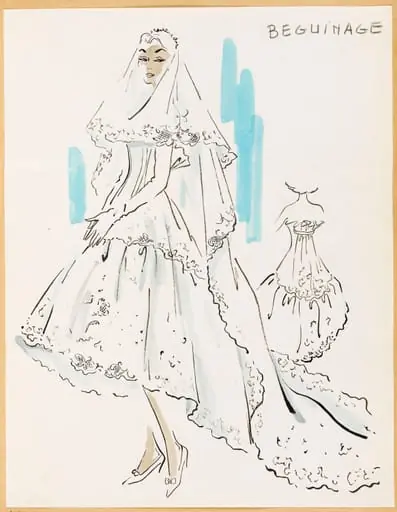 Béguinage