Artwork
Tantric Manuscript "Sangrahani Sutra"
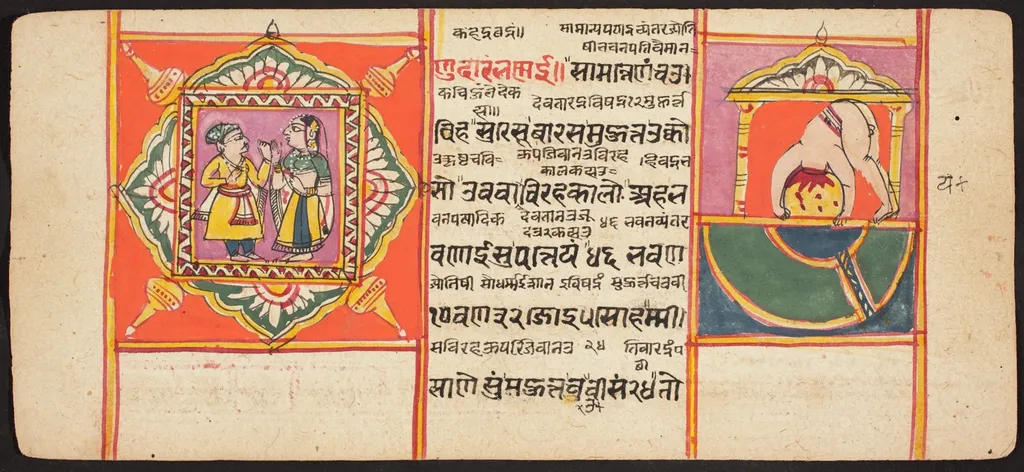
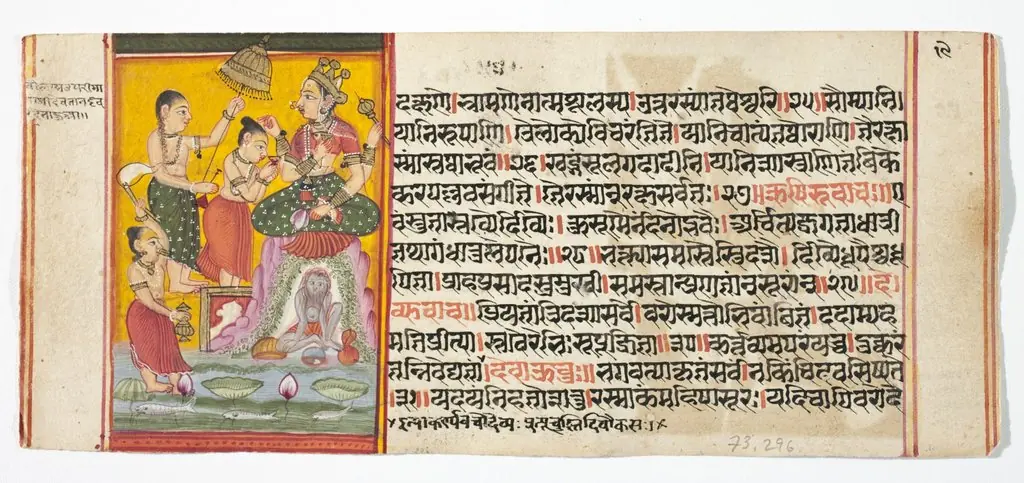
Tantric Manuscript "Sangrahani Sutra" is an unspecified painting by Unknown. It is held in the collection of the Detroit Institute of Arts. The work is a painted tantric manuscript titled “Sangrahani Sutra.
About this work
Overview
Within this square a purple rectangle contains two standing figures, each distinguished by the color of their robes—yellow on the left, green on the right.
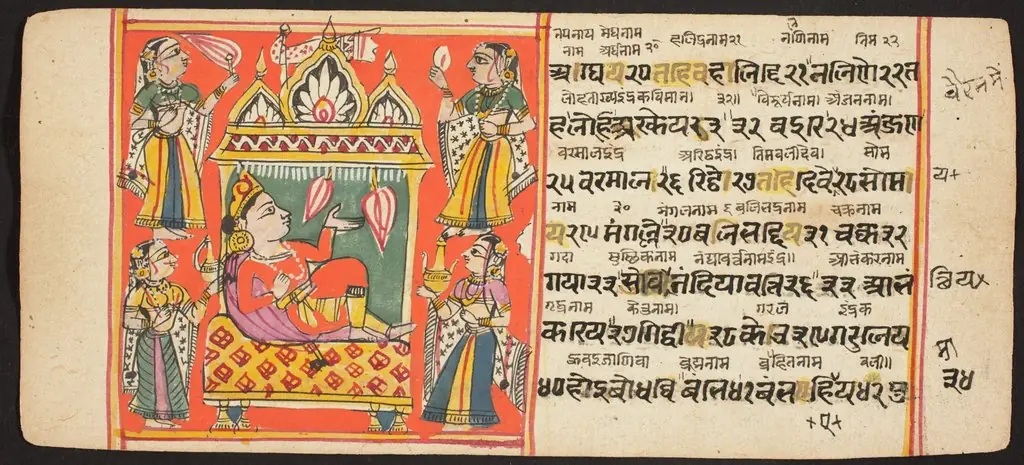
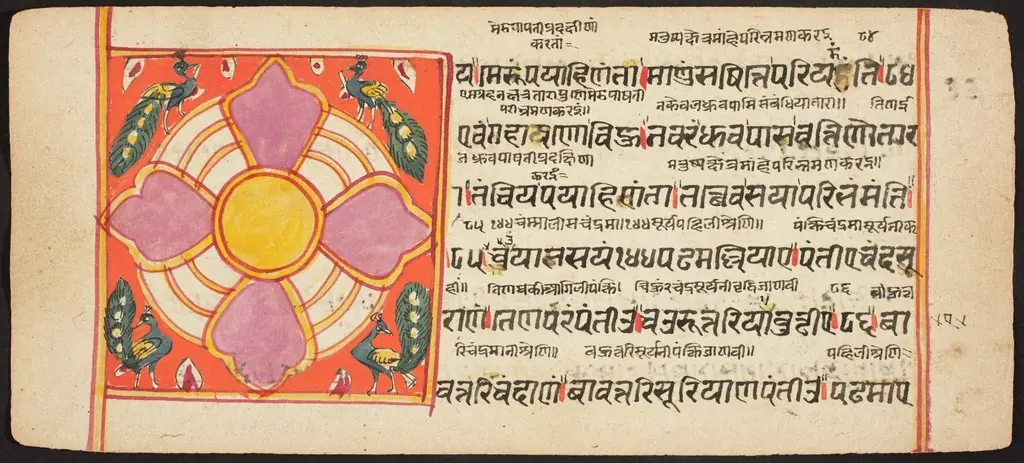
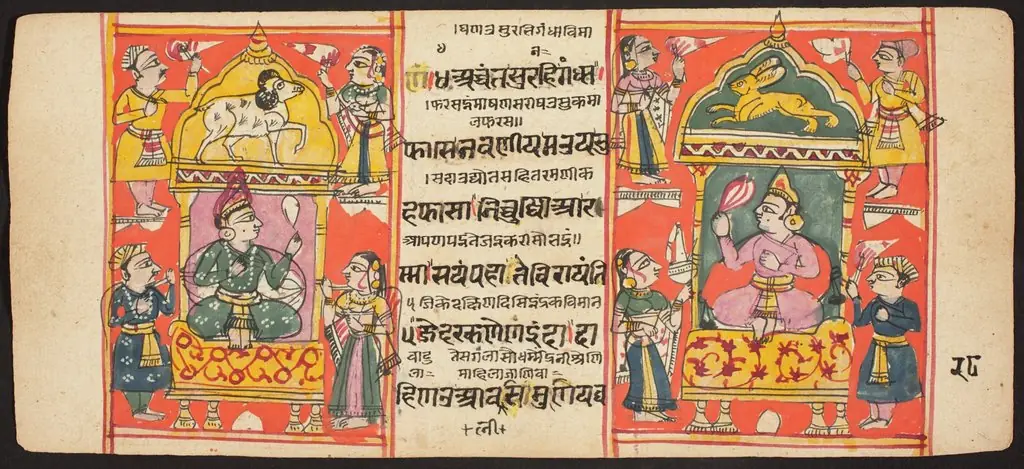
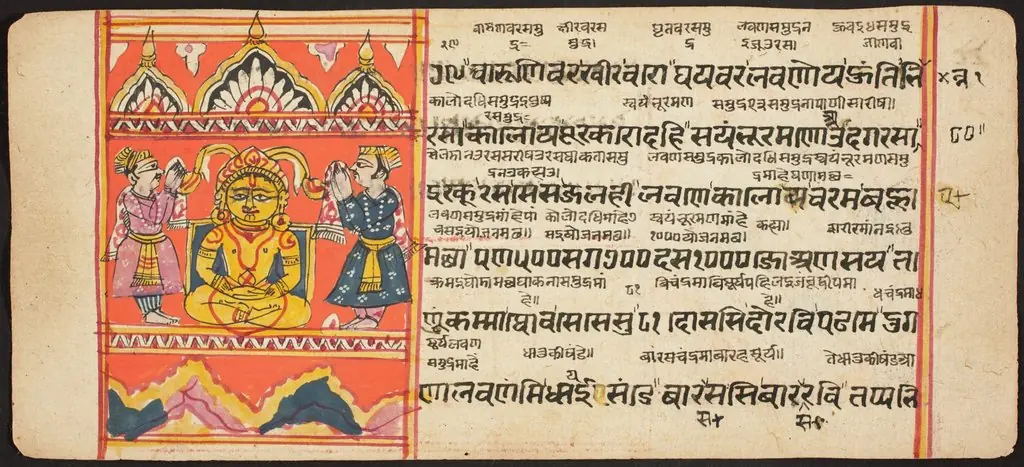
The work is a painted tantric manuscript titled “Sangrahani Sutra.” Its composition is organized around a central square set against a red field, framed by a green‑yellow border. Within this square a purple rectangle contains two standing figures, each distinguished by the color of their robes—yellow on the left, green on the right. A second square to the right shows a bent figure in red holding a yellow object. The background is a muted beige with lines of an unidentified script.
Subject & Meaning
The depicted figures are likely deities or ritual participants associated with the Sangrahani Sutra, a text used in tantric practice. The contrasting robe colors and the act of holding a yellow object may symbolize specific spiritual attributes or offerings, while the geometric framing underscores the manuscript’s instructional purpose.
Technique & Style
The painting employs flat, vivid pigments applied in geometric blocks, a hallmark of medieval Indian manuscript illumination. Bold outlines separate color fields, and the use of red, purple, yellow, green and beige creates a striking visual hierarchy. The script in the background is rendered in a fine, linear hand, suggesting a later addition or marginal commentary.
History & Provenance
The piece originates from a tradition of tantric manuscript production, though its precise date and place of creation are not recorded. The unknown script in the background hints at a regional language or esoteric notation, indicating the work may have circulated among specialized monastic communities.
Context
Tantric manuscripts such as this one were used as visual aids in ritual instruction, often accompanying oral recitation of sutras. The geometric layout reflects the pedagogical emphasis on order and symbolism prevalent in esoteric Buddhist art of the Indian subcontinent.
Legacy
While the specific manuscript remains obscure, its visual language contributes to the broader understanding of how tantric teachings were codified and transmitted through richly colored, diagrammatic art forms that blend textual and pictorial instruction.
Artist & collection

 Domestic Scene
 Giacomo and Cardinal Marco, investing Andrea, Abbot of San Zeno, with his Benefice
 The Nymph of Fontainebleau
 Portrait of a Woman
 Madonna and Child with Saints in the Enclosed Garden
 Venus and Minerva
 Family Group of Four on Sofa
 Wall painting from Room H of the Villa of P. Fannius Synistor at Boscoreale
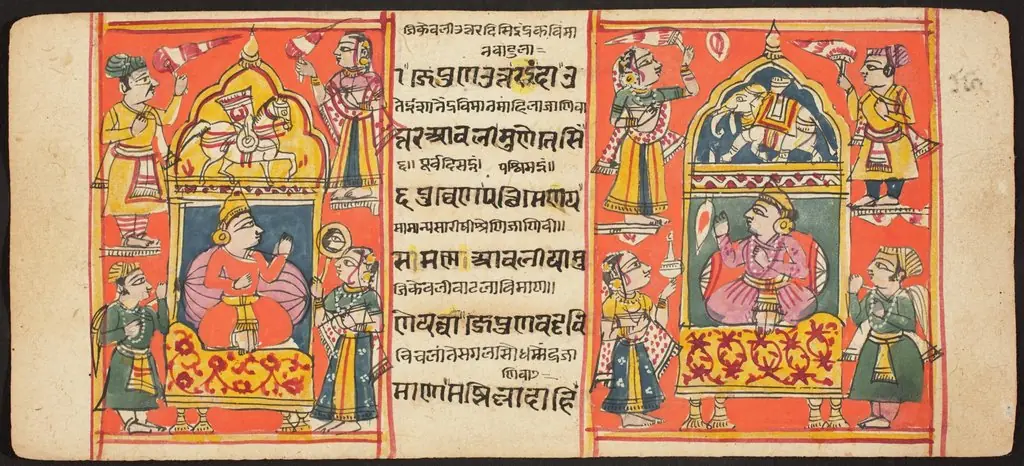 Tantric Manuscript "Sangrahani Sutra"
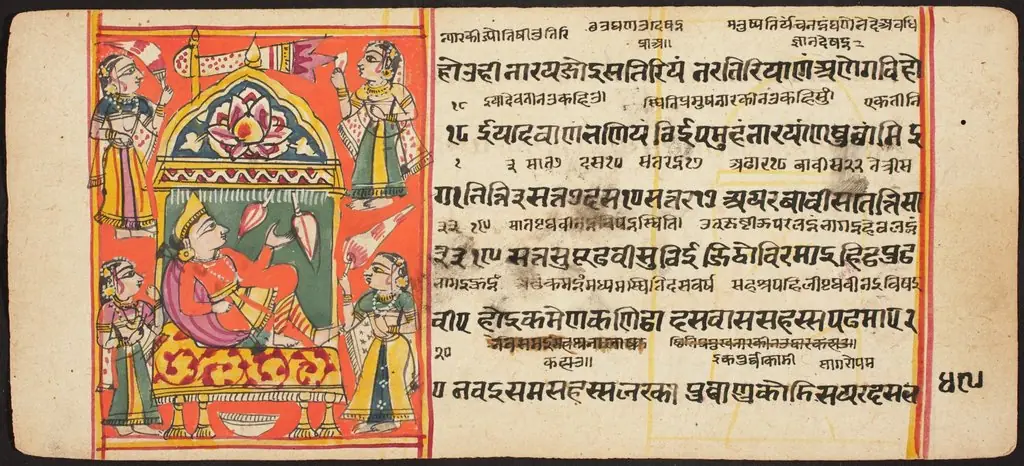 Tantric Manuscript "Sangrahani Sutra"
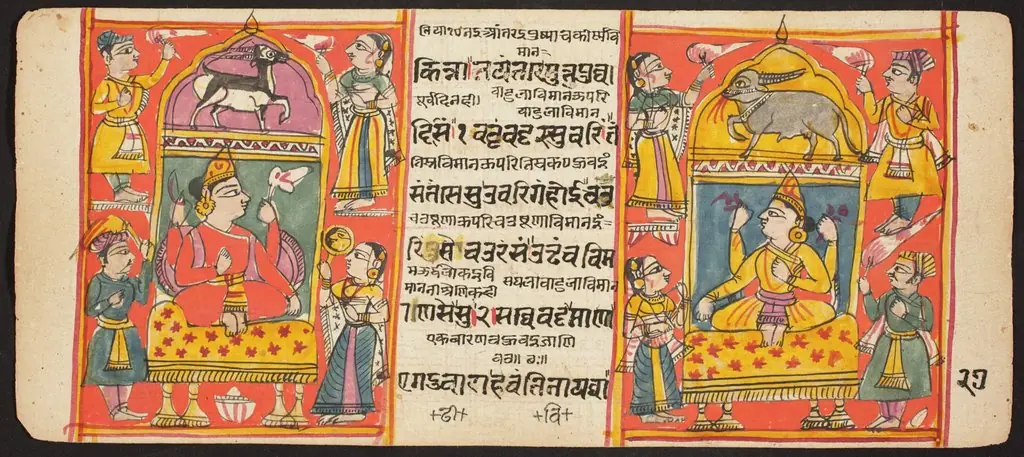 Tantric Manuscript "Sangrahani Sutra"
 Tantric Manuscript "Sangrahani Sutra"
 Tantric Manuscript "Sangrahani Sutra"
 Tantric Manuscript "Sangrahani Sutra"
 Tantric Manuscript "Sangrahani Sutra"
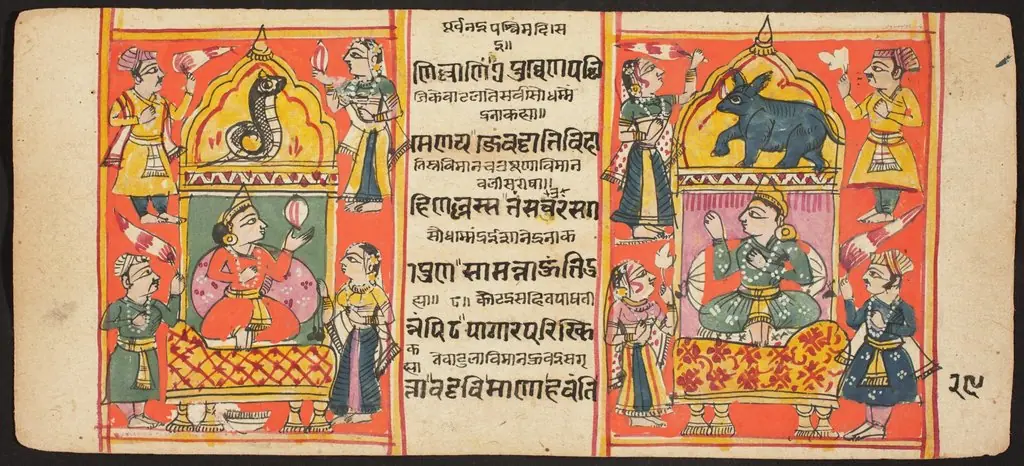 Tantric Manuscript "Sangrahani Sutra"
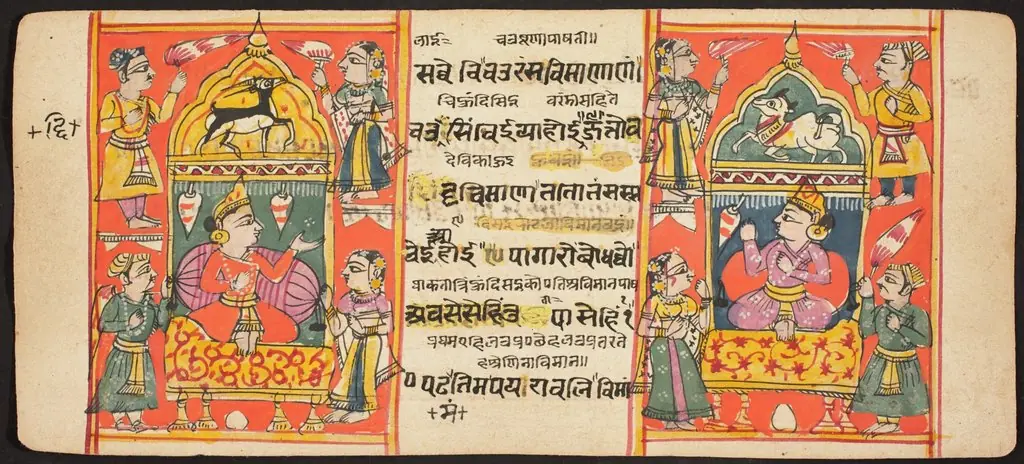 Tantric Manuscript "Sangrahani Sutra"
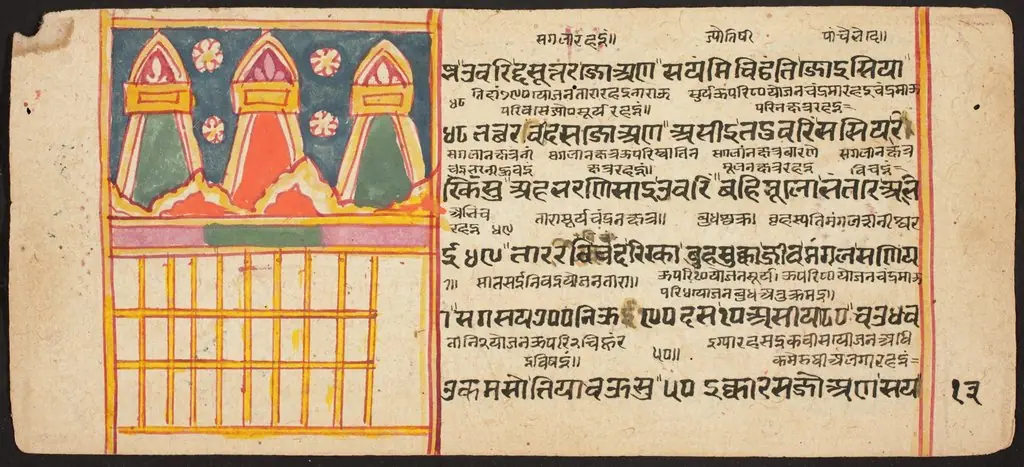 Tantric Manuscript "Sangrahani Sutra"
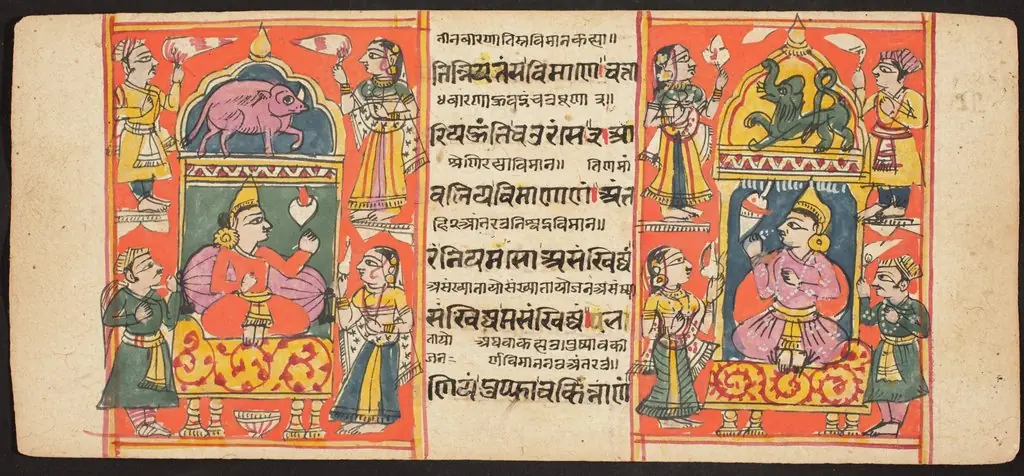 Tantric Manuscript "Sangrahani Sutra"
 Legend of Durga