Artwork
Tantric Manuscript "Sangrahani Sutra"
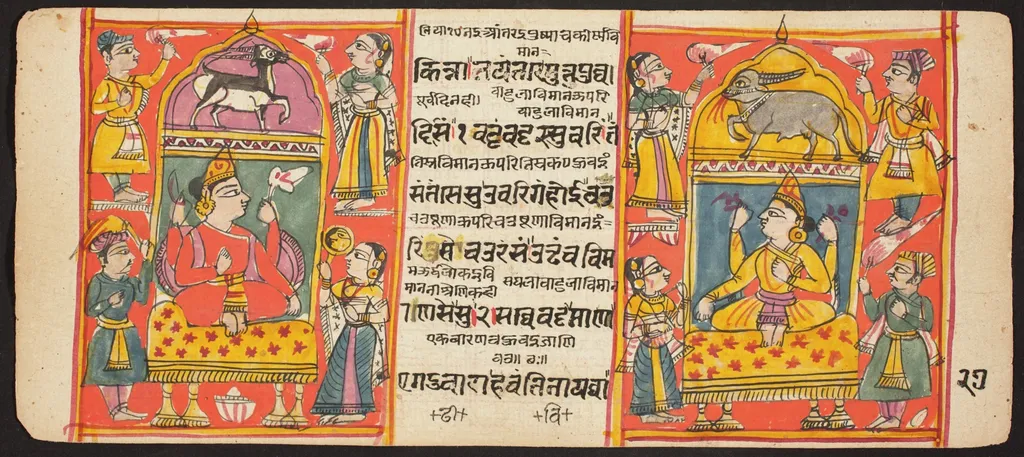
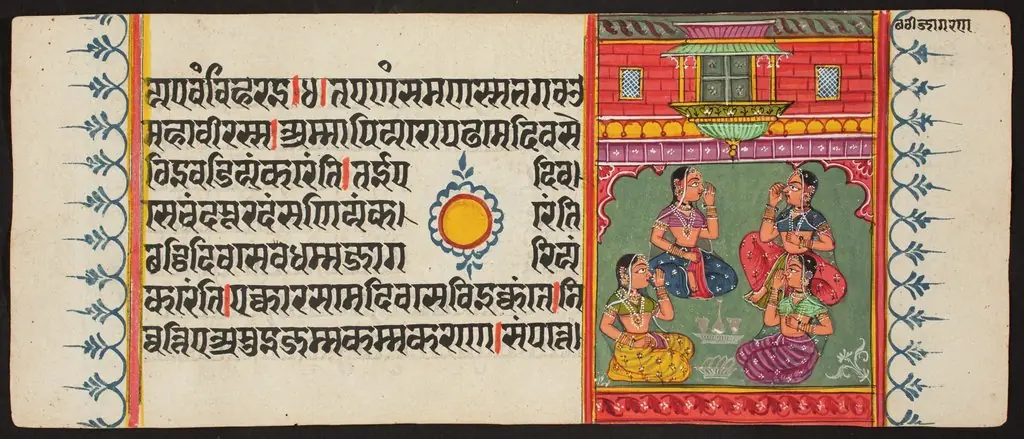
Tantric Manuscript "Sangrahani Sutra" is an unspecified painting by Unknown. It is held in the collection of the Detroit Institute of Arts. This illustrated manuscript page originates from a Tantric Buddhist text known as the Sangrahani Sutra.
About this work
Overview
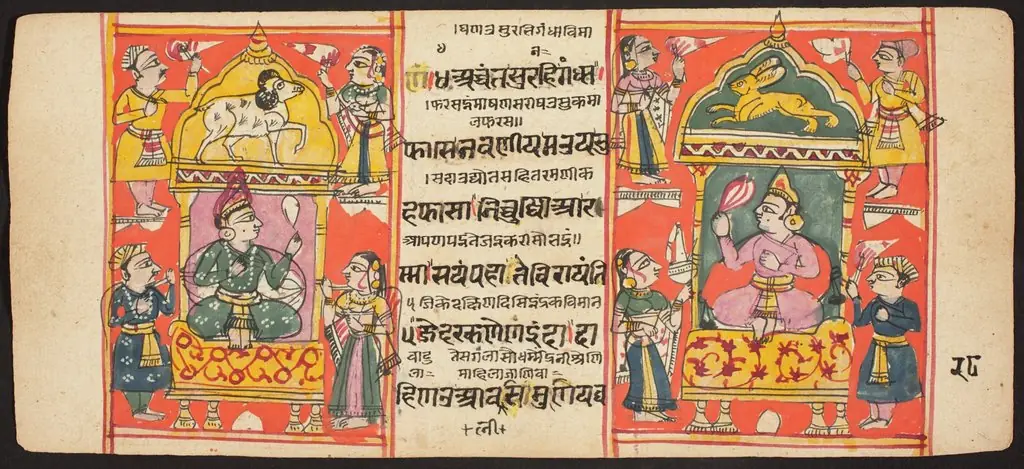
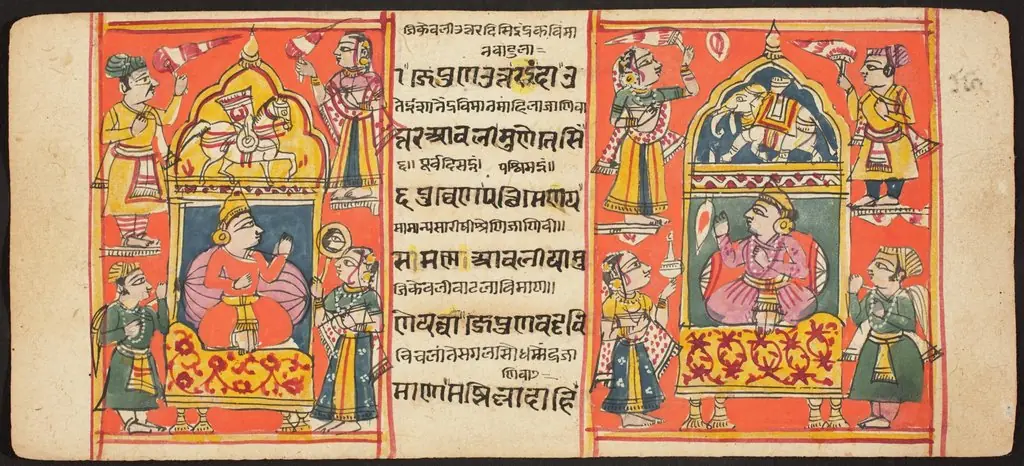
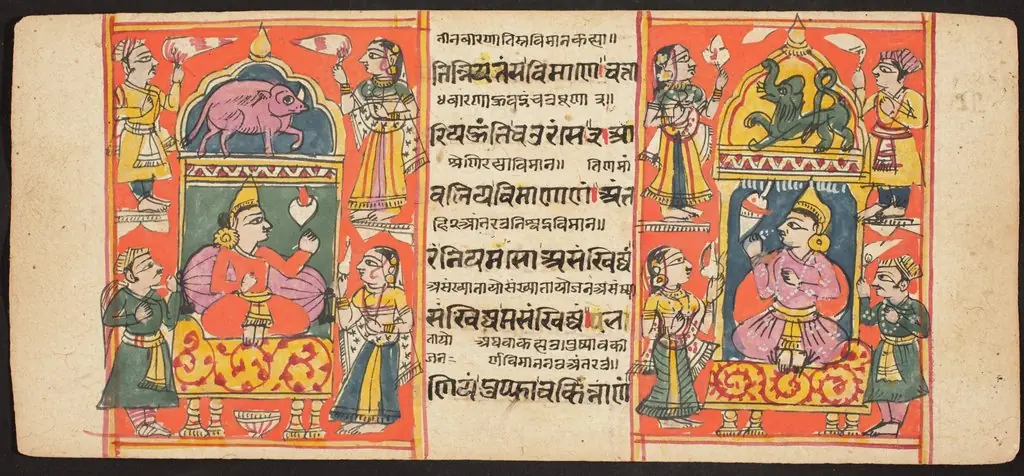
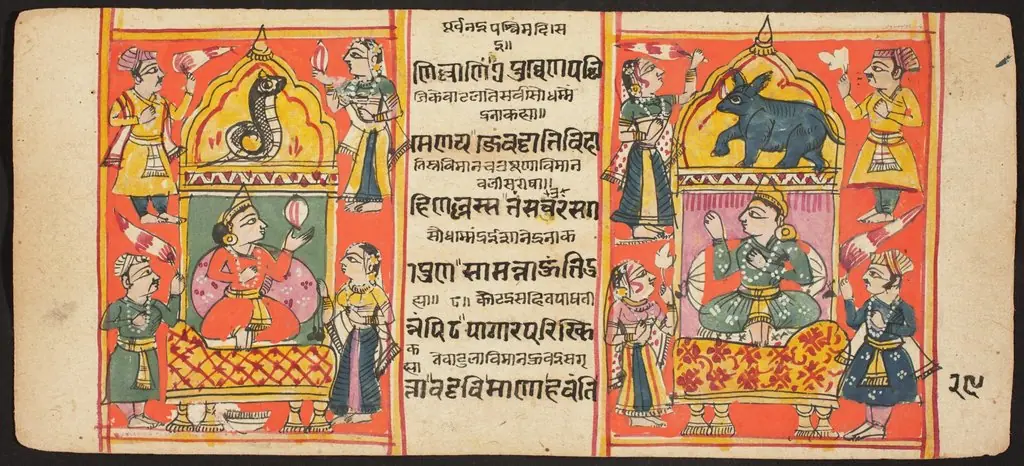
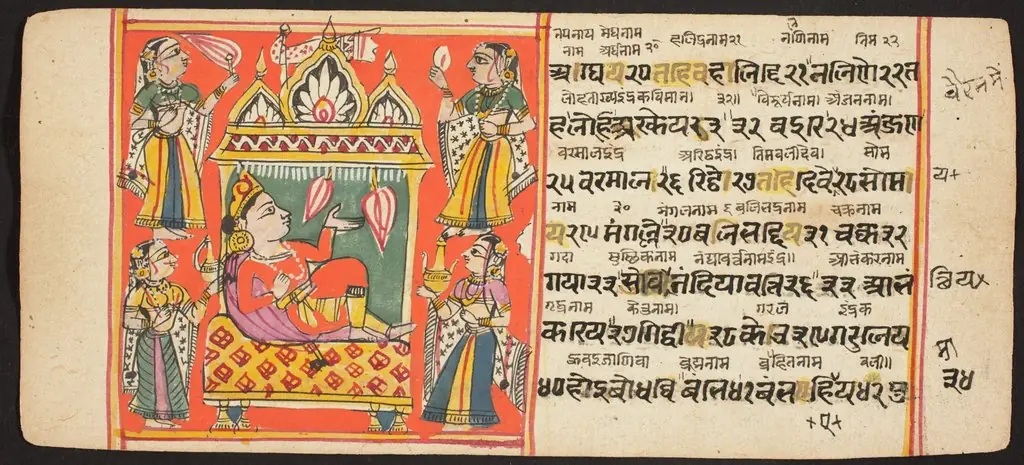
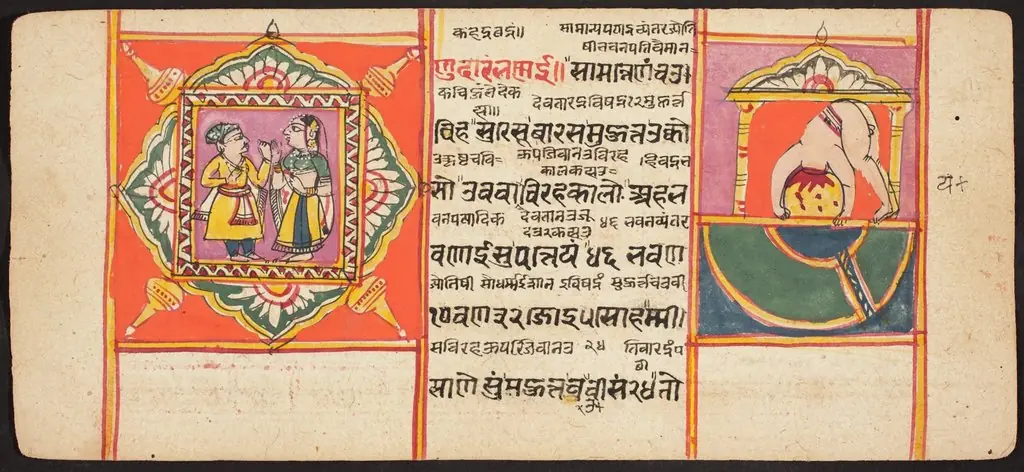
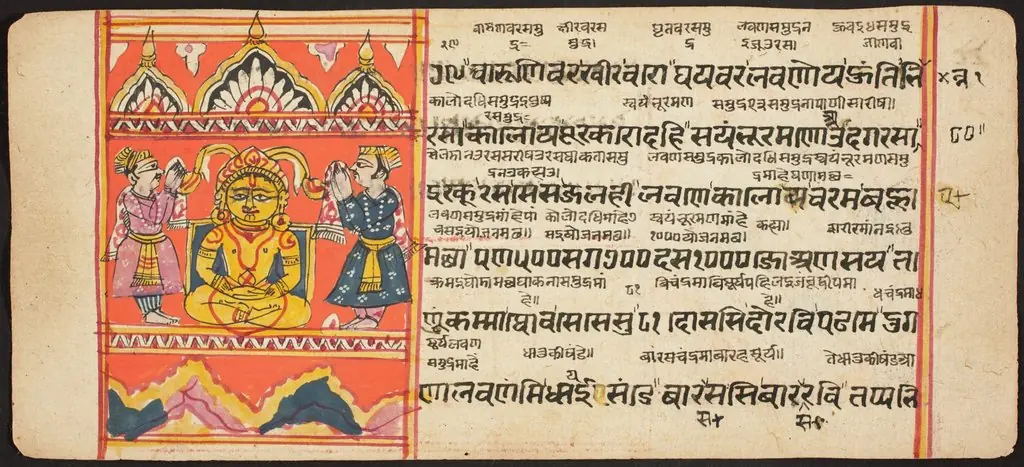
This illustrated manuscript page originates from a Tantric Buddhist text known as the Sangrahani Sutra. It is composed of three distinct horizontal bands, each featuring symbolic figures and ornamental elements. The composition emphasizes ritual iconography through vivid pigments and intricate detailing, typical of devotional manuscripts produced in medieval India.
Subject & Meaning
The left panel depicts a male figure in red beneath a cow, while the right shows a man in yellow below a bull. These pairings likely represent tantric deities or spiritual principles associated with animal vahanas, or mounts. The central band contains script in an undeciphered or esoteric script, suggesting the page served a liturgical or meditative function rather than a narrative one.
Technique & Style
The painting employs mineral pigments on palm leaf or paper, with fine brushwork rendering elaborate jewelry, floral adornments on the animals, and richly patterned textiles. The warm golden background enhances the luminous quality of the figures, reflecting the use of gold leaf and earth tones common in regional manuscript traditions of the time.
History & Provenance
Produced in India between the 12th and 15th centuries, such manuscripts were used by esoteric Buddhist communities for ritual study. The Detroit Institute of Arts acquired this fragment as part of a broader collection of South Asian religious art, though its exact origin and prior ownership remain undocumented.
Context
Tantric Buddhist manuscripts like this one were created for private devotion, often within monastic or lay practitioner circles. They combined visual symbolism with sacred texts to aid meditation and ritual practice. The inclusion of animals adorned with ornaments reflects the integration of local cultural motifs into esoteric religious iconography.
Legacy
This fragment contributes to the understanding of how visual language functioned within non-literal religious traditions. Though the script remains undeciphered, its presence underscores the importance of sacred writing as a spiritual object, not merely a linguistic one. It continues to inform scholarly study of South Asian manuscript culture.
Artist & collection

 Domestic Scene
 Giacomo and Cardinal Marco, investing Andrea, Abbot of San Zeno, with his Benefice
 The Nymph of Fontainebleau
 Portrait of a Woman
 Madonna and Child with Saints in the Enclosed Garden
 Venus and Minerva
 Family Group of Four on Sofa
 Wall painting from Room H of the Villa of P. Fannius Synistor at Boscoreale
 Tantric Manuscript "Sangrahani Sutra"
 Tantric Manuscript "Sangrahani Sutra"
 Tantric Manuscript "Sangrahani Sutra"
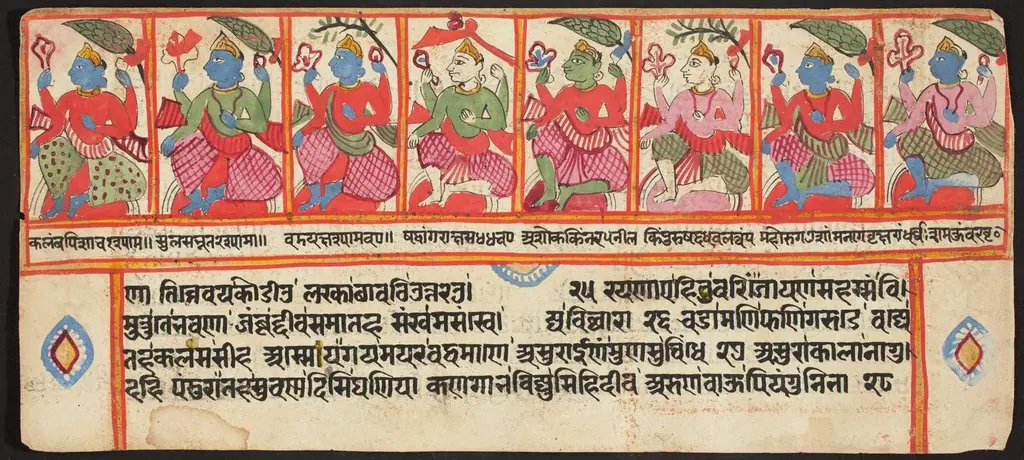 Tantric Manuscript "Sangrahani Sutra"
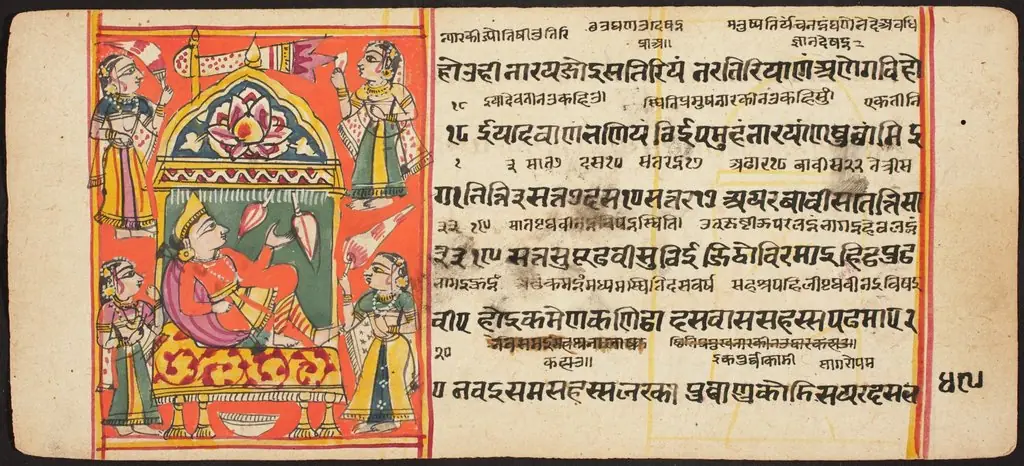 Tantric Manuscript "Sangrahani Sutra"
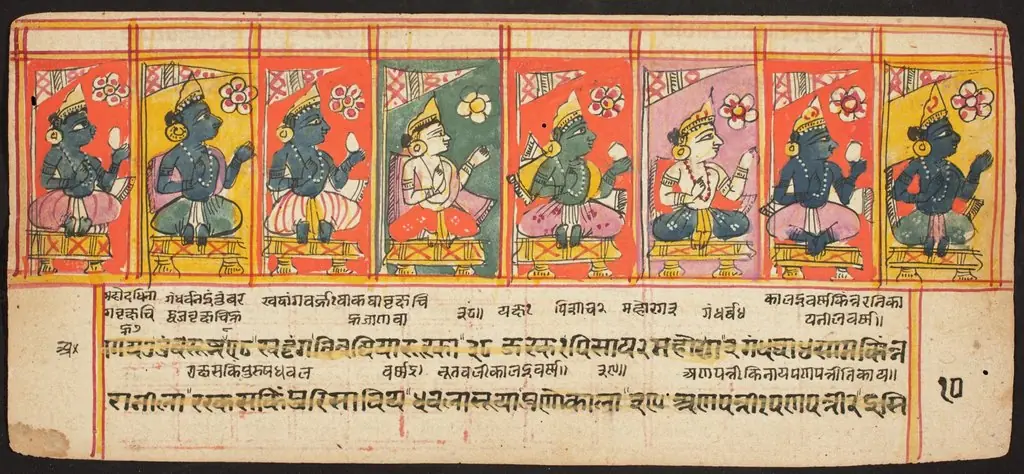 Tantric Manuscript "Sangrahani Sutra"
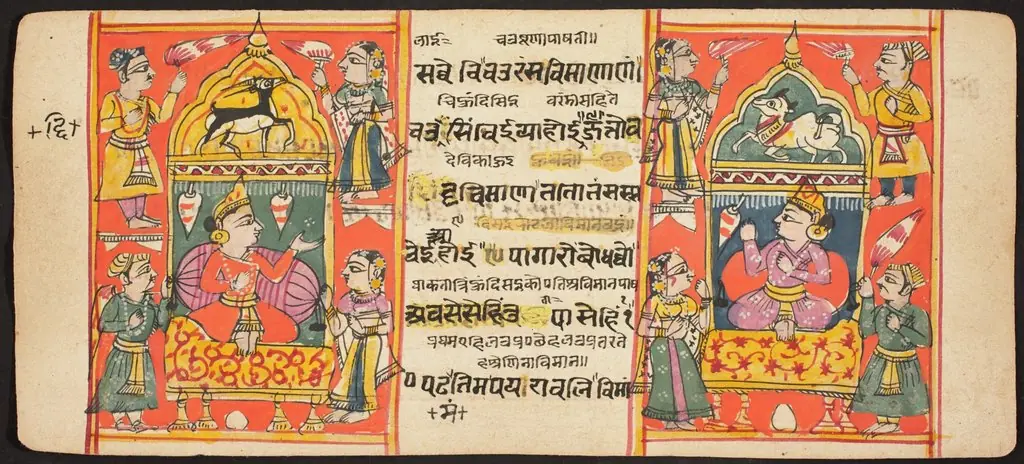 Tantric Manuscript "Sangrahani Sutra"
 Tantric Manuscript "Sangrahani Sutra"
 Tantric Manuscript "Sangrahani Sutra"
 Tantric Manuscript "Sangrahani Sutra"
 Tantric Manuscript "Sangrahani Sutra"
 Kalpa Sutra