Artwork
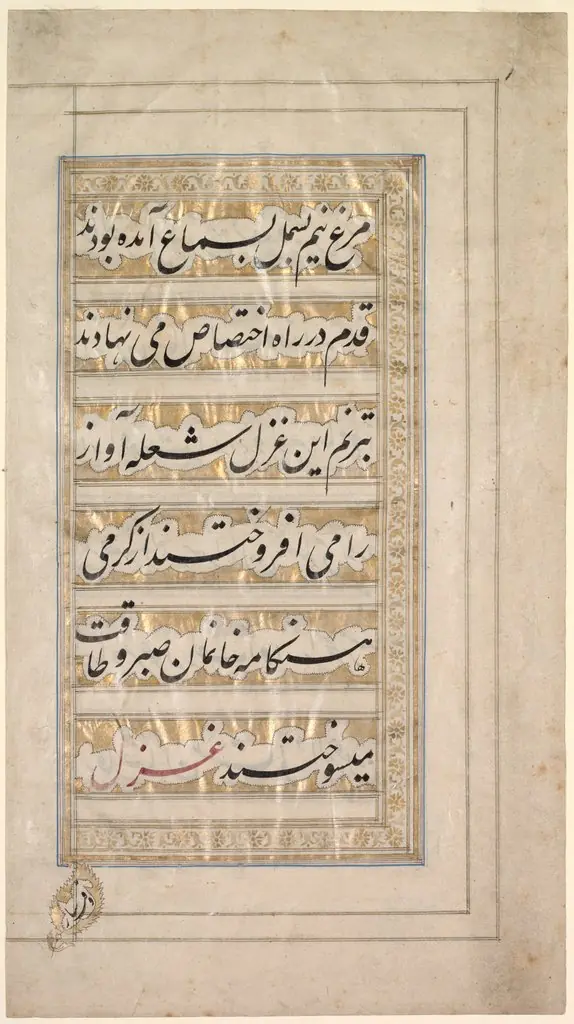
Calligraphy (verso)
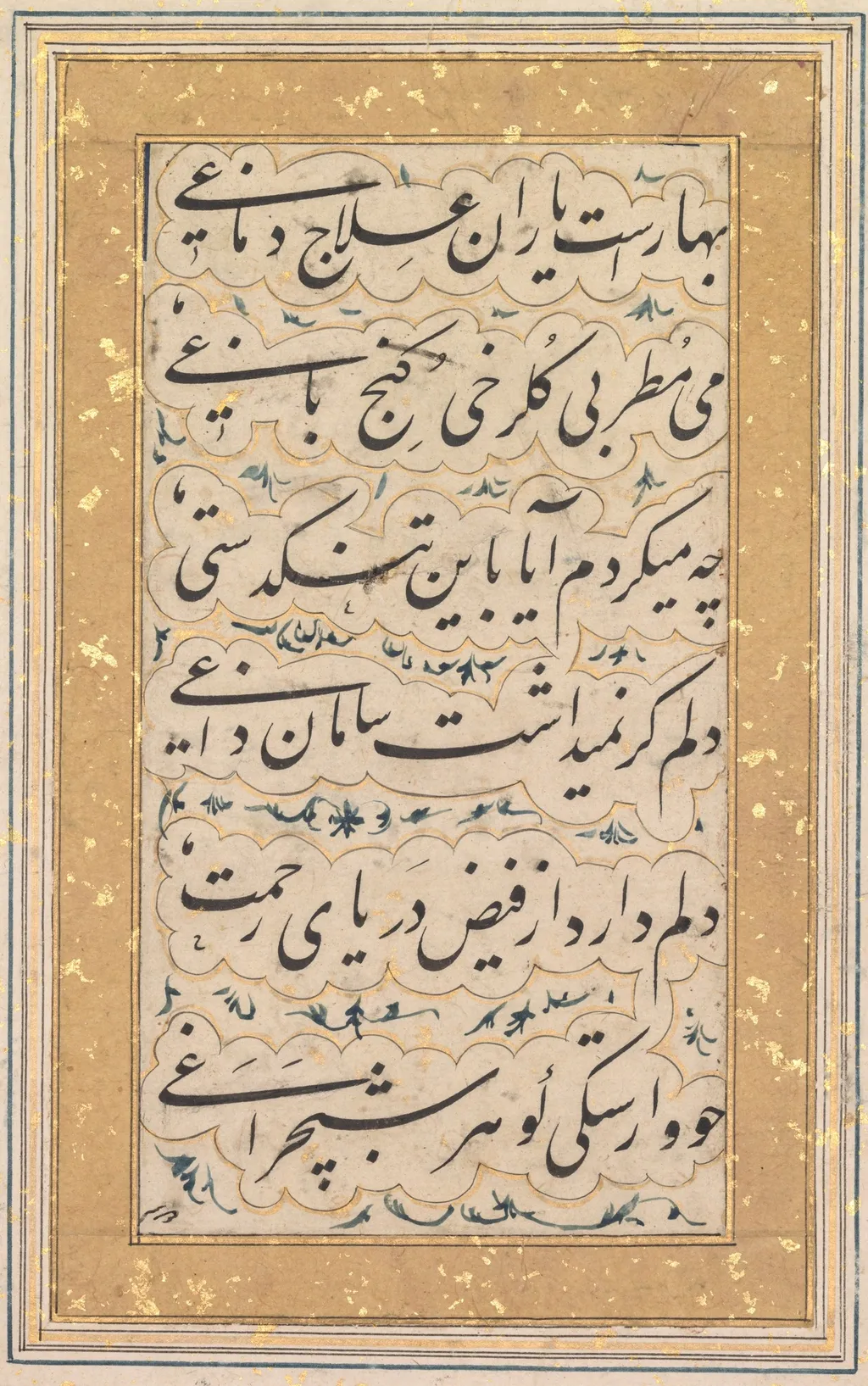
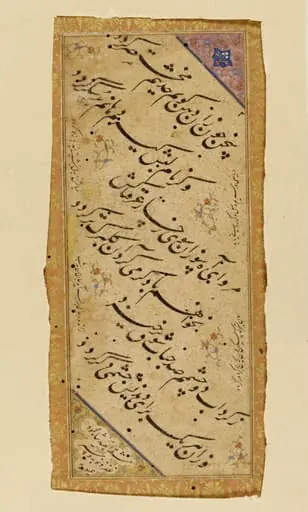
Calligraphy (verso) is an unspecified painting by Unknown. It dates from 1650 and is held in the collection of the Cleveland Museum of Art.
About this work
Overview
The work titled “Calligraphy (verso)” consists of a single sheet of paper bearing black ink script arranged in orderly, flowing lines. Between the characters are scattered blue and gold dots, and the perimeter of the sheet is edged with a narrow gold line. The paper shows signs of age, including brown spotting and a muted background tone.
Subject & Meaning
The composition is purely textual, presenting a calligraphic passage whose purpose was likely functional rather than decorative, serving as part of a larger manuscript or book. The interspersed colored dots may have acted as visual guides for reading or as modest embellishments typical of certain manuscript traditions.
Technique & Style
The calligrapher employed a fine brush or pen to lay down black ink in smooth, continuous strokes, achieving a uniform line quality. Small pigment particles in blue and gold were applied as discrete marks between letters, while a thin gold leaf or pigment was used to frame the sheet’s edge, indicating a careful, hand‑crafted approach.
Context
Such script sheets were commonly used on the verso side of illuminated pages, providing space for marginalia, glosses, or supplemental text. The inclusion of colored dots and a gold border reflects aesthetic conventions found in medieval and early modern manuscript production, where modest ornamentation accompanied the primary text.
History & Provenance
The piece is held by the Cleveland Museum of Art, though its precise origin, date, and previous ownership are not detailed in the available information. The aged appearance of the paper suggests it was created several centuries ago, likely within a cultural context that valued handwritten documentation.
Artist & collection

 Domestic Scene
 Giacomo and Cardinal Marco, investing Andrea, Abbot of San Zeno, with his Benefice
 The Nymph of Fontainebleau
 Portrait of a Woman
 Madonna and Child with Saints in the Enclosed Garden
 Venus and Minerva
 Family Group of Four on Sofa
 Wall painting from Room H of the Villa of P. Fannius Synistor at Boscoreale
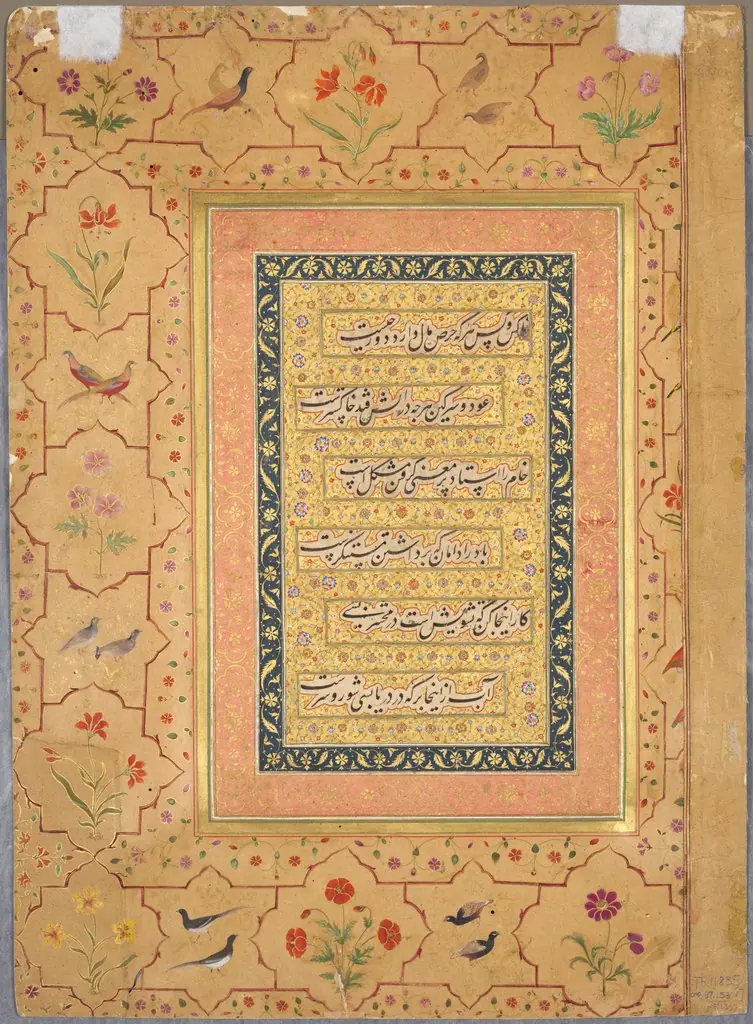 Page from the Late Shah Jahan Album: Calligraphy Framed by an Ornamental Border with Poppies and Pairs of Birds (verso)
 Calligraphy (verso)
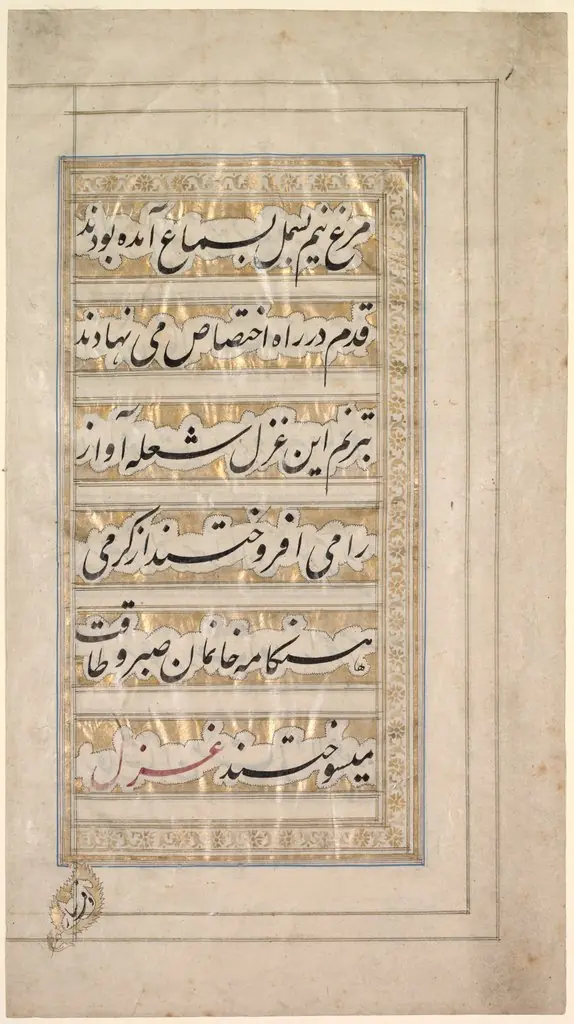 Page from the Poem of Beauty and Love
 Page from the Poem of Beauty and Love
 Illuminated page (verso), from a Panj Ganj (Five Treasures) of Abd al- Rahman Jami (Persian, 1414–1492) with two Persian masnavis: Yusuf va Zulaykha (Joseph and Zulaykha) and Khirad-nama-i Iskandari (Alexander’s Book of Wisdom)
 Illuminated page (verso), from a Panj Ganj (Five Treasures) of Abd al- Rahman Jami (Persian, 1414–1492) with two Persian masnavis: Yusuf va Zulaykha (Joseph and Zulaykha) and Khirad-nama-i Iskandari (Alexander’s Book of Wisdom)
 Page from the Poem of Beauty and Love
 Page from a Panj Ganj (Five Treasures) of Abd al-Rahman Jami (Persian, 1414–1492), with two Persian
masnavis: Yusuf va Zulaykha (Joseph and Zulaykha) and Subhat al-abrar (Rosary of the Righteous) (verso)
Page from a Panj Ganj (Five Treasures) of Abd al-Rahman Jami (Persian, 1414–1492), with two Persian
masnavis: Yusuf va Zulaykha (Joseph and Zulaykha) and Subhat al-abrar (Rosary of the Righteous) (verso)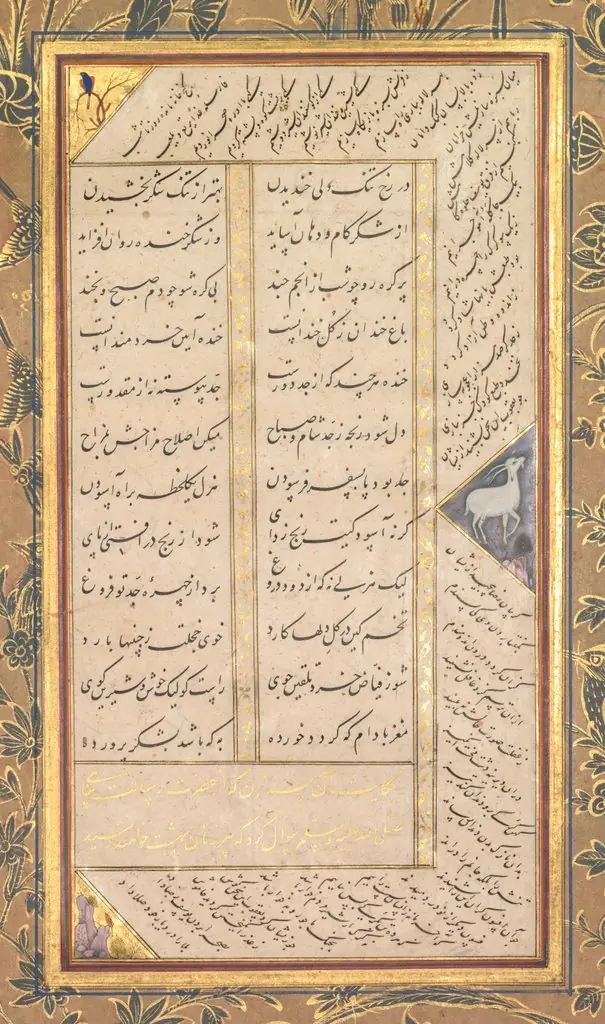 Page from a Panj Ganj (Five Treasures) of Abd al-Rahman Jami (Persian, 1414–1492), with two Persian masnavis: Yusuf va Zulaykha (Joseph and Zulaykha) and Subhat al-abrar (Rosary of the Righteous) (verso)
 Untitled