Artwork
Illuminated page (verso), from a Panj Ganj (Five Treasures) of Abd al- Rahman Jami (Persian, 1414–1492) with two Persian masnavis: Yusuf va Zulaykha (Joseph and Zulaykha) and Khirad-nama-i Iskandari (Alexander’s Book of Wisdom)
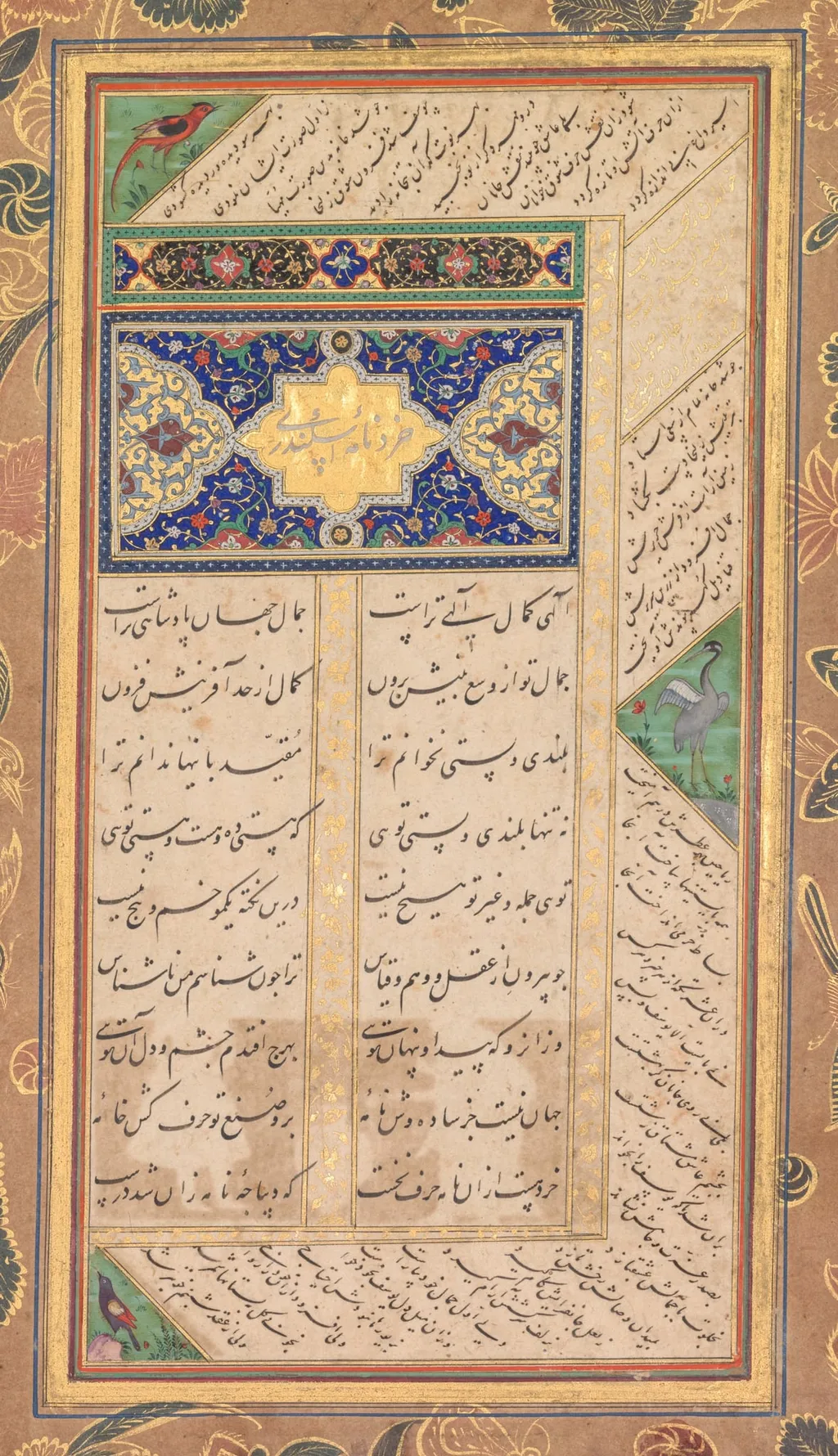
Illuminated page (verso), from a Panj Ganj (Five Treasures) of Abd al- Rahman Jami (Persian, 1414–1492) with two Persian masnavis: Yusuf va Zulaykha (Joseph and Zulaykha) and Khirad-nama-i Iskandari (Alexander’s Book of Wisdom) is an unspecified painting by the Baroque artist Mushfiq. It dates from 1605 and is held in the collection of the Cleveland Museum of Art. This illuminated page is from a manuscript of Abd al-Rahman Jami's Panj Ganj, a collection of five narrative poems.
About this work
Overview
This illuminated page is from a manuscript of Abd al-Rahman Jami's Panj Ganj, a collection of five narrative poems. The page features Persian text and intricate designs.
Subject & Meaning
The text on this page describes Zulaykha's attempts to seduce Joseph, symbolizing the mystical love of an imperfect devotee for God. The poem conveys that with patience and virtuous actions, unification with the divine is achievable.
Technique & Style
The page is decorated with colorful designs and features text written in a decorative style, with verses arranged diagonally in the margins.
Context
The Panj Ganj is a collection of five narrative poems by Jami, including Yusuf va Zulaykha and Khirad-nama-i Iskandari, which begins on this page.
Artist & collection
Artist
Mushfiq was a sub-imperial Mughal painter who worked in the atelier of Abd-ur-Rahim Khan-i-Khanan (also called Abdul Rahim Khan-I-Khana), commander-in-chief of the Mughal army in the late 16th/early 17th century.

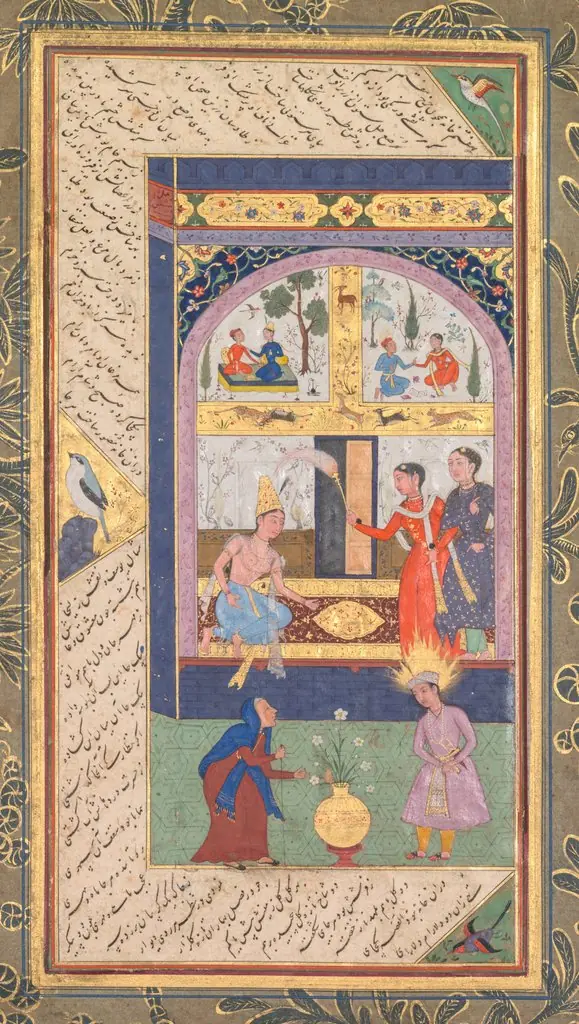 Zulaykha in her palace and as an elderly woman with Joseph (recto), from a Panj Ganj (Five Treasures) of Abd al- Rahman Jami (Persian, 1414–1492)
 Zulaykha in her palace and as an old woman with Joseph, from a Panj Ganj (Five Treasures) of Abd al-Rahman Jami (Persian, 1414–1492); verso from a Panj Ganj of Abd al-Rahman Jami (Persian, 1414–1492), with two masnavis: Yusuf va Zulaykha (Joseph and Zulaykha) and Khirad-nama-i Iskandari (Alexander’s Book of Wisdom)
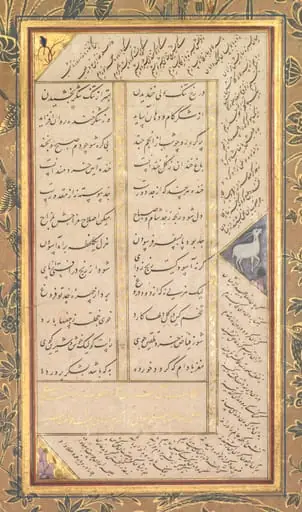 Page from a Panj Ganj (Five Treasures) of Abd al-Rahman Jami (Persian, 1414–1492), with two Persian
masnavis: Yusuf va Zulaykha (Joseph and Zulaykha) and Subhat al-abrar (Rosary of the Righteous) (verso)
Page from a Panj Ganj (Five Treasures) of Abd al-Rahman Jami (Persian, 1414–1492), with two Persian
masnavis: Yusuf va Zulaykha (Joseph and Zulaykha) and Subhat al-abrar (Rosary of the Righteous) (verso)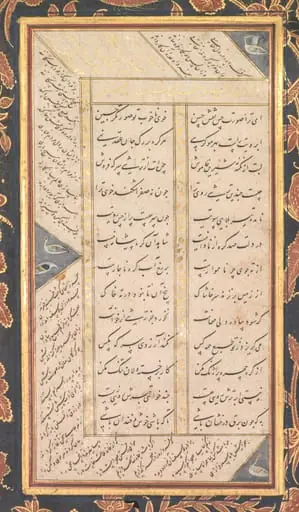 Folio B: Folio from the "Five Treasures" (Panj Ganj) of Jami (recto)
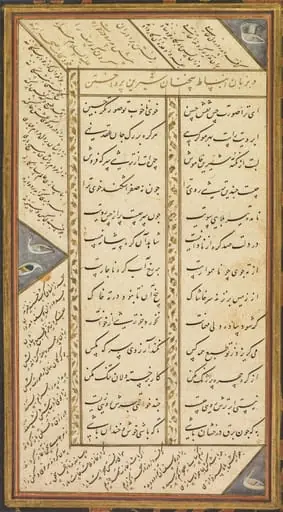 Page from the Panj Ganj (Five Treasures) of Abd al-Rahman Jami (Persian, 1414–1492), with two Persian masnavis (narrative poems): Yusuf va Zulaykha (Joseph and Zulaykha) and Subhat al-abrar (Rosary of the Righteous)
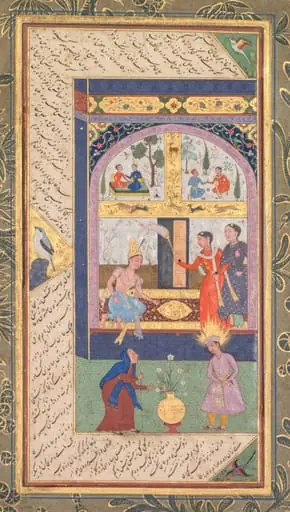 Zulaykha in her palace and as an elderly woman with Joseph (recto), from a Panj Ganj (Five Treasures) of Abd al- Rahman Jami (Persian, 1414–1492)
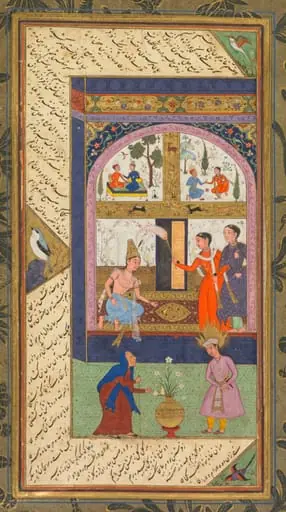 Folios A and B from the "Five Treasures" (Panj Ganj) of Jami
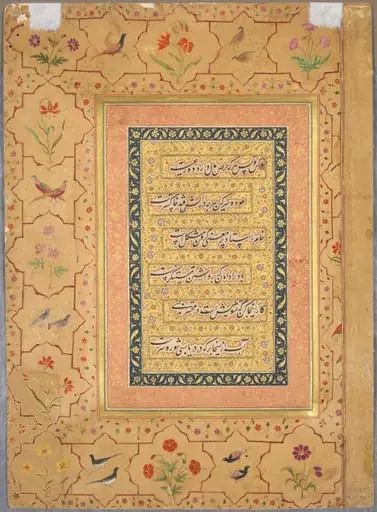 Calligraphy framed by an ornamental border with poppies and pairs of birds, from the Late Shah Jahan Album (verso)
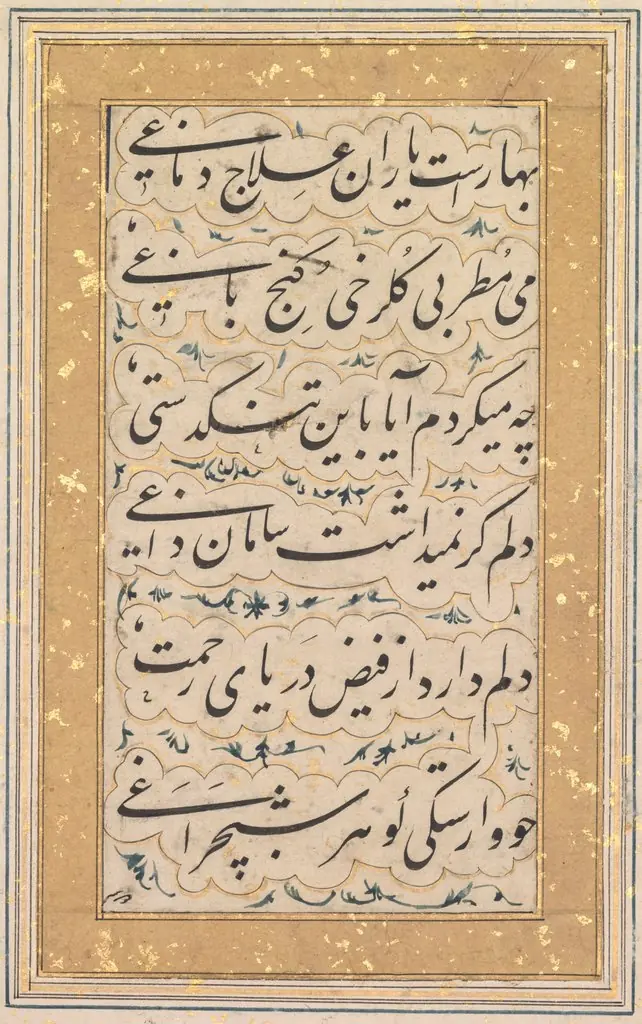 Calligraphy (verso)
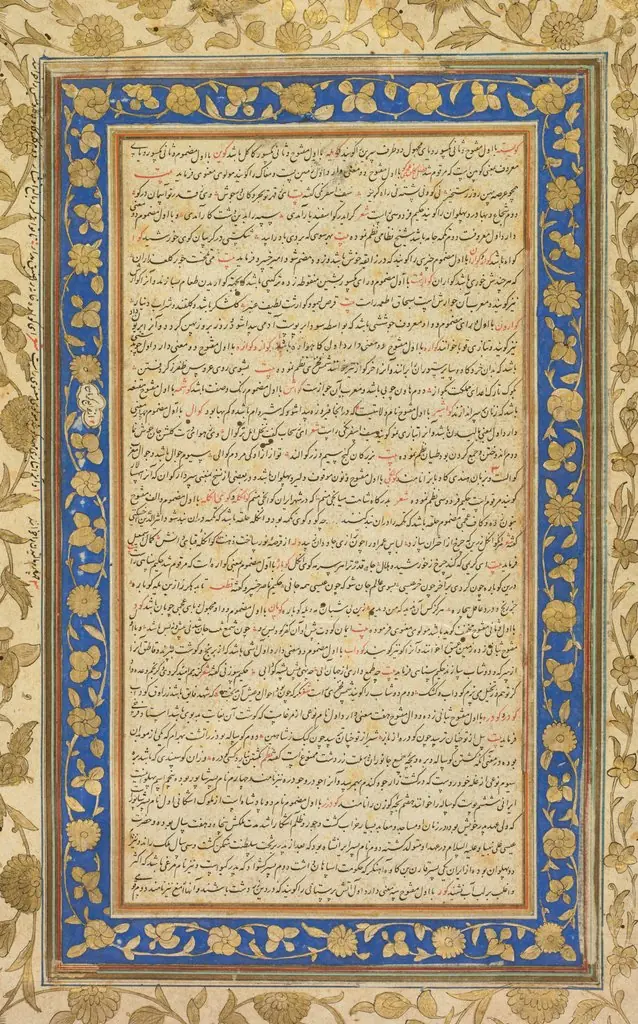 From the Farhang-i Jahangiri (Persian-language Dictionary) compiled by Mir Jamal al-Din Husayn Inju of Shiraz (Persian, d. 1626)
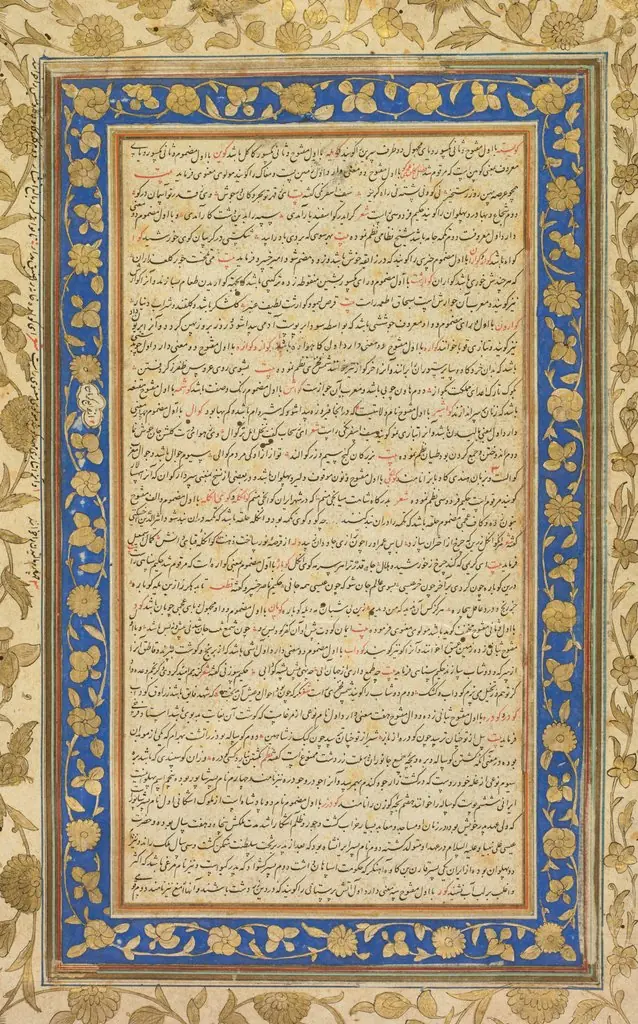 An Illuminated Folio from the Royal Manuscript of the Farhang-i Jahangiri (recto)
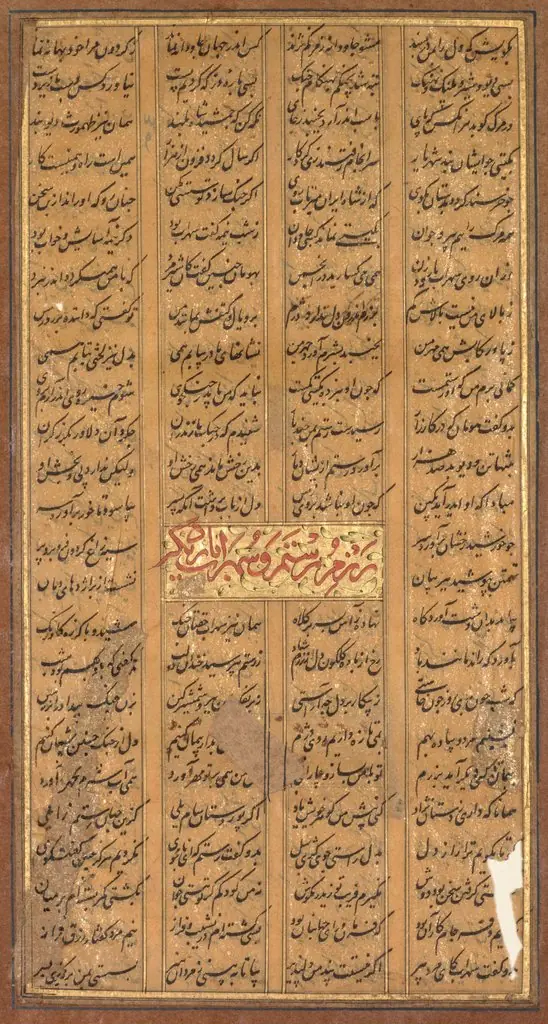 Text of Rustam and Suhrab, from the Shah-nama of Firdausi (Persian, c. 934–1020) (verso)
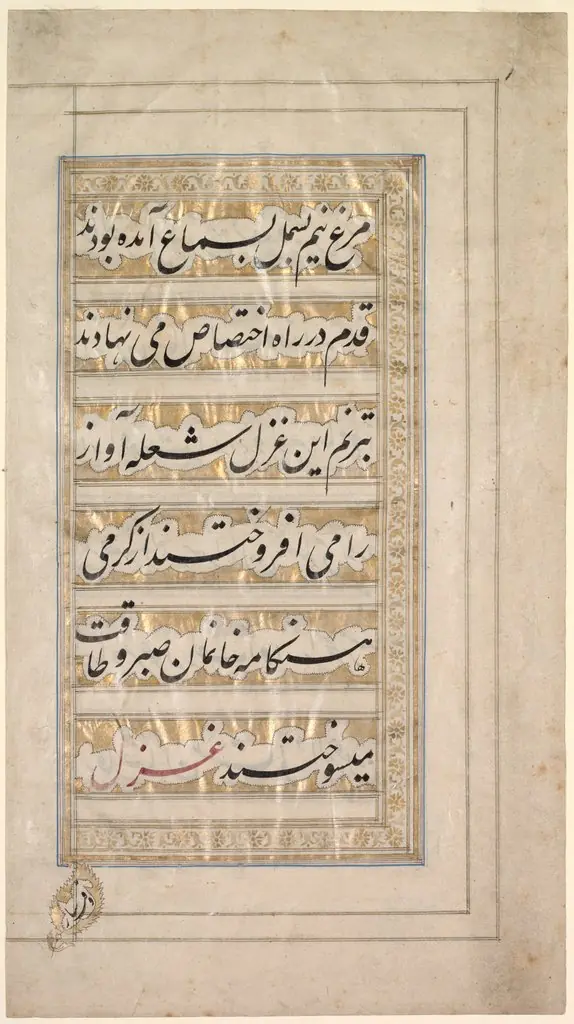 Page from the Poem of Beauty and Love