Artwork
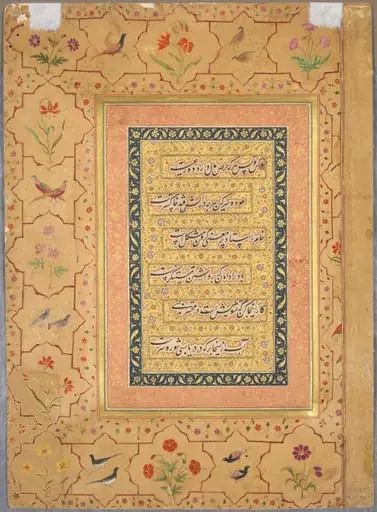
Page from a Panj Ganj (Five Treasures) of Abd al-Rahman Jami (Persian, 1414–1492), with two Persian masnavis: Yusuf va Zulaykha (Joseph and Zulaykha) and Subhat al-abrar (Rosary of the Righteous) (verso)
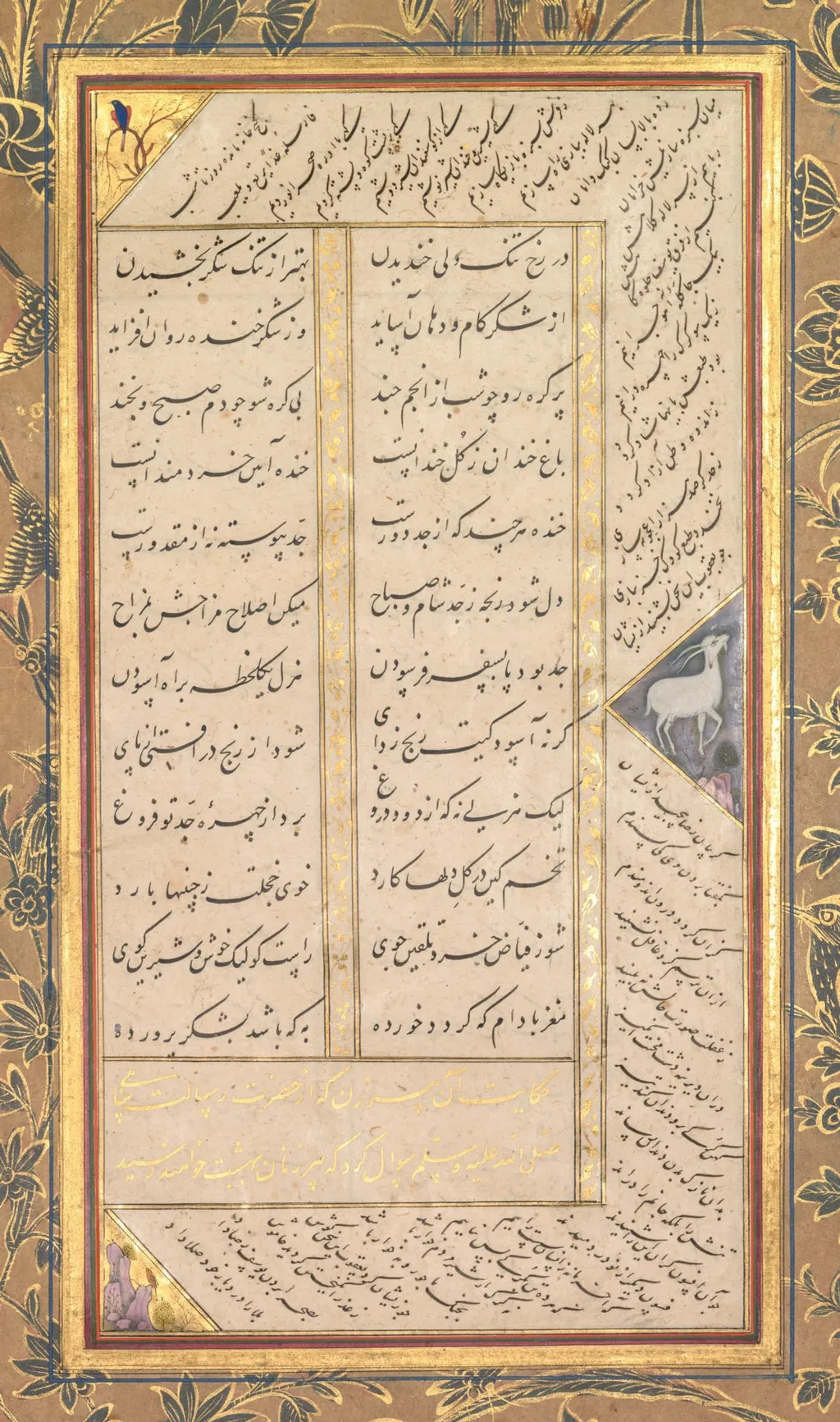
Page from a Panj Ganj (Five Treasures) of Abd al-Rahman Jami (Persian, 1414–1492), with two Persian masnavis: Yusuf va Zulaykha (Joseph and Zulaykha) and Subhat al-abrar (Rosary of the Righteous) (verso) is an unspecified painting by the Mughal Painting artist Mushfiq. It dates from 1564 and is held in the collection of the Cleveland Museum of Art.
About this work
Overview
This page originates from a manuscript known as Panj Ganj (Five Treasures) by Abd al-Rahman Jami, comprising two Persian masnavis: Yusuf va Zulaykha (Joseph and Zulaykha) and Subhat al-abrar (Rosary of the Righteous). It features a blend of textual content and decorative elements.
Subject & Meaning
The illustrated subject on this page is the romantic tale of Joseph and Zulaykha, a narrative poem exploring themes of love and virtue. The inclusion of Subhat al-abrar on the verso adds a layer of moral and spiritual reflection.
Technique & Style
The page showcases exuberant border decorations and insets, along with a full-page painting, commissioned by Abd al-Rahim to complete the manuscript's illumination. The style reflects the patron's influence on the artistic execution.
History & Provenance
Originally completed circa 1414-1492, the manuscript was acquired by Abd al-Rahim, a prominent Mughal statesman and art patron, around 80 years after its creation. He oversaw the addition of elaborate illustrations and designs.
Context
Created within the cultural and literary flourishing of the Mughal court, this manuscript represents the intersection of Persian literary heritage and Mughal artistic patronage, highlighting the era's appreciation for both literature and visual arts.
Legacy
Now housed at The Cleveland Museum of Art, this page from Panj Ganj contributes to the understanding of Mughal-era manuscript illumination and the enduring impact of Jami's works on Islamic literary and artistic traditions.
Artist & collection
Artist
Mushfiq was a sub-imperial Mughal painter who worked in the atelier of Abd-ur-Rahim Khan-i-Khanan (also called Abdul Rahim Khan-I-Khana), commander-in-chief of the Mughal army in the late 16th/early 17th century.

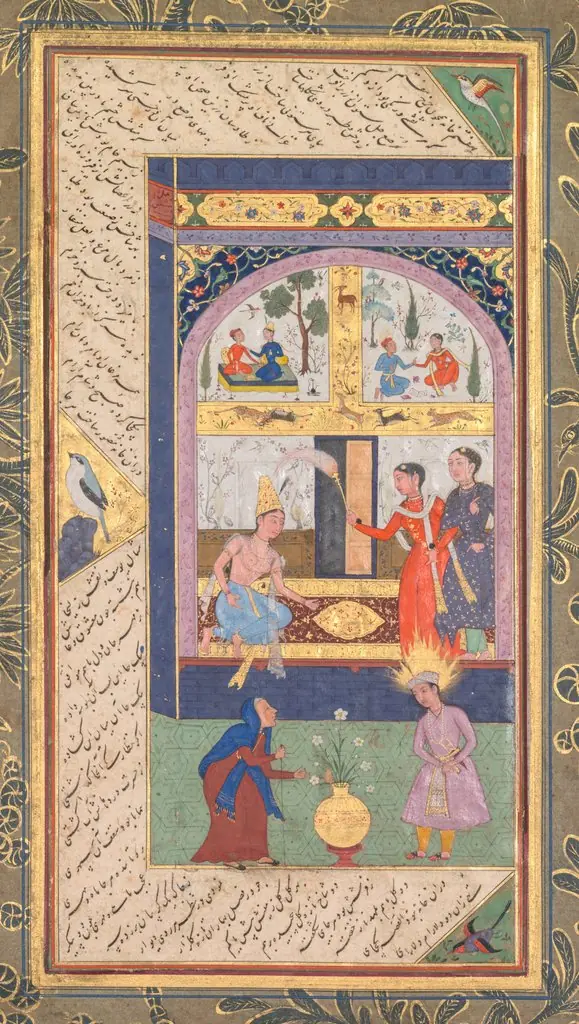 Zulaykha in her palace and as an elderly woman with Joseph (recto), from a Panj Ganj (Five Treasures) of Abd al- Rahman Jami (Persian, 1414–1492)
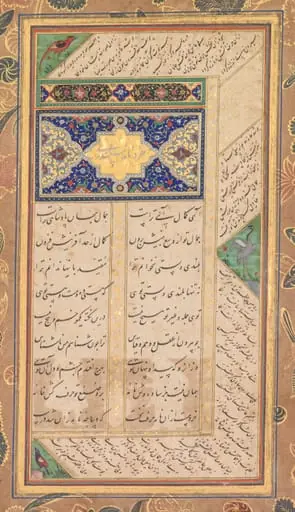 Illuminated page (verso), from a Panj Ganj (Five Treasures) of Abd al- Rahman Jami (Persian, 1414–1492) with two Persian masnavis: Yusuf va Zulaykha (Joseph and Zulaykha) and Khirad-nama-i Iskandari (Alexander’s Book of Wisdom)
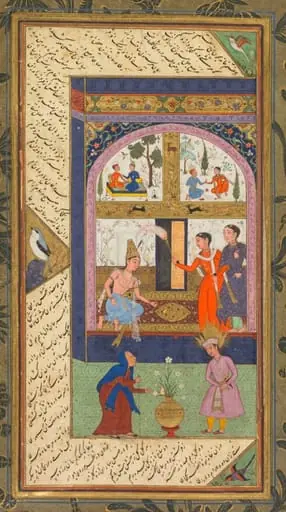 Zulaykha in her palace and as an old woman with Joseph, from a Panj Ganj (Five Treasures) of Abd al-Rahman Jami (Persian, 1414–1492); verso from a Panj Ganj of Abd al-Rahman Jami (Persian, 1414–1492), with two masnavis: Yusuf va Zulaykha (Joseph and Zulaykha) and Khirad-nama-i Iskandari (Alexander’s Book of Wisdom)
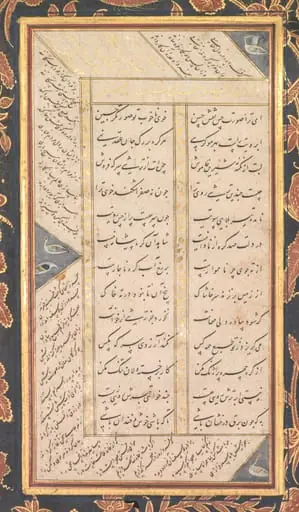 Folio B: Folio from the "Five Treasures" (Panj Ganj) of Jami (recto)
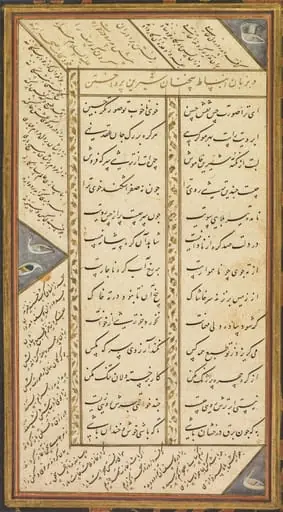 Page from the Panj Ganj (Five Treasures) of Abd al-Rahman Jami (Persian, 1414–1492), with two Persian masnavis (narrative poems): Yusuf va Zulaykha (Joseph and Zulaykha) and Subhat al-abrar (Rosary of the Righteous)
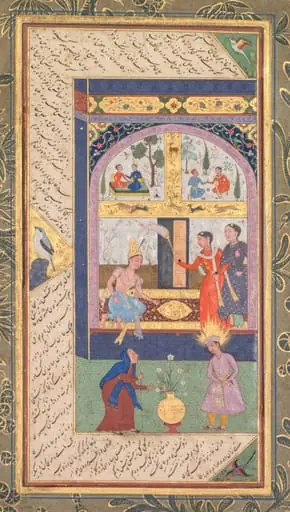 Zulaykha in her palace and as an elderly woman with Joseph (recto), from a Panj Ganj (Five Treasures) of Abd al- Rahman Jami (Persian, 1414–1492)
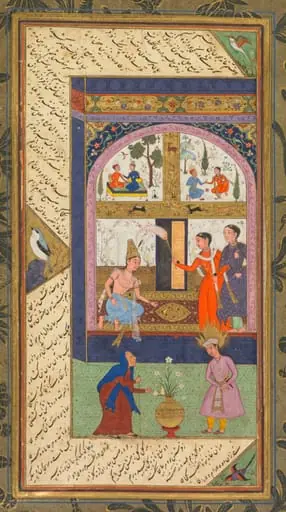 Folios A and B from the "Five Treasures" (Panj Ganj) of Jami
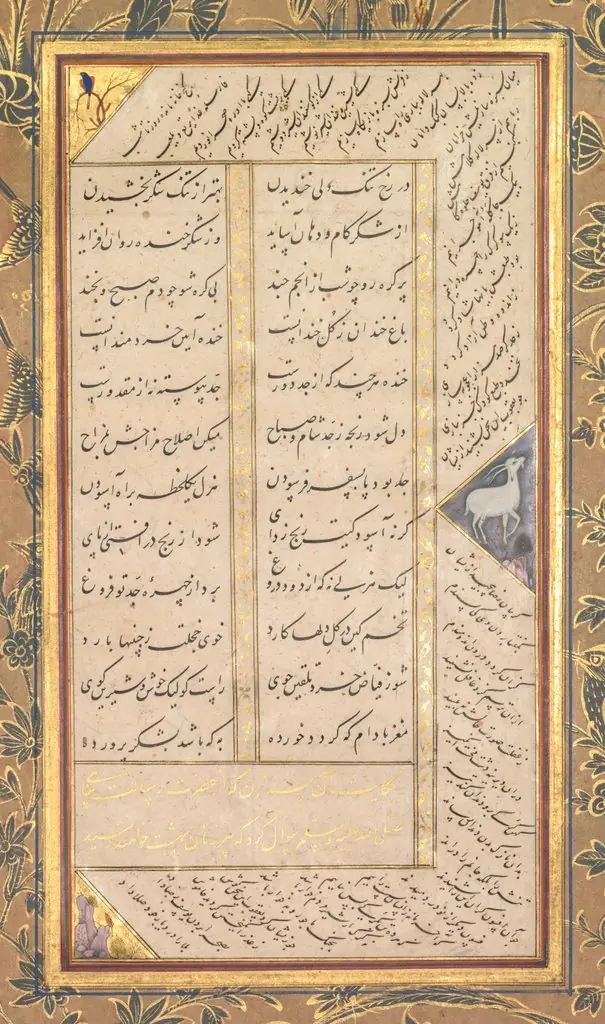 Page from a Panj Ganj (Five Treasures) of Abd al-Rahman Jami (Persian, 1414–1492), with two Persian masnavis: Yusuf va Zulaykha (Joseph and Zulaykha) and Subhat al-abrar (Rosary of the Righteous) (verso)
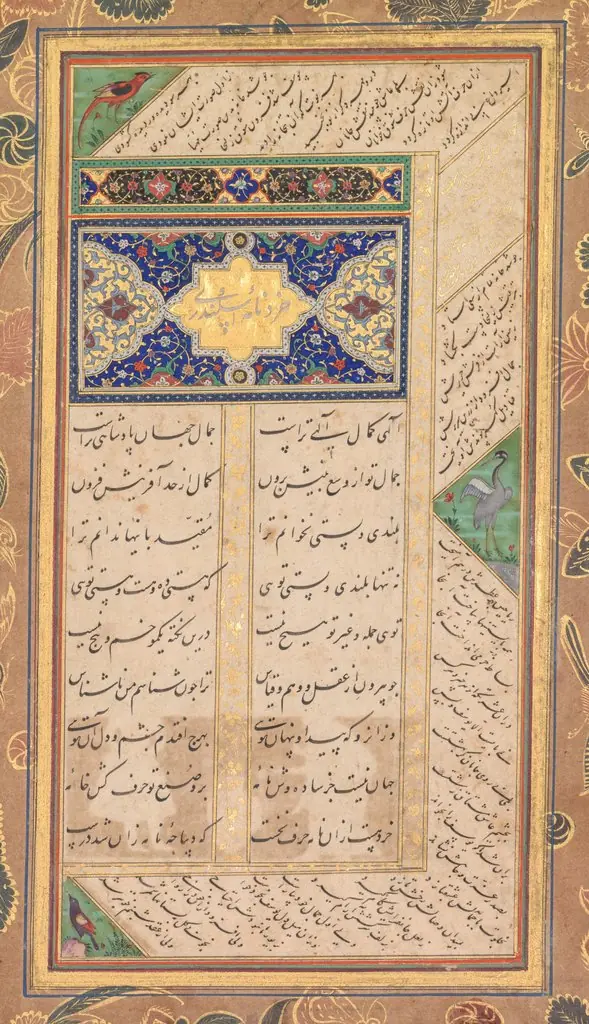 Illuminated page (verso), from a Panj Ganj (Five Treasures) of Abd al- Rahman Jami (Persian, 1414–1492) with two Persian masnavis: Yusuf va Zulaykha (Joseph and Zulaykha) and Khirad-nama-i Iskandari (Alexander’s Book of Wisdom)
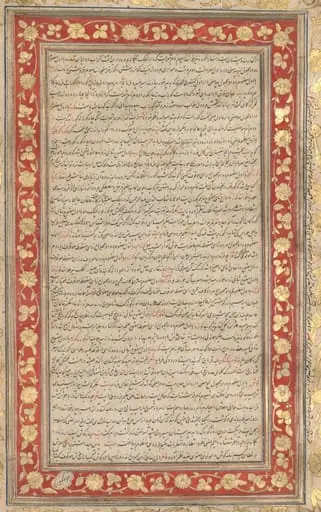 An Illuminated Folio from the Royal Manuscript of the Farhang-i Jahangiri (verso)
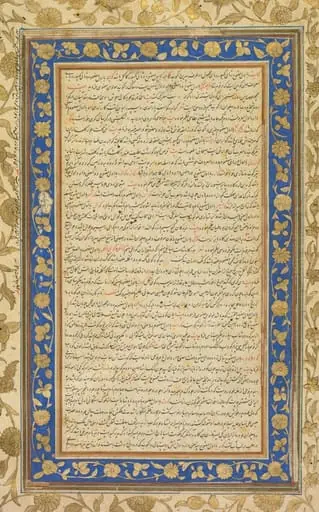 An Illuminated Folio from the Royal Manuscript of the Farhang-i Jahangiri (recto)
 Calligraphy framed by an ornamental border with poppies and pairs of birds, from the Late Shah Jahan Album (verso)