Artwork
Page from Tales of a Parrot (Tuti-nama): text page
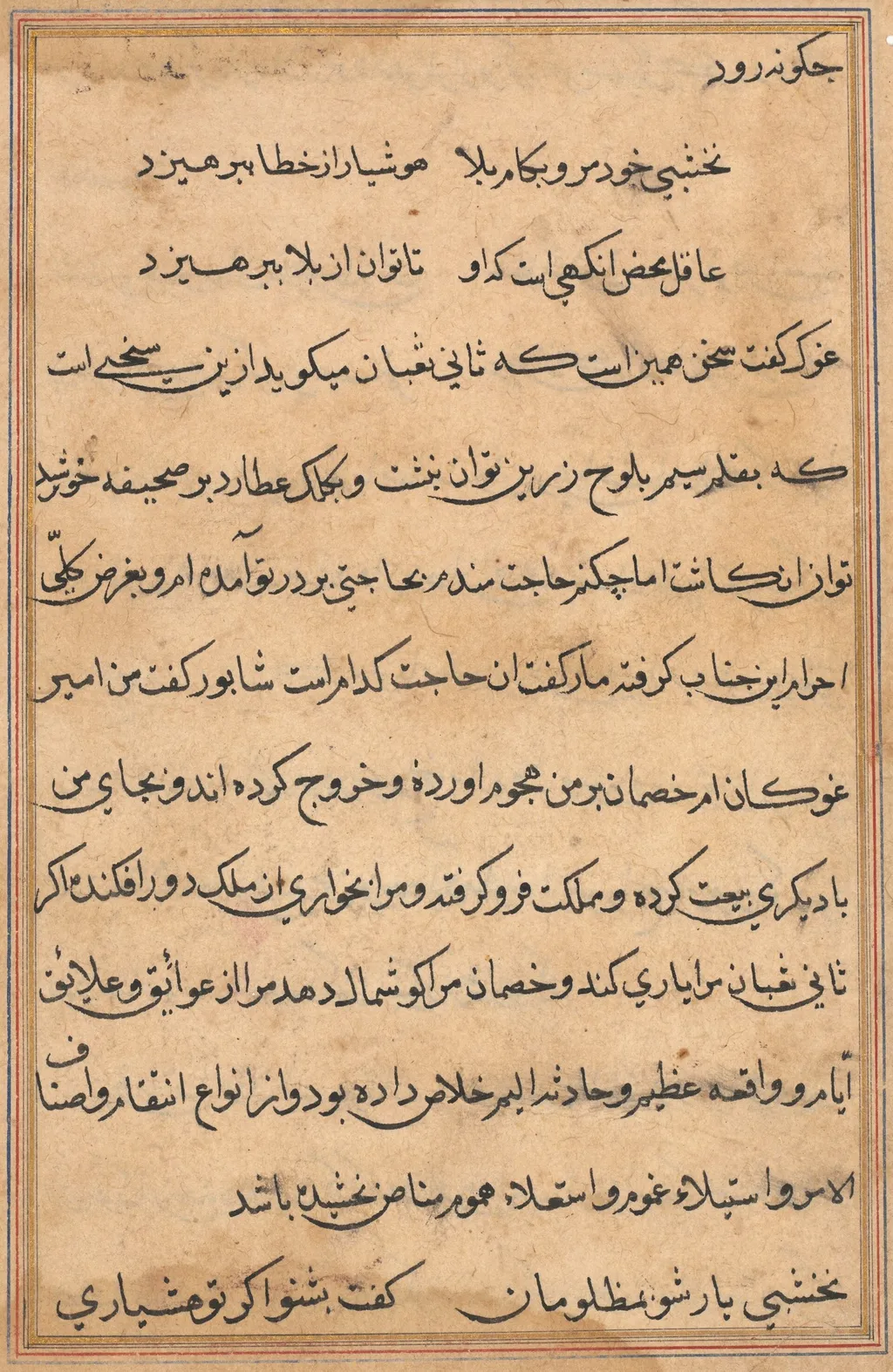
Page from Tales of a Parrot (Tuti-nama): text page is an unspecified painting. It dates from 1560 and is held in the collection of the Cleveland Museum of Art. This object is a painted page taken from the Persian manuscript known as the Tales of a Parrot, or Tuti‑nama.
About this work
Overview
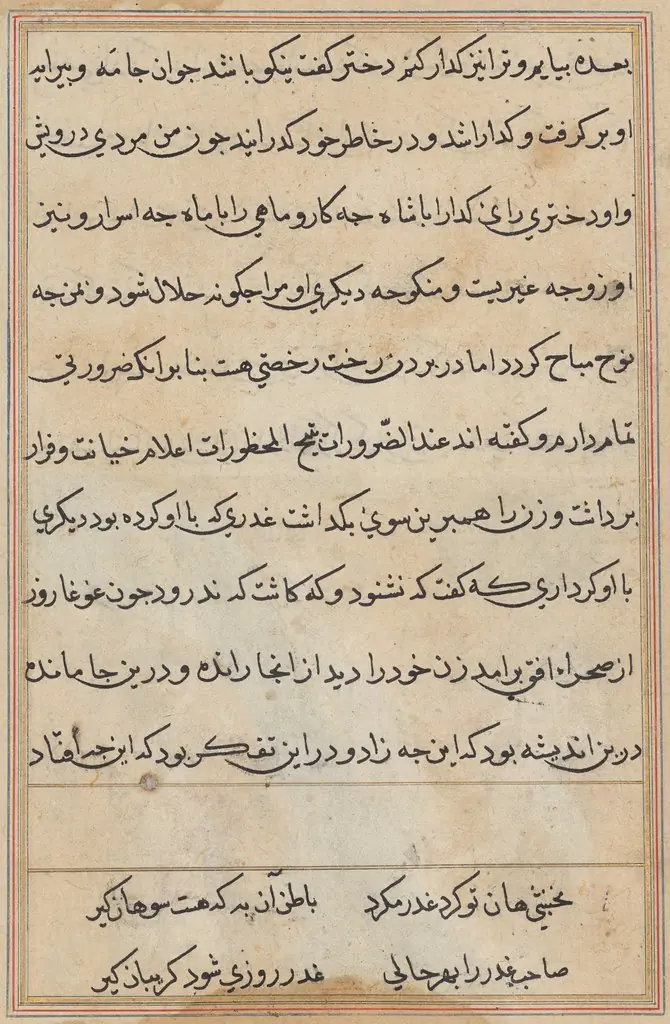
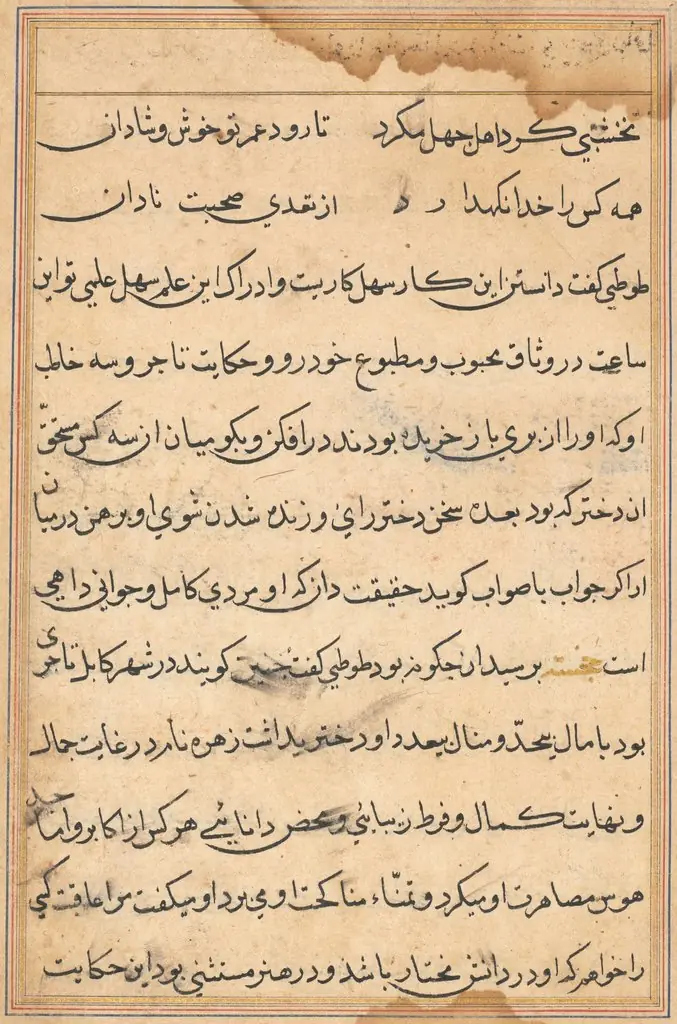
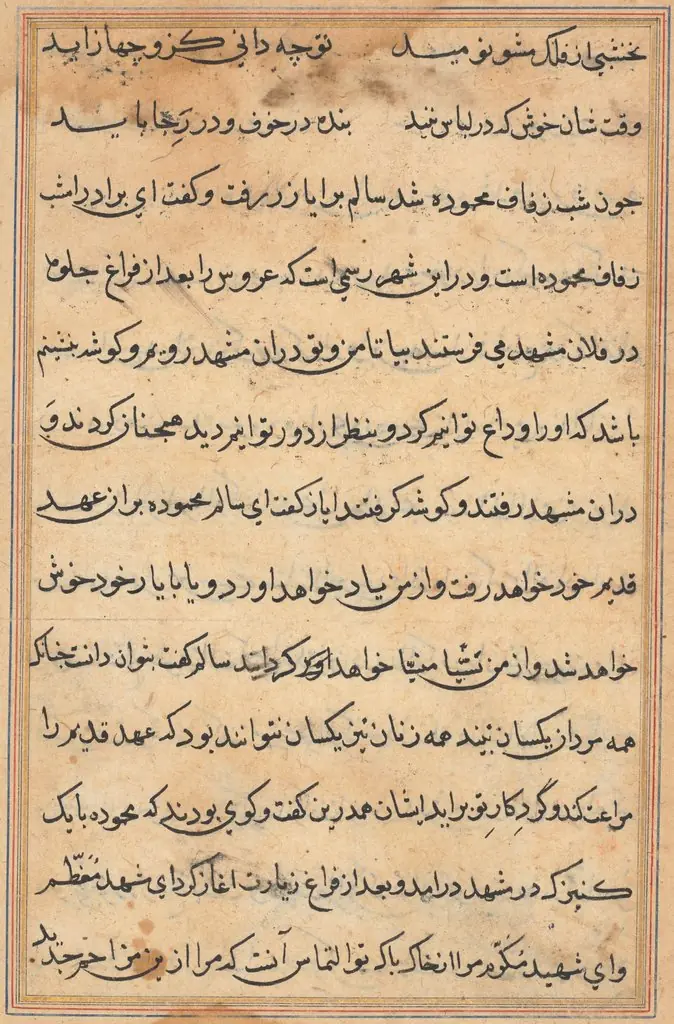
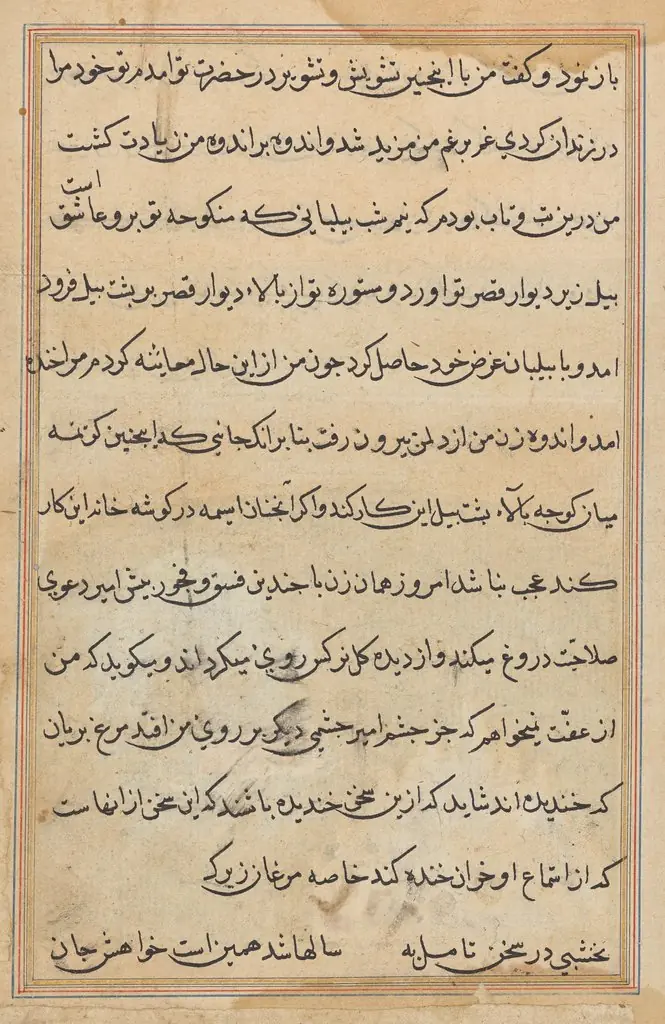
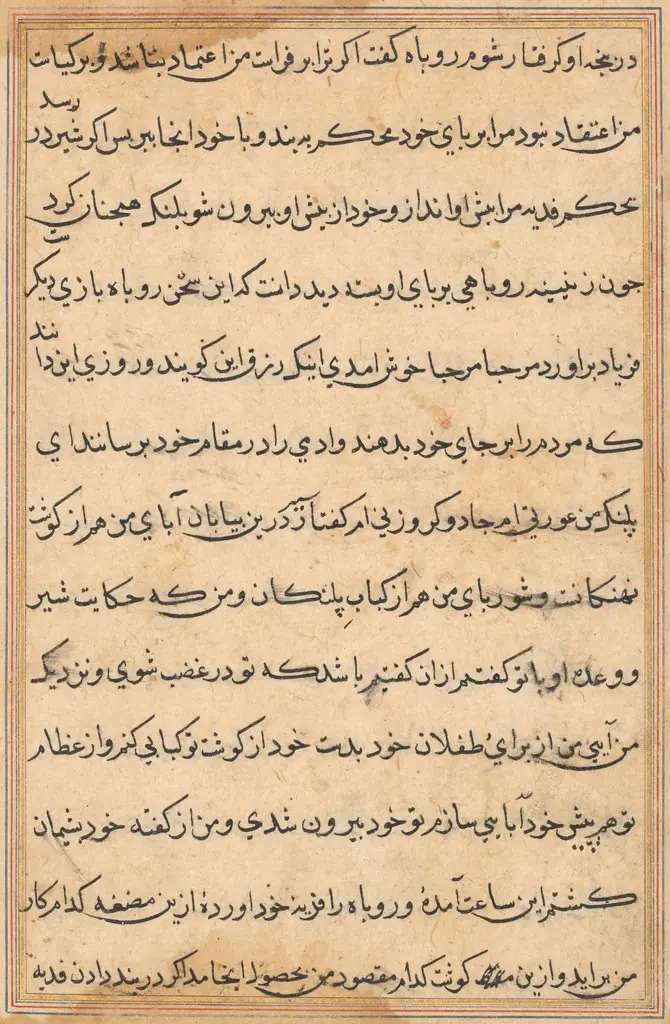
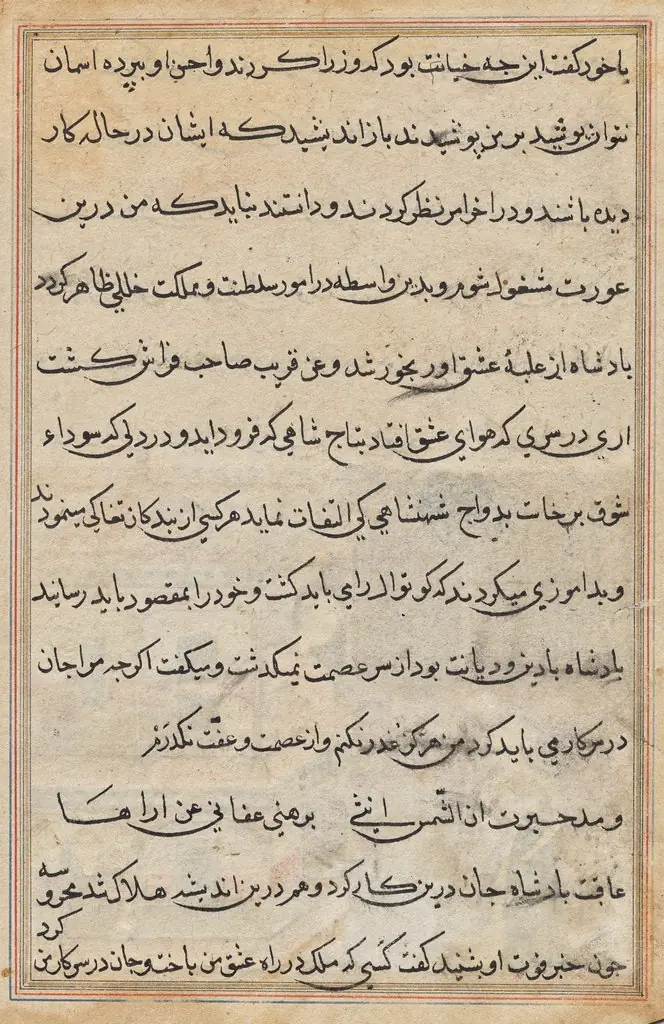
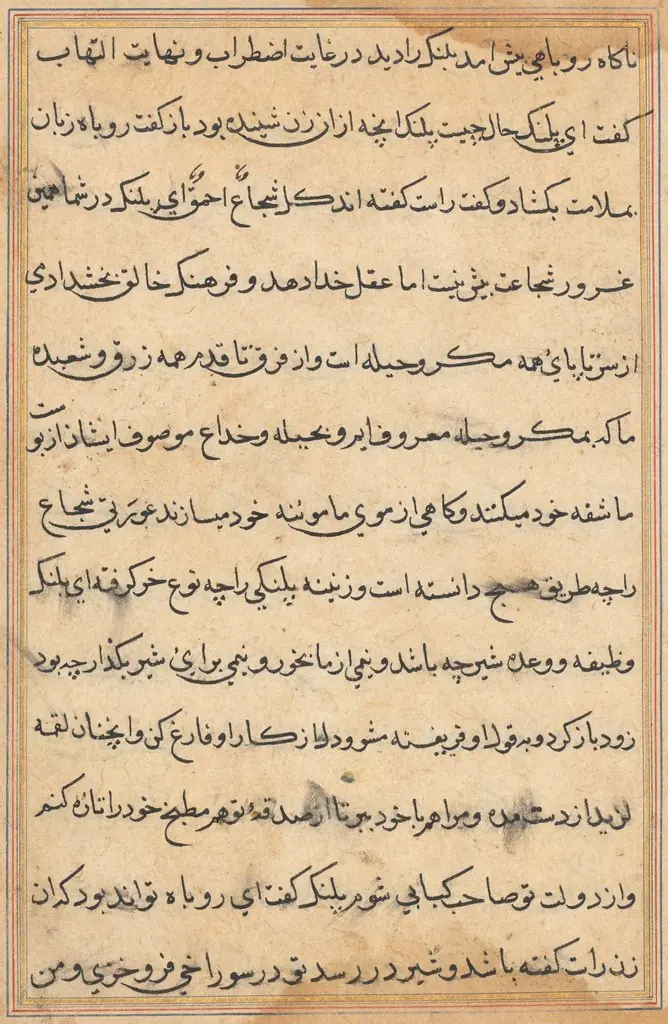
This object is a painted page taken from the Persian manuscript known as the Tales of a Parrot, or Tuti‑nama. The sheet consists primarily of black calligraphic script set against a light, slightly yellowed surface, framed by a narrow red border. The dense arrangement of words in orderly rows suggests a purpose of careful, deliberate reading.
Subject & Meaning
The text on the page forms part of a narrative collection that recounts moral and romantic stories, traditionally addressed to Prince Salim, a royal patron of the sixteenth century. The rhythmic interlacing of tiny dots and lines between letters gives the script a musical quality, reinforcing the storytelling intent.
Technique & Style
Executed in ink on a painted paper, the calligraphy displays a flowing, cursive hand characteristic of Persian manuscript tradition. The use of a subtle red margin and the decorative connective marks reflects a refined aesthetic that balances legibility with ornamental elegance.
History & Provenance
Created in the 1500s for Prince Salim, a son of the Mughal emperor Akbar, the page was originally part of a deluxe illustrated codex. Its survival in a relatively intact condition indicates careful preservation, and it now resides within a museum collection that specializes in Asian art.
Context
During the Mughal era, illustrated books such as the Tuti‑nama served both educational and diplomatic functions, showcasing the empire’s artistic sophistication while reinforcing courtly values. The manuscript’s production aligns with a broader tradition of Persian literary culture flourishing under imperial patronage.
Artist & collection

 Page from Tales of a Parrot (Tuti-nama): text page
 Page from Tales of a Parrot (Tuti-nama): text page
 Page from Tales of a Parrot (Tuti-nama): text page
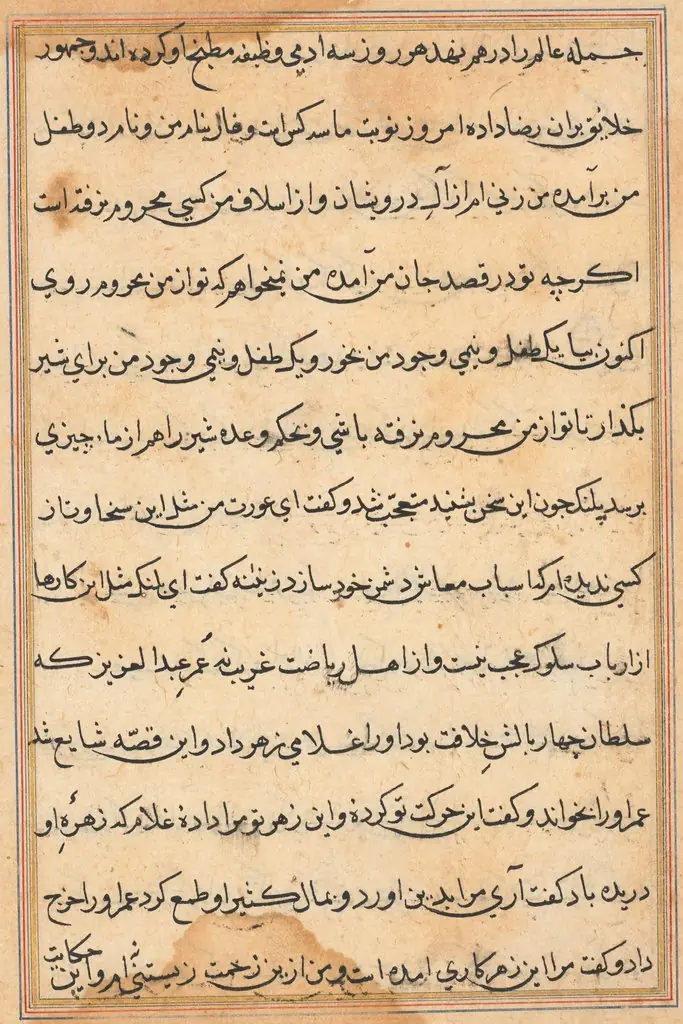 Page from Tales of a Parrot (Tuti-nama): text page
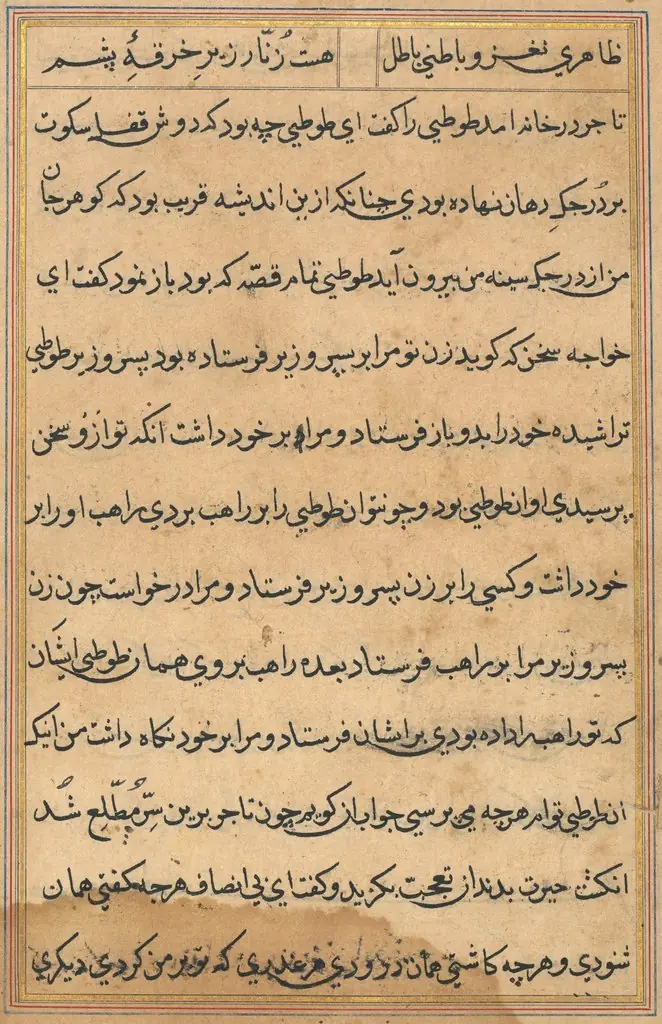 Page from Tales of a Parrot (Tuti-nama): text page
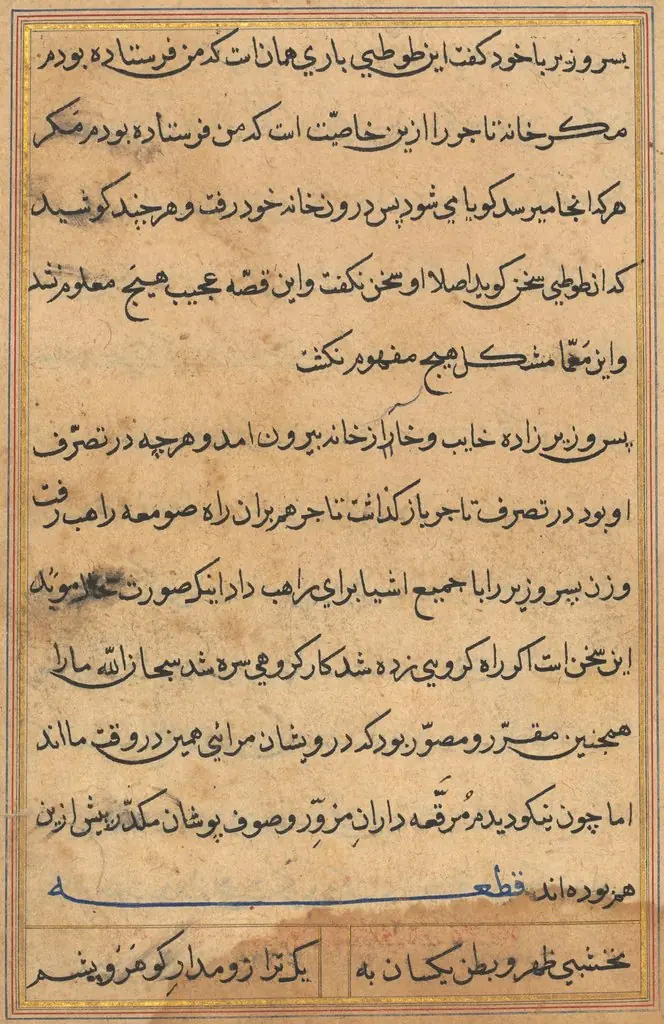 Page from Tales of a Parrot (Tuti-nama): text page
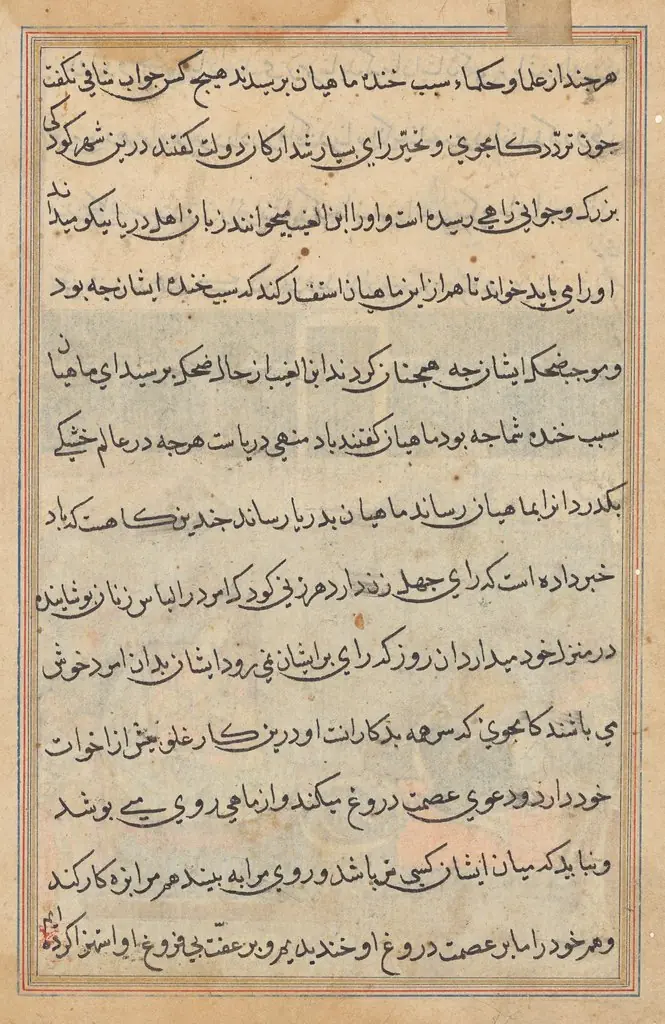 Page from Tales of a Parrot (Tuti-nama): text page
 Page from Tales of a Parrot (Tuti-nama): text page
 Page from Tales of a Parrot (Tuti-nama): text page
 Page from Tales of a Parrot (Tuti-nama): text page
 Page from Tales of a Parrot (Tuti-nama): text page