Artwork
Seven men disputing possession of a woman bring her before the Tree of Justice into which she is absorbed, from a Tuti-nama (Tales of a Parrot): Sixth Night
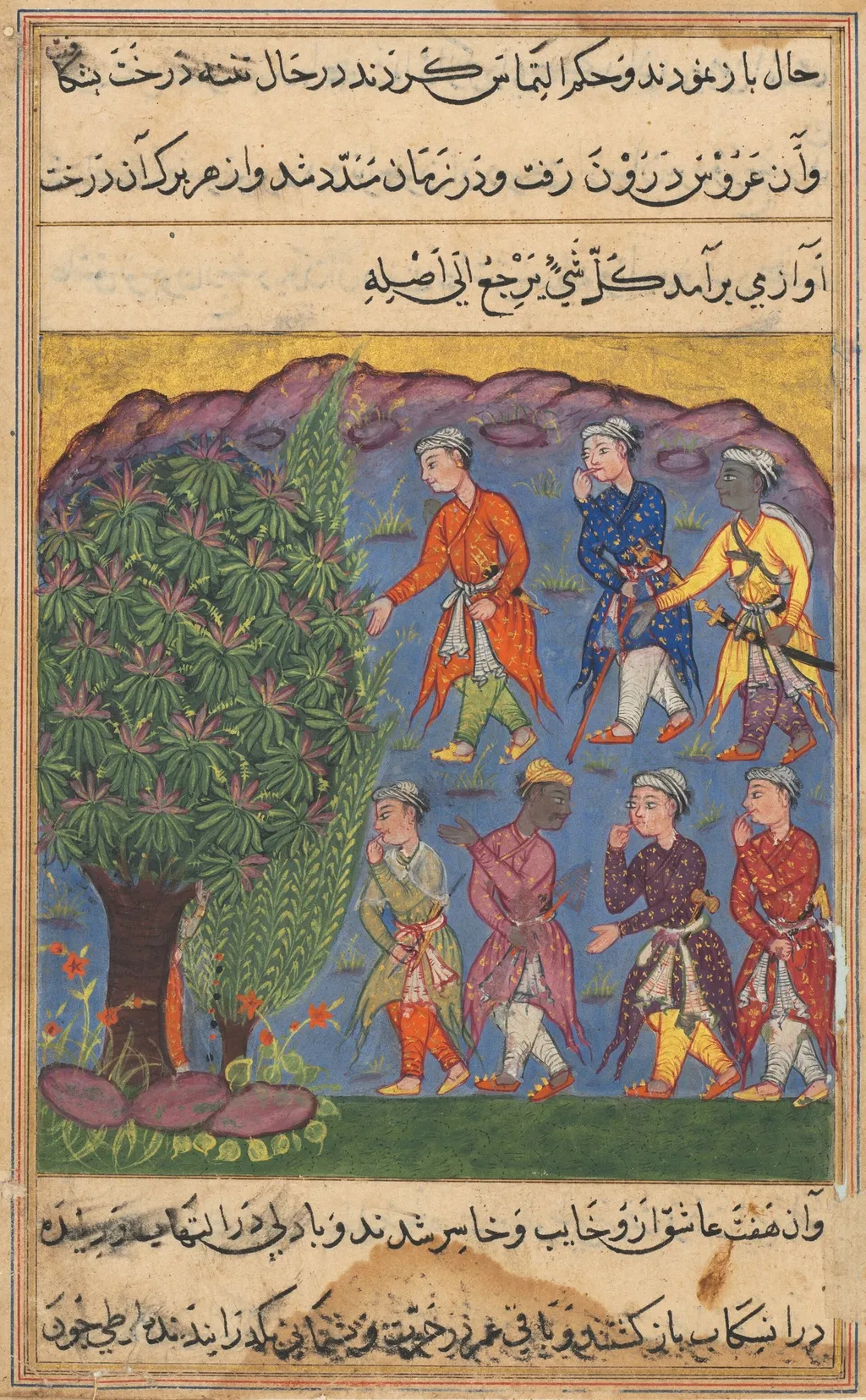
Seven men disputing possession of a woman bring her before the Tree of Justice into which she is absorbed, from a Tuti-nama (Tales of a Parrot): Sixth Night is an unspecified painting. It dates from 1560 and is held in the collection of the Cleveland Museum of Art. The work illustrates a narrative episode from the medieval Persian collection known as the Tuti‑nama, or "Tales of a Parrot.
About this work
Overview
The work illustrates a narrative episode from the medieval Persian collection known as the Tuti‑nama, or "Tales of a Parrot." In this scene, seven men contend over a woman, guiding her toward a stylized tree that appears to consume her. The composition is set against a blue sky, with a rocky hillside receding in the background, and is rendered with vivid coloration and detailed ornamentation.
Subject & Meaning
The painting visualizes a moral tale in which multiple claimants vie for a single woman, symbolizing the futility of worldly disputes. The tree, often interpreted as the Tree of Justice, envelops the woman, suggesting the ultimate resolution of such conflicts through divine or judicial authority.
Technique & Style
Executed with a rich palette of reds, greens, and blues, the artist employs chiaroscuro to model forms and create spatial depth. Figures are dressed in elaborate robes and turbans, their intricate patterns emphasizing the work’s meticulous craftsmanship and the influence of Persian miniature traditions.
History & Provenance
The painting originates from the sixth night of the Tuti‑nama narrative cycle, a text compiled in the 14th‑15th centuries. It survives as part of a manuscript illustration series, though specific details of its creation, patronage, or subsequent ownership remain undocumented.
Context
Within the broader corpus of Persian illustrated manuscripts, scenes of moral instruction were commonly paired with poetic or prose texts. This image reflects the period’s didactic purpose, using vivid visual storytelling to reinforce ethical lessons for an elite, literate audience.
Artist & collection

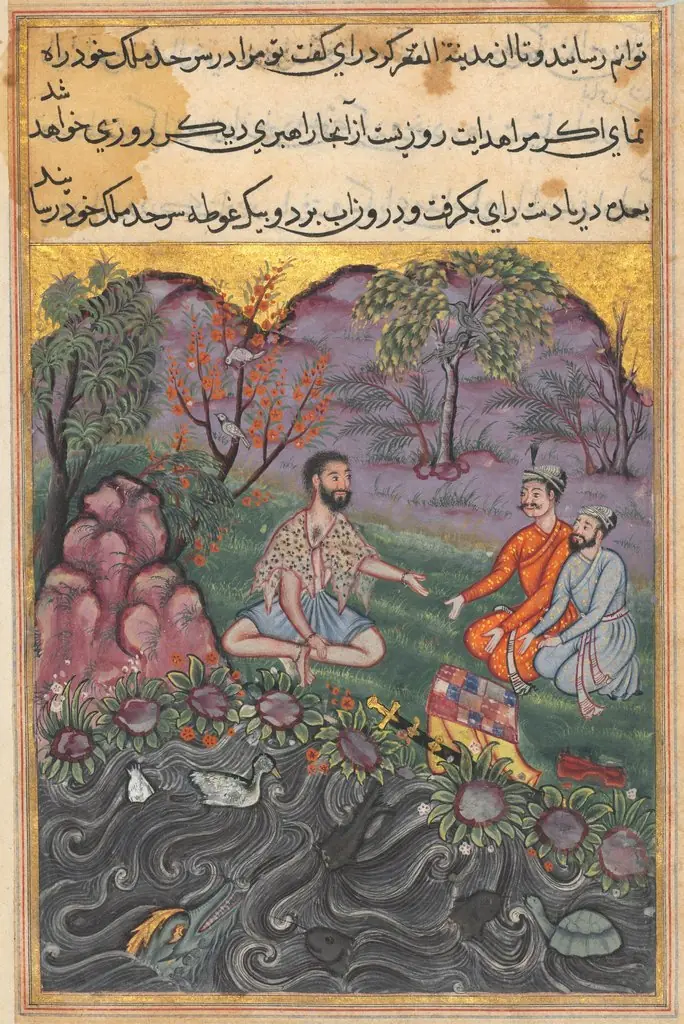 The Raja of Ujjain, who is traveling in the guise of a yogi, meets two brothers who ask him to equitably partition their father’s possession, from a Tuti-nama (Tales of a Parrot): Forty-sixth Night
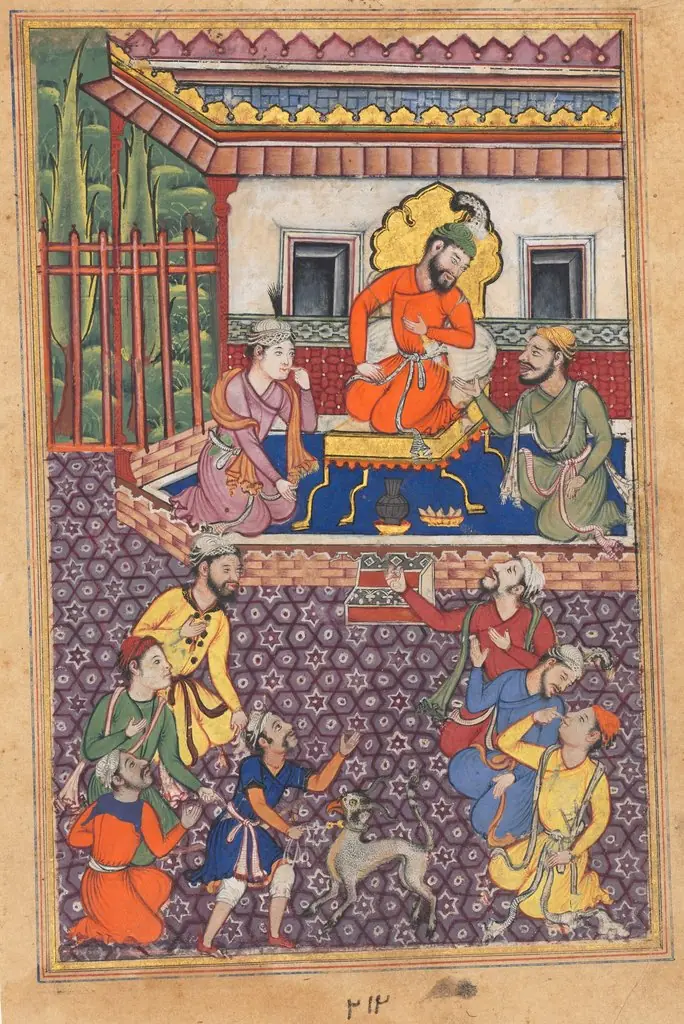 The court of the Raja of Ujjain, from a Tuti-nama (Tales of a Parrot): Forty-sixth Night
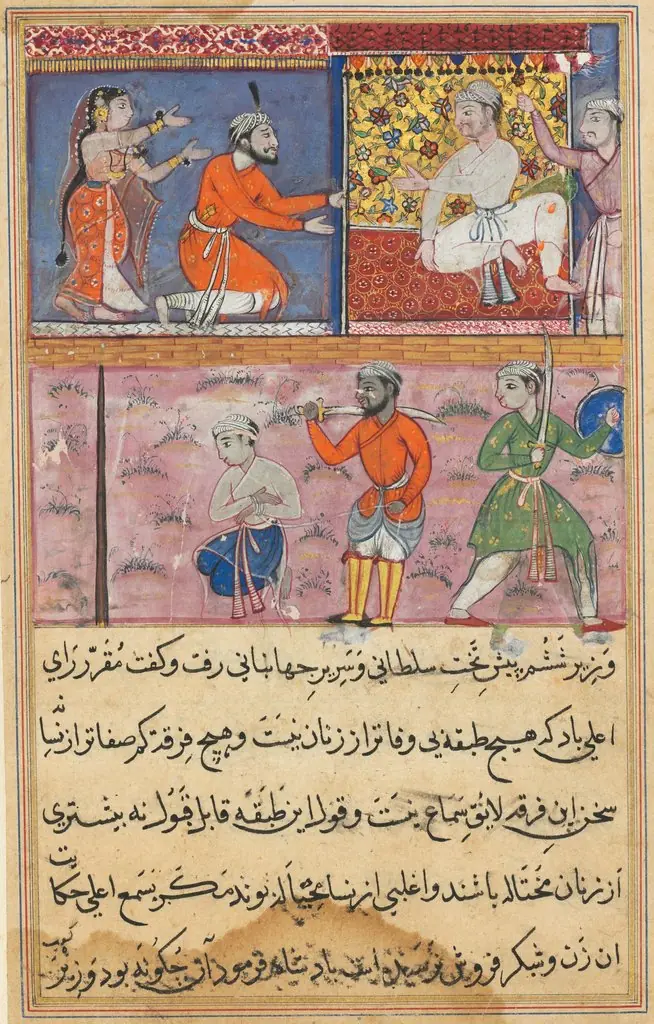 The prince sent back to the place of execution for the sixth time, from a Tuti-nama (Tales of a Parrot): Eighth Night
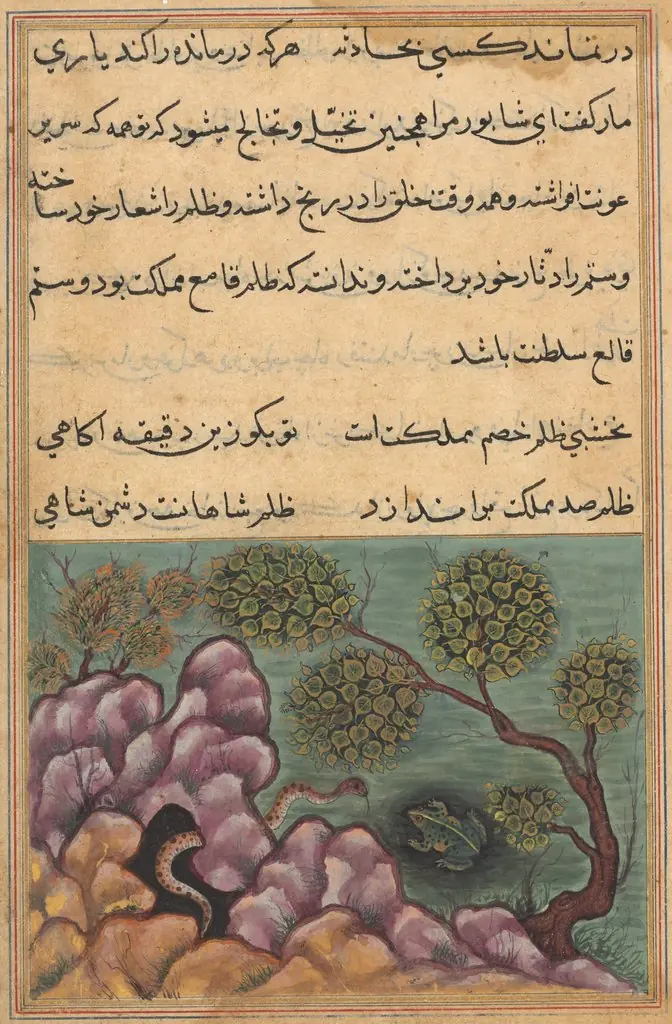 The dethroned frog Shapur seeks the help of the serpent, from a Tuti-nama (Tales of a Parrot): Twenth-sixth Night
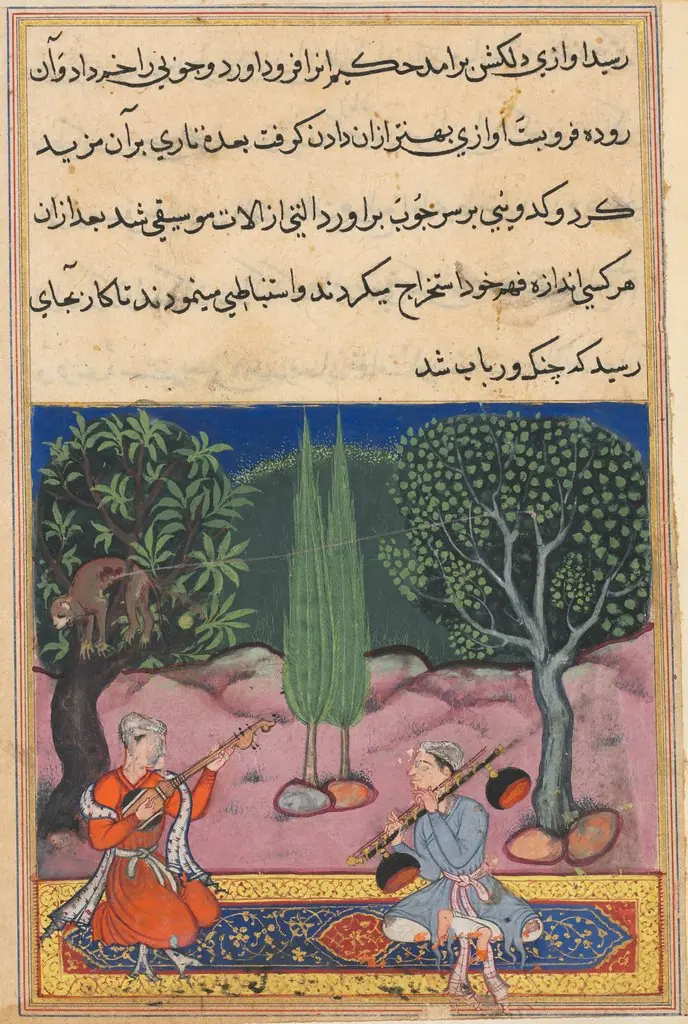 The invention of musical instruments from the intestines of a monkey, from a Tuti-nama (Tales of a Parrot): Fourteenth Night
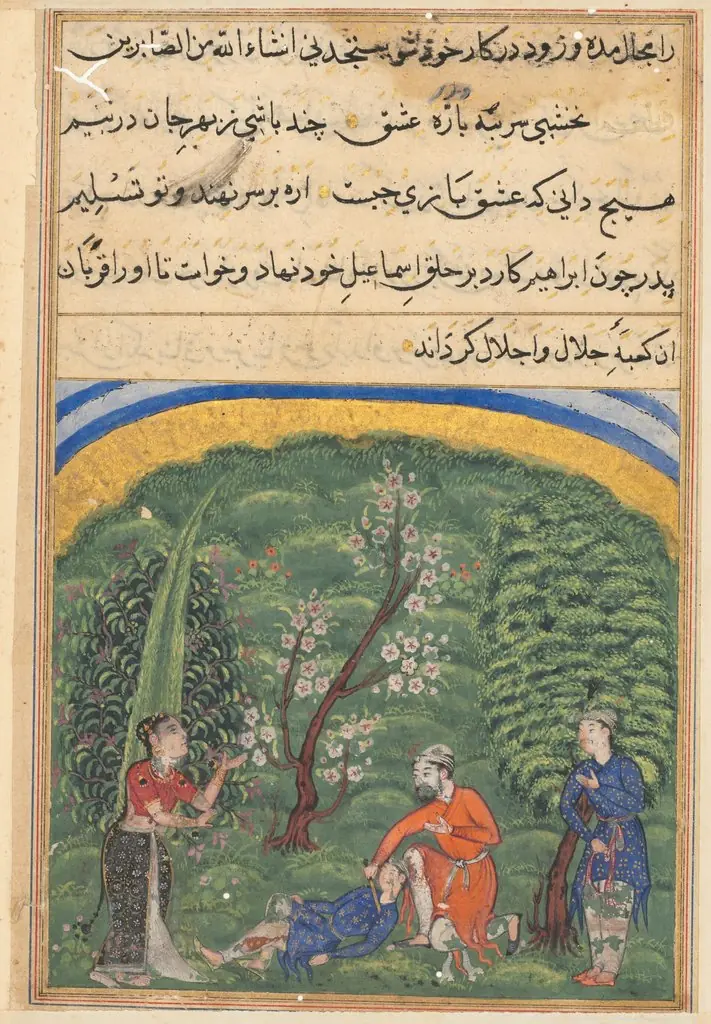 The sentinel in the employ of the Shah of Tabaristan prepares to sacrifice his son to the ghost of the Shah’s soul, from a Tuti-nama (Tales of a Parrot): Second Night
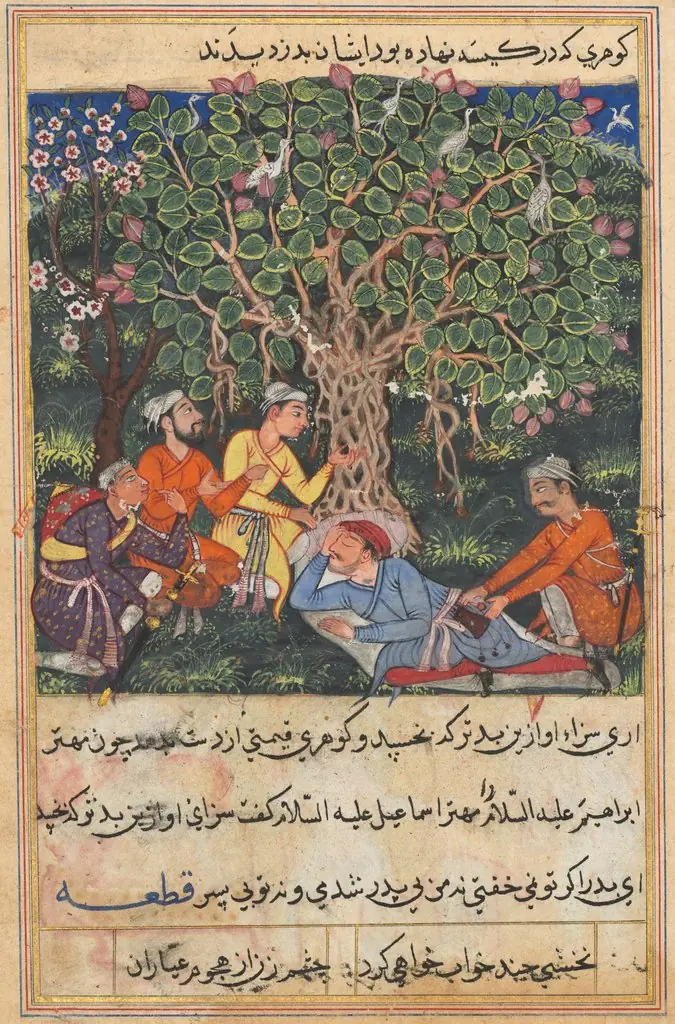 The street cleaner, on his way to meet King Bhojaraja, sleeps under a tree where four thieves disguised as fellow travelers deprive him of a priceless pearl, from a Tuti-nama (Tales of a Parrot): Twelfth Night