Artwork
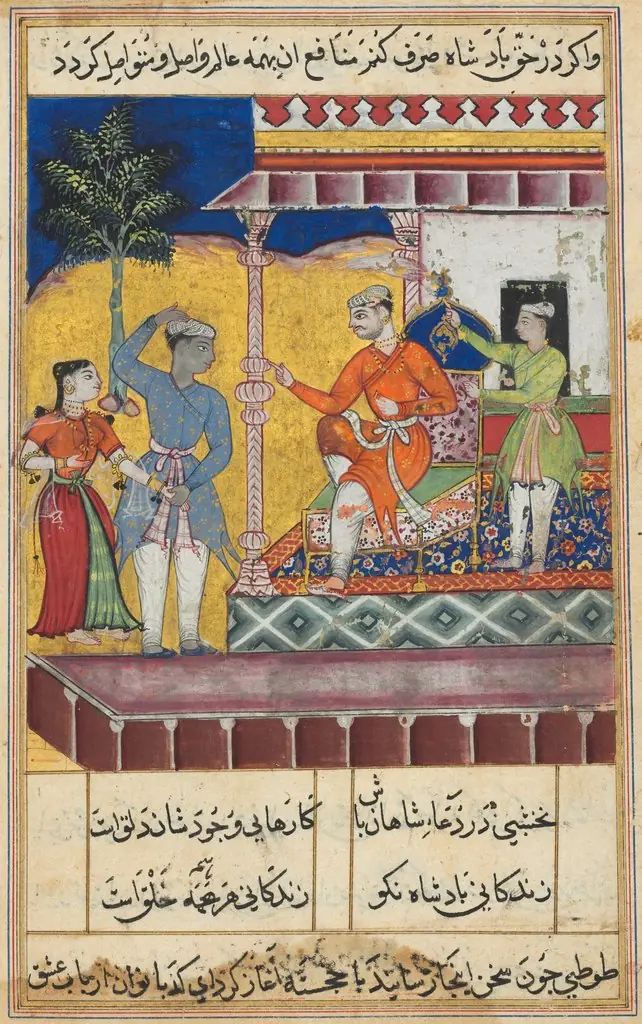
The street cleaner, on his way to meet King Bhojaraja, sleeps under a tree where four thieves disguised as fellow travelers deprive him of a priceless pearl, from a Tuti-nama (Tales of a Parrot): Twelfth Night
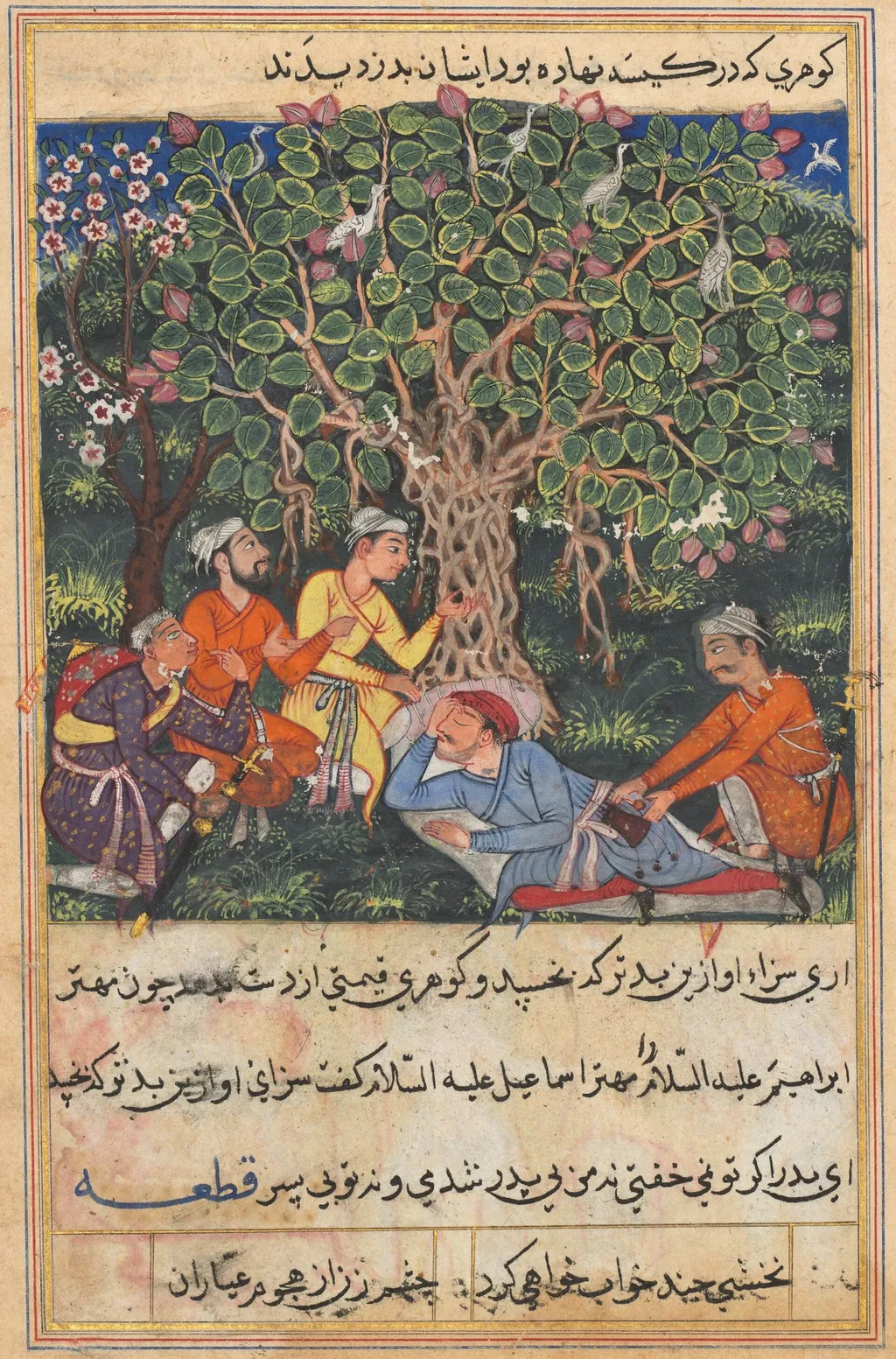
The street cleaner, on his way to meet King Bhojaraja, sleeps under a tree where four thieves disguised as fellow travelers deprive him of a priceless pearl, from a Tuti-nama (Tales of a Parrot): Twelfth Night is an unspecified painting. It dates from 1560 and is held in the collection of the Cleveland Museum of Art.
About this work
Overview
The work illustrates a narrative scene from the medieval Persian collection Tuti‑nama, depicting a street cleaner on his way to meet King Bhojaraja. He is shown asleep beneath a leafy tree, while four other figures, dressed in vivid orange, yellow and purple garments, surround him. A small bird is perched in the upper right corner, adding a decorative element to the composition.
Subject & Meaning
The central figure, a traveler in a loose blue robe, represents the unsuspecting street cleaner who has been lured into a trap. The surrounding characters, their gestures sharp and purposeful, are thieves disguised as fellow wayfarers, poised to steal a valuable pearl from the sleeper. The scene conveys themes of deception and the vulnerability of the naive.
Technique & Style
Executed in a bright palette, the painting employs flat areas of color and decorative patterning typical of Persian manuscript illustration. The foliage is rendered with thick green leaves and pink blossoms, creating a stylized natural setting. Elegant calligraphic text frames the image at the top and bottom, linking the visual narrative to its literary source.
History & Provenance
The image originates from a copy of the Tuti‑nama, a collection of moral tales illustrated for a courtly audience. The specific manuscript dates to the late medieval period, though the exact date and workshop remain uncertain. The painting is now part of the Cleveland Museum of Art’s collection, acquired through donation in the early twentieth century.
Context
Tuti‑nama, meaning “The Parrot’s Book,” compiled stories that combined entertainment with ethical instruction. This particular episode, titled “Twelfth Night,” reflects the tradition of using vivid visual storytelling to complement the text, a common practice in Persian illustrated books that served both literary and didactic purposes.
Artist & collection

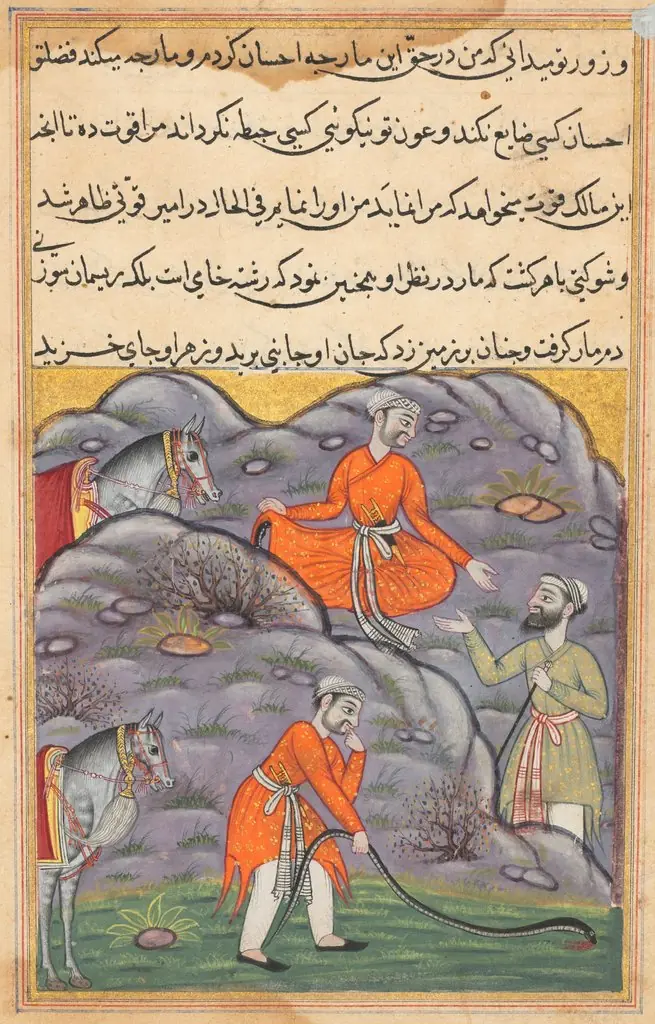 The Emir slays the snake after giving it shelter, from a Tuti-nama (Tales of a Parrot): Forty-fifth Night
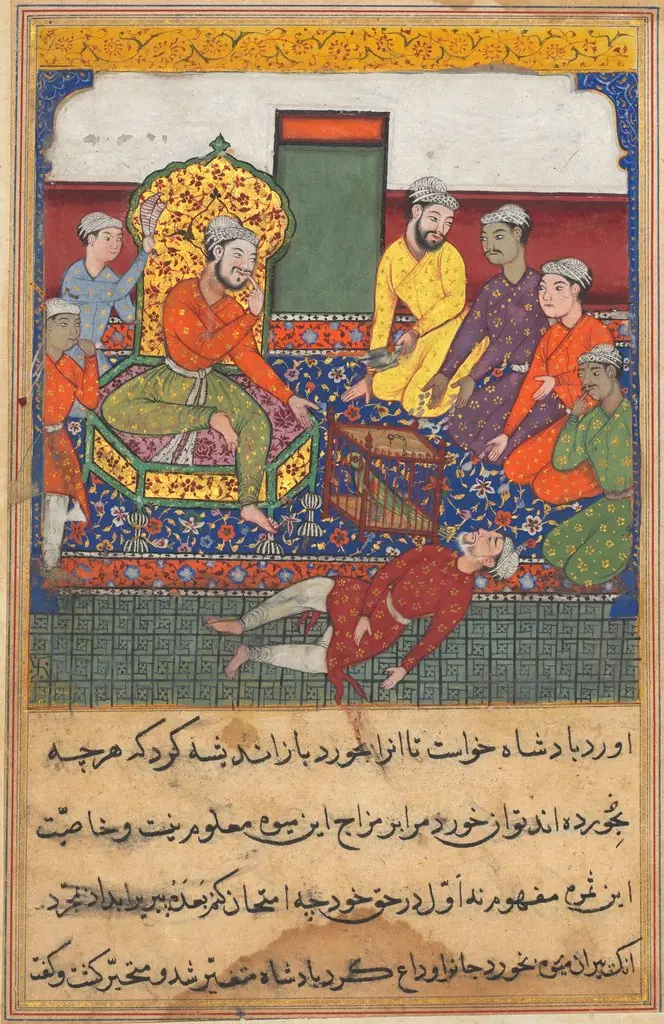 The old man eats of the fruit of the Tree of Life, but drops dead, from a Tuti-nama (Tales of a Parrot): Ninth Night
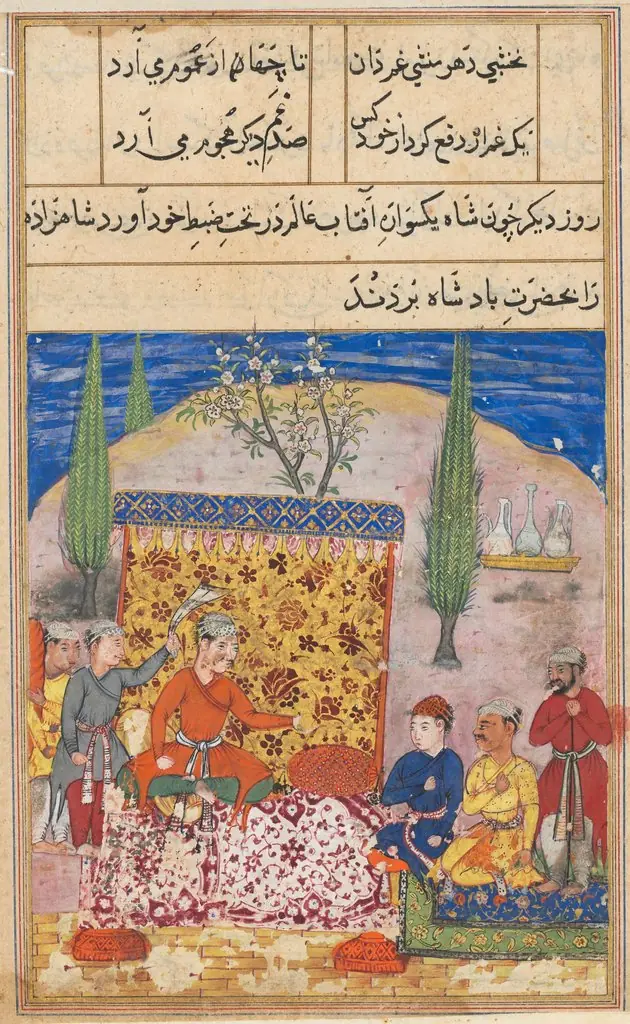 The young prince is presented to the king, his father, by his teacher, but refuses to speak, from a Tuti-nama (Tales of a Parrot): Eighth Night
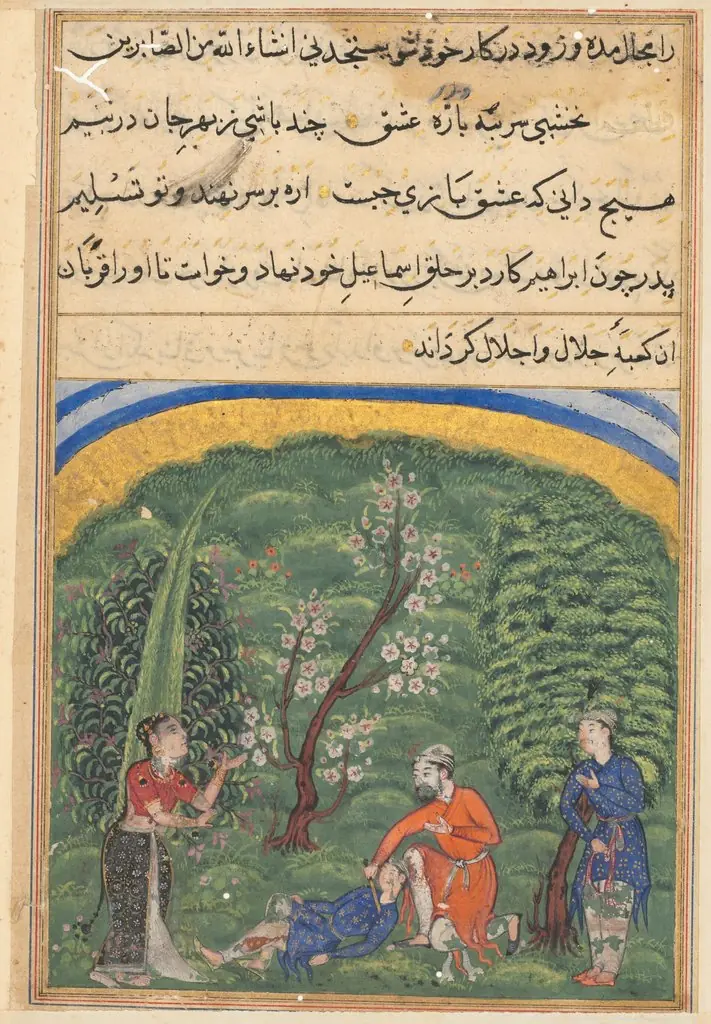 The sentinel in the employ of the Shah of Tabaristan prepares to sacrifice his son to the ghost of the Shah’s soul, from a Tuti-nama (Tales of a Parrot): Second Night
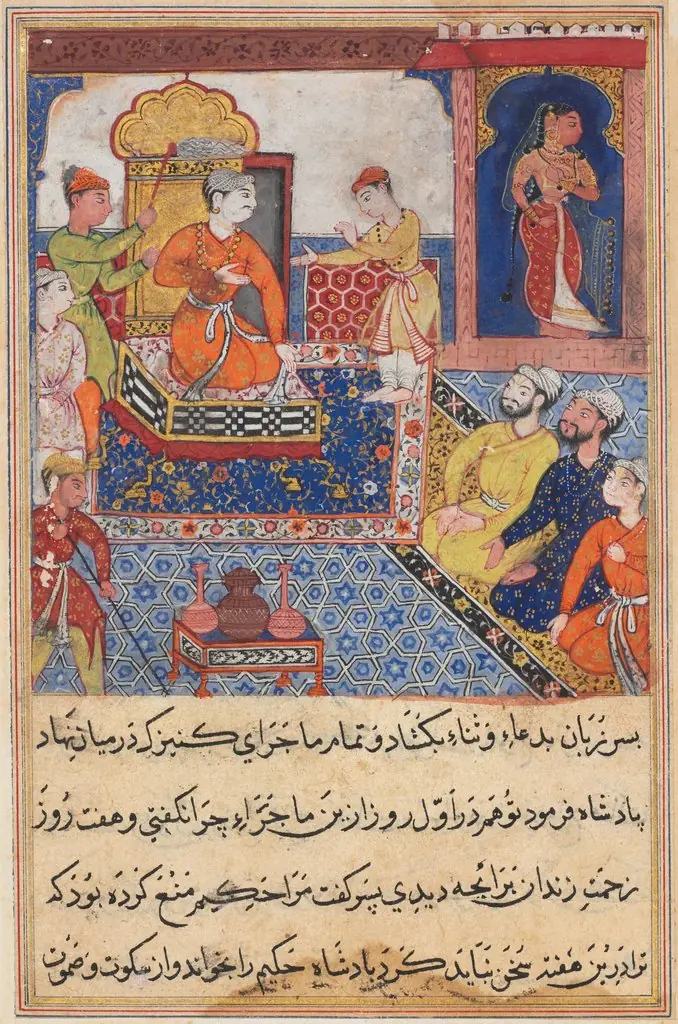 The young prince recounts his experiences to his father, the king, from a Tuti-nama (Tales of a Parrot): Eighth Night
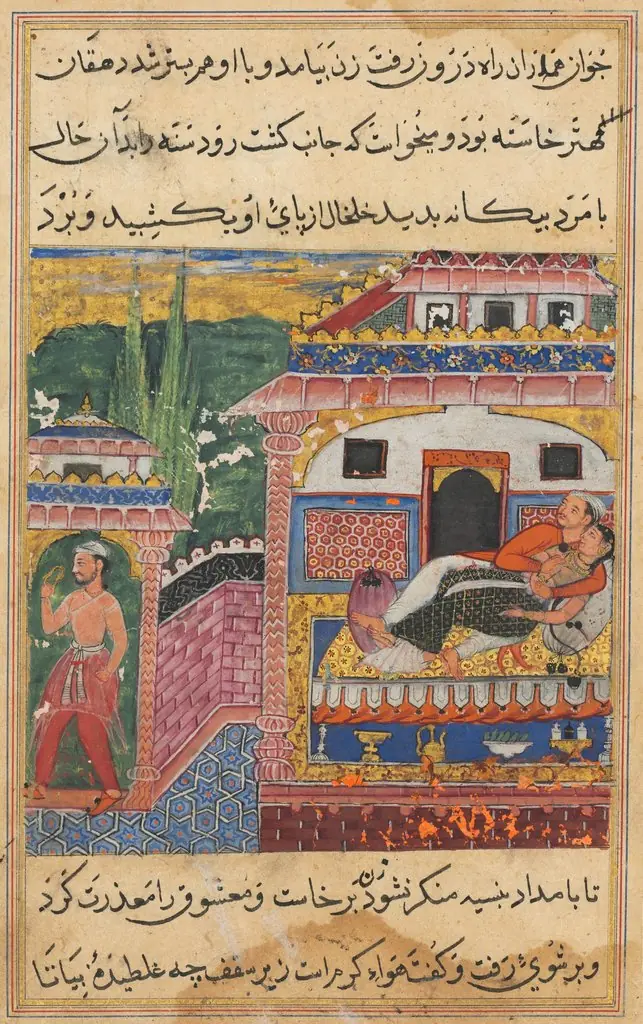 The farmer, father of the son with the deceitful wife, steals away with her anklet while she is in bed with her lover, from a Tuti-nama (Tales of a Parrot): Eighth Night
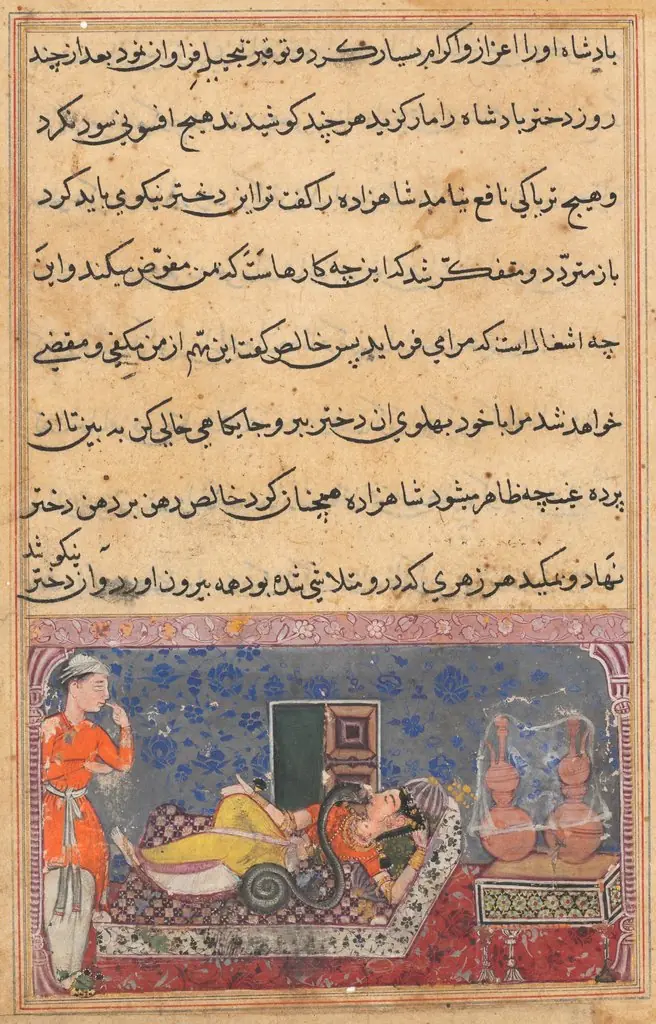 Khalis repays the prince for his kindness by changing into a snake and sucking the poison from the king’s daughter, from a Tuti-nama (Tales of a Parrot): Eighteenth Night
 The rejuvenated old man and the daughter of the king of the jinns take leave of the King of Kings, from a Tuti-nama (Tales of a Parrot): Seventh Night