Artwork
Quatrefoil Roundel with Arms and Secular Scenes
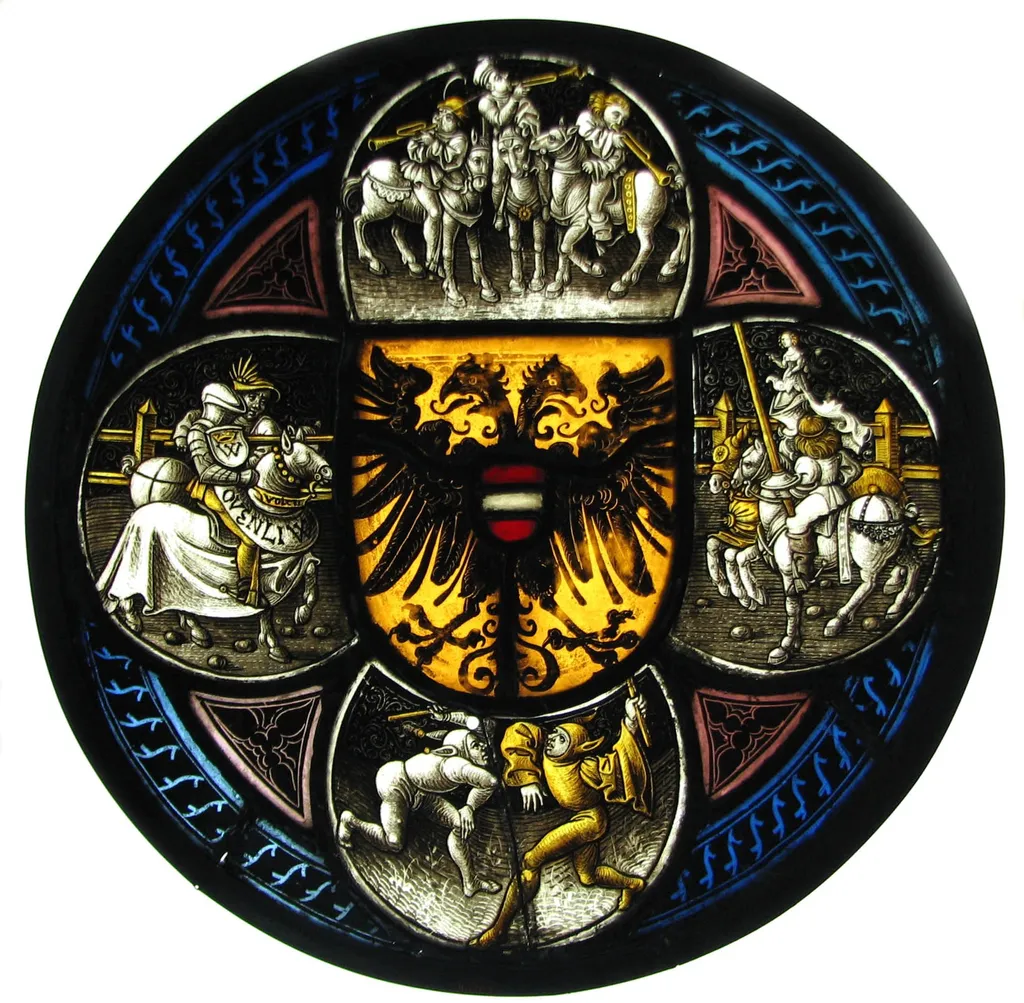
Quatrefoil Roundel with Arms and Secular Scenes is an unspecified painting. It dates from 1500 and is held in the collection of the Metropolitan Museum of Art. The work is a circular panel divided into four quadrants surrounding a central heraldic emblem.
About this work
Overview
The composition relies on a restrained palette of yellow, black and white, with fine decorative detailing throughout.
The work is a circular panel divided into four quadrants surrounding a central heraldic emblem. At its heart lies a coat of arms displaying a black double‑headed eagle set against a yellow field. The surrounding sections portray equestrian figures, one of whom wears a white robe and holds a round object. The composition relies on a restrained palette of yellow, black and white, with fine decorative detailing throughout.
Subject & Meaning
The central eagle serves as a dynastic or civic symbol, likely representing authority or lineage. The peripheral scenes, featuring mounted riders and a robed figure with a circular item, may illustrate episodes from secular life, possibly commemorating a patron’s achievements or allegorical virtues associated with the heraldic charge.
Technique & Style
Executed in tempera on a wooden roundel, the painting employs precise brushwork to render intricate patterns on clothing and armor. The muted chromatic scheme emphasizes line and form over vivid coloration, characteristic of late medieval or early Renaissance heraldic panels where clarity of emblematic content was paramount.
History & Provenance
The roundel is part of the collection of the Metropolitan Museum of Art, acquired through the museum’s acquisitions program. Its origins trace to a European workshop that produced heraldic roundels for noble households, though the exact date and original patron remain undocumented.
Context
Heraldic roundels such as this were commonly used as decorative elements in domestic interiors, on furniture, or as portable displays of family identity during the 14th–16th centuries. The inclusion of secular scenes alongside the coat of arms reflects a trend toward integrating narrative content with symbolic insignia in private commissions.
Artist & collection

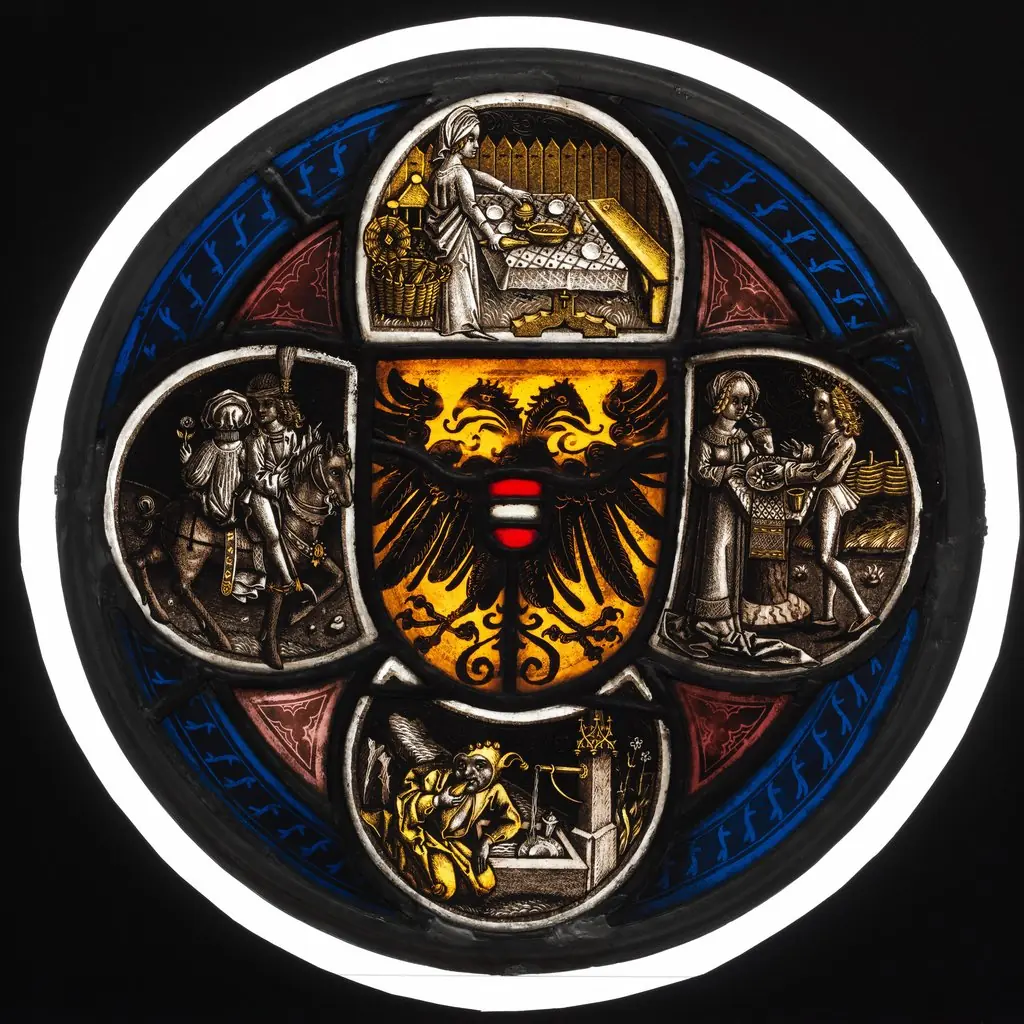 Quatrefoil Roundel with Arms and Secular Scenes
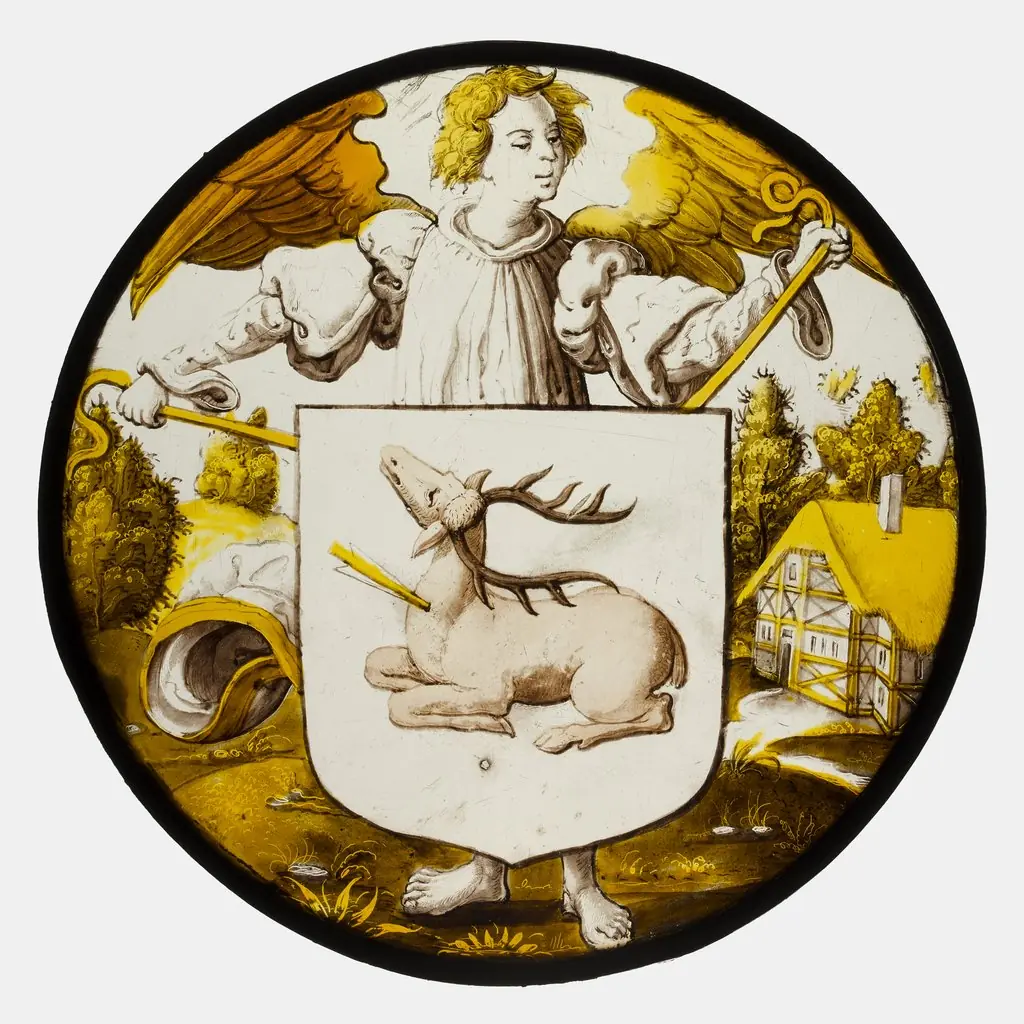 Roundel with Angel Supporting a Heraldic Shield
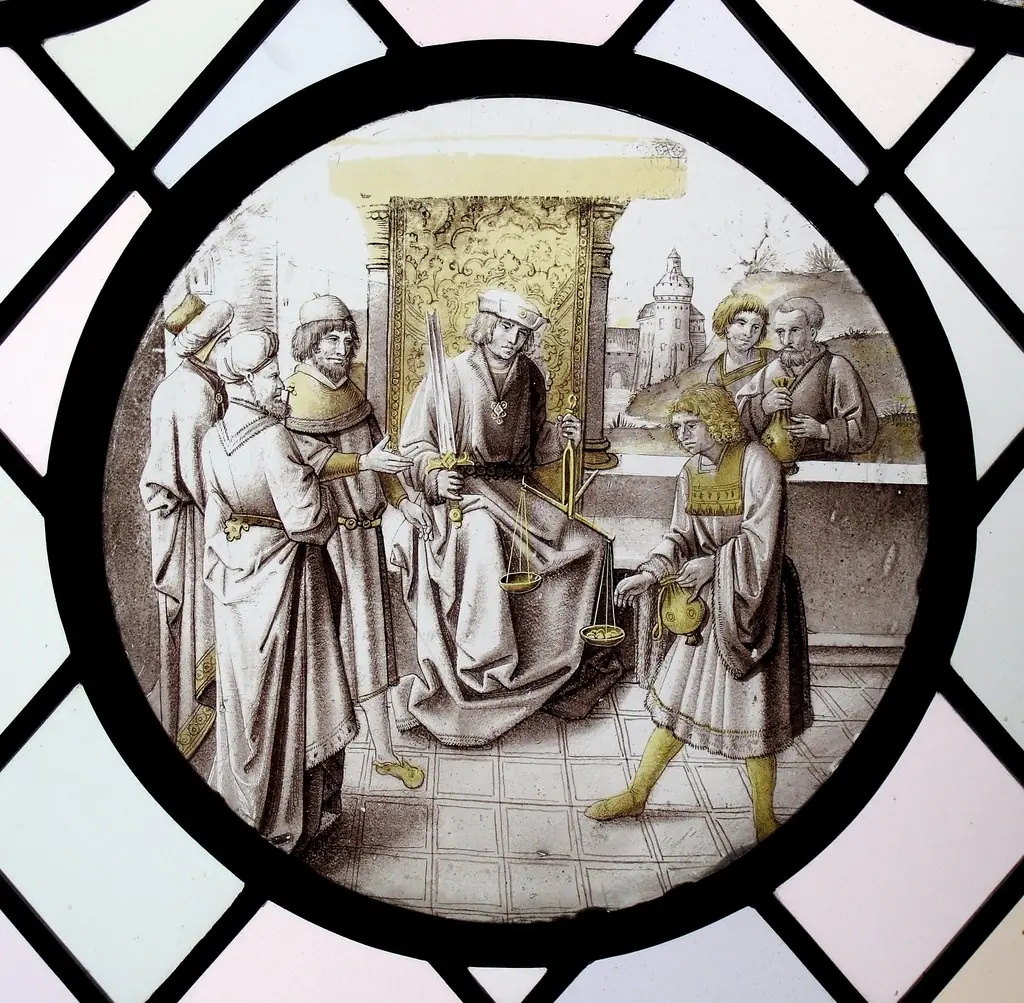 Roundel with Judgment or Allegorical Scene
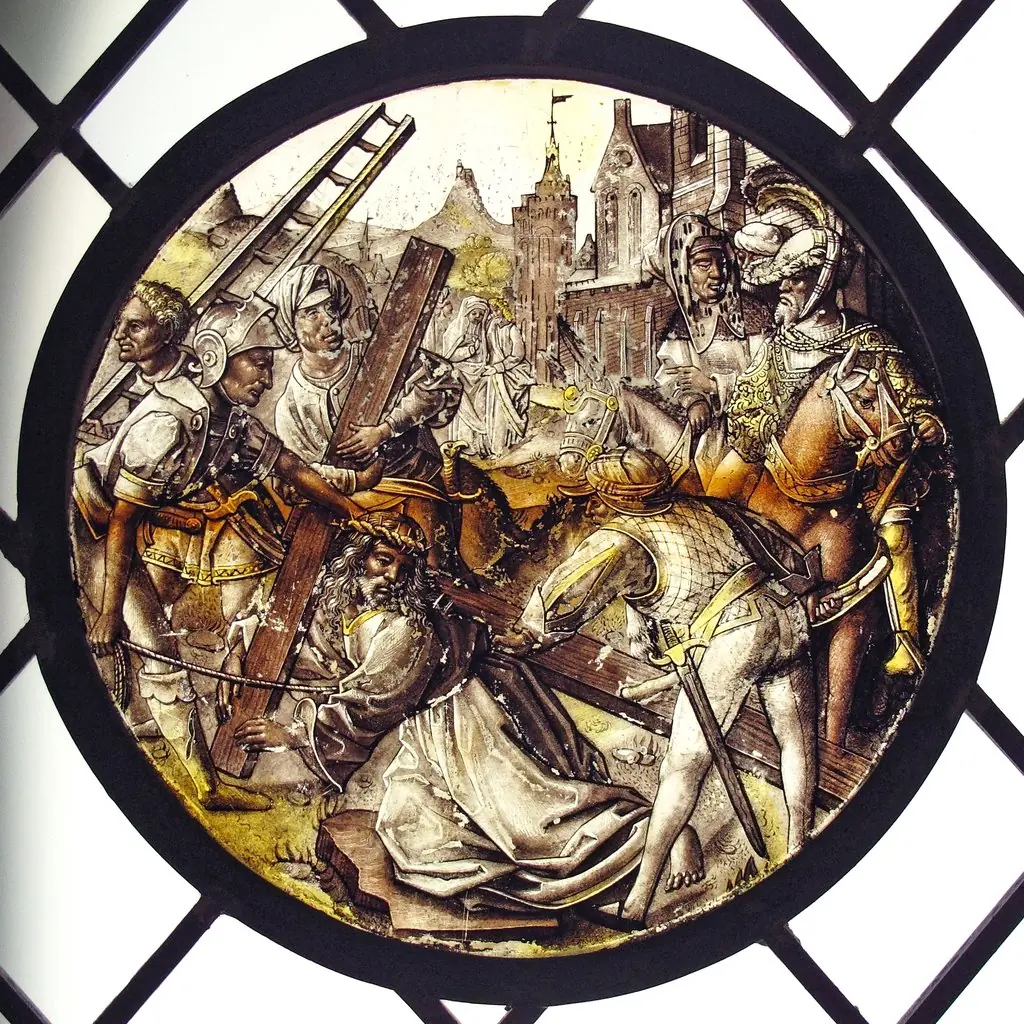 Roundel with Christ Bearing the Cross
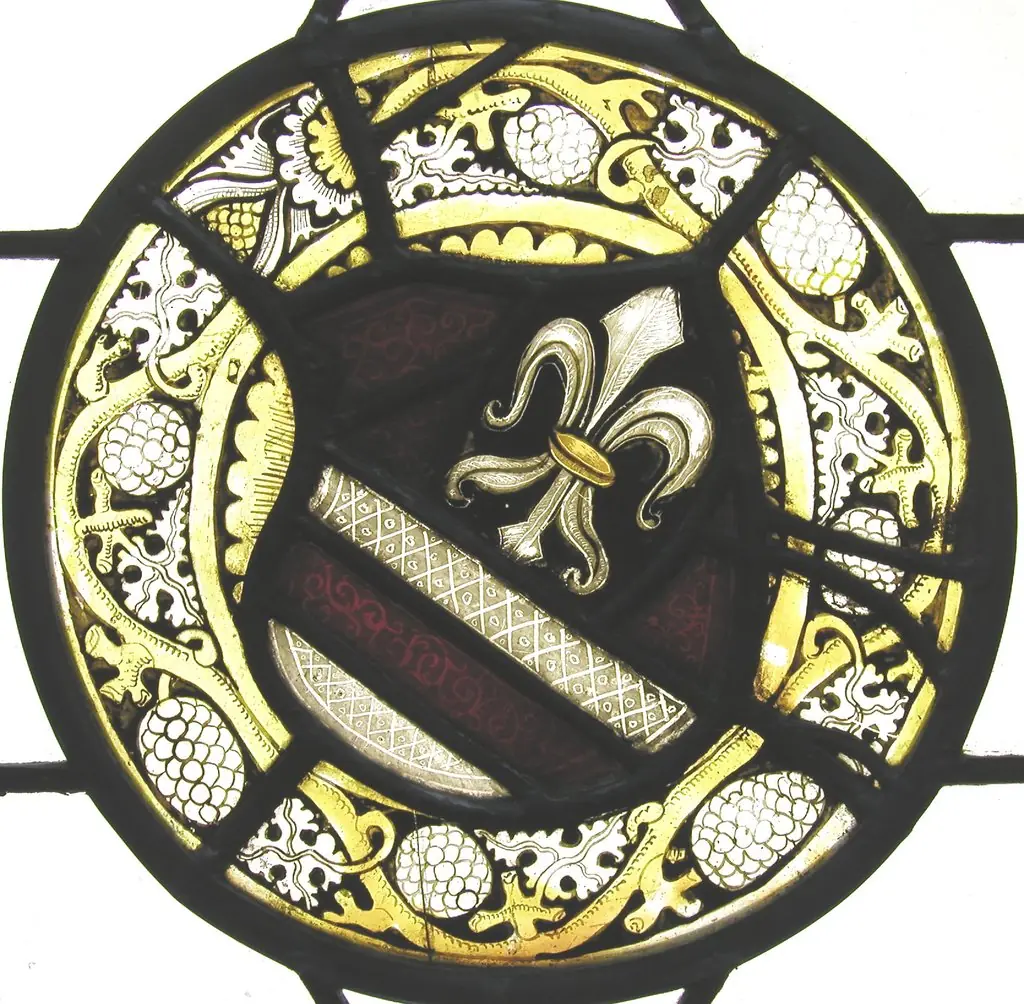 Armorial Roundel
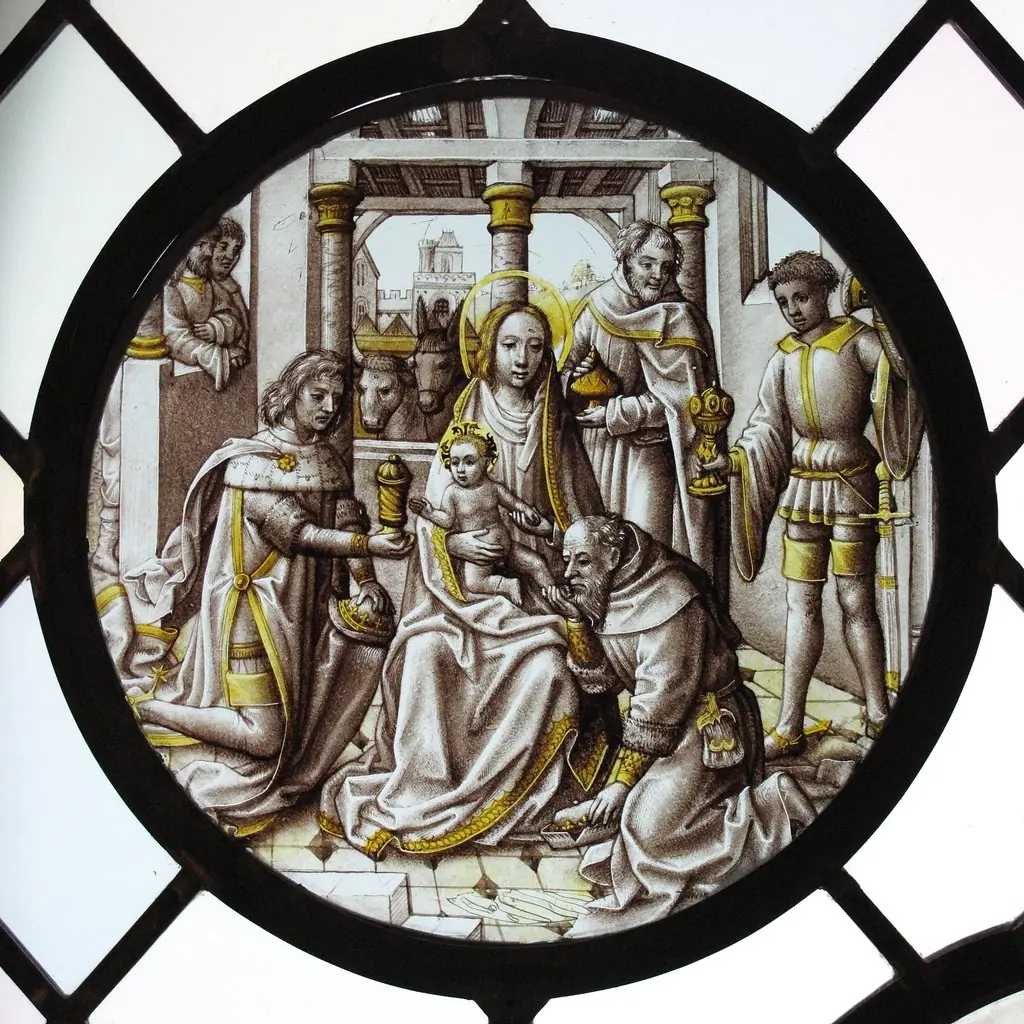 Roundel with the Adoration of the Magi
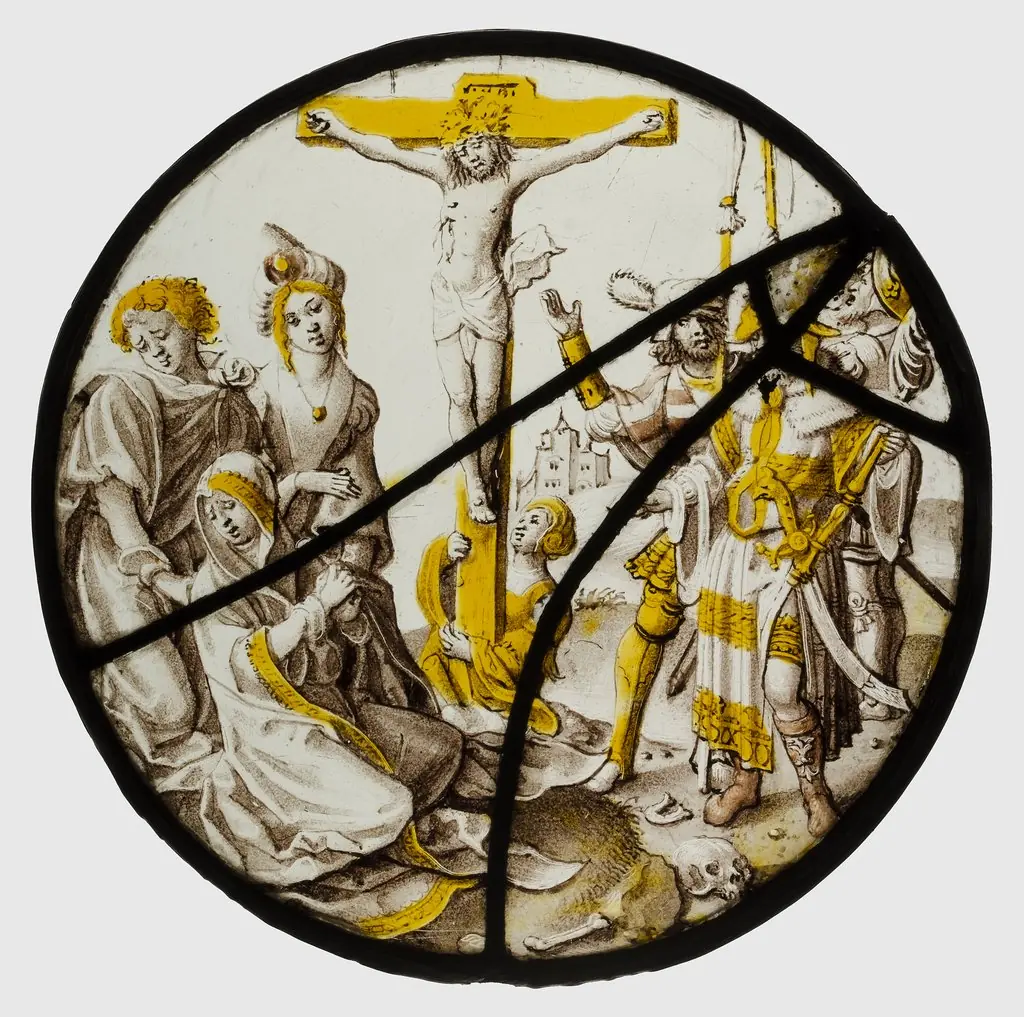 Roundel with the Crucifixion
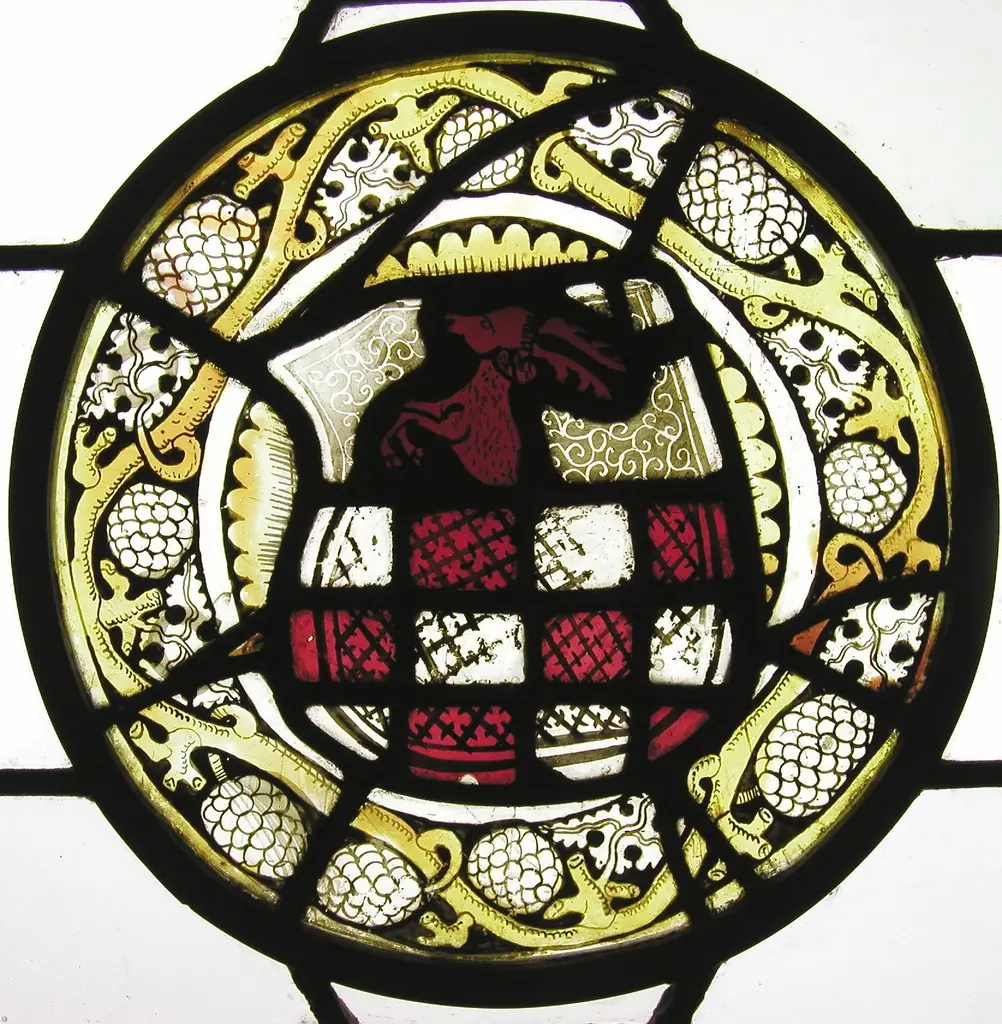 Armorial Roundel
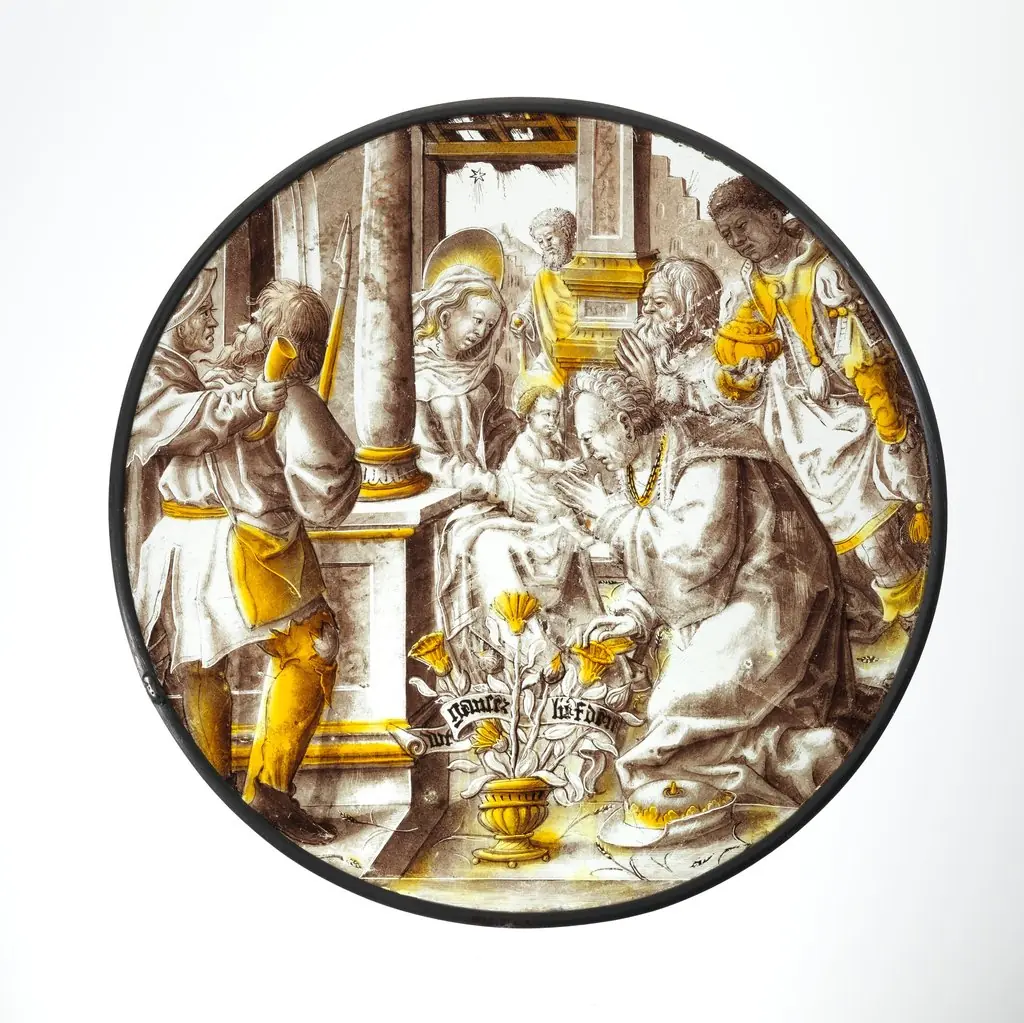 Roundel with Adoration of the Kings
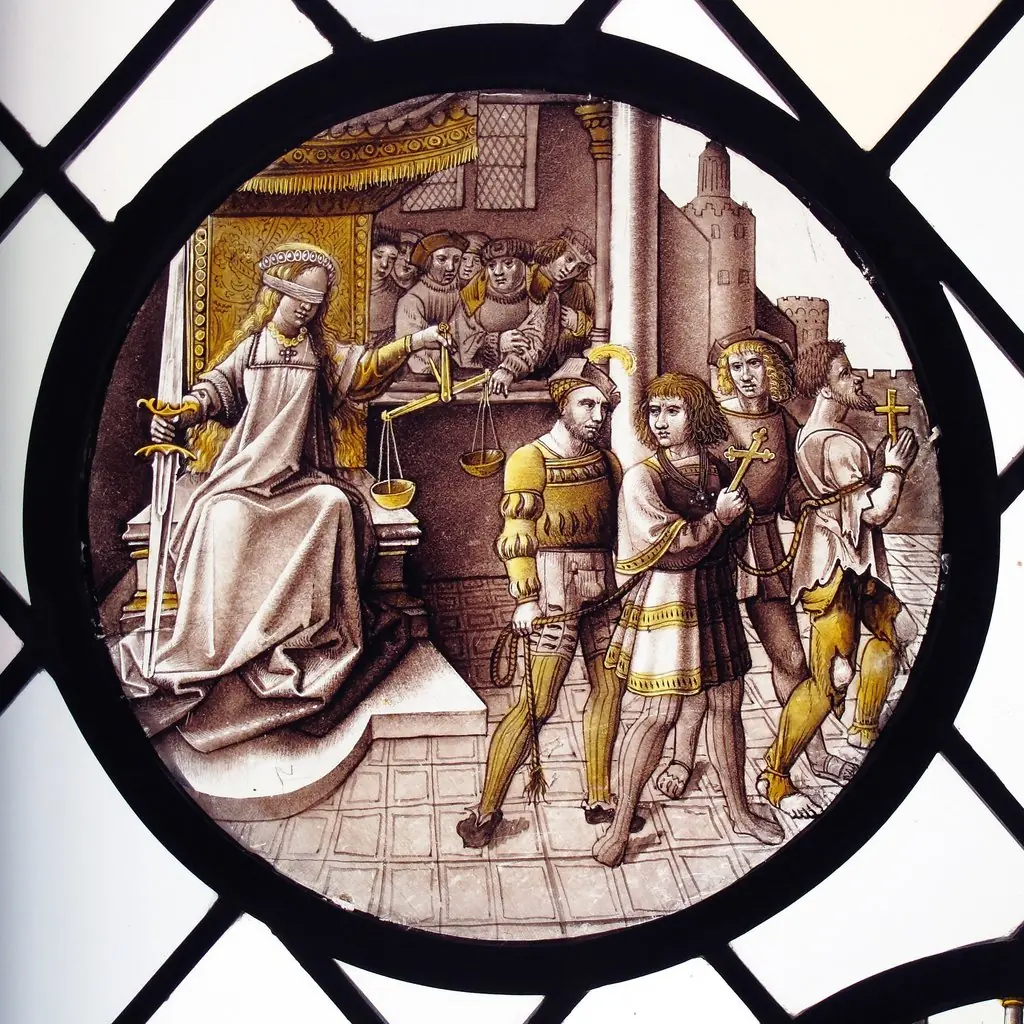 Roundel with Justice
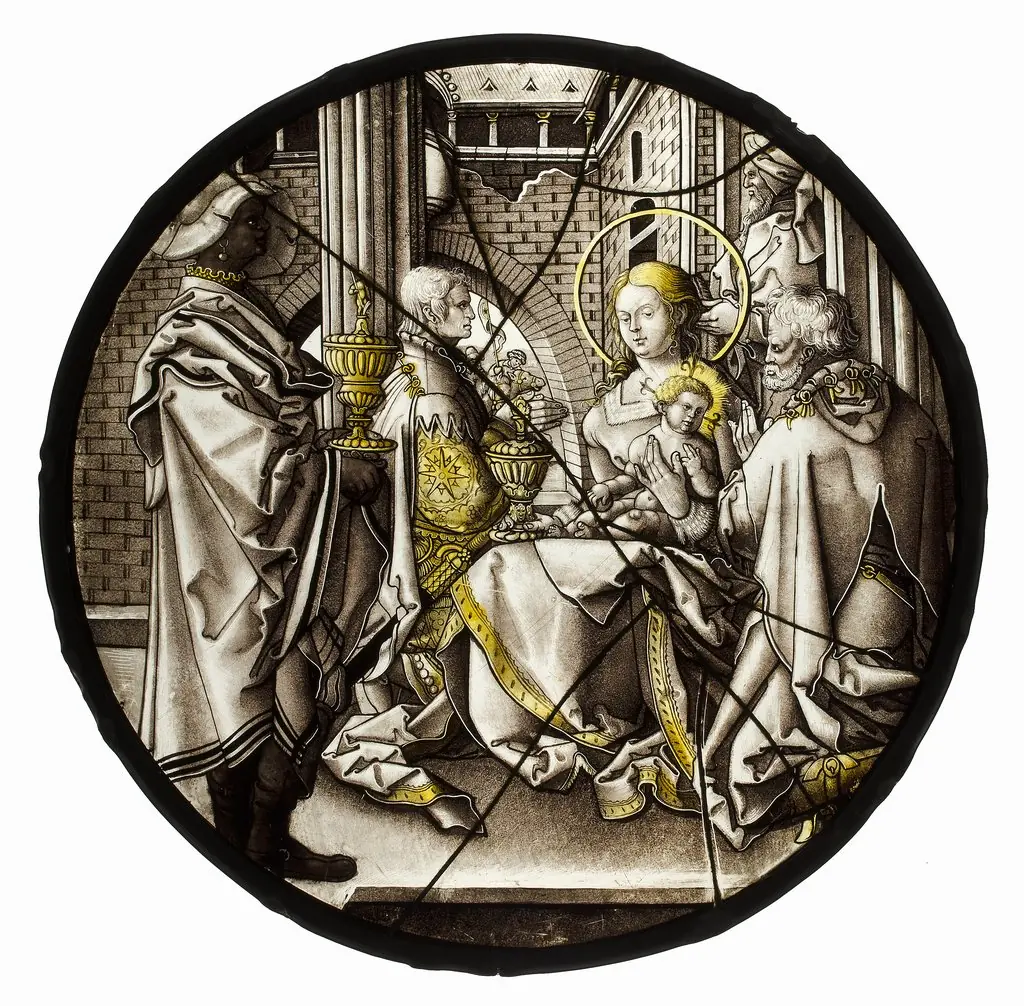 Roundel with Adoration of the Magi
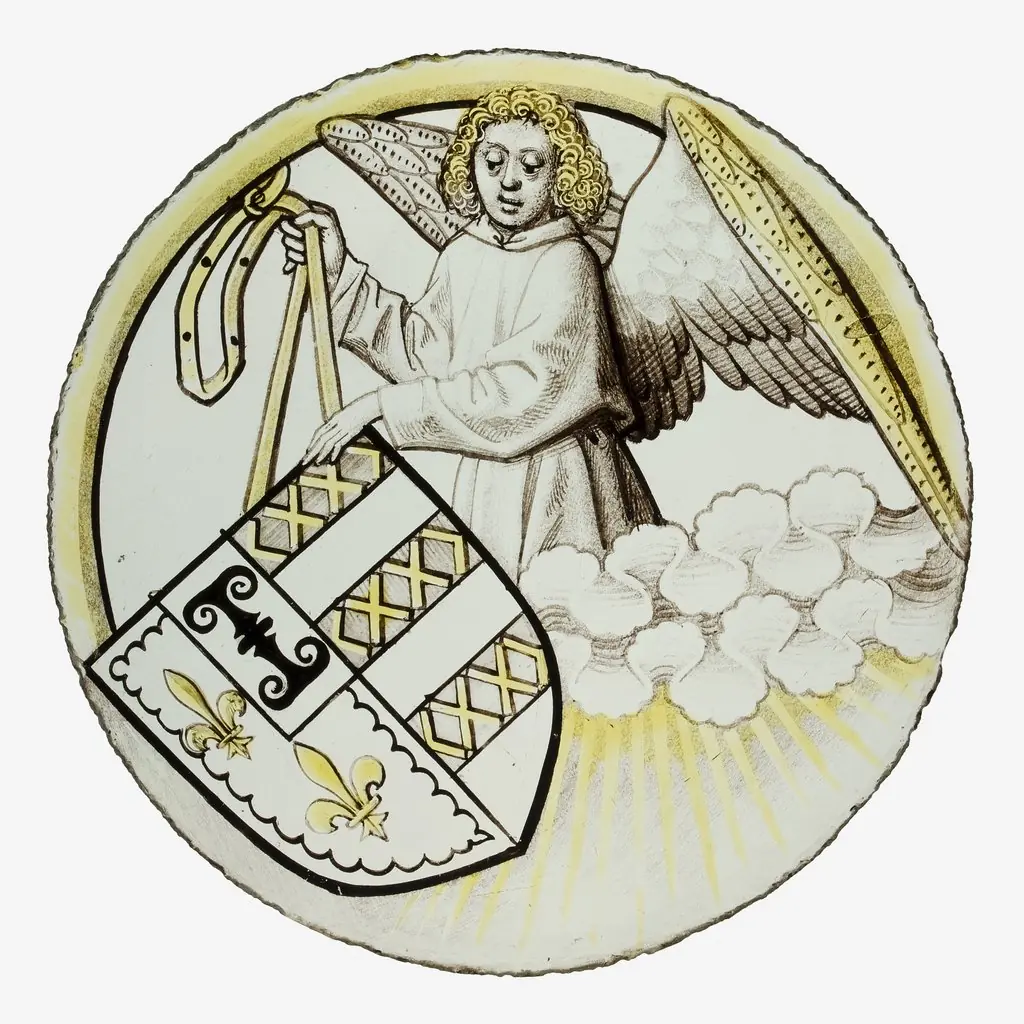 Roundel with Angel Supporting a Heraldic Shield
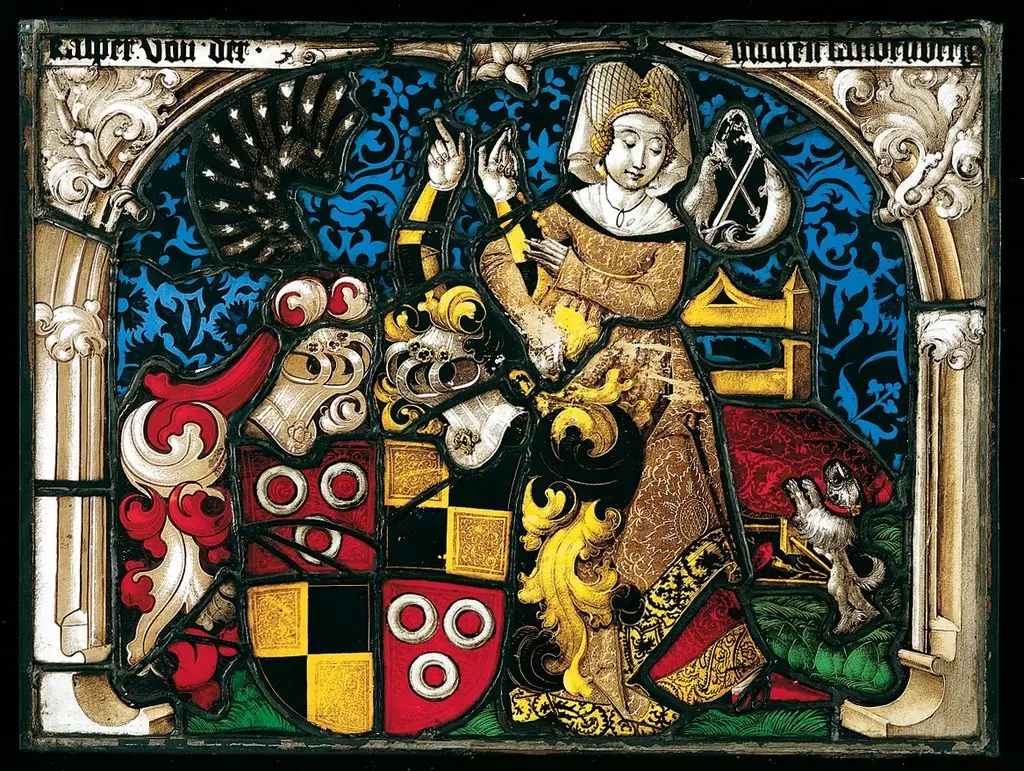 Stained-Glass Panel with a Coat of Arms and a Female Supporter
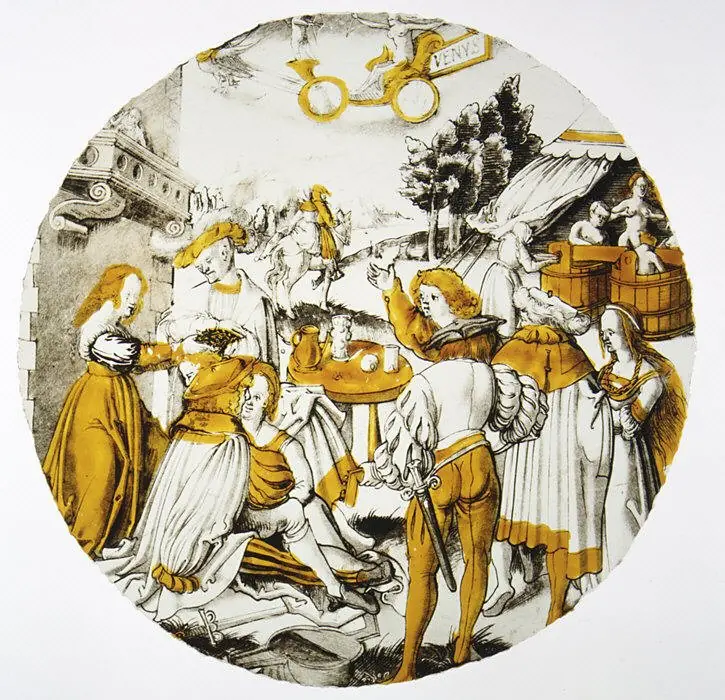 Roundel of The Planet Venus and Her Children
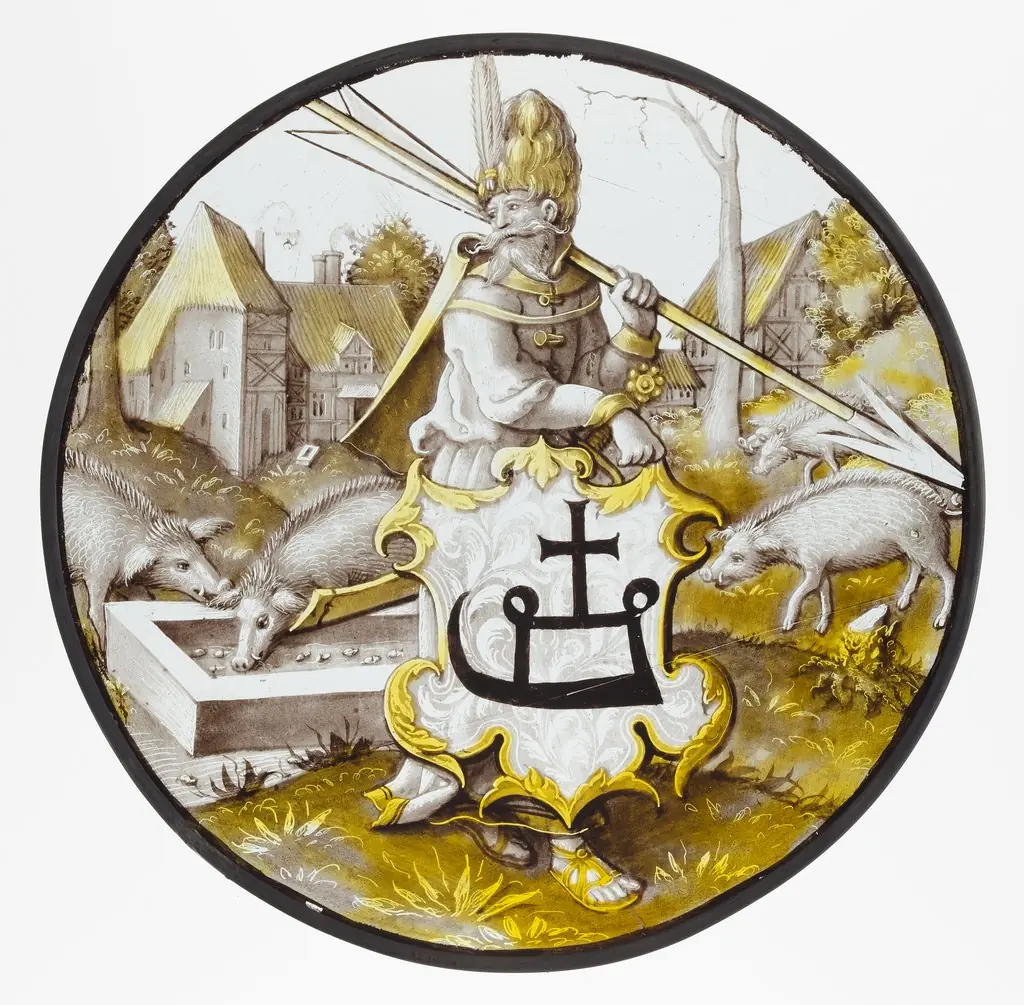 Roundel with Turkish Soldier holding an Arrow and Support
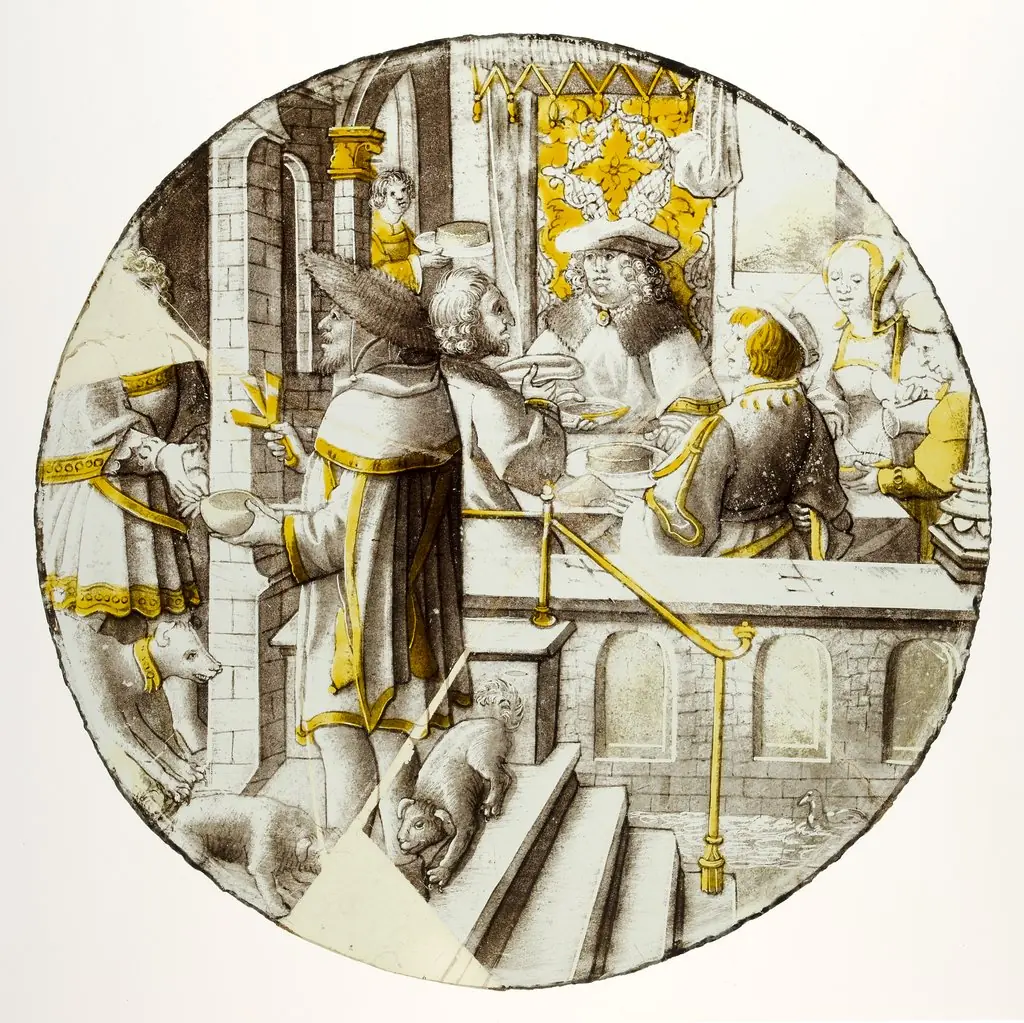 Roundel with Lazarus at the House of Dives
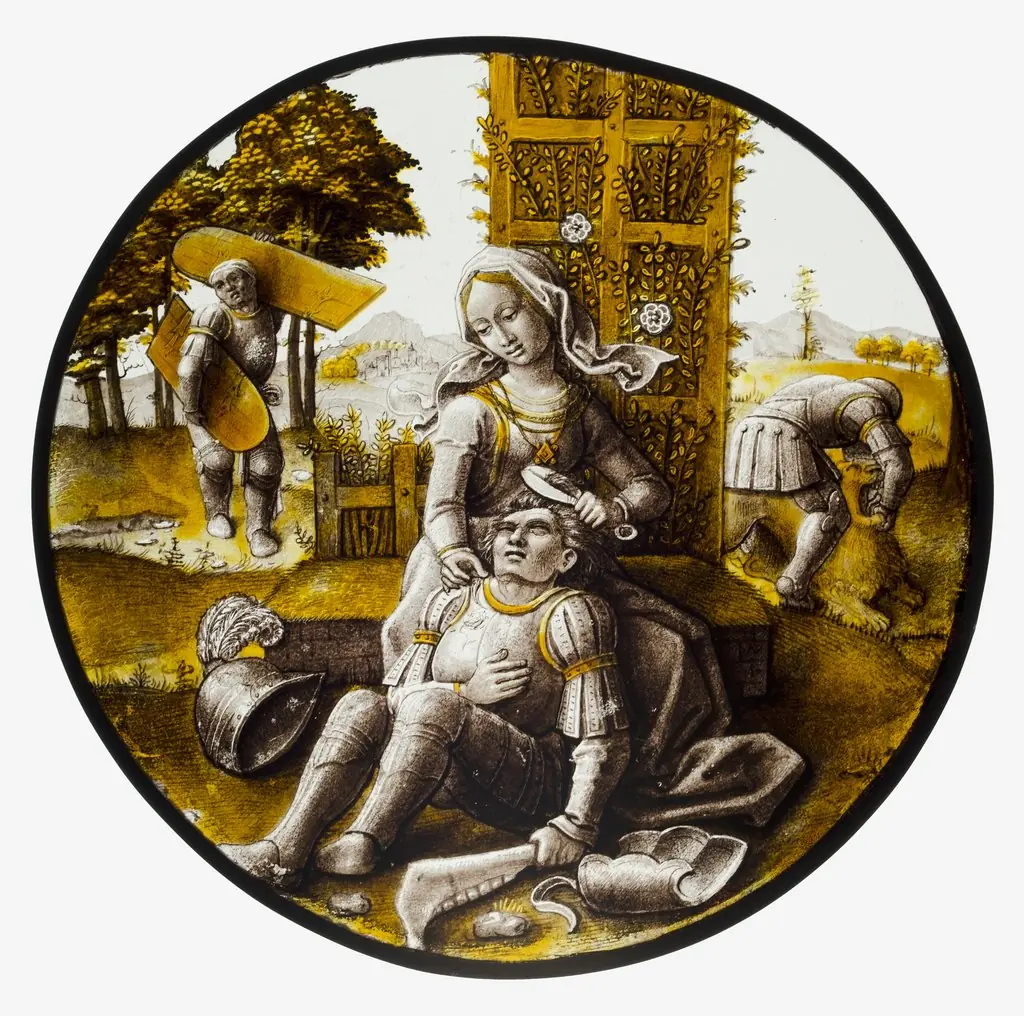 Roundel with Delilah Cutting the Hair of Samson
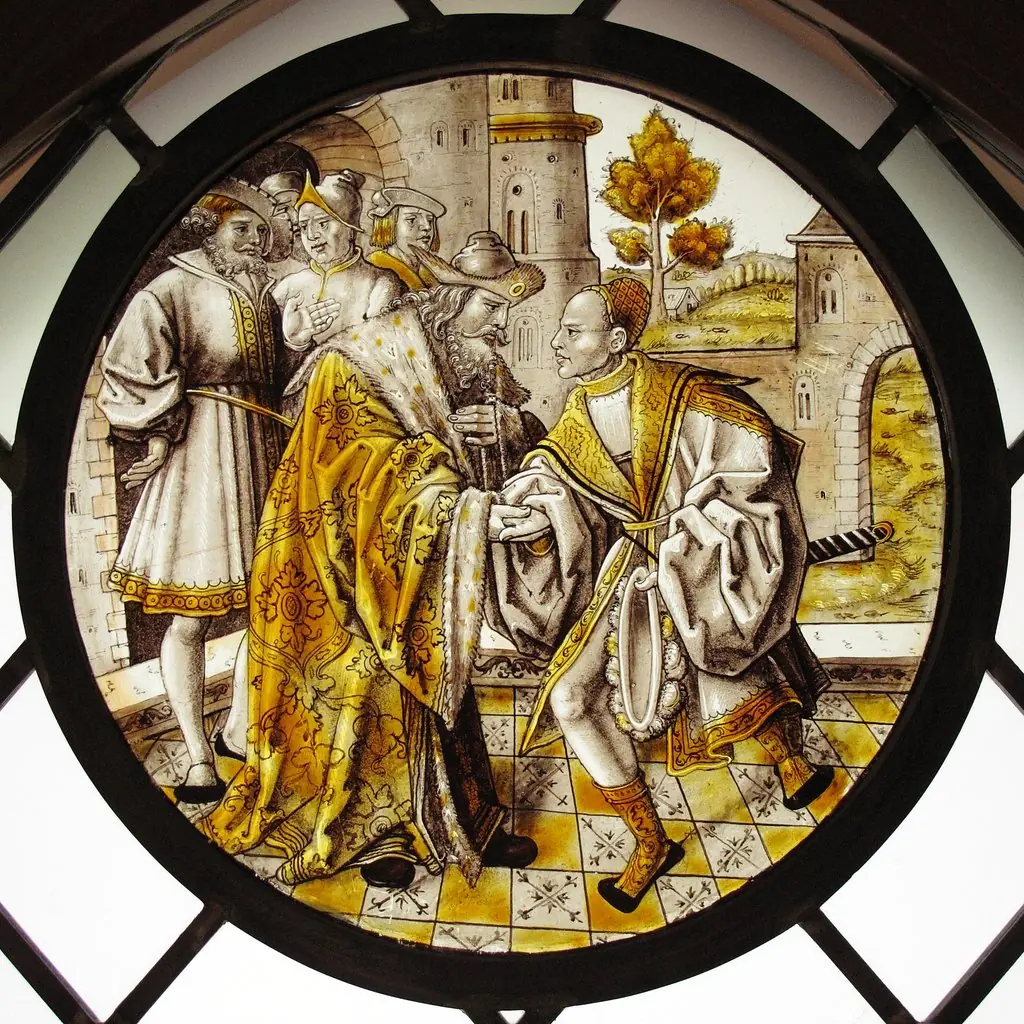 Roundel with Return of the Prodigal Son
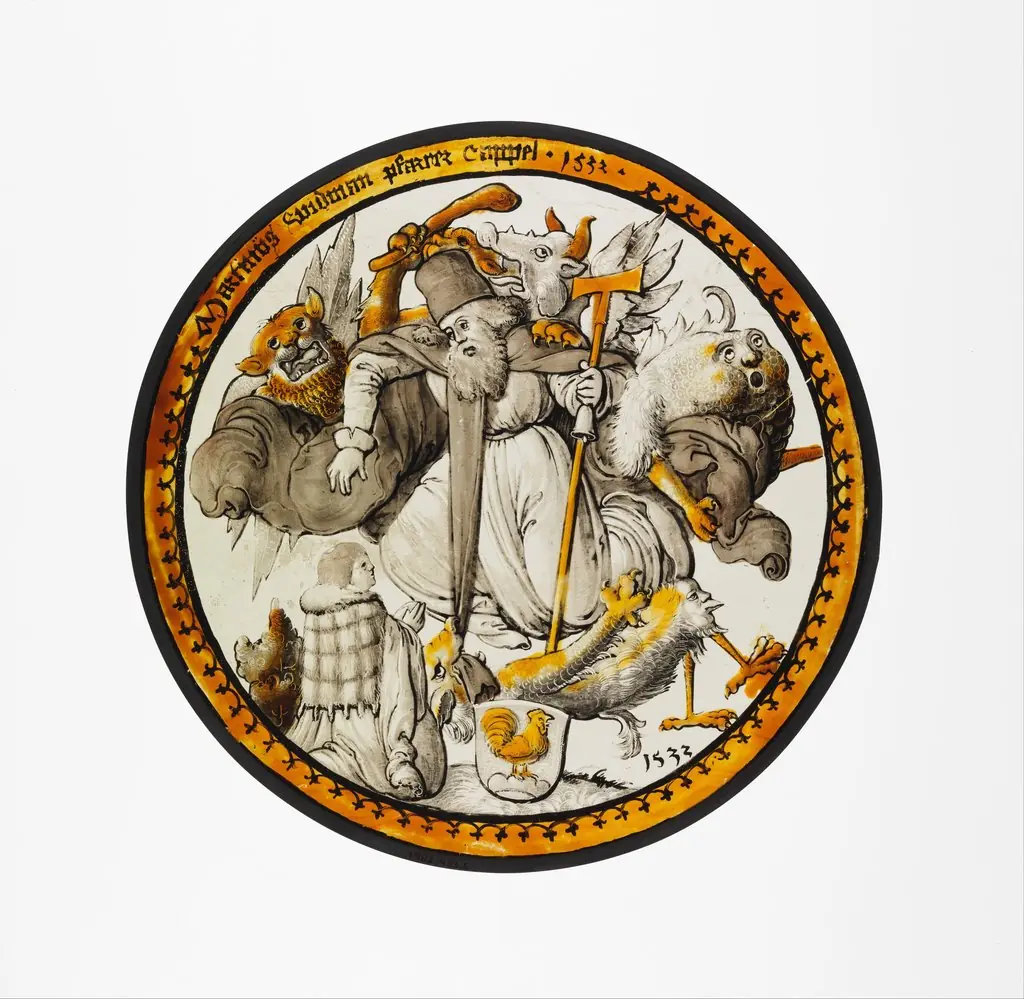 Roundel with the Temptation of Saint Anthony
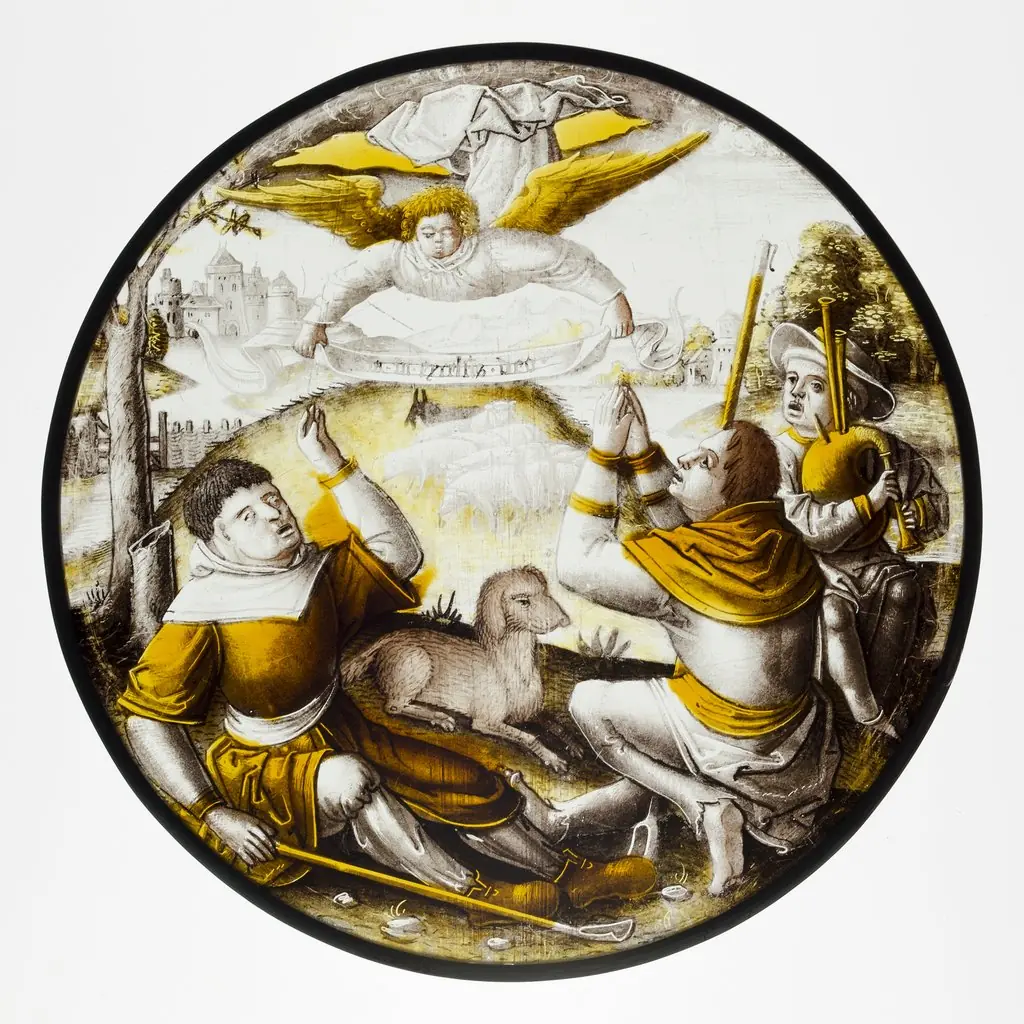 Roundel with Annunciation to the Shepherds