Artwork
Lucretia
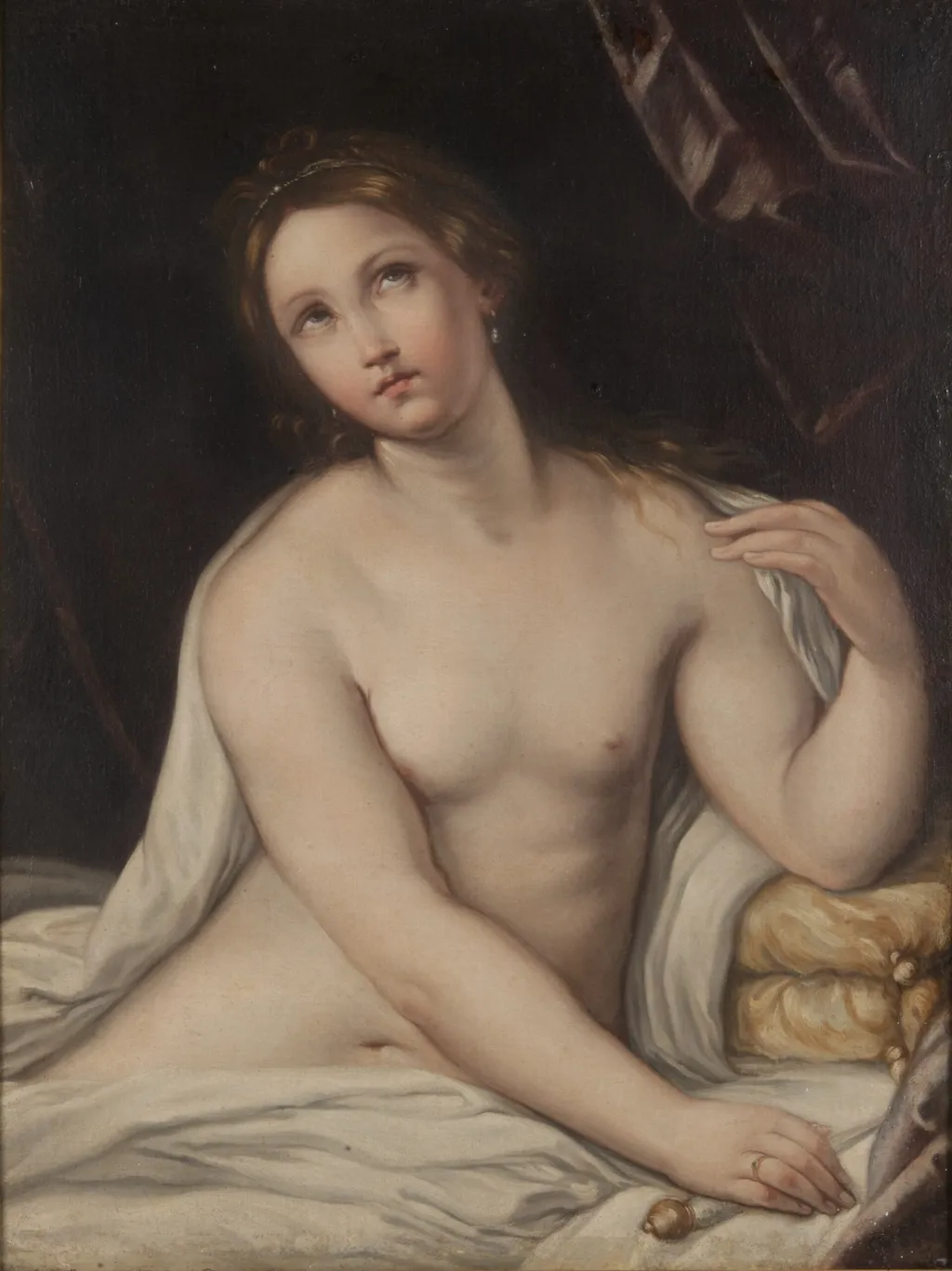
Lucretia is an oil painting by Unknown. It is held in the collection of the Nationalmuseum.
About this work
Overview
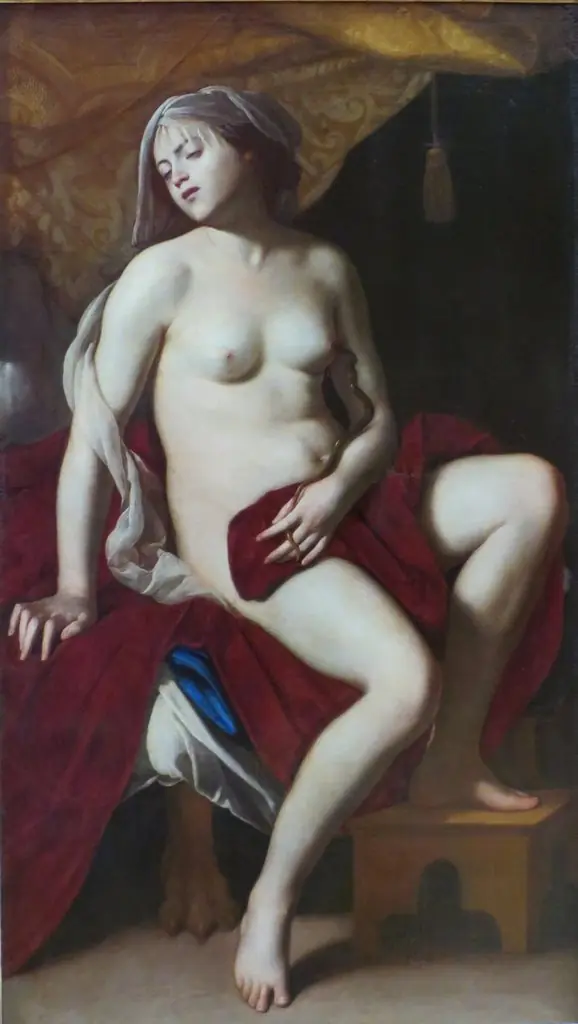
The lighting highlights her pale skin against the shadowed background, reinforcing the painting’s introspective tone.
This oil painting portrays Lucretia, a figure from Roman legend, seated on a bed in a moment of quiet resolve. Her nudity, partially concealed by a white sheet, and the dark surrounding space emphasize her isolation. The composition focuses on her stillness and inward gaze, creating a mood of deep contemplation rather than action. The lighting highlights her pale skin against the shadowed background, reinforcing the painting’s introspective tone.
Subject & Meaning
Lucretia is depicted at the moment before her suicide, following her violation by Sextus Tarquinius. Her upward gaze and solemn expression suggest inner turmoil and moral conviction. The gold ring and earring signify her status and virtue, contrasting with the vulnerability of her exposed form. The scene does not show violence but instead captures the psychological weight of her decision, aligning with Renaissance ideals of honor and female agency.
Technique & Style
The artist employs chiaroscuro to model Lucretia’s form, using subtle gradations of light to define her body against the deep, unbroken background. Brushwork is restrained, favoring smooth transitions over texture, enhancing the sense of stillness. The white sheet is rendered with delicate highlights, drawing attention to her posture and the quiet dignity of her pose. The palette is limited, dominated by flesh tones and muted shadows, reinforcing the painting’s somber mood.
History & Provenance
The painting’s early ownership is undocumented, but it entered a public collection in the early 20th century. Its attribution to a specific artist remains debated among scholars, though stylistic elements suggest a Northern Renaissance origin, possibly from the late 16th or early 17th century. No records of commission or patronage survive, indicating it may have been produced for private contemplation rather than public display.
Context
During the Renaissance, Lucretia’s story was frequently depicted as a moral allegory of chastity and civic virtue. Artists used her suicide to explore themes of honor, gender, and resistance to tyranny. This painting aligns with a broader tradition of female martyr imagery in Northern Europe, where psychological depth and restrained emotion were valued over dramatic spectacle. It reflects contemporary interest in inner life and moral complexity.
Legacy
The painting contributes to a visual discourse on female agency and moral integrity in early modern art. Its quiet intensity distinguishes it from more theatrical interpretations of Lucretia’s death. While not widely reproduced, it remains a significant example of how Renaissance artists conveyed psychological gravity through minimal gesture and controlled composition, influencing later depictions of internal conflict in Western art.
Artist & collection

 Domestic Scene
 Giacomo and Cardinal Marco, investing Andrea, Abbot of San Zeno, with his Benefice
 The Nymph of Fontainebleau
 Portrait of a Woman
 Madonna and Child with Saints in the Enclosed Garden
 Venus and Minerva
 Family Group of Four on Sofa
 Wall painting from Room H of the Villa of P. Fannius Synistor at Boscoreale