Artwork
Élisabeth-Alexandrine de Bourbon, Mademoiselle de Sens (1705–1765)
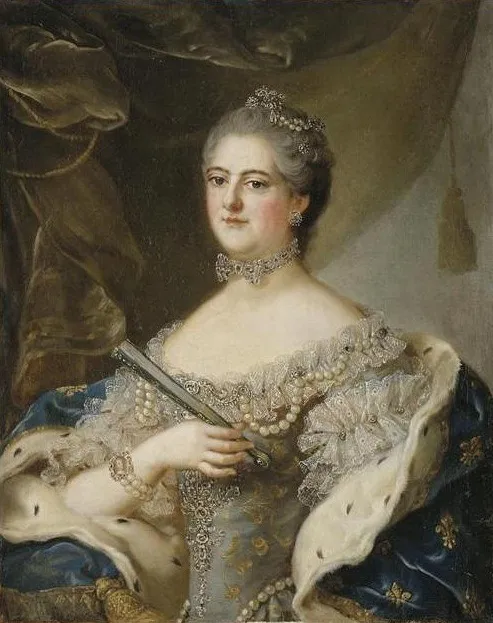
Élisabeth-Alexandrine de Bourbon, Mademoiselle de Sens (1705–1765) is an oil painting by the Rococo painting artist Unknown. It dates from 1750 and is held in the collection of the Palace of Versailles. This oil painting depicts Élisabeth-Alexandrine de Bourbon, known as Mademoiselle de Sens, portrayed in full aristocratic attire.
About this work
Overview
The work is a formal portrait, typical of early 18th-century French court portraiture, designed to convey status through detail rather than narrative.
This oil painting depicts Élisabeth-Alexandrine de Bourbon, known as Mademoiselle de Sens, portrayed in full aristocratic attire. The composition centers on her figure against a deep, unbroken background, emphasizing the richness of her clothing and adornments. The work is a formal portrait, typical of early 18th-century French court portraiture, designed to convey status through detail rather than narrative.
Subject & Meaning
Élisabeth-Alexandrine de Bourbon was a princess of the blood, daughter of Louis III, Prince of Condé. The portrait asserts her noble lineage through symbolic elements: the pearl tiara and necklace signify purity and royal connection, while the ornate gold embroidery on her gown reflects her position within the Bourbon dynasty. The fan, a common accessory among aristocratic women, suggests refinement and social poise.
Technique & Style
The artist employed fine brushwork to render the textures of silk, lace, and metal thread in the dress, with meticulous attention to the play of light on pearls and embroidery. The dark background isolates the subject, focusing attention on her attire and facial expression. The palette is restrained, dominated by blue, white, and gold, reinforcing the portrait’s formal tone and aristocratic restraint.
History & Provenance
The painting was likely commissioned during the early 1720s, when Élisabeth-Alexandrine was a prominent figure at the French court. It remained within noble collections until the 19th century, possibly passing through the Condé family. Its current location and acquisition history are documented in institutional records, though its early ownership chain remains partially unverified.
Context
Portraits of royal women in this period served political and dynastic functions, reinforcing lineage and social hierarchy. Élisabeth-Alexandrine’s image, like others of her rank, was intended for private display among elite circles, not public exhibition. The emphasis on jewelry and fabric, rather than landscape or setting, aligns with the conventions of French court portraiture under Louis XV.
Legacy
The portrait endures as a record of aristocratic aesthetics in early 18th-century France. While not widely reproduced, it contributes to scholarly understanding of how noble women were visually represented through material culture. Its preservation offers insight into the craftsmanship and symbolic language of courtly identity during the Ancien Régime.
Artist & collection

 Domestic Scene
 Giacomo and Cardinal Marco, investing Andrea, Abbot of San Zeno, with his Benefice
 The Nymph of Fontainebleau
 Portrait of a Woman
 Madonna and Child with Saints in the Enclosed Garden
 Venus and Minerva
 Family Group of Four on Sofa
 Wall painting from Room H of the Villa of P. Fannius Synistor at Boscoreale
 Queen Maria Amalia of Saxony
 Portrait of Natalia Alexandrovna Repnina
 Porträt der Marie Leszczyńska (1703-1768)
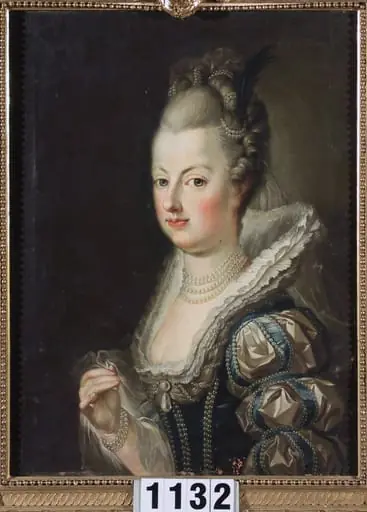 Maria Antoaneta, regina Franței
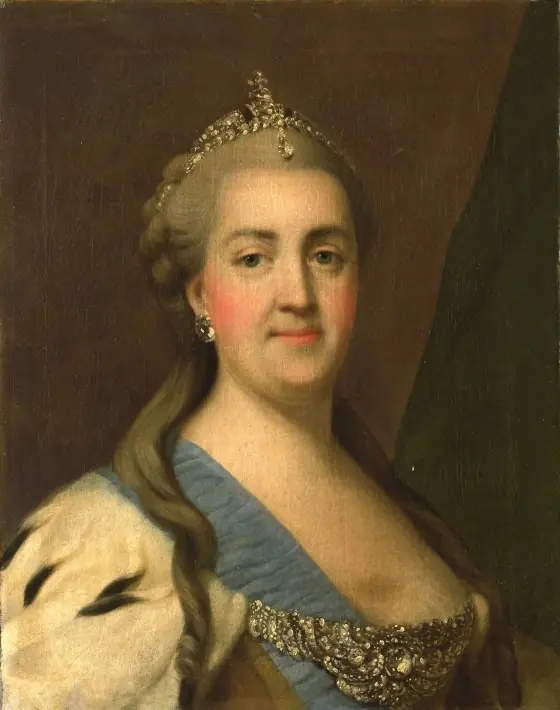 Portrait of Catherine II (1729-96), empress of Russia
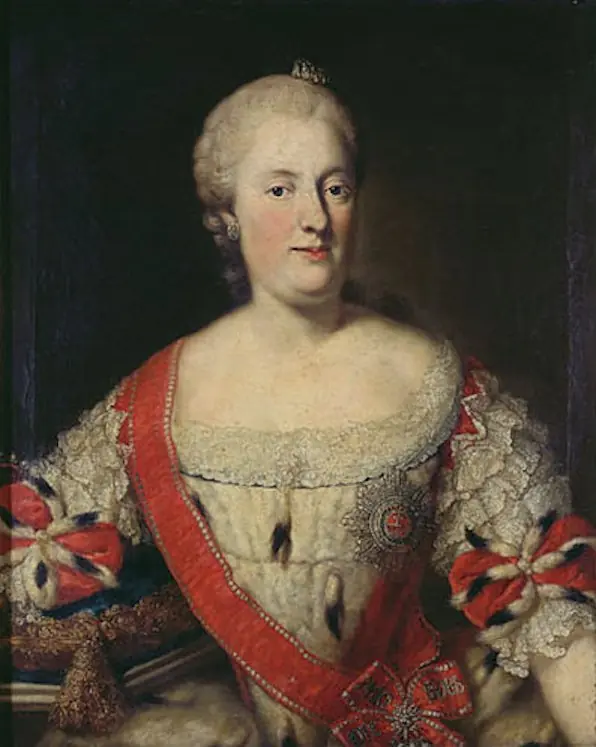 Bildnis der Maria Anna, Gemahlin des Kurfürsten Max III. Joseph von Bayern (Werkstatt)
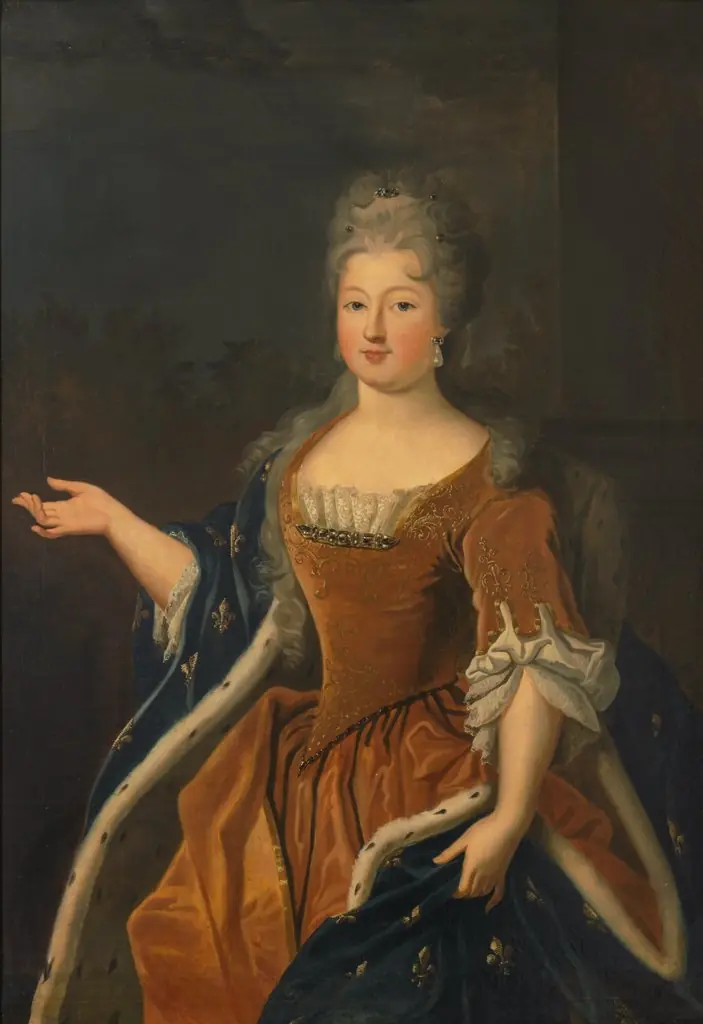 Portrait of Marie Louise-Elisabeth d'Orléans
 Catherine Opalińska, Queen of Poland
 Porträt der Varvara Alexeevna Sheremeteva