Artwork
The Carousal (Scene from Faust?)
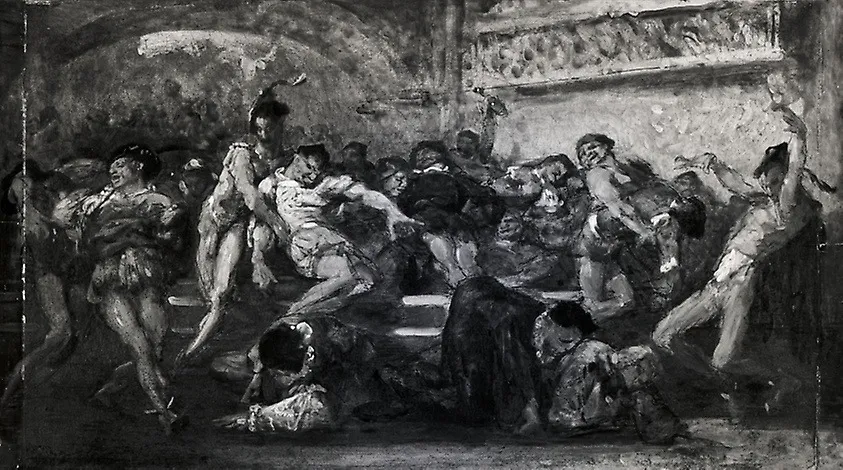
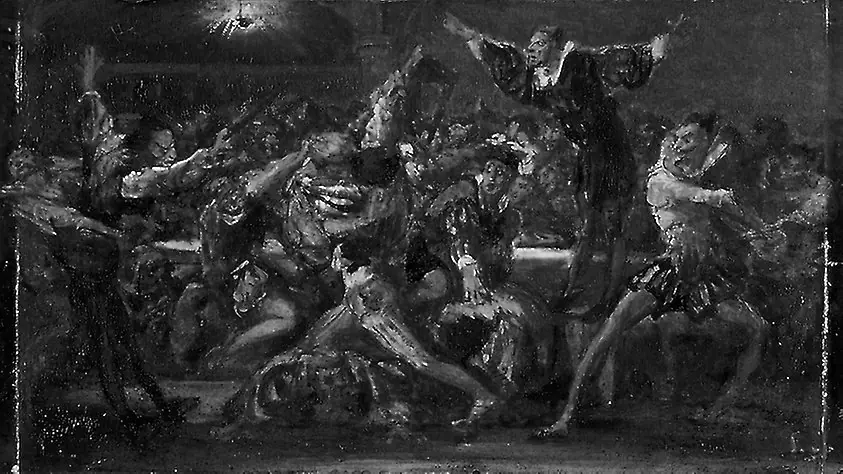
The Carousal (Scene from Faust?) is an unspecified painting by Unknown. It dates from 1865 and is held in the collection of the Art Institute of Chicago.
About this work
Overview
The composition emphasizes energy through asymmetrical grouping and implied motion, avoiding narrative clarity.
This painting captures a dynamic interior scene populated by multiple figures in varied postures—standing, seated, reclining—suggesting movement and transient interaction. The setting lacks clear architectural definition, implying a staged or imagined space. Attire and demeanor hint at an earlier era, though no specific time or location is confirmed. The composition emphasizes energy through asymmetrical grouping and implied motion, avoiding narrative clarity.
Subject & Meaning
The figures appear engaged in a social or ceremonial gathering, possibly drawn from literary or theatrical sources, though no definitive link to Faust or any known narrative is established. Their gestures and spatial arrangement suggest ritual, celebration, or fleeting intimacy, but the absence of clear symbols or text leaves interpretation open. The scene resists moral or allegorical reading, favoring atmosphere over story.
Technique & Style
Light and shadow are used to model forms and direct attention, with areas of deep tone contrasting against lighter zones to suggest volume and depth. Brushwork is loose in some regions, particularly in drapery and background, while facial features and hands receive more defined attention. The lack of a clear horizon or spatial cues creates a compressed, intimate environment.
History & Provenance
The painting’s origin and early ownership remain undocumented. It has no recorded exhibition history prior to the 20th century, and its attribution to a specific artist has not been conclusively verified. The title 'The Carousal (Scene from Faust?)' was likely assigned later, reflecting speculative associations rather than documented intent.
Context
Created during a period when artists frequently drew from literary and theatrical themes, the work aligns with broader 19th-century interests in dramatic, emotionally charged scenes. However, its ambiguous setting and undefined narrative distinguish it from more literal illustrations of known texts. It reflects a trend toward evocative, mood-driven imagery over didactic storytelling.
Legacy
The painting has not been widely reproduced or critically analyzed in major scholarly texts. It remains a minor, enigmatic work within its artist’s oeuvre, valued more for its atmospheric qualities than for historical or technical innovation. Its obscurity underscores the many such works that resist easy categorization yet preserve a sense of lived moment.
Artist & collection

 Domestic Scene
 Giacomo and Cardinal Marco, investing Andrea, Abbot of San Zeno, with his Benefice
 The Nymph of Fontainebleau
 Portrait of a Woman
 Madonna and Child with Saints in the Enclosed Garden
 Venus and Minerva
 Family Group of Four on Sofa
 Wall painting from Room H of the Villa of P. Fannius Synistor at Boscoreale
 The Death of Virginia
 Der Tod des Cato von Utica
 Aeneas Offering Presents to King Latinus and Asking Him for the Hand of His Daughter
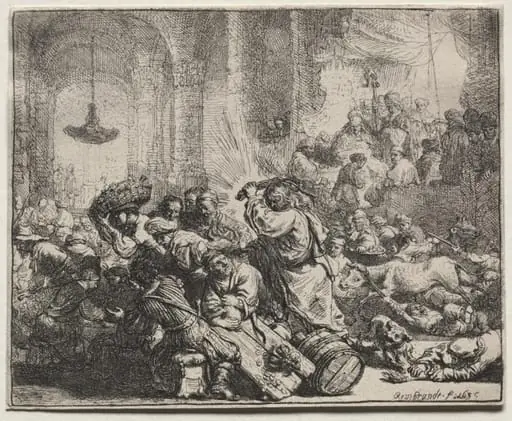 Christ Driving the Money Changers from the Temple
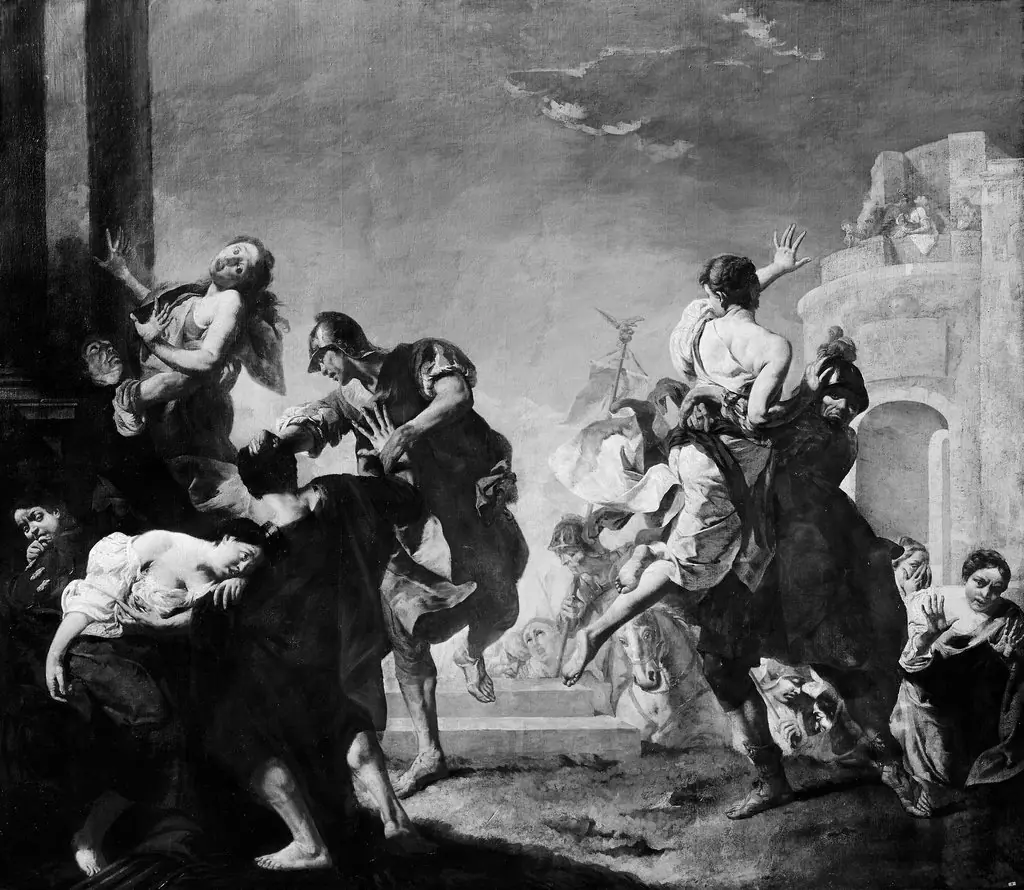 Rape of the Sabines
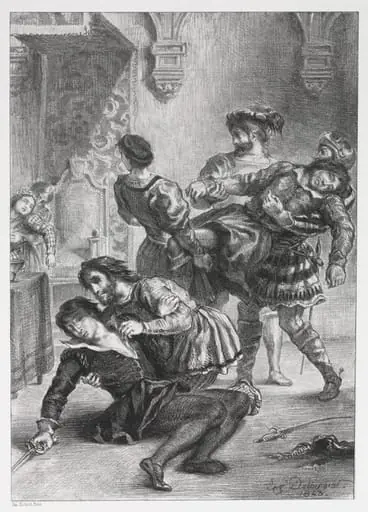 Hamlet: The Death of Hamlet
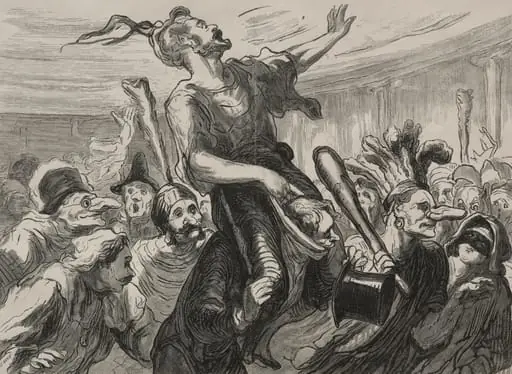 At the Opera Ball: Long live the smartly dressed crowd!
 Ecce Homo
 Geißelung Christi
 Rape of the Sabine Women
 Die Ermordung des hl. Severus
 The Carousal (Scene from Faust?)