Artwork
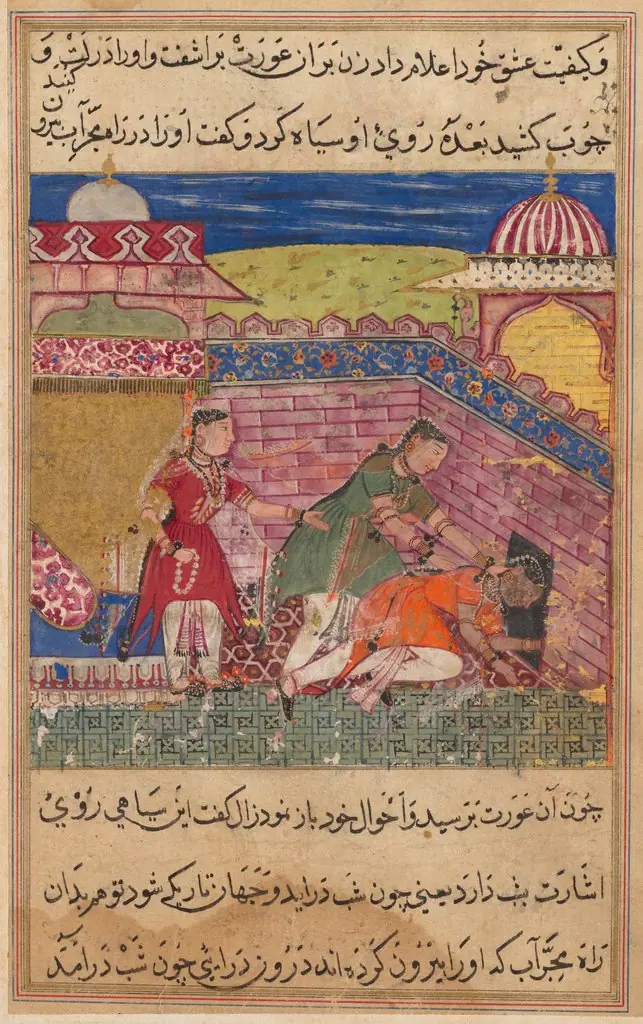
The false Mansur punished before the judge and expelled from the city, from a Tuti-nama (Tales of a Parrot): Seventeenth Night
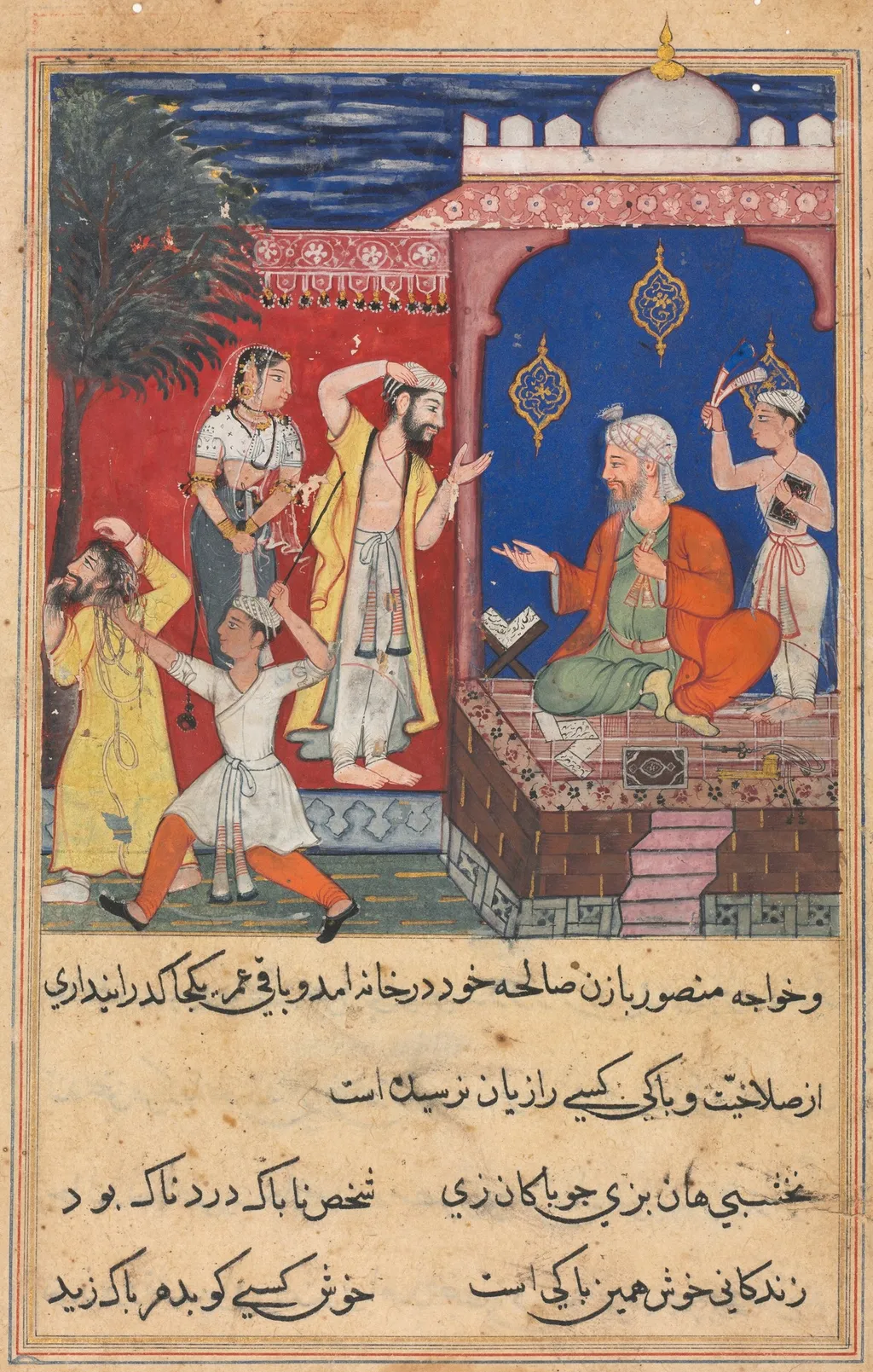
The false Mansur punished before the judge and expelled from the city, from a Tuti-nama (Tales of a Parrot): Seventeenth Night is an unspecified painting. It dates from 1560 and is held in the collection of the Cleveland Museum of Art. The work depicts a narrative episode from a Persian illustrated manuscript, showing the moment a false Mansur is apprehended and expelled.
About this work
Overview
The work depicts a narrative episode from a Persian illustrated manuscript, showing the moment a false Mansur is apprehended and expelled.
The work depicts a narrative episode from a Persian illustrated manuscript, showing the moment a false Mansur is apprehended and expelled. The composition is divided into two zones: on the left, a crowd in vivid yellows, reds and whites surrounds the condemned figure, while on the right a seated official in orange and green gestures toward the scene, accompanied by a servant with a fan. A blue wall, white dome and a solitary palm complete the background.
Subject & Meaning
The scene illustrates a moral tale from the Tuti‑nama, a collection of parrot‑told stories, in which a deceitful individual named Mansur faces public punishment. The juxtaposition of the bustling, accusatory crowd with the detached authority figure underscores themes of justice and social order in medieval Persian literature.
Technique & Style
Rendered in flat, saturated pigments, the painting employs a decorative, two‑dimensional approach typical of Persian miniature art. Figures are outlined without chiaroscuro, and the composition relies on bold color blocks and stylized gestures rather than realistic modeling, emphasizing narrative clarity over illusionistic depth.
History & Provenance
The image originates from a manuscript of the Tuti‑nama, likely produced in the Persianate world during the late medieval period. The specific copy from which this folio derives is not detailed, but such illustrated books were commonly commissioned for elite patrons and circulated among literary circles.
Context
Illustrated books like the Tuti‑nama served both entertainment and didactic purposes, using vivid visual storytelling to convey ethical lessons. This painting reflects the broader tradition of courtly manuscript production, where artists combined literary content with elaborate decorative schemes.
Legacy
Works of this type inform contemporary understandings of Persian narrative art and its role in cultural transmission. The piece exemplifies the aesthetic conventions that continue to influence modern exhibitions of Islamic manuscript illumination.
Artist & collection

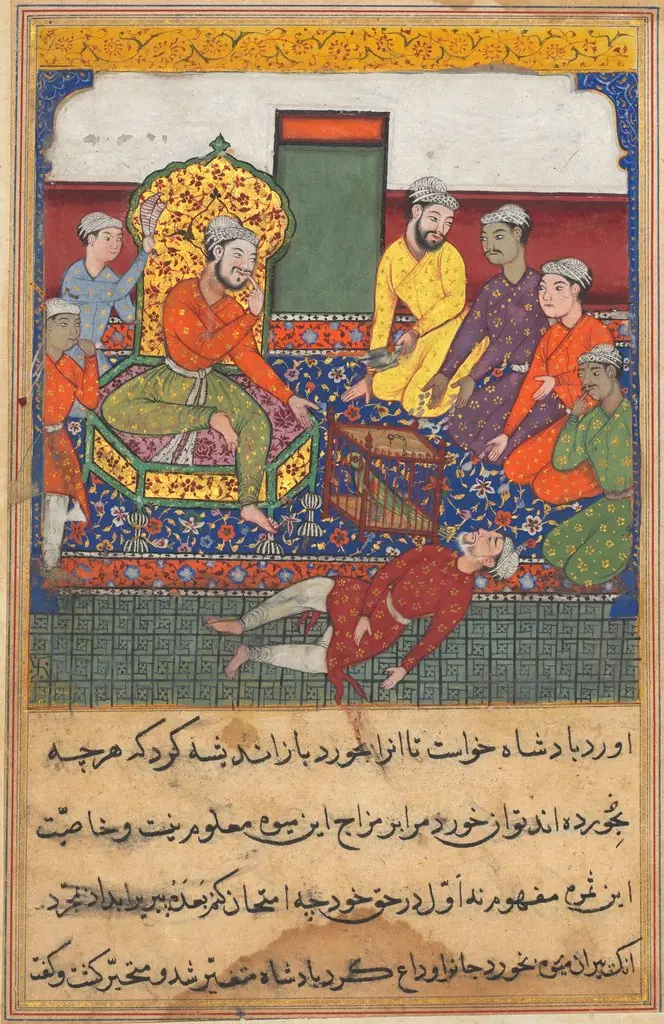 The old man eats of the fruit of the Tree of Life, but drops dead, from a Tuti-nama (Tales of a Parrot): Ninth Night
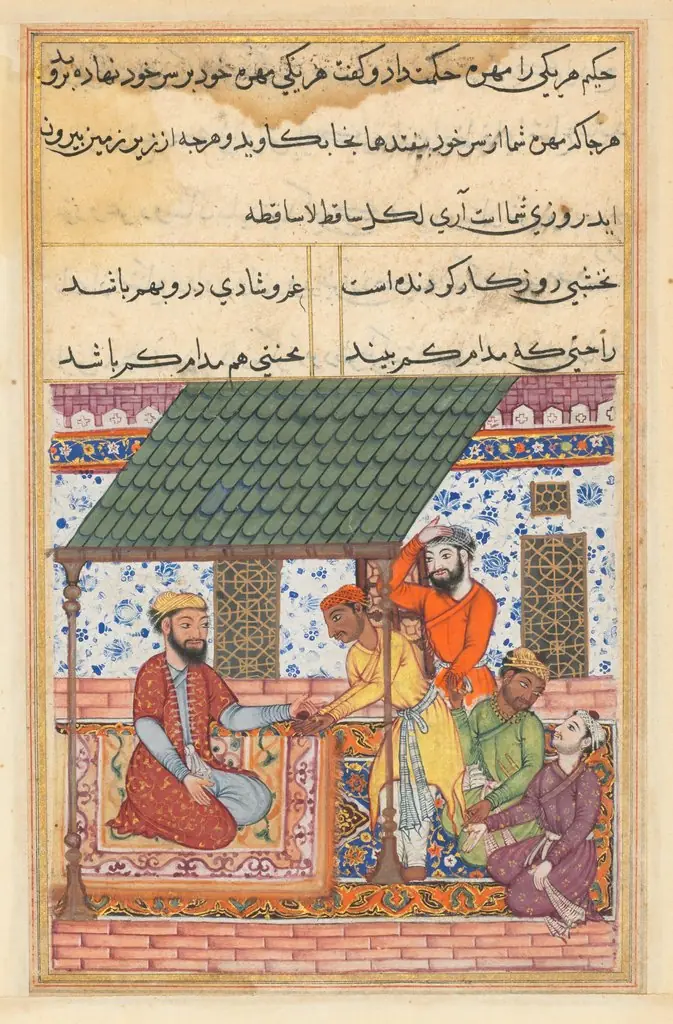 The four destitute friends go to a wise man who gives each one of them a magic shell to be placed on top of the turban, from a Tuti-nama (Tales of a Parrot): Forty-seventh Night
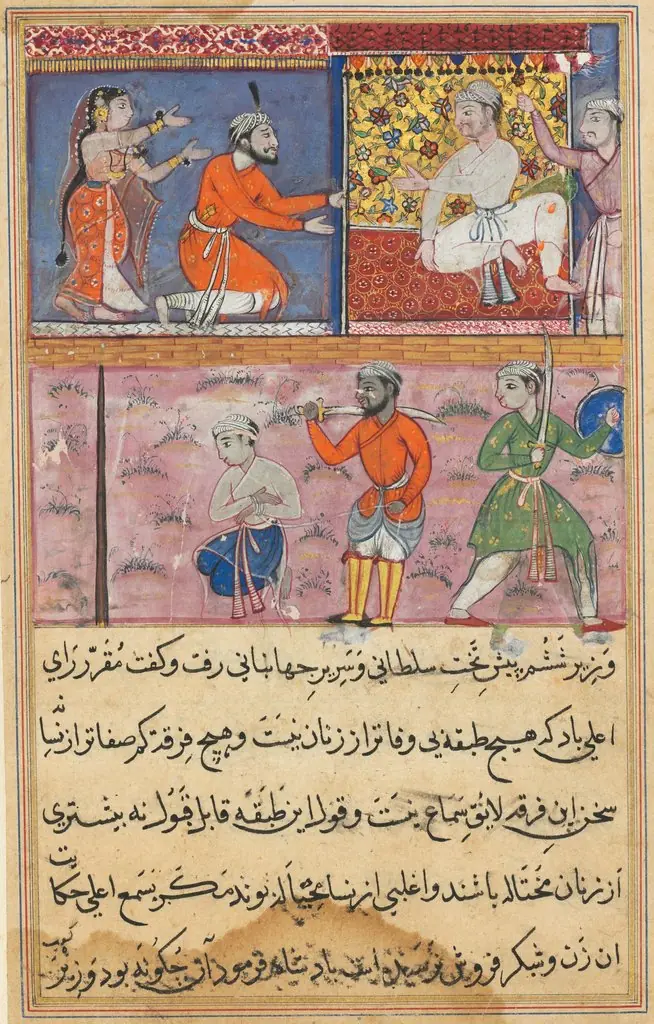 The prince sent back to the place of execution for the sixth time, from a Tuti-nama (Tales of a Parrot): Eighth Night
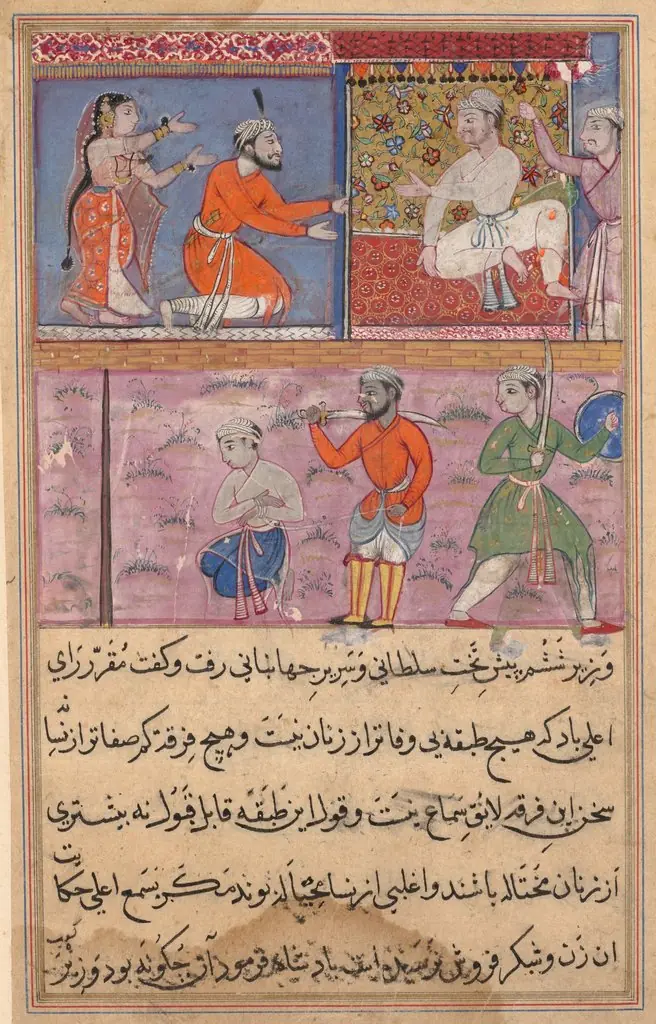 Page from Tales of a Parrot (Tuti-nama): text page
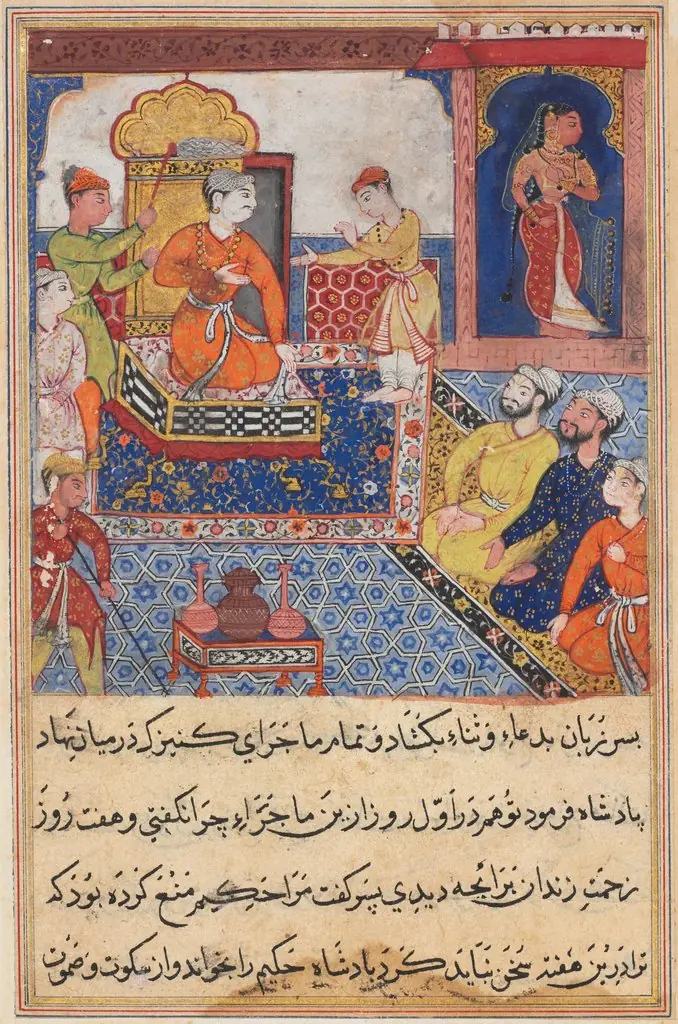 The young prince recounts his experiences to his father, the king, from a Tuti-nama (Tales of a Parrot): Eighth Night
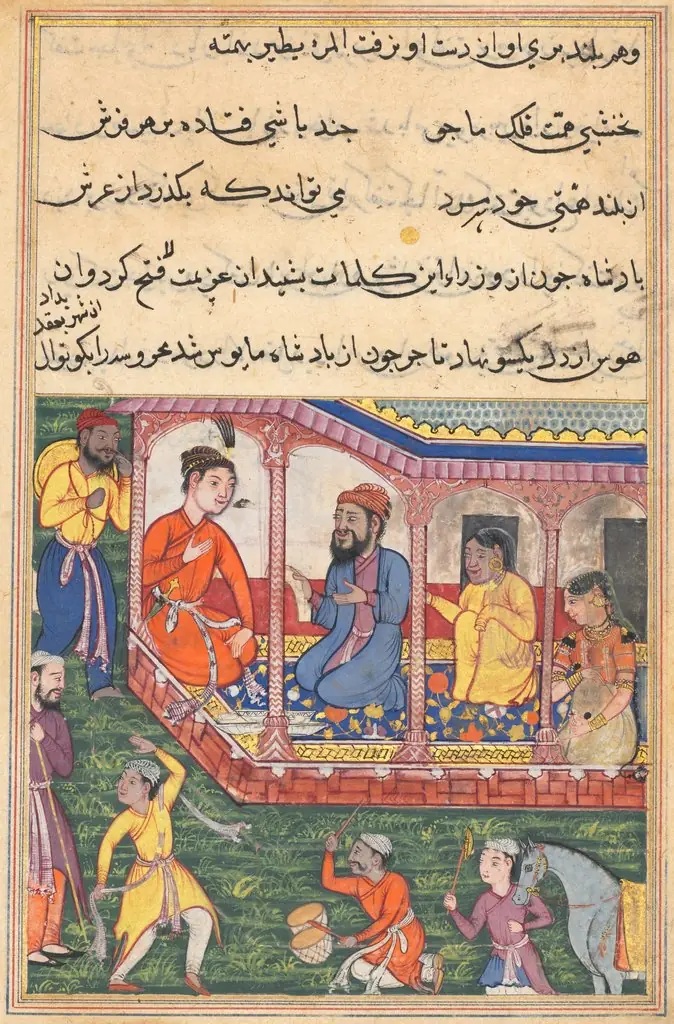 Mahrusa’s marriage to the prefect of the city, from a Tuti-nama (Tales of a Parrot): Thirty-sixth Night
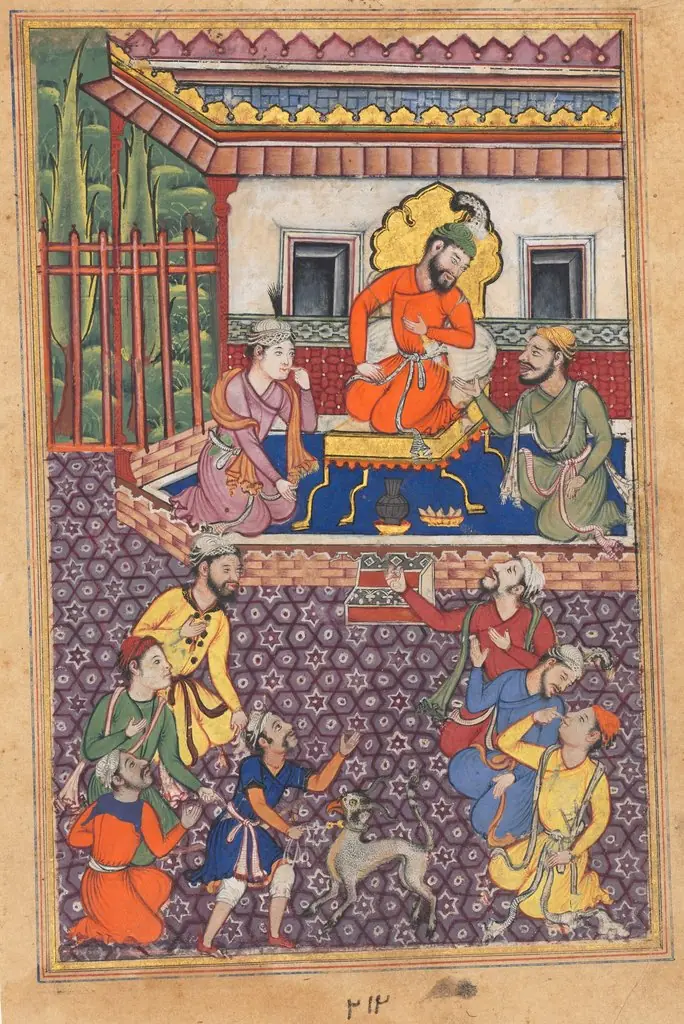 The court of the Raja of Ujjain, from a Tuti-nama (Tales of a Parrot): Forty-sixth Night
 The deceitful wife ejects the procuress after blackening her face, from a Tuti-nama (Tales of a Parrot): Eighth Night