Artwork
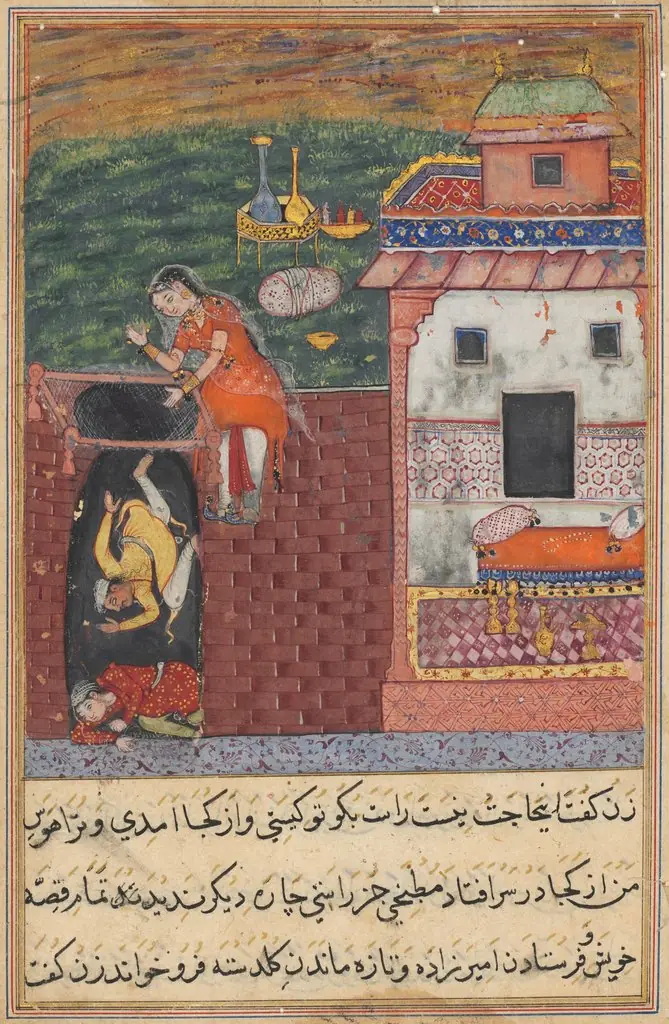
The deceitful wife persuades her husband to sleep in the same place where she had previously slept with her lover, from a Tuti-nama (Tales of a Parrot): Eighth Night
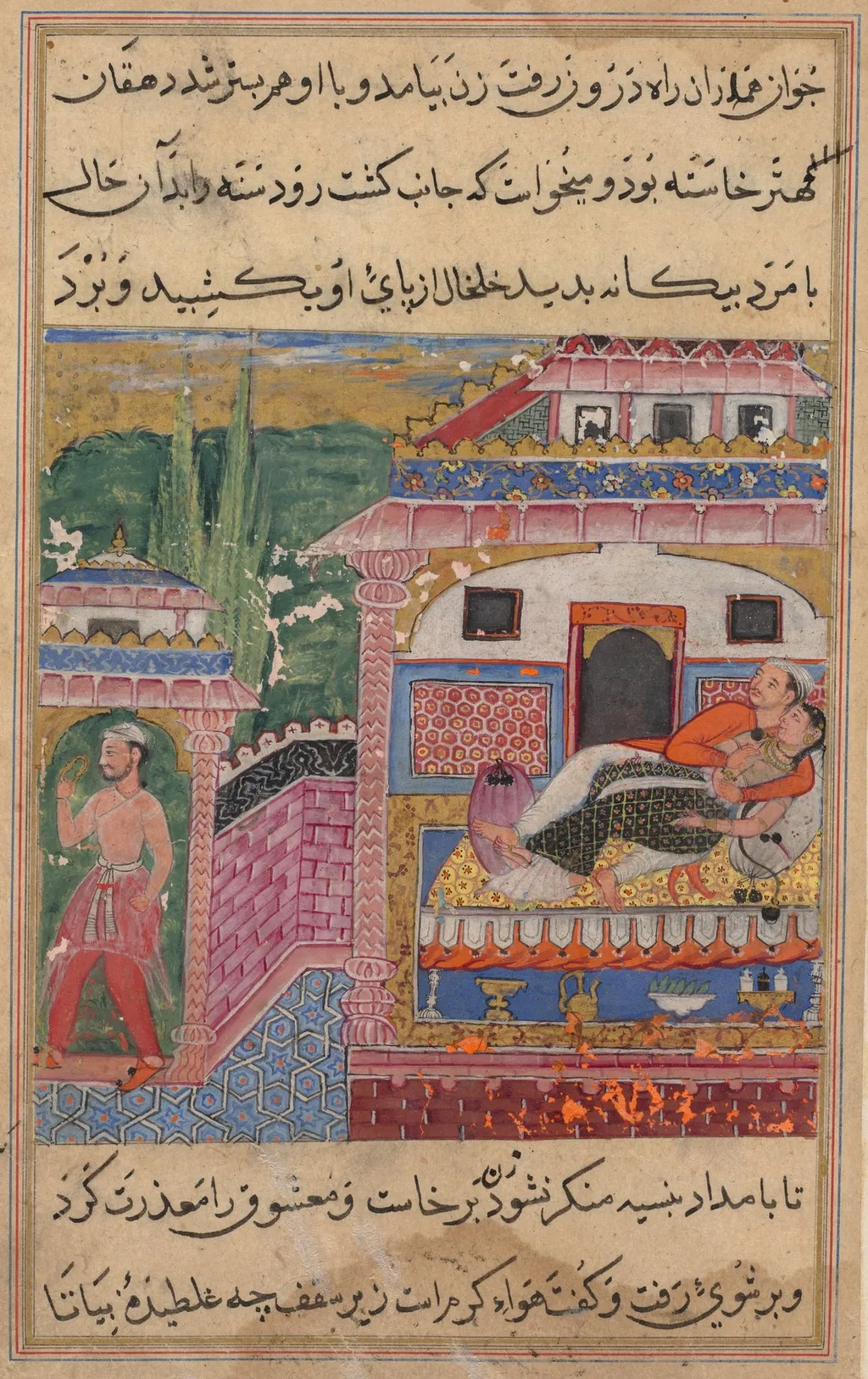
The deceitful wife persuades her husband to sleep in the same place where she had previously slept with her lover, from a Tuti-nama (Tales of a Parrot): Eighth Night is an unspecified painting. It dates from 1560 and is held in the collection of the Cleveland Museum of Art.
About this work
Overview
The work illustrates a narrative from the medieval Persian collection Tuti‑nama, specifically the episode titled “The deceitful wife persuades her husband to sleep in the same place where she had previously slept with her lover.” Set against a verdant landscape with trees and a building, the composition centers on a domestic interior where the two figures interact.
Subject & Meaning
In the foreground, a woman in traditional Indian dress cajoles her husband, who appears in more relaxed attire, to occupy the very spot she once shared with a lover. The scene captures themes of betrayal, manipulation, and the moral complexities explored in the Tuti‑nama’s moralistic tales.
Technique & Style
The painter employs a vivid palette, rendering the figures and surroundings with intricate detailing. Fine brushwork delineates the textiles and foliage, while the use of bright, saturated colors enhances the visual drama. Spatial depth is achieved through a layered background that recedes behind the central action.
Context
The Tuti‑nama, a 14th‑century anthology of parrot‑told stories, was widely illustrated in Persianate courts. This painting reflects the cross‑cultural exchange between Persian literary tradition and Indian visual motifs, evident in the heroine’s attire and the landscape’s stylized naturalism.
Legacy
As an example of narrative painting linked to literary sources, the work demonstrates how visual art functioned as a didactic tool, reinforcing the cautionary messages embedded in the Tuti‑nama. Its preservation offers insight into the aesthetic preferences and storytelling conventions of its period.
Artist & collection

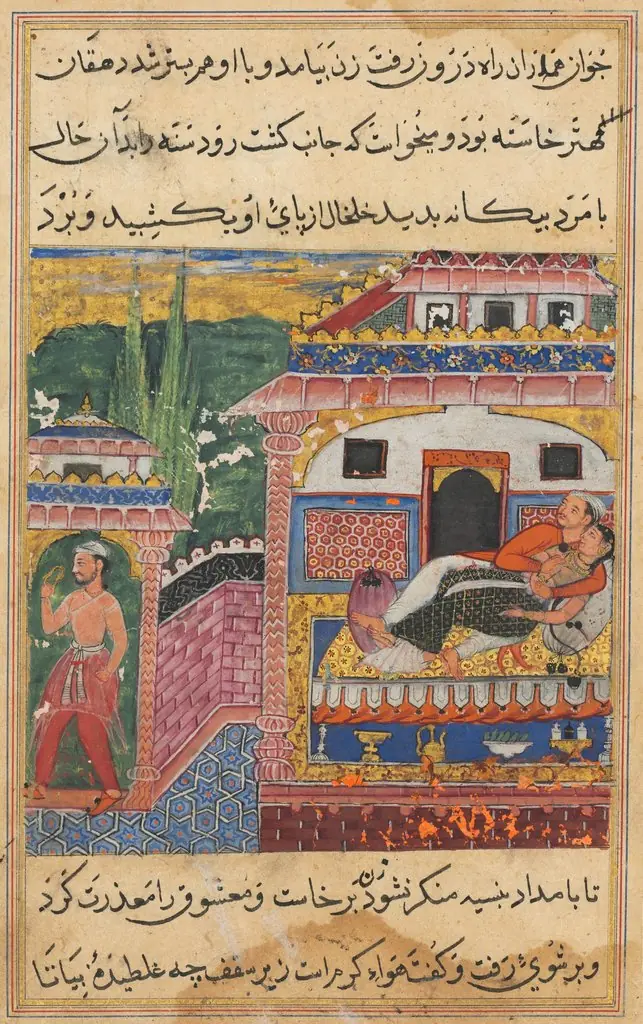 The farmer, father of the son with the deceitful wife, steals away with her anklet while she is in bed with her lover, from a Tuti-nama (Tales of a Parrot): Eighth Night
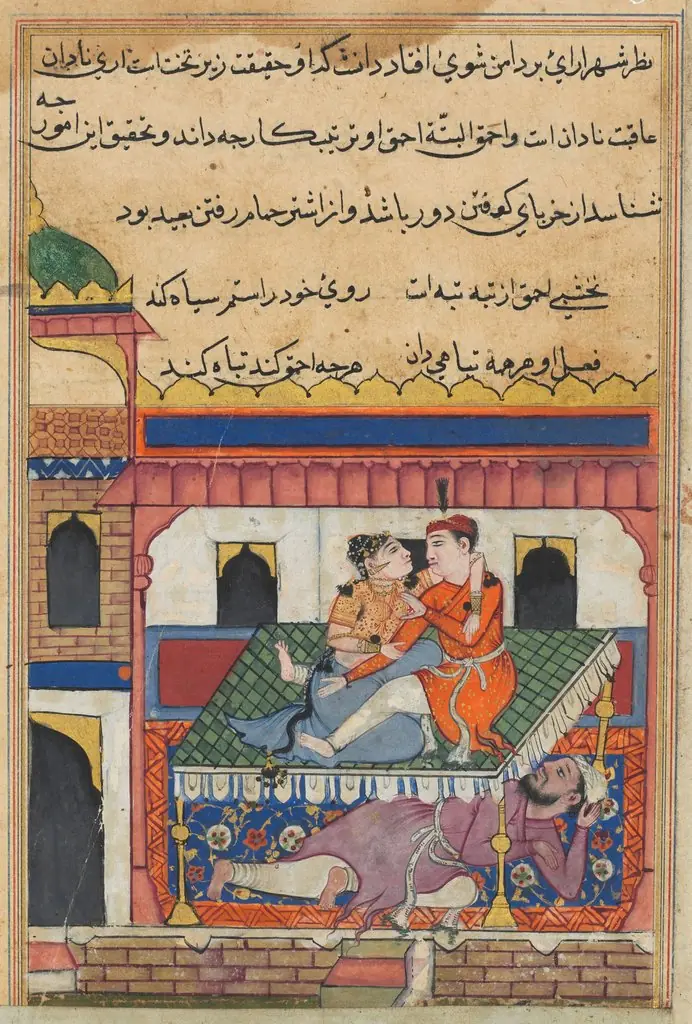 Shahr-Arai and her lover dallying on a bed beneath which is concealed her husband, from a Tuti-nama (Tales of a Parrot): Fortieth Night
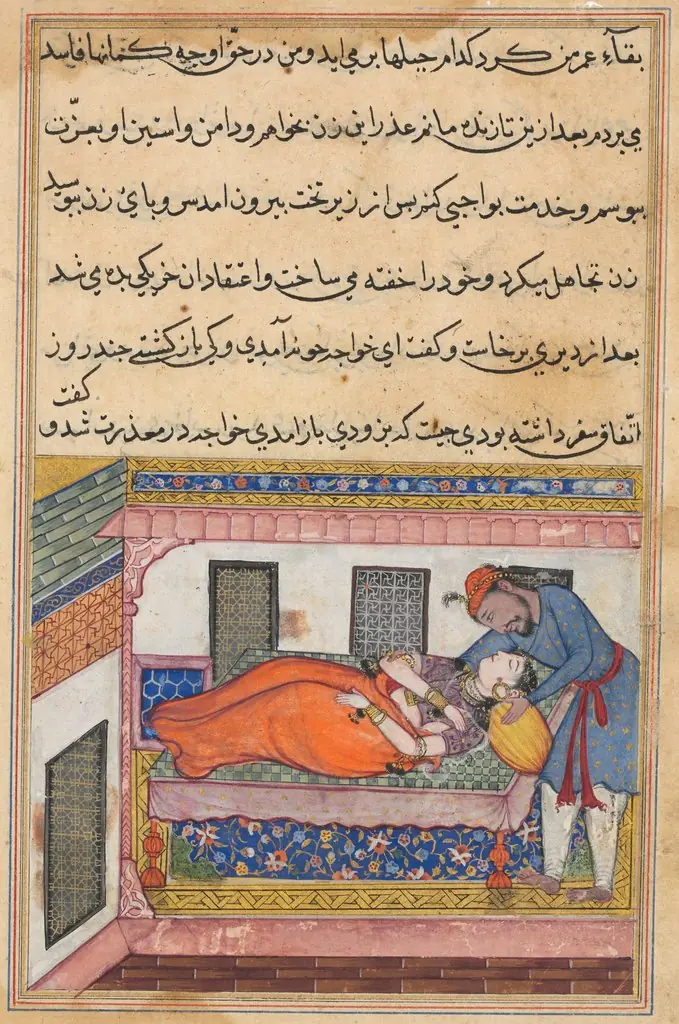 Shahr-Arai’s husband bends to kiss his wife who feigns sleep, from a Tuti-nama (Tales of a Parrot): Fortieth Night
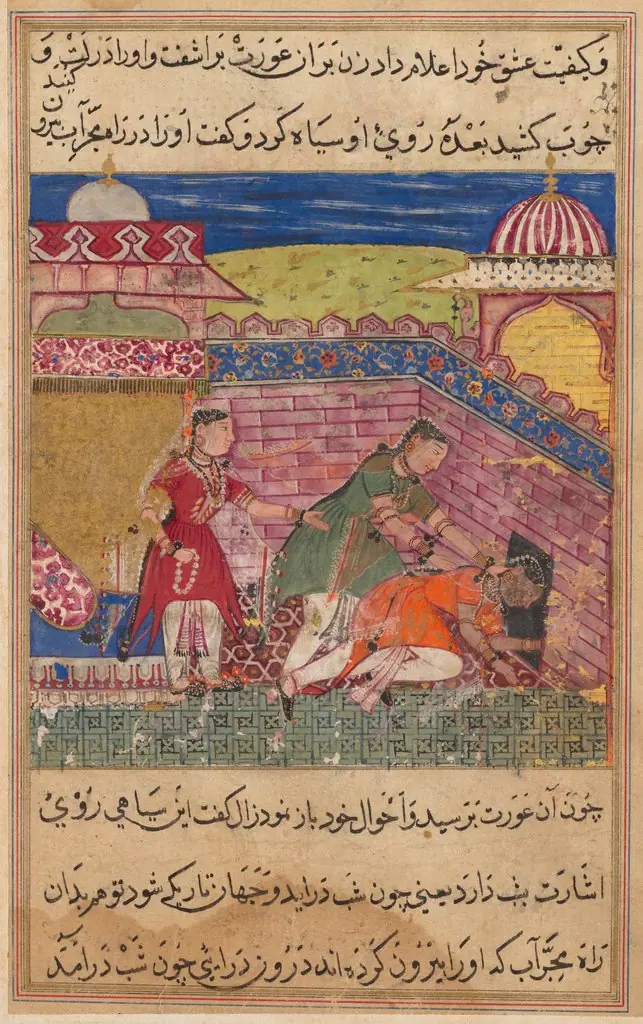 The deceitful wife ejects the procuress after blackening her face, from a Tuti-nama (Tales of a Parrot): Eighth Night
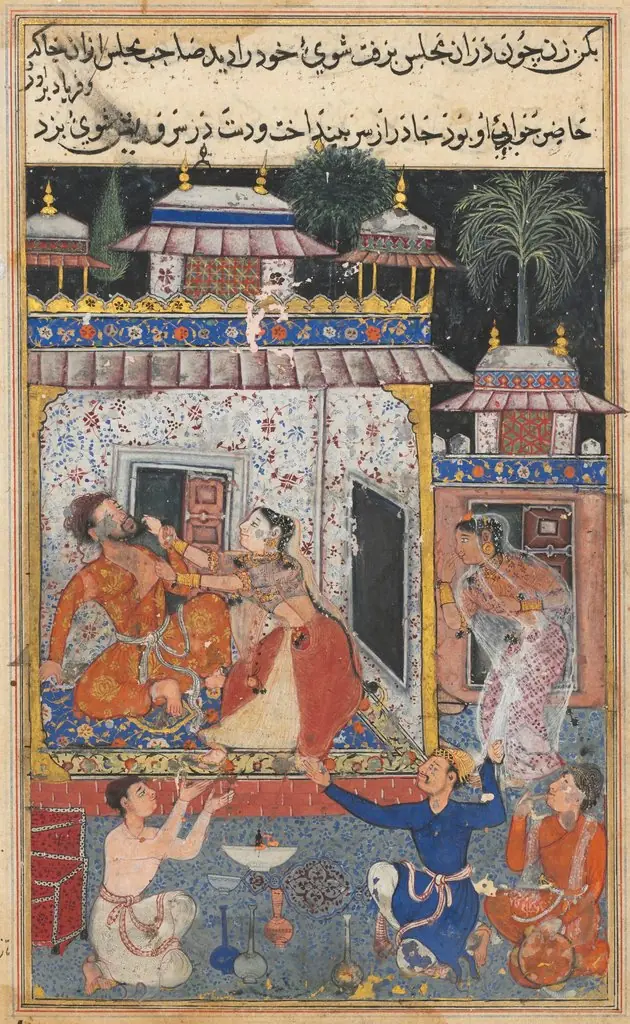 The deceitful wife assaults her erring husband, from a Tuti-nama (Tales of a Parrot): Eighth Night
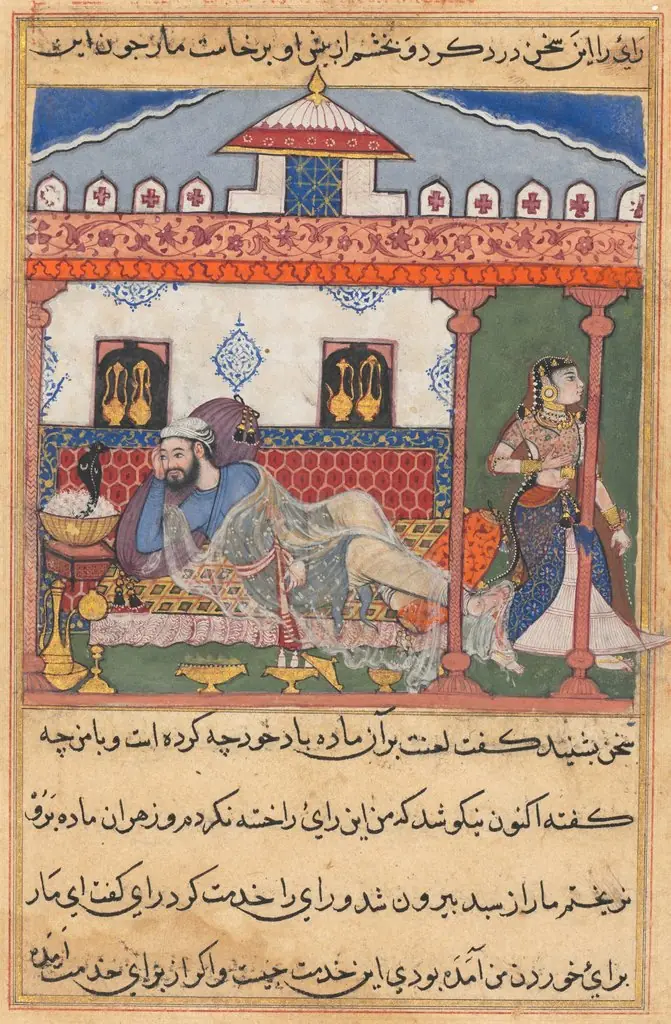 The snake, hidden in a basket of flowers, reveals himself to the Raja who has just sent away his wife, from a Tuti-nama (Tales of a Parrot): Forty-third Night
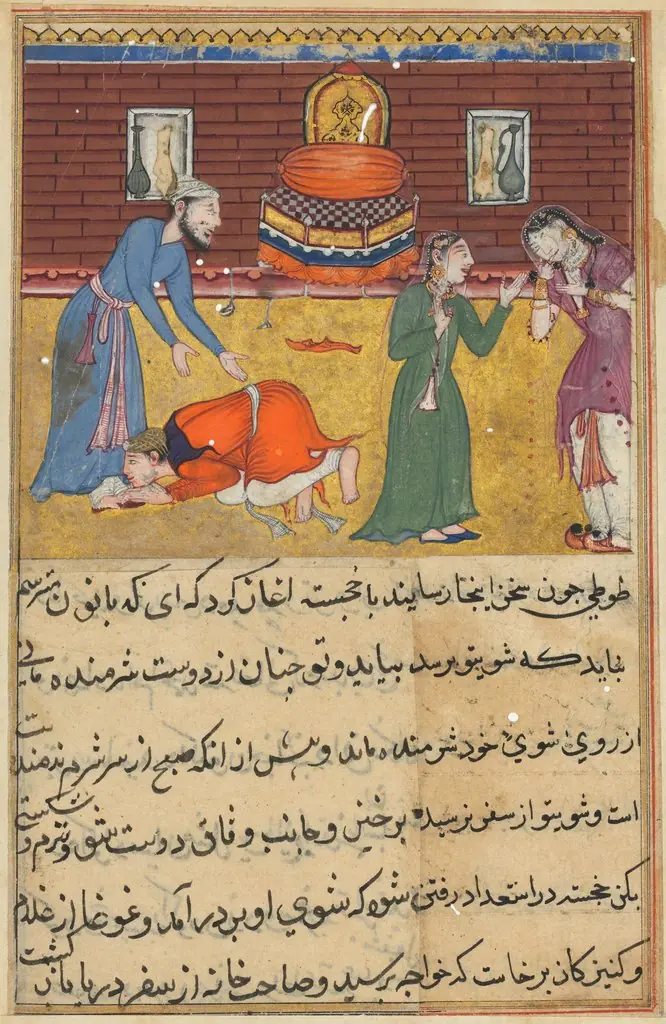 The pious man’s son, now a king, reveals himself to his father; his nurse upbraids his unfaithful mother, from a Tuti-nama (Tales of a Parrot): Fifty-second Night
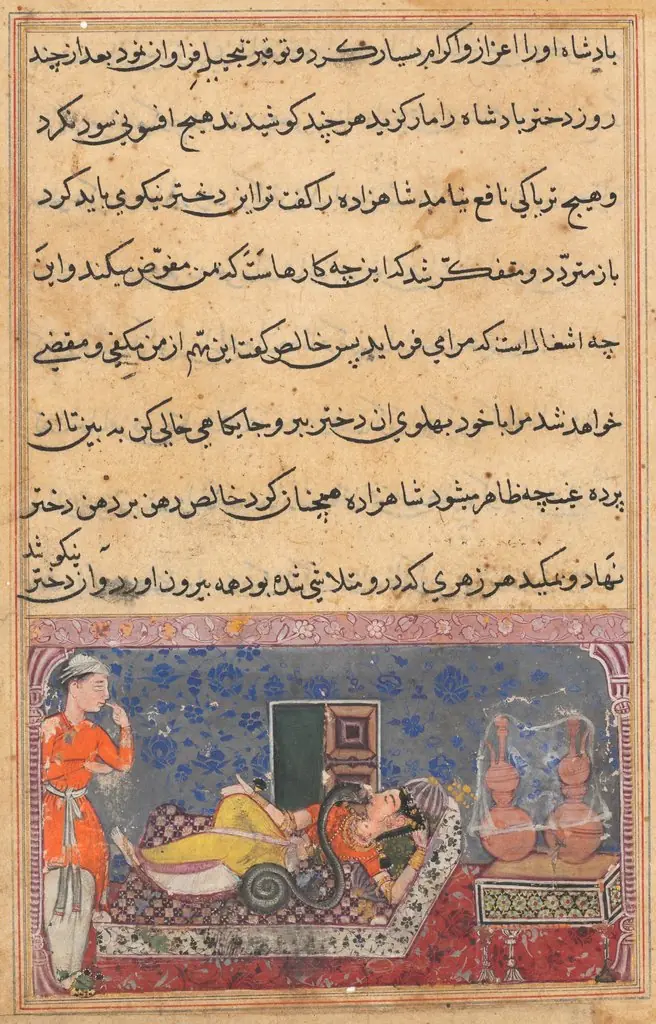 Khalis repays the prince for his kindness by changing into a snake and sucking the poison from the king’s daughter, from a Tuti-nama (Tales of a Parrot): Eighteenth Night
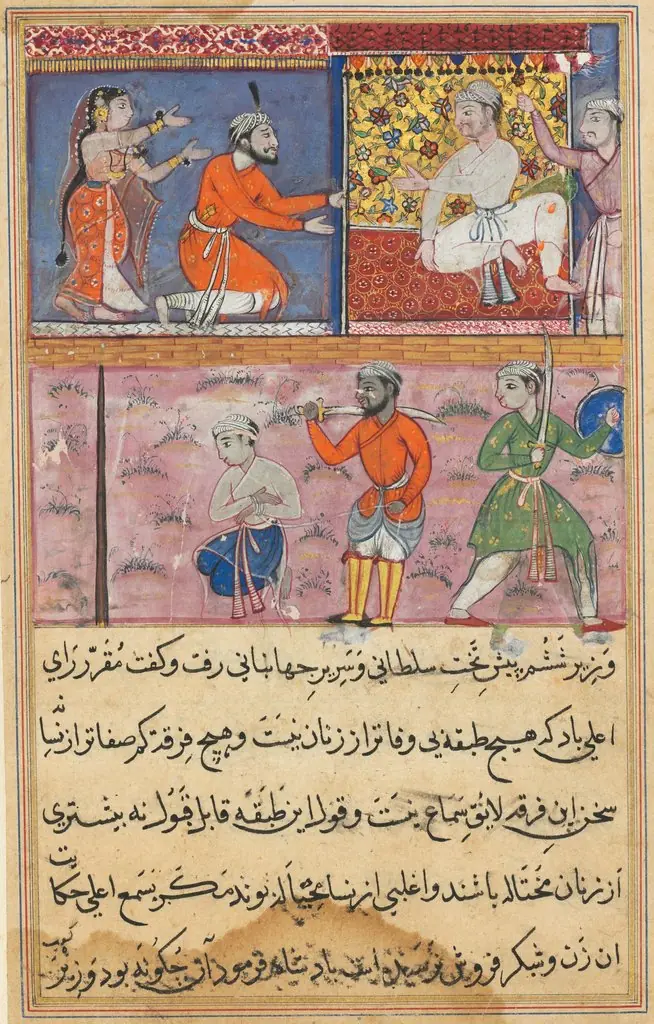 The prince sent back to the place of execution for the sixth time, from a Tuti-nama (Tales of a Parrot): Eighth Night
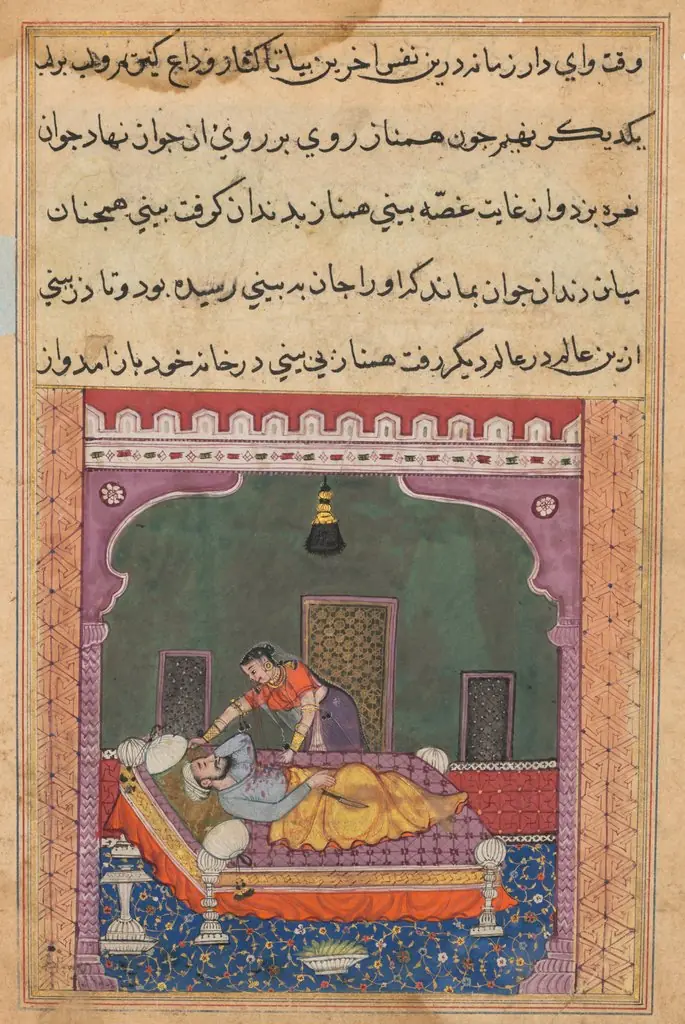 In order to falsely implicate her husband, Hamnaz places a knife by his side and lets the blood dripping from her nose stain his clothes, from a Tuti-nama (Tales of a Parrot): Twenty-fifth Night
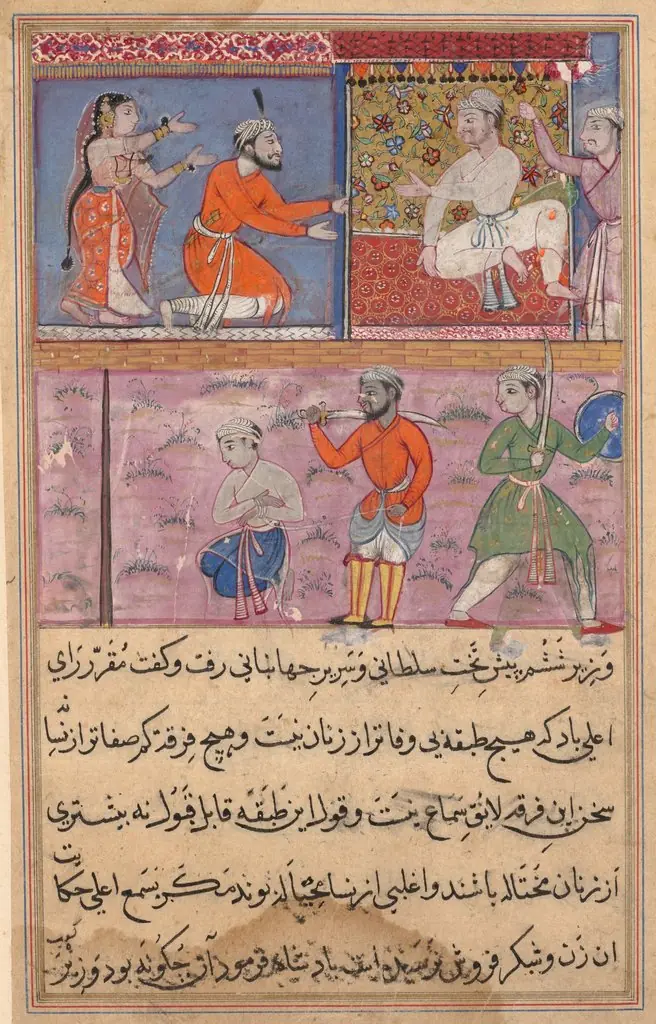 Page from Tales of a Parrot (Tuti-nama): text page
 The two cooks, who attempt to seduce the warrior’s loyal wife, are trapped by her in a cellar, from a Tuti-nama (Tales of a Parrot): Fourth Night