Artwork
Star Mandala
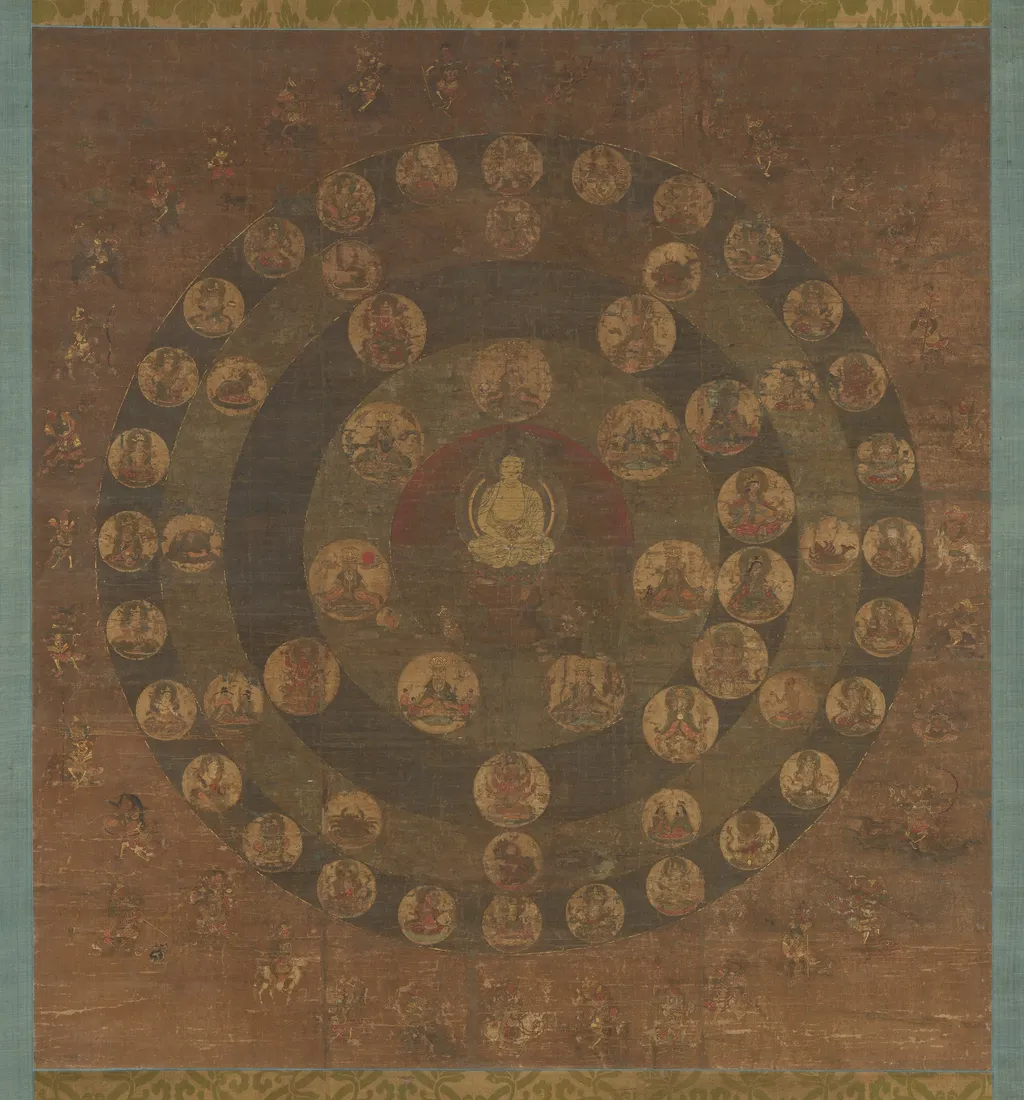
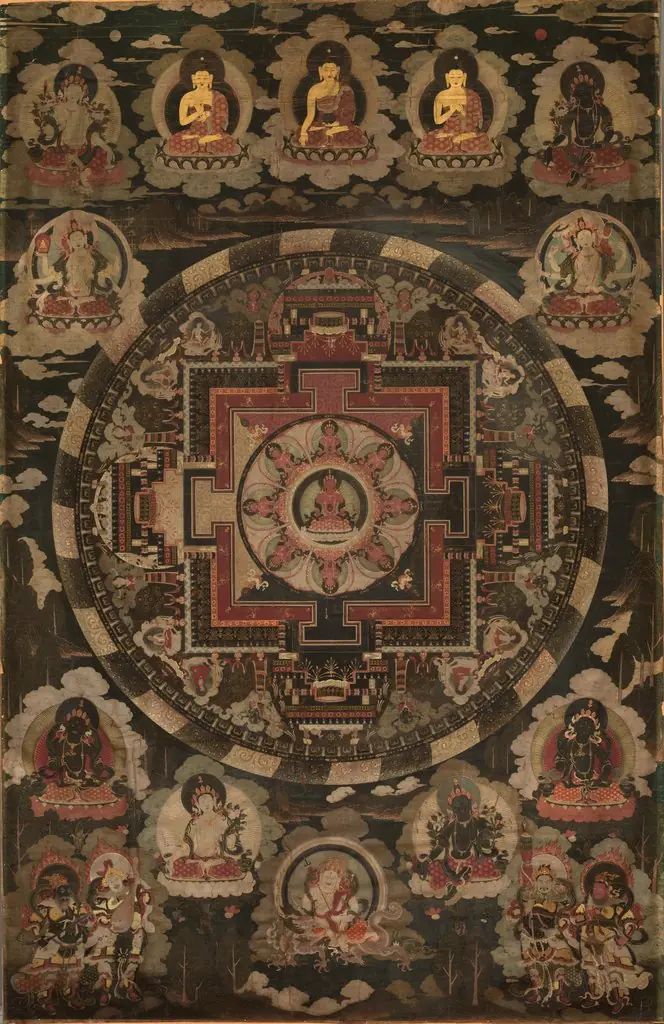
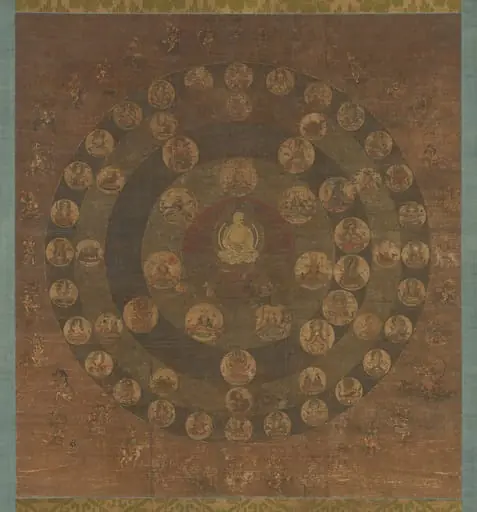
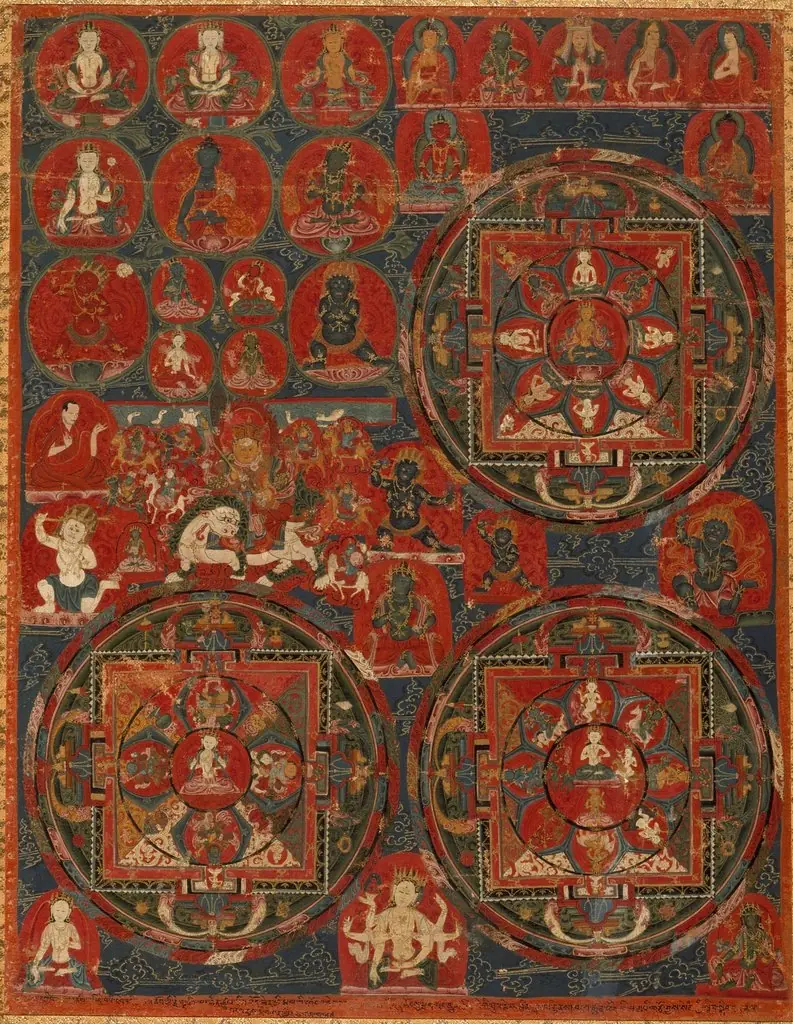
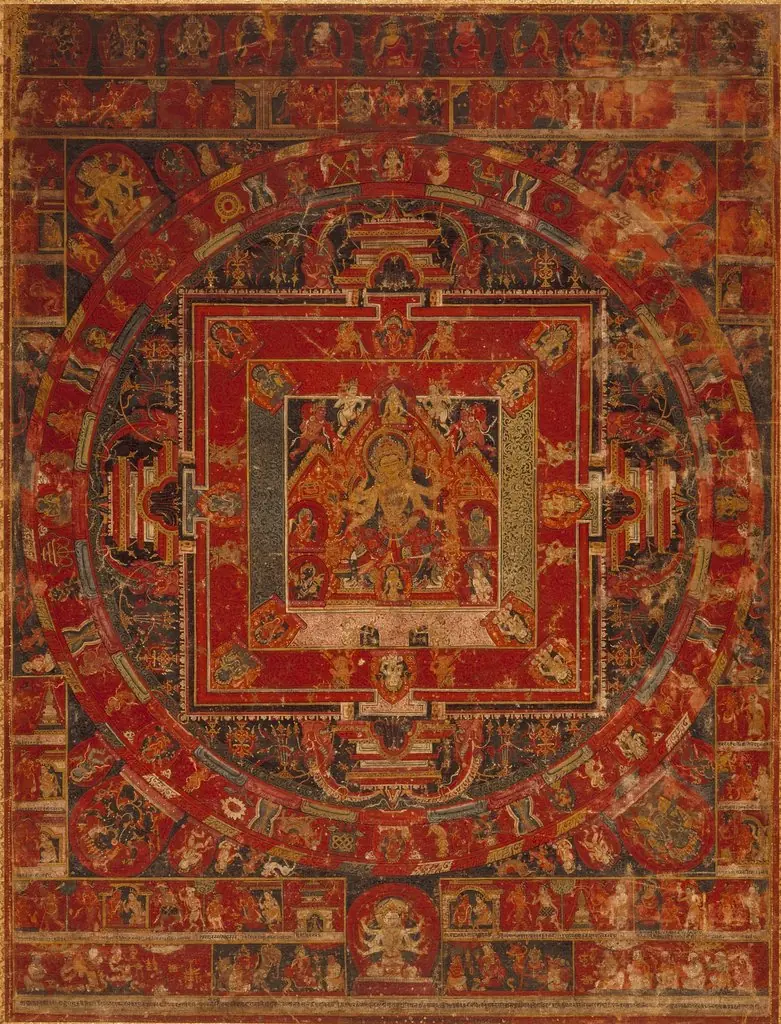
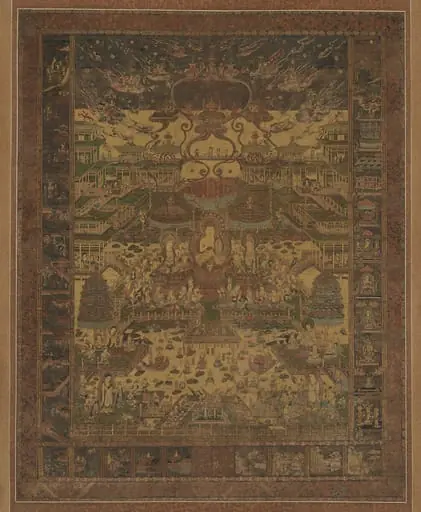
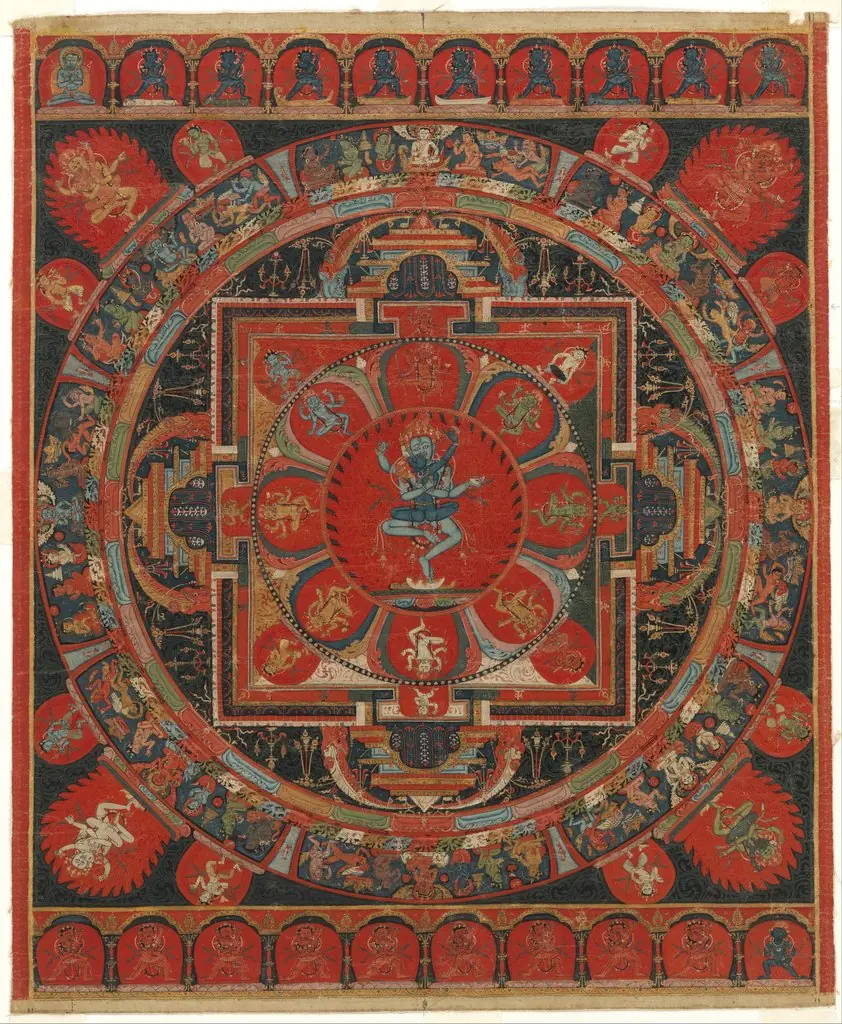
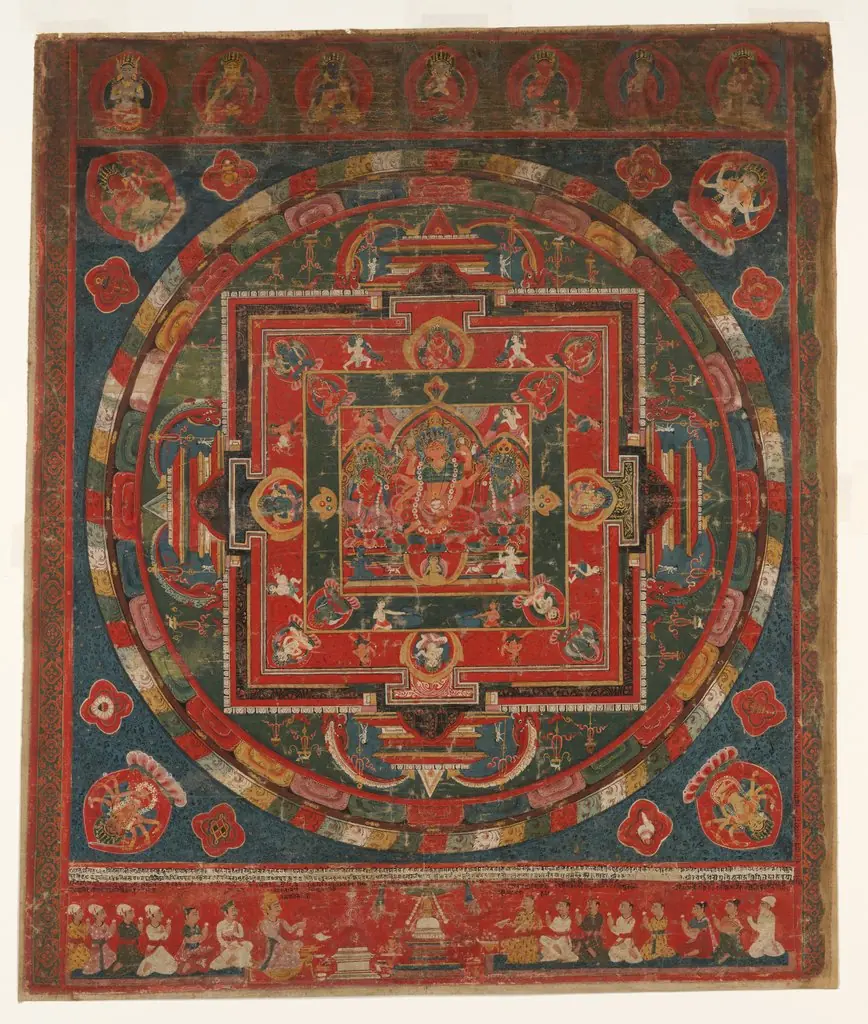
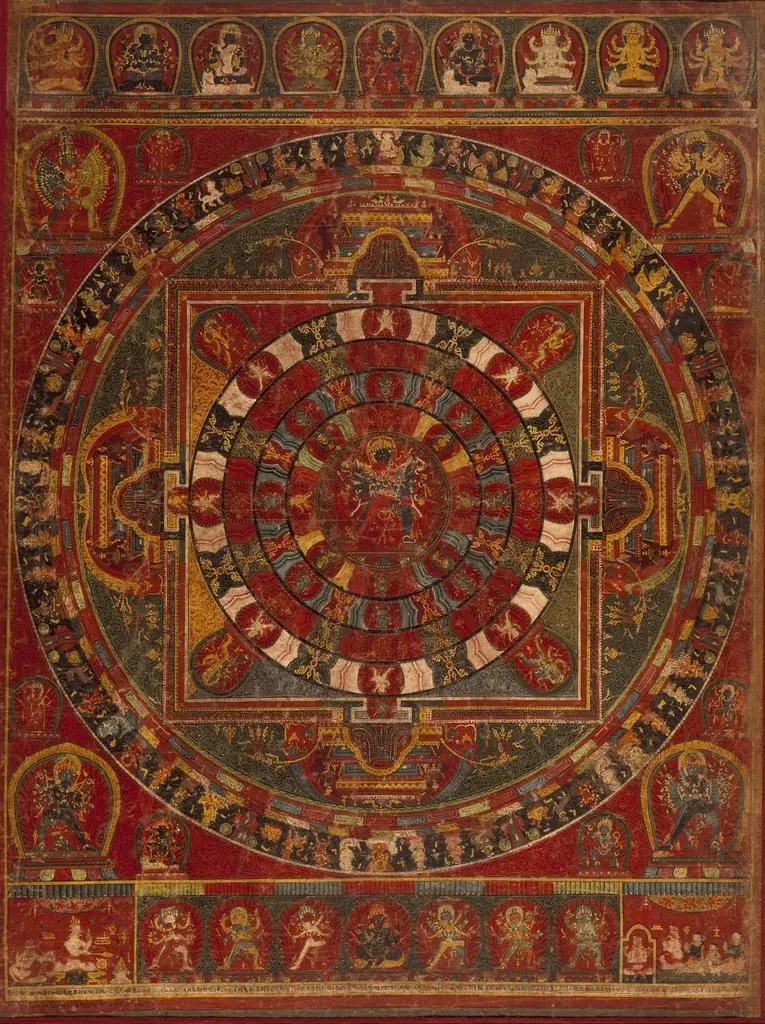
Star Mandala is an unspecified painting by Unknown. It dates from 1300 and is held in the collection of the Metropolitan Museum of Art. This painting is a geometrically structured composition centered on a mandala form, rendered in pigments on a flat surface.
About this work
Overview
No figural elements are present; the work relies entirely on abstract patterns and color relationships to convey its intent.
This painting is a geometrically structured composition centered on a mandala form, rendered in pigments on a flat surface. It belongs to a category of devotional artworks traditionally used in meditative practices. The design radiates outward from a central point, employing symmetry and repetition to evoke a sense of cosmic order. No figural elements are present; the work relies entirely on abstract patterns and color relationships to convey its intent.
Subject & Meaning
The subject is not a narrative or portrait but a symbolic representation of the universe as a harmonious, cyclical system. The mandala serves as a visual aid for contemplation, guiding the viewer’s focus inward toward spiritual stillness. Each layer and color may correspond to elements, directions, or states of consciousness, reflecting metaphysical frameworks rooted in Eastern religious traditions. The work invites quiet reflection rather than external interpretation.
Technique & Style
The painting was executed with meticulous precision, using fine brushes and natural pigments applied in thin, even layers. Concentric circles, radial lines, and intricate geometric motifs are rendered with uniformity, suggesting the use of compasses or stencils. Colors are muted and deliberate—ochres, indigos, and whites—chosen for symbolic resonance rather than decorative effect. The surface is smooth, with no visible brushstroke texture, emphasizing clarity and order.
History & Provenance
The work likely originated in a monastic or temple setting, created by a trained artisan under religious supervision. Its survival suggests it was preserved within a religious community rather than circulated commercially. No documented ownership prior to the 20th century exists, but stylistic analysis aligns it with late medieval or early modern Himalayan or Southeast Asian traditions. It entered institutional collections in the mid-1900s through scholarly acquisition.
Context
This painting emerged within a broader tradition of ritual art used in Buddhist and Hindu practices across Asia. Similar mandalas were created in sand, paint, or embroidery, often as part of ceremonies or personal meditation. Its production would have required adherence to sacred proportions and iconographic rules, passed down through generations of practitioners. It was not intended for public display but for private or communal spiritual use.
Legacy
Though originally functional within religious practice, the painting now functions primarily as an object of cultural and aesthetic study. It has influenced modern abstract art through its emphasis on symmetry and spiritual geometry. Museums and educational institutions present it as an example of non-Western visual philosophy, contributing to broader understandings of art as a vehicle for contemplation rather than representation.
Artist & collection

 Domestic Scene
 Giacomo and Cardinal Marco, investing Andrea, Abbot of San Zeno, with his Benefice
 The Nymph of Fontainebleau
 Portrait of a Woman
 Madonna and Child with Saints in the Enclosed Garden
 Venus and Minerva
 Family Group of Four on Sofa
 Wall painting from Room H of the Villa of P. Fannius Synistor at Boscoreale