Artwork
Copy of Painting inside the Caves of Ajanta (cave 1)
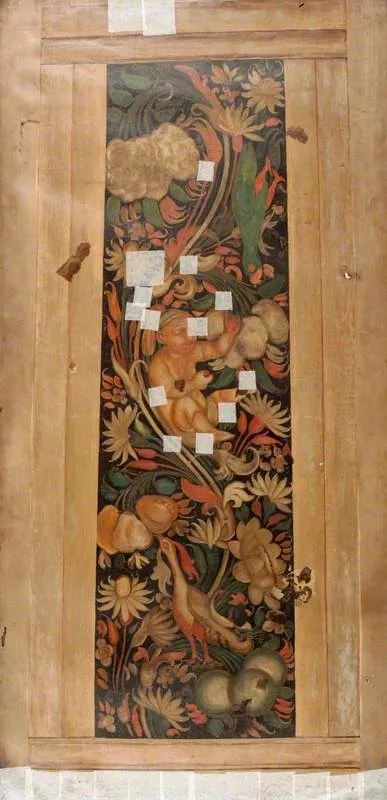
Copy of Painting inside the Caves of Ajanta (cave 1) is an oil painting by the Orientalist artist Unknown. It dates from 1872 and is held in the collection of the Victoria and Albert Museum. This work is a 19th-century oil painting reproduction of a mural from Cave 1 at Ajanta, India.
About this work
Overview
The composition centers on a reclining infant amid botanical motifs, rendered with attention to naturalistic detail and subdued earth tones.
This work is a 19th-century oil painting reproduction of a mural from Cave 1 at Ajanta, India. It translates ancient Buddhist wall imagery into Western materials and conventions, using oil on canvas to replicate a scene originally executed in tempera on plaster. The composition centers on a reclining infant amid botanical motifs, rendered with attention to naturalistic detail and subdued earth tones.
Subject & Meaning
The infant figure likely represents Prince Siddhartha, the future Buddha, depicted in a moment of serenity before his spiritual awakening. Surrounded by lush flora, the scene evokes themes of innocence and divine protection, consistent with early Buddhist narratives that associate the Buddha’s birth with natural abundance and celestial harmony.
Technique & Style
The artist employs oil paint to mimic the soft modeling and tonal gradations of Renaissance chiaroscuro, lending volume to the infant’s form and the surrounding leaves. Colors are restrained—ochres, olives, and muted yellows—echoing the faded palette of the original murals. Small white squares, possibly patches or restoration marks, interrupt the surface, hinting at the painting’s layered history.
History & Provenance
Created during the British colonial period in India, this oil copy was likely made by a European artist or student documenting Ajanta’s frescoes. Such reproductions were common among scholars and collectors seeking to preserve or disseminate Indian heritage through European artistic frameworks, often removing the works from their original devotional context.
Context
The Ajanta caves, carved between the 2nd century BCE and 6th century CE, contain some of India’s earliest surviving narrative paintings. While the original murals depict Jataka tales and Buddhist cosmology, 19th-century copies like this one reframed them through Western aesthetic ideals, reflecting colonial-era interests in classification and preservation rather than spiritual continuity.
Legacy
This reproduction contributed to the Western rediscovery of Ajanta’s art, influencing later studies and museum displays. Though detached from its ritual setting, the painting helped establish the site’s global recognition. Its hybrid style remains a document of cross-cultural exchange, revealing how non-Western art was interpreted and reimagined in the 1800s.
Artist & collection

 Domestic Scene
 Giacomo and Cardinal Marco, investing Andrea, Abbot of San Zeno, with his Benefice
 The Nymph of Fontainebleau
 Portrait of a Woman
 Madonna and Child with Saints in the Enclosed Garden
 Venus and Minerva
 Family Group of Four on Sofa
 Wall painting from Room H of the Villa of P. Fannius Synistor at Boscoreale
 Copy of Painting inside the Caves of Ajanta (cave 6)
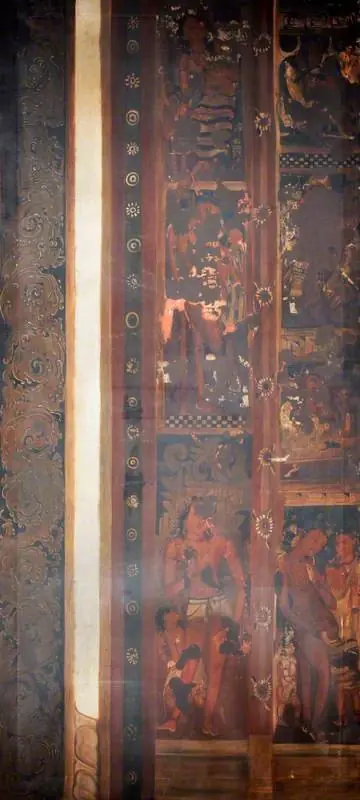 Copy of Painting inside the Caves of Ajanta (cave 6)
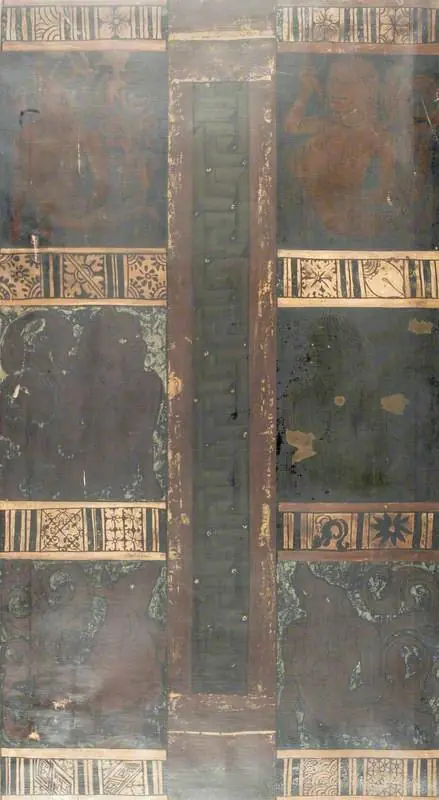 Copy of Painting inside the Caves of Ajanta (cave 2)
 Copy of painting inside the caves of Ajanta (cave 1)
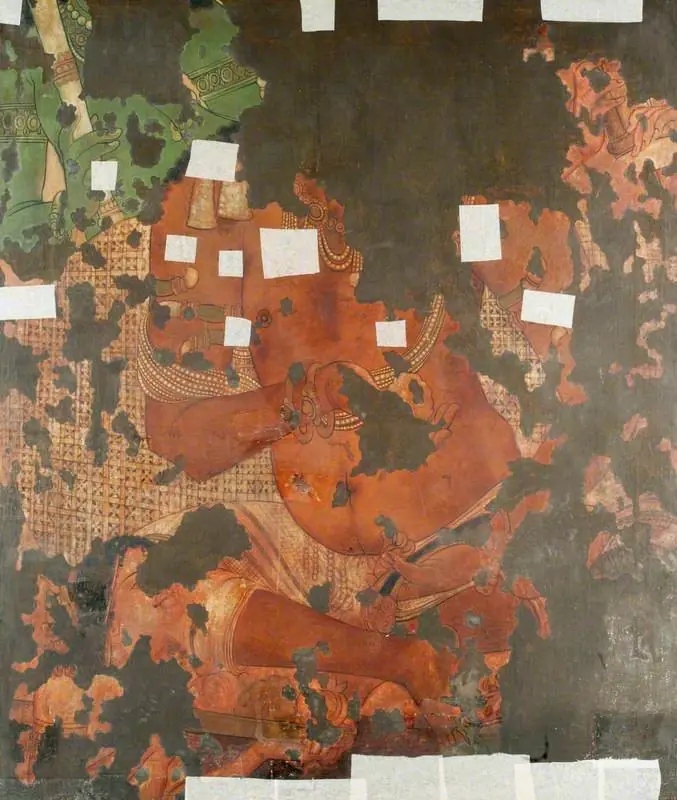 Copy of Painting inside the Caves of Ajanta (cave 16)
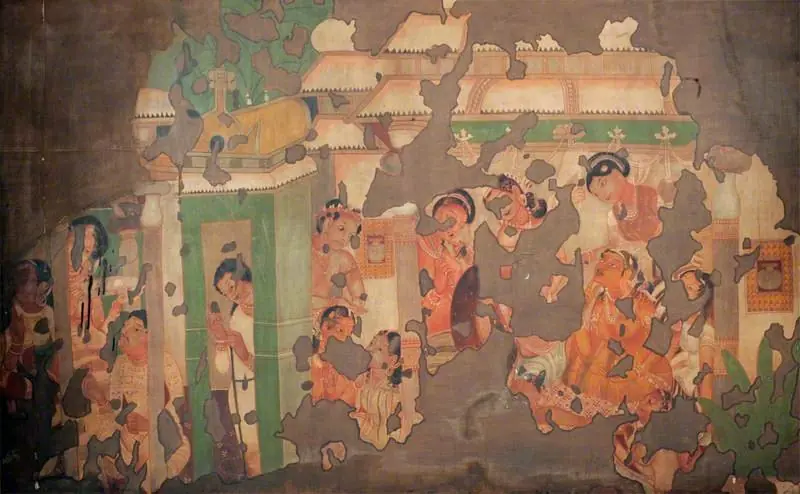 Copy of Painting inside the Caves of Ajanta (cave 1)
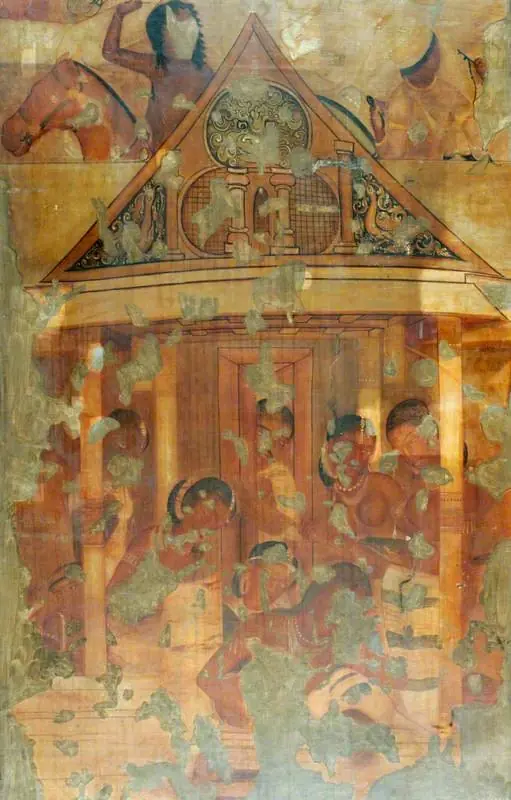 Copy of Painting inside the Caves of Ajanta (cave 17)
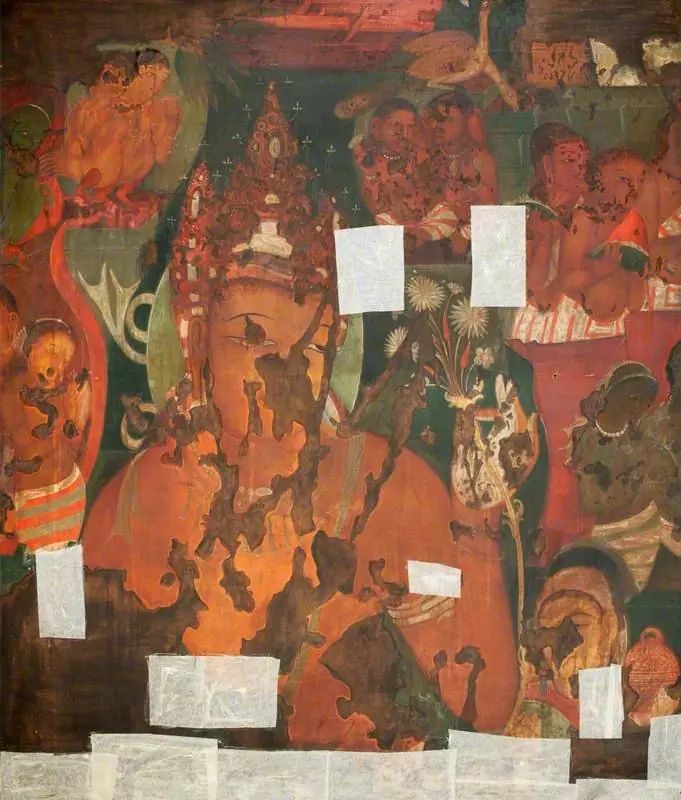 Copy of Painting inside the Caves of Ajanta (cave 11)
 Copy of Painting inside the Caves of Ajanta (cave 2)
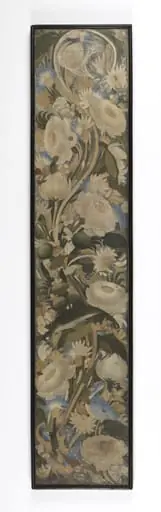 Copy of painting inside the caves of Ajanta (Cave 2)
 Copy of Painting inside the Caves of Ajanta (cave 6)
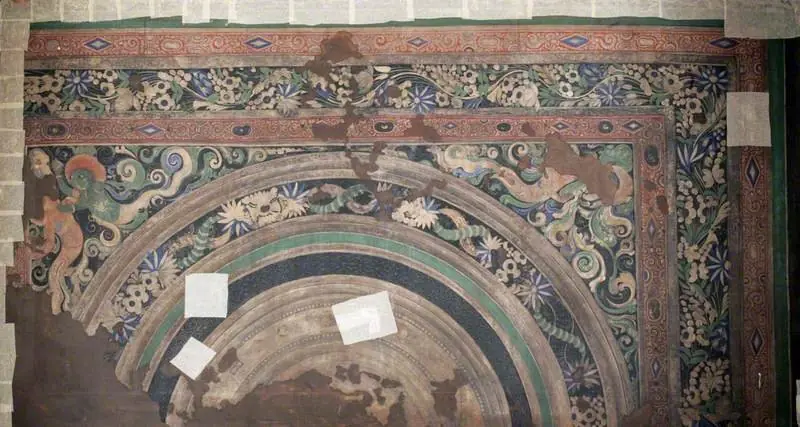 Copy of Painting inside the Caves of Ajanta (cave 21)