Artwork
Polyptych of Assumption
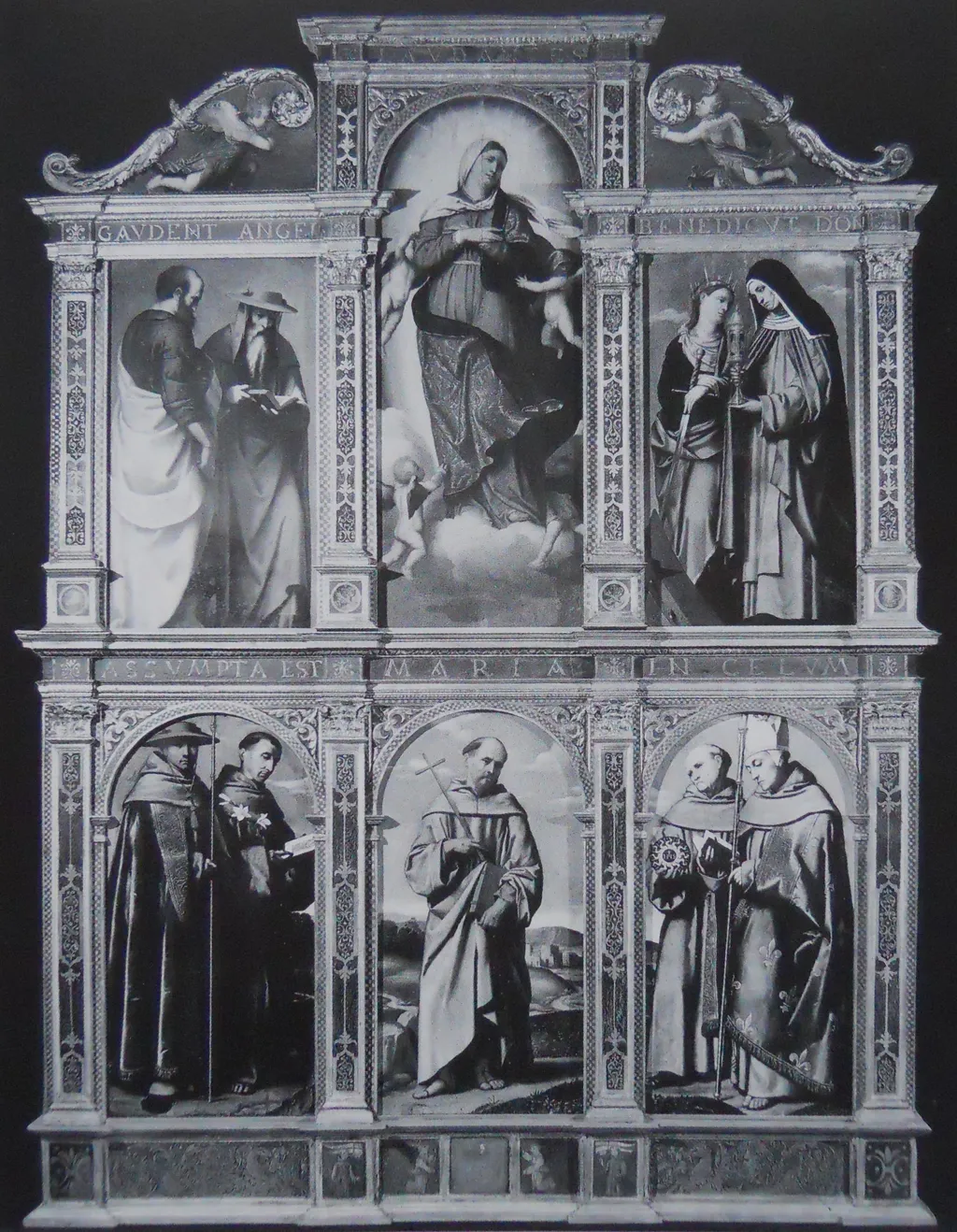
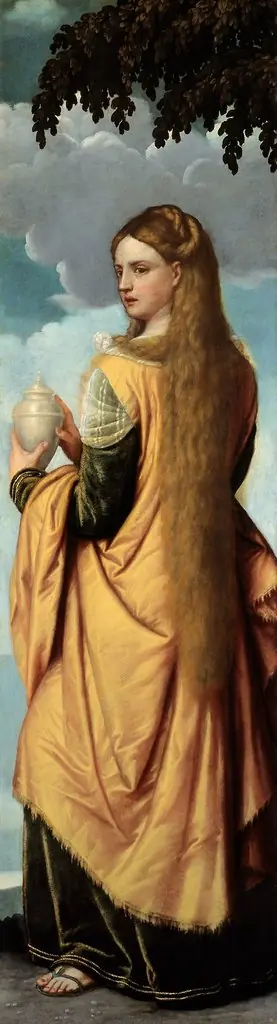
Polyptych of Assumption is an oil painting by the Early Baroque Italian artist Moretto da Brescia. It dates from 1529 and is held in the collection of the Louvre Museum.
About this work
Overview
The Polyptych of Assumption is a multi-panel painting created by Moretto da Brescia between 1529 and 1530, primarily executed in oil on panel.
Technique & Style
The work combines media: the main panels are in oil paint, while the two angels on the cornice are painted in tempera grassa verniciata, highlighting the artist's versatility across techniques.
History & Provenance
Originally housed in the Basilica of Santa Maria degli Angeli in Gardone Val Trompia, the polyptych was relocated to the Pinacoteca di Brera in Milan in 1805. In 1812, select panels were exchanged with the Louvre for works by prominent European artists.
Context
The polyptych's creation and initial placement reflect the religious and artistic patronage prevalent in 16th-century Italy, while its later movements underscore the geopolitical and artistic exchange dynamics of the early 19th century.
Legacy
The dispersal of the polyptych's panels across institutions highlights the complex history of art conservation and exchange, influencing how Moretto da Brescia's work is studied and appreciated today.
Artist & collection
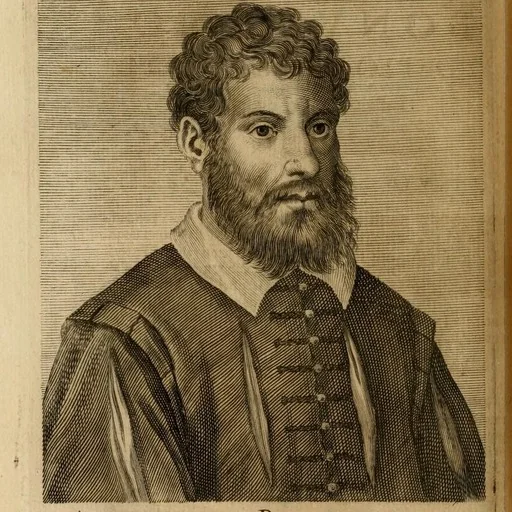
Artist
Alessandro Bonvicino (also Buonvicino) (c. 1498 – possibly 22 December 1554), more commonly known as Moretto, or in Italian Il Moretto da Brescia (the Moor of Brescia), was an Italian Renaissance painter from Brescia,…

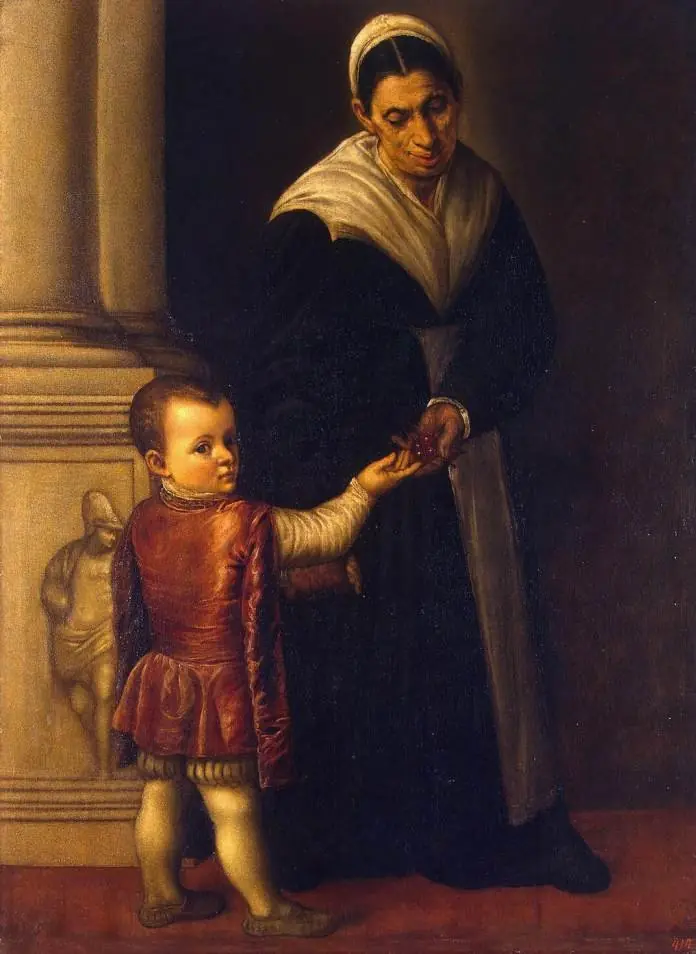
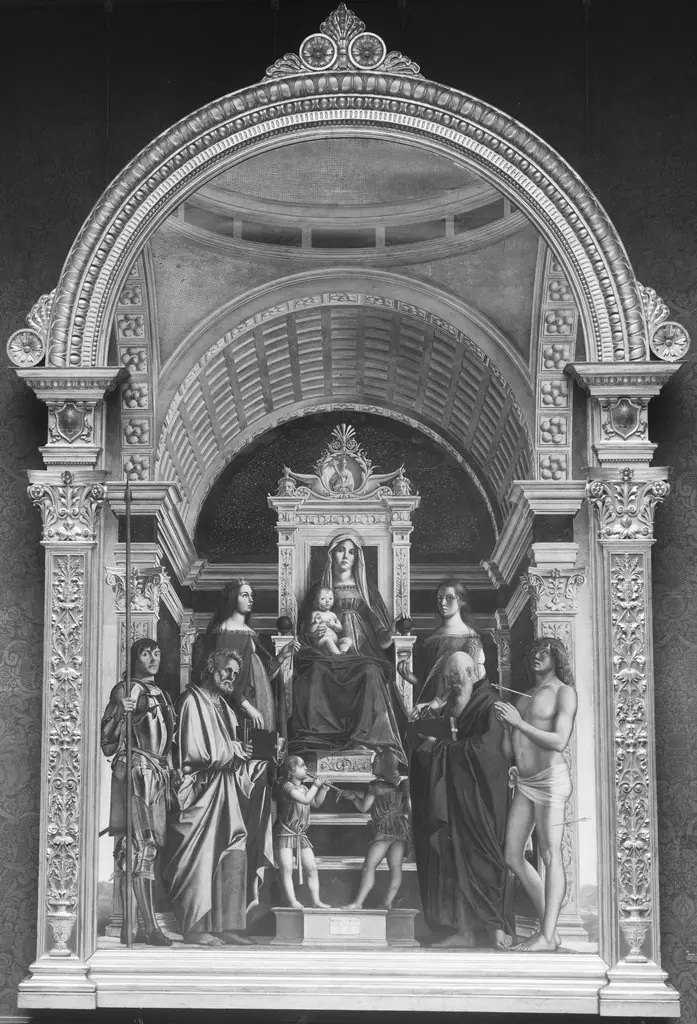 Mary enthroned with the child and six saints
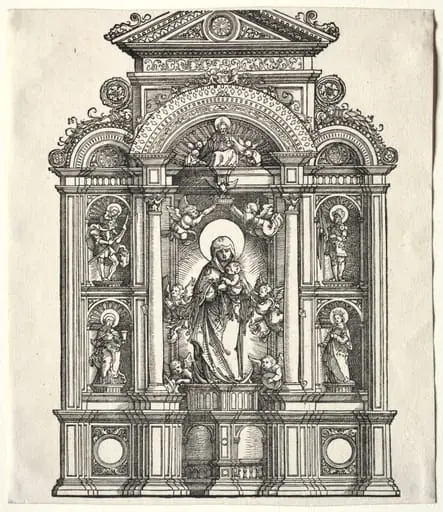 Great Altar with the Virgin, in a border with SS. Christopher, George, Barbara, Catherine
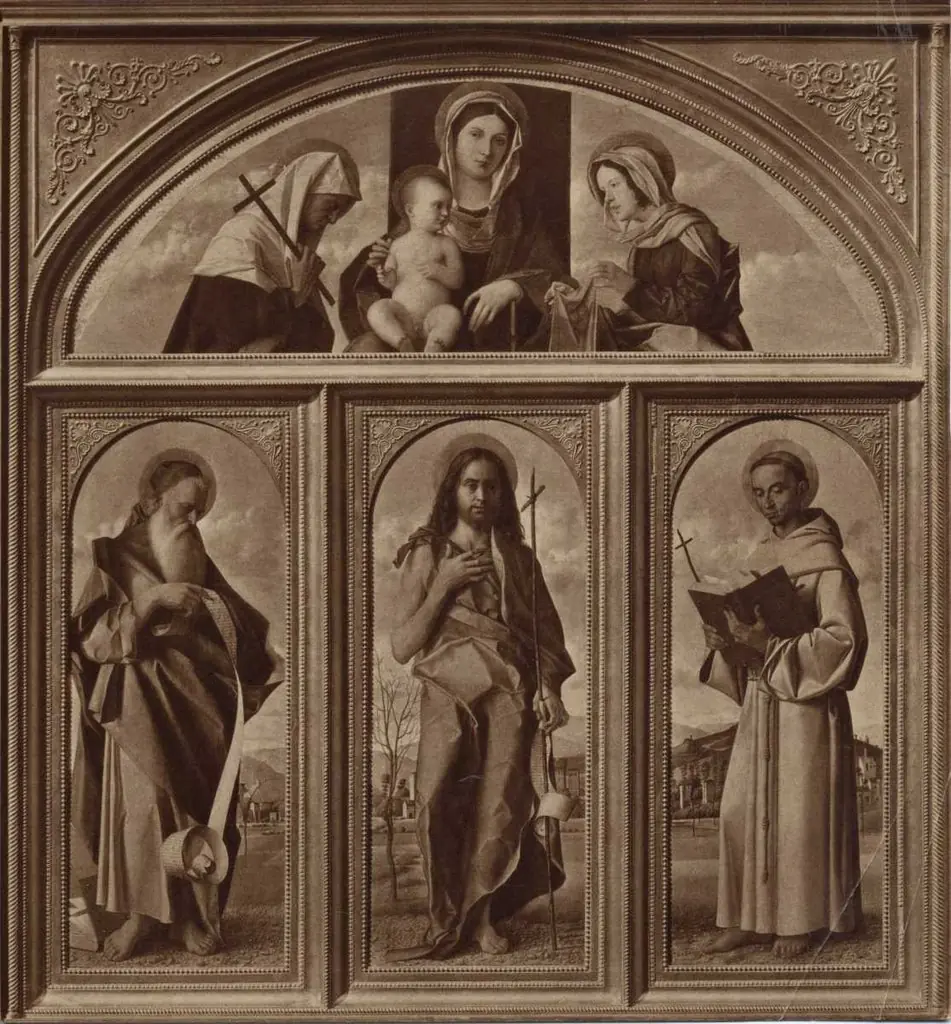 Altartafel mit drei Heiligen
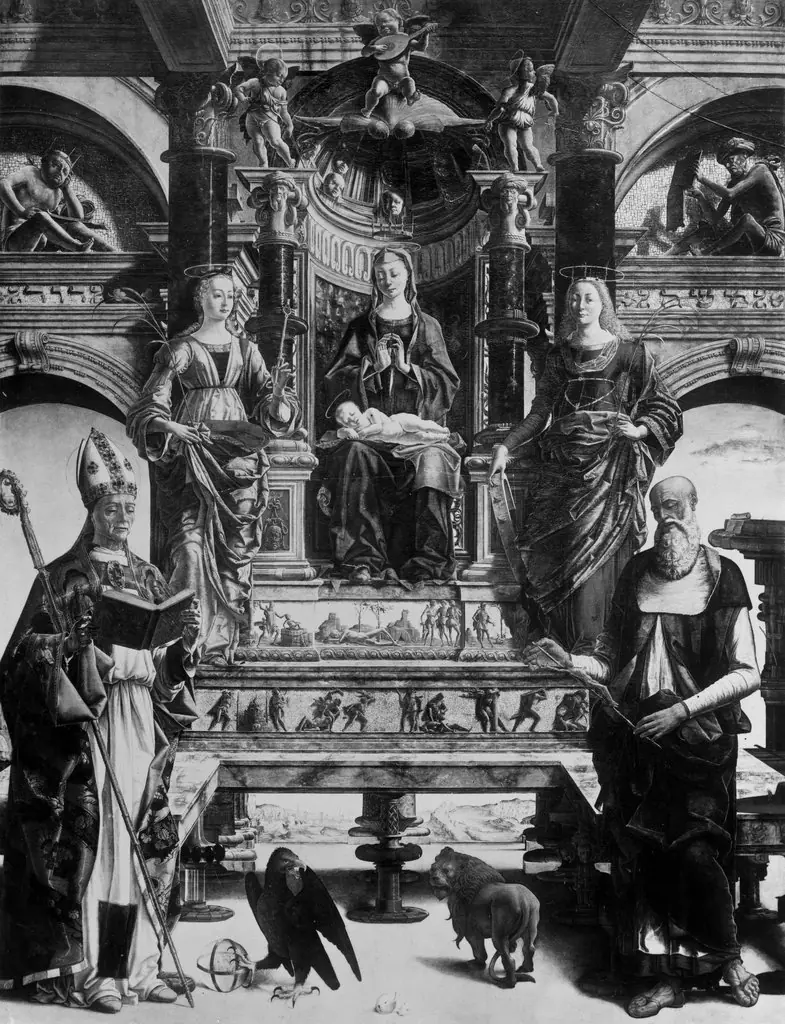 Madonna enthroned with the sleeping child and four saints
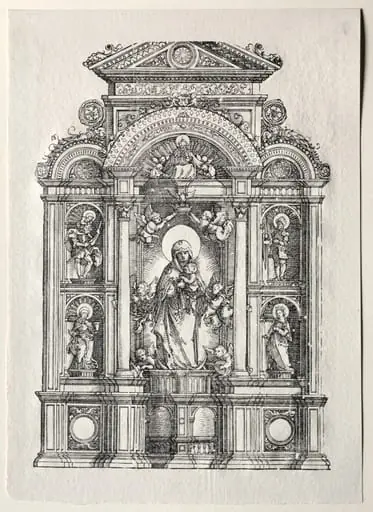 Altar mit der Schönen Maria von Regensburg
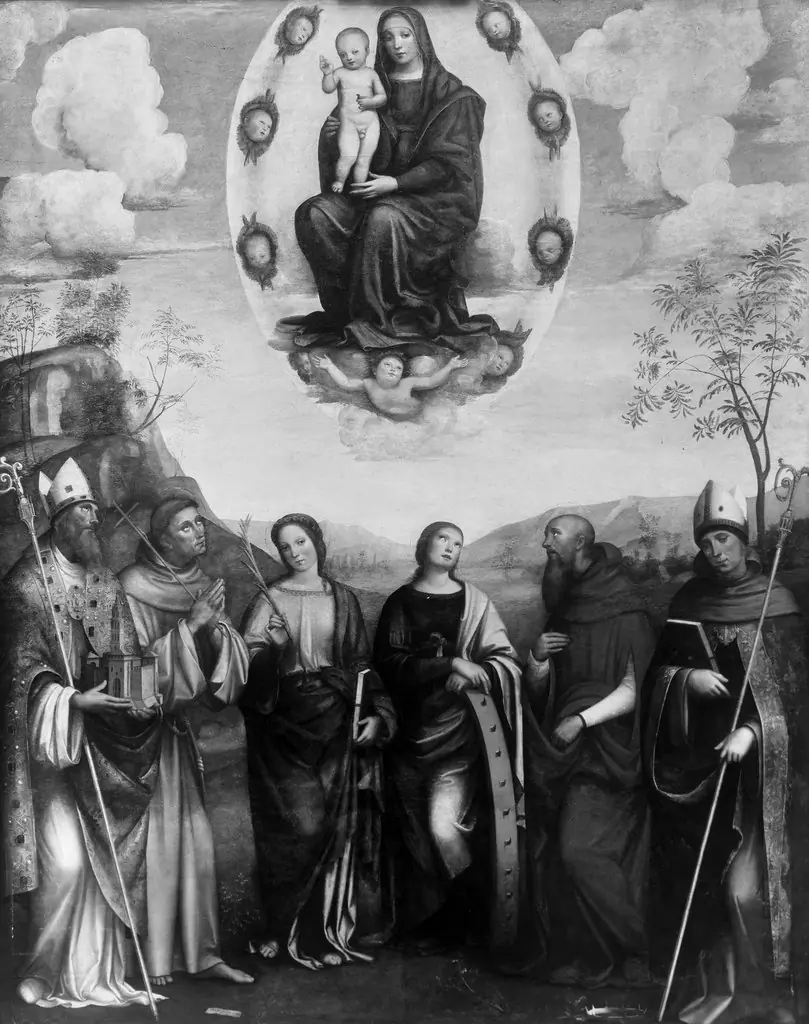 Mary with the child in glory adored by six saints
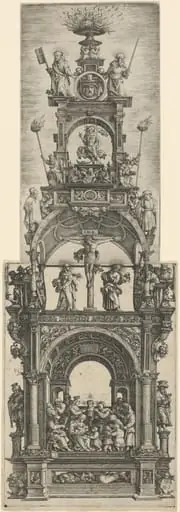 Triumphal Altar with Stages in the Life of Christ
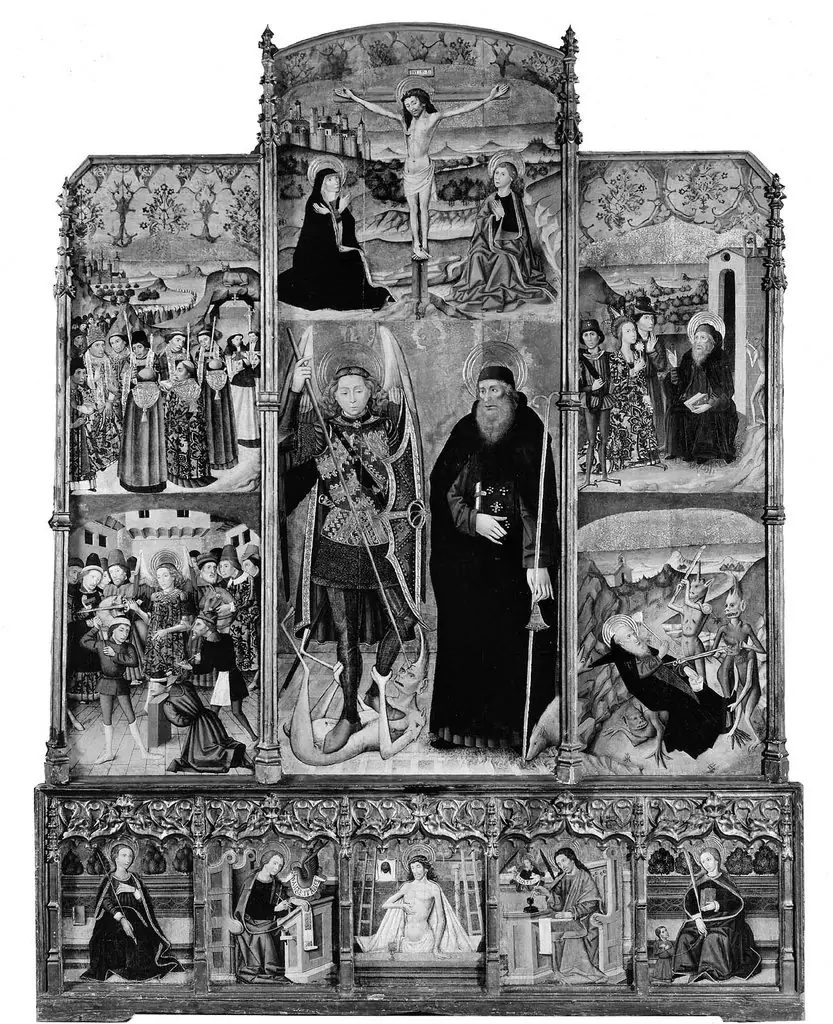 Altarpiece of Saints Michael and Anthony Abbot
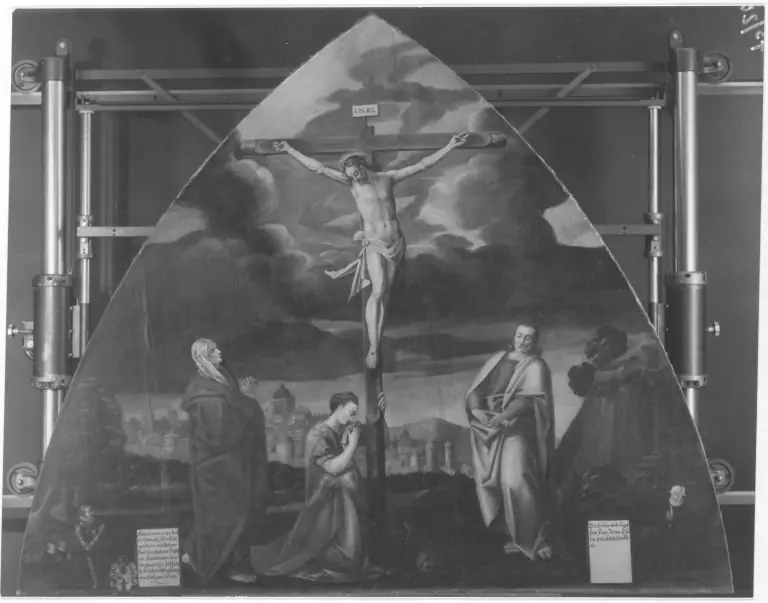 Christus am Kreuz mit Maria, Johannes und Magdalena (Epitaph Pfefferle)
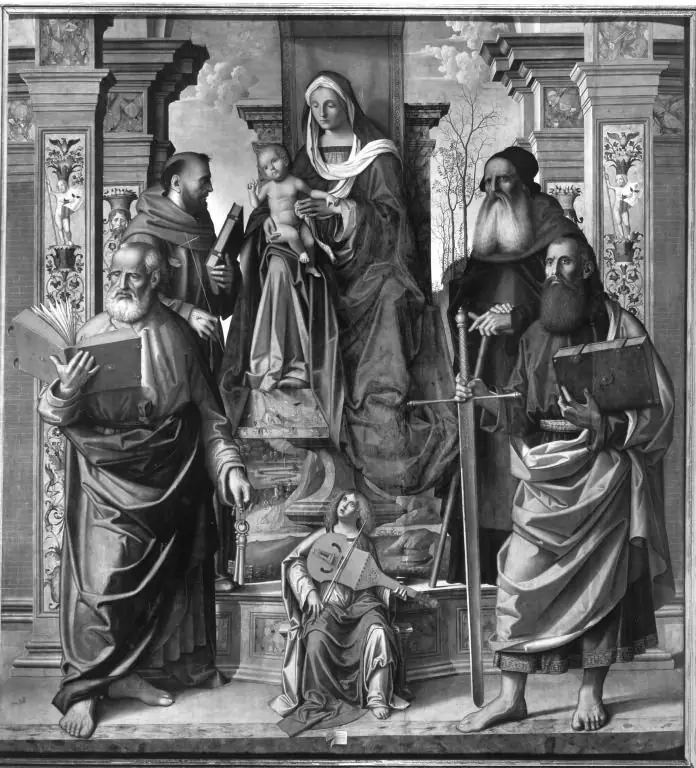 Maria mit Kind und vier Heiligen
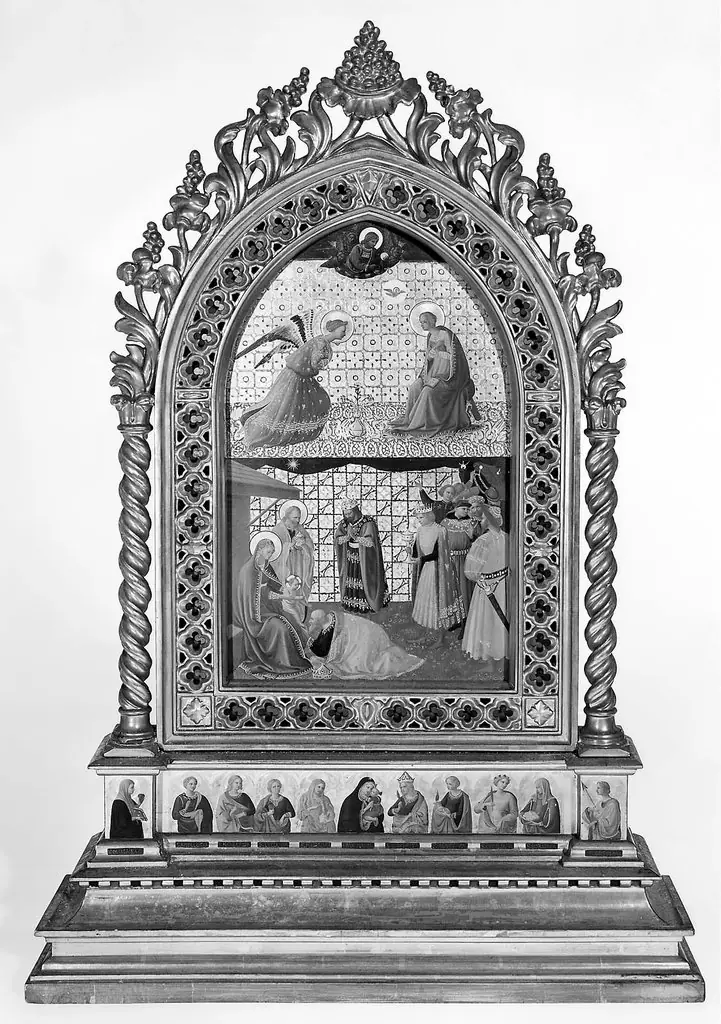 The Adoration of the Kings and the Annunciation
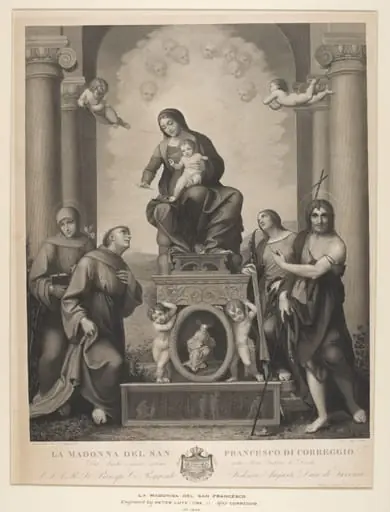 La Madonna Del San Francesco