Artwork
Crucifixion
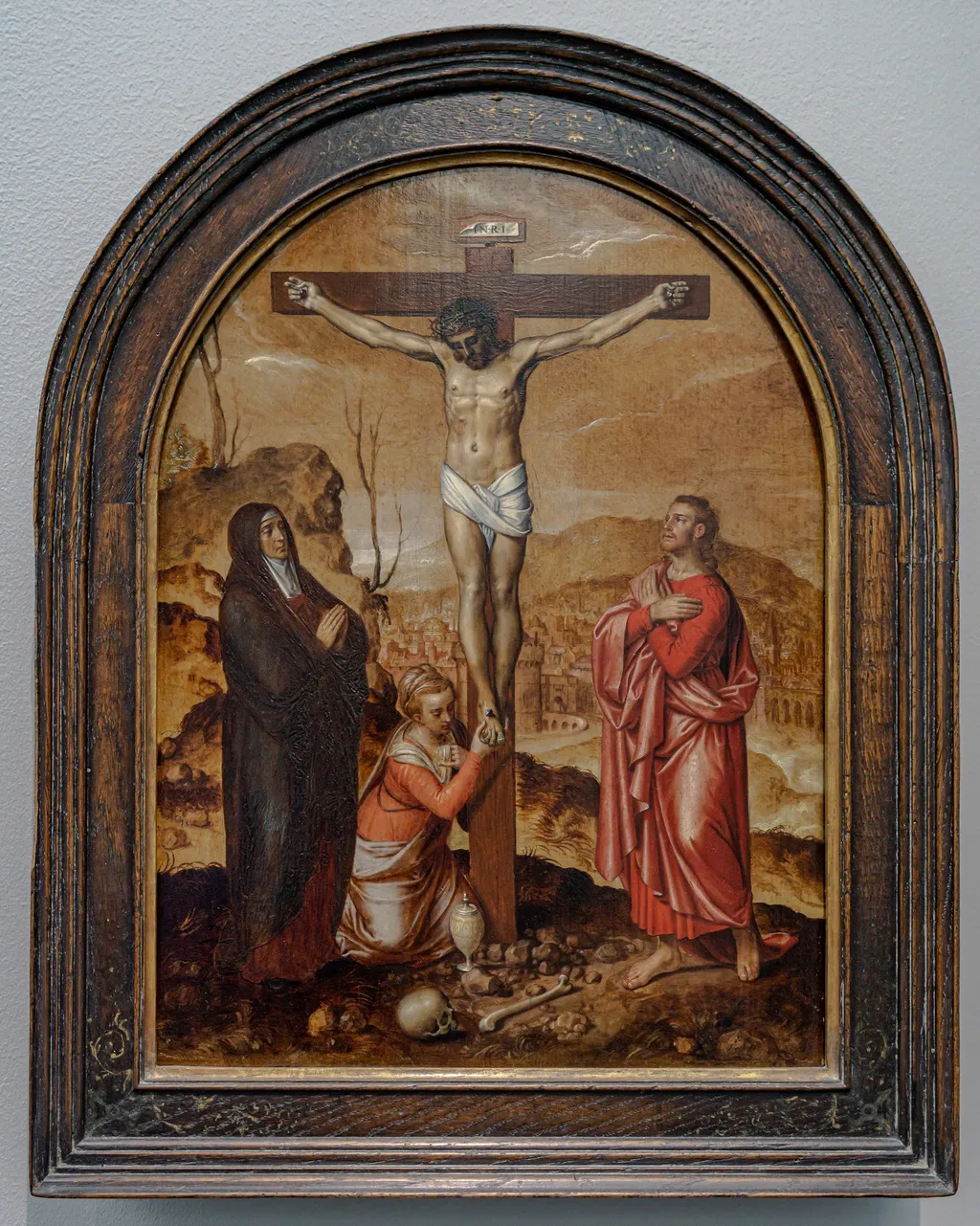
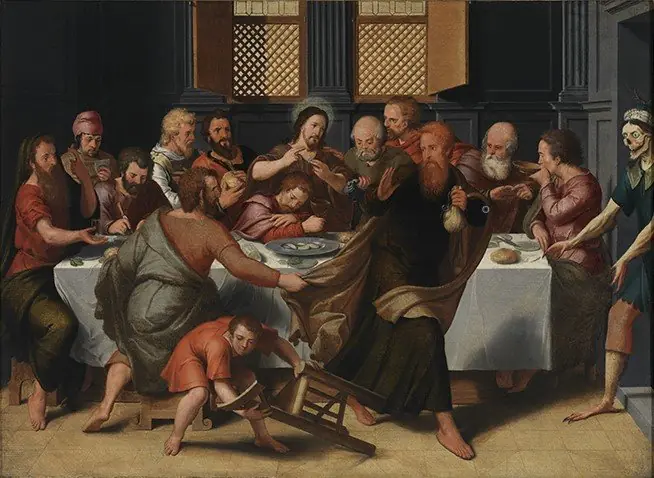
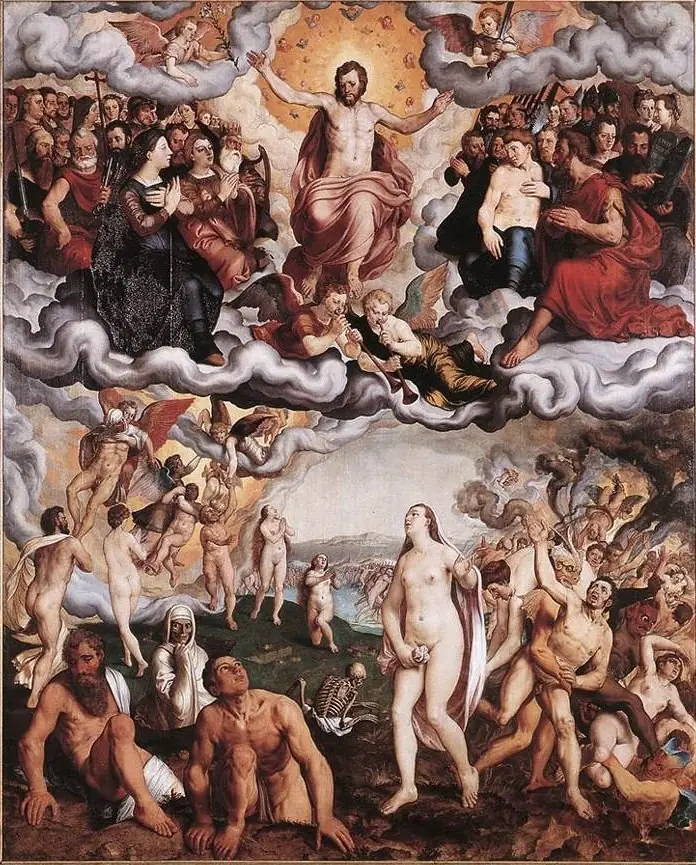
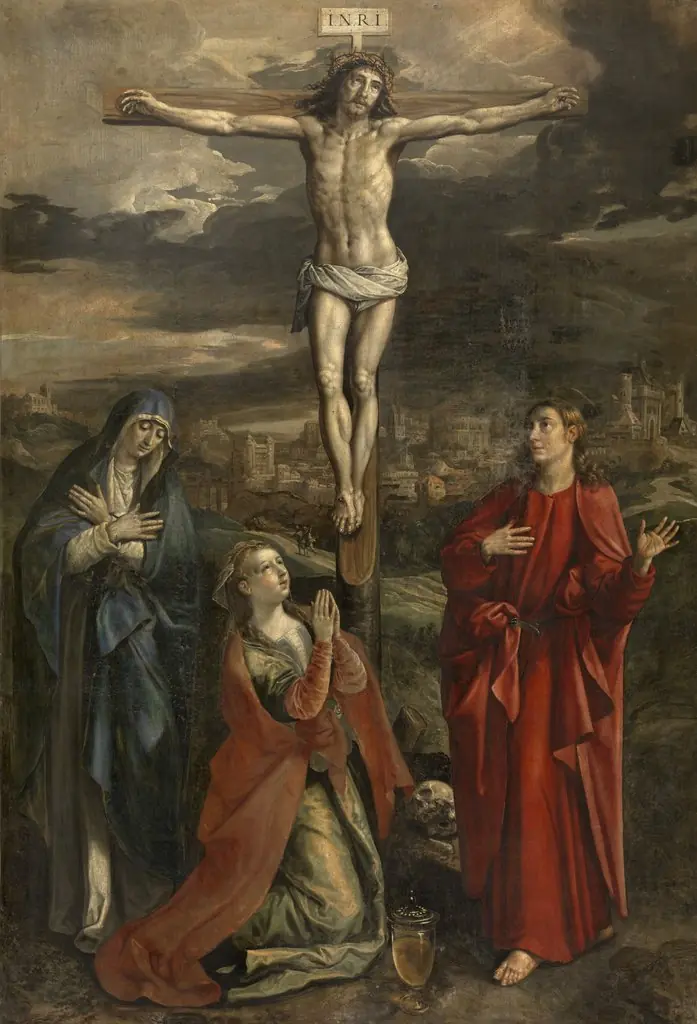
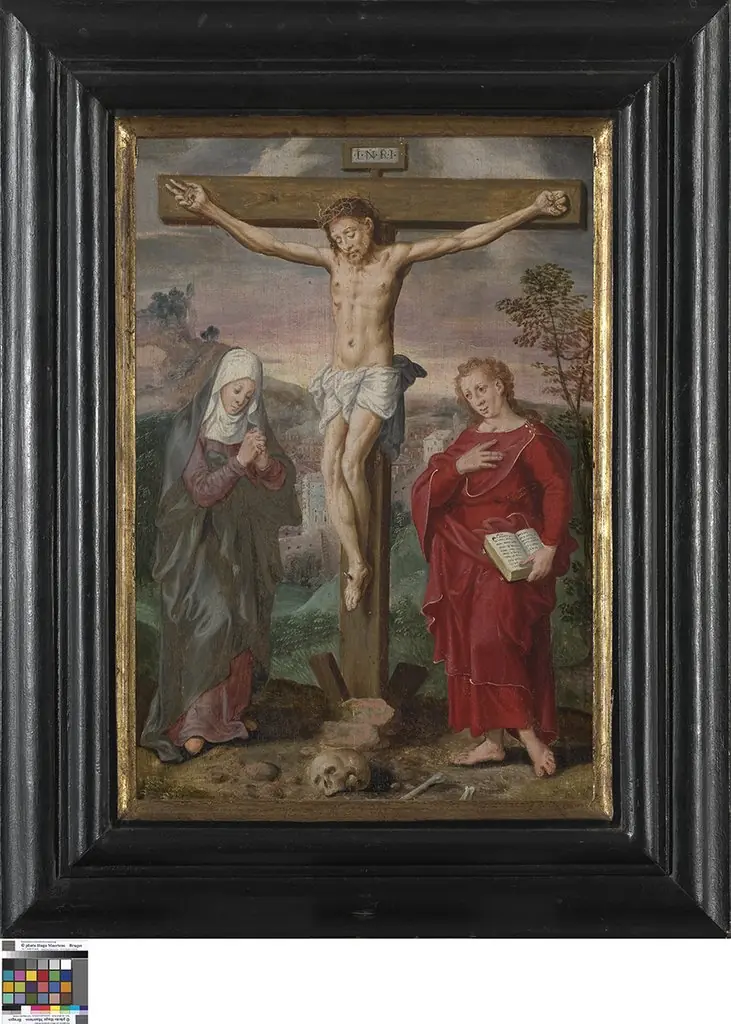
Crucifixion is an oil painting by the Early Baroque Italian artist Pieter Pourbus. It dates from 1557 and is held in the collection of the Groeningemuseum.
About this work
Overview
Pieter Pourbus, a 16th‑century Flemish painter active in Bruges, executed the oil painting *Crucifixion* in 1557. The work is part of the Groeningemuseum’s collection and exemplifies the artist’s focus on religious subjects alongside his portraiture.
Subject & Meaning
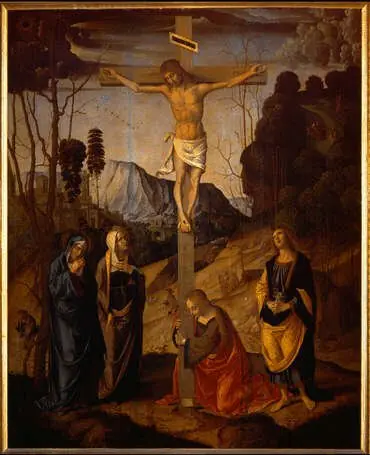
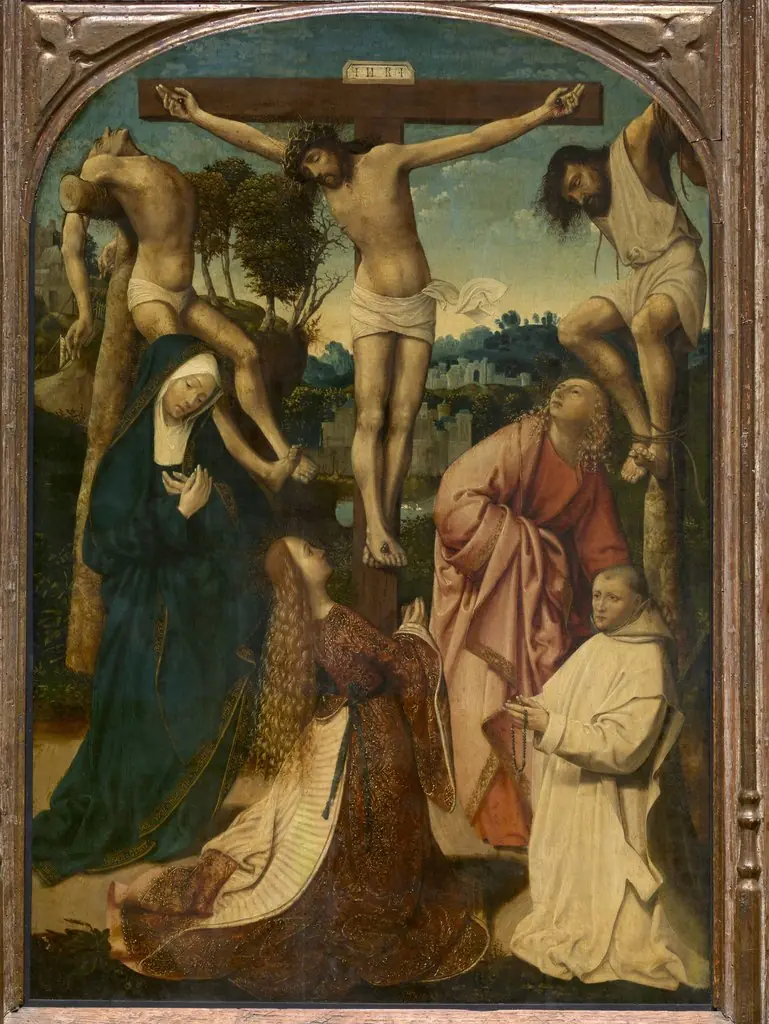
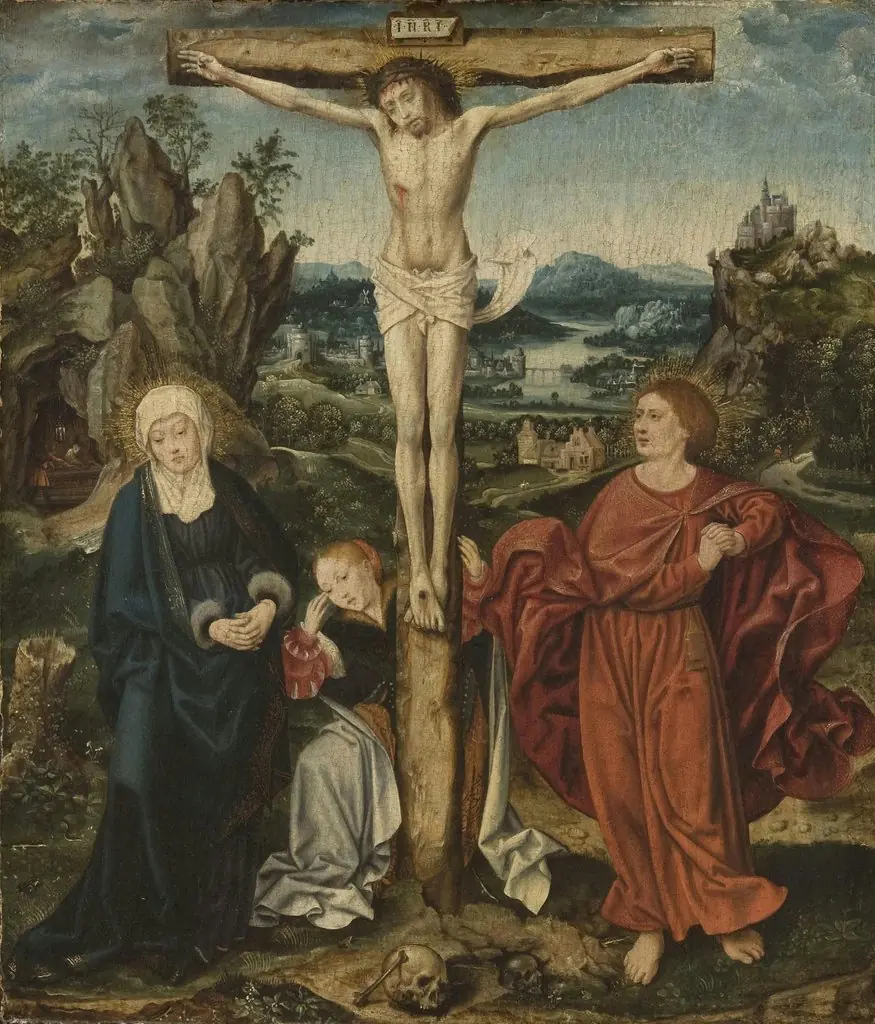
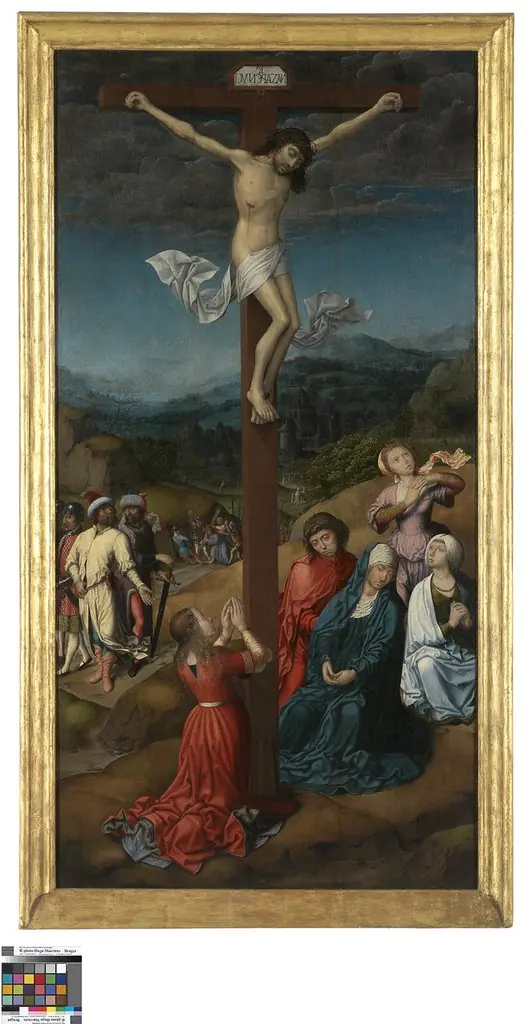
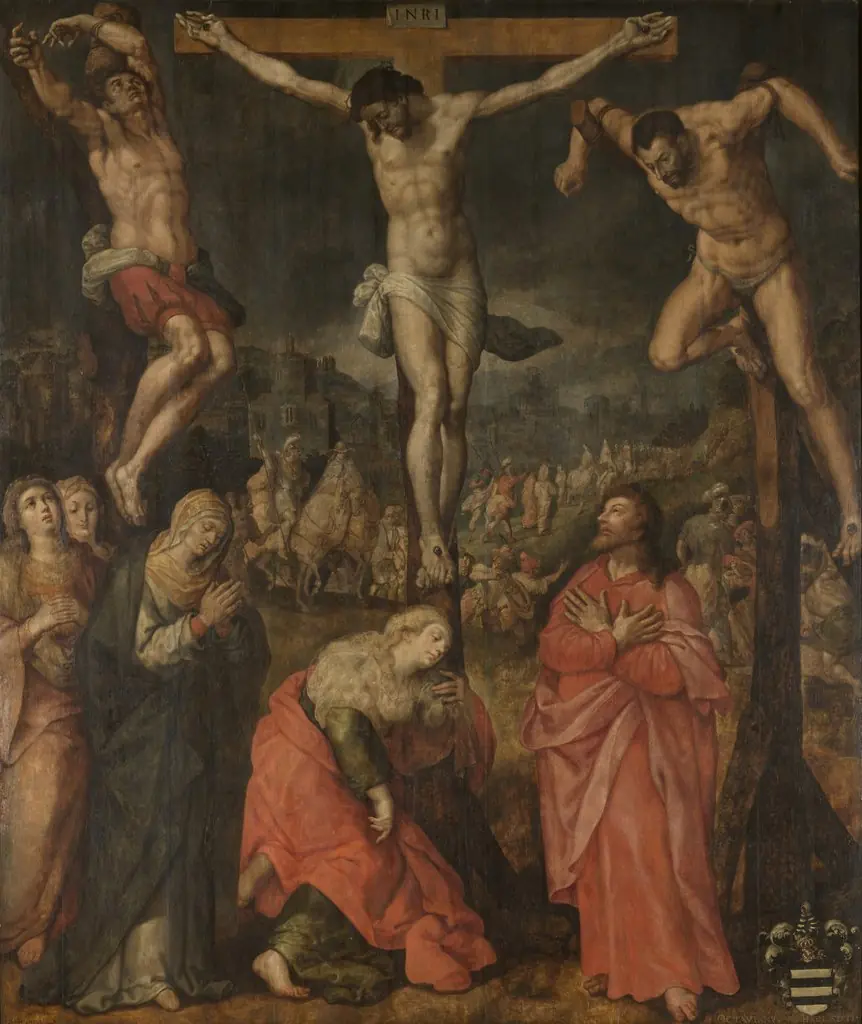
The composition centers on the crucified Christ, whose outstretched arms and uplifted head dominate the scene. Flanking him are three mournful figures: a woman in a dark robe to the left, a man in red to the right, and a third figure in white and orange at the foot of the cross, suggesting a narrative of grief and devotion.
Technique & Style
Pourbus employs chiaroscuro to model the figures, creating a stark contrast between illuminated flesh and shadowed surroundings. The palette is restrained, dominated by earthy hues that reinforce the somber mood, while the distant landscape and cityscape recede into muted tones, adding depth.
History & Provenance
Created during the late Renaissance, the painting reflects the transitional aesthetic of early Baroque influences arriving from Italy. It entered the Groeningemuseum’s holdings at an unspecified date, where it remains displayed as a representative work of Pourbus’s religious output.
Context
In mid‑16th‑century Bruges, devotional imagery remained central to artistic commissions. Pourbus’s *Crucifixion* aligns with contemporary Flemish practices that emphasized narrative clarity and emotional resonance, while also incorporating emerging Baroque sensibilities in light treatment.
Artist & collection
Artist
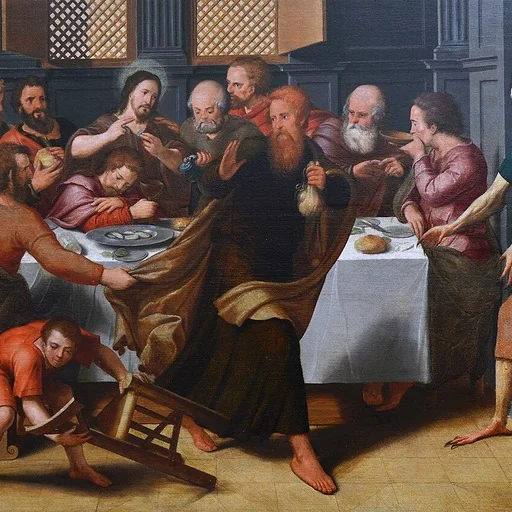
Pieter Jansz. Pourbus (c. 1523–1584) was a Flemish Renaissance painter, draftsman, engineer and cartographer who was active in Bruges during the 16th century. He is known primarily for his religious and portrait paintings.