Artwork
King Beheading Enemy
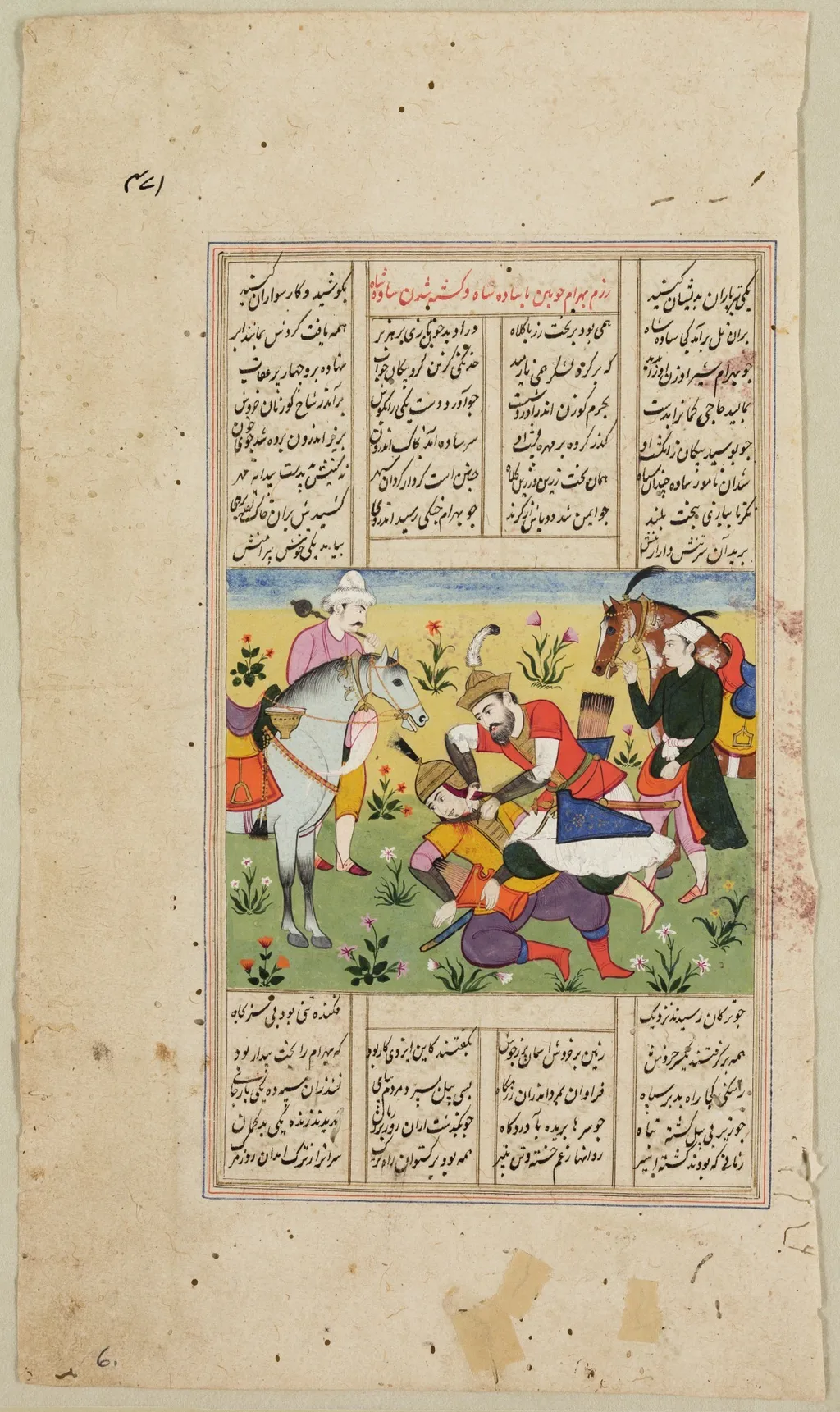
King Beheading Enemy is an unspecified painting by the Spanish Baroque Tenebrist artist Unknown. It dates from 1620 and is held in the collection of the Detroit Institute of Arts. This painting captures a moment of royal violence: a monarch delivering a fatal blow to a subdued opponent.
About this work
Overview
The scene is rendered with heightened color and precise detail, emphasizing the gravity of the act without overt embellishment.
This painting captures a moment of royal violence: a monarch delivering a fatal blow to a subdued opponent. The composition centers on the king’s decisive action, framed by contrasting attire and a serene natural backdrop. The scene is rendered with heightened color and precise detail, emphasizing the gravity of the act without overt embellishment. The setting suggests a ceremonial or symbolic context rather than a battlefield.
Subject & Meaning
The king, clad in regal red and gold, represents authority and justice, while the kneeling enemy in pale blue and white embodies defeat and vulnerability. The onlookers—a mounted spectator and a reins-holder—suggest ritualized observation, implying the act is not mere brutality but a sanctioned display of power. The floral field may symbolize the land under the king’s dominion, juxtaposing life with death.
Technique & Style
The artist employs vivid, saturated hues to heighten emotional contrast: the king’s rich garments against the enemy’s muted tones and the bright yellow field. Detailed brushwork defines fabric folds, facial expressions, and floral elements, creating a sense of immediacy. The figures are arranged in a shallow space, directing focus to the central act while maintaining a decorative, almost tapestry-like surface quality.
History & Provenance
The painting’s origins are undocumented in public records, and no known artist, date, or cultural source has been conclusively identified. Its style suggests a possible connection to early modern courtly art traditions, though it lacks clear ties to established schools or collections. Its survival implies it was once owned by a patron with interest in symbolic representations of sovereignty.
Context
In many pre-modern cultures, depictions of rulers executing enemies served to legitimize power through visual narrative. This image aligns with traditions where sovereignty was demonstrated through decisive, public acts of justice or retribution. The inclusion of bystanders and a cultivated landscape reflects a desire to frame violence within order, not chaos.
Legacy
Though not widely reproduced or studied, the painting contributes to a broader visual language of rulership and punishment. Its preservation suggests continued interest in the symbolism of power, even as its specific historical narrative remains obscure. It stands as a quiet example of how authority was visually encoded in non-Western or lesser-documented artistic traditions.
Artist & collection

 Domestic Scene
 Giacomo and Cardinal Marco, investing Andrea, Abbot of San Zeno, with his Benefice
 The Nymph of Fontainebleau
 Portrait of a Woman
 Madonna and Child with Saints in the Enclosed Garden
 Venus and Minerva
 Family Group of Four on Sofa
 Wall painting from Room H of the Villa of P. Fannius Synistor at Boscoreale
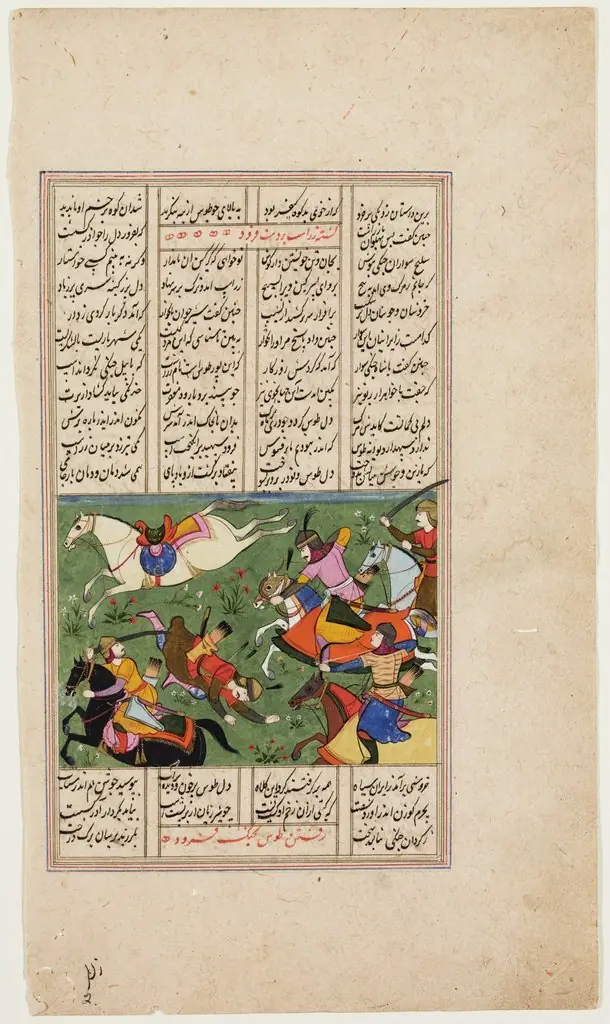 Cavalry Battle with Fallen Warrior
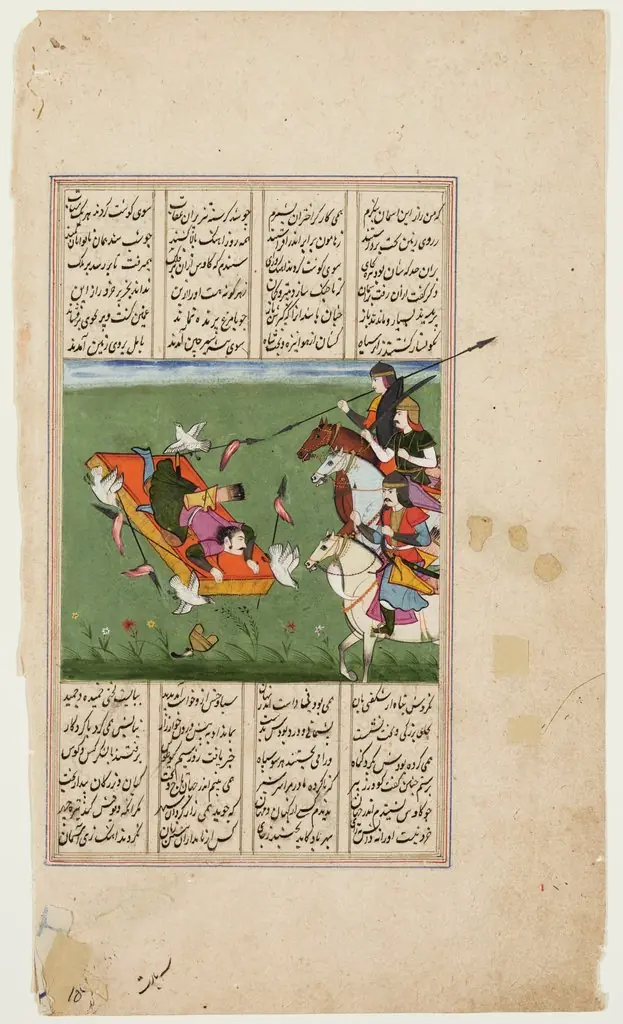 Kai Kaus Discovered on Palaquin
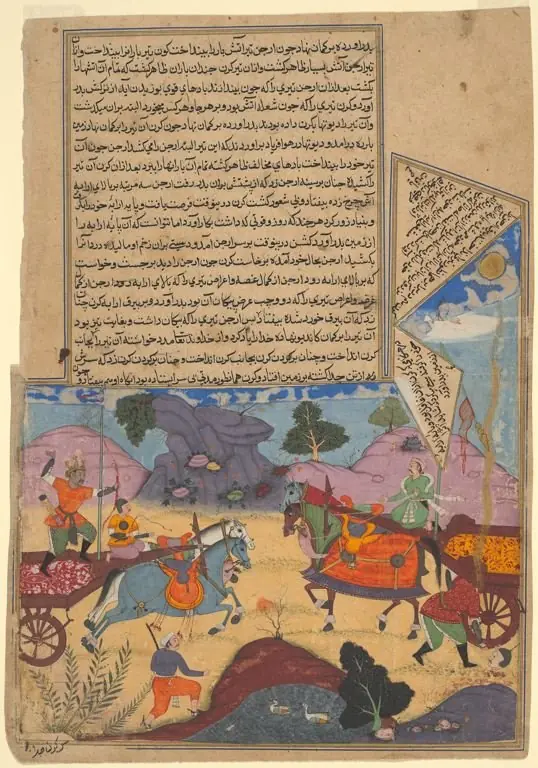 Arjuna Slays Karna, page from a copy of the Razmnama
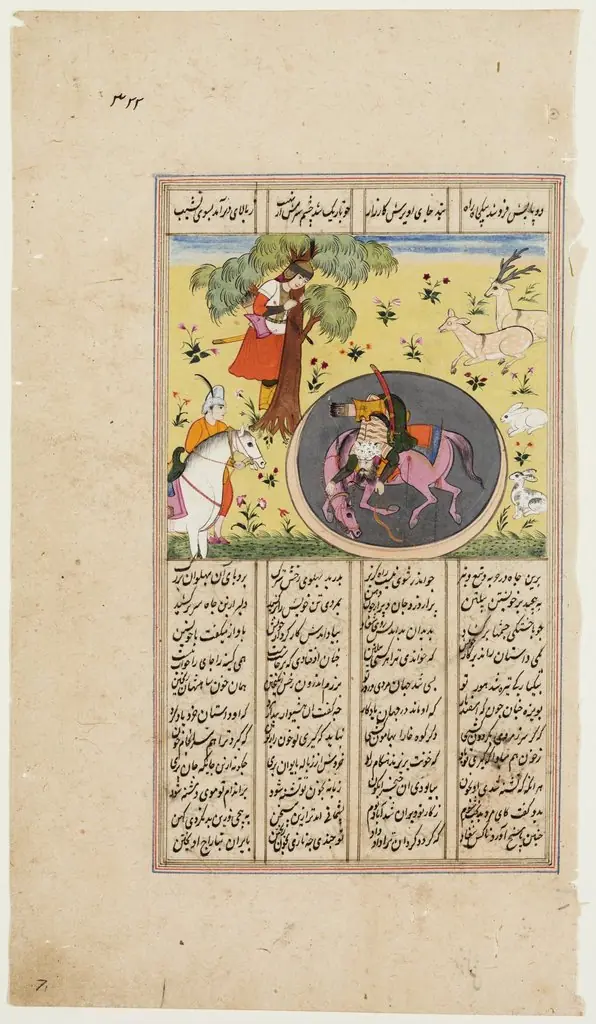 Rustam and Raksh Entrapped
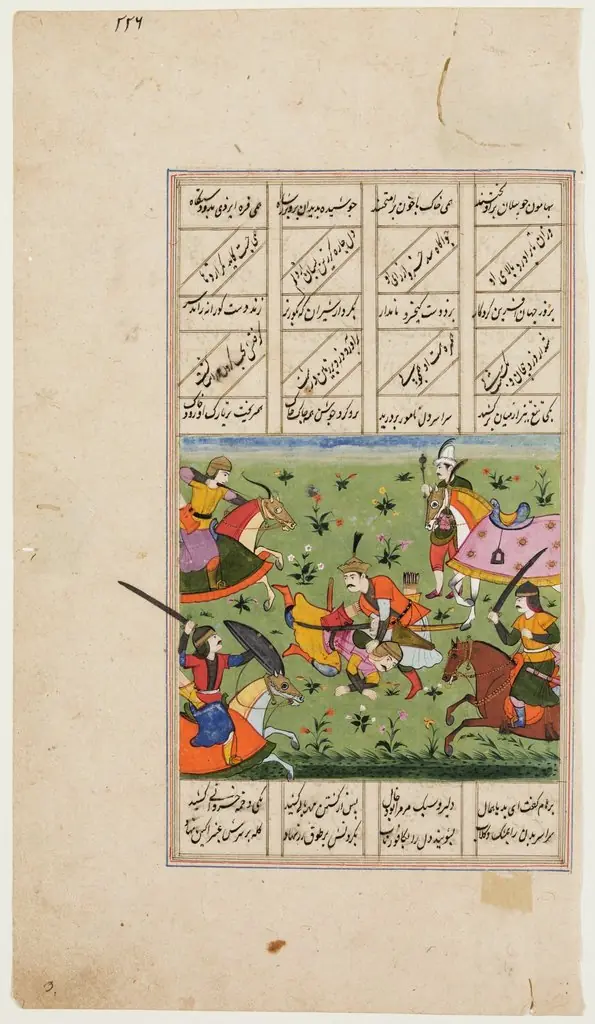 Cavalry Battle with Dismounted Combat
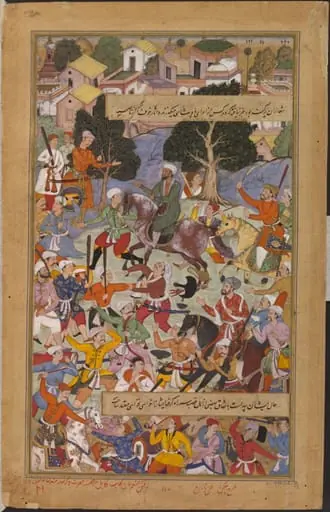 Mu'nim Khan
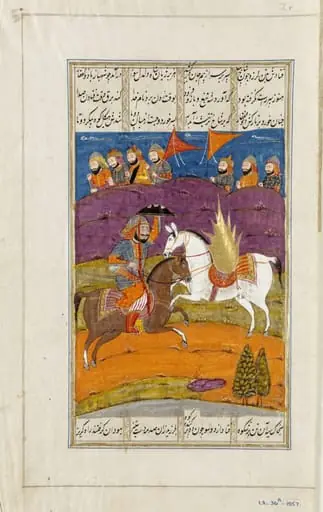 Harith and Imam Ali
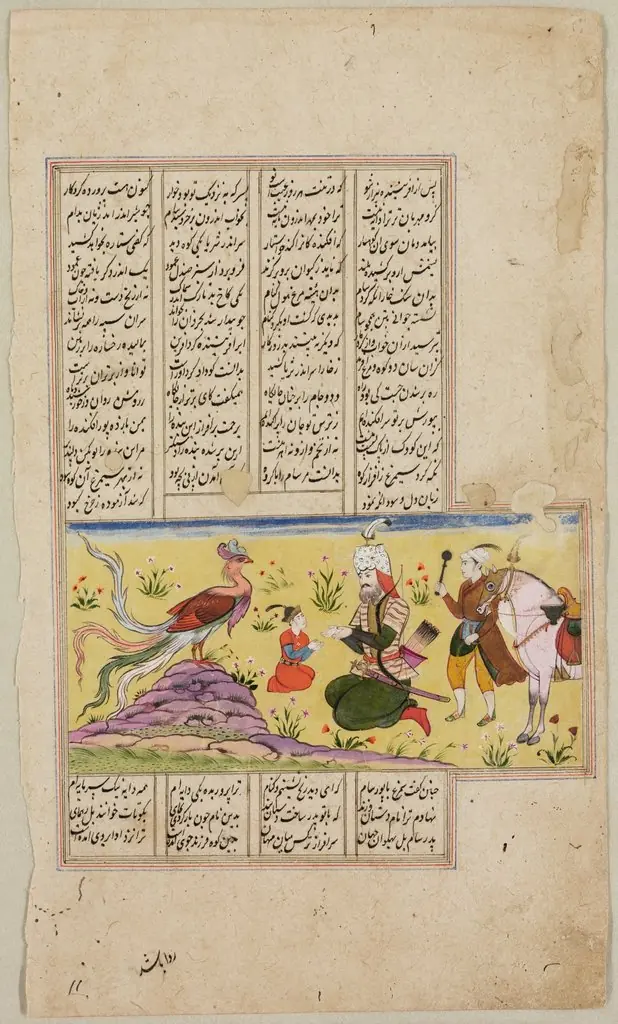 Rustam and the Simurgh
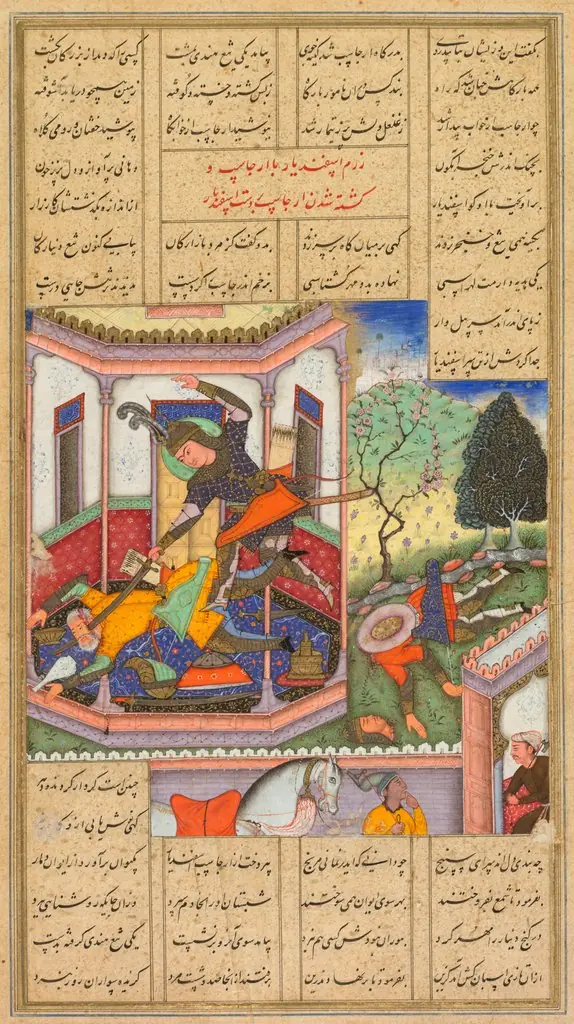 Isfandiyar slays Arjasp, the king of Turan, from a Shah-nama (Book of Kings) of Firdausi (Persian, about 934–1020)
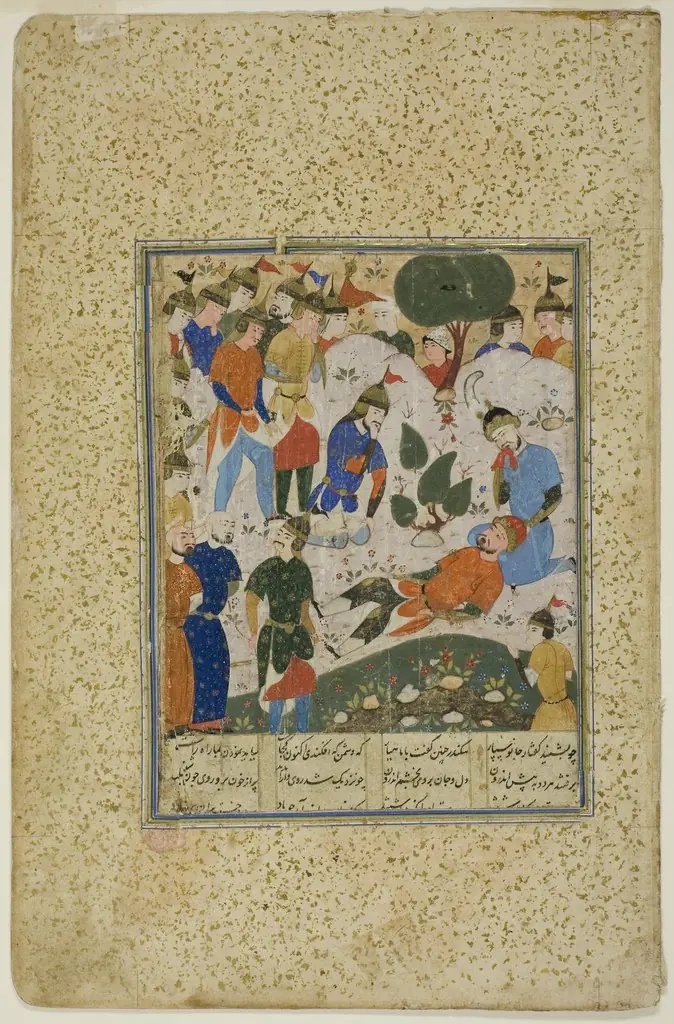 Iskander Comforts the Dying Darius