Artwork
Harith and Imam Ali
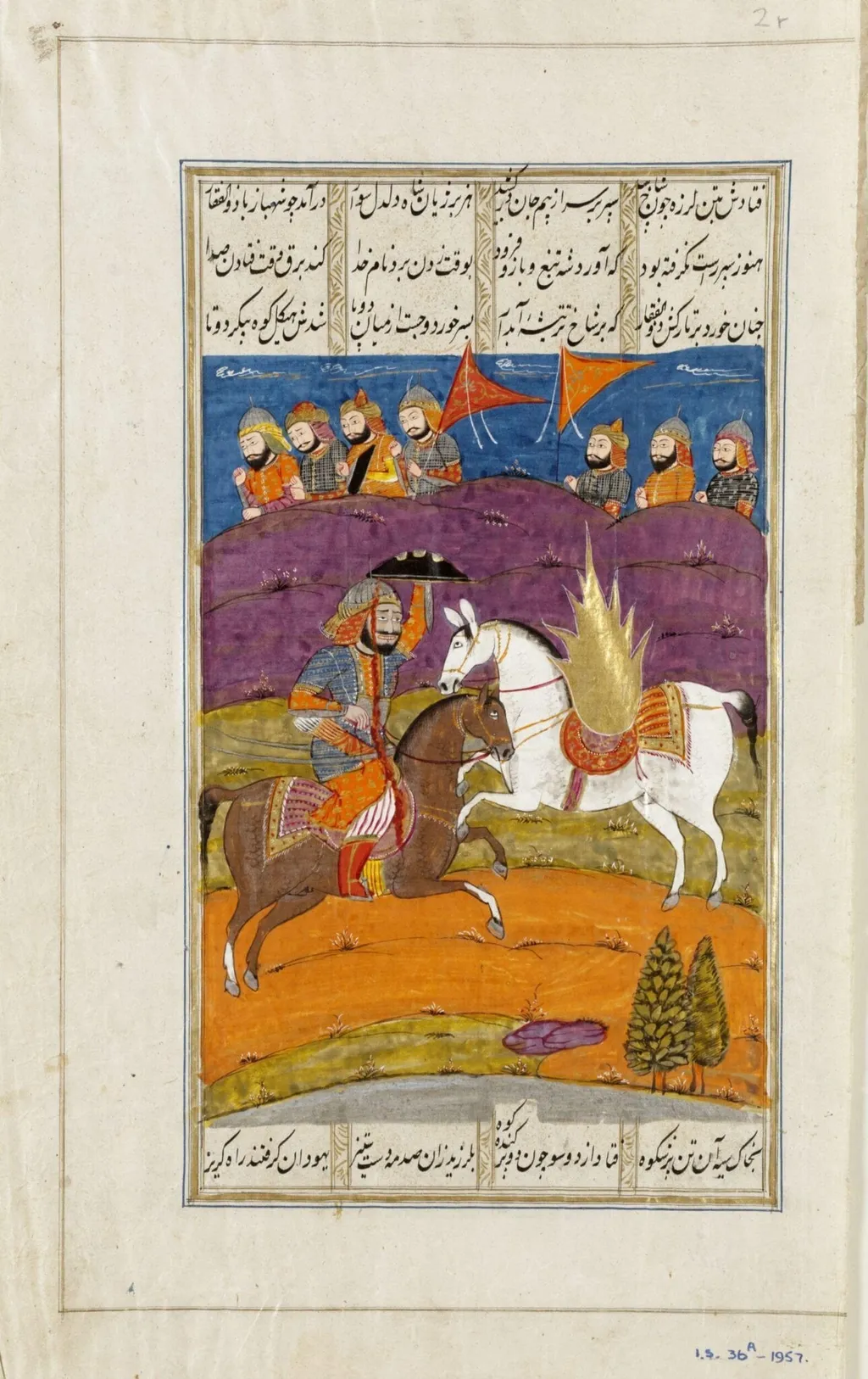
Harith and Imam Ali is a paint painting by Unknown. It dates from 1850 and is held in the collection of the Victoria and Albert Museum.
About this work
Overview
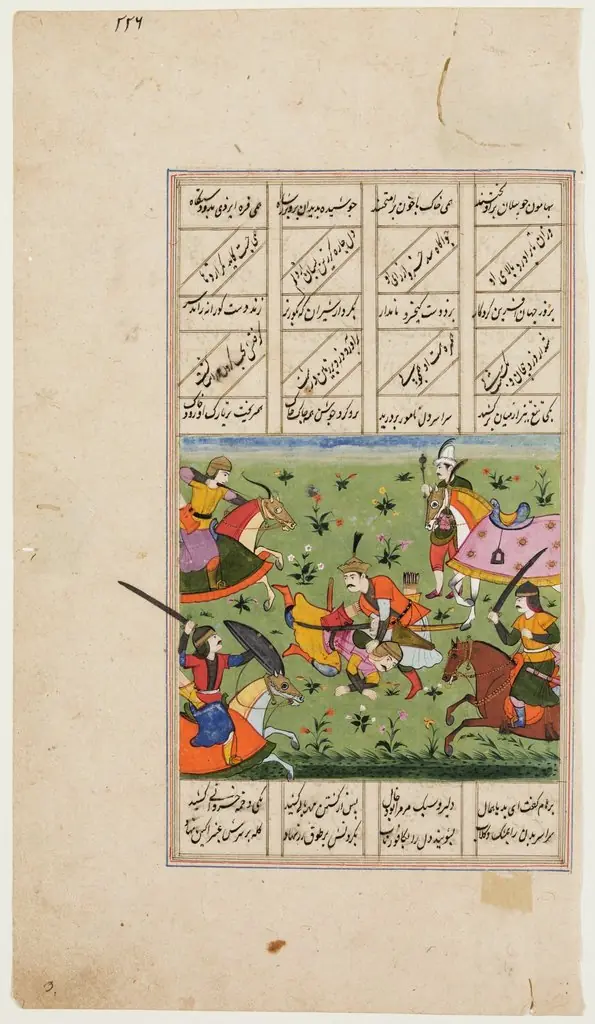
This mid‑nineteenth‑century work portrays a dramatic encounter between the Jewish leader Harith of Khaibar and Imam ‘Ali, the first Imam of Shi‘a Islam.
This mid‑nineteenth‑century work portrays a dramatic encounter between the Jewish leader Harith of Khaibar and Imam ‘Ali, the first Imam of Shi‘a Islam. In the composition, Harith is shown being split by Imam ‘Ali’s sword while a group of soldiers watches the event. Executed in opaque watercolour with gold accents on paper, the image functions as an illustrative page for a manuscript copy of the *Hamlah‑i Haidari*.
Subject & Meaning
The scene visualises a legendary episode from Islamic tradition in which Imam ‘Ali defeats the rebellious ruler Harith, symbolising the triumph of divine justice over tyranny. The presence of onlookers underscores the public nature of the punishment and reinforces the moral lesson that opposition to rightful authority will be met with decisive retribution.
Technique & Style
The artist employed opaque watercolour, a medium that allows for rich, flat colour fields, combined with gilded detailing to highlight the sword and decorative elements. The use of gold creates a luminous contrast against the muted earth tones of the desert landscape, while the precise line work conveys the narrative clarity typical of manuscript illustration in the Indian sub‑continent.
History & Provenance
Created around 1850, the painting was produced as an illustration for a Delhi‑based copy of the *Hamlah‑i Haidari* by Mirza Rafi Bazil. It later entered the collection of the Victoria and Albert Museum, where it is catalogued among works that exemplify the cross‑cultural artistic exchanges between Persian, Indian, and Islamic traditions during the 19th century.
Context
The work reflects the broader 19th‑century interest in visualising religious narratives for devotional and didactic purposes. By integrating Indian manuscript conventions with Persian iconography, the piece illustrates how regional artistic practices were adapted to convey stories central to Shi‘a identity, serving both as a teaching tool and a decorative object within elite circles.
Artist & collection

 Domestic Scene
 Giacomo and Cardinal Marco, investing Andrea, Abbot of San Zeno, with his Benefice
 The Nymph of Fontainebleau
 Portrait of a Woman
 Madonna and Child with Saints in the Enclosed Garden
 Venus and Minerva
 Family Group of Four on Sofa
 Wall painting from Room H of the Villa of P. Fannius Synistor at Boscoreale
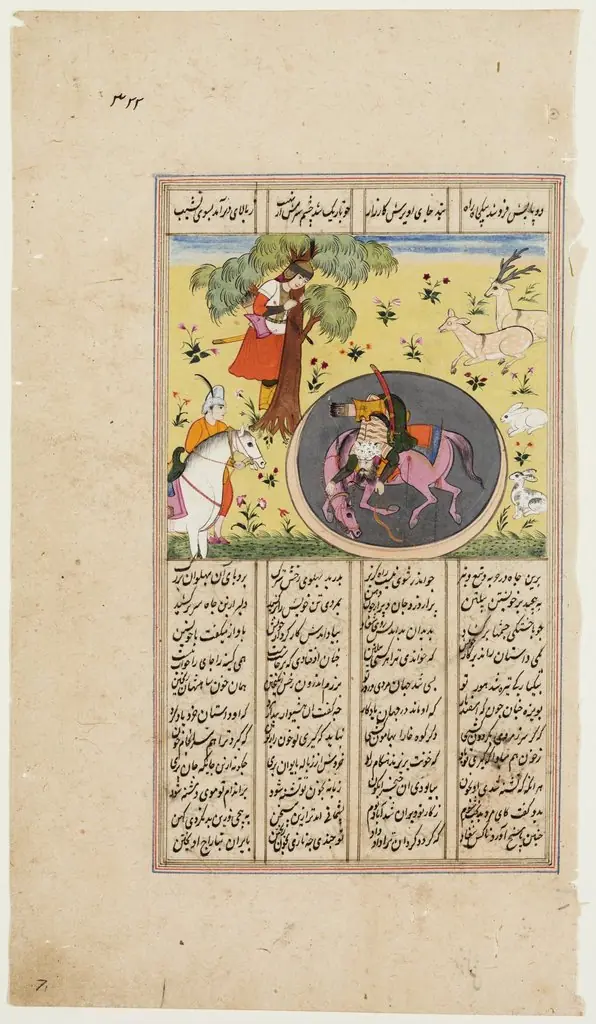 Rustam and Raksh Entrapped
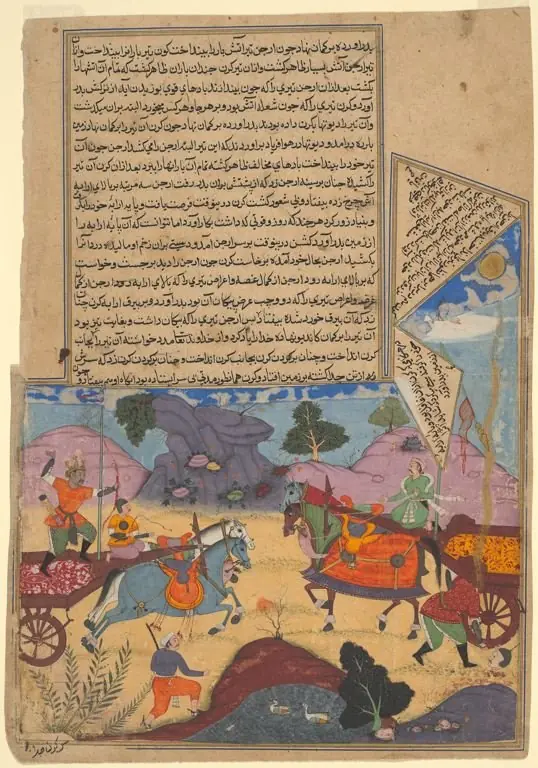 Arjuna Slays Karna, page from a copy of the Razmnama
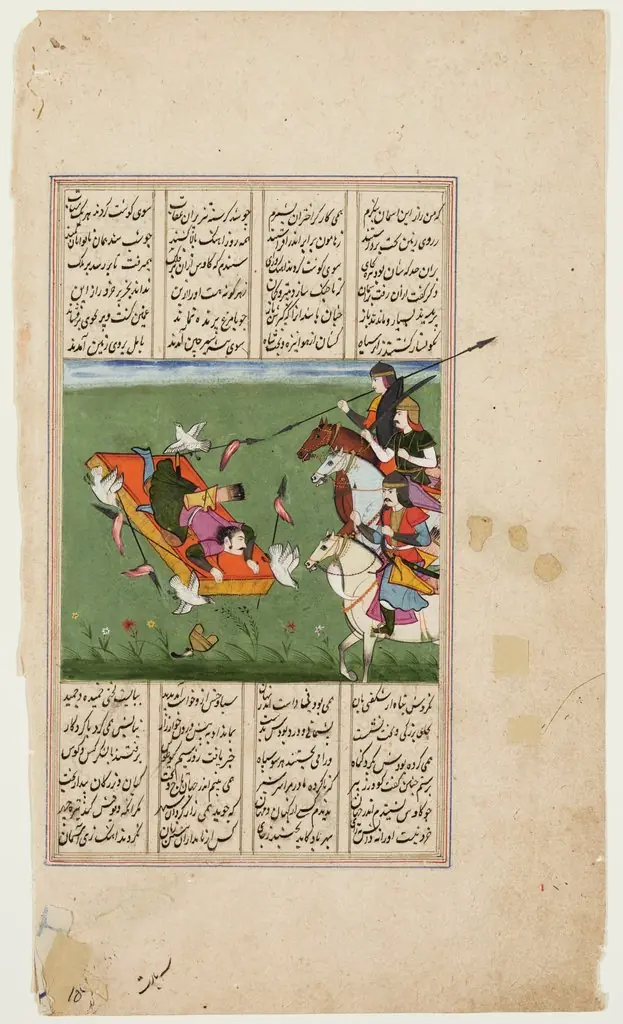 Kai Kaus Discovered on Palaquin
 King Anushirwan and the Owls, from the Khamsa of Nizami
 Untitled
 Shiva and Andhaka
 King Beheading Enemy
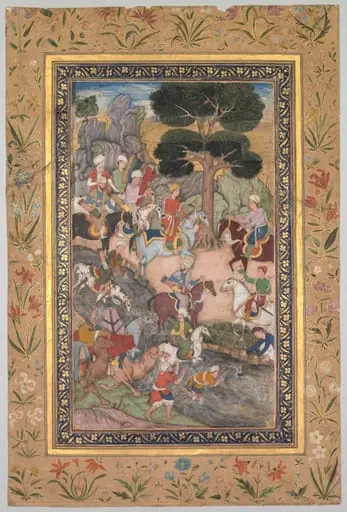 Babur meeting with Sultan Ali Mirza at the Kohik River, from a Babur-nama (Memoirs of Babur)
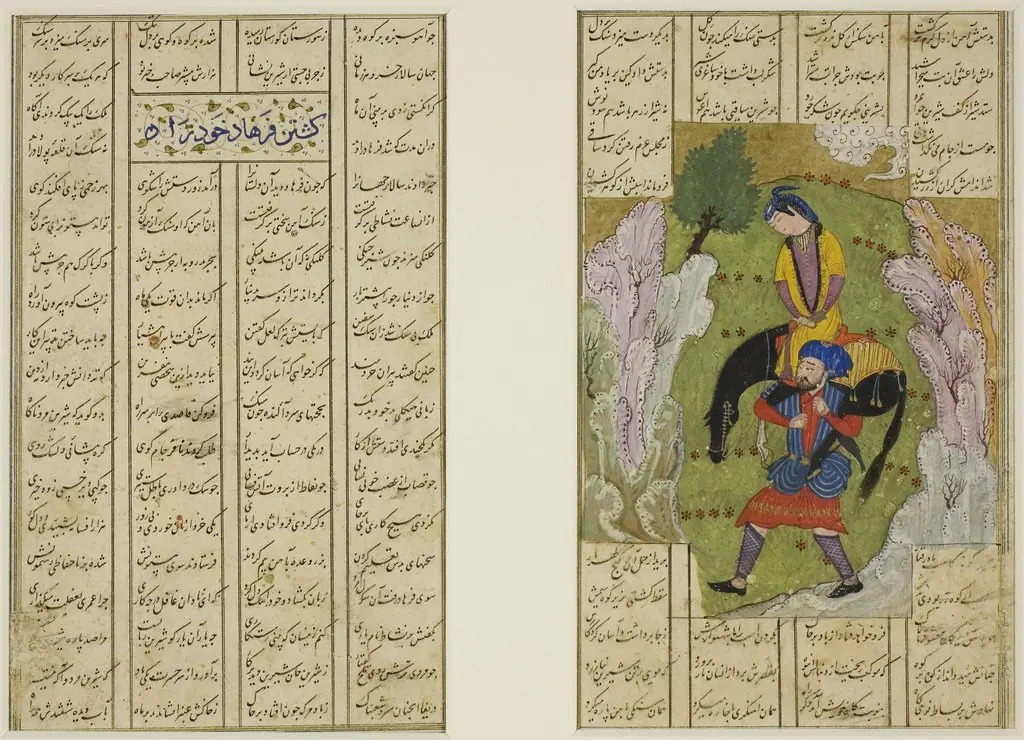 Farhad Carrying Shirin and Her Horse, from a copy of the Khamsa of Nizami
 Farhad Carrying Shirin and Her Horse, from a copy of the Khamsa of Nizami
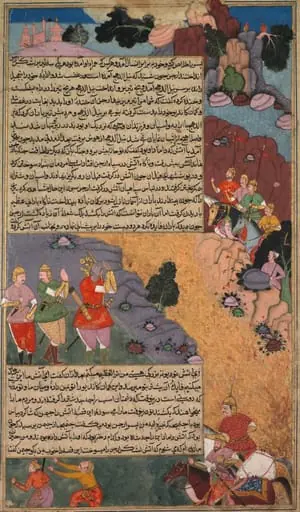 The First Adventure of the White Horse, Page from the Khan Khanan's Razm Nama (Book of Wars)
 Cavalry Battle with Dismounted Combat