Artwork
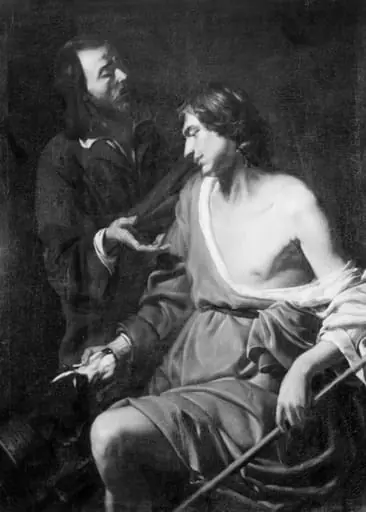
Socrates drinks the cup of poison
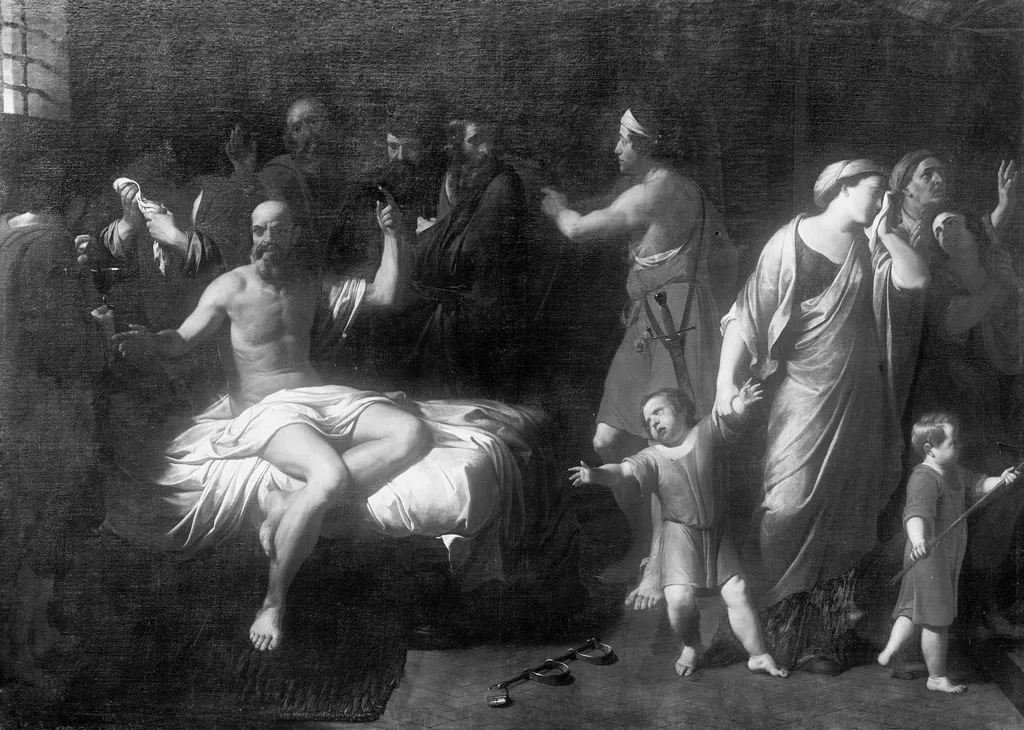
Socrates drinks the cup of poison is a paint painting by Unknown. It is held in the collection of the Gemäldegalerie Berlin.
About this work
Overview
This oil painting portrays the final moments of Socrates, the Athenian philosopher, as he prepares to drink the hemlock sentenced by the state. The scene is rendered with quiet intensity, focusing on the figure of Socrates seated on a low bed, cup in hand, while those around him react with grief and restraint. The composition avoids theatricality, emphasizing dignity in the face of death.
Subject & Meaning
The scene captures Socrates’ last hours, as described in Plato’s Phaedo, where he accepts death calmly to uphold his principles.
The scene captures Socrates’ last hours, as described in Plato’s Phaedo, where he accepts death calmly to uphold his principles. His outstretched arm may signify philosophical instruction or resignation. The figures surrounding him—mourning companions, a woman with a child, and a soldier with a sword—reflect the human cost of his execution and the tension between individual conscience and state authority.
Technique & Style
The artist employs muted tones and controlled lighting to reinforce the somber mood. A dim window on the left casts a soft, directional glow, illuminating Socrates’ form while leaving the background in shadow. Figures are rendered with restrained gestures and naturalistic postures, avoiding melodrama. Brushwork is precise but unobtrusive, favoring emotional clarity over ornamental detail.
History & Provenance
The painting resides in the Gemäldegalerie Berlin, part of its 18th- to 19th-century European collection. Its origin is attributed to a Neoclassical artist influenced by Enlightenment ideals and classical antiquity. While the exact date and artist remain uncertain, its style aligns with works produced in the late 1700s or early 1800s, a period when Socratic themes were frequently revisited in academic art.
Context
Created during a time when Enlightenment thinkers revered Socrates as a martyr for reason and free inquiry, the painting reflects broader cultural interest in classical virtue and civic duty. Depictions of his death served not only as moral exemplars but also as subtle commentaries on authority, dissent, and intellectual integrity in contemporary society.
Legacy
Though not widely known today, the painting contributes to a persistent visual tradition of Socrates’ death as a symbol of principled resistance. Its restrained tone distinguishes it from more dramatic interpretations, offering instead a contemplative portrait of philosophical endurance. It remains a quiet testament to the enduring power of classical ideals in Western art.
Artist & collection

 Domestic Scene
 Giacomo and Cardinal Marco, investing Andrea, Abbot of San Zeno, with his Benefice
 The Nymph of Fontainebleau
 Portrait of a Woman
 Madonna and Child with Saints in the Enclosed Garden
 Venus and Minerva
 Family Group of Four on Sofa
 Wall painting from Room H of the Villa of P. Fannius Synistor at Boscoreale
 Isaac Blessing Jacob
 Isaak segnet Jakob
 Der sterbende Seneca
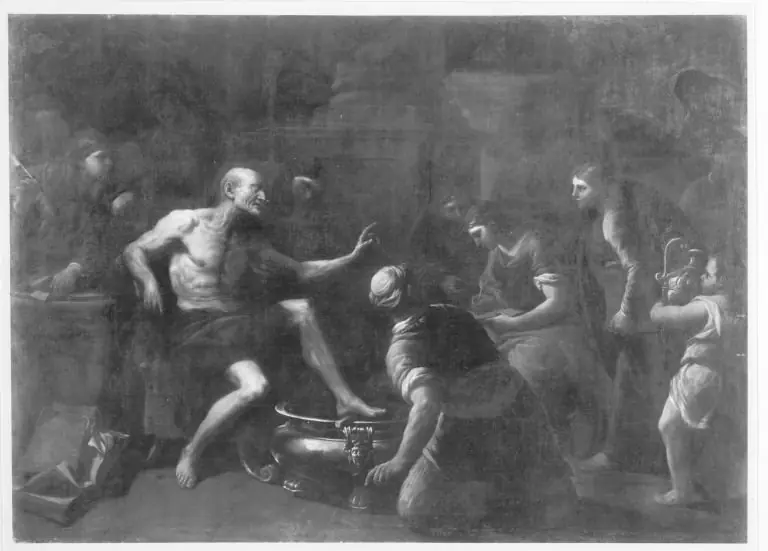 The dying Seneca
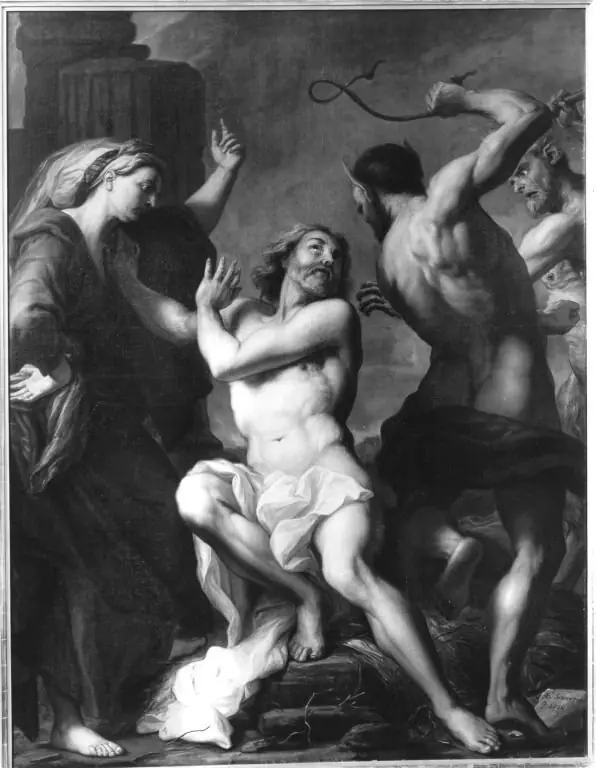 Hiobs Leiden
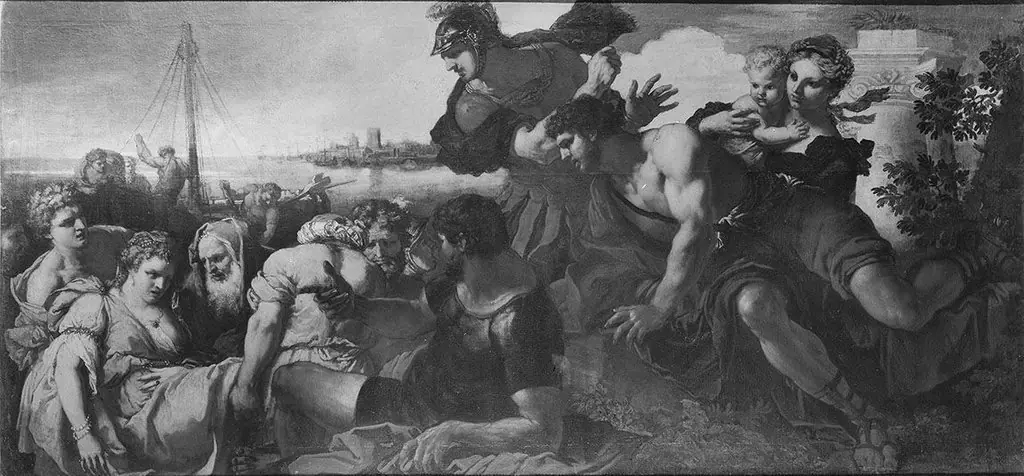 The Rescue of Agrippina, Mother of Nero
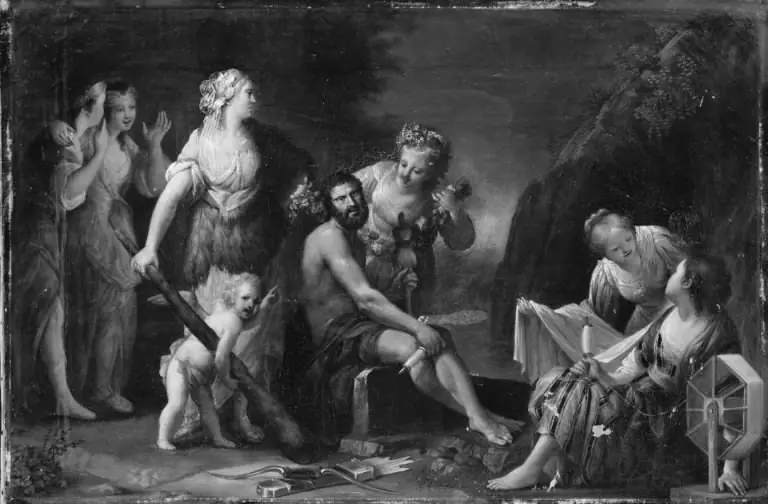 Hercules hos Omphale, omgivet af hendes veninder
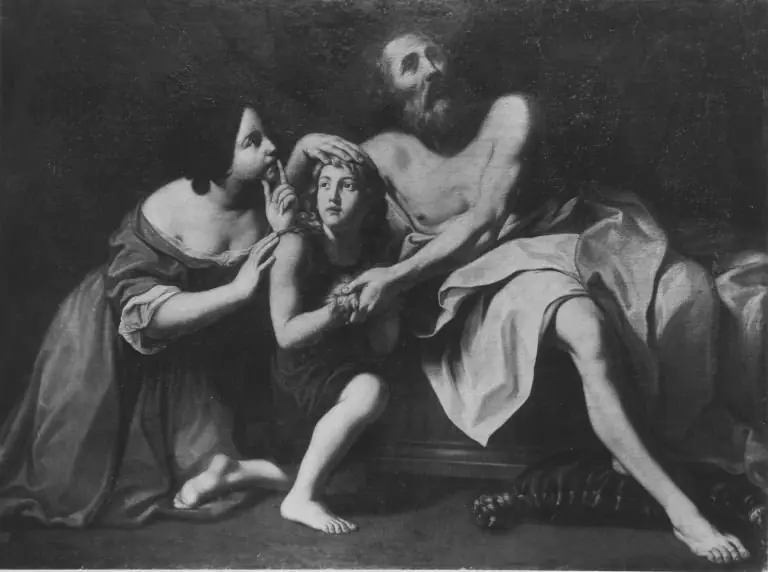 Isaak segnet Jakob
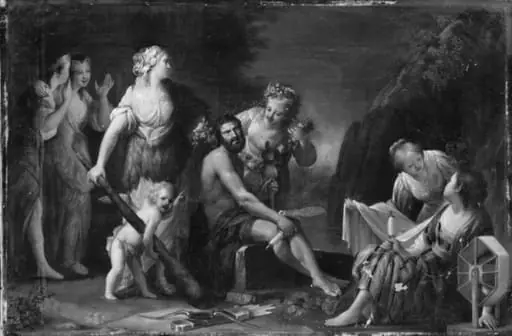 Hercules hos Omphale, omgivet af hendes veninder
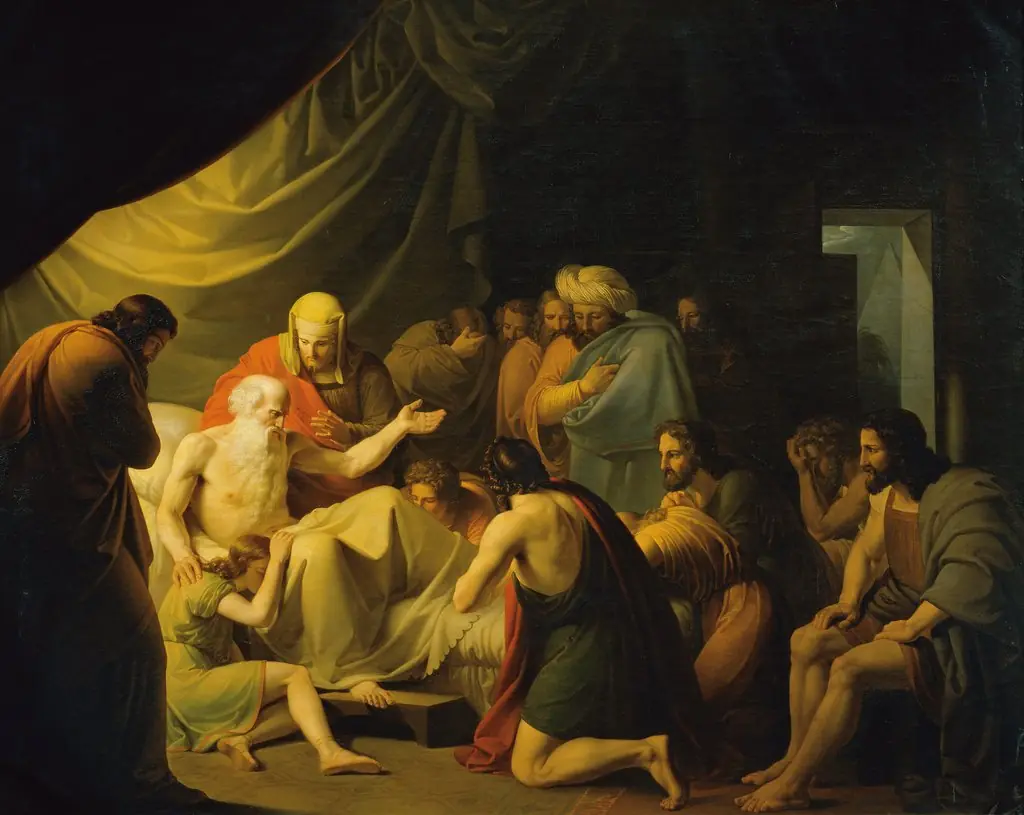 Jacob blesses the sons of Joseph
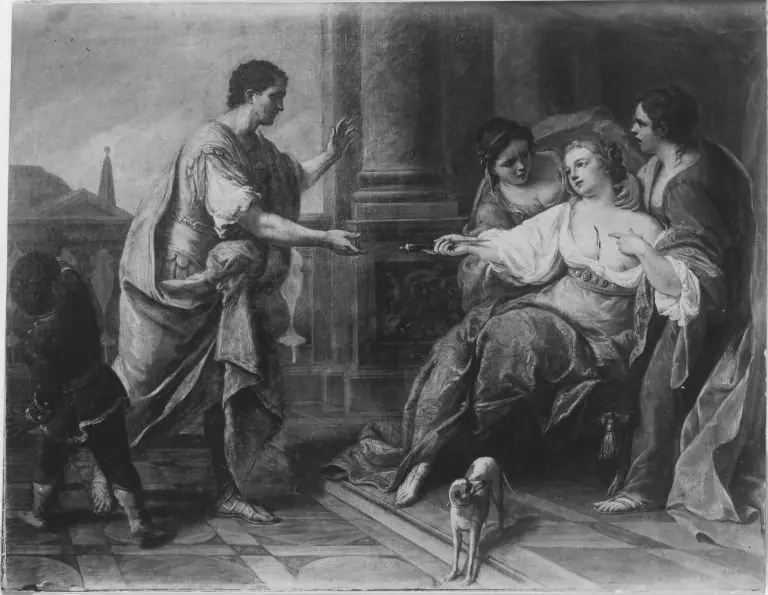 Lukretia und Collatinus
 Sitting Person Conversing One Standing