Artwork
Isaak segnet Jakob
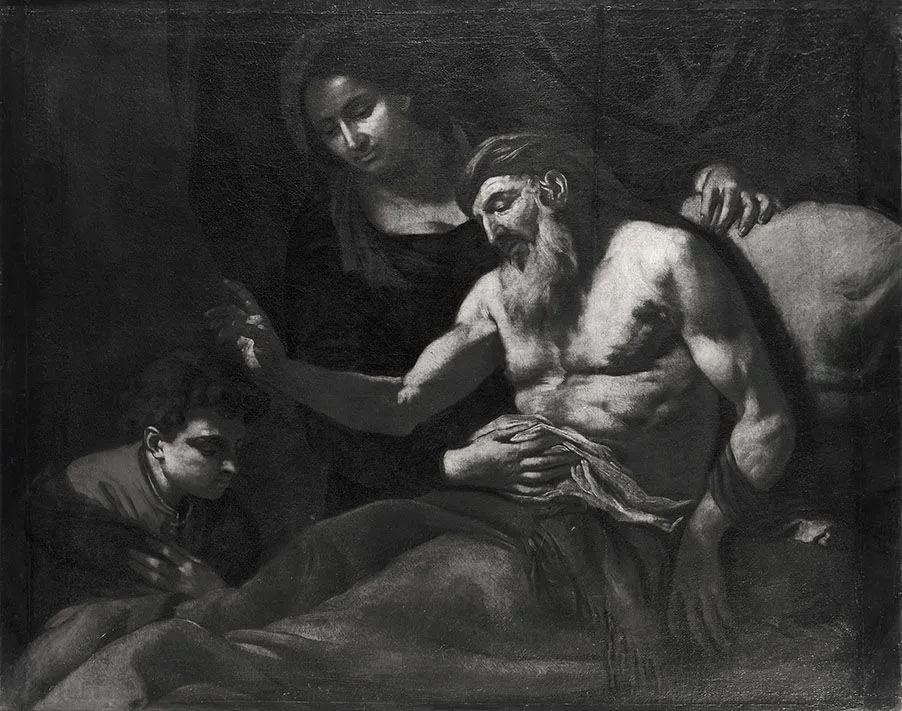
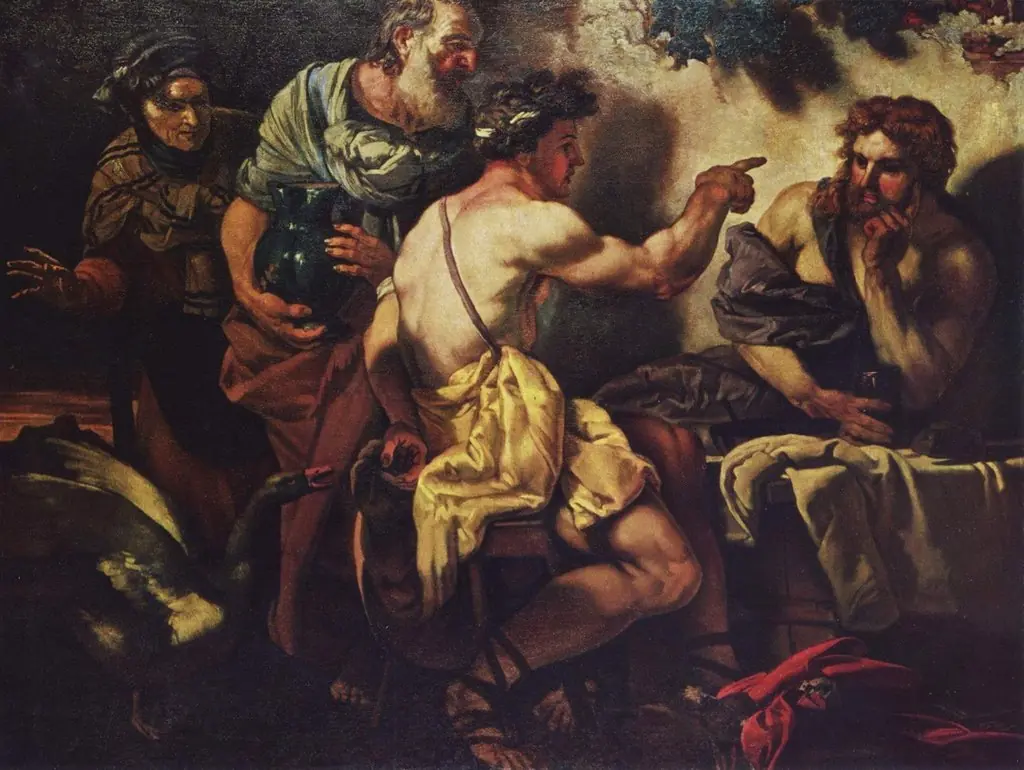
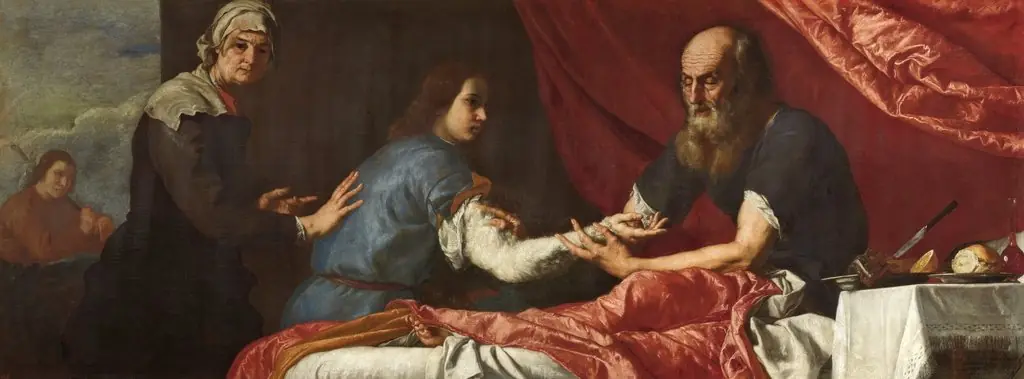
Isaak segnet Jakob is an unspecified painting by the Barbizon school artist Johann Carl Loth. It dates from 1665 and is held in the collection of the Bavarian State Painting Collections.
About this work
Overview
The composition centers on Isaac, seated and shirtless, his hands clasped in a gesture of solemn invocation.
Johann Carl Loth's 'Isaak segnet Jakob' (1665) depicts the biblical moment from Genesis 27 where the blind patriarch Isaac blesses his son Jacob, who has disguised himself to receive the blessing intended for Esau. The composition centers on Isaac, seated and shirtless, his hands clasped in a gesture of solemn invocation. Jacob lies prostrate at the left, gazing upward with an expression of anticipation, while Rebecca stands behind Isaac, her hand resting on his shoulder as she guides the deception. Loth employs a dramatic chiaroscuro technique, characteristic of his Italian Baroque training, where deep shadows envelop the background to isolate the figures in a pool of intense light. This lighting accentuates the textures of skin and fabric, heightening the emotional gravity of the scene. Painted in 1665, during Loth's mature period after his return to Germany from Venice, the work exemplifies his synthesis of Venetian colorism and German narrative rigor. The painting reflects the artist's ability to convey psychological tension through physical proximity and stark lighting contrasts, securing his reputation as a leading figure in 17th-century German religious art.
Subject & Meaning
The central figure, a shirtless, bearded man, occupies the middle of the scene, his hands joined in a gesture of supplication. A woman in dark attire leans forward, her hand resting on his shoulder, while a young boy lies on the floor, gazing upward. The grouping evokes themes of intercession, familial devotion, or a biblical narrative of mercy and protection.
Technique & Style
Loth employs a pronounced chiaroscuro, contrasting deep shadows with sharply illuminated highlights to model the bodies and create a dramatic spatial depth. The stark lighting isolates each figure, emphasizing their emotional states and reinforcing the solemn atmosphere typical of mid‑Seventeenth‑century Baroque religious painting.
History & Provenance
Created in 1665, the work entered the collection of the Alte Pinakothek, one of Germany’s foremost art museums, where it remains part of the permanent display. Its provenance prior to acquisition by the museum is not extensively documented, but the painting has been recognized as a representative example of Loth’s mature Baroque period.
Artist & collection

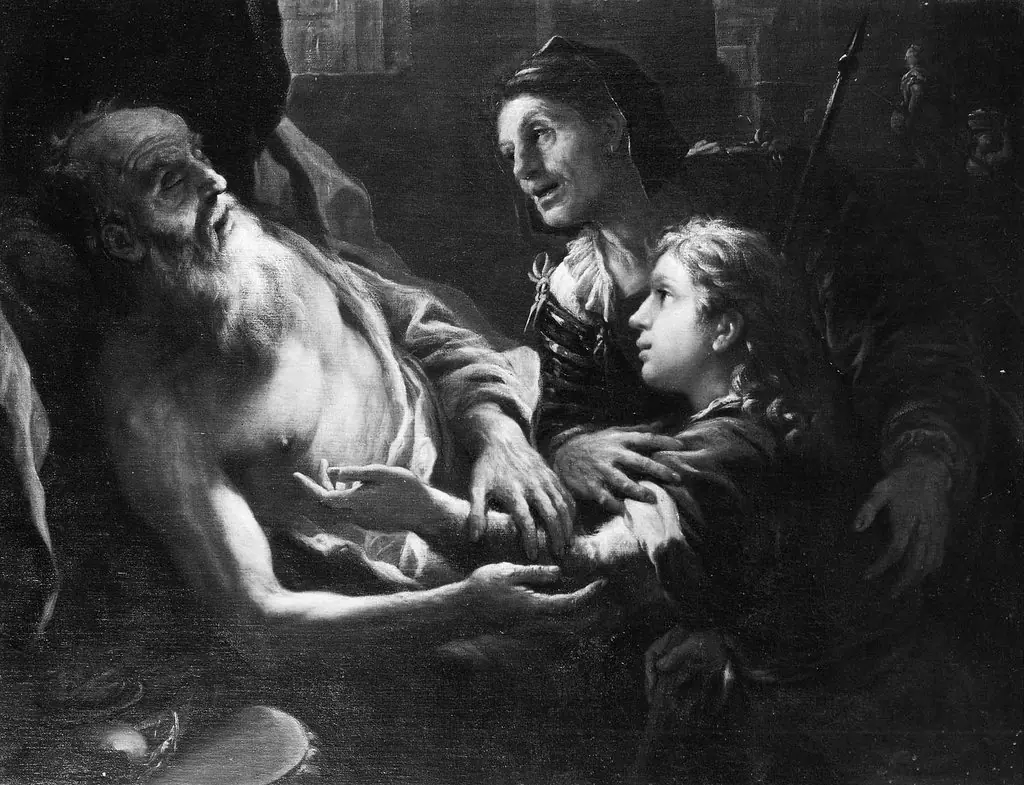 Isaac Blessing Jacob
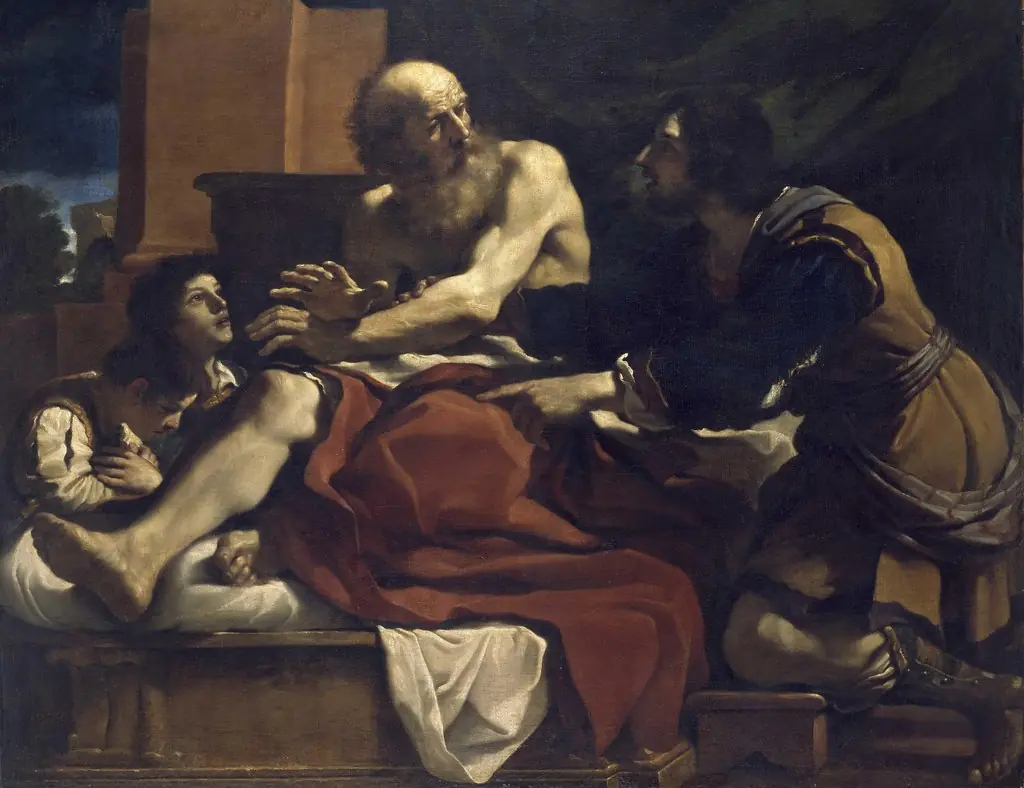 Jacob Blessing the Sons of Joseph
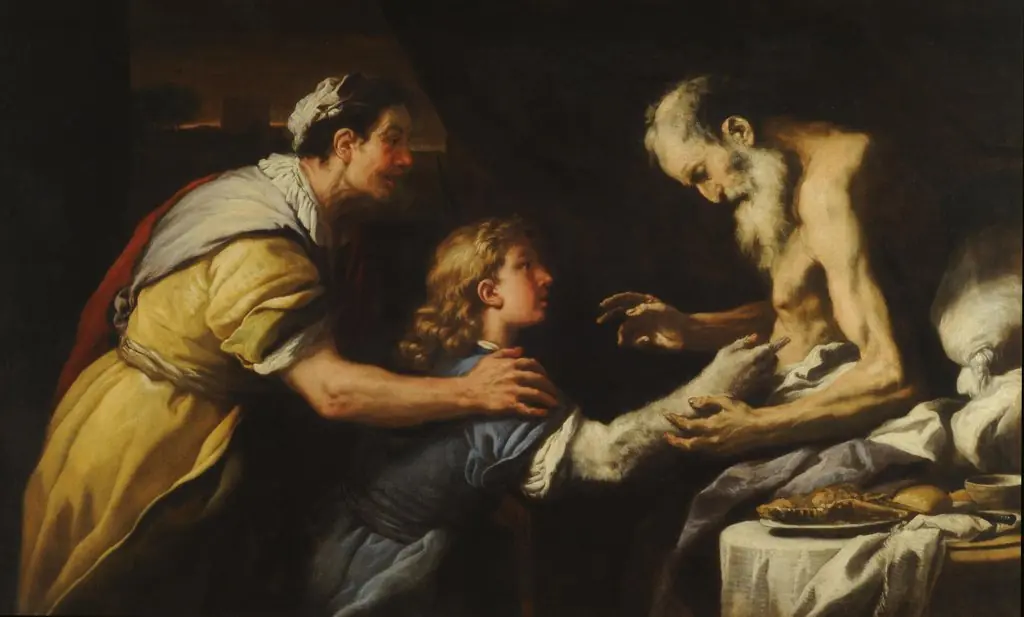 Introduction of Jacob to Isaac
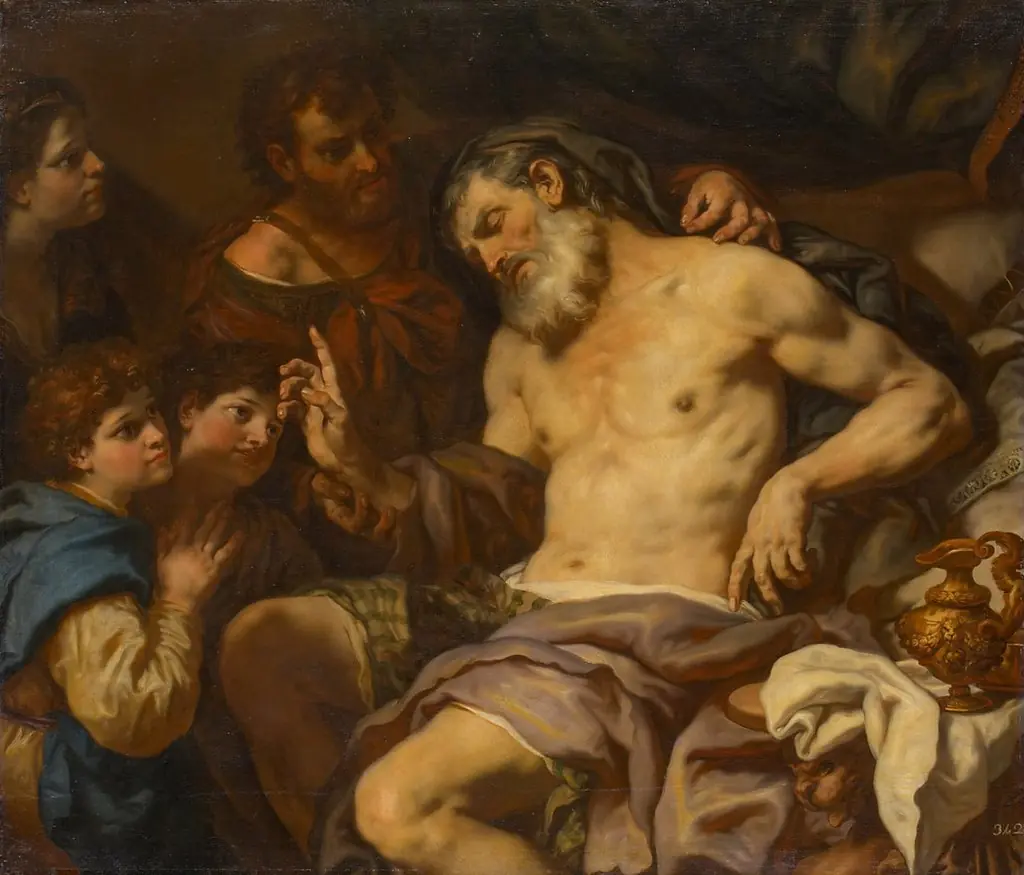 Jacob Blesses Ephraim and Manasseh
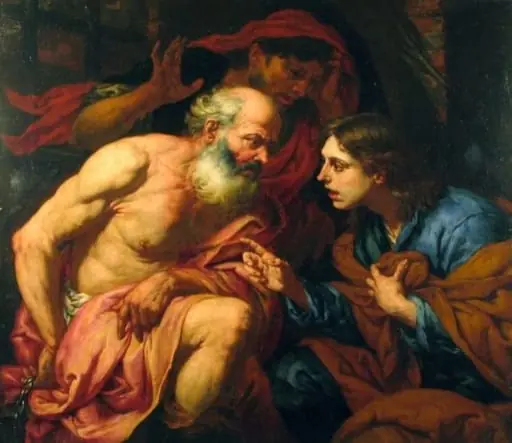 Iosif tălmăcind visele în închisoare
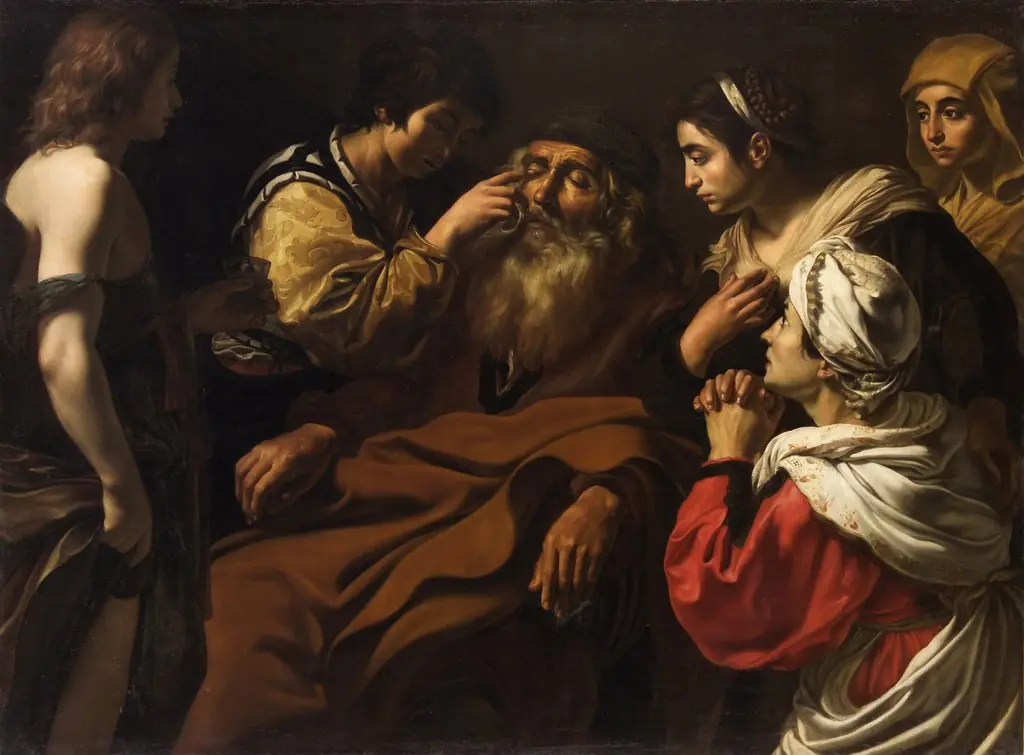 Tobias Heals his Blind Father
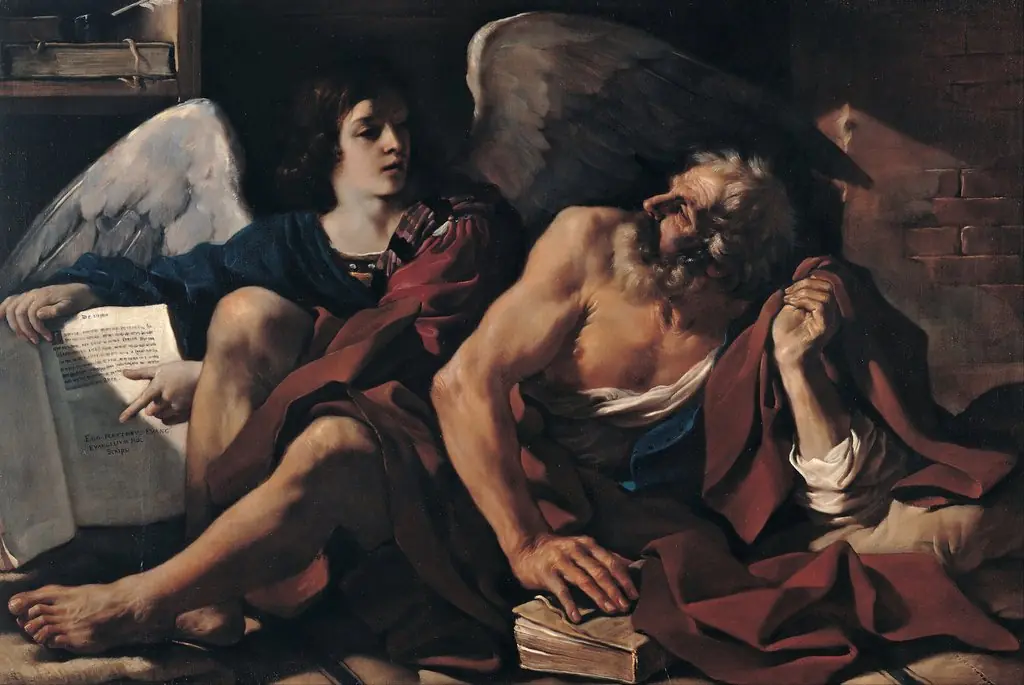 Saint Matthew and the Angel
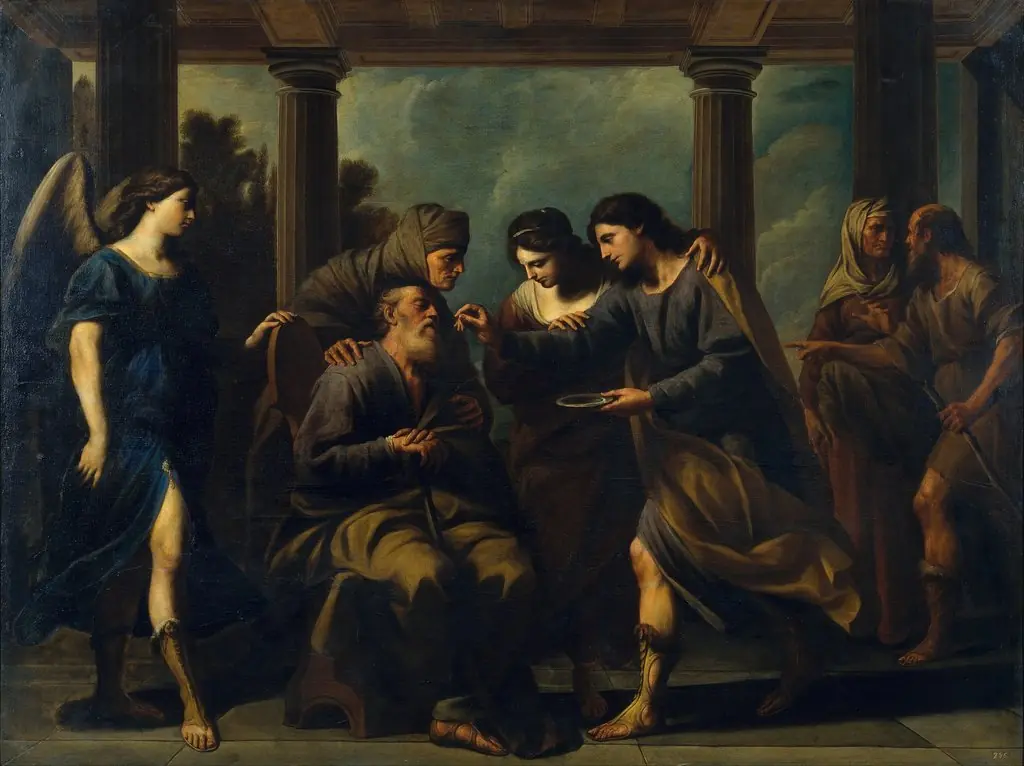 Tobias Heals his Blind Father
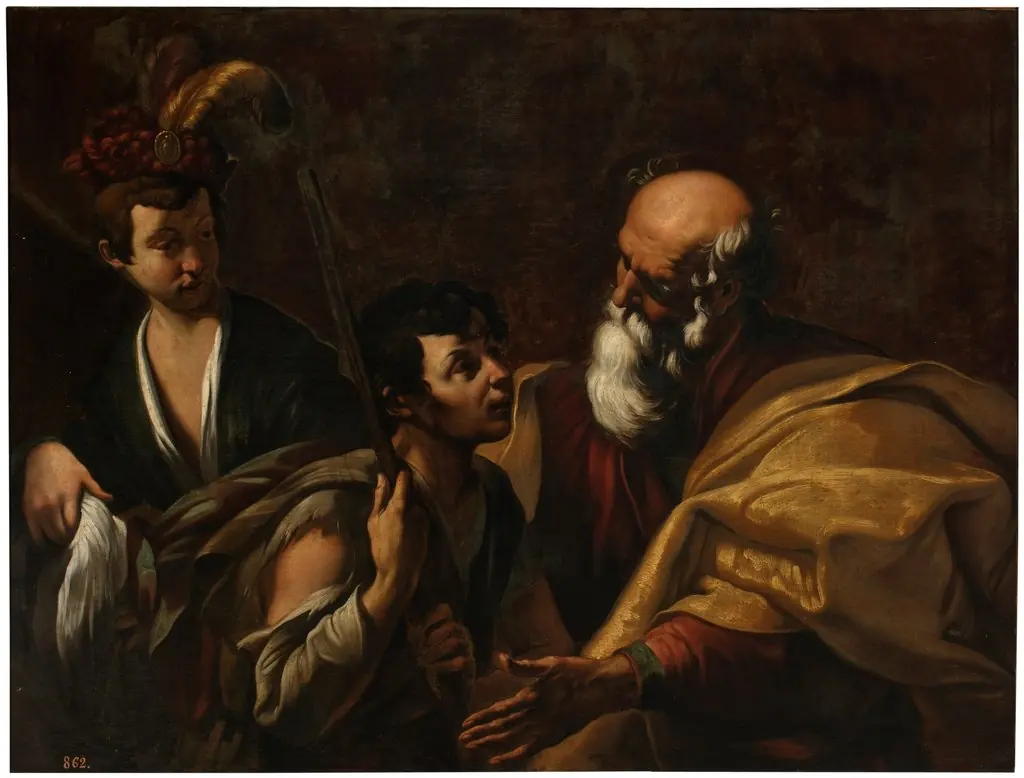 El hijo pródigo
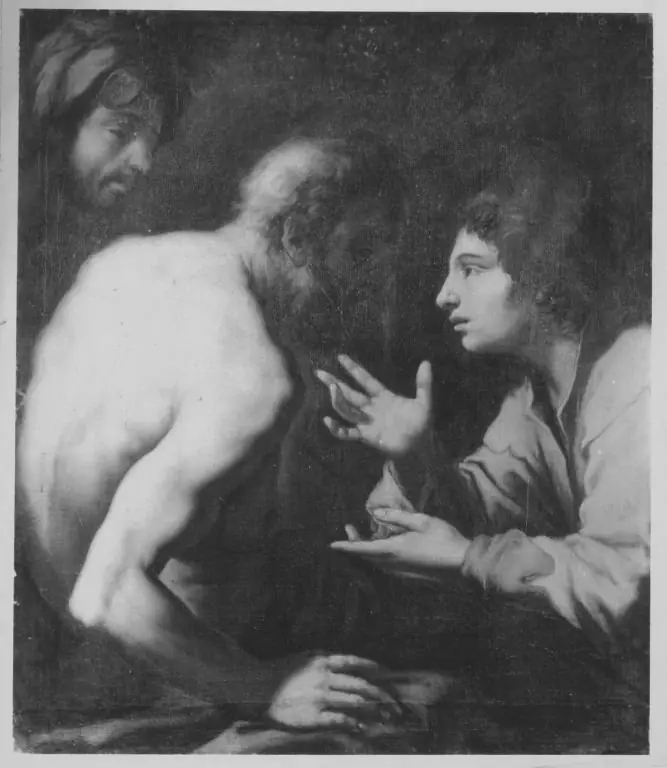 Joseph als Traumdeuter
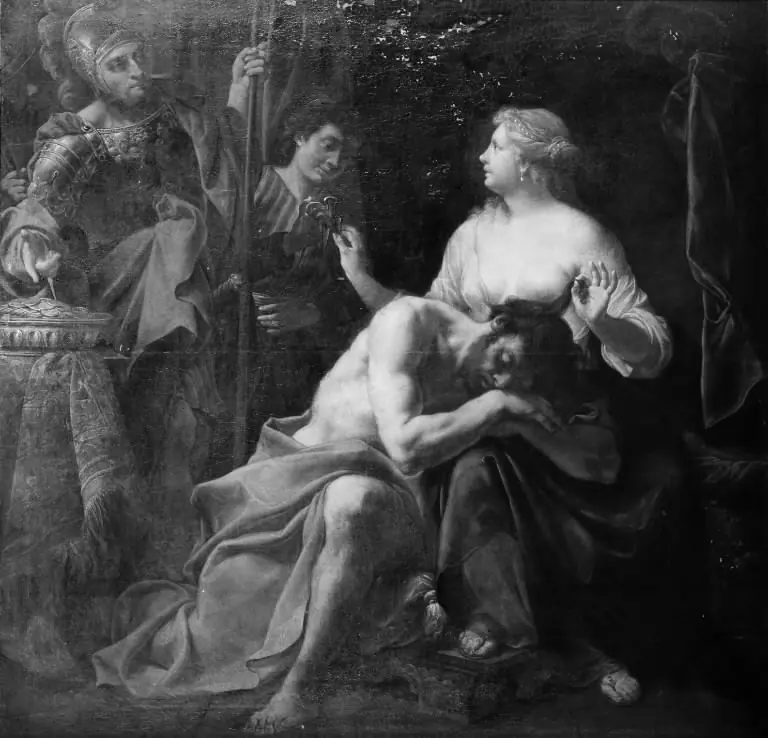 Samson and Delilah
 Isaac and Jacob