Artwork
Page from Tales of a Parrot (Tuti-nama): text page
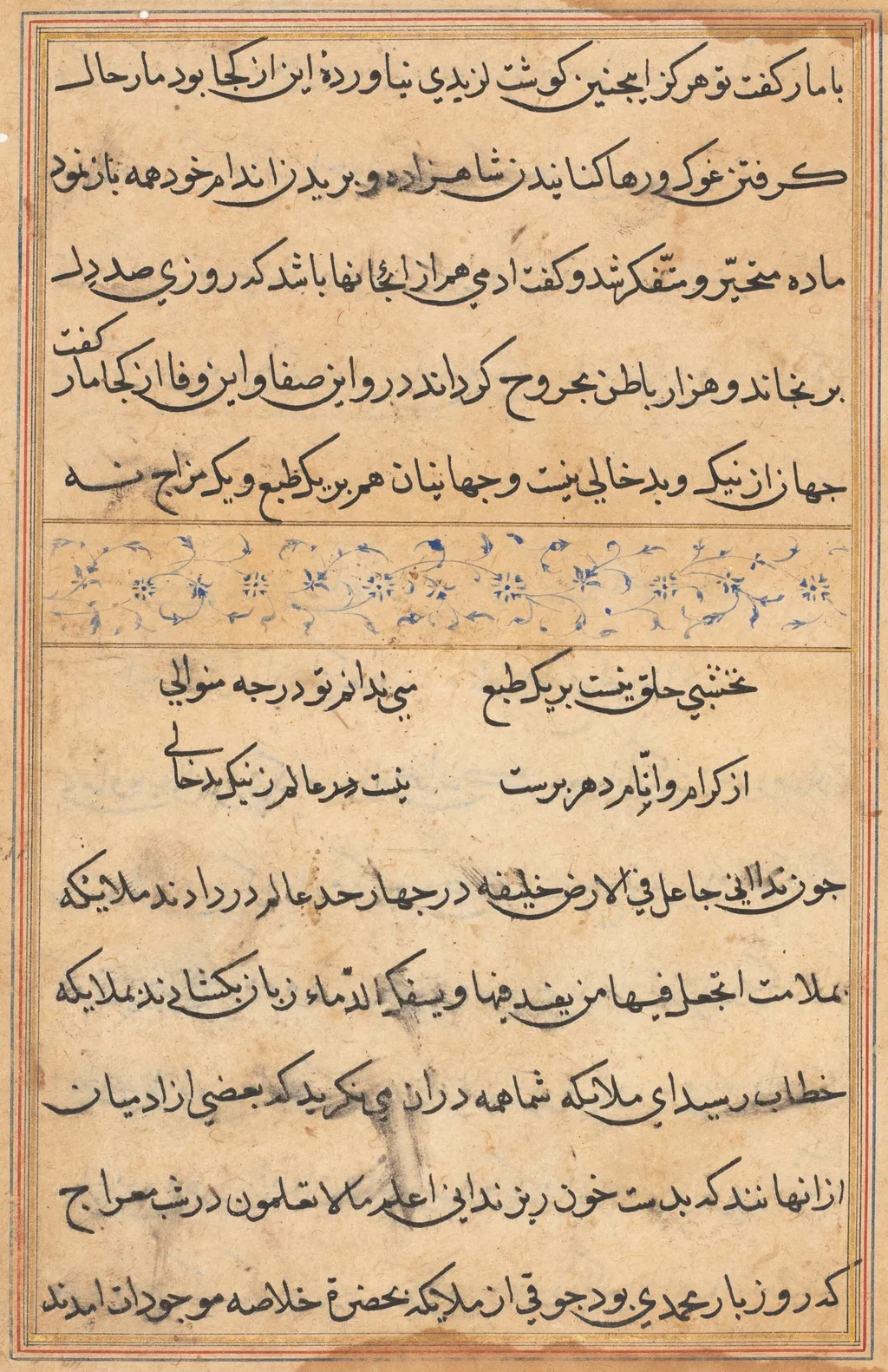
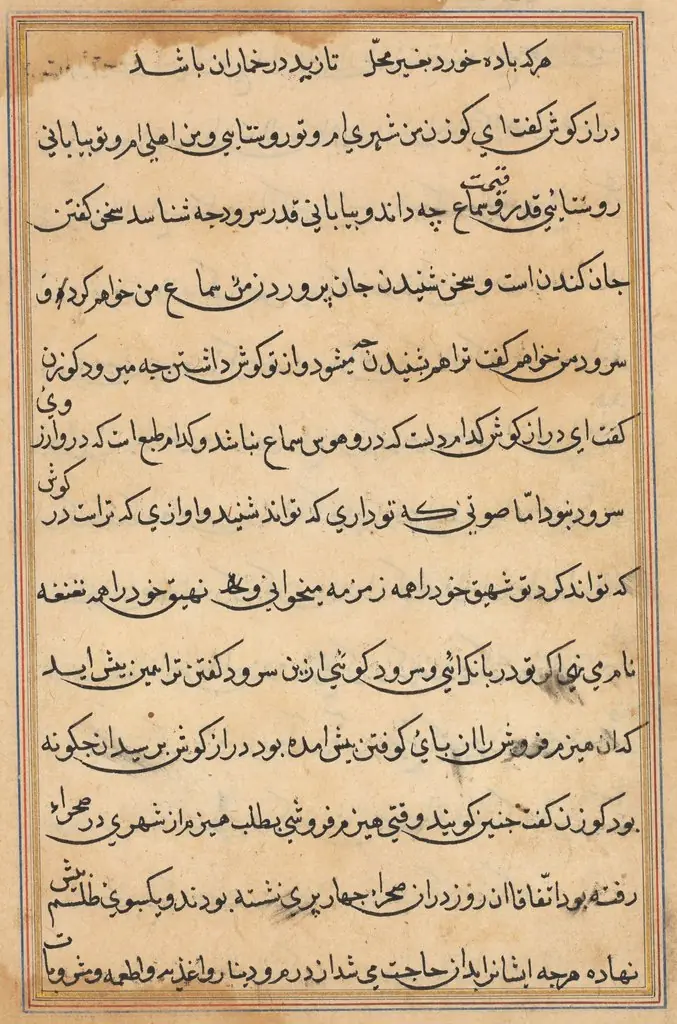
Page from Tales of a Parrot (Tuti-nama): text page is an unspecified painting. It dates from 1560 and is held in the collection of the Cleveland Museum of Art. The object is a painted page from the Persian manuscript known as *Tuti‑nama* (Tales of a Parrot).
About this work
Overview
A narrow red band borders the page, while a row of small blue floral motifs runs along the bottom edge, providing a subtle chromatic accent.
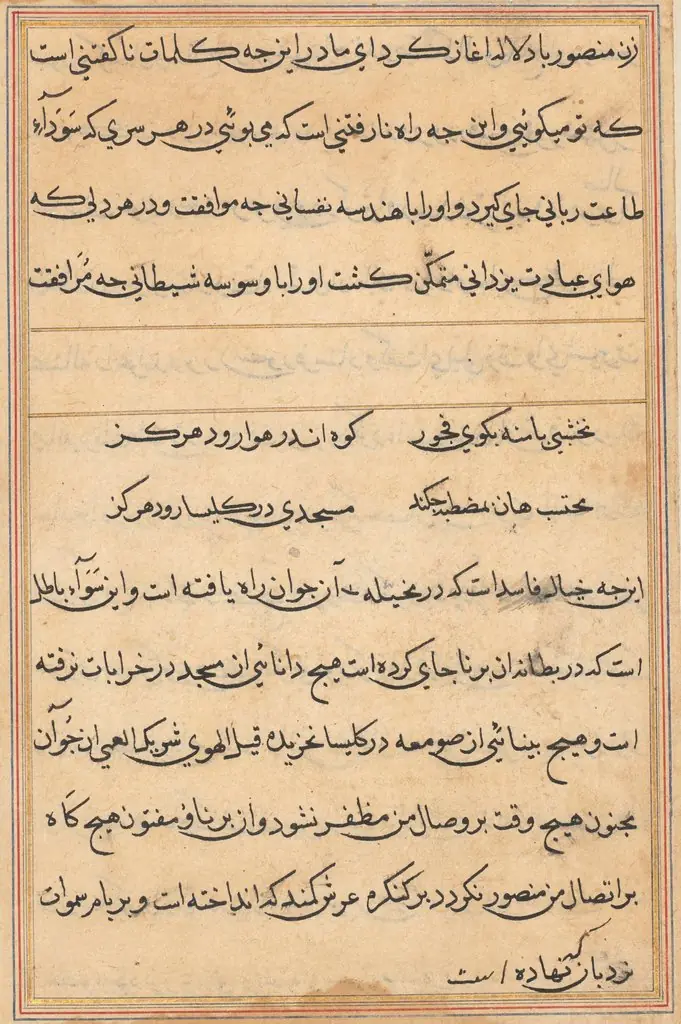
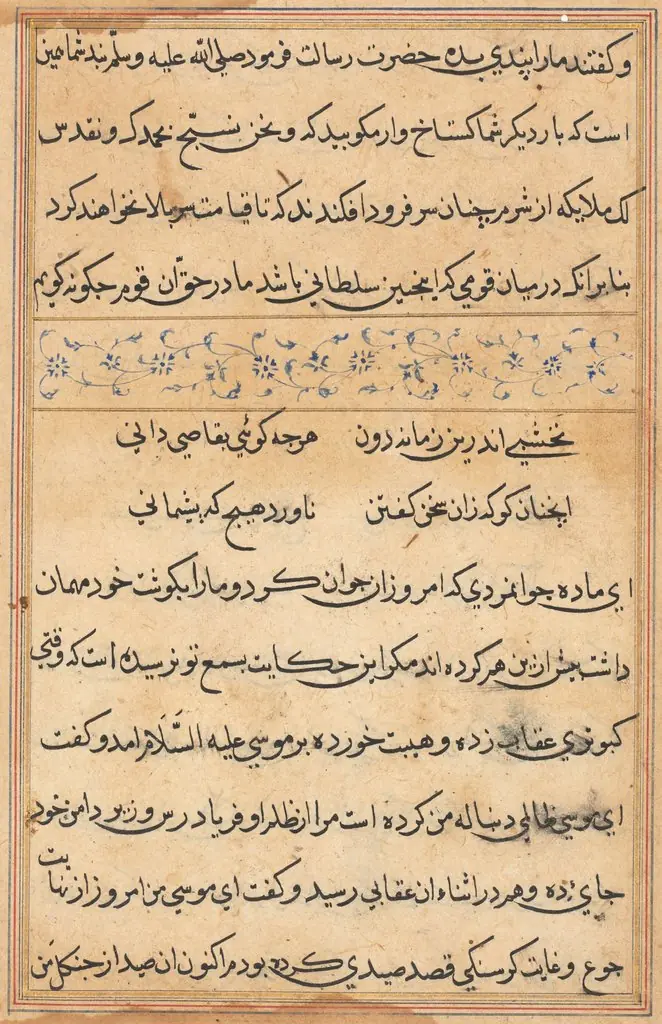
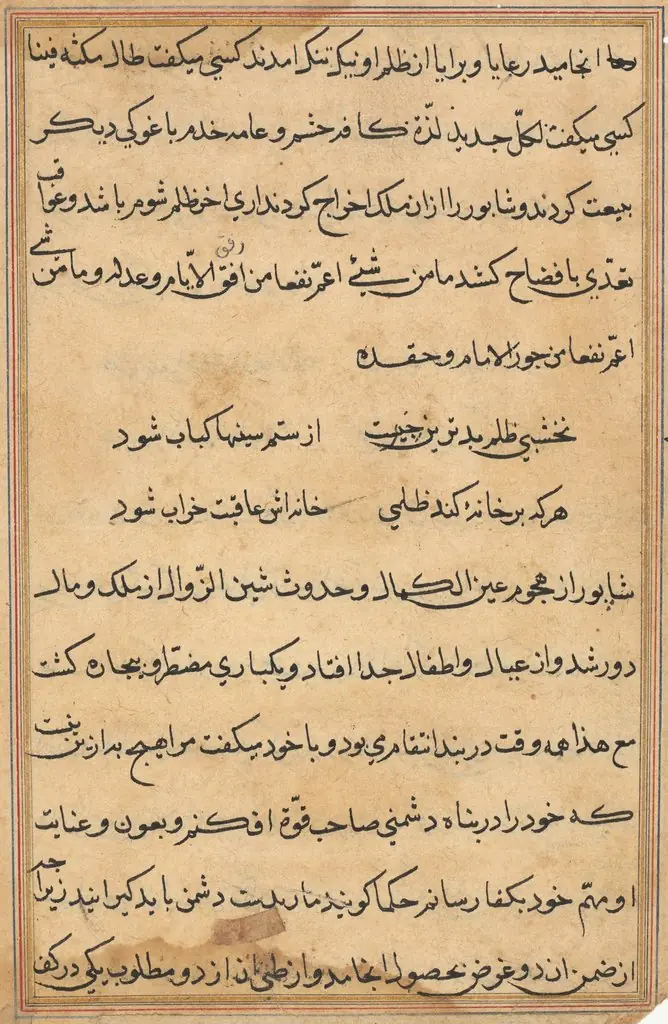
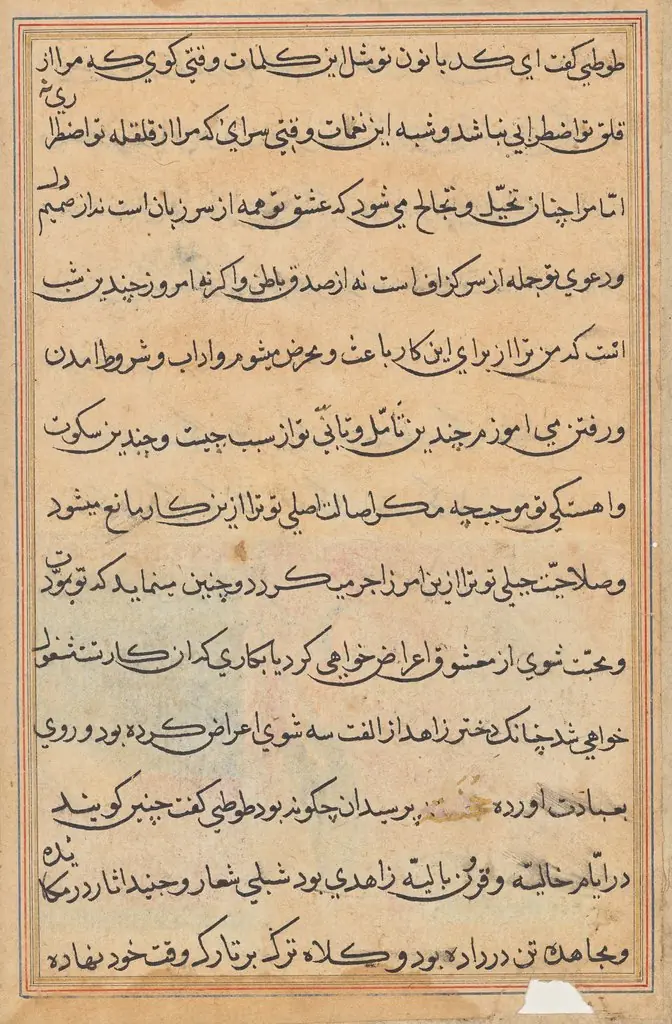
The object is a painted page from the Persian manuscript known as *Tuti‑nama* (Tales of a Parrot). Executed on paper, the surface is dominated by dense black ink calligraphy arranged in fluid, curved lines that occupy most of the layout, all set against a light ground. A narrow red band borders the page, while a row of small blue floral motifs runs along the bottom edge, providing a subtle chromatic accent.
Subject & Meaning
The script appears to be narrative prose, suggesting the page records a story intended for a high‑status recipient, possibly a prince or court official. The careful composition and decorative framing imply that the text was meant to be both read and admired as a visual object, reflecting the cultural practice of treating literary works as works of art.
Technique & Style
The calligraphic text is rendered in fine black ink using a brush or pen, with smooth, flowing strokes that demonstrate a high level of skill in Persian script. The red border and blue floral strip are applied in watercolor, their thin application contrasting with the dense black script and highlighting the page’s structured design.
History & Provenance
This page is part of a larger illuminated manuscript tradition that flourished in Persia during the early modern period. While the exact date and origin of this particular leaf are not specified, similar *Tuti‑nama* copies were produced for royal patrons and later entered museum collections, including the Cleveland Museum of Art, where comparable pages are displayed.
Context
*Tuti‑nama* belongs to a genre of Persian literature that uses animal protagonists to convey moral and philosophical lessons. The manuscript’s lavish presentation reflects the importance of literary culture in courtly settings, where texts were often embellished with decorative borders and miniature motifs to enhance their prestige.
Artist & collection

 Page from Tales of a Parrot (Tuti-nama): text page
 Page from Tales of a Parrot (Tuti-nama): text page
 Page from Tales of a Parrot (Tuti-nama): text page
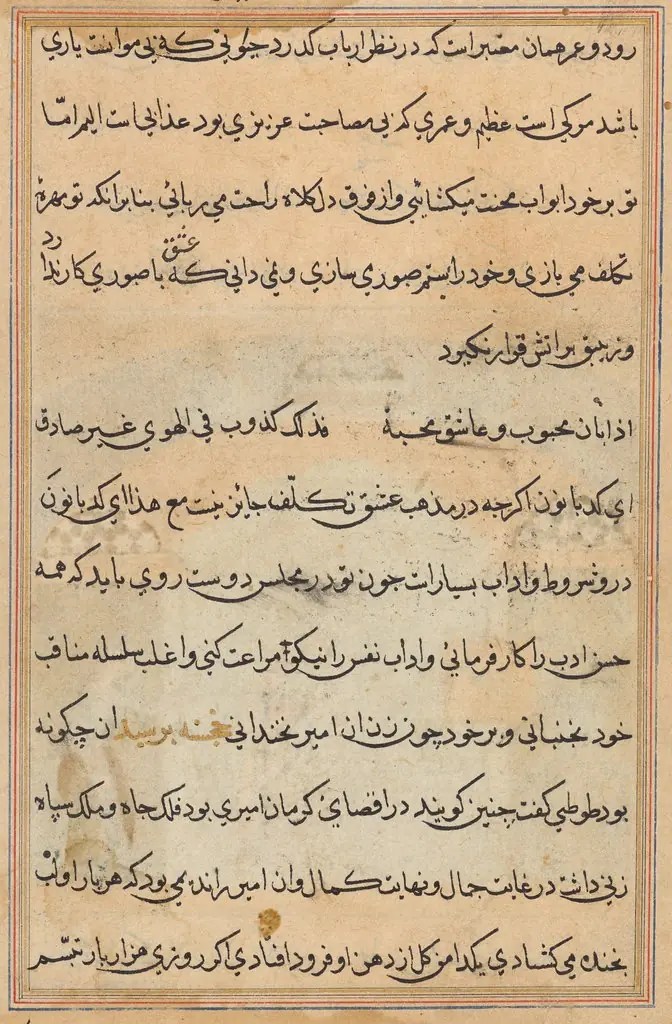 Page from Tales of a Parrot (Tuti-nama): text page
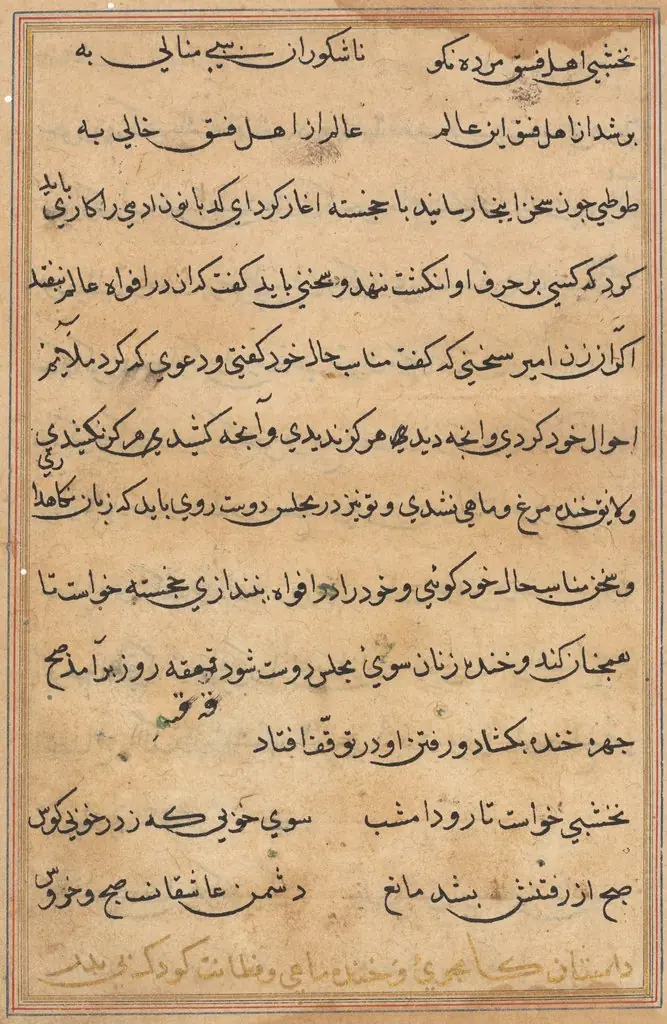 Page from Tales of a Parrot (Tuti-nama): text page
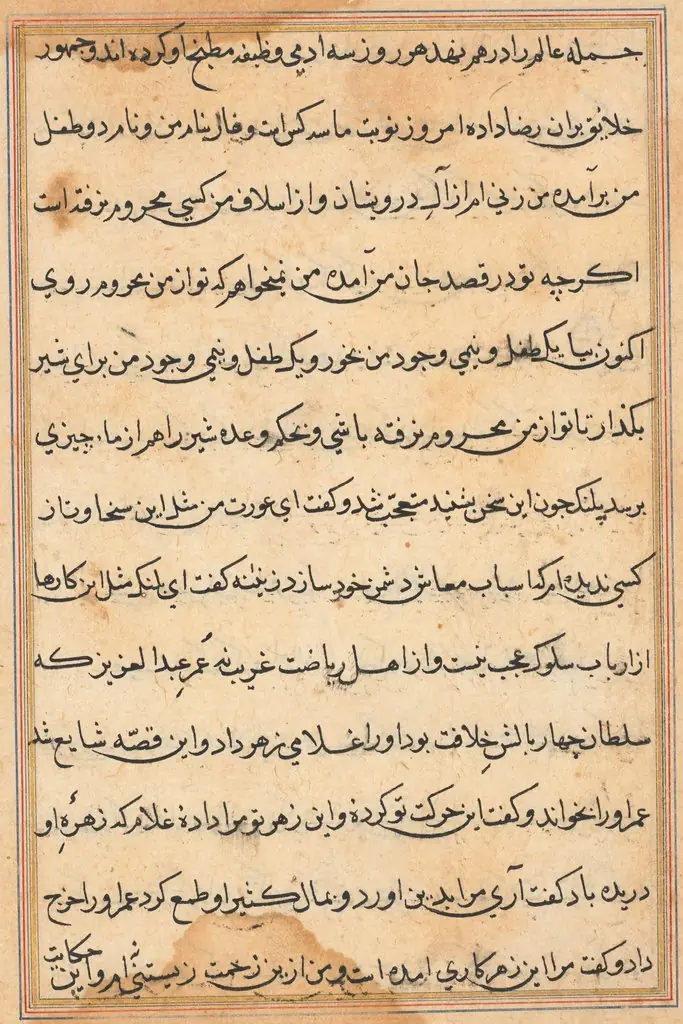 Page from Tales of a Parrot (Tuti-nama): text page
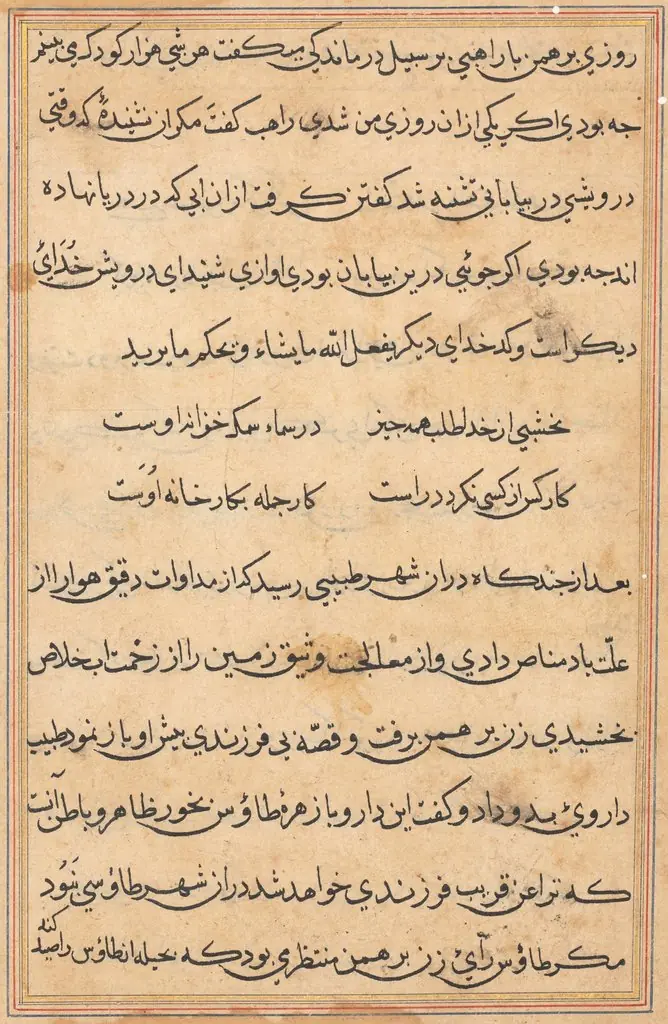 Page from Tales of a Parrot (Tuti-nama): text page
 Page from Tales of a Parrot (Tuti-nama): text page
 Page from Tales of a Parrot (Tuti-nama): text page
 Page from Tales of a Parrot (Tuti-nama): text page
 Page from Tales of a Parrot (Tuti-nama): text page
 Page from Tales of a Parrot (Tuti-nama): text page