Artwork
Page from Tales of a Parrot (Tuti-nama): text page
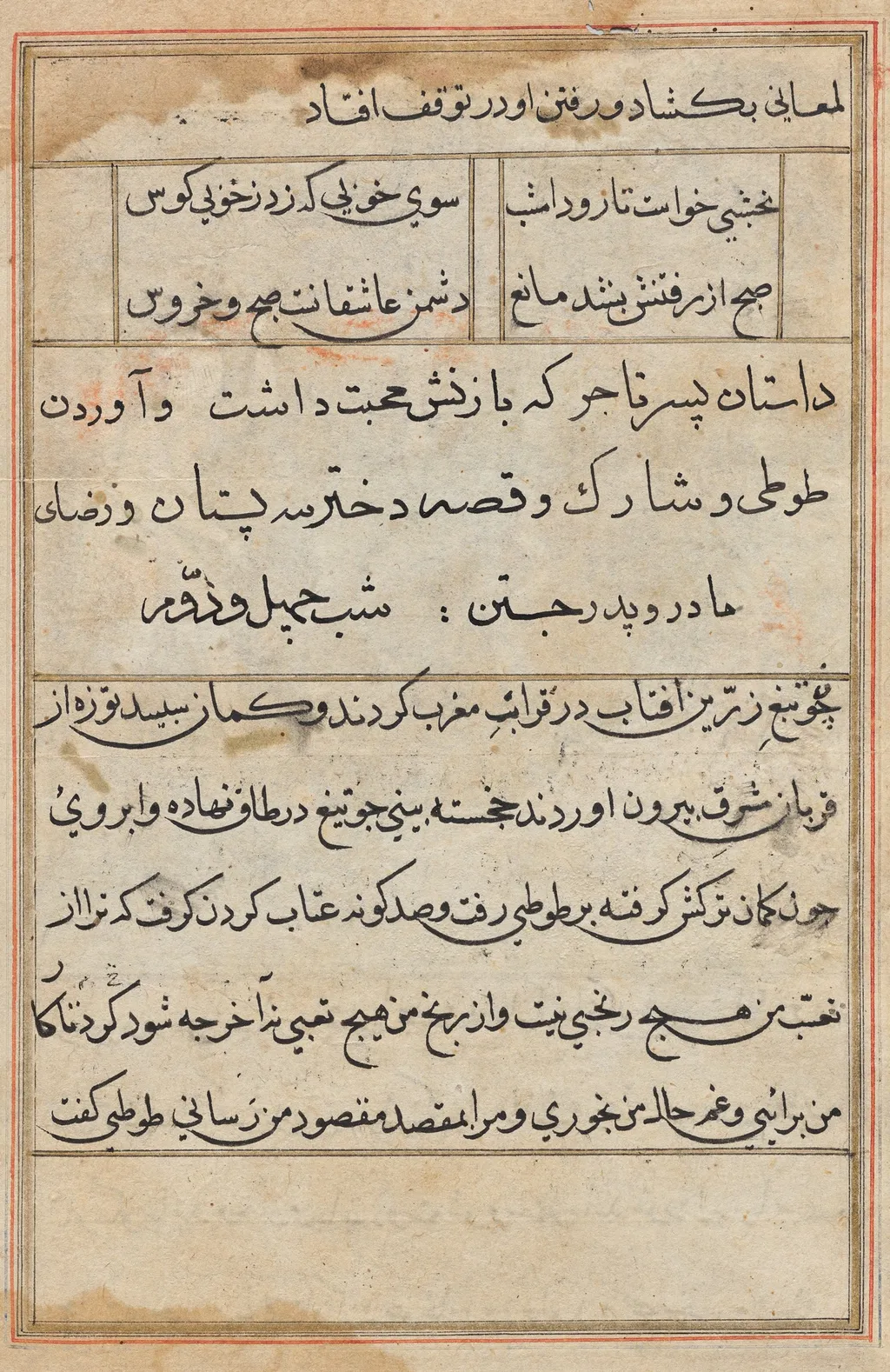
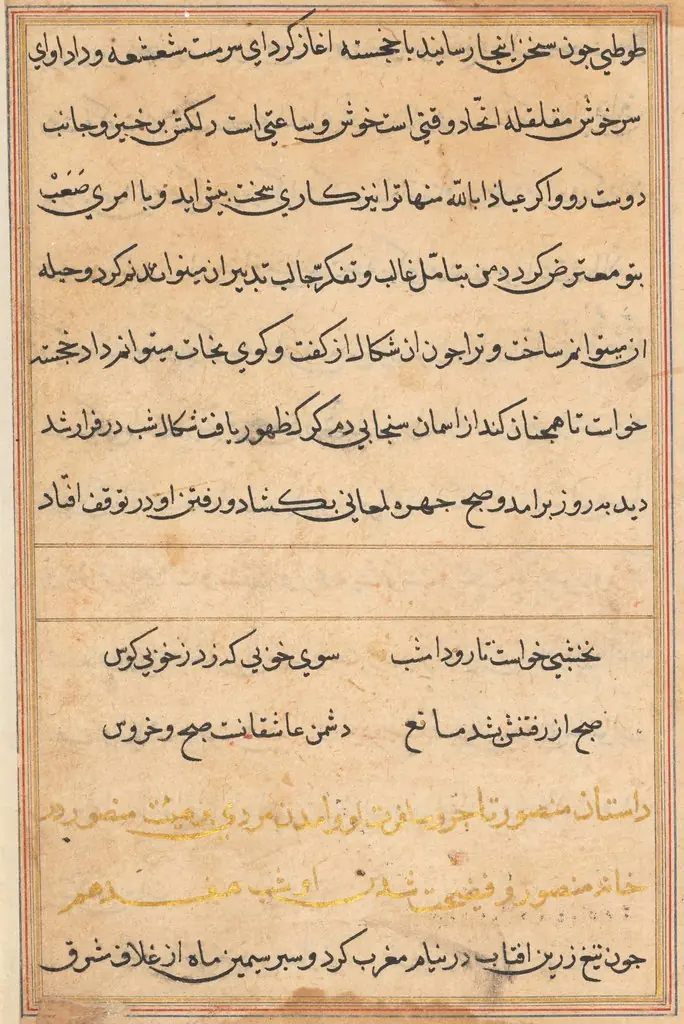
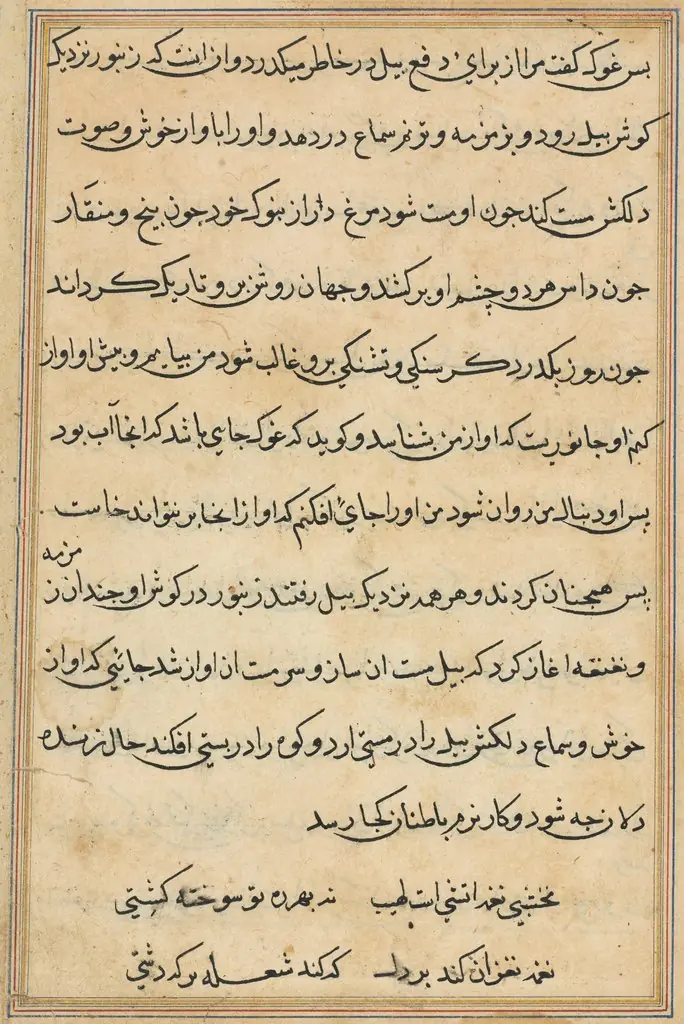
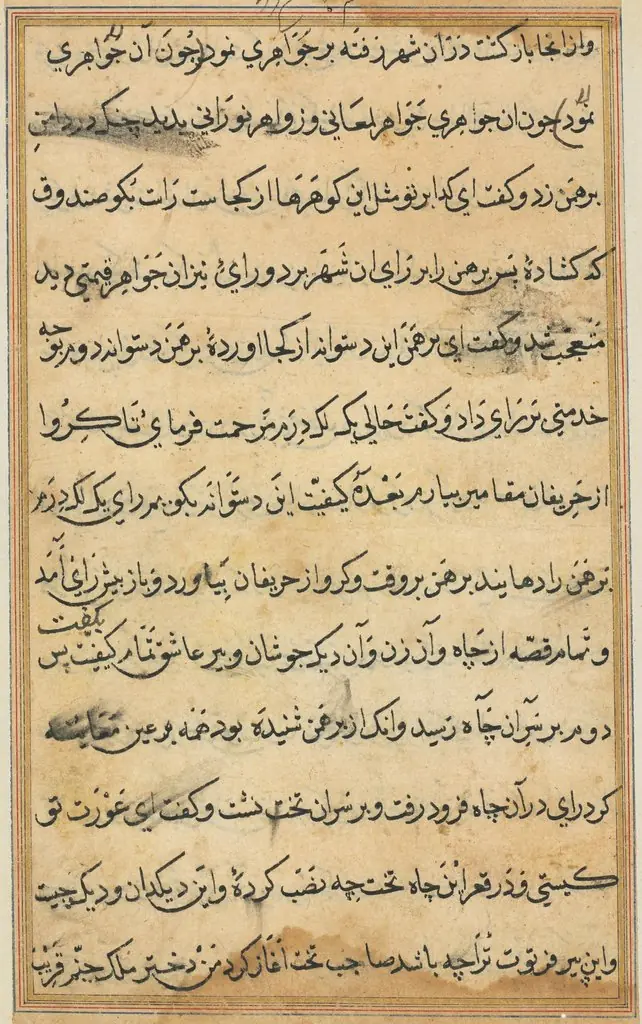
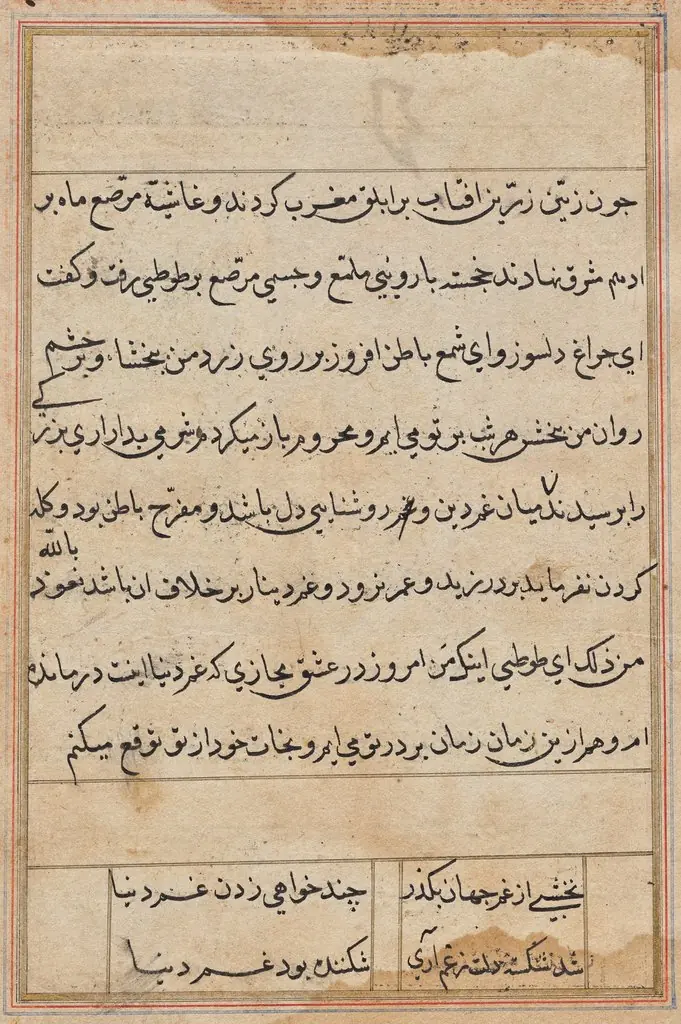
Page from Tales of a Parrot (Tuti-nama): text page is an unspecified painting. It dates from 1560 and is held in the collection of the Cleveland Museum of Art. The object is a single leaf from the Persian manuscript *Tales of a Parrot* (Tuti‑nama).
About this work
Overview
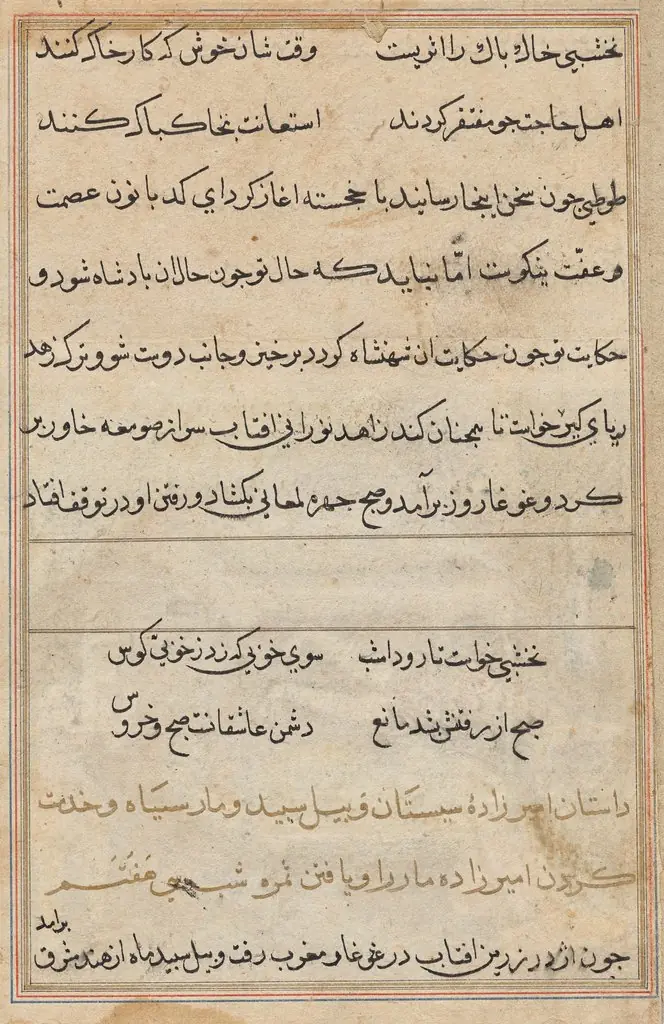
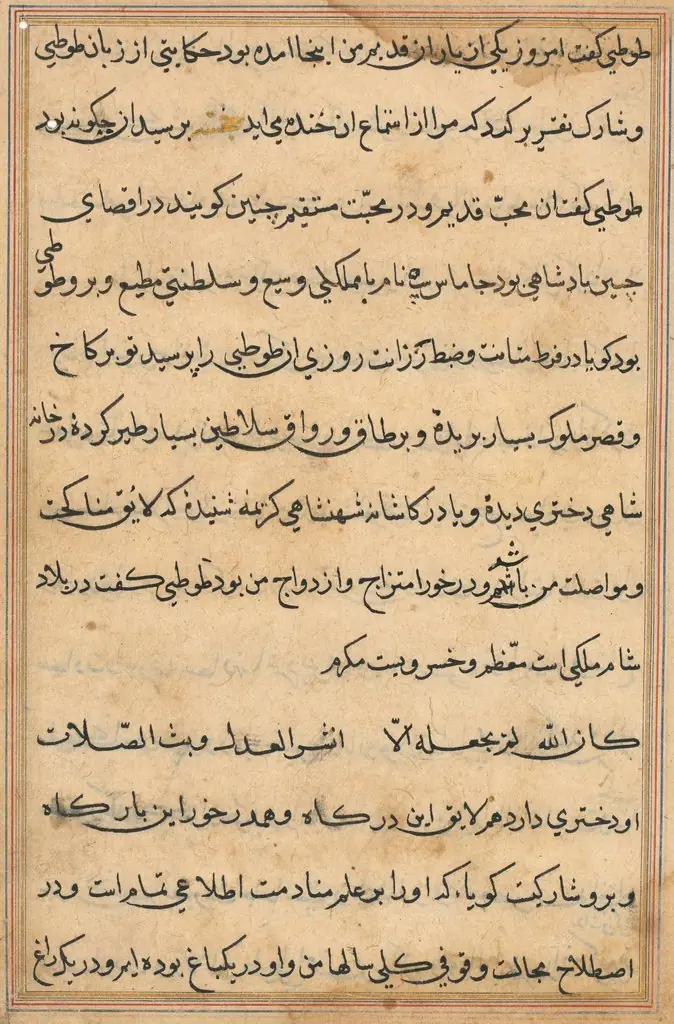
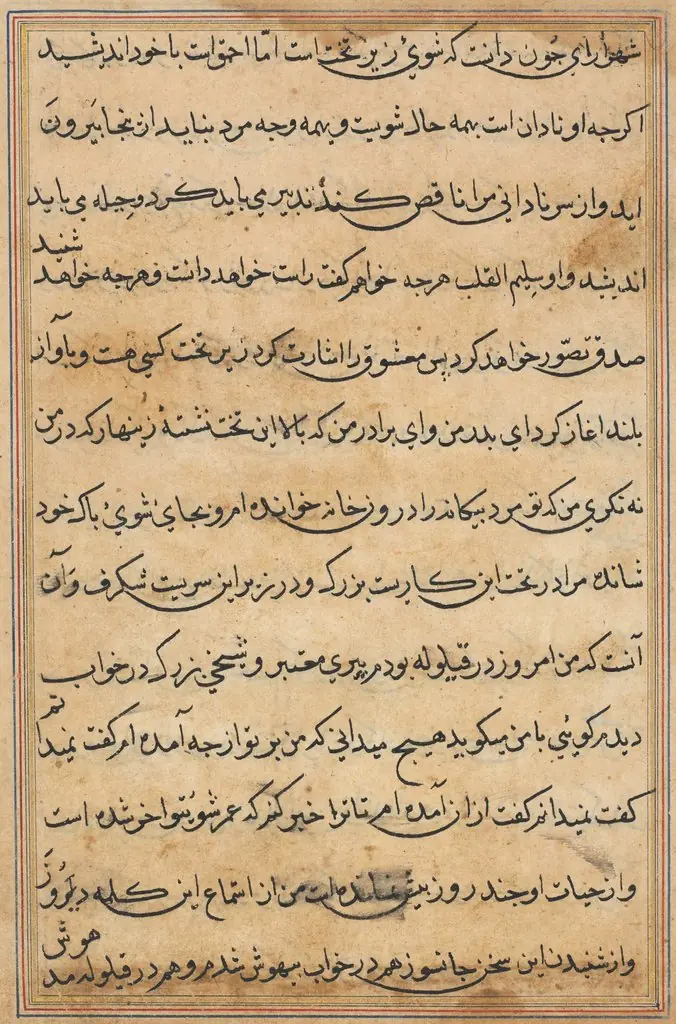
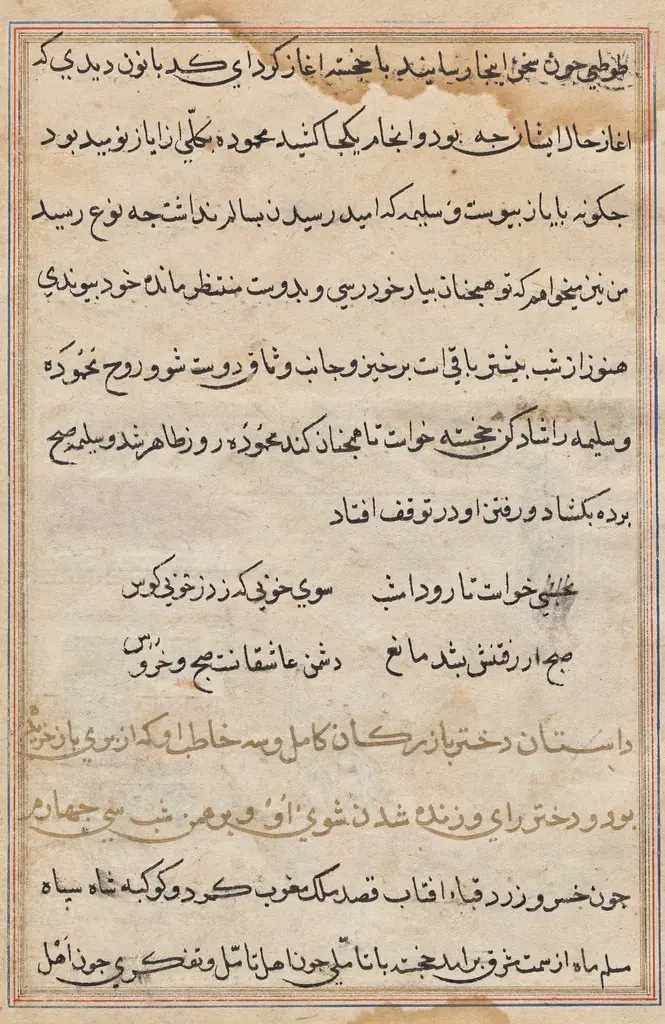
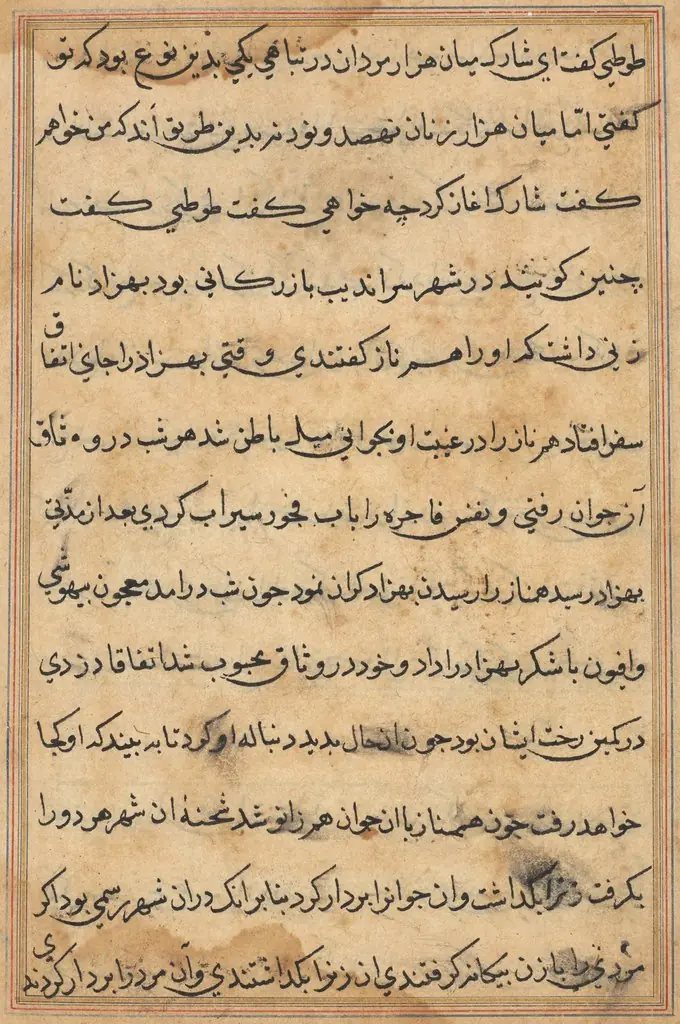
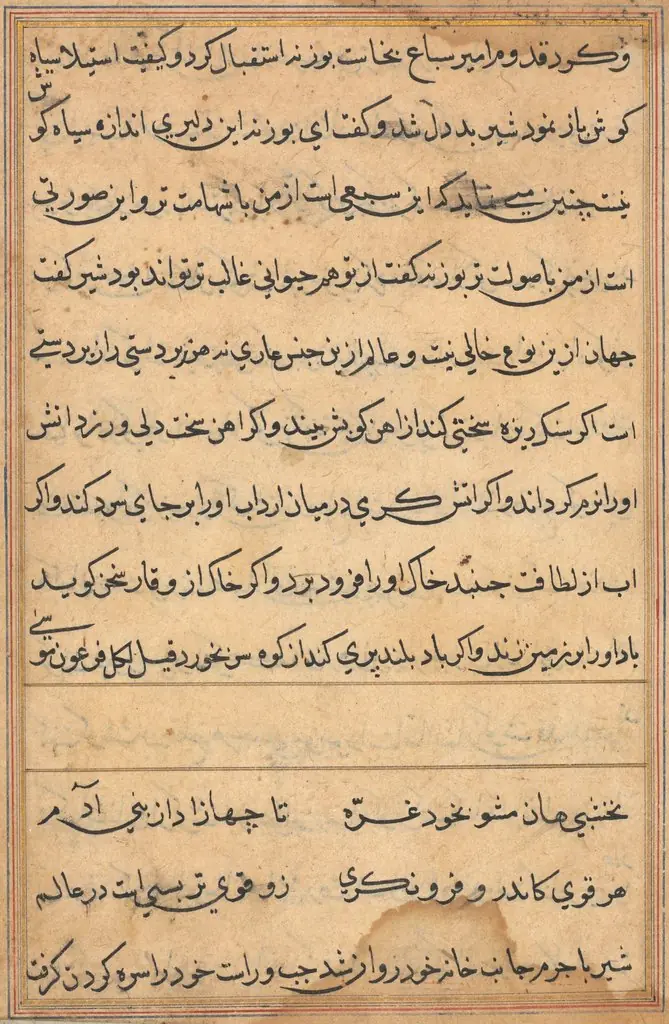
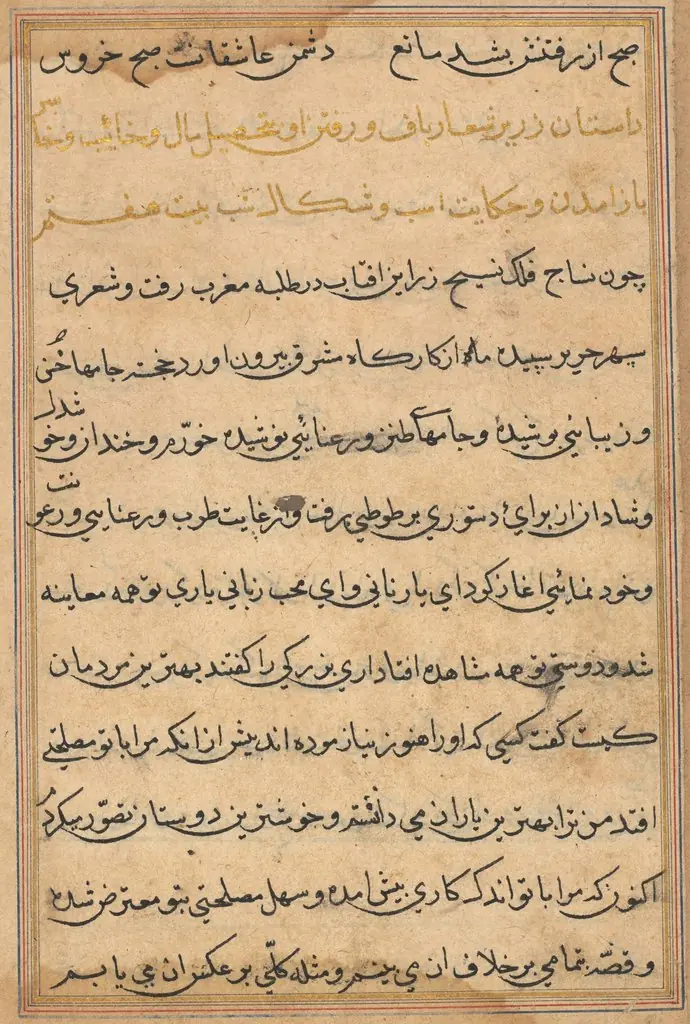
The object is a single leaf from the Persian manuscript *Tales of a Parrot* (Tuti‑nama). Rendered in black ink on a lightly yellowed sheet, the page is framed by a narrow red margin. The text is organized into rectangular blocks, each line flowing with a disciplined, cursive hand that conveys a narrative quality typical of medieval Persian storytelling.
Subject & Meaning
The written content belongs to the *Tuti‑nama*, a collection of moral and didactic tales traditionally narrated by a parrot to a king. Though the specific story on this leaf is not identified here, the work as a whole uses allegorical animal characters to explore ethical dilemmas and courtly virtues, reflecting the didactic purpose of the genre.
Technique & Style
The script exemplifies Persian nastaʿlīq calligraphy, distinguished by its elegant, slanted strokes and harmonious proportion.
The script exemplifies Persian nastaʿlīq calligraphy, distinguished by its elegant, slanted strokes and harmonious proportion. Ink is applied with a reed pen, producing uniform, flowing lines that fill each boxed segment. The red border, likely added with a pigment wash, frames the page without obscuring the text, underscoring the manuscript’s aesthetic balance between visual restraint and textual clarity.
History & Provenance
Created in the medieval Persian world, the page later entered the collection of the Cleveland Museum of Art, where it is currently held. Its provenance prior to acquisition by the museum is not detailed in the available information, but the work represents a surviving example of the region’s literary and artistic production.
Context
Manuscript culture in Persia during the medieval period emphasized the integration of literary content with refined calligraphic presentation. *Tuti‑nama* manuscripts were often produced for elite patrons, serving both as entertainment and moral instruction. The page’s modest decorative border reflects a functional approach, prioritizing legibility and the transmission of the narrative over lavish illumination.
Artist & collection

 Page from Tales of a Parrot (Tuti-nama): text page
 Page from Tales of a Parrot (Tuti-nama): text page
 Page from Tales of a Parrot (Tuti-nama): text page
 Page from Tales of a Parrot (Tuti-nama): text page
 Page from Tales of a Parrot (Tuti-nama): text page
 Page from Tales of a Parrot (Tuti-nama): text page
 Page from Tales of a Parrot (Tuti-nama): text page
 Page from Tales of a Parrot (Tuti-nama): text page
 Page from Tales of a Parrot (Tuti-nama): text page
 Page from Tales of a Parrot (Tuti-nama): text page
 Page from Tales of a Parrot (Tuti-nama): text page