Artwork
Portrait of a Man, called James IV (1488 - 1513)
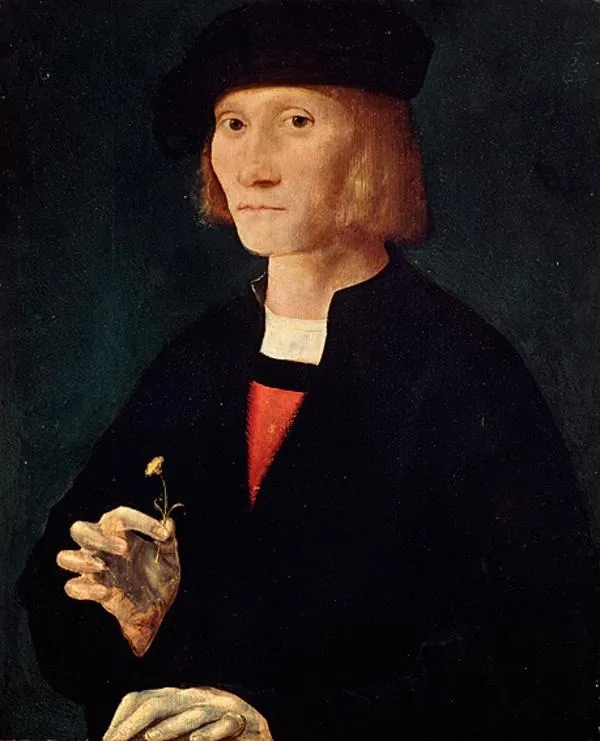
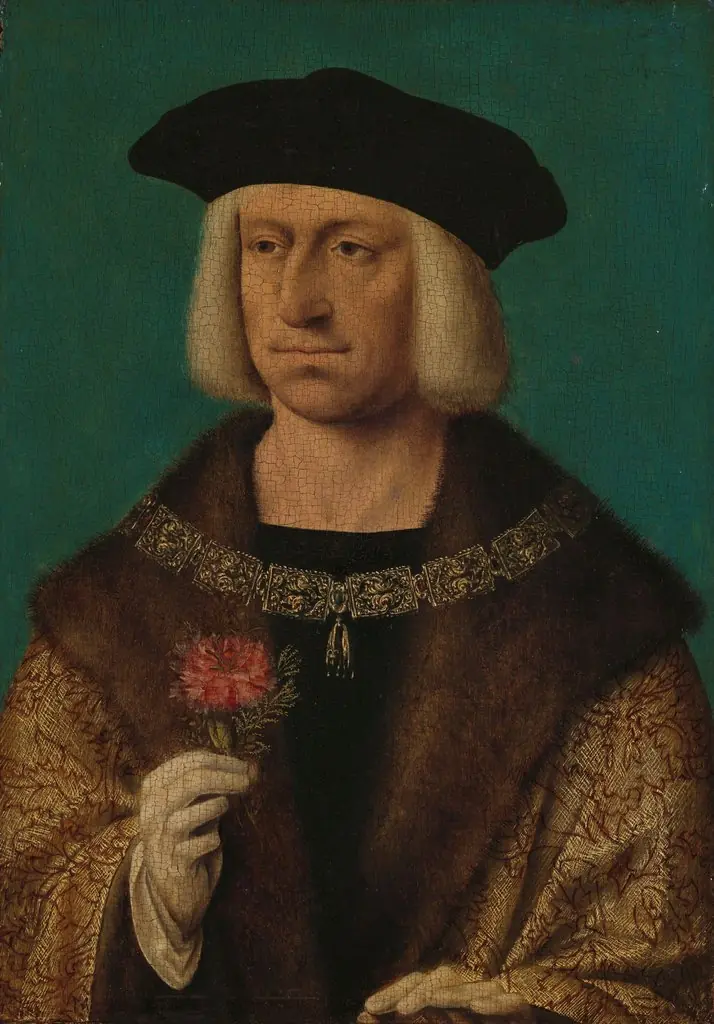
Portrait of a Man, called James IV (1488 - 1513) is an oil painting by the Early Renaissance artist Unknown. It dates from 1515 and is held in the collection of the National Galleries Scotland. This oil painting depicts a man identified as James IV of Scotland, ruler from 1488 to 1513.
About this work
Overview
The work is housed in the Scottish National Gallery, attributed to an unknown artist active in the early 16th century.
This oil painting depicts a man identified as James IV of Scotland, ruler from 1488 to 1513. Dressed in dark garments with a white collar and red underlayer, he holds a small flower in his right hand. His short hair and pale complexion are rendered with quiet precision. The dark background isolates his figure, emphasizing his presence without distraction. The work is housed in the Scottish National Gallery, attributed to an unknown artist active in the early 16th century.
Subject & Meaning
The figure is traditionally associated with James IV, though definitive identification remains uncertain. The flower he holds may symbolize fidelity, renewal, or personal devotion, common in Renaissance portraiture. His direct gaze and restrained expression convey dignity rather than grandeur, reflecting a shift toward introspective representation. The absence of regalia suggests a focus on individual character over political status.
Technique & Style
Oil paint was applied with subtle layering to achieve soft transitions in skin tone and fabric texture. The dark background enhances the figure’s three-dimensionality through controlled chiaroscuro, though without dramatic lighting. Details like the collar’s crisp edges and the flower’s delicate form reveal careful observation. The brushwork is restrained, favoring clarity over ornamentation, typical of Northern European portraiture of the period.
History & Provenance
The painting entered the collection of the Scottish National Gallery in the 19th century, with its attribution to James IV established through historical association rather than documentation. No contemporary records confirm the artist’s identity or the commission’s origin. Its survival through centuries of political upheaval in Scotland underscores its significance as a rare visual record of early Tudor-era Scottish nobility.
Context
Created during a period when Scottish royalty sought to align with continental artistic trends, the portrait reflects influences from Flemish and German court painting. Unlike grand ceremonial images, this work presents a private, almost intimate likeness—consistent with a growing interest in individual identity among European elites. Similar portraits from the era often included symbolic objects, reinforcing personal or moral themes.
Legacy
Though not widely known outside Scotland, the portrait remains a key example of early 16th-century Scottish portraiture. Its understated realism offers insight into how nobility wished to be seen beyond symbols of power. It continues to inform scholarly discussions on the transmission of Northern Renaissance styles into the British Isles, serving as a reference point for later Scottish royal imagery.
Artist & collection

 Domestic Scene
 Giacomo and Cardinal Marco, investing Andrea, Abbot of San Zeno, with his Benefice
 The Nymph of Fontainebleau
 Portrait of a Woman
 Madonna and Child with Saints in the Enclosed Garden
 Venus and Minerva
 Family Group of Four on Sofa
 Wall painting from Room H of the Villa of P. Fannius Synistor at Boscoreale
 Portrait of a Young Man (Lyons)
 Portrait of a Beardless Man
 Portrait of a young man in red garment
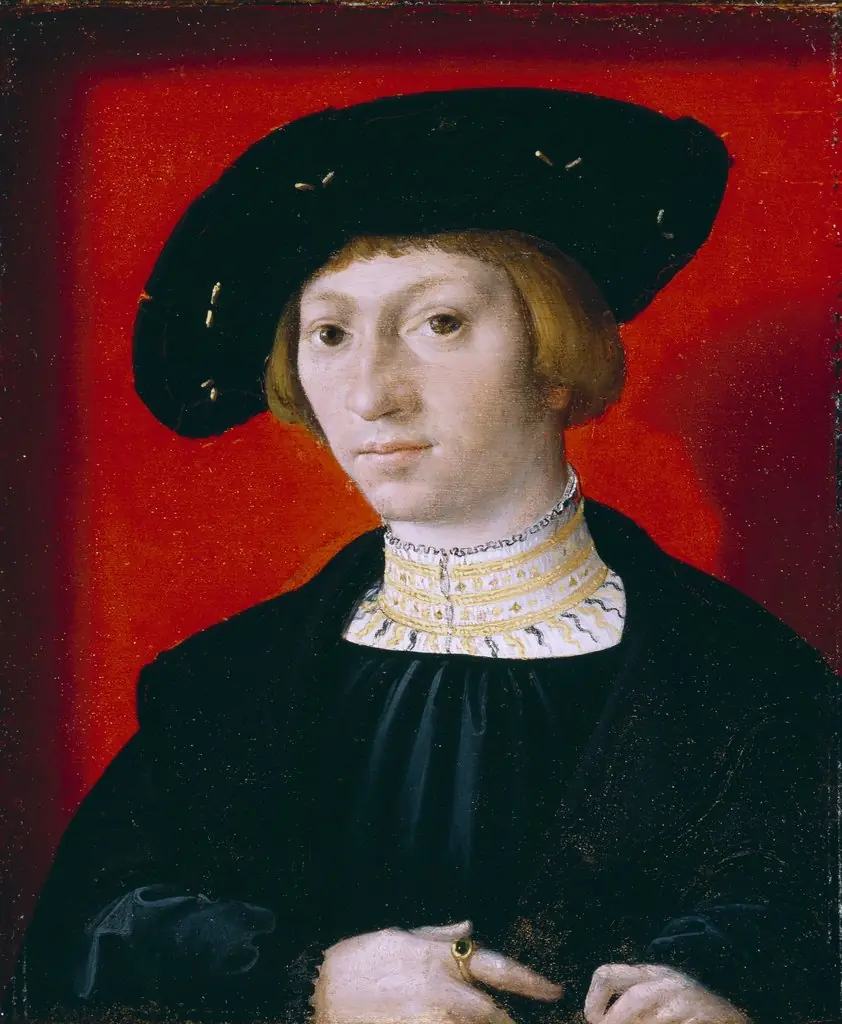 A Young Man
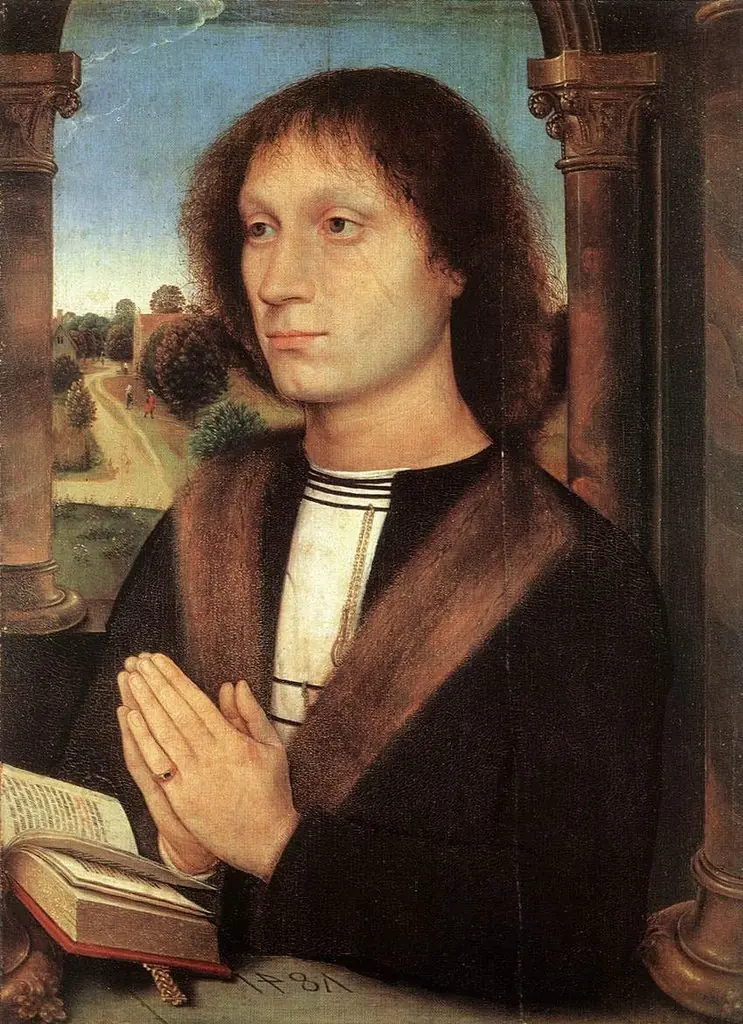 Benedetto Portinari triptych: Right wing, Portrait of a Praying Man
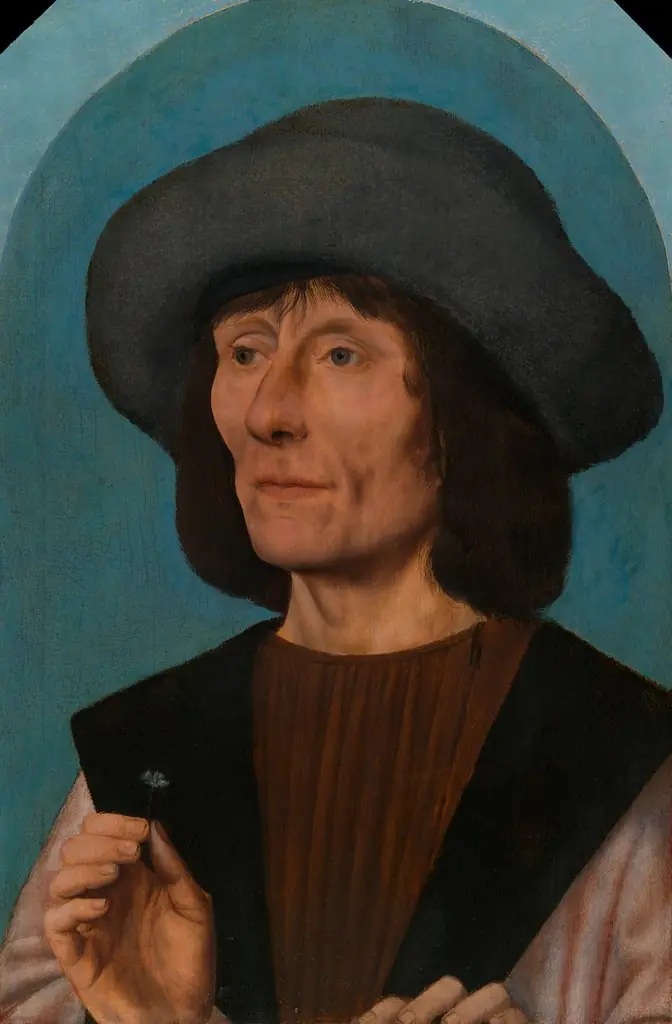 Portrait of a Man with a Pink Carnation
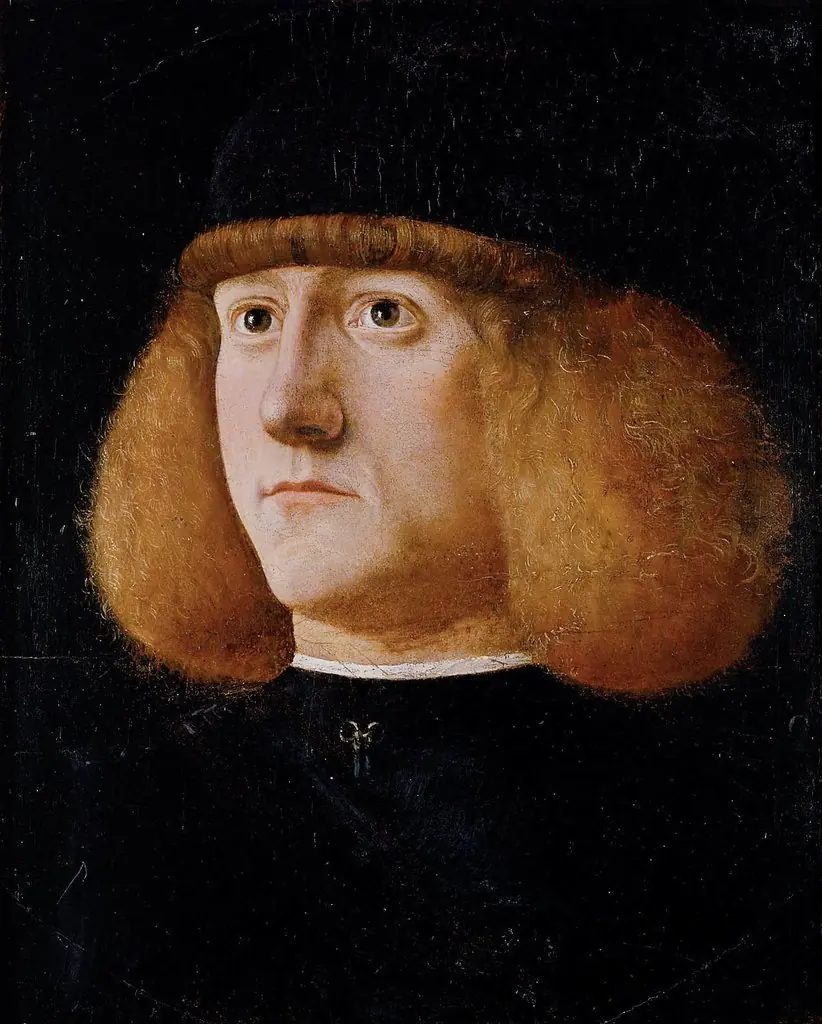 Portrait of a Young Man
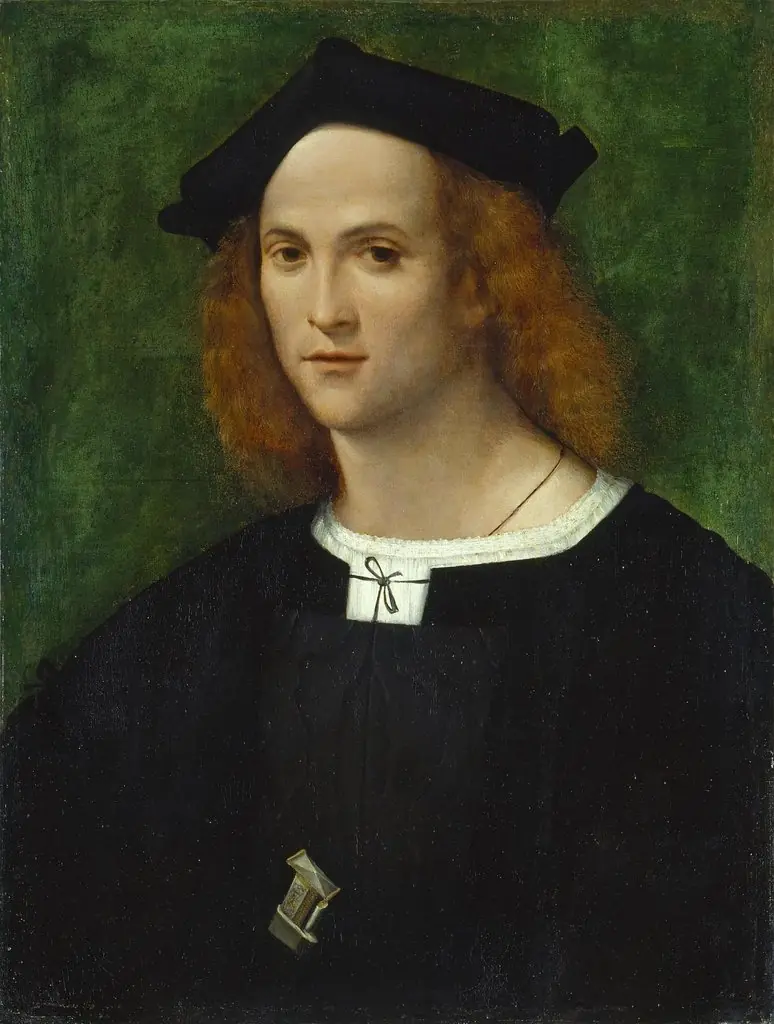 Portrait of a Young Man
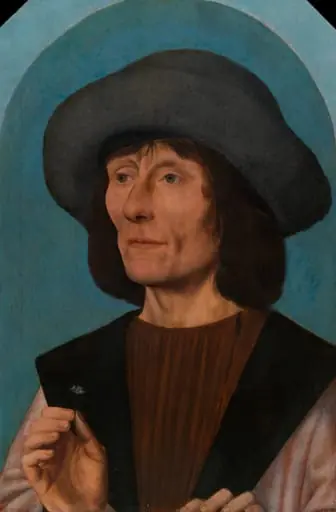 Portrait of a Man with a Pink
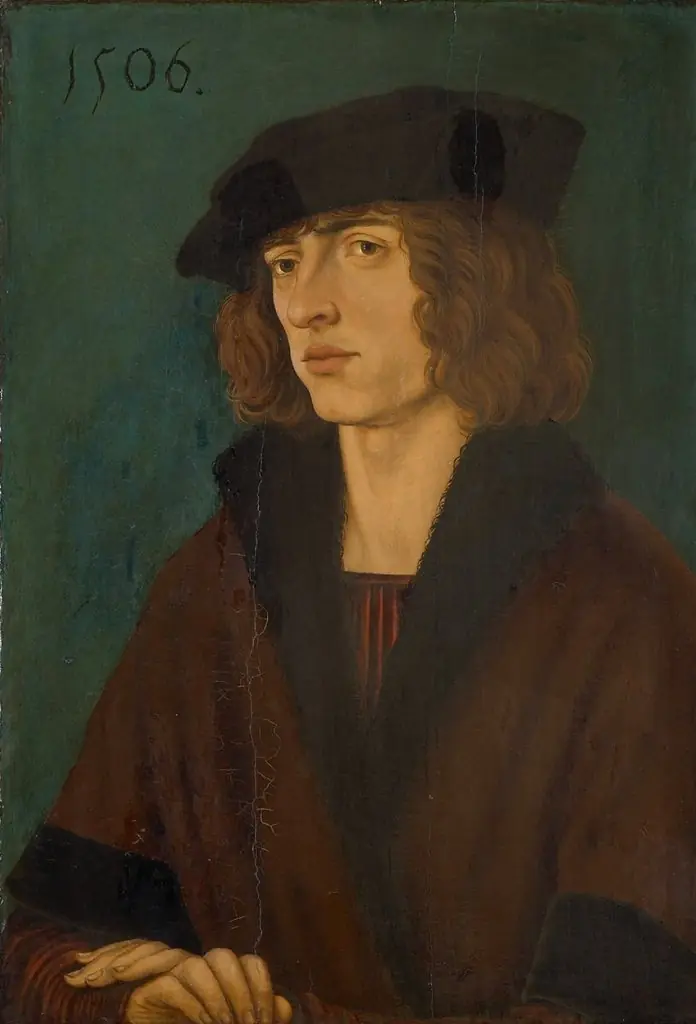 Portrait of a young Man
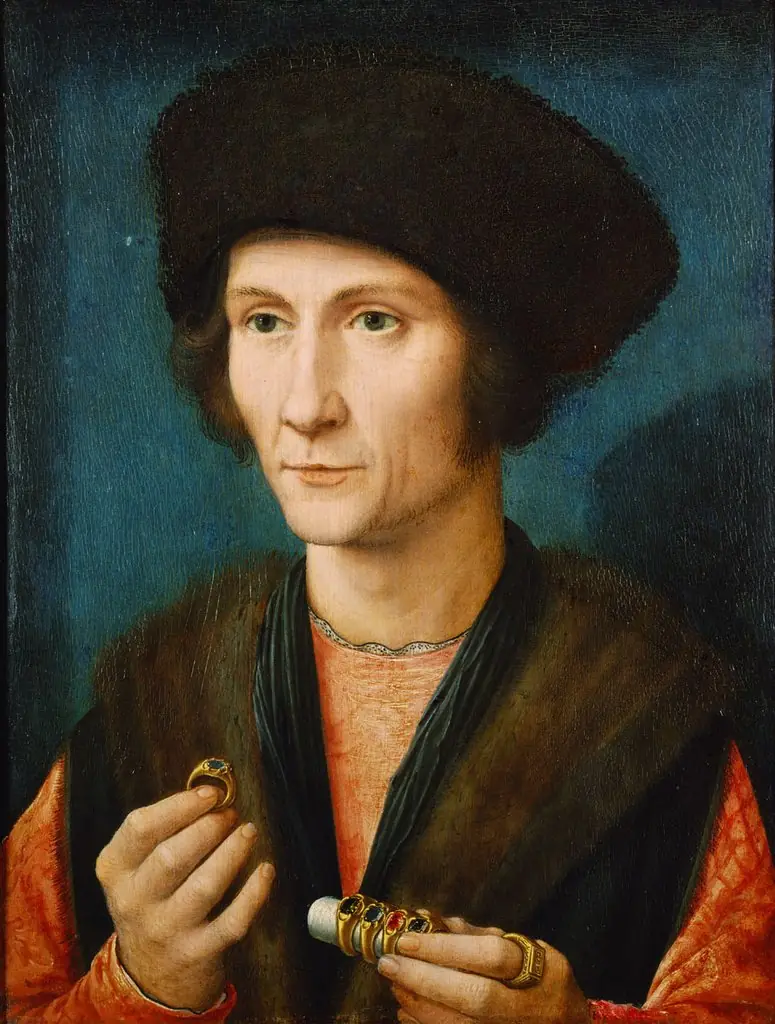 Portrait of a Goldsmith
 Portrait of Maximilian I (1459-1519)