Artwork
Frontispiece Painting of the Sutra of Meditation on Samantabhadra from the Threefold Lotus Sutra, Chusonji Version
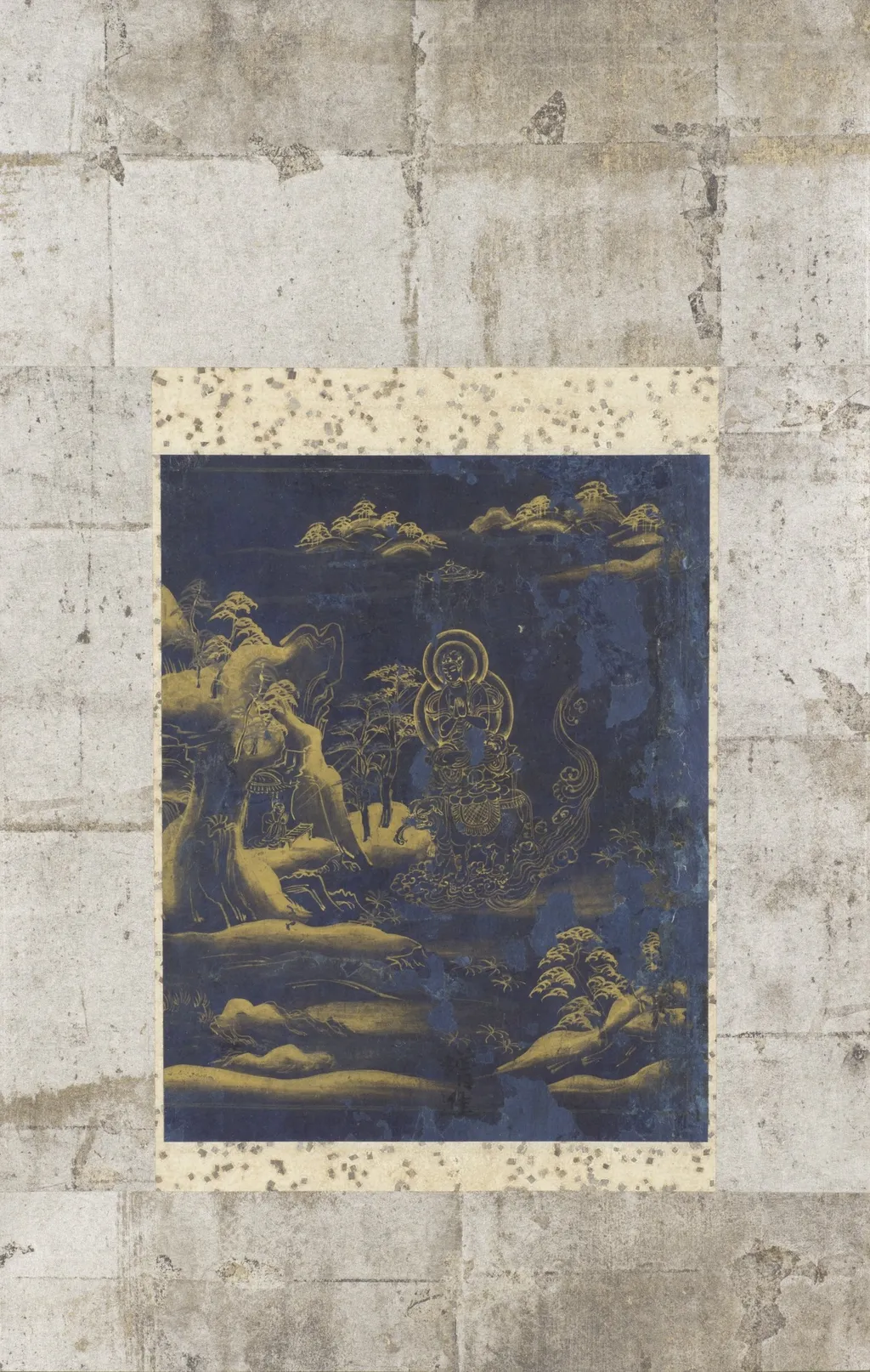
Frontispiece Painting of the Sutra of Meditation on Samantabhadra from the Threefold Lotus Sutra, Chusonji Version is an unspecified painting by the Byzantine icon painting artist Unknown. It dates from 1150 and is held in the collection of the Los Angeles County Museum of Art.
About this work
Overview
This painting serves as the frontispiece to a manuscript copy of the Sutra of Meditation on Samantabhadra, part of the Threefold Lotus Sutra tradition.
This painting serves as the frontispiece to a manuscript copy of the Sutra of Meditation on Samantabhadra, part of the Threefold Lotus Sutra tradition. Created in the 12th century at Chusonji Temple in Iwate, Japan, it was intended to introduce and sanctify the text it precedes. Executed in ink and mineral pigments on paper, it reflects the devotional purpose of the manuscript, blending textual authority with visual symbolism to guide meditative practice.
Subject & Meaning
The painting depicts Samantabhadra, a bodhisattva associated with practice and meditation, riding a six-tusked elephant. The elephant symbolizes steadfastness and the power to overcome obstacles on the path to enlightenment. Surrounding figures, including celestial beings and monks, reinforce the sutra’s themes of devotion and spiritual discipline. The composition directs the viewer’s focus inward, aligning visual imagery with the meditative intent of the text.
Technique & Style
The work employs fine ink outlines and layered mineral pigments, typical of Heian-period Buddhist painting. Gold leaf accents highlight divine elements, enhancing the sacred atmosphere without overt ornamentation. Figures are rendered with restrained elegance, emphasizing clarity and spiritual presence over naturalism. The flat, hierarchical space reflects traditional East Asian religious iconography, prioritizing symbolic meaning over spatial depth.
History & Provenance
Produced at Chusonji Temple during the late Heian period, the manuscript was likely commissioned by monastic patrons for ritual use. It remained within the temple’s collection for centuries, preserved through careful storage and periodic copying. The painting’s survival is notable given the temple’s destruction and rebuilding over time, suggesting its enduring spiritual significance to the monastic community.
Context
This painting emerged during a period of heightened interest in Lotus Sutra devotion in Japan, particularly among elite monastic circles. The Threefold Lotus Sutra, including the Meditation Sutra, was central to esoteric practices emphasizing visualization and moral discipline. Such frontispieces functioned as ritual anchors, transforming the act of reading into a contemplative experience grounded in visual contemplation.
Legacy
The Chusonji version of this frontispiece stands as a rare surviving example of early medieval Japanese Buddhist manuscript art. It contributes to understanding how textual and visual elements were integrated in religious practice. While later traditions evolved, this work preserves the aesthetic and devotional priorities of its time, offering insight into the material culture of monastic meditation in 12th-century Japan.
Artist & collection

 Domestic Scene
 Giacomo and Cardinal Marco, investing Andrea, Abbot of San Zeno, with his Benefice
 The Nymph of Fontainebleau
 Portrait of a Woman
 Madonna and Child with Saints in the Enclosed Garden
 Venus and Minerva
 Family Group of Four on Sofa
 Wall painting from Room H of the Villa of P. Fannius Synistor at Boscoreale
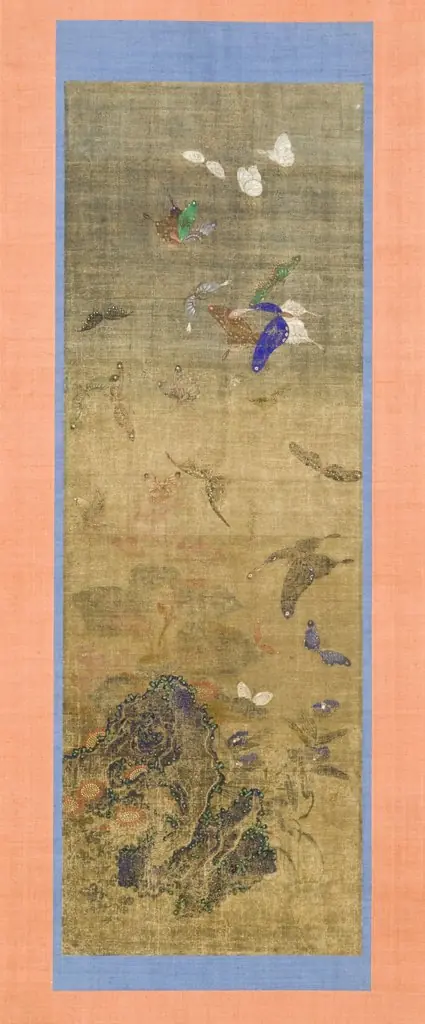 Butterflies, Flowers and Rocks
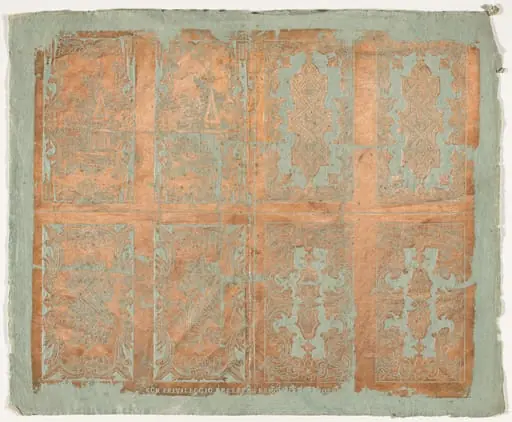 Endpaper
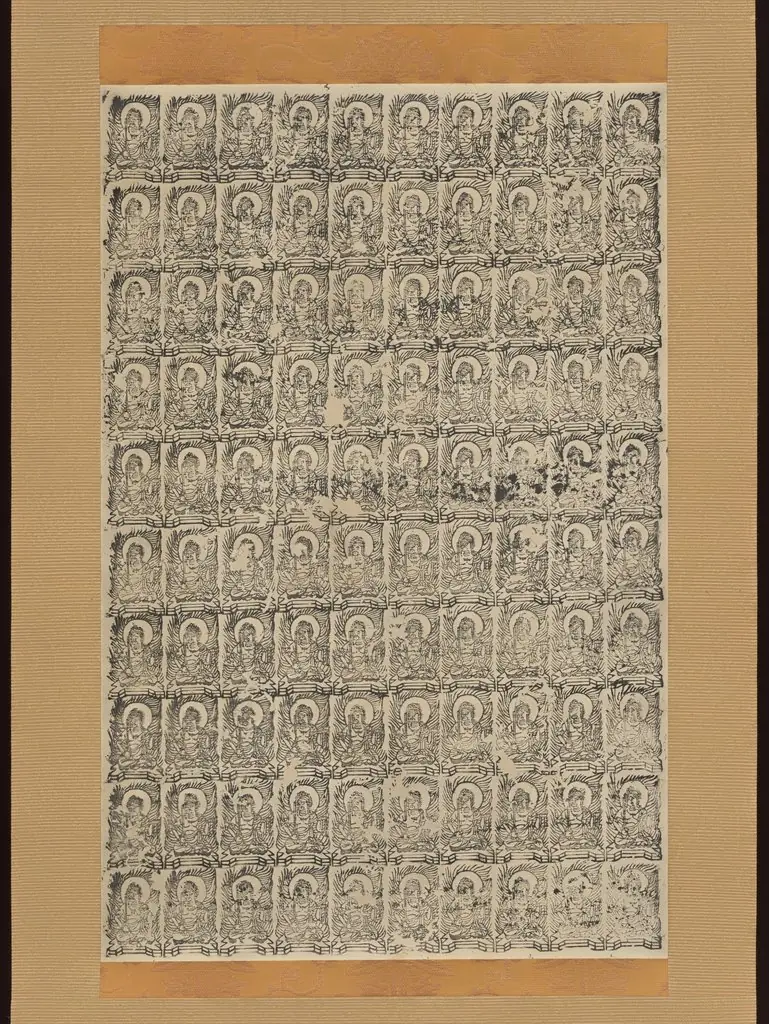 Stamped Images of the Wisdom King Fudō (Acala)
 Family of Monkeys
 Album of Daoist and Buddhist Themes: Procession of Daoist Deities: Leaf 3
 宋緙絲富貴長春 軸
 Sketch (verso)
 Dragon
 Copy of painting inside the caves of Ajanta (cave 16)
 明 佚名 雲龍圖 軸|Dragon Amid Clouds and Waves
 Peacocks, Pine Tree, and Peonies
 Icoana de factură catolică îl reprezintă pe sfântul Teodor Tiron (306 d. Hr) sărbătorit pe 17 februarie.Sf. Teodor înveșmântat ca oștean: coif cu pene, armura și mantie roșie. În dreapta ține un coif cu stânga sulița. În planul doi o biserică catolică. Pe fondul alb, de o parte și alta a sfântului câte tulpină cu o floare roșie. Cromatica: predomină roșul(inclusiv ca desen) albastru, bleu, negru, maro, auriu, verde deschis, verde închis, fond alb.Ramă îngustă, patru stinghiii îmbinate oblic la colțuri.