Artwork
Wapenbord van de rederijkerskamer Heilige Geest
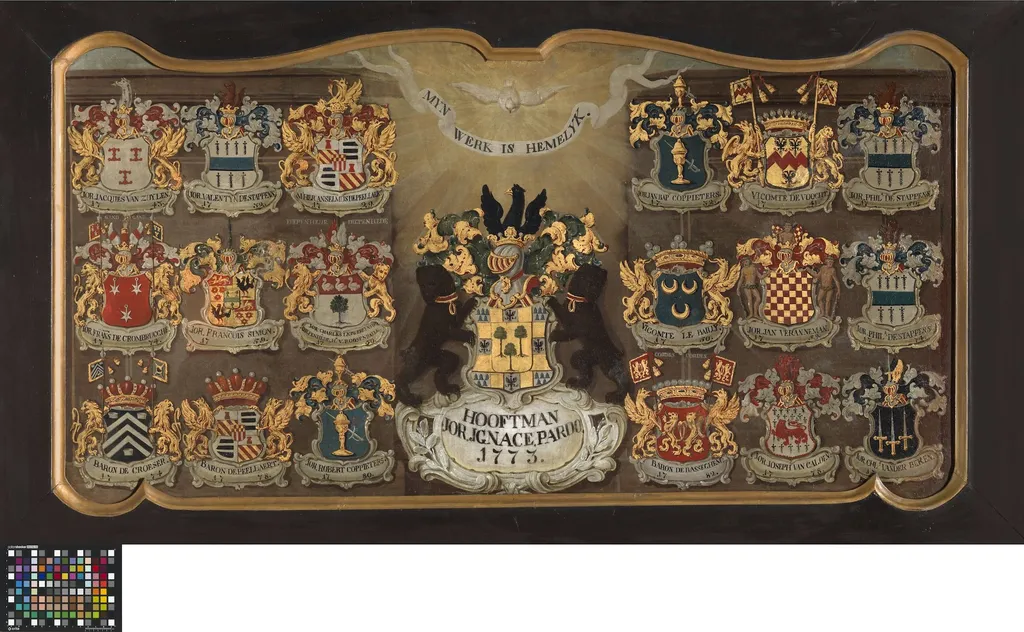
Wapenbord van de rederijkerskamer Heilige Geest is an oil painting by the Rococo painting artist Unknown. It dates from 1773 and is held in the collection of the Groeningemuseum.
About this work
Overview
The work functions as a collective emblem, likely commissioned to honor a group of individuals bound by civic or cultural ties.
This oil painting on panel depicts a heraldic composition centered on a large yellow crest bearing a castle motif, surrounded by eighteen smaller, intricately rendered coats of arms. The background is a deep, warm brown that enhances the vibrancy of the colored shields. Each crest is distinct in design, suggesting individual identities. The work functions as a collective emblem, likely commissioned to honor a group of individuals bound by civic or cultural ties.
Subject & Meaning
The central castle crest may symbolize authority or a founding lineage, while the eighteen surrounding shields represent affiliated families or members of the rederijkerskamer Heilige Geest, a literary society in the Low Countries. Heraldic symbols—animals, objects, and geometric patterns—convey lineage, virtues, or professional affiliations. Together, the arrangement asserts communal identity and shared cultural values among the society’s constituents.
Technique & Style
Executed in oil paint with meticulous attention to detail, the painting employs fine brushwork to render each crest’s unique elements—tinctures, charges, and borders—with precision. The use of layered glazes creates depth in the dark brown background, while the colored shields retain luminous clarity. The composition is symmetrical and orderly, reflecting the formal conventions of heraldic art rather than expressive innovation.
History & Provenance
Created for the rederijkerskamer Heilige Geest, a prominent chamber of rhetoric in the 16th-century Low Countries, the work likely adorned their meeting hall as a symbol of collective pride. Such panels were often commissioned to commemorate members or milestones. Its survival suggests it was preserved within the society’s archives or by descendants, though its exact journey from origin to current location remains partially undocumented.
Context
In the 16th-century Low Countries, rederijkerskamers were civic literary societies that combined poetry, drama, and public performance with civic identity. Heraldic panels like this one served as visual affirmations of membership and status. The inclusion of multiple crests reflects the society’s structure as a network of individuals united by cultural practice, not bloodline, distinguishing it from noble heraldry.
Legacy
This painting stands as a rare surviving example of civic heraldry tied to the rederijkerskamer tradition. It offers insight into how literary and cultural groups in the Low Countries visually encoded social cohesion. While not widely known outside specialized circles, it remains a valuable artifact for understanding the intersection of art, identity, and civic life in early modern Northern Europe.
Artist & collection

 Domestic Scene
 Giacomo and Cardinal Marco, investing Andrea, Abbot of San Zeno, with his Benefice
 The Nymph of Fontainebleau
 Portrait of a Woman
 Madonna and Child with Saints in the Enclosed Garden
 Venus and Minerva
 Family Group of Four on Sofa
 Wall painting from Room H of the Villa of P. Fannius Synistor at Boscoreale
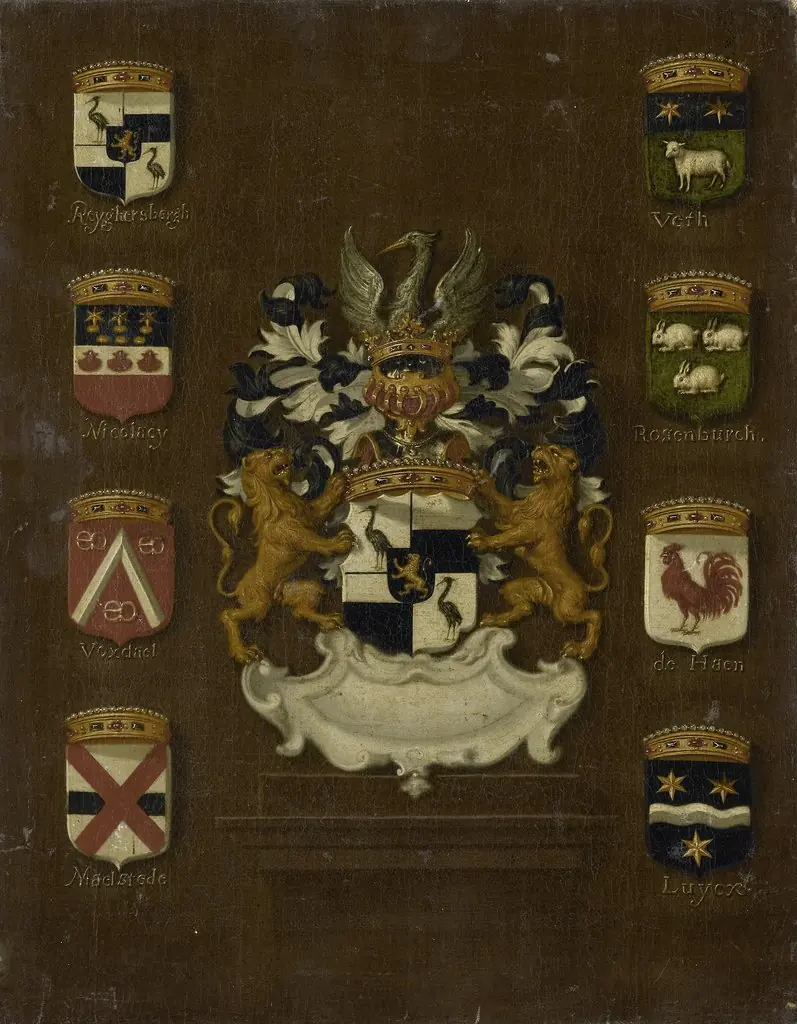 Coat of Arms of Jan van Reyersbergh with its eight quarterings
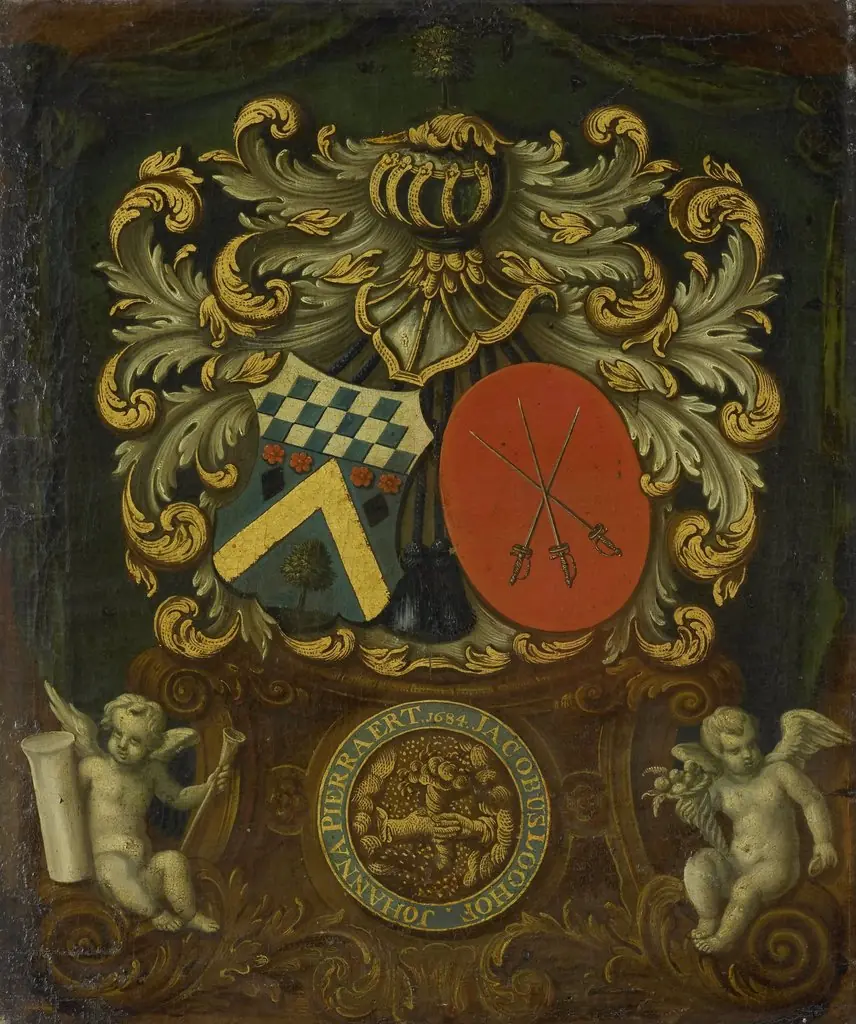 The family shields of Jacobus Loohoff and Johanna Pierraert, 1684
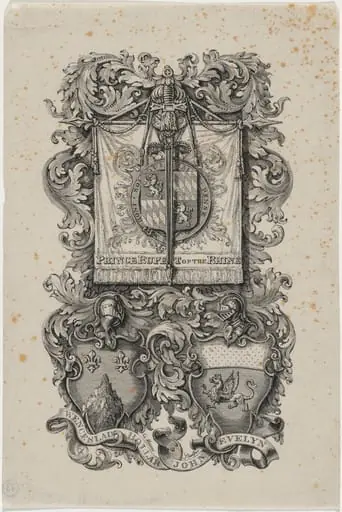 Coat of Arms of Prince Rupert, Hollar and Evelyn
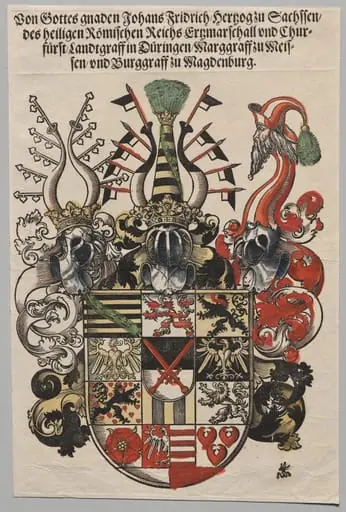 Coat of Arms of John Frederic, Elector of Saxony, called the Magnanimous
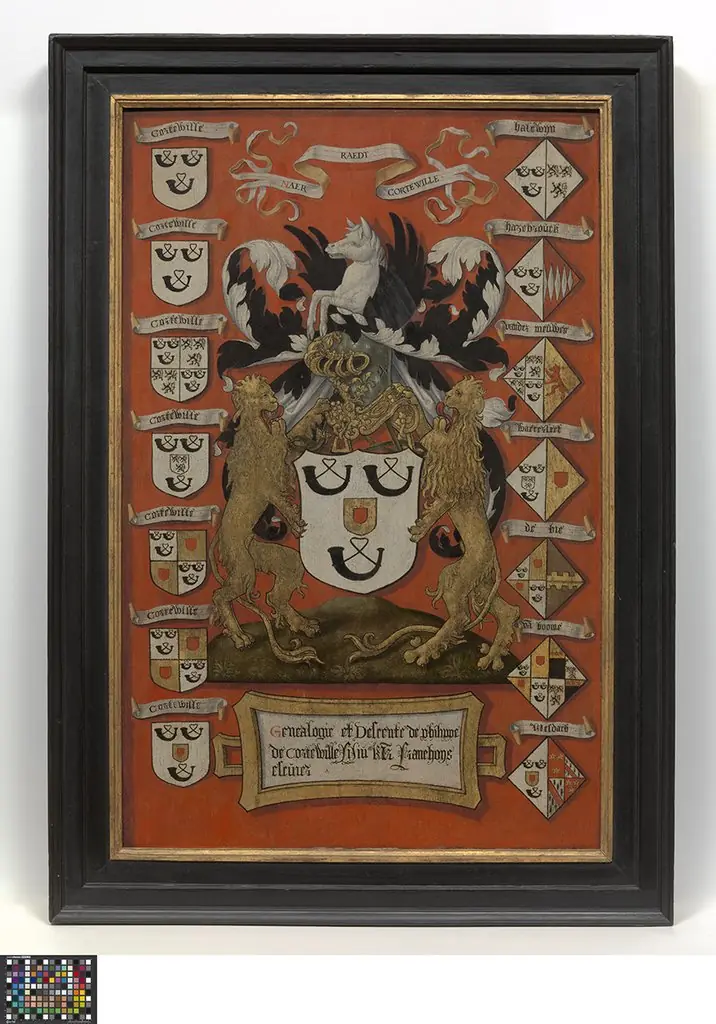 Pedigree of Filips de Cortewille
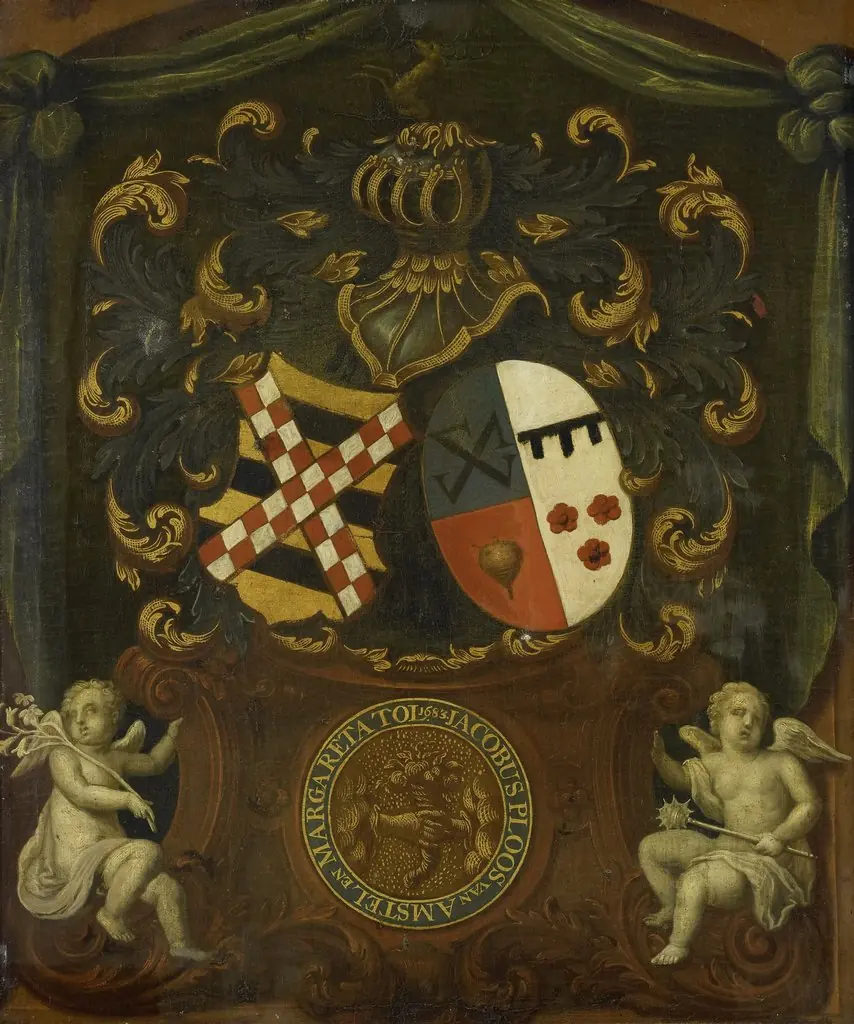 The family shields of Jacob Ploos van Amstel and Margareta Tol
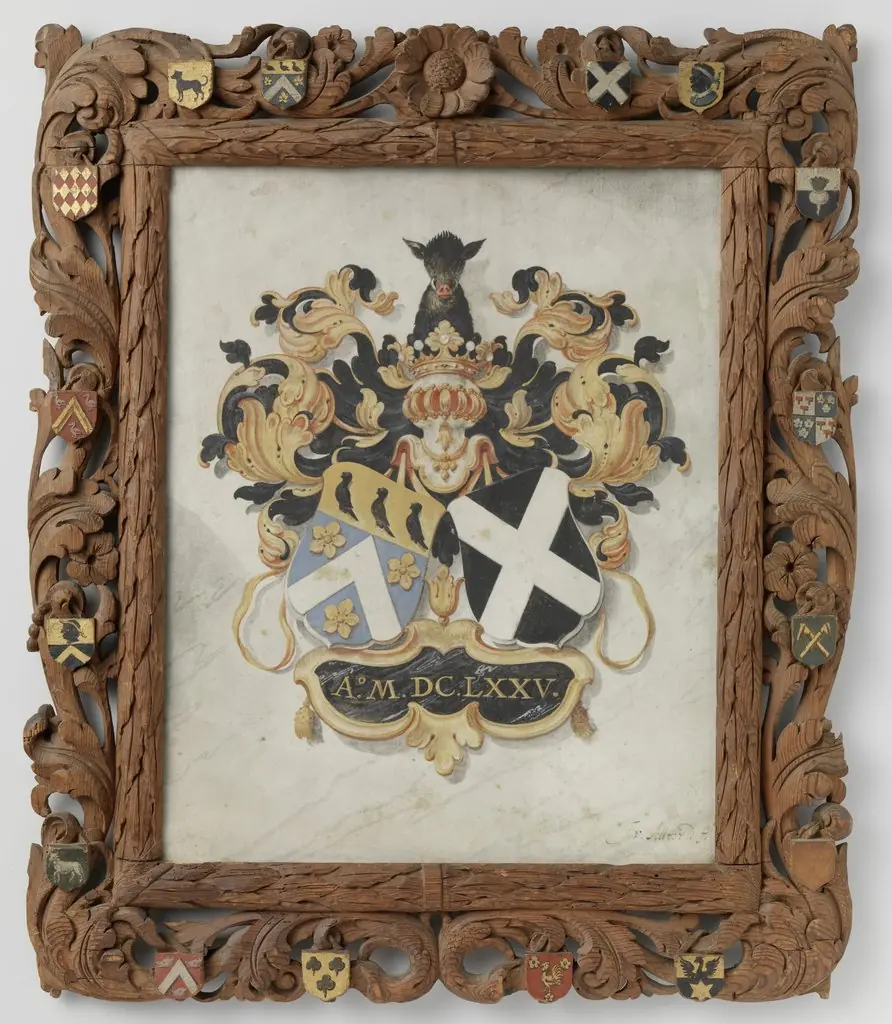 The family shields of Jan Boudaen Courten and Anna Maria Hoeufft
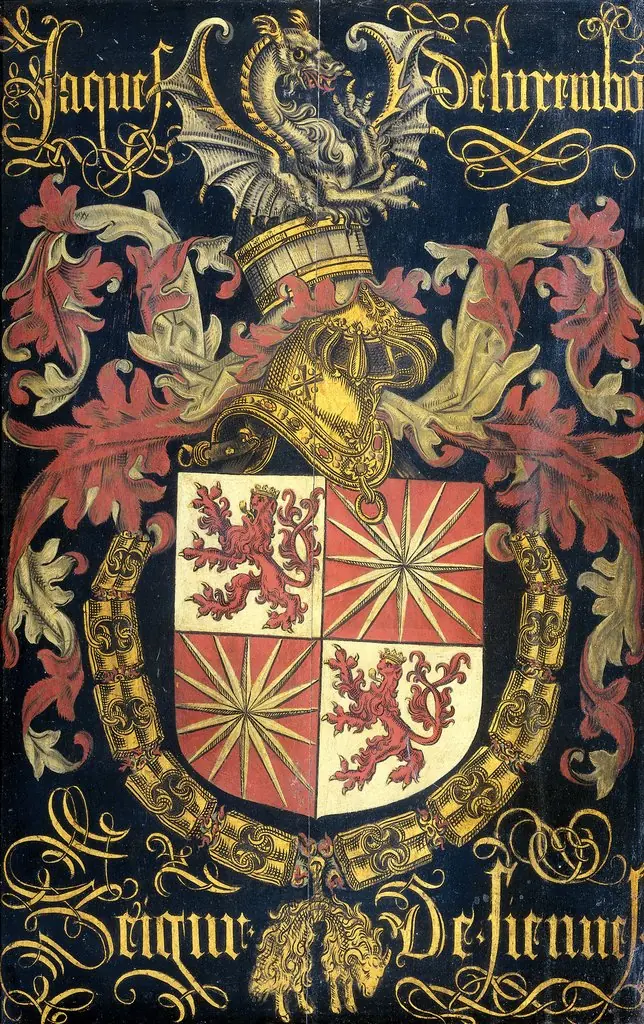 Shield of Jacob of Luxemburg (after 1441-1488), Lord of Fiennes, in his capacity as knight of the Order of the Golden Fleece
 Ornament Fillet