Artwork
Wapenschild
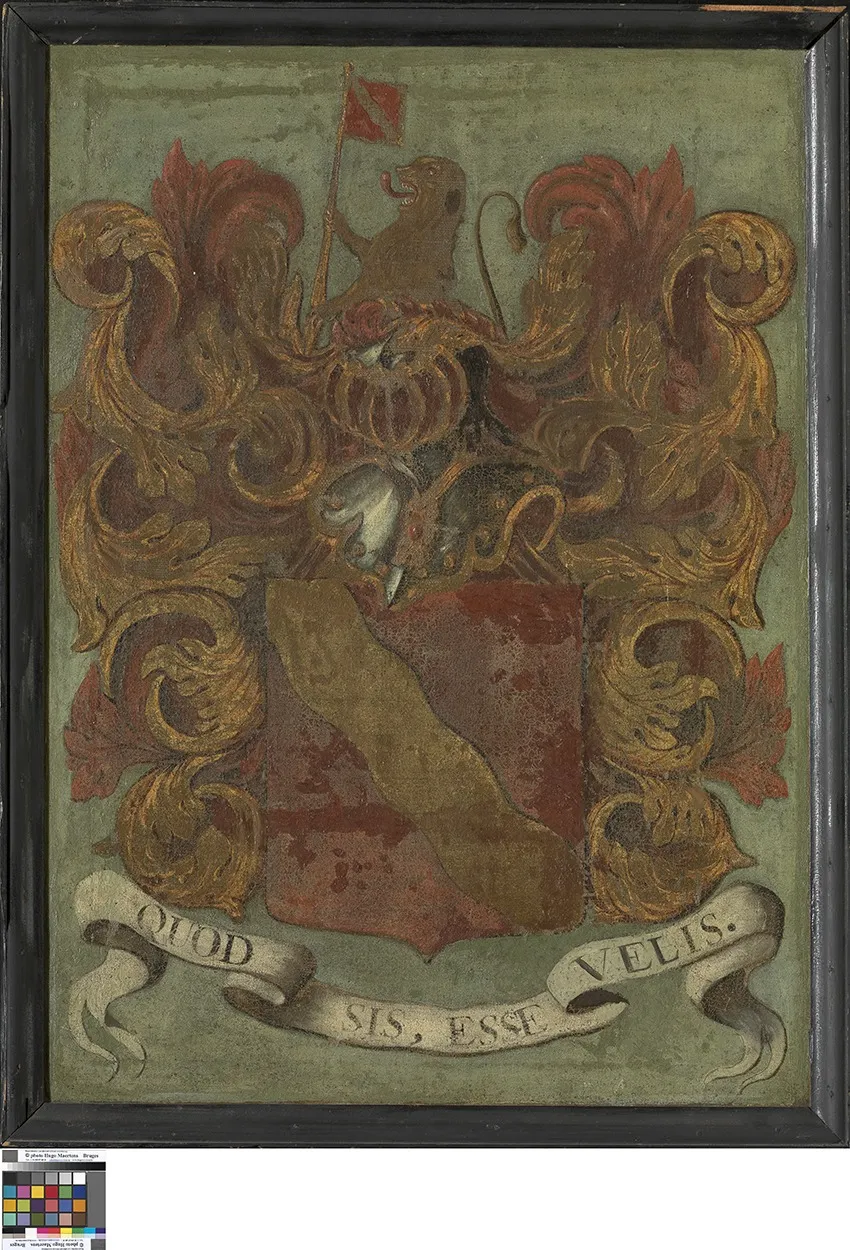
Wapenschild is an oil painting by Unknown. It dates from 1701 and is held in the collection of the Groeningemuseum. The work is an oil painting that presents a heraldic composition centered on a shield.
About this work
Overview
The work is an oil painting that presents a heraldic composition centered on a shield. The shield is bisected, displaying a red field on one side and a gold field on the other. Above the shield a lion clutches a flag, and beneath it a banner bears the Latin motto “QUOD SIS, ESSE VELIS.” The surrounding field is a subdued green, punctuated with ornamental gold and red scrollwork.
Subject & Meaning
The motto, translating roughly to “What you are, you may wish to be,” suggests an aspirational or reflective statement attached to the bearer’s identity.
The central motif is a coat of arms, a visual identifier traditionally used to signify lineage, authority, or affiliation. The lion, a common heraldic charge, conveys strength and nobility, while the flag it holds may reference a specific family or institutional standard. The motto, translating roughly to “What you are, you may wish to be,” suggests an aspirational or reflective statement attached to the bearer’s identity.
Technique & Style
Rendered in oil, the artist employs chiaroscuro to model the shield and lion, creating a sense of three‑dimensionality against the flat green backdrop. Thick impasto on the metallic elements—particularly the gold and red flourishes—adds tactile texture, while transparent glazes deepen the hues of the red and gold fields, enhancing their luminosity.
History & Provenance
The painting’s provenance is not detailed in the available data, and no specific artist or date is recorded. Its format as a heraldic panel suggests it may have been commissioned for a private residence, civic building, or institutional setting where the displayed arms held relevance.
Context
Heraldic imagery was widely used in European visual culture from the medieval period through the early modern era, serving both decorative and communicative functions. This piece aligns with that tradition, employing the language of arms to convey status and identity within a formal, painted medium rather than a sculptural or textile format.
Artist & collection

 Domestic Scene
 Giacomo and Cardinal Marco, investing Andrea, Abbot of San Zeno, with his Benefice
 The Nymph of Fontainebleau
 Portrait of a Woman
 Madonna and Child with Saints in the Enclosed Garden
 Venus and Minerva
 Family Group of Four on Sofa
 Wall painting from Room H of the Villa of P. Fannius Synistor at Boscoreale
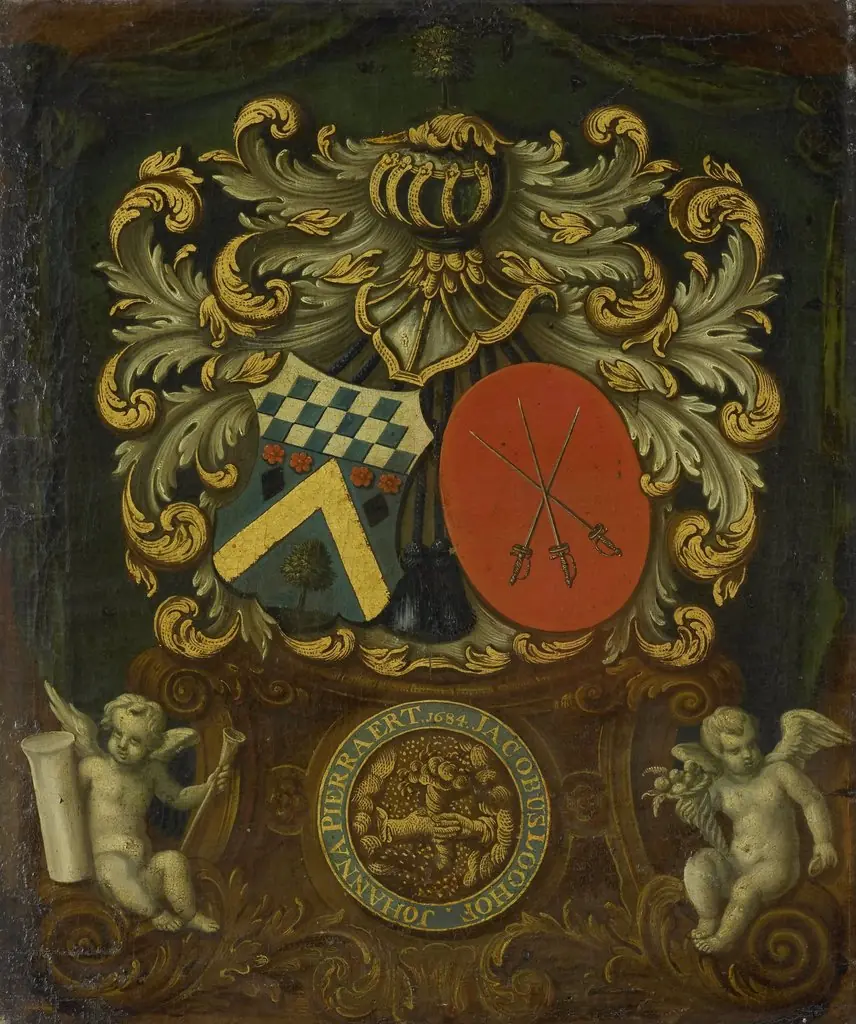 The family shields of Jacobus Loohoff and Johanna Pierraert, 1684
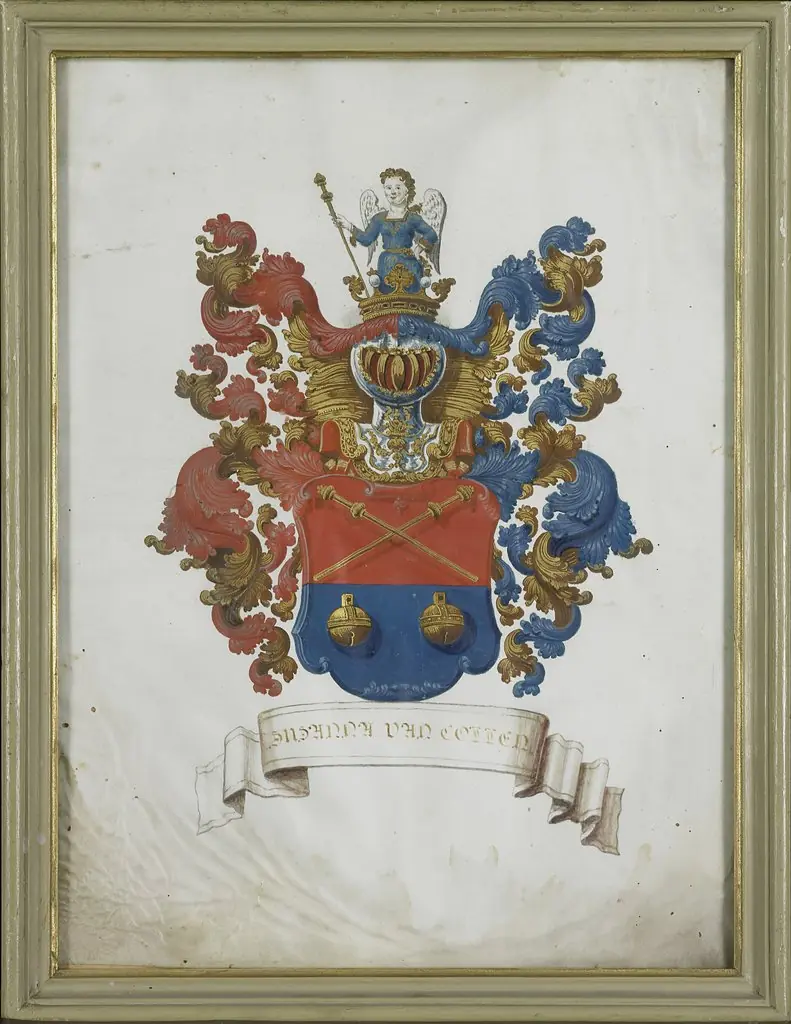 Het wapen van Susanna van Collen (1692-1745), echtgenote van Jacob Feitama
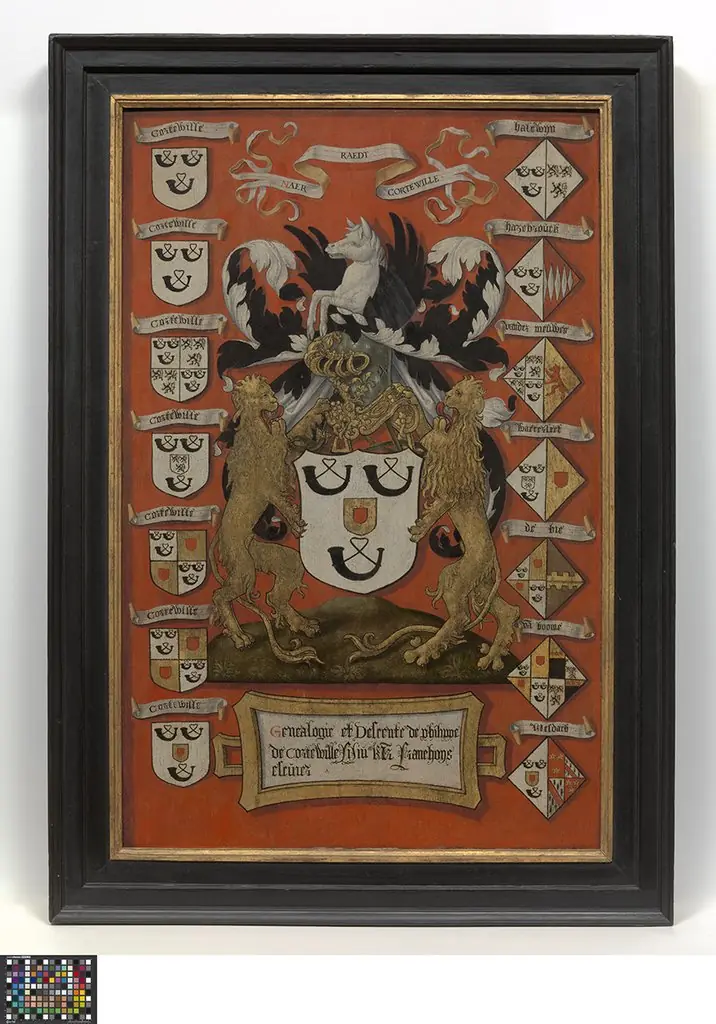 Pedigree of Filips de Cortewille
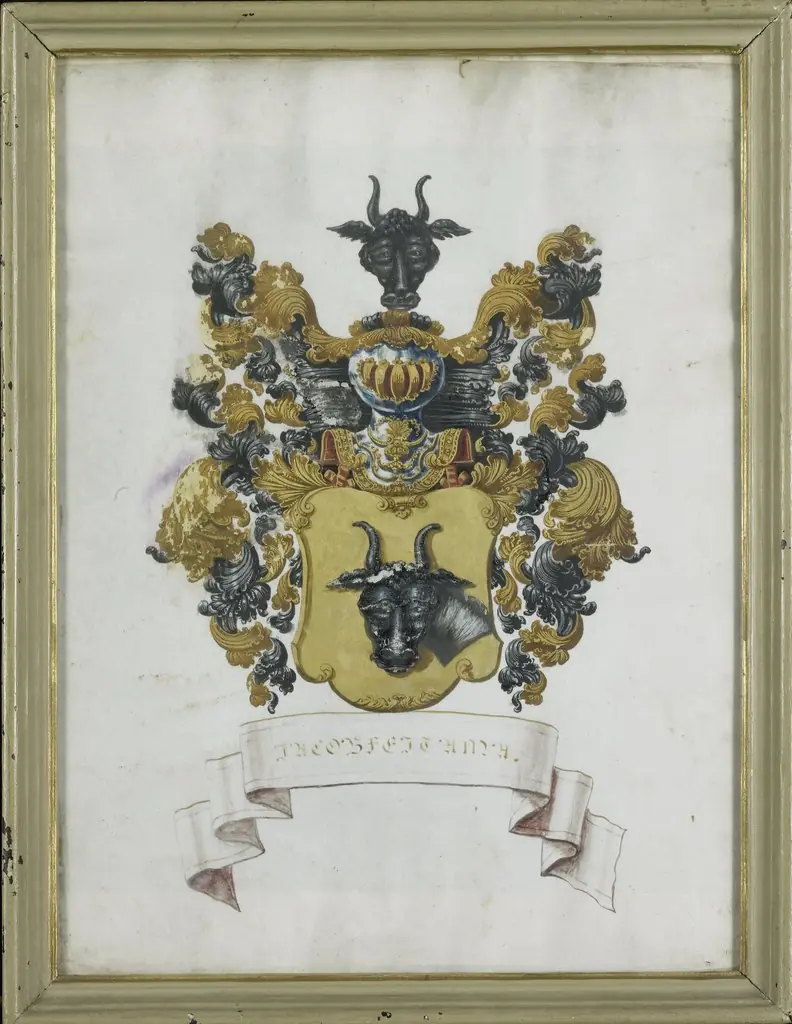 Het wapen van Jacob Feitama II (1698-1774)
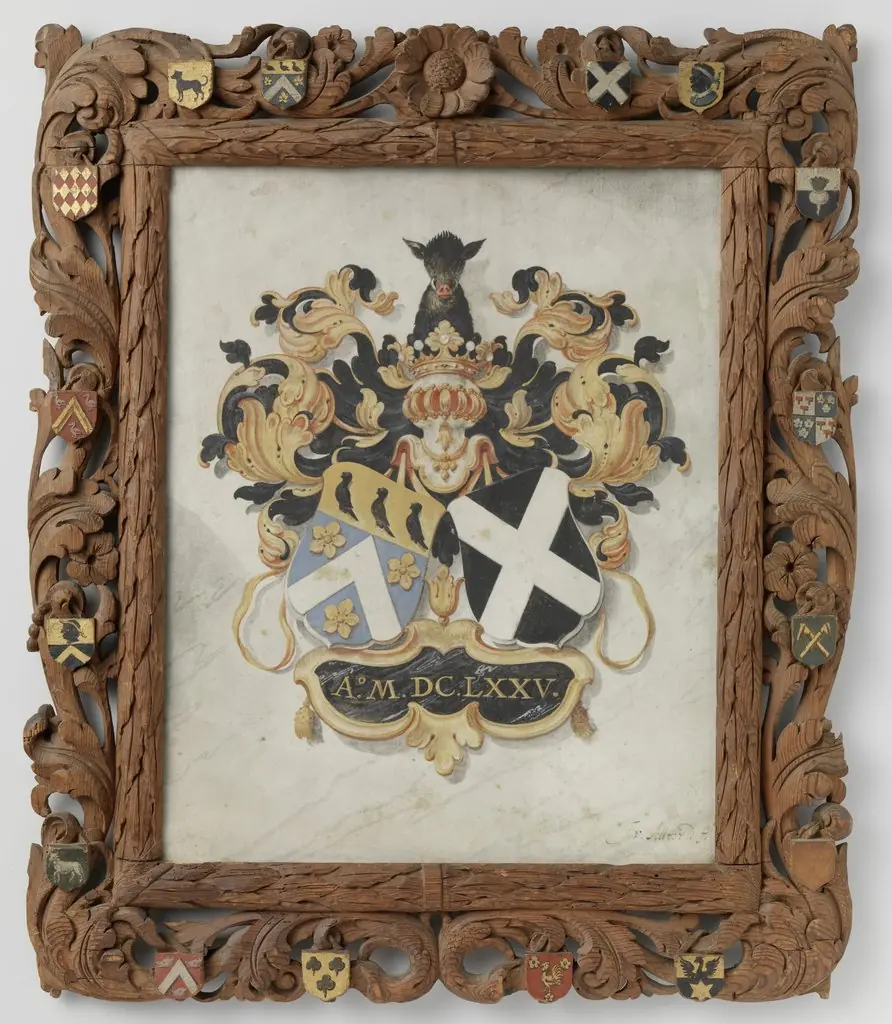 The family shields of Jan Boudaen Courten and Anna Maria Hoeufft
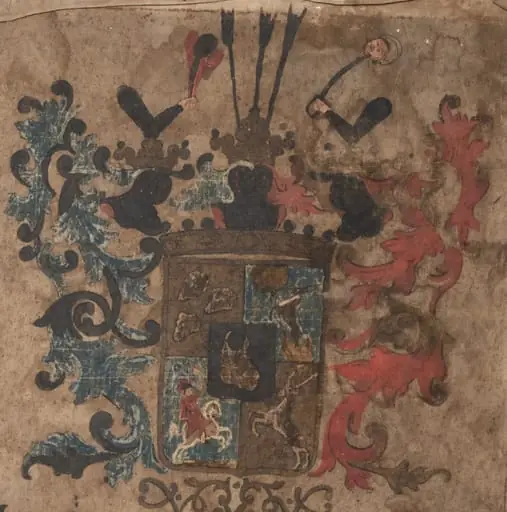 Blazonul funerar al contelul Miklós Wass din Țaga
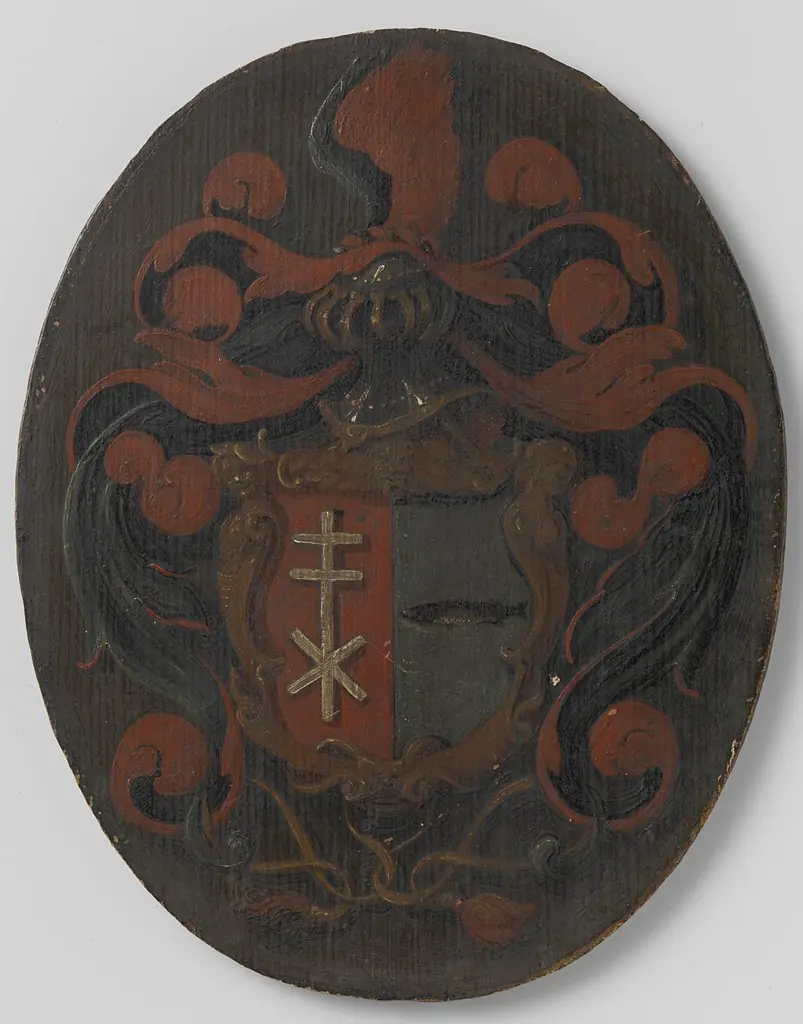 Wapenbord met het wapen van de familie Snoeck (Amsterdam)
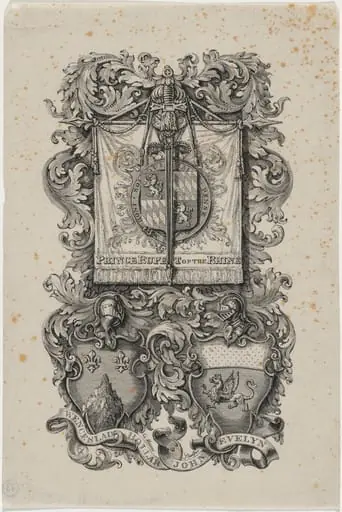 Coat of Arms of Prince Rupert, Hollar and Evelyn
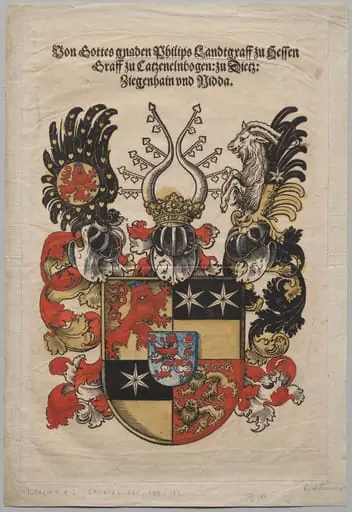 Coat of Arms of Philip, Landgrave of Hesse
 Coat of Arms with Two Eagles
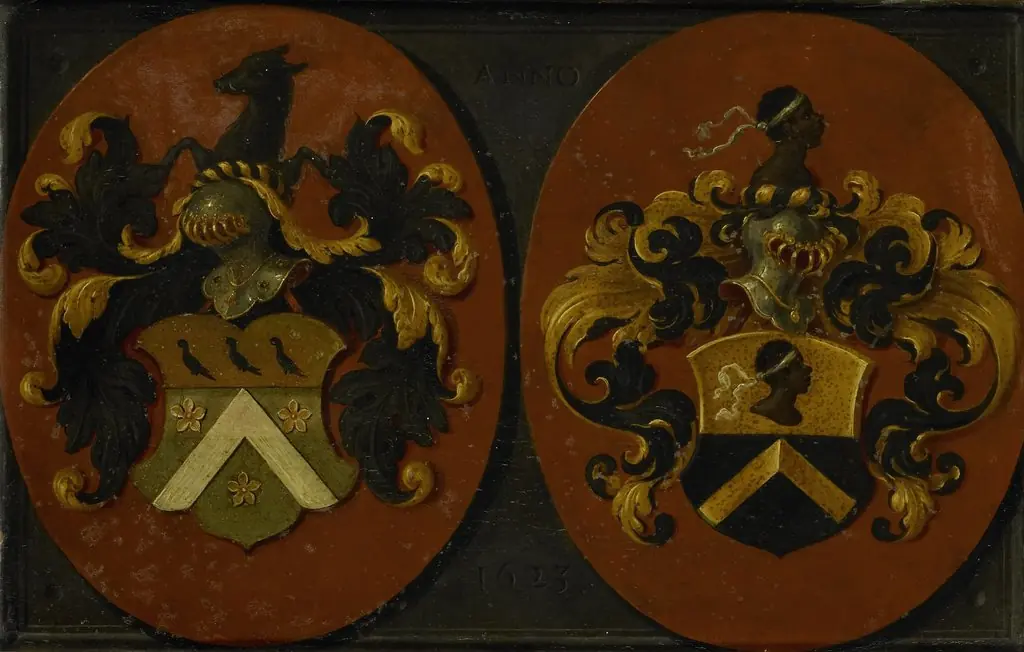 Wapenbord met de wapens van Boudaen en Fourmenois, 1623 (het wapen van Fourmenois omgewend)
 Ornament Fillet