Artwork
Het wapen van Jacob Feitama II (1698-1774)
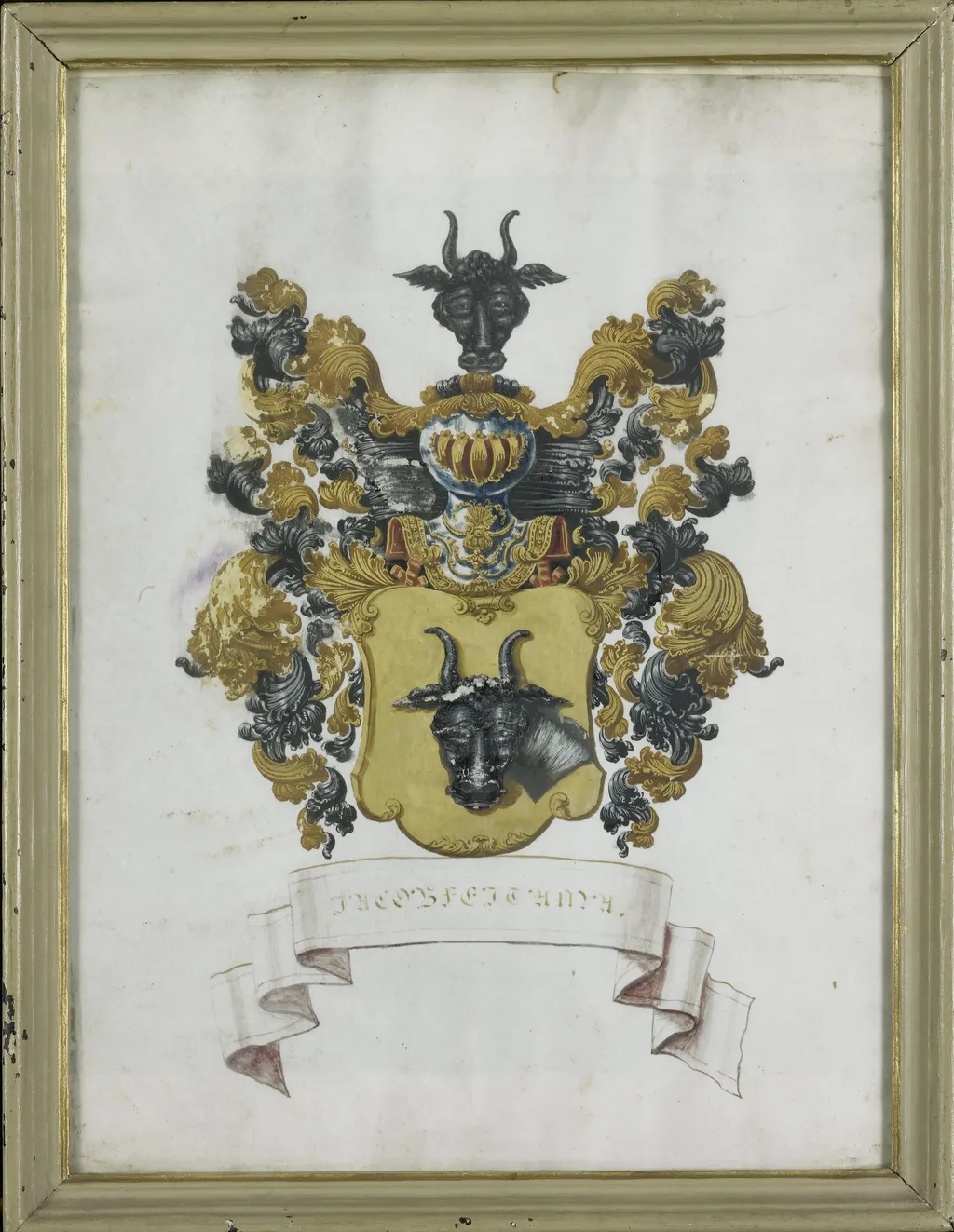
Het wapen van Jacob Feitama II (1698-1774) is a watercolor painting by the Rococo painting artist Unknown. It dates from 1750 and is held in the collection of the Rijksmuseum. The work is a painted coat of arms rendered on parchment.
About this work
Overview
The work is a painted coat of arms rendered on parchment. Central to the composition is a black bull’s head with curved horns, positioned above a yellow shield. Gold scrollwork and ornamental swirls fill the surrounding field, while diminutive crowns and a lower banner complete the design.
Subject & Meaning
Heraldic imagery such as the bull’s head and shield traditionally signified lineage, authority, or affiliation. The inclusion of crowns and a banner suggests a claim to noble status or a specific family identity, typical of European armorial practices in the early modern period.
Technique & Style
Executed with pigment applied directly to parchment, the piece employs a limited palette of gold, black, yellow, with accents of red and blue. The gold scrolls and swirls are rendered in a stylised, ornamental manner, reflecting the decorative conventions of 17th‑century heraldic art.
History & Provenance
Attributed to the period of Jacob Feitama II (1698‑1774), the parchment likely served a documentary or ceremonial function within his household or institution. The faded inscription on the banner indicates the original text has deteriorated over time, a common issue for organic supports.
Context
Heraldic panels on parchment were frequently used in the Dutch Republic and surrounding regions to display family crests on official documents, seals, or interior decorations. The design’s formal symmetry and use of gold align with contemporary visual codes of prestige.
Legacy
Such armorial artifacts provide insight into the visual language of status and identity in early modern Europe, offering scholars material evidence of how families like the Feitama represented themselves in both private and public contexts.
Artist & collection

 Domestic Scene
 Giacomo and Cardinal Marco, investing Andrea, Abbot of San Zeno, with his Benefice
 The Nymph of Fontainebleau
 Portrait of a Woman
 Madonna and Child with Saints in the Enclosed Garden
 Venus and Minerva
 Family Group of Four on Sofa
 Wall painting from Room H of the Villa of P. Fannius Synistor at Boscoreale
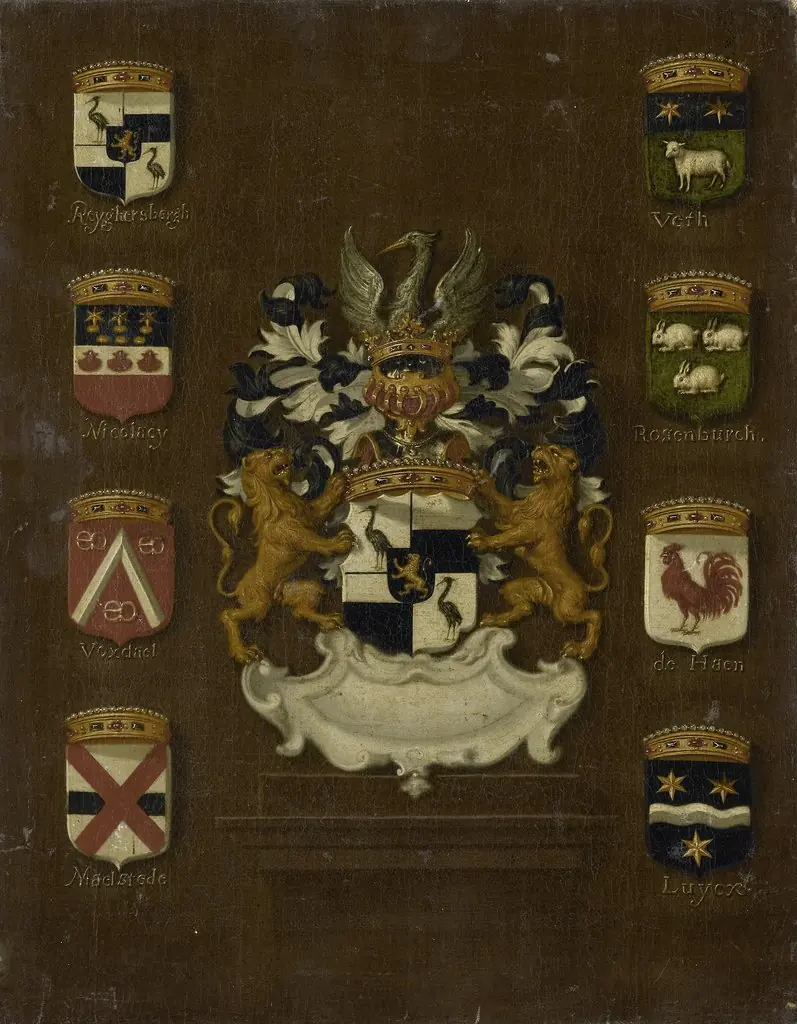 Coat of Arms of Jan van Reyersbergh with its eight quarterings
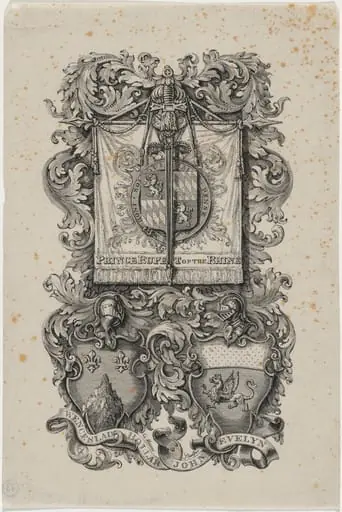 Coat of Arms of Prince Rupert, Hollar and Evelyn
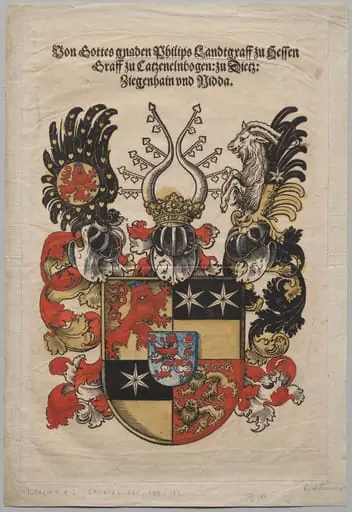 Coat of Arms of Philip, Landgrave of Hesse
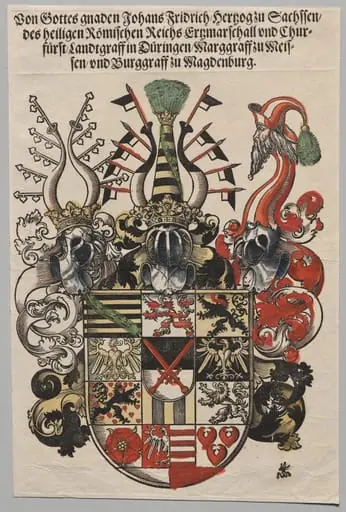 Coat of Arms of John Frederic, Elector of Saxony, called the Magnanimous
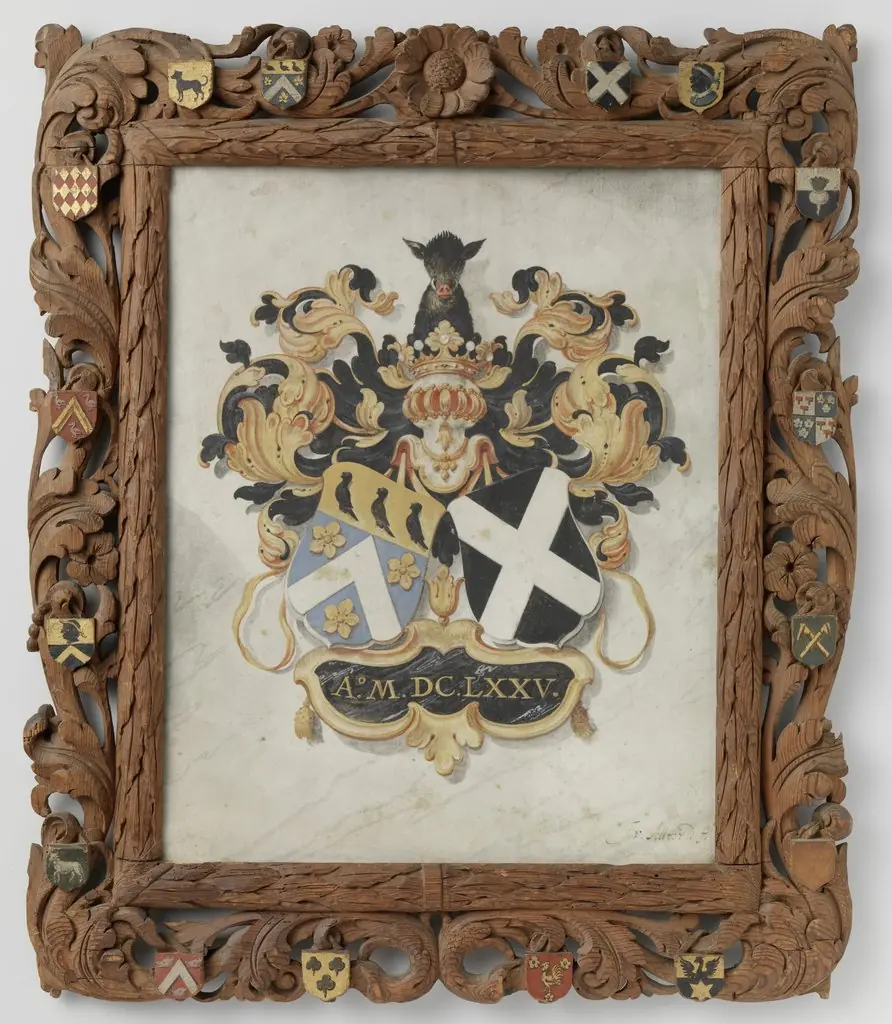 The family shields of Jan Boudaen Courten and Anna Maria Hoeufft
 Ornament Fillet
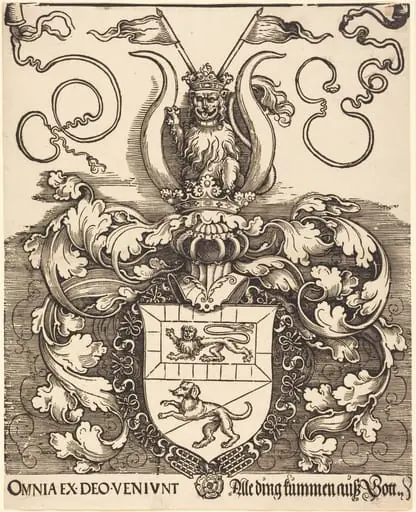 Coat of Arms of Lorenz Staiber
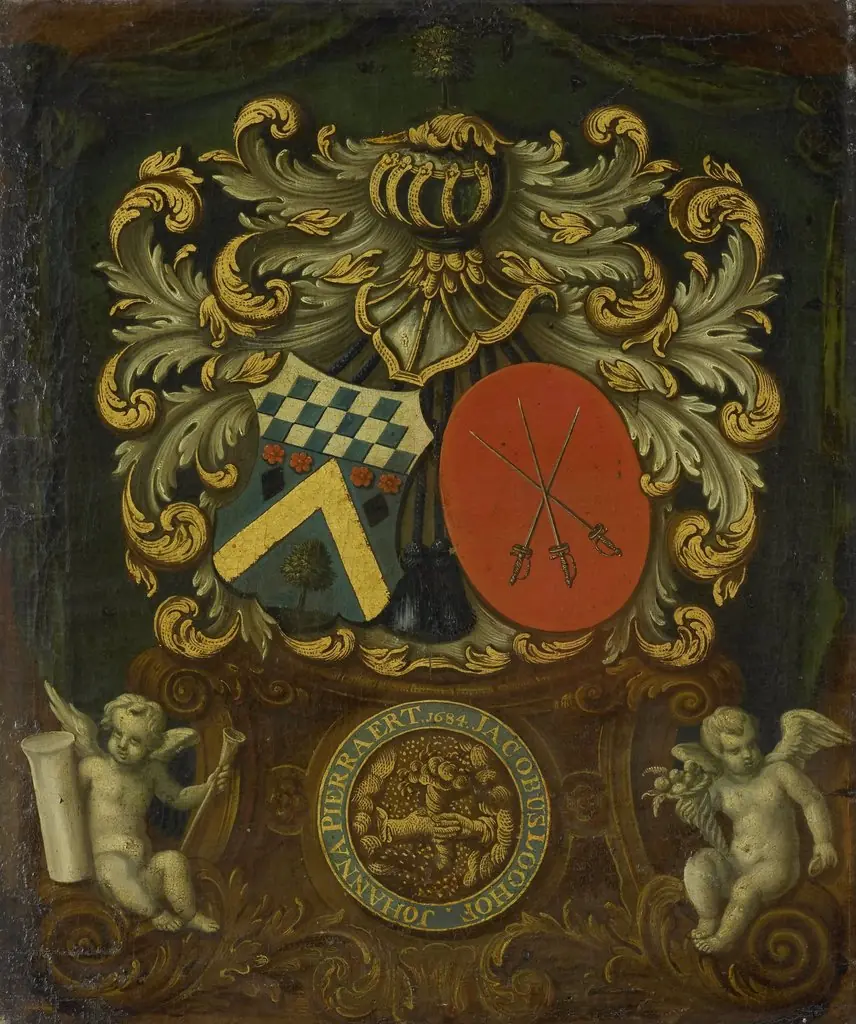 The family shields of Jacobus Loohoff and Johanna Pierraert, 1684
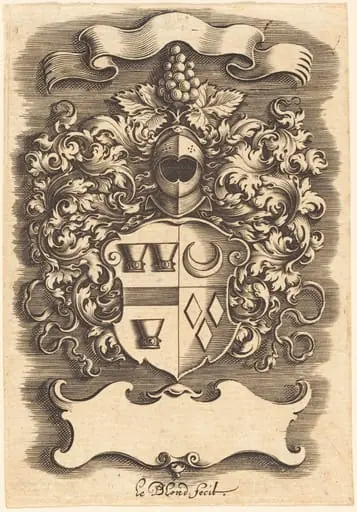 Crest
Crest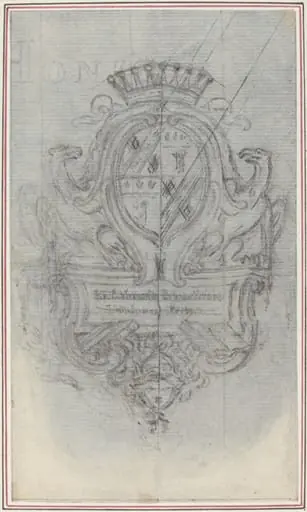 Coat of Arms with Two Eagles