Artwork
Page from Tales of a Parrot (Tuti-nama): text page
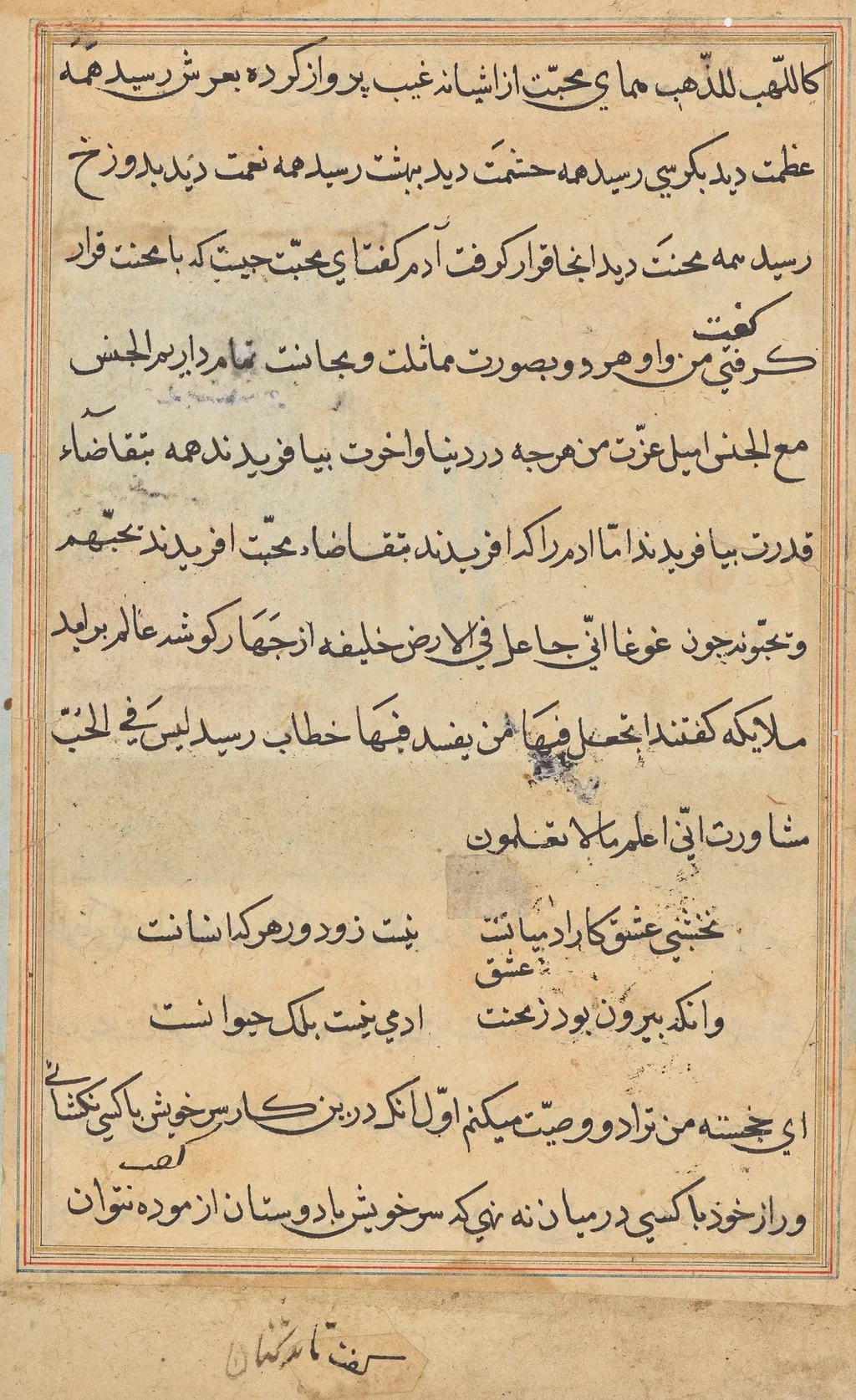
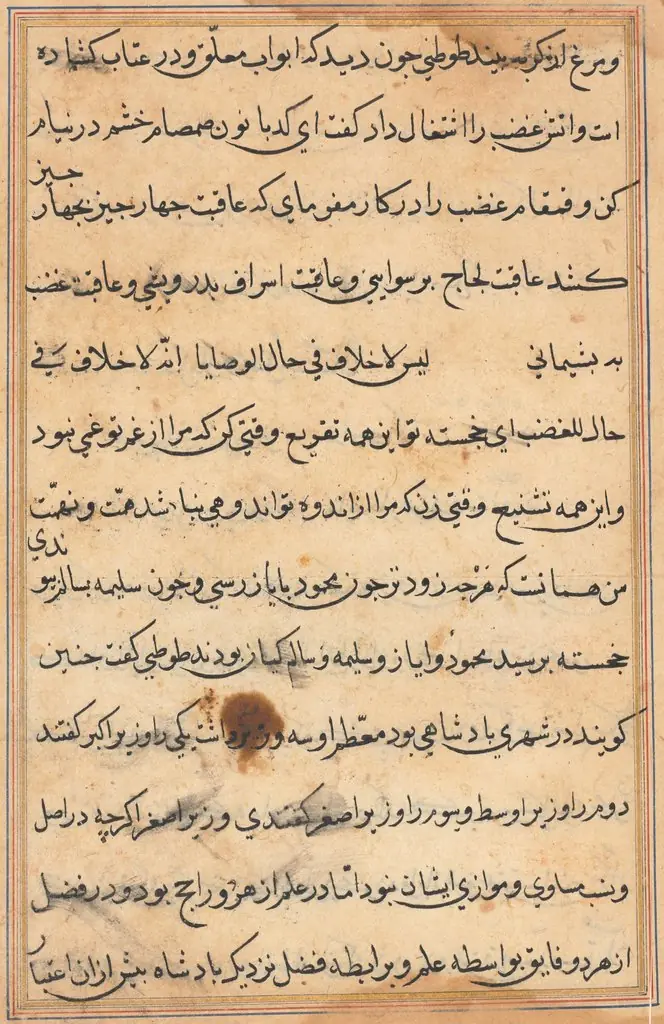
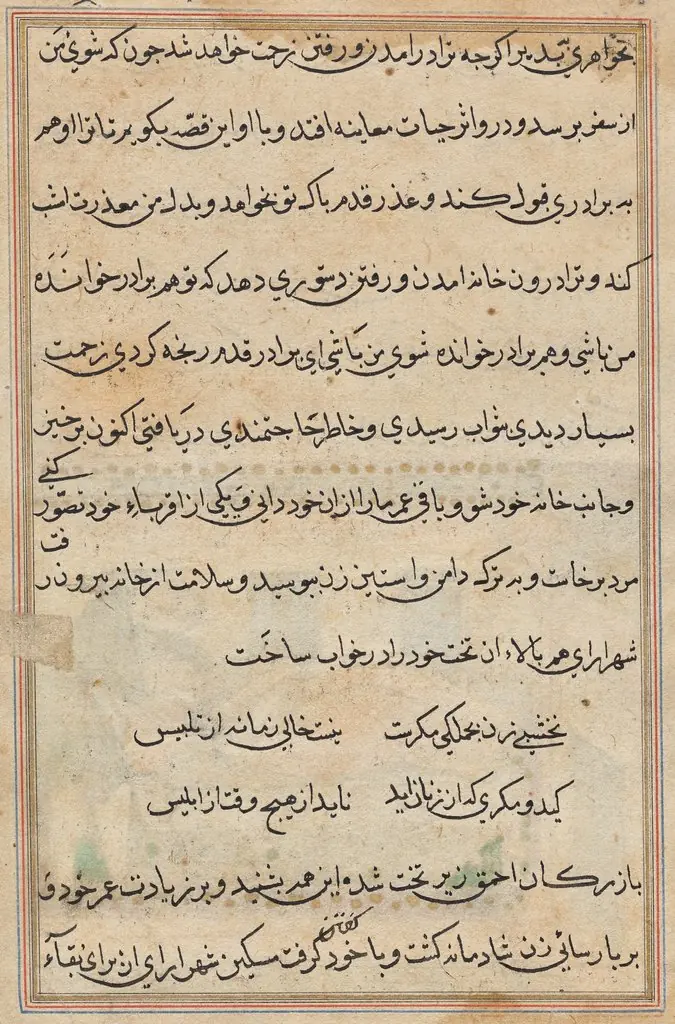
Page from Tales of a Parrot (Tuti-nama): text page is an unspecified painting. It dates from 1560 and is held in the collection of the Cleveland Museum of Art. This object is a single folio from the medieval manuscript known as the *Tales of a Parrot* (Tuti‑nama).
About this work
Overview
This object is a single folio from the medieval manuscript known as the *Tales of a Parrot* (Tuti‑nama). The leaf measures roughly the size of a hand‑held page and retains its original thin border and muted colour palette, indicating its origin as a luxury codex produced for a princely patron.
Subject & Meaning
The page contains a continuous block of text rendered in an unidentified script, suggesting the work was intended for a literate elite audience familiar with the language. The narrative content, though not legible here, forms part of a larger collection of moral and romantic stories traditionally associated with the *Tuti‑nama* tradition.
Technique & Style
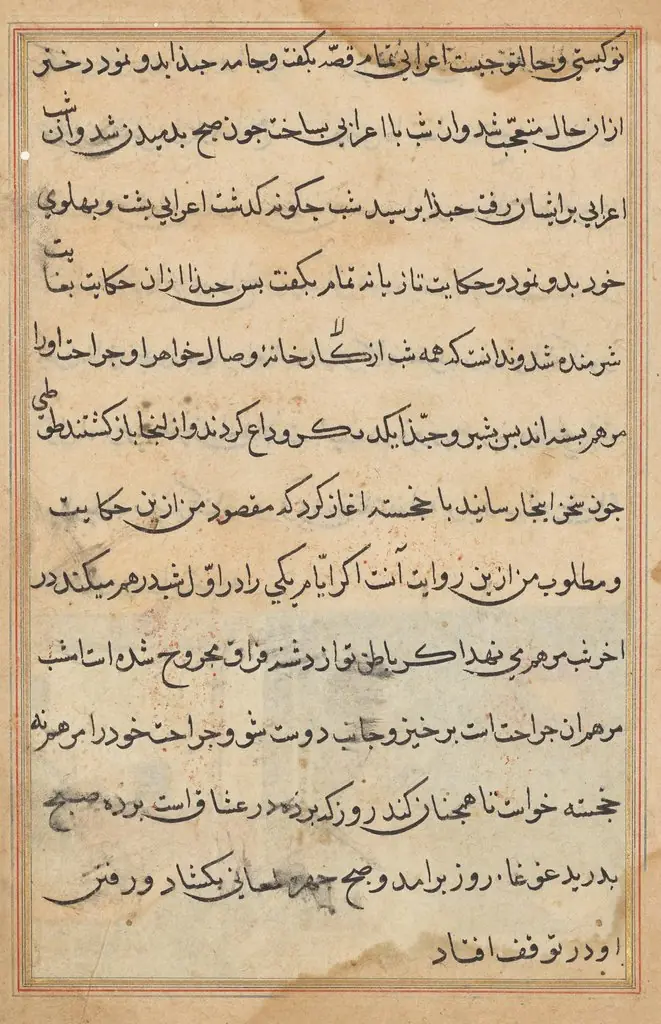
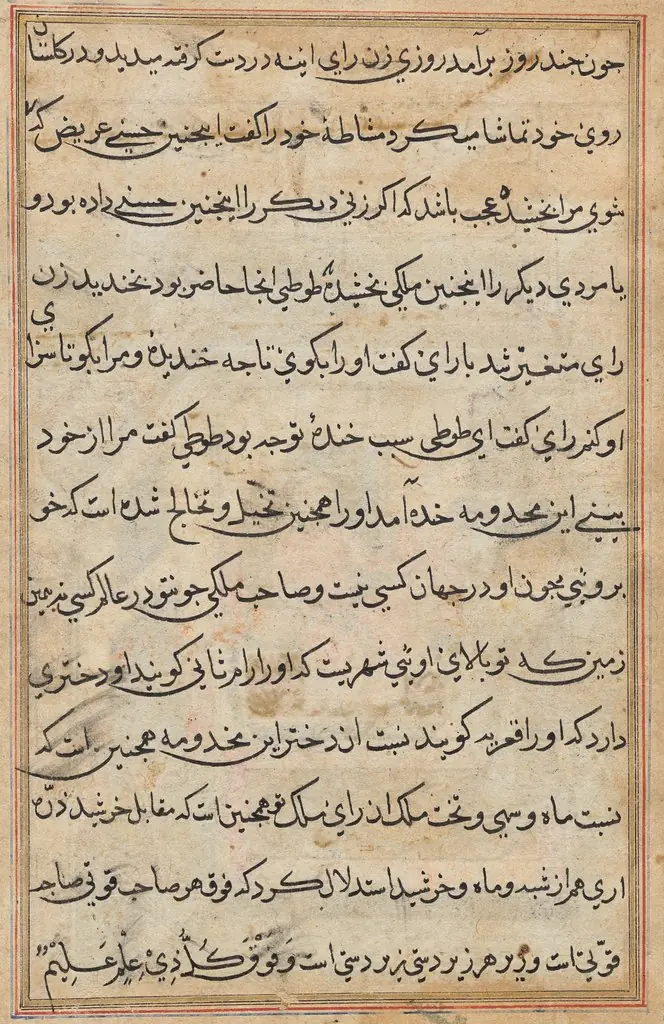
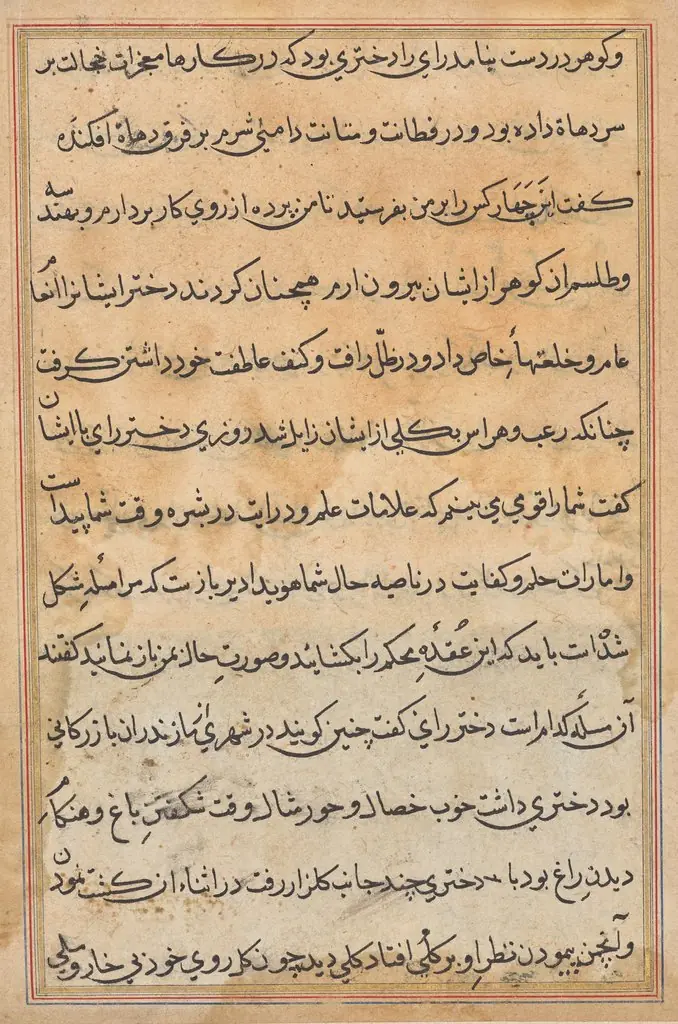
The calligraphy is executed in a fluid, cursive hand, with fine, interlaced strokes that reveal a high degree of scribal skill. The surrounding border is modest, employing subtle pigments that have faded with age, while the parchment itself shows the characteristic wear and discoloration of a centuries‑old document.
History & Provenance
Commissioned for Prince Salim, a member of the Mughal court, the manuscript reflects the patronage practices of the early modern Indian subcontinent. The folio has remained within the collection associated with the prince’s household, providing a tangible link to the cultural milieu of his reign.
Context
The *Tales of a Parrot* belongs to a genre of Persianate literature that blends didactic tales with courtly romance. Such works were often illustrated and illuminated, though this particular leaf emphasizes textual elegance over pictorial decoration, aligning with the tastes of elite patrons who valued literary refinement.
Legacy
Although the script remains undeciphered in this excerpt, the folio contributes to scholarly understanding of manuscript production for royal audiences in the Mughal era. Its preservation offers insight into the material culture of bookmaking and the transmission of literary traditions across South‑Asian courts.
Artist & collection

 Page from Tales of a Parrot (Tuti-nama): text page
 Page from Tales of a Parrot (Tuti-nama): text page
 Page from Tales of a Parrot (Tuti-nama): text page
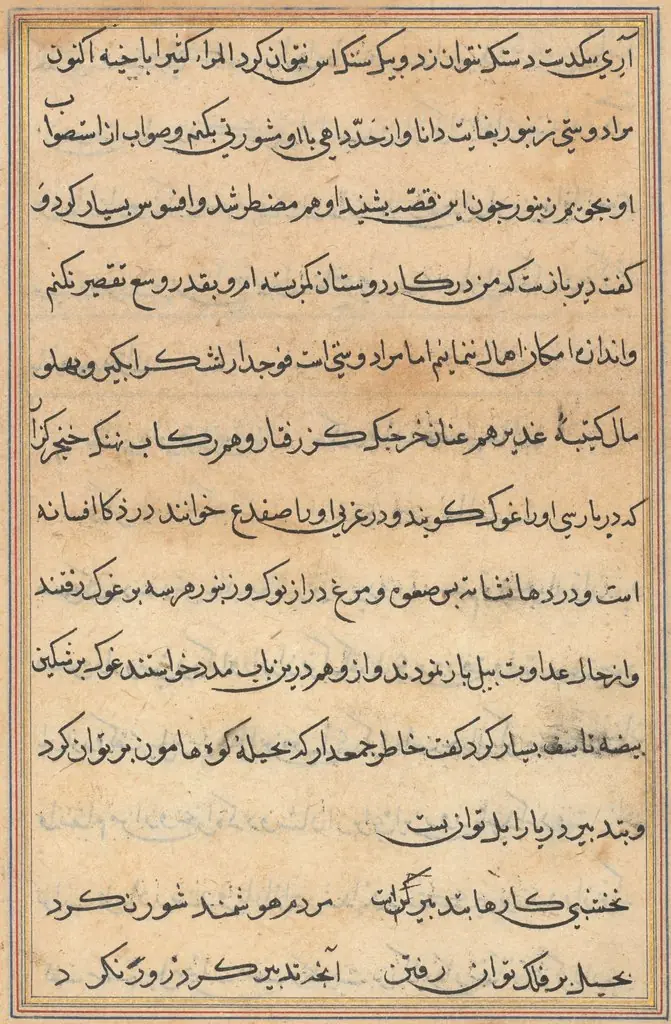 Page from Tales of a Parrot (Tuti-nama): text page
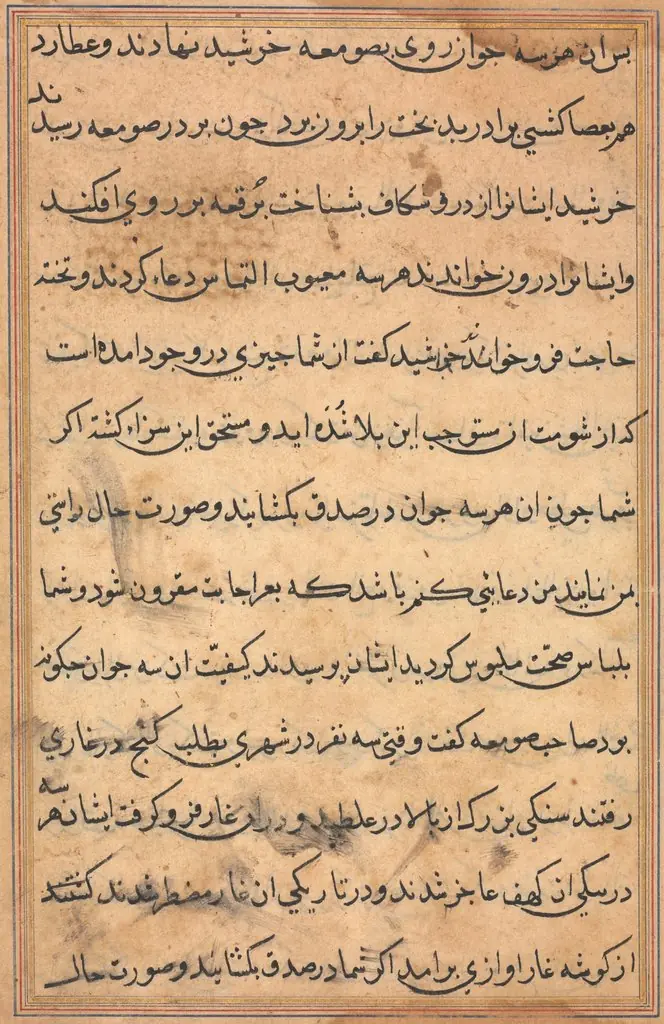 Page from Tales of a Parrot (Tuti-nama): text page
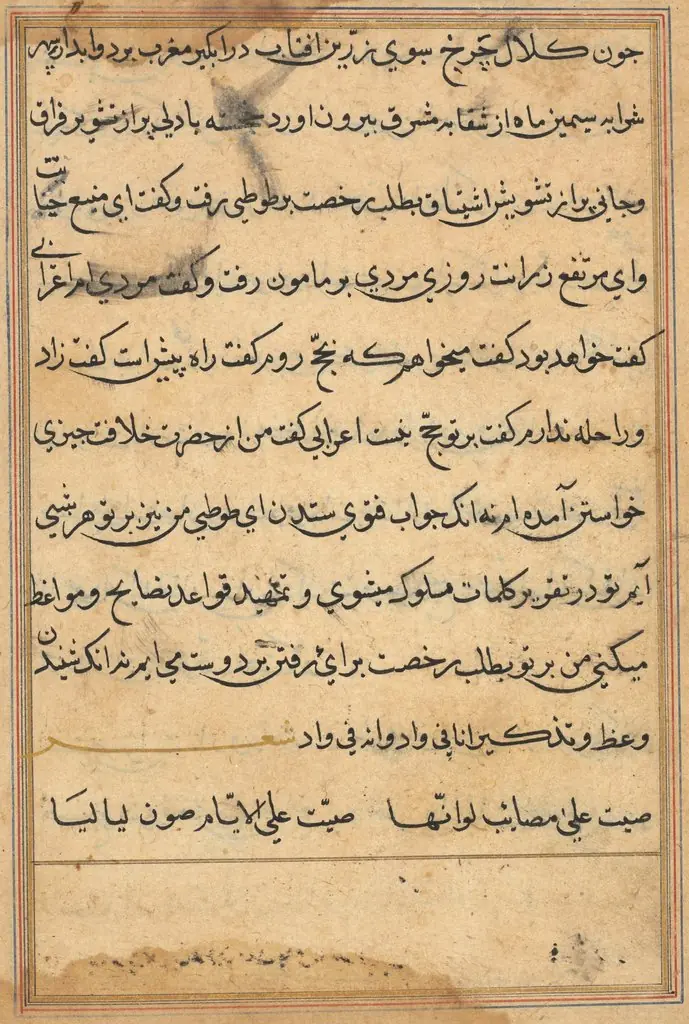 Page from Tales of a Parrot (Tuti-nama): text page
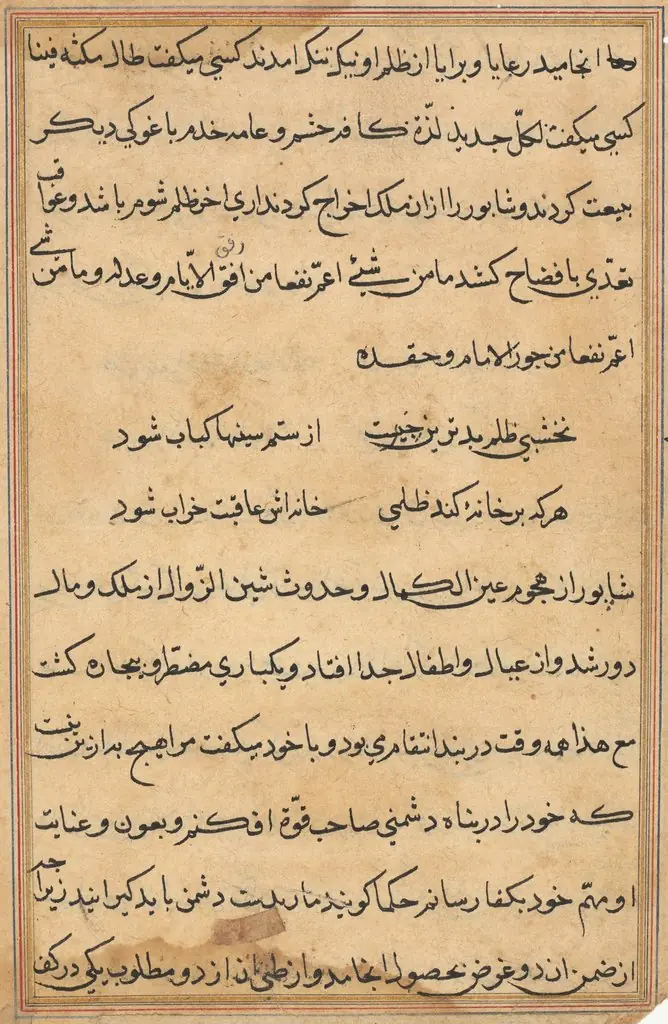 Page from Tales of a Parrot (Tuti-nama): text page
 Page from Tales of a Parrot (Tuti-nama): text page
 Page from Tales of a Parrot (Tuti-nama): text page