Artwork
Page from Tales of a Parrot (Tuti-nama): text page
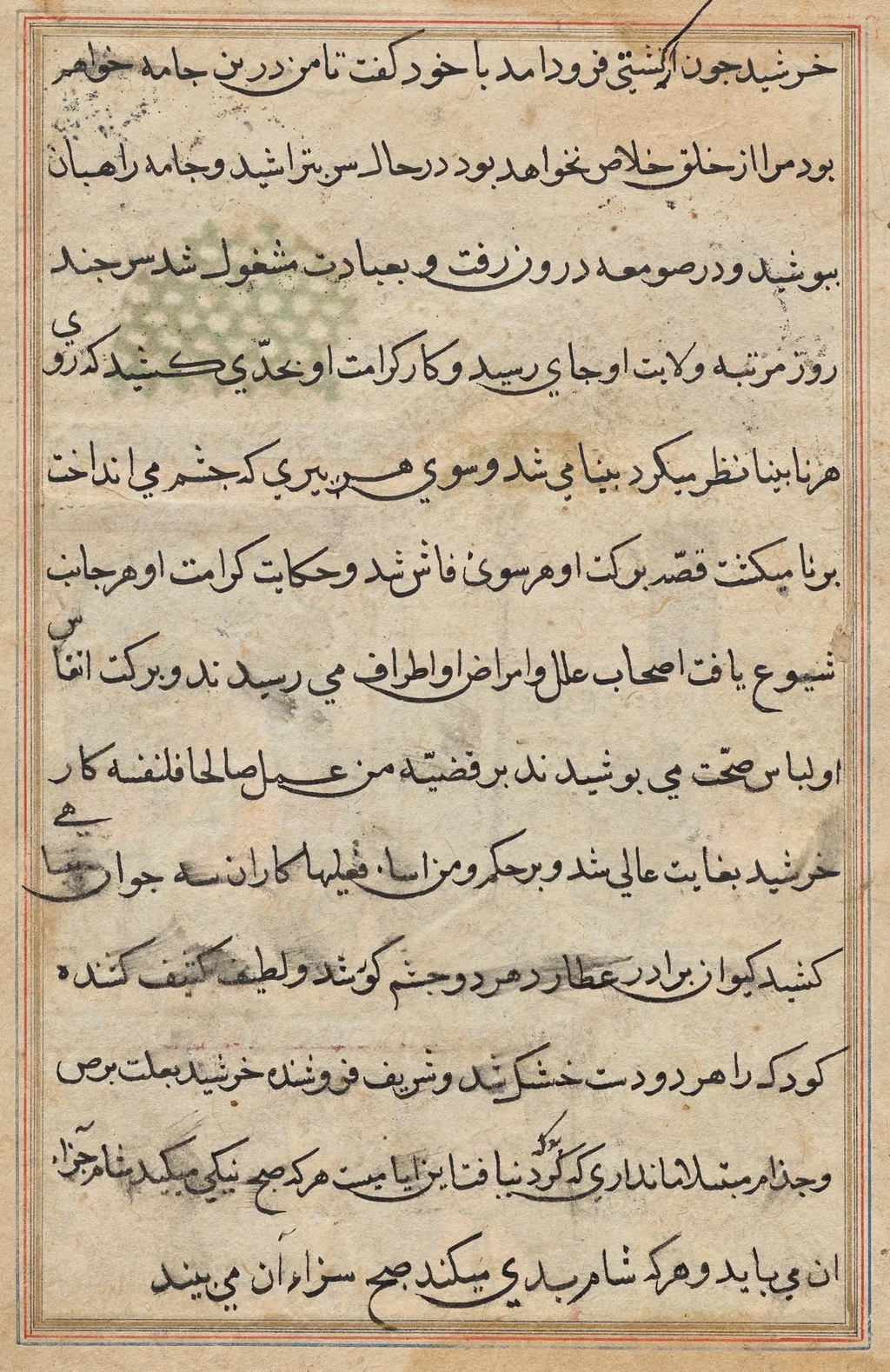
Page from Tales of a Parrot (Tuti-nama): text page is an unspecified painting. It dates from 1560 and is held in the collection of the Cleveland Museum of Art. This object is a single folio from the Persian manuscript *Tales of a Parrot* (Tuti‑nama).
About this work
Overview
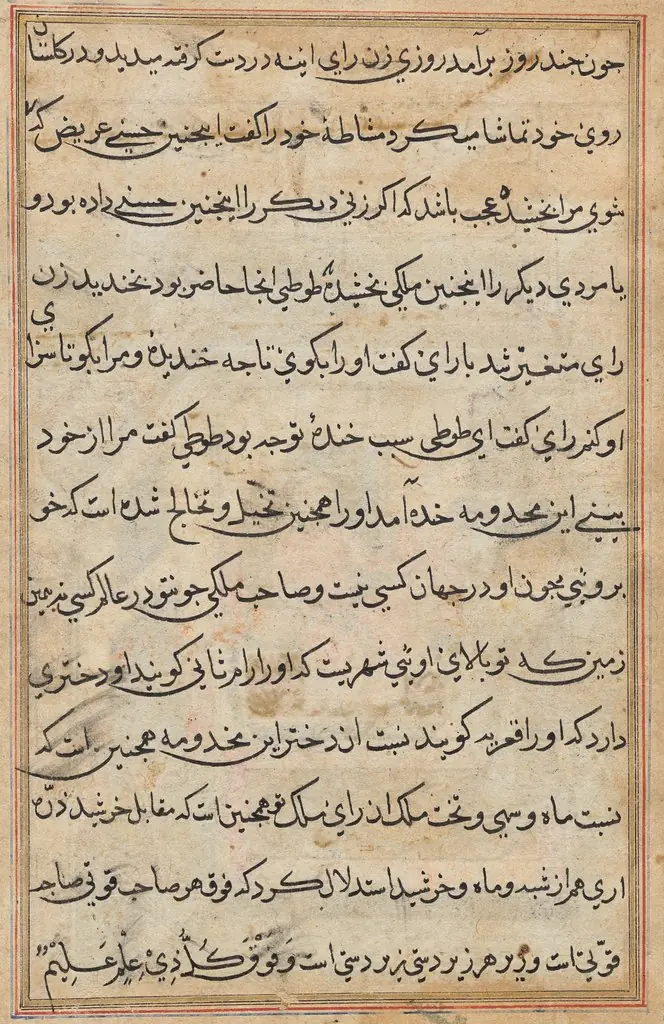
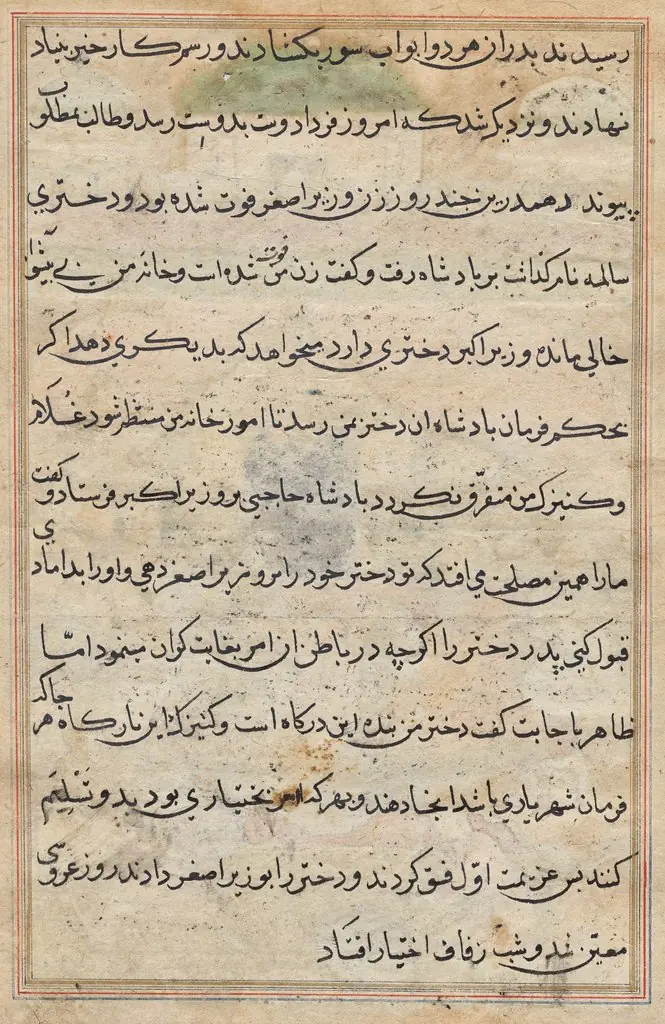
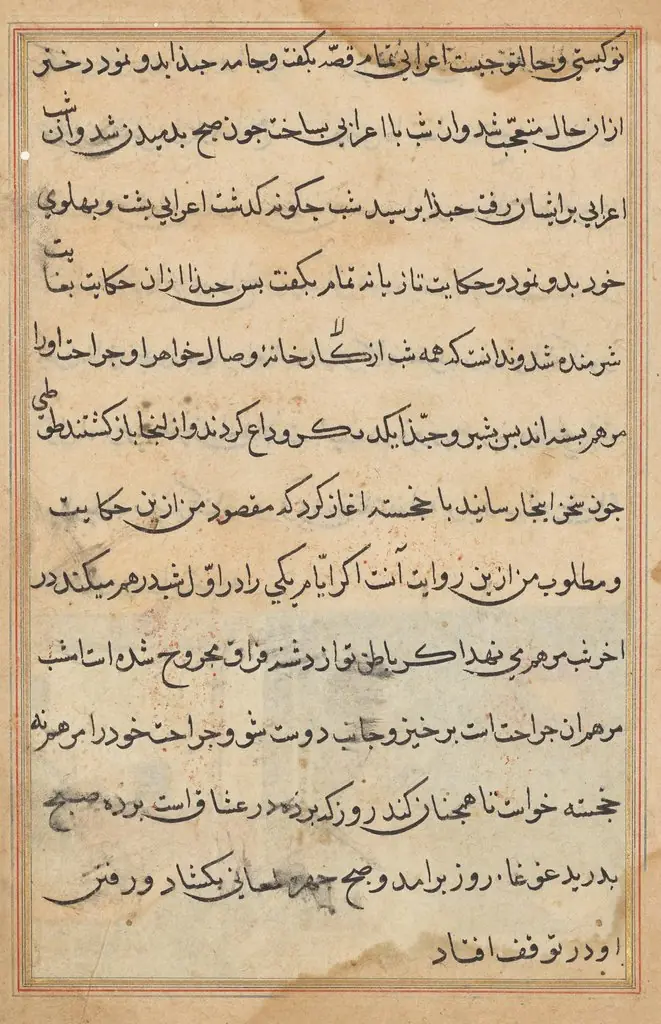
This object is a single folio from the Persian manuscript *Tales of a Parrot* (Tuti‑nama). The page is rendered entirely in black ink, the calligraphy filling the surface in tightly spaced, flowing Arabic script. A narrow red line runs along the edge, framing the text, while the paper itself shows a muted, aged tone with faint discolorations near the top.
Subject & Meaning
The manuscript recounts a series of moral and entertaining stories narrated by a parrot, a popular literary genre in Persian culture that blends didactic lessons with whimsical anecdotes. The dense script on this page reflects the careful transcription of one of those narrative episodes, preserving the original Persian prose.
Technique & Style
The calligrapher employed a fine-point reed pen to produce uniform, curved strokes characteristic of Persian Nastaʿlīq script. The ink is a deep black, applied with consistent pressure, while the thin red border—likely a pigment wash—serves both decorative and structural purposes, delineating the text block.
History & Provenance
The folio originates from an illuminated manuscript tradition that flourished in the Persianate world between the 14th and 17th centuries. Although the exact date and place of production are not specified, the paper’s patina and the style of the script suggest a pre‑modern origin, later entering a Western collection through the art market.
Context
*Tales of a Parrot* belongs to a broader corpus of Persian narrative literature that often employed animal narrators to convey ethical teachings. Such manuscripts were typically commissioned by elite patrons for private reading, and their production involved skilled scribes, calligraphers, and occasionally miniature painters.
Legacy
Pages like this illustrate the high level of craftsmanship in Persian book arts and provide scholars with material evidence of literary transmission across the Islamic world. The folio’s preservation allows contemporary audiences to study the visual and textual conventions of historic Persian storytelling.
Artist & collection

 Page from Tales of a Parrot (Tuti-nama): text page
 Page from Tales of a Parrot (Tuti-nama): text page
 Page from Tales of a Parrot (Tuti-nama): text page
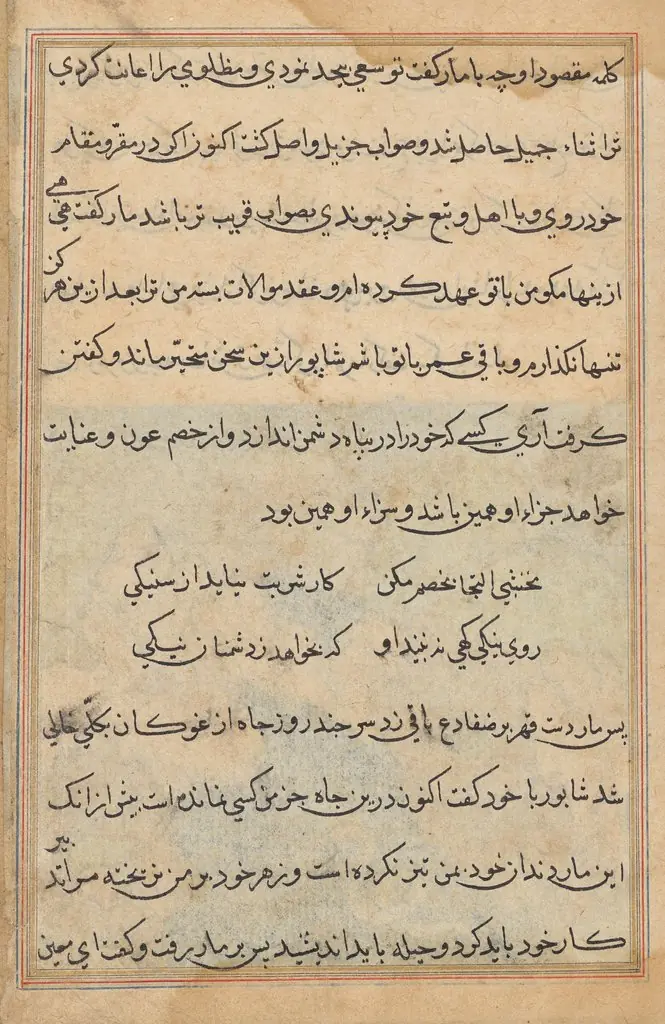 Page from Tales of a Parrot (Tuti-nama): text page
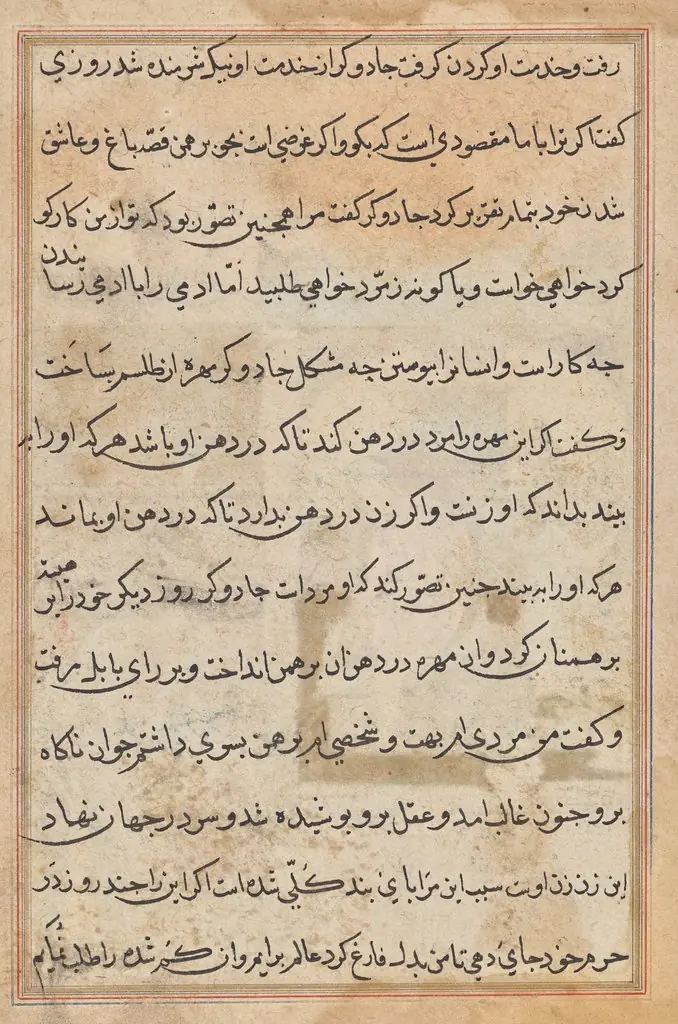 Page from Tales of a Parrot (Tuti-nama): text page
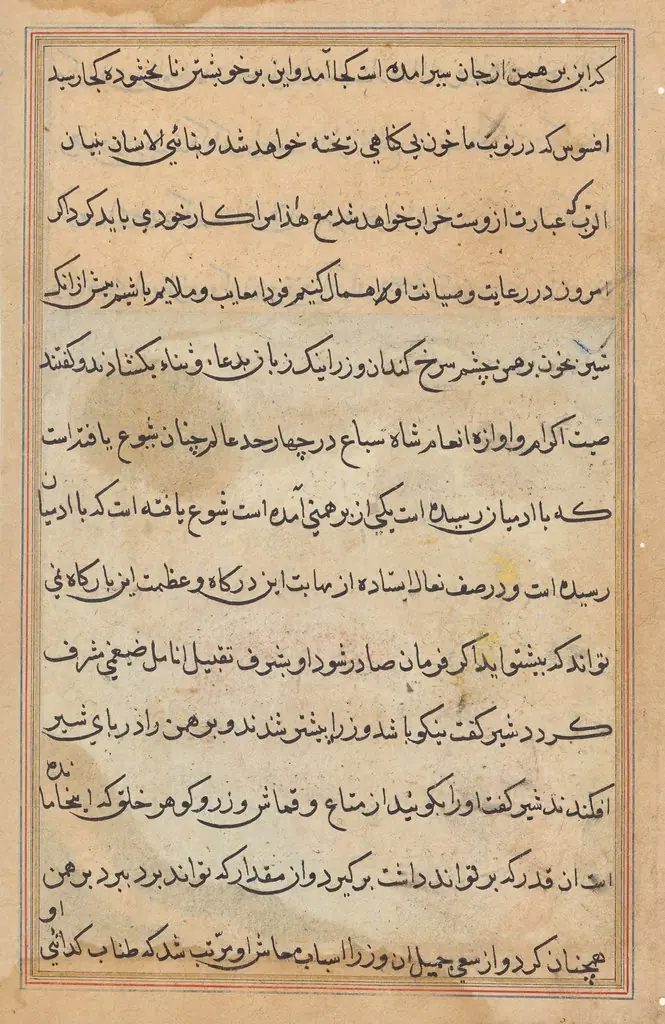 Page from Tales of a Parrot (Tuti-nama): text page
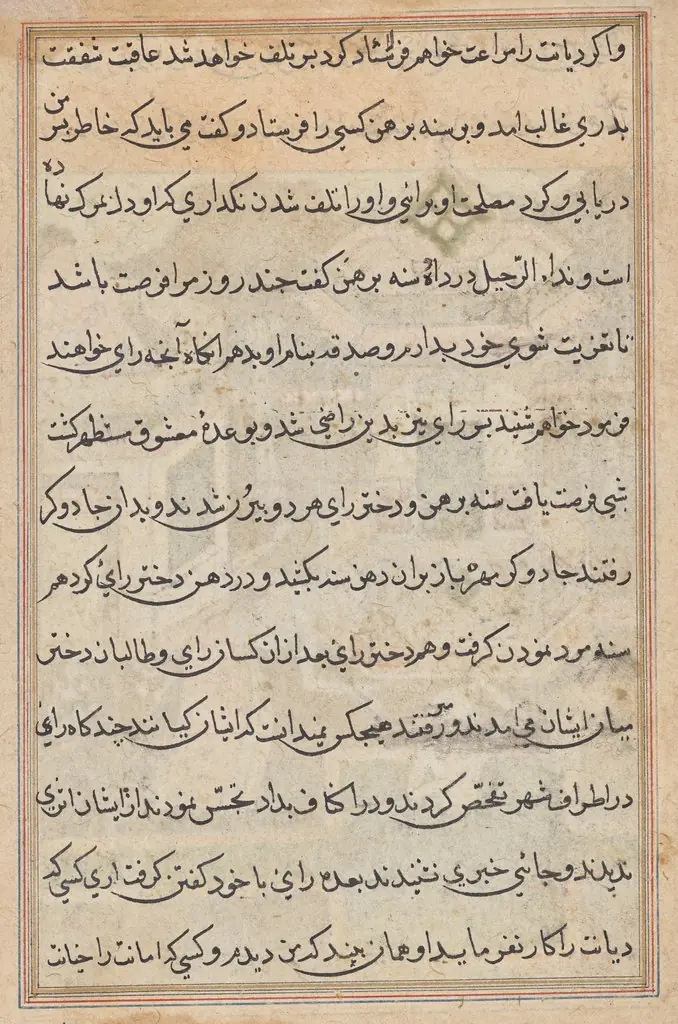 Page from Tales of a Parrot (Tuti-nama): text page
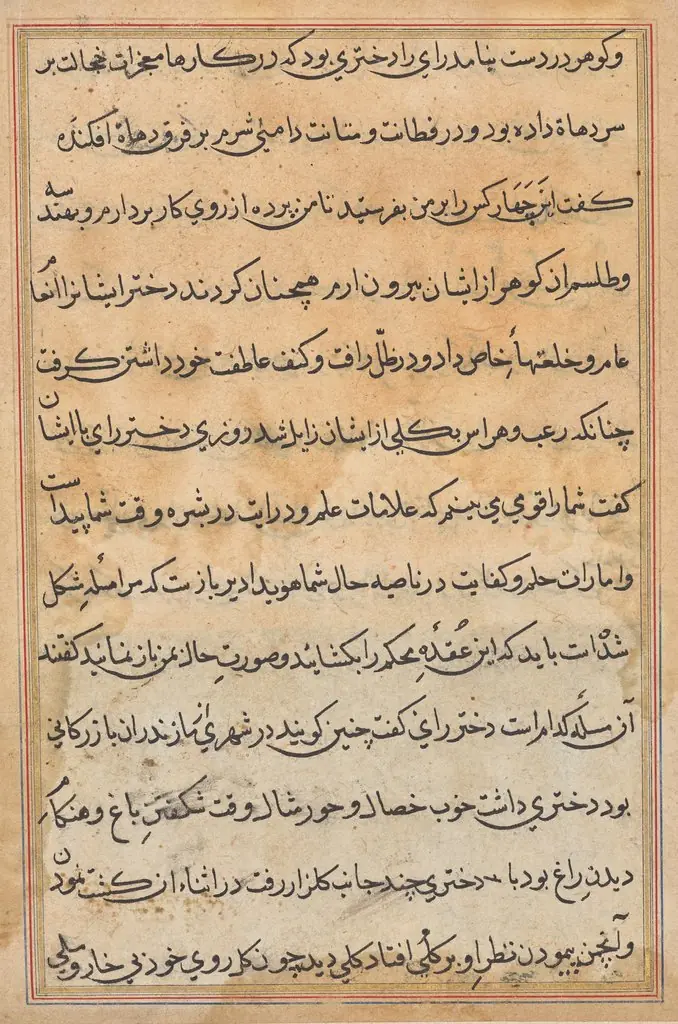 Page from Tales of a Parrot (Tuti-nama): text page
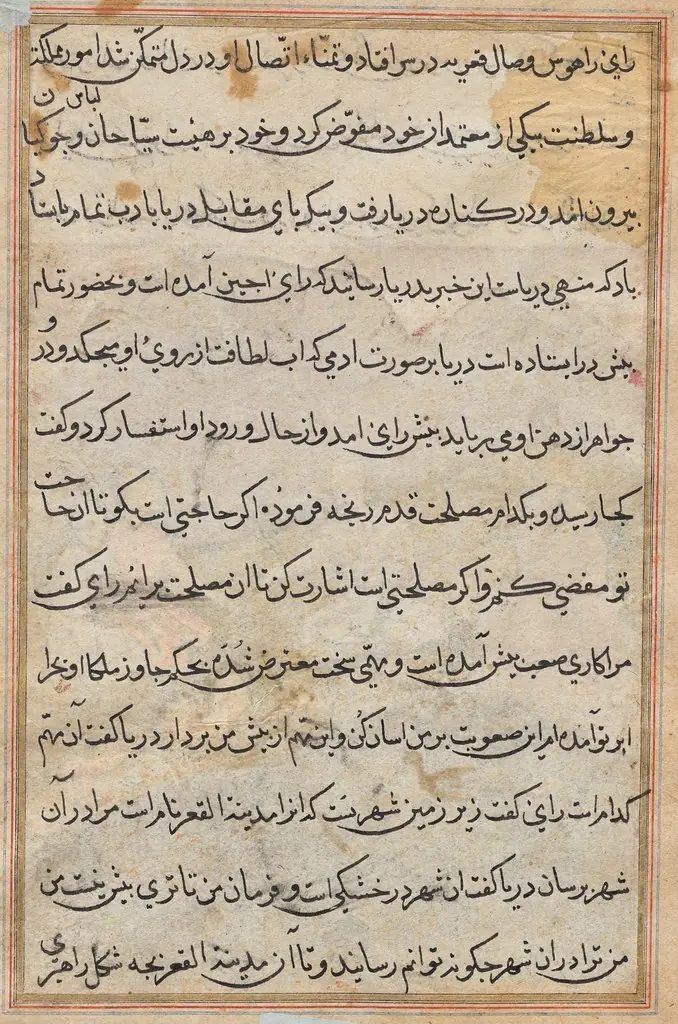 Page from Tales of a Parrot (Tuti-nama): text page
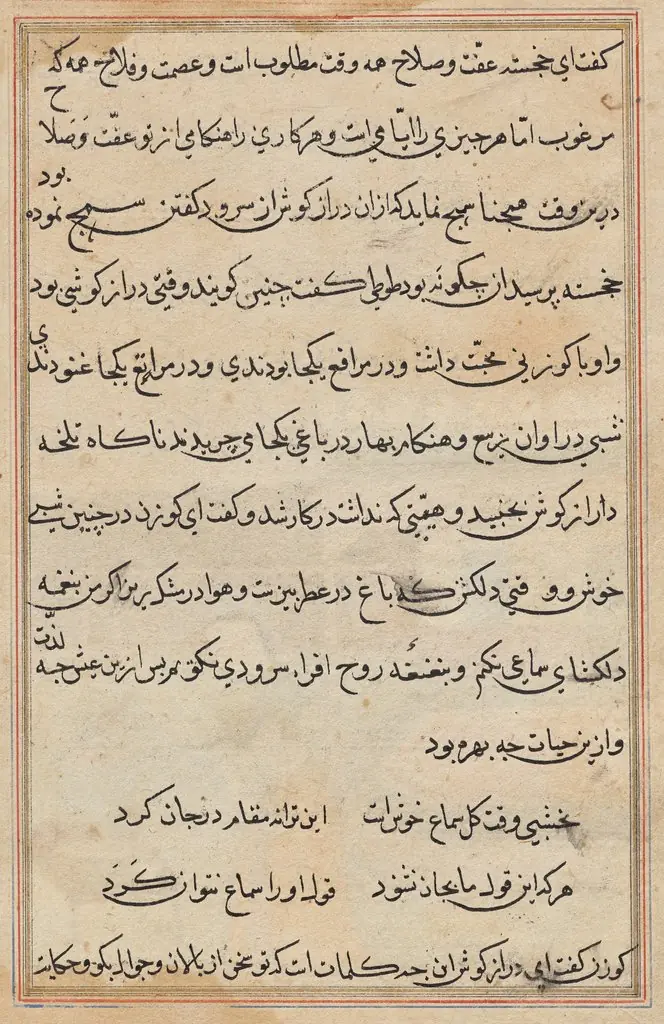 Page from Tales of a Parrot (Tuti-nama): text page
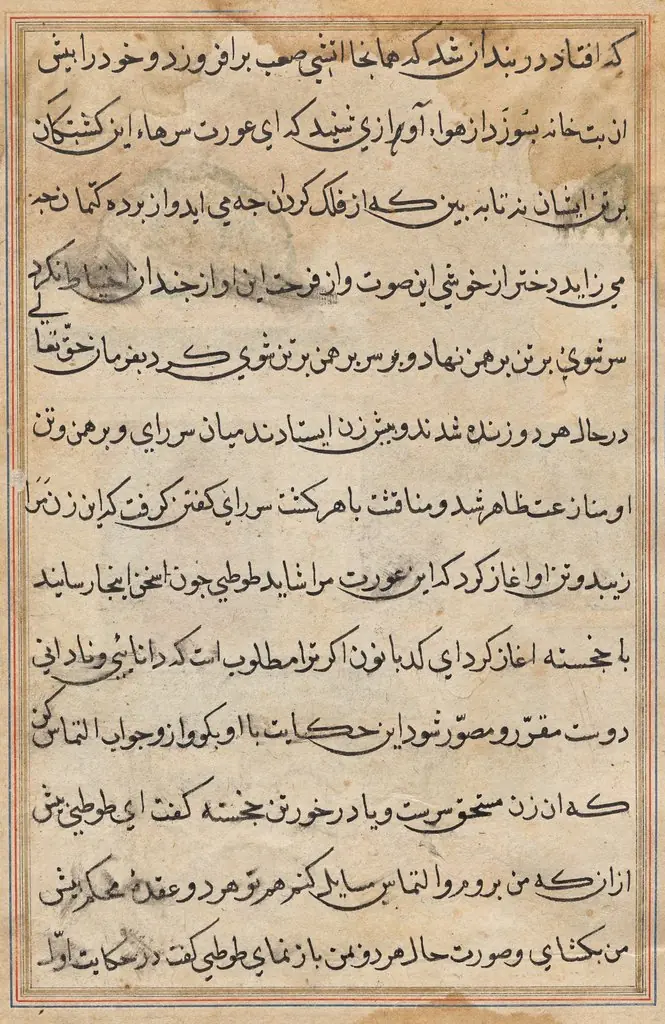 Page from Tales of a Parrot (Tuti-nama): text page