Artwork
The daughter-in-law of the king of Banaras sees the jackal deprived of its food by a bird, as it unsuccessfully attempts to catch a fish, from a Tuti-nama (Tales of a Parrot): Sixteenth Night
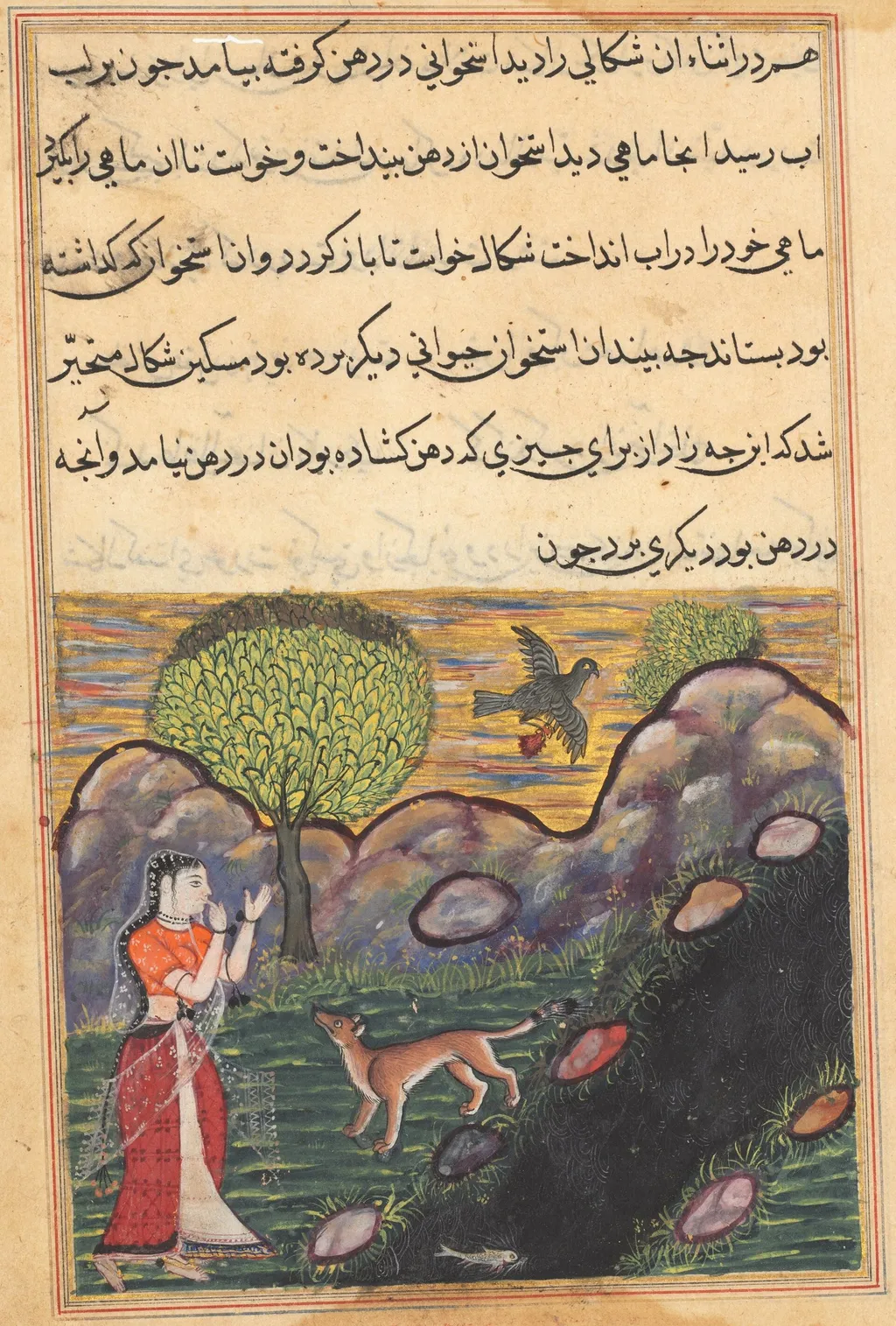
The daughter-in-law of the king of Banaras sees the jackal deprived of its food by a bird, as it unsuccessfully attempts to catch a fish, from a Tuti-nama (Tales of a Parrot): Sixteenth Night is an unspecified painting. It dates from 1560 and is held in the collection of the Cleveland Museum of Art. The work depicts a vividly dressed woman standing on a riverbank while a jackal lunges for a fish that a bird has already snatched.
About this work
Overview
The scene is taken from the sixteenth night of the medieval Persian collection *Tuti‑nama* (Tales of a Parrot), in which animals behave as humans.
The work depicts a vividly dressed woman standing on a riverbank while a jackal lunges for a fish that a bird has already snatched. A tree, scattered rocks and assorted fruits—red and purple—populate the background, and a flowing script crowns the composition. The scene is taken from the sixteenth night of the medieval Persian collection *Tuti‑nama* (Tales of a Parrot), in which animals behave as humans.
Subject & Meaning
The narrative illustrates a moment of animal rivalry observed by the king of Banaras’s daughter‑in‑law. The jackal’s failure to secure its prey, contrasted with the bird’s swift theft, underscores themes of competition and the capriciousness of fortune, common motifs in the *Tuti‑nama*’s moral storytelling tradition.
Technique & Style
Executed in bold, saturated hues, the painting relies on clear, decisive lines to delineate figures and action. The artist’s use of bright red and white for the female figure draws immediate attention, while the stylized rendering of flora and fruit adds decorative richness without detracting from the central drama.
History & Provenance
The piece originates from a manuscript tradition of the sixteenth‑century Persian *Tuti‑nama* and was likely produced for a courtly audience familiar with the text’s allegorical tales. It entered the collection of the Cleveland Museum of Art through a mid‑20th‑century acquisition of South Asian miniature paintings, where it remains catalogued as a representative example of narrative illustration.
Artist & collection

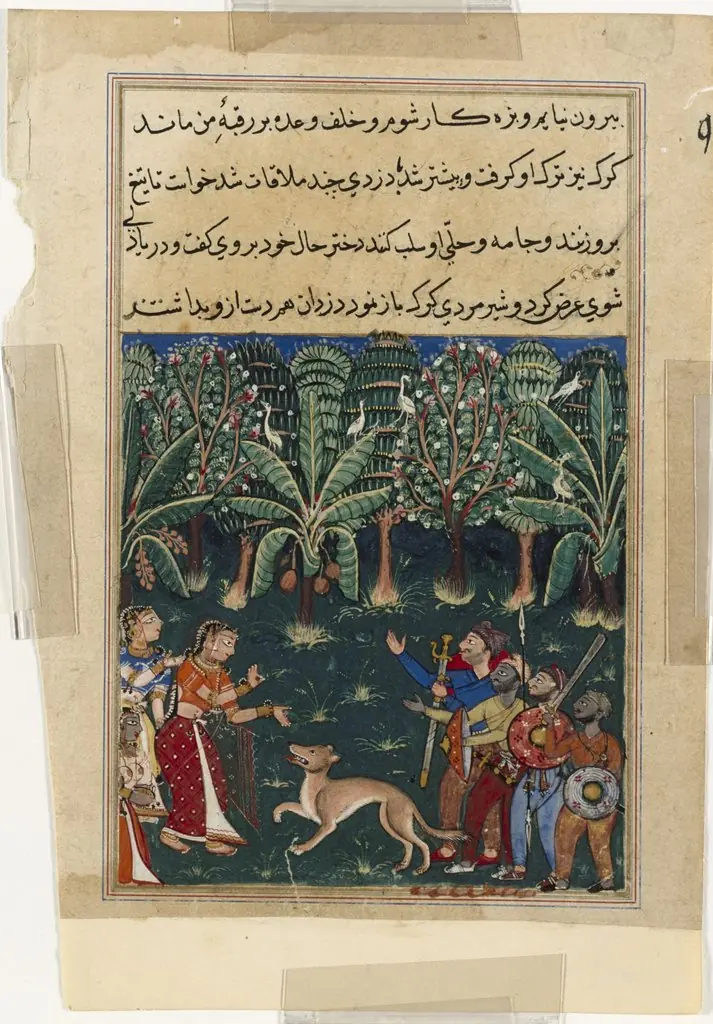 The merchant’s daughter encounters a wolf and bandits on her way to meet the gardener in order to keep her promise, from a Tuti-nama (Tales of a Parrot): Twelfth Night
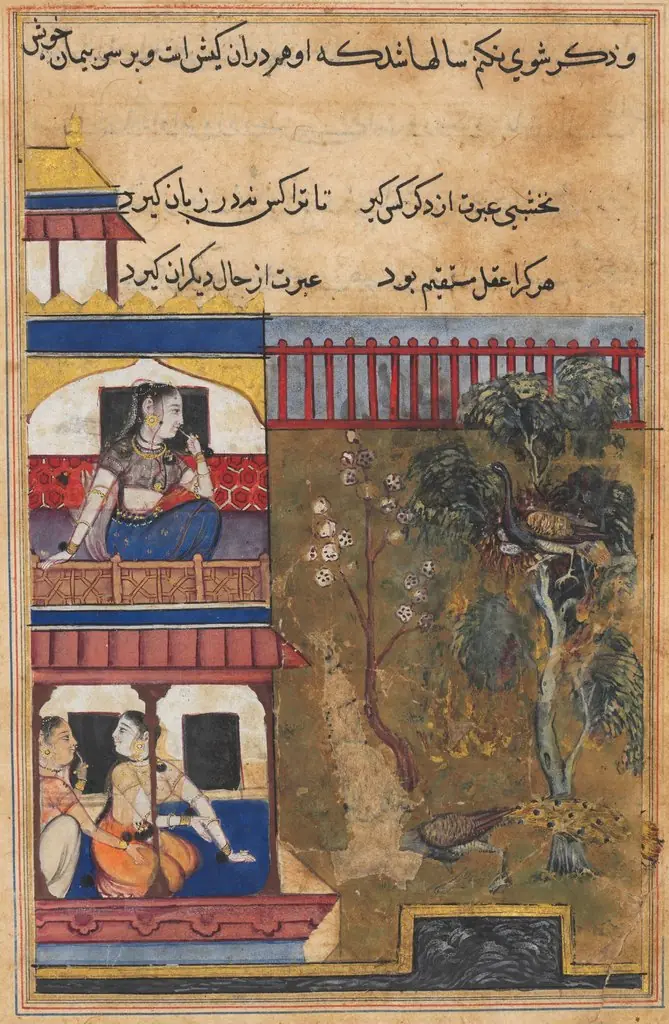 The queen of Rum watches the peahen prefer to burn rather than abandon her eggs while the peacock flees the nest, from a Tuti-nama (Tales of a Parrot): Thirty-ninth Night
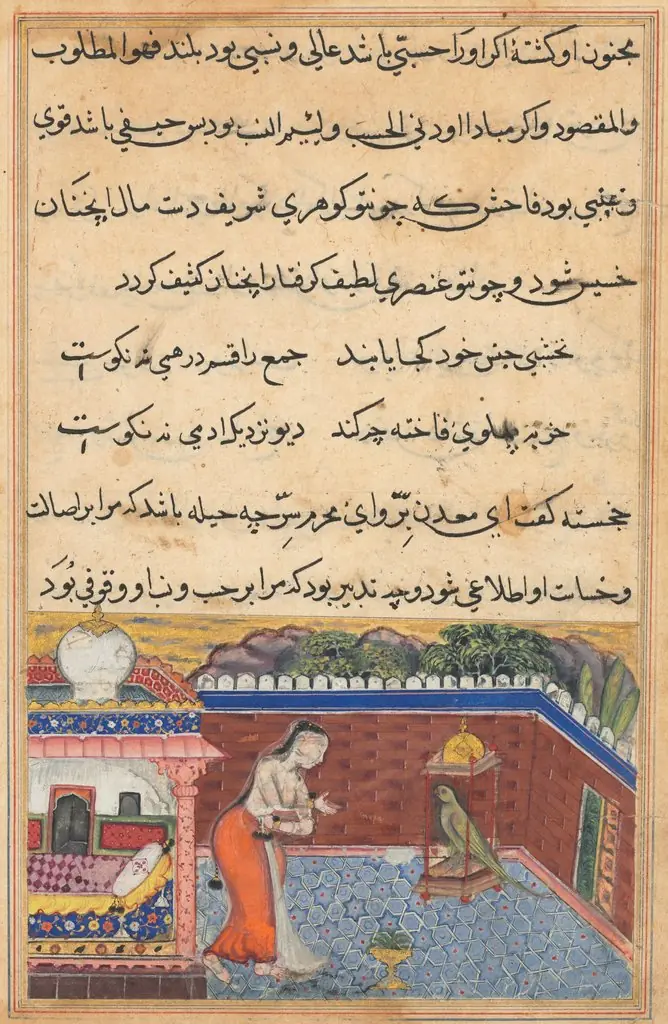 The parrot addresses Khujasta at the beginning of the thirty-first night, from a Tuti-nama (Tales of a Parrot)
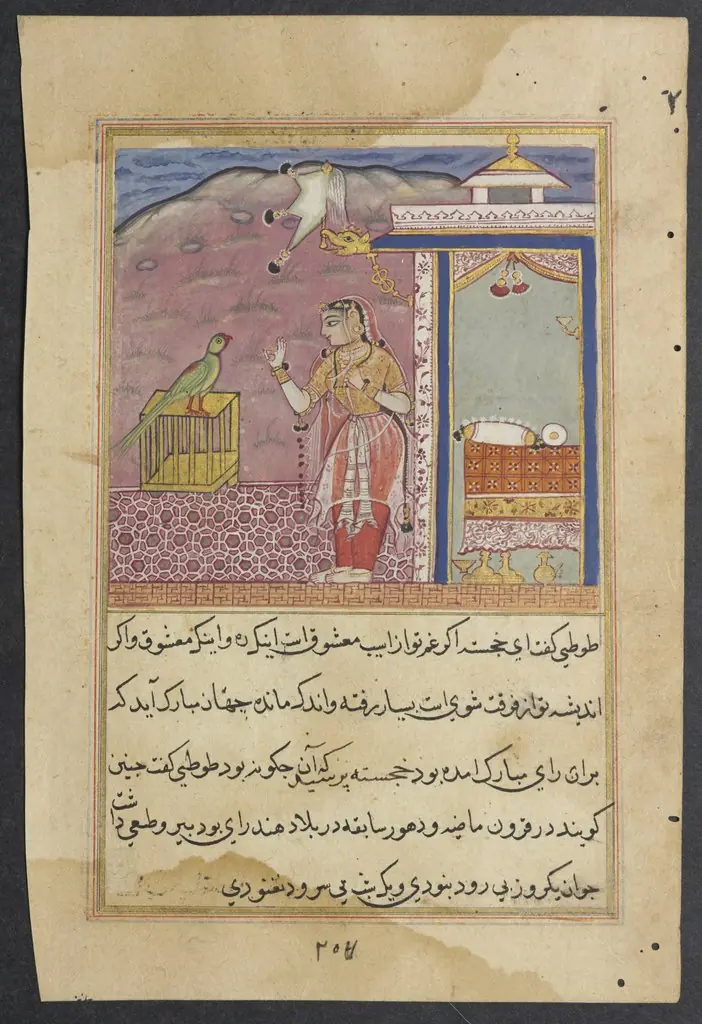 The parrot addresses Khujasta at the beginning of the forty-fourth night, from a Tuti-nama (Tales of a Parrot)
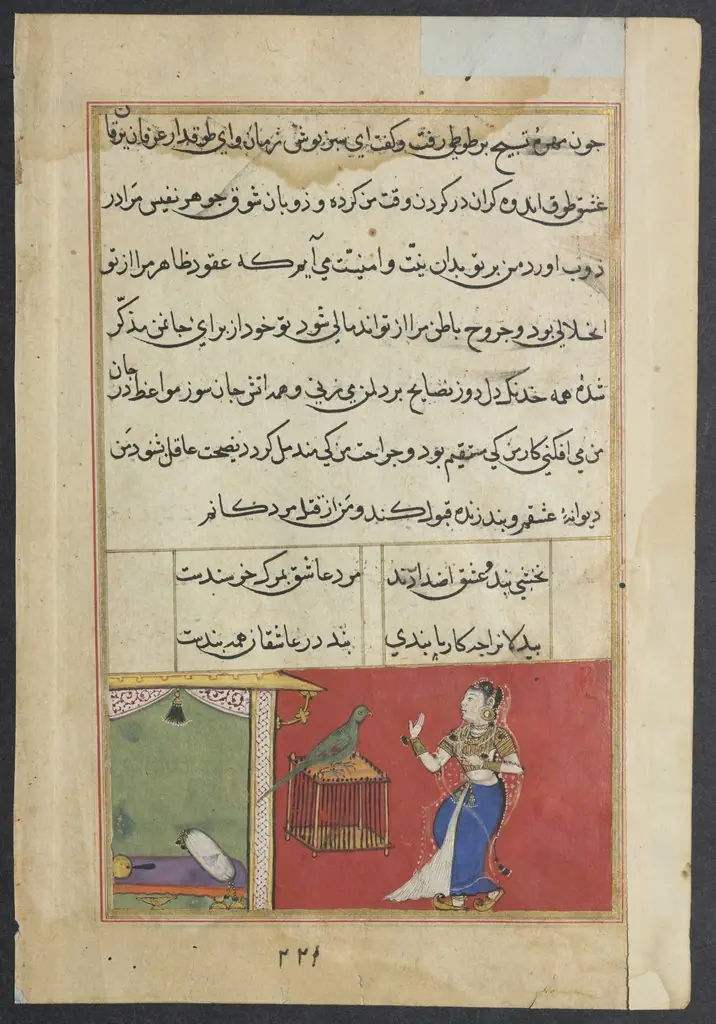 The parrot addresses Khujasta at the beginning of the forty-seventh night, from a Tuti-nama (Tales of a Parrot): Forty-seventh Night
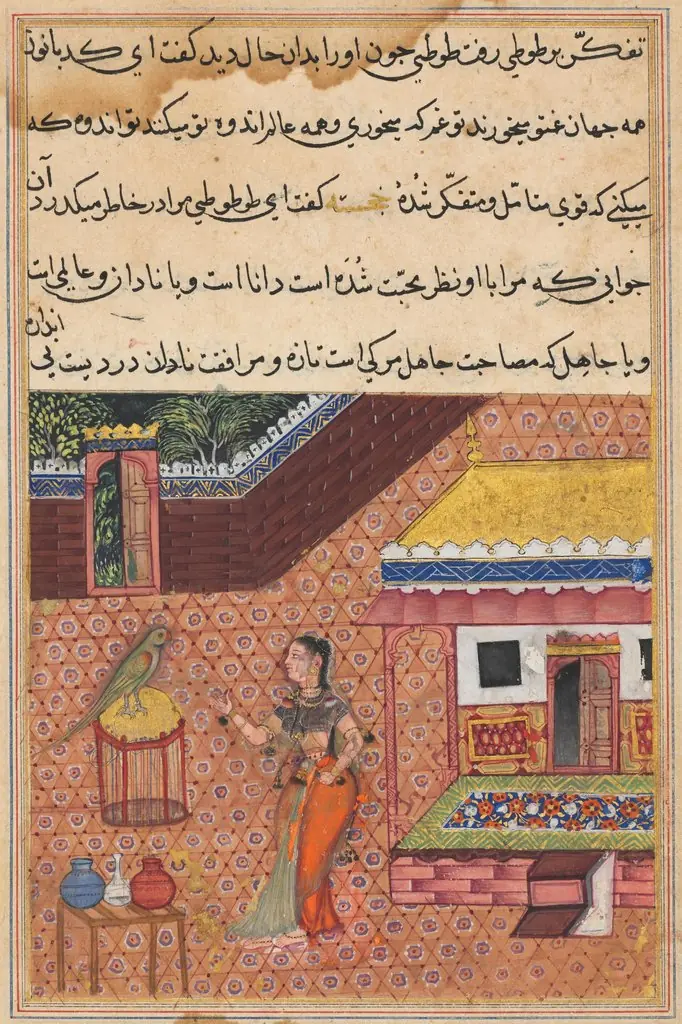 The parrot addresses Khujasta at the beginning of the thirty-fourth night, from a Tuti-nama (Tales of a Parrot)
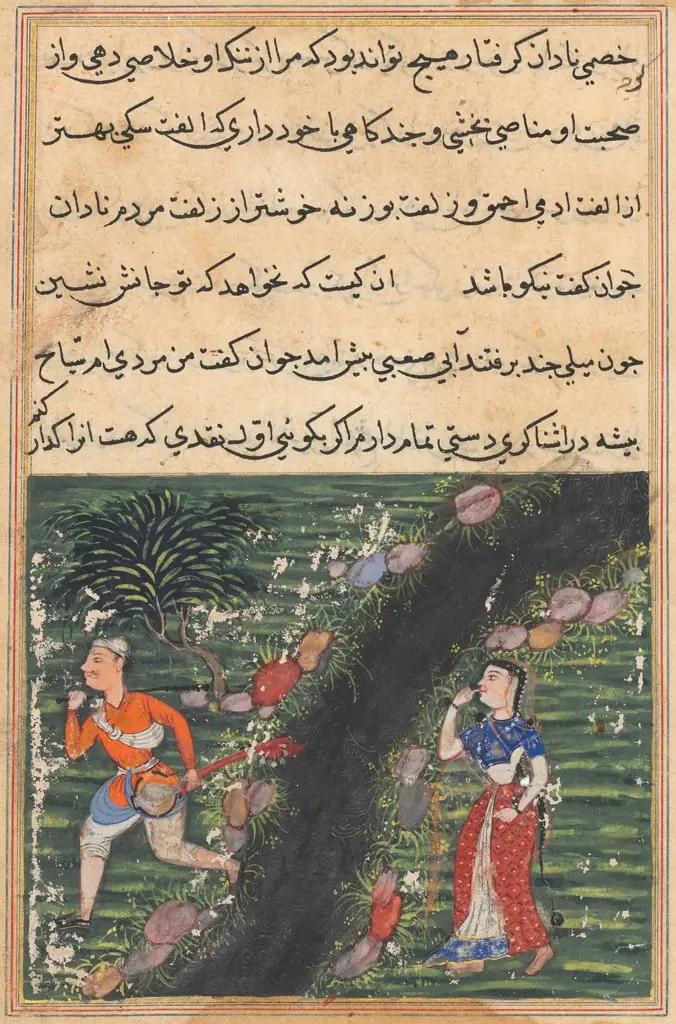 The vagabond crosses a stream with the possessions of the daughter-in-law of the king of Banaras and absconds, from a Tuti-nama (Tales of a Parrot): Sixteenth Night
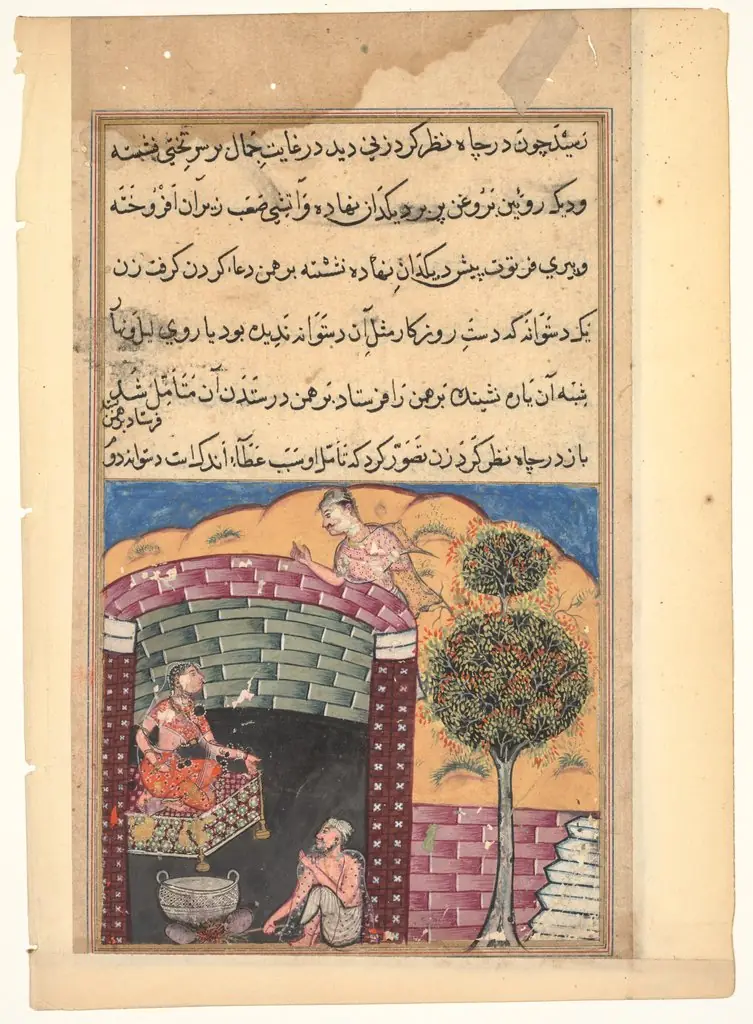 The Brahman gambler sees the daughter of the king of the jinns in a pit together with an old man and a cauldron of boiling oil, from a Tuti-nama (Tales of a Parrot: Seventh Night)
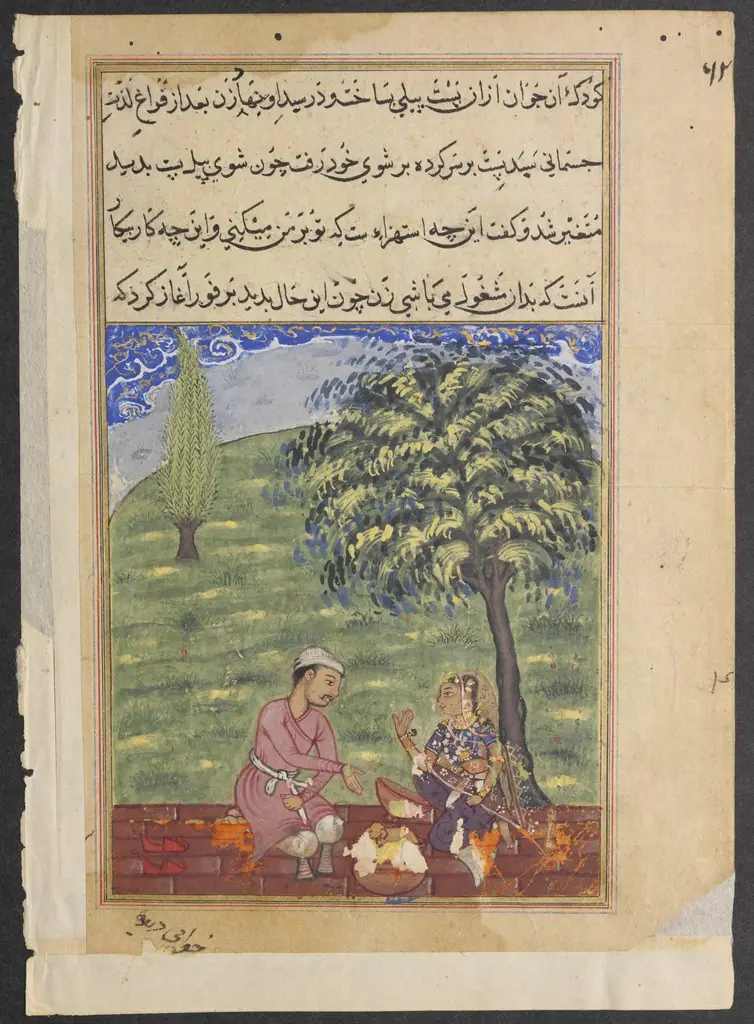 The unfaithful wife explaining away the presence of the dough elephant, from a Tuti-nama (Tales of a Parrot): Eighth Night
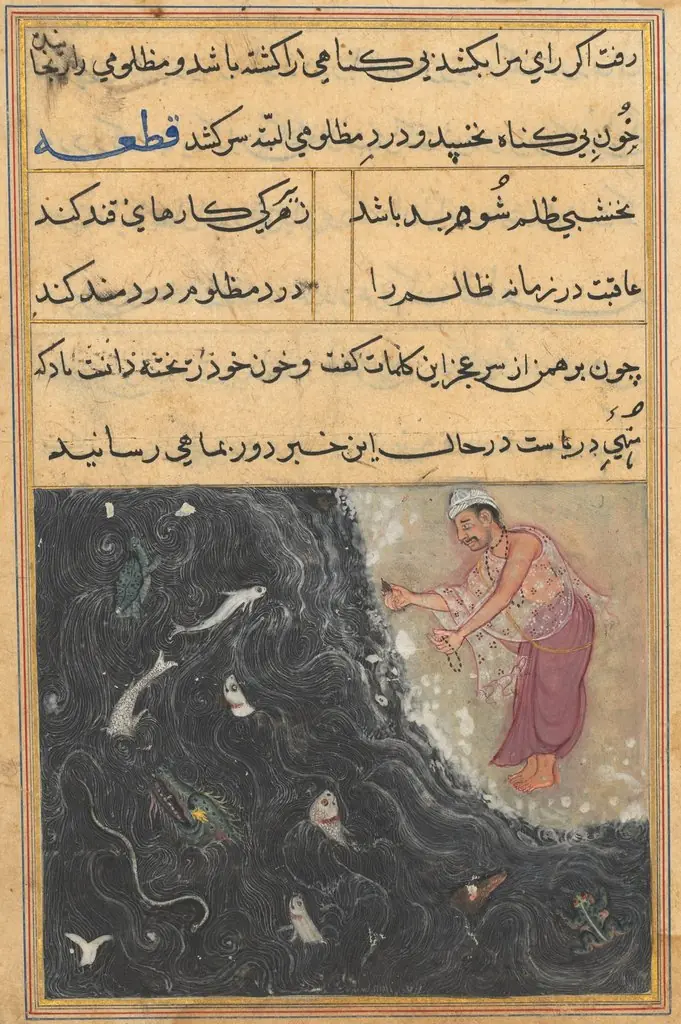 The Brahman’s predicament is conveyed by the wind to the fish who carries the news to the king of the Ocean, from a Tuti-nama (Tales of a Parrot): Eleventh Night