Artwork
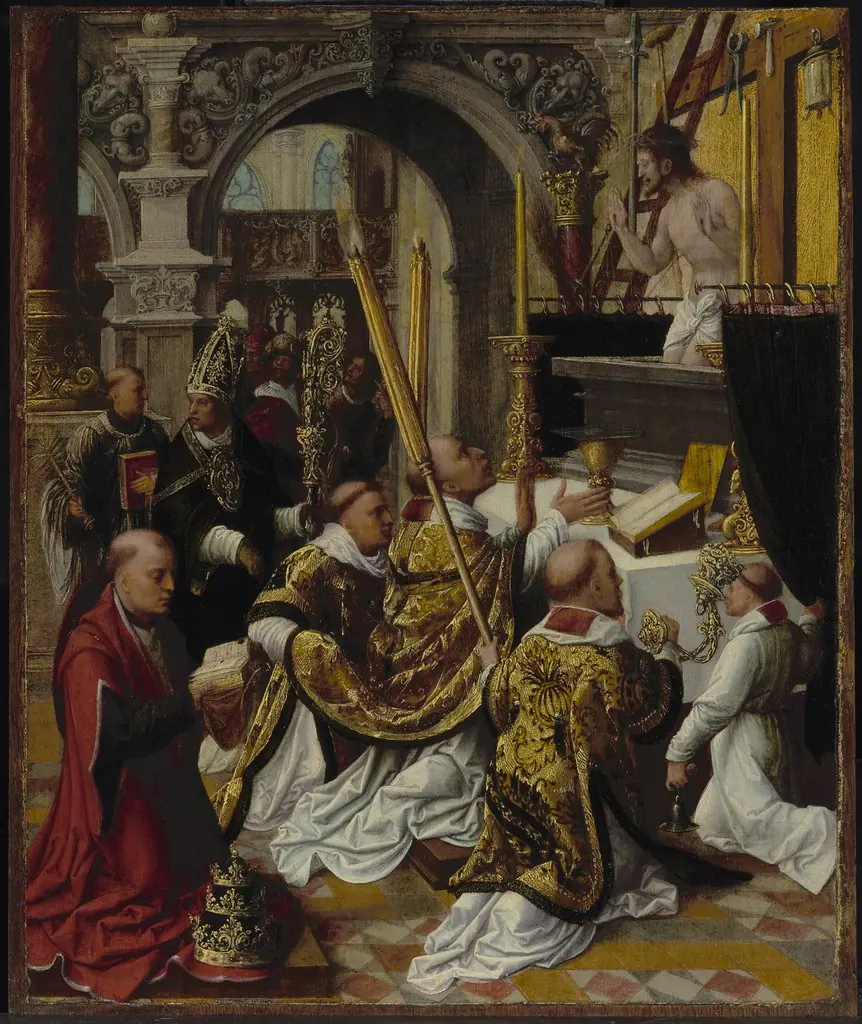
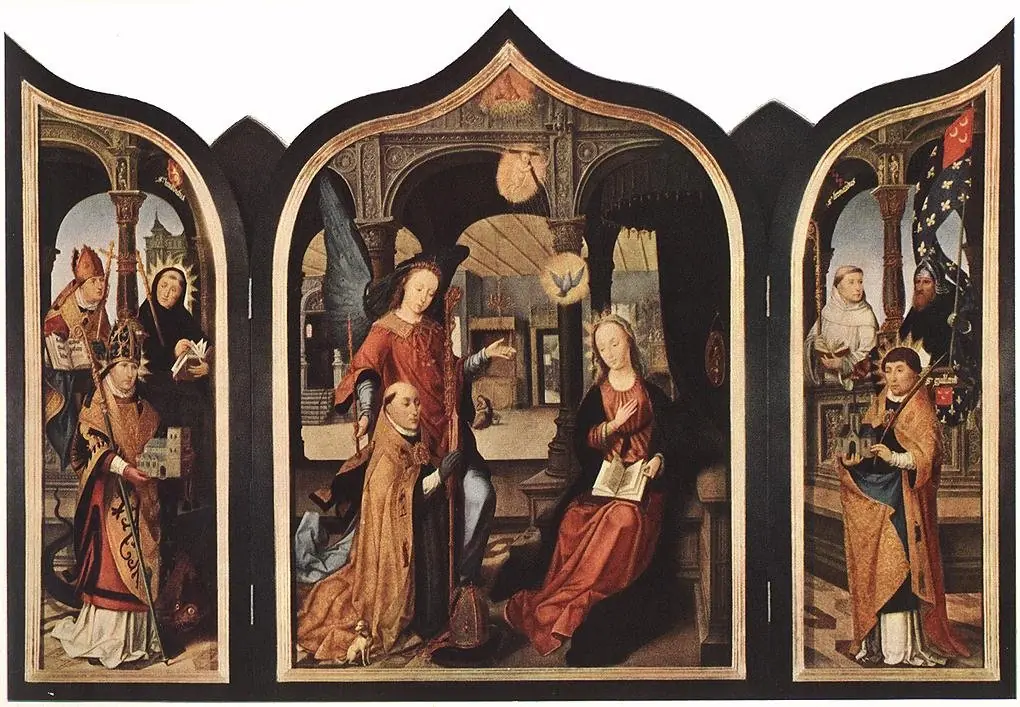
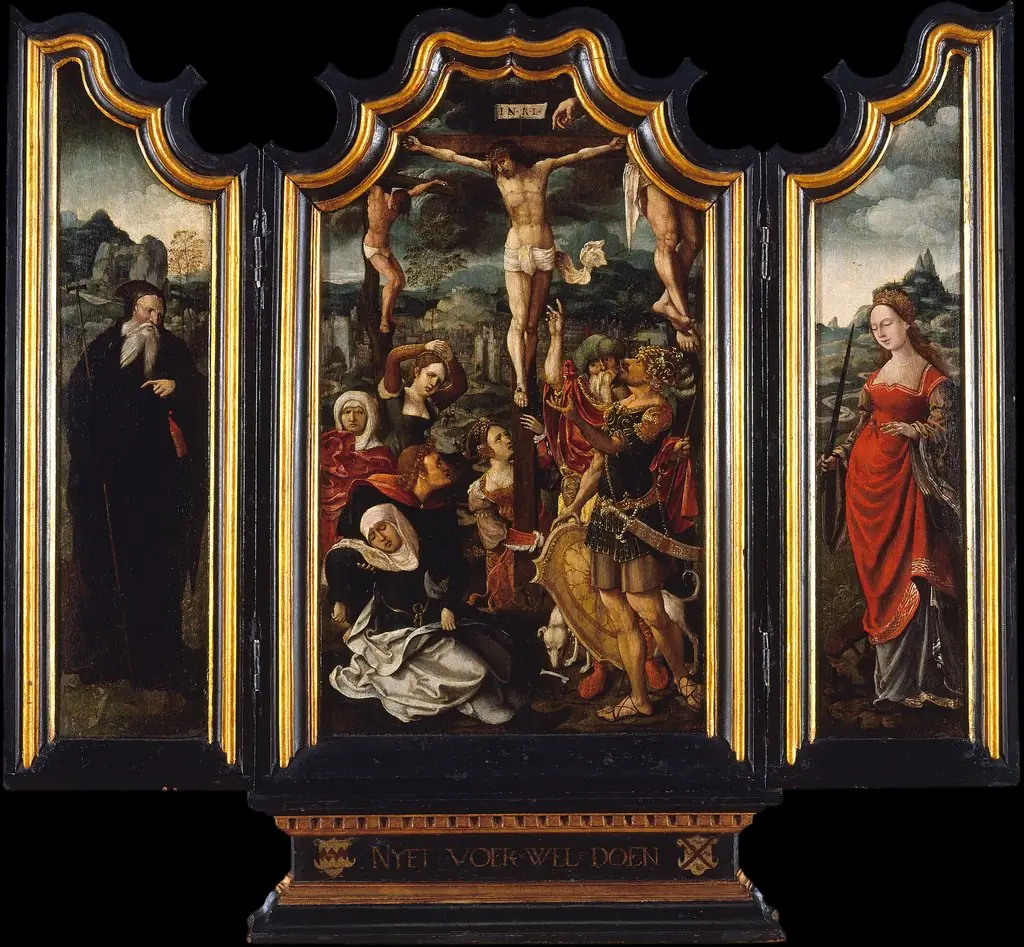
Triptych of the Mass of St. Gregory; left wing: St. John the Evangelist; right wing: St. Elisabeth of Hungary with the founder, Elisabeth van der Meren
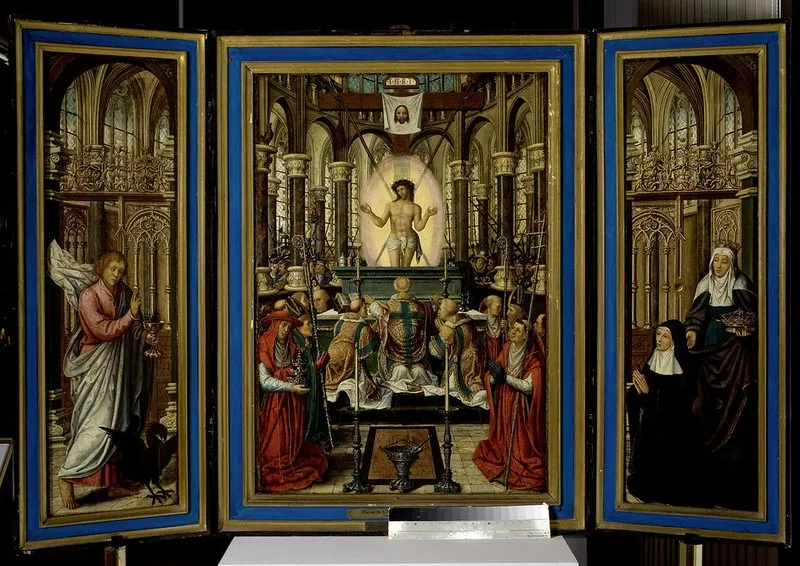
Triptych of the Mass of St. Gregory; left wing: St. John the Evangelist; right wing: St. Elisabeth of Hungary with the founder, Elisabeth van der Meren is an oil painting by the Northern Renaissance artist Unknown. It dates from 1517 and is held in the collection of the National Museum in Warsaw.
About this work
Overview
The side panels present a winged, white‑garbed figure holding a book on the left, and two women in black‑and‑white habits on the right.
The work is a three‑panel oil painting, known as a triptych, whose central image depicts a partially unclothed figure at an altar, flanked by robed attendants raising a cloth. The side panels present a winged, white‑garbed figure holding a book on the left, and two women in black‑and‑white habits on the right. Gold detailing and deep red garments dominate the composition against a dark background.
Subject & Meaning
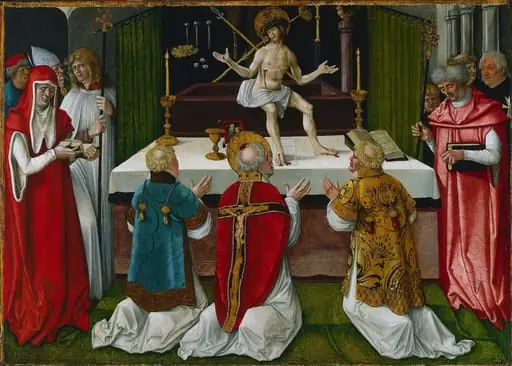
The central scene is interpreted as the Mass of St. Gregory, a liturgical motif that often includes a miraculous host. The left wing portrays St. John the Evangelist, identifiable by his wings and the book he carries, symbolizing the Gospel. The right wing shows St. Elisabeth of Hungary together with the founder, Elisabeth van der Meren, both in monastic attire, linking the work to local devotional patronage.
Technique & Style
The artist employed a pronounced impasto, especially evident in the richly folded robes, creating a tactile surface that catches light. Gold leaf or pigment outlines the tiny saintly faces that appear as cameo‑like heads above the altar, adding a decorative yet narrative layer. The palette relies on stark contrasts: luminous gold and crimson against a somber ground, enhancing the spiritual drama.
History & Provenance
The triptych bears the names of St. John the Evangelist and St. Elisabeth of Hungary, suggesting a commission for a chapel or confraternity associated with these saints. The inclusion of Elisabeth van der Meren points to a patronage link with the van der Meren family, though precise records of its original location and subsequent ownership remain limited.
Artist & collection

 Domestic Scene
 Giacomo and Cardinal Marco, investing Andrea, Abbot of San Zeno, with his Benefice
 The Nymph of Fontainebleau
 Portrait of a Woman
 Madonna and Child with Saints in the Enclosed Garden
 Venus and Minerva
 Family Group of Four on Sofa
 Wall painting from Room H of the Villa of P. Fannius Synistor at Boscoreale