Artwork
The Parrot Addresses Khujasta at the Beginning of the Twenty-ninth Night, from a Tuti-nama (Tales of a Parrot)
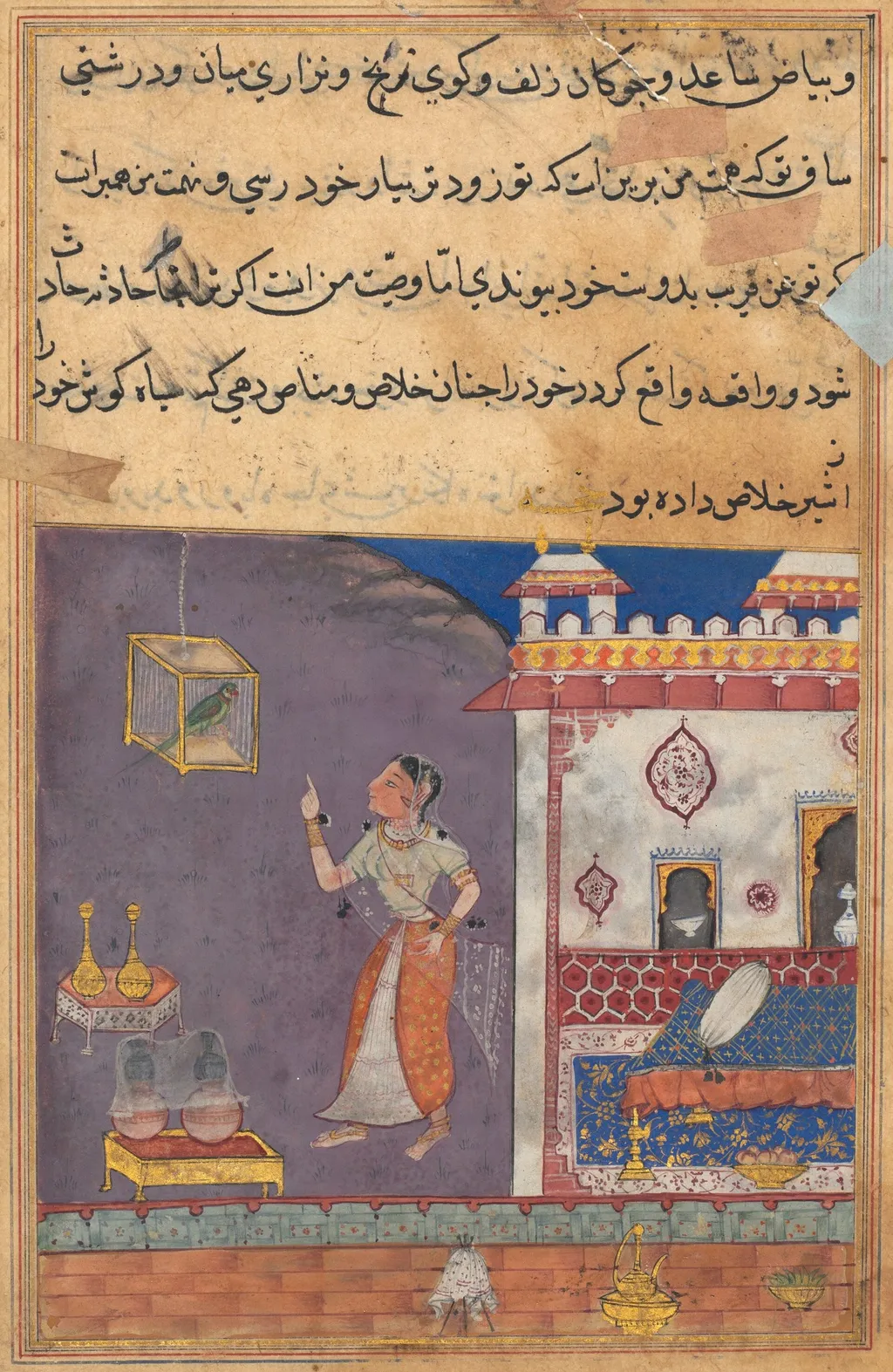
The Parrot Addresses Khujasta at the Beginning of the Twenty-ninth Night, from a Tuti-nama (Tales of a Parrot) is an unspecified painting. It dates from 1560 and is held in the collection of the Cleveland Museum of Art.
About this work
Overview
This painting, titled "The Parrot Addresses Khujasta at the Beginning of the Twenty-ninth Night," illustrates a scene from a Tuti-nama, or "Tales of a Parrot.
This painting, titled "The Parrot Addresses Khujasta at the Beginning of the Twenty-ninth Night," illustrates a scene from a Tuti-nama, or "Tales of a Parrot." It depicts a woman, Khujasta, standing within an interior space, engaged with a caged bird suspended above her. The artwork is characterized by its vibrant palette and intricate details, typical of Persian manuscript illumination. A flowing script at the top suggests the narrative context of the depicted scene.
Subject & Meaning
The painting captures a pivotal moment from the Tuti-nama, a collection of Persian fables. Khujasta, the central figure, interacts with a parrot whose nightly stories prevent her from meeting her lover, thus delaying her husband's return. Here, the parrot likely begins its twenty-ninth tale, a narrative device designed to impart moral lessons and prolong the story cycle. The man seated in the background might represent an unseen observer or a secondary character within the unfolding narrative.
Technique & Style
The artwork demonstrates a sophisticated approach to color and composition. Rich, saturated hues of deep purple, red, and gold dominate the palette, contributing to a sense of opulence and vitality. Details such as patterned carpets and the woman's bright orange attire are rendered with precision. The arrangement of figures and objects within the architectural setting creates a balanced yet dynamic scene, characteristic of illustrated manuscripts from the period.
Artist & collection

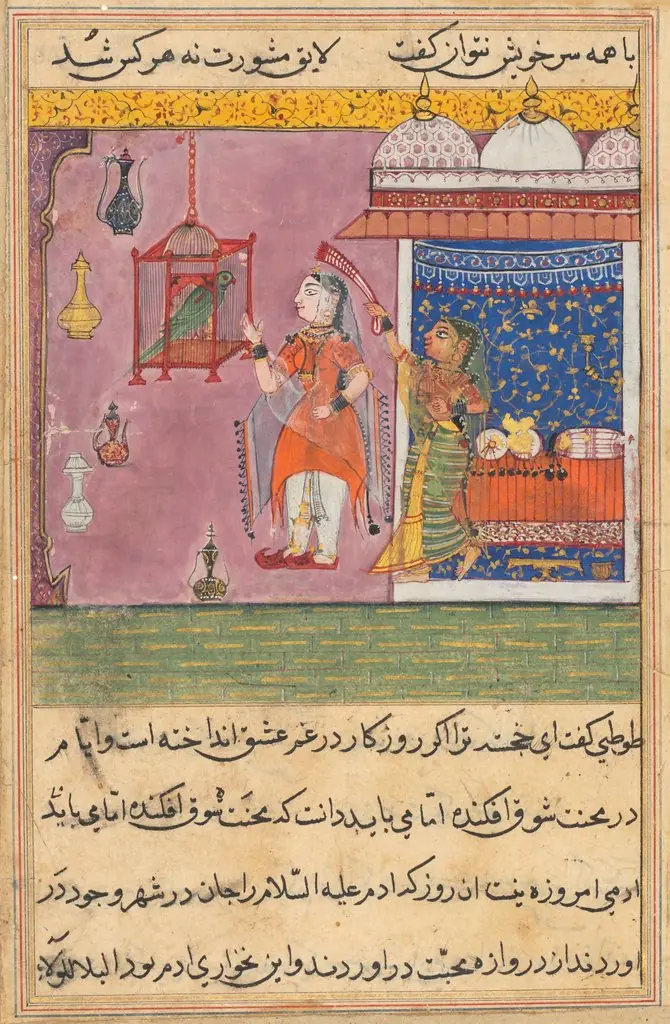 The Parrot Addresses Khujasta at the Beginning of the Nineteenth Night, from a Tuti-nama (Tales of a Parrot)
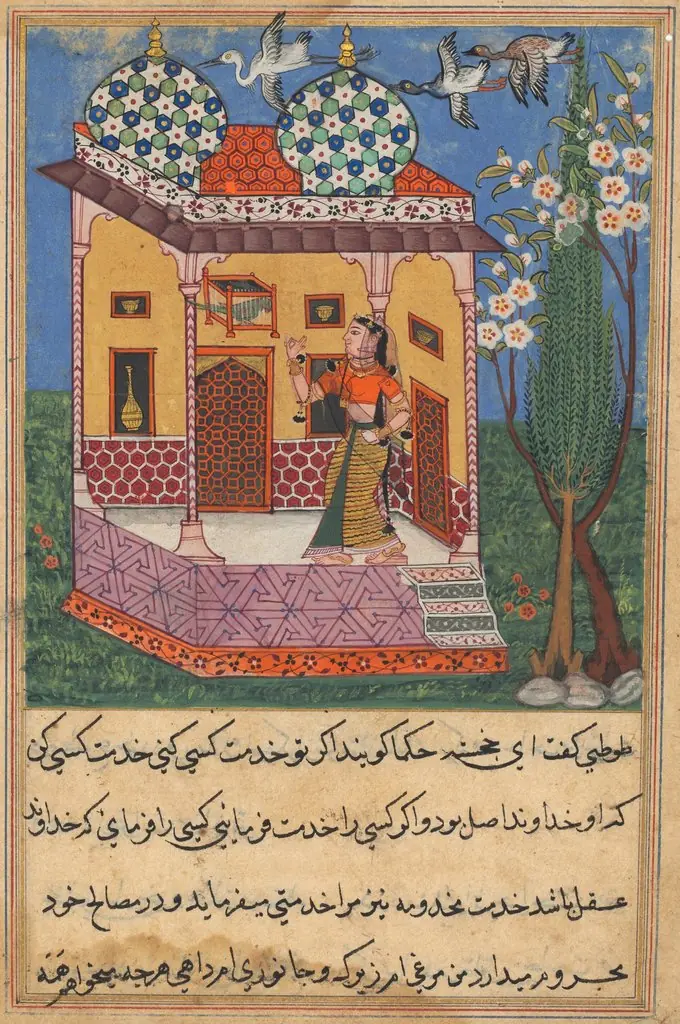 The Parrot Addresses Khujasta at the Beginning of the Twenty-sixth Night, from a Tuti-nama (Tales of a Parrot)
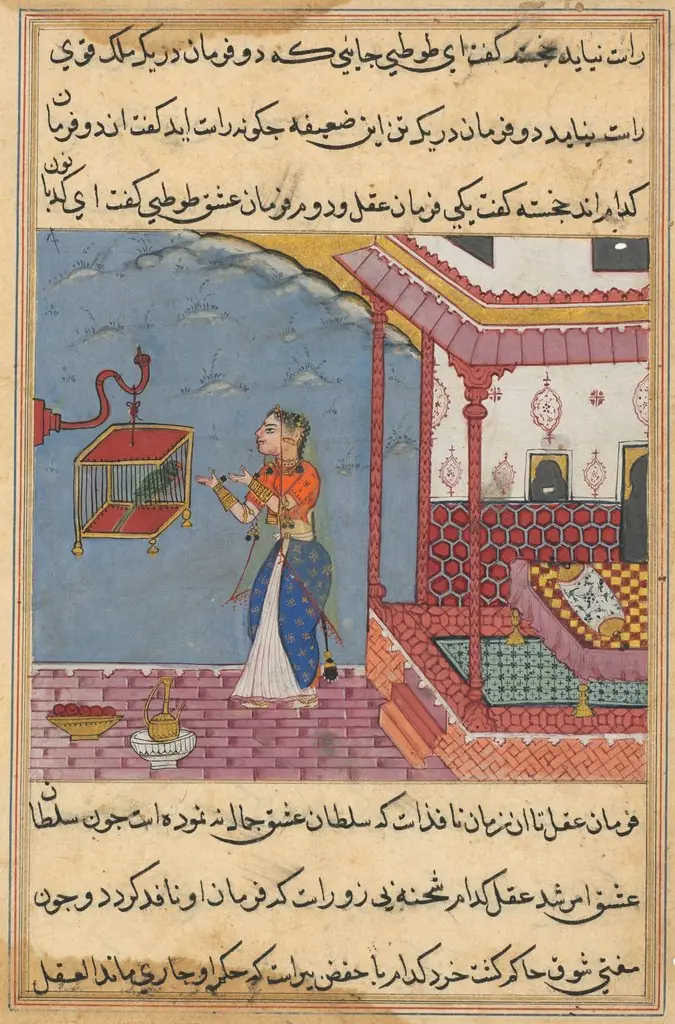 The Parrot Addresses Khujasta at the Beginning of the Twenty-Fourth Night, from a Tuti-nama (Tales of a Parrot)
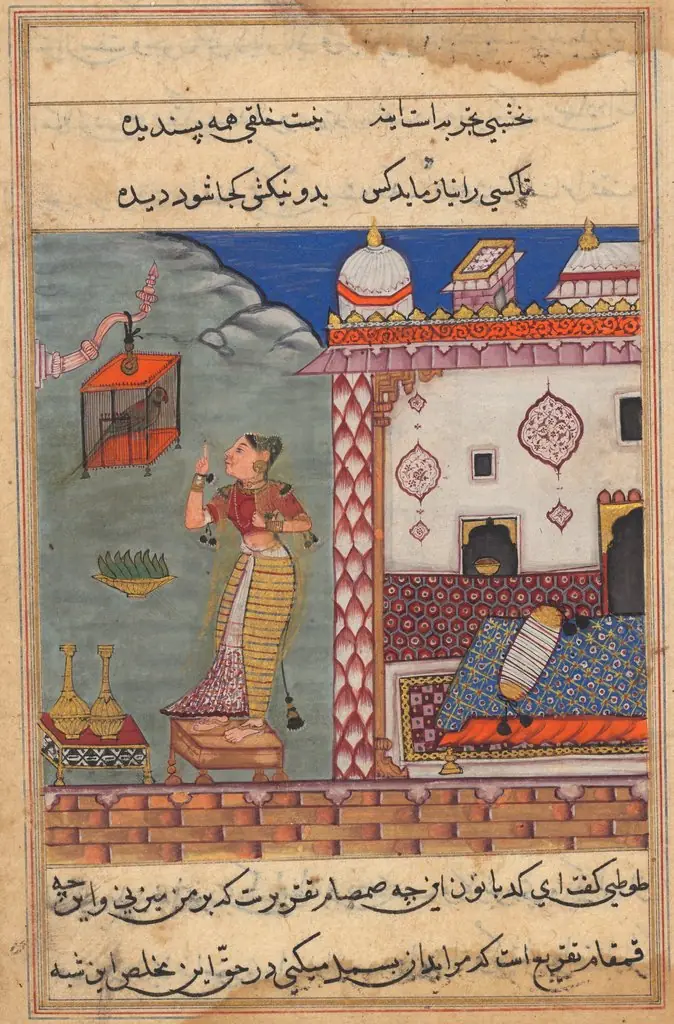 The Parrot Addresses Khujasta at the Beginning of the Twenty-seventh Night, form a Tuti-nama (Tales of a Parrot)
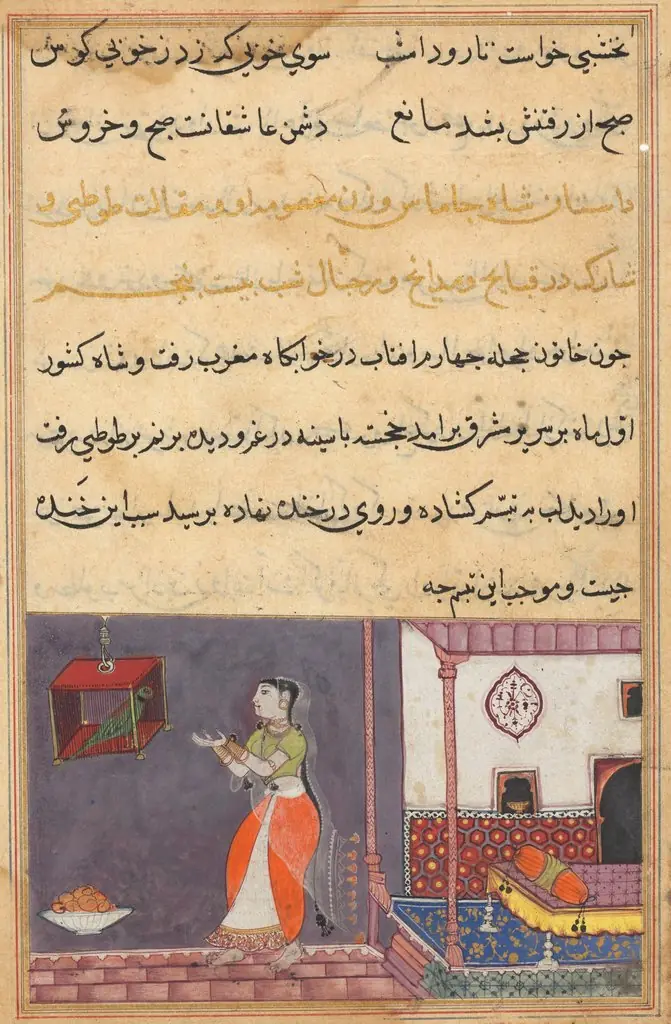 The Parrot Addresses Khujasta at the Beginning of the Twenty-fifth Night, from a Tuti-nama (Tales of a Parrot)
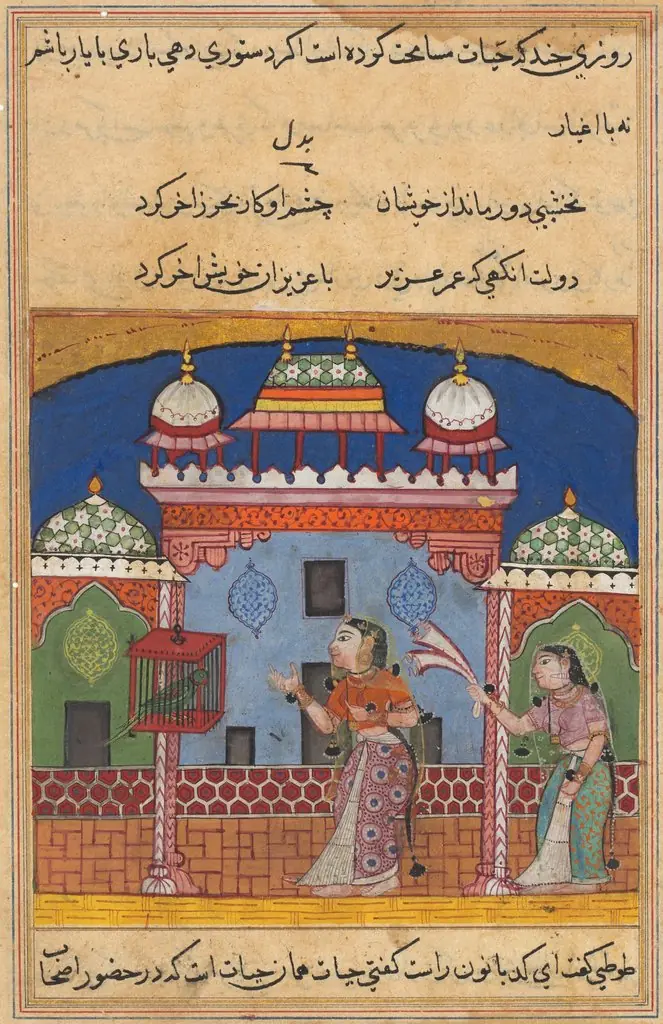 The Parrot Addresses Khujasta at the Beginning of the Twenty-second Night, from a Tuti-nama (Tales of a Parrot)
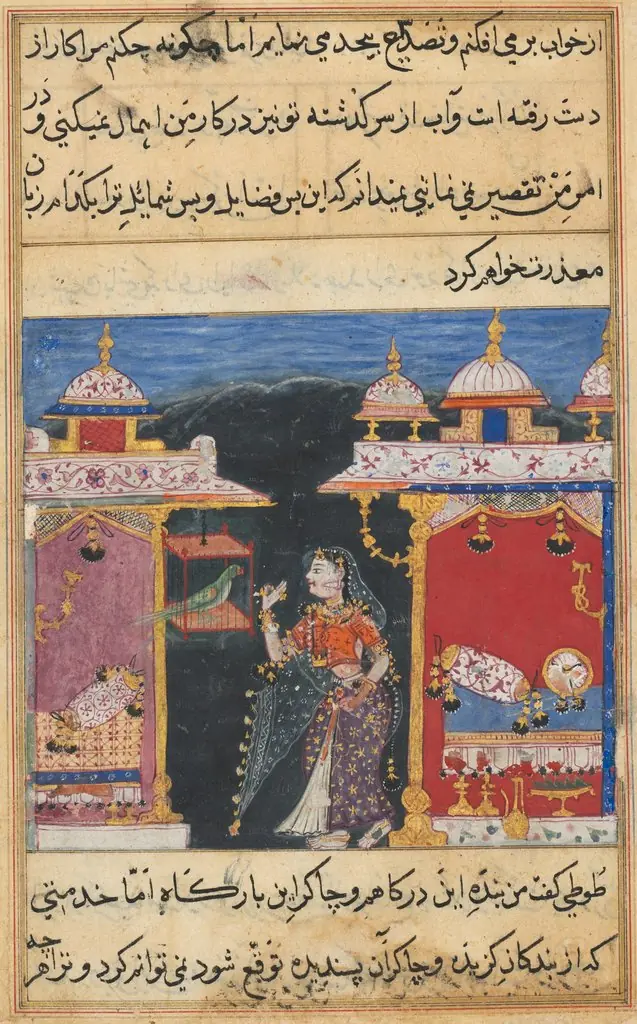 The Parrot Addresses Khujasta at the Beginning of the Seventh Night, from a Tuti-nama (Tales of a Parrot)
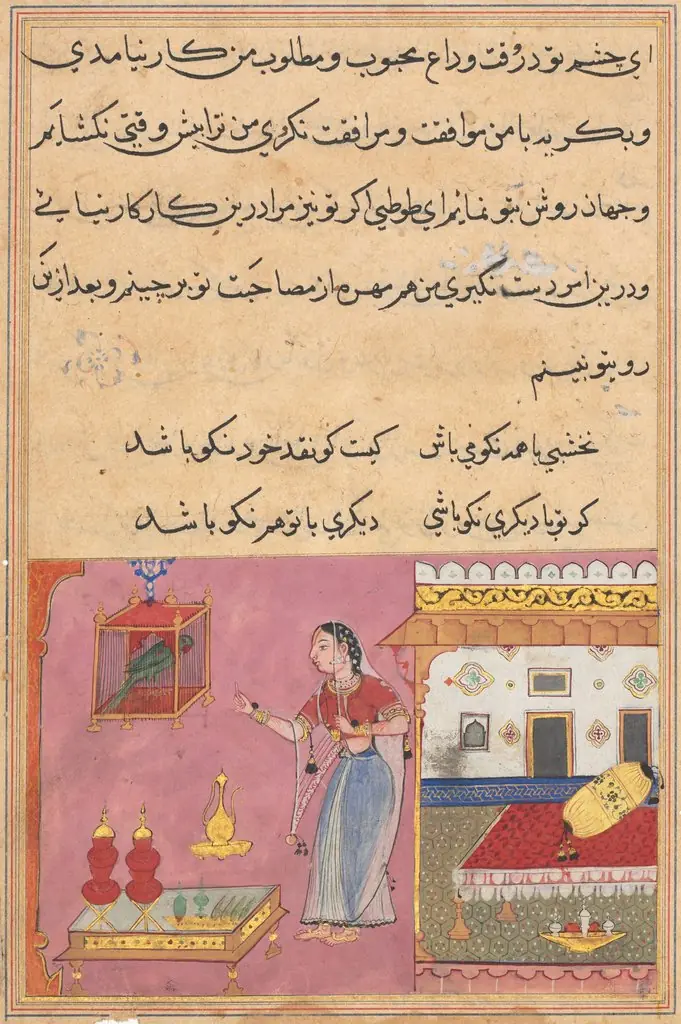 The Parrot Addresses Khujasta at the Beginning of the Twentieth Night, from a Tuti-nama (Tales of a Parrot)
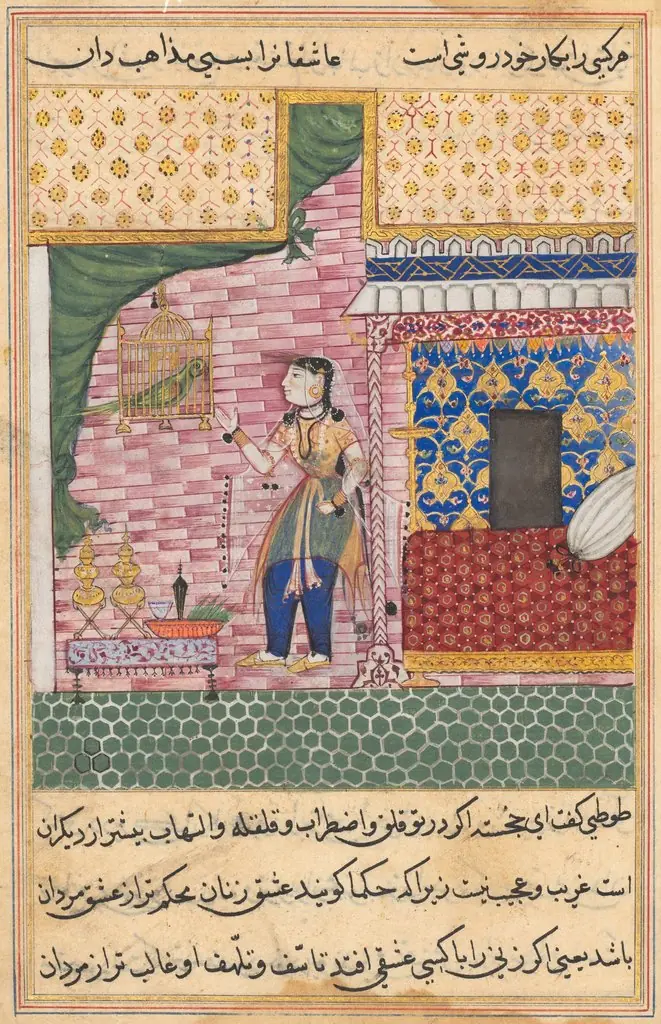 The Parrot Addresses Khujasta at the Beginning of the Seventeenth Night, from a Tuti-nama (Tales of a Parrot)
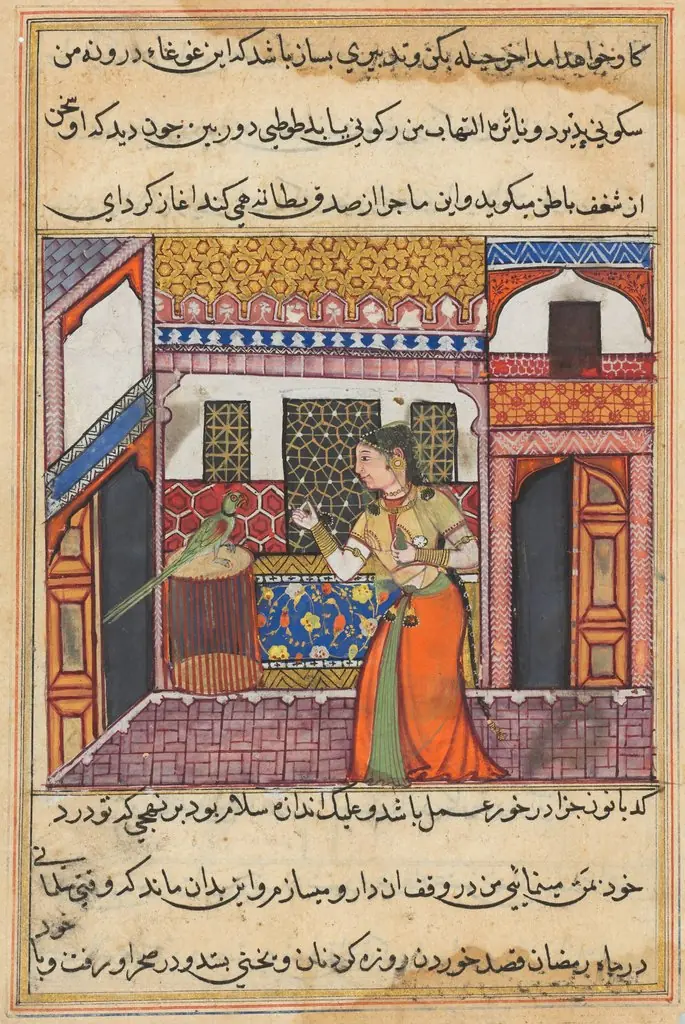 The parrot addresses Khujasta at the beginning of the forty-third night, from a Tuti-nama (Tales of a Parrot)
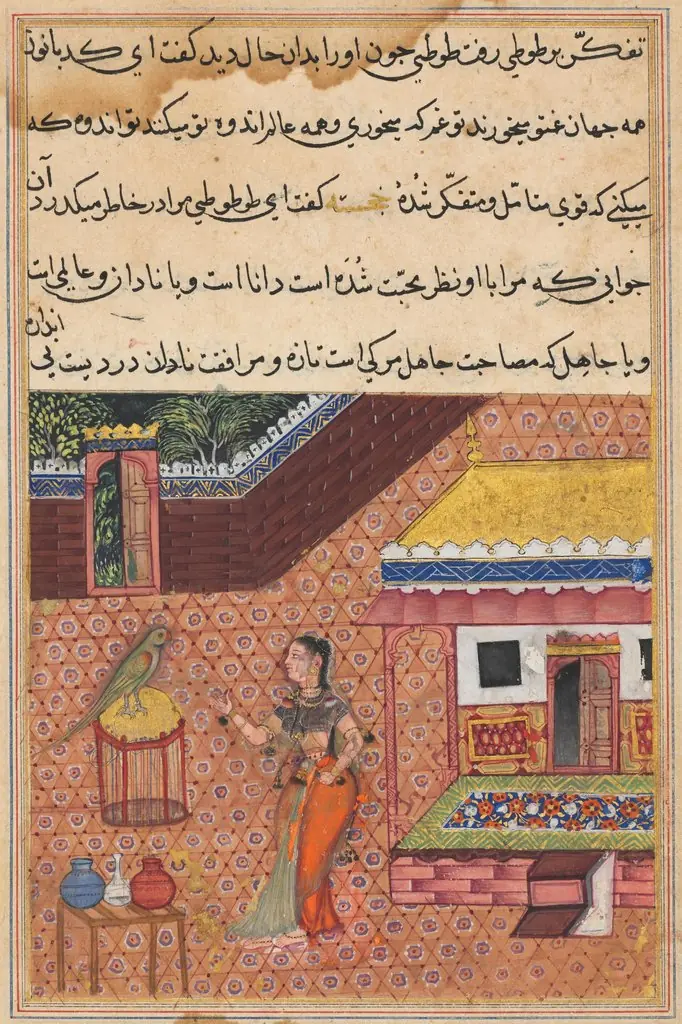 The parrot addresses Khujasta at the beginning of the thirty-fourth night, from a Tuti-nama (Tales of a Parrot)