Artwork
William Owen II of Porkington
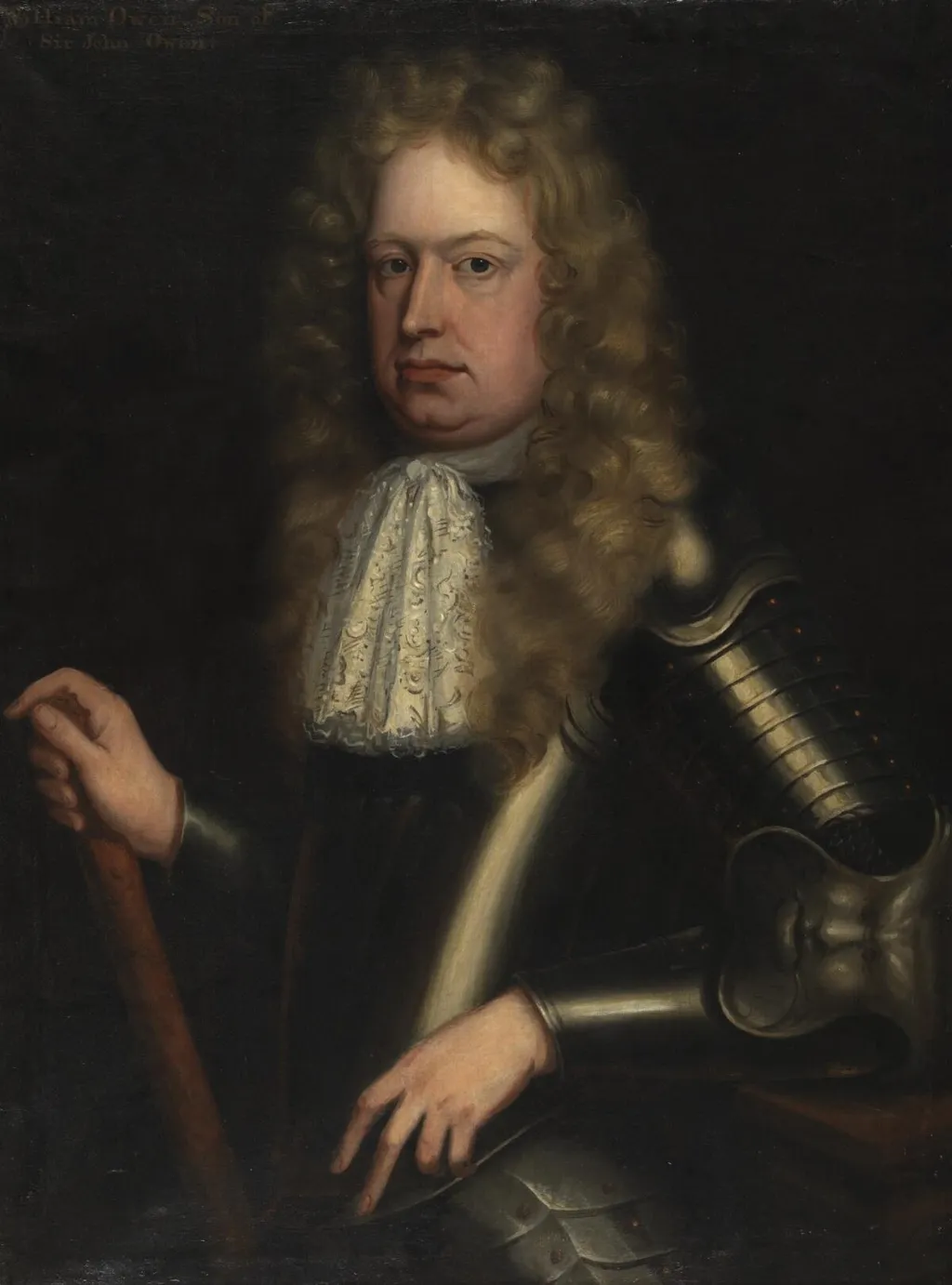
William Owen II of Porkington is an oil painting by Unknown. It dates from 1660 and is held in the collection of the National Library of Wales.
About this work
His right hand rests on a brown object, possibly a cane or a sword hilt, while his left hand is positioned near a metal armor piece on his arm.
This painting shows a man with long, curly hair and a white ruffled collar. He wears a black coat with a high collar and a white lace cravat. His right hand rests on a brown object, possibly a cane or a sword hilt, while his left hand is positioned near a metal armor piece on his arm. The man's attire suggests he is from the 17th century, given the style of his clothing and the armor. The artist has used oil paint to create this portrait, which is now held at the National Library of Wales.
Overview
This oil painting depicts a 17th-century gentleman identified as William Owen II of Porkington. Rendered in oil on canvas, the portrait presents the sitter in formal attire characteristic of the period, with attention to textile detail and subtle lighting. It is currently held in the collection of the National Library of Wales, where it functions as both a personal likeness and a record of regional aristocratic identity.
Subject & Meaning
The subject, William Owen II, is portrayed with elements suggesting both civilian status and martial association: a lace cravat and high-collared coat indicate refinement, while the armored forearm and object at his side hint at military or noble duty. The composition balances personal dignity with social role, reflecting the dual identity common among Welsh gentry of the era.
Technique & Style
Oil paint is used with restrained brushwork to convey texture—soft lace, smooth leather, and metallic armor are differentiated through tonal variation rather than overt detail. The background is muted, directing focus to the figure’s posture and attire. Lighting is even, avoiding dramatic contrasts, consistent with provincial portraiture of the mid-1600s.
History & Provenance
The painting remained within the Owen family of Porkington until its acquisition by the National Library of Wales. Its survival suggests it was preserved as a family heirloom, possibly commissioned to mark a significant event such as marriage or inheritance. No documentation confirms the artist’s identity, though the style aligns with regional English and Welsh portraitists of the period.
Context
In mid-17th-century Wales, portraits like this served to affirm lineage and social standing amid political upheaval. The inclusion of armor, though likely symbolic, reflects lingering ideals of chivalric duty among landholding families. Such images were not grand court pieces but modest affirmations of local status within a society still bound by feudal traditions.
Legacy
The portrait remains a rare surviving example of Welsh gentry portraiture from the Stuart era. It contributes to the understanding of regional artistic practice outside London, illustrating how provincial families adapted elite visual language to express identity. Its preservation underscores the importance of familial archives in sustaining cultural memory.
Artist & collection

 Domestic Scene
 Giacomo and Cardinal Marco, investing Andrea, Abbot of San Zeno, with his Benefice
 The Nymph of Fontainebleau
 Portrait of a Woman
 Madonna and Child with Saints in the Enclosed Garden
 Venus and Minerva
 Family Group of Four on Sofa
 Wall painting from Room H of the Villa of P. Fannius Synistor at Boscoreale
 Aernout van Citters (1661-1718), Son of Aernout van Citters and Christina de Brauw
 Portrait of Carel Rabenhaupt, Lieutenant-General
 Portrait of Aernout van Citters (1661-1718), son of Aernout van Citters and Christina de Brauw
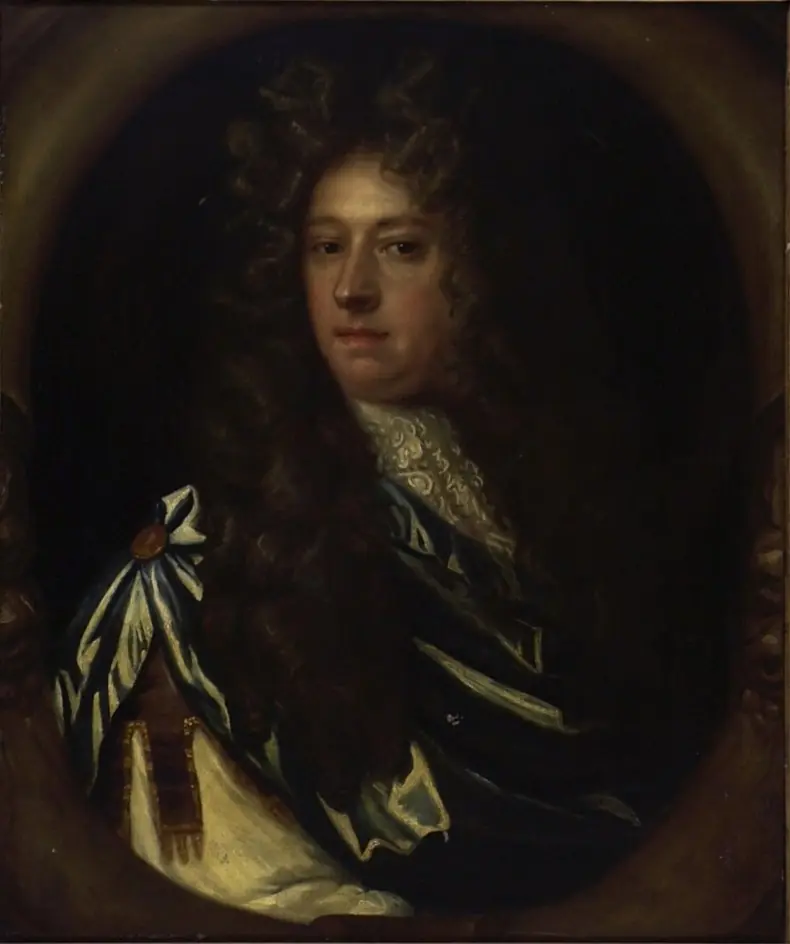 Portrait of a Man
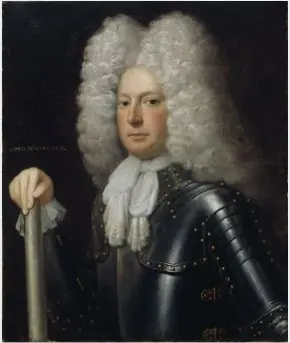 Portrait of William, 4th Viscount Molyneux of Maryborough (c.1655-1717)
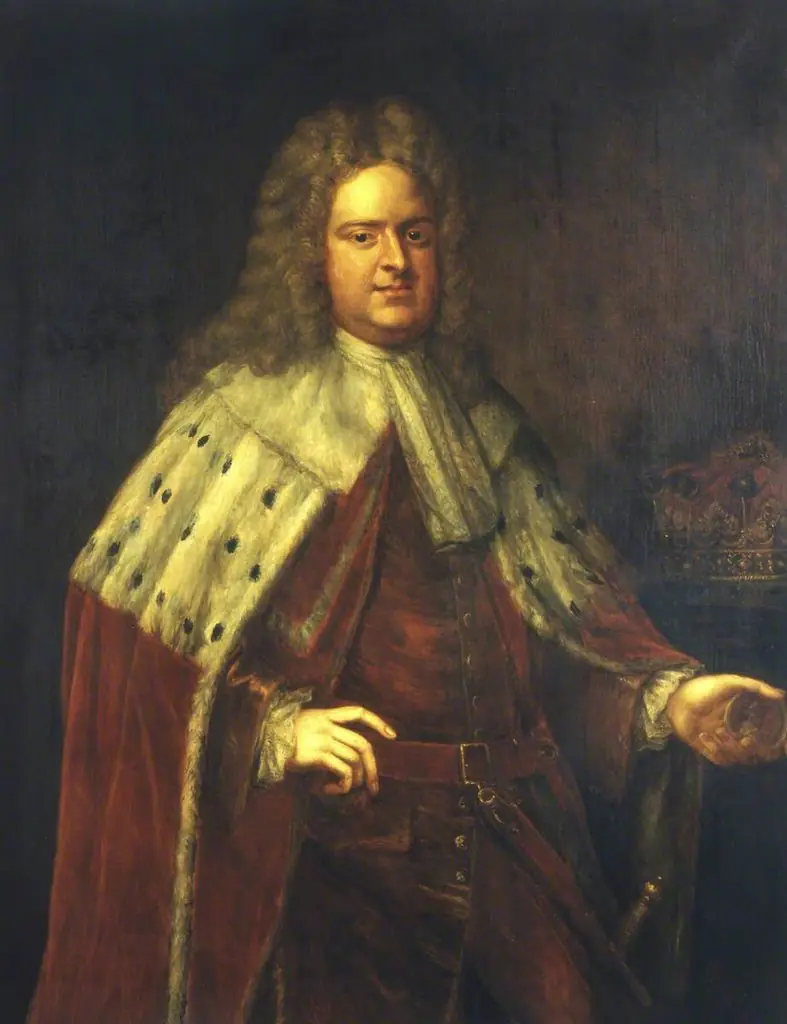 Edward Harley (1689–1741), 2nd Earl of Oxford and Mortimer
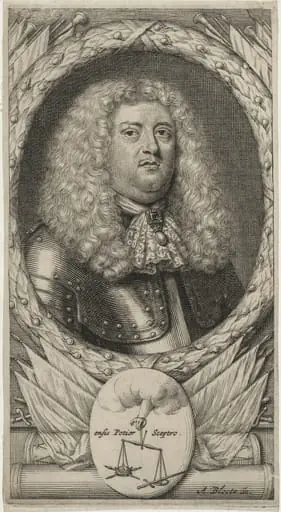 Edward Montagu, First Earl of Sandwich
 Portrait of Hendrick Bicker (1649 - 1718), burgomaster of Amsterdam
 Portrait of Cornelis Cruys
 John Lord Sommers