Artwork
Portrait of Dmitry Naryshkin
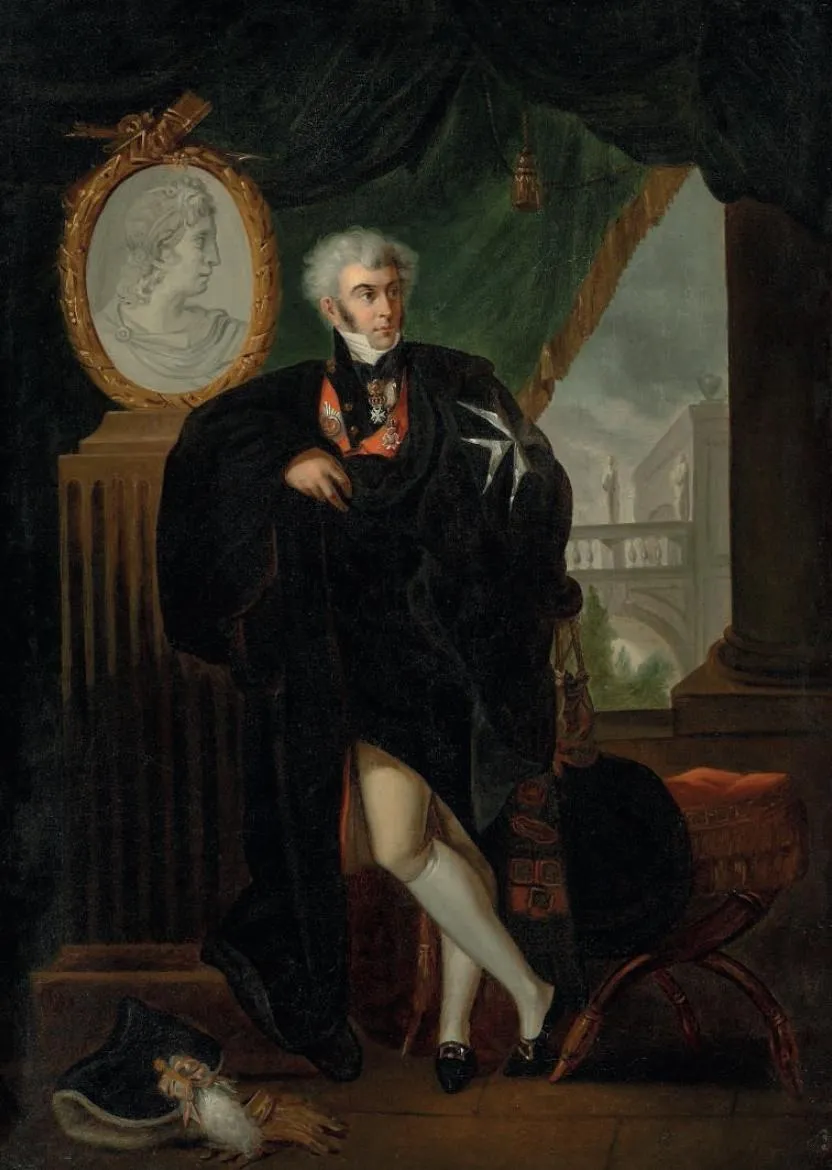
Portrait of Dmitry Naryshkin is an oil painting by the Neoclassicist artist Unknown. It dates from 1805 and is held in the collection of the Hermitage Museum.
About this work
Overview
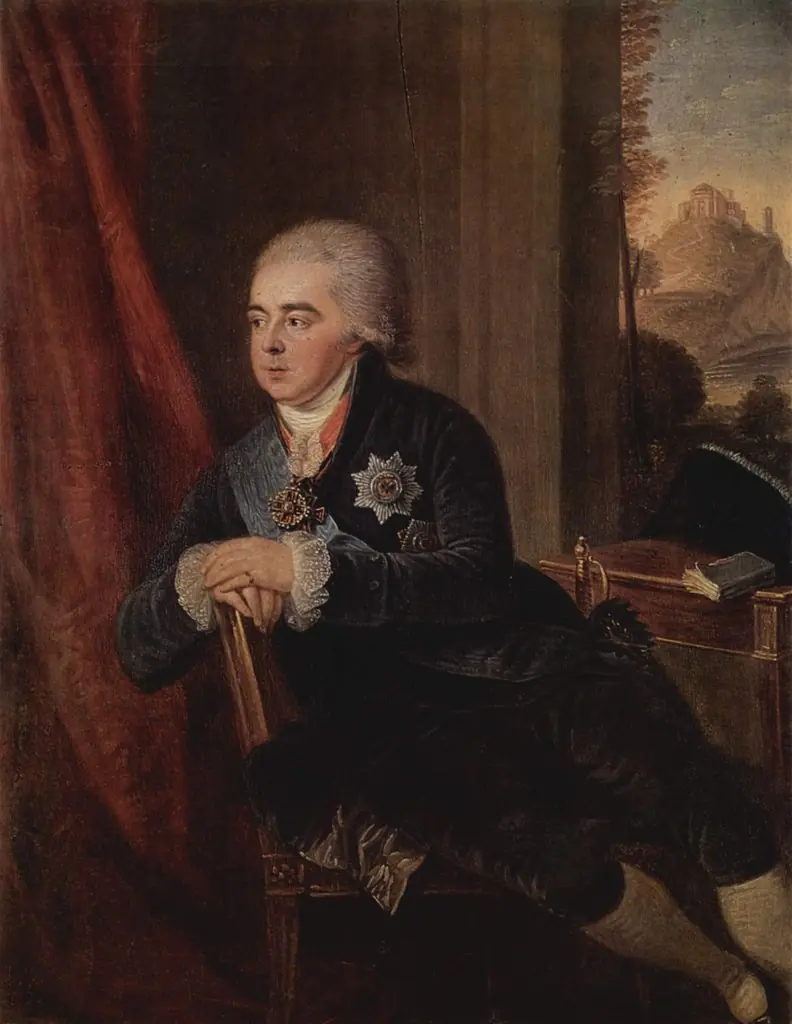
It depicts a seated gentleman dressed in a dark robe trimmed with a red collar, his white hair contrasting with the somber attire.
The work is an oil painting titled Portrait of Dmitry Naryshkin. It depicts a seated gentleman dressed in a dark robe trimmed with a red collar, his white hair contrasting with the somber attire. Medals and a prominent star are displayed on his chest, while his left leg is crossed over his right. The setting includes a green curtain, a gilded frame, and a distant view of a bridge and urban architecture.
Subject & Meaning
The sitter, identified as Dmitry Naryshkin, is presented in formal regalia that signals a high rank or official honor. The inclusion of medals and a large star suggests military or civil distinction, while his composed pose conveys authority and composure. The background elements—curtain, framed portrait, and cityscape—serve to situate him within a cultured, possibly governmental, environment.
Technique & Style
Rendered in oil on canvas, the portrait employs a restrained palette of dark tones punctuated by the vivid red collar and the gleam of metal decorations. Fine brushwork defines the texture of the robe and the sheen of the medals, while broader strokes suggest the depth of the curtain and the distant architecture. The composition balances realism in the figure with a slightly idealized, dignified presentation.
History & Provenance
The painting’s provenance is not detailed in the supplied information, and no specific date or exhibition history is provided. Its identification as a portrait of Dmitry Naryshkin indicates a personal commission, likely intended for private or institutional display within his circle or family.
Context
Portraiture of this type was common among Russian aristocracy and officials in the 18th and 19th centuries, where attire and insignia communicated status. The inclusion of a city view behind the sitter aligns with a tradition of situating the subject within a recognizable civic landscape, reinforcing his connection to public service or governance.
Legacy
While the painting’s broader impact is not recorded here, its careful rendering of rank and setting provides a visual document of the social hierarchy and visual conventions of its era, offering scholars a reference point for studying the visual language of Russian official portraiture.
Artist & collection

 Domestic Scene
 Giacomo and Cardinal Marco, investing Andrea, Abbot of San Zeno, with his Benefice
 The Nymph of Fontainebleau
 Portrait of a Woman
 Madonna and Child with Saints in the Enclosed Garden
 Venus and Minerva
 Family Group of Four on Sofa
 Wall painting from Room H of the Villa of P. Fannius Synistor at Boscoreale
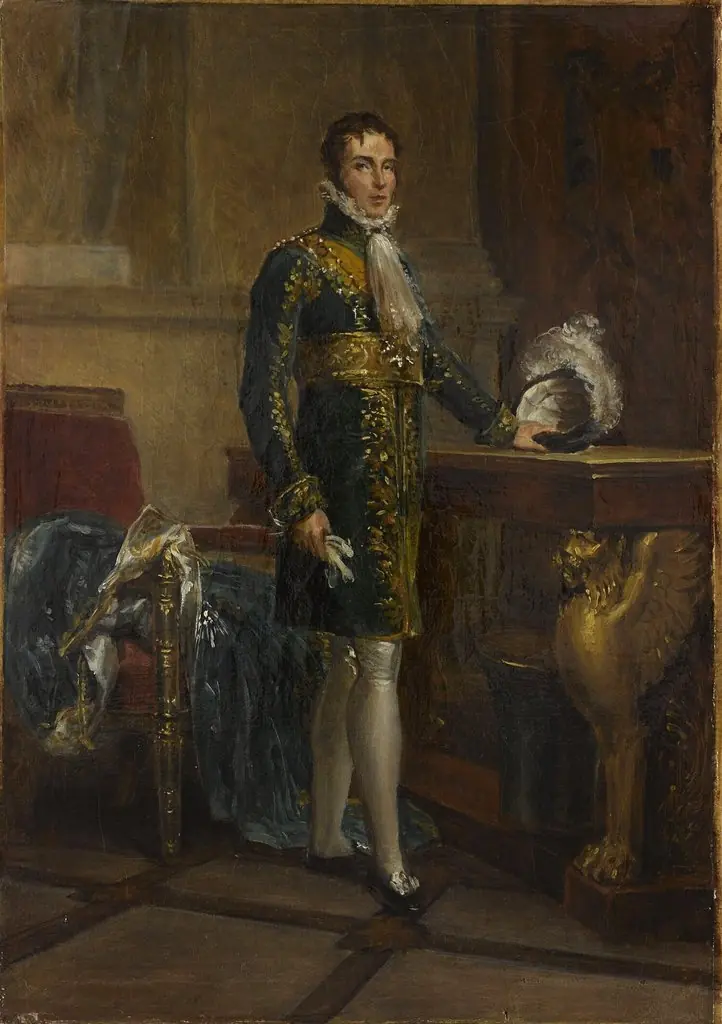 Eugène de Beauharnais (1781-1824), duc de Leuchtenberg, dit le prince Eugène, vice-roi d'Italie
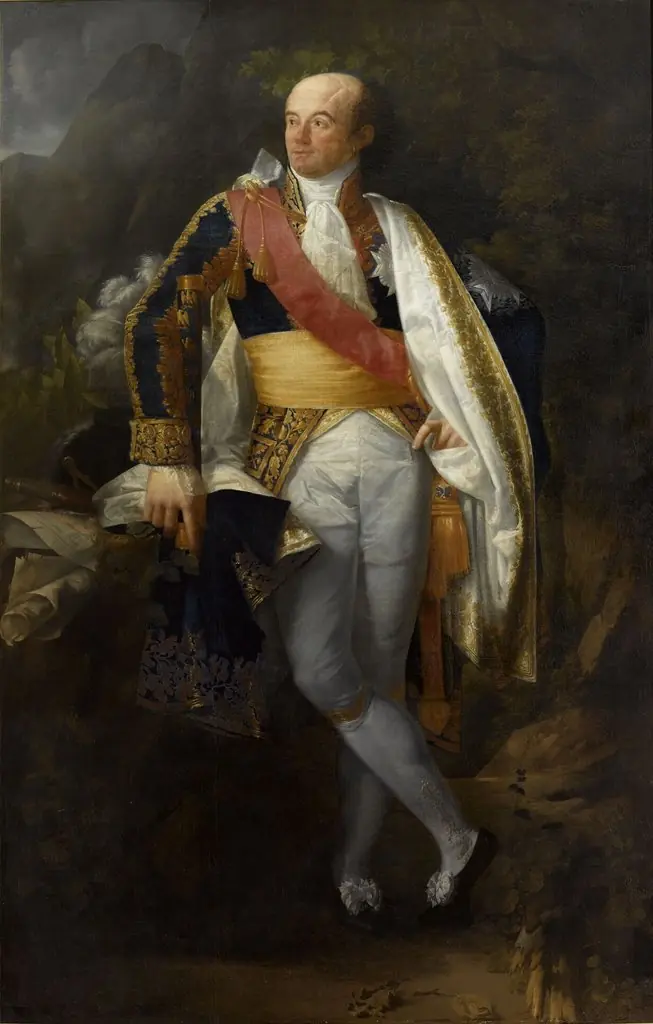 Dominique-Catherine, marquis Pérignon, maréchal de France (1754-1818)
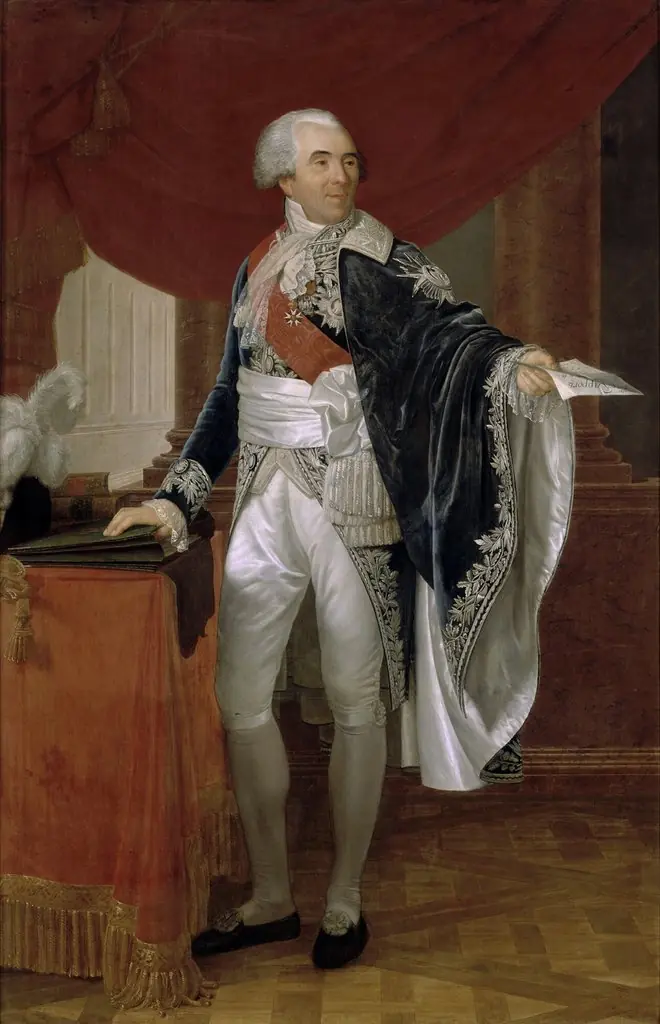 Jean-Gérard Lacués, count of Cessac (1752-1841)
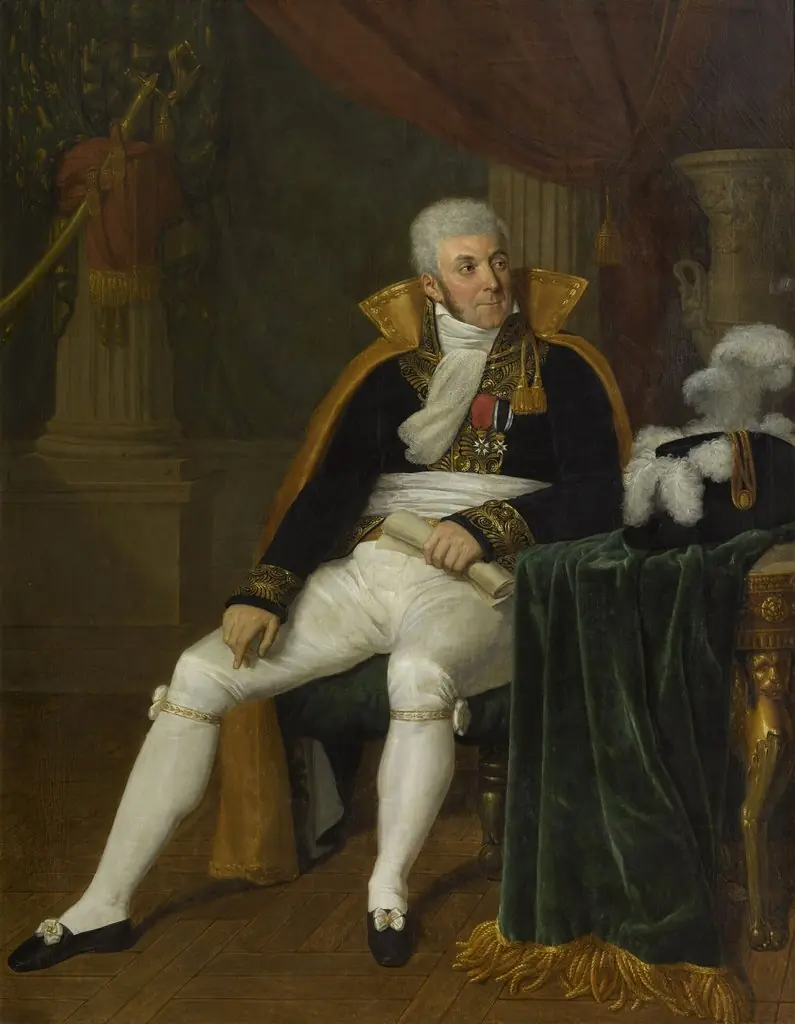 Jérôme, count Soulès, lieutenant-general (1760-1833)
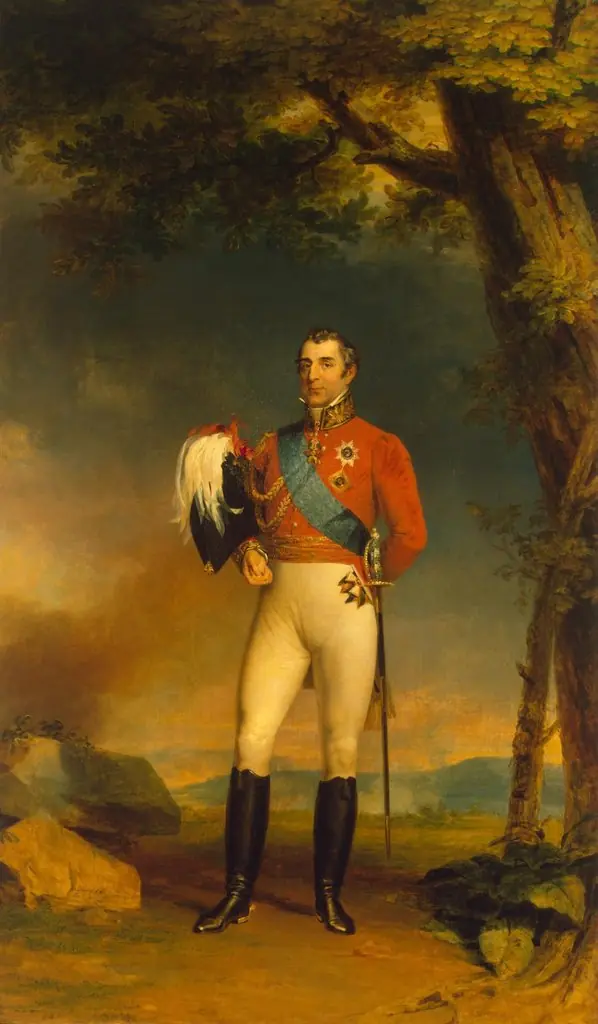 Portrait of Duke of Wellington (1769-1852)
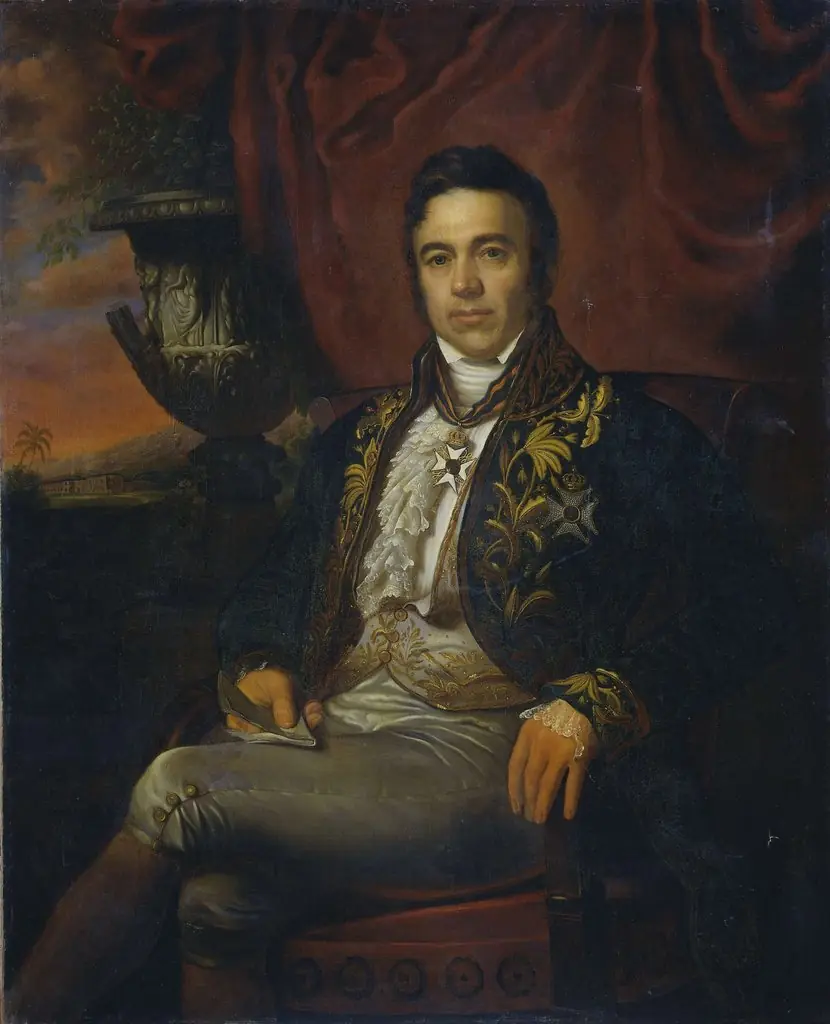 Portrait of Jean Chrétien Baud (1789-1859), Gouverneur-generaal ad interim (1833-35)
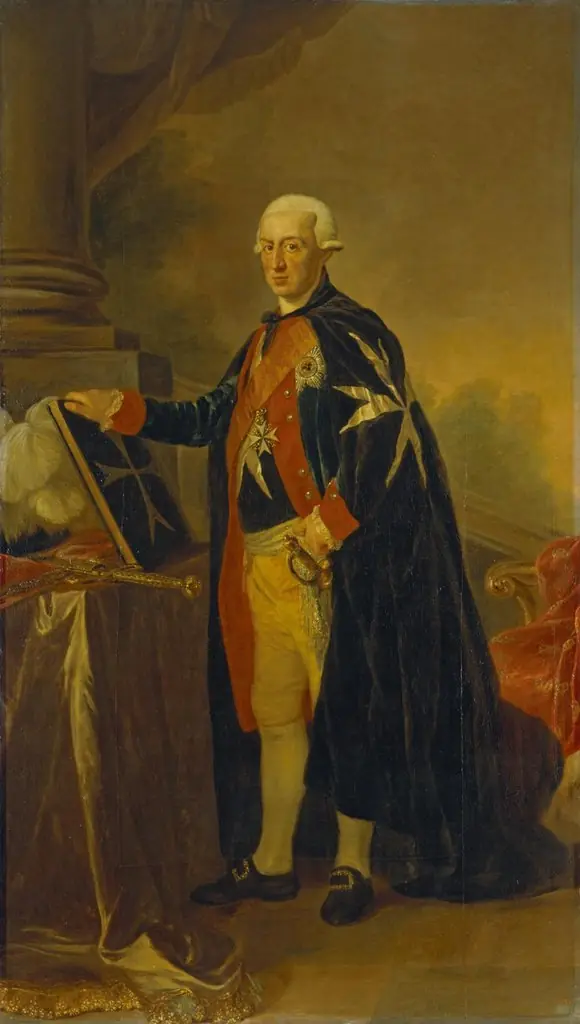 Portrait of Prince Augustus Ferdinand of Prussia
 Bon Adrien Jeannot de Moncey, Duc de Conegliano, Marshal of France
 Portrait of Prince Alexander B. Kurakin
 Arthur Wellesley (1769–1852), 1st Duke of Wellington
 Alexandre Aguado, marquis de Las Marismas (1784-1842)
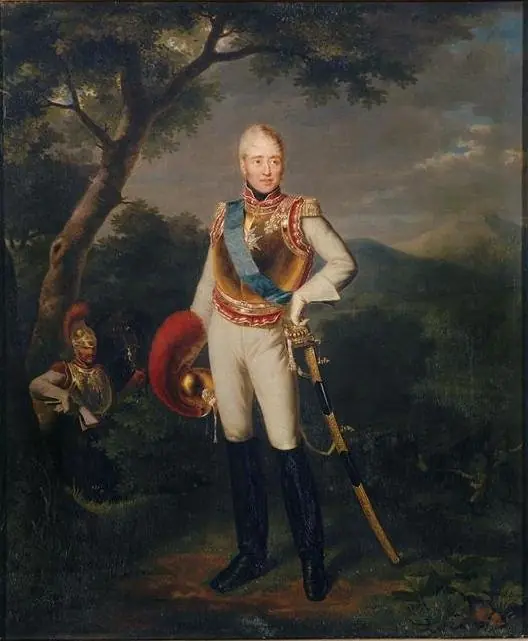 Charles X, roi de France (1757-1836), alors comte d'Artois, en uniforme de colonel-général des Carabiniers en 1818