Artwork
Page from Tales of a Parrot (Tuti-nama): text page
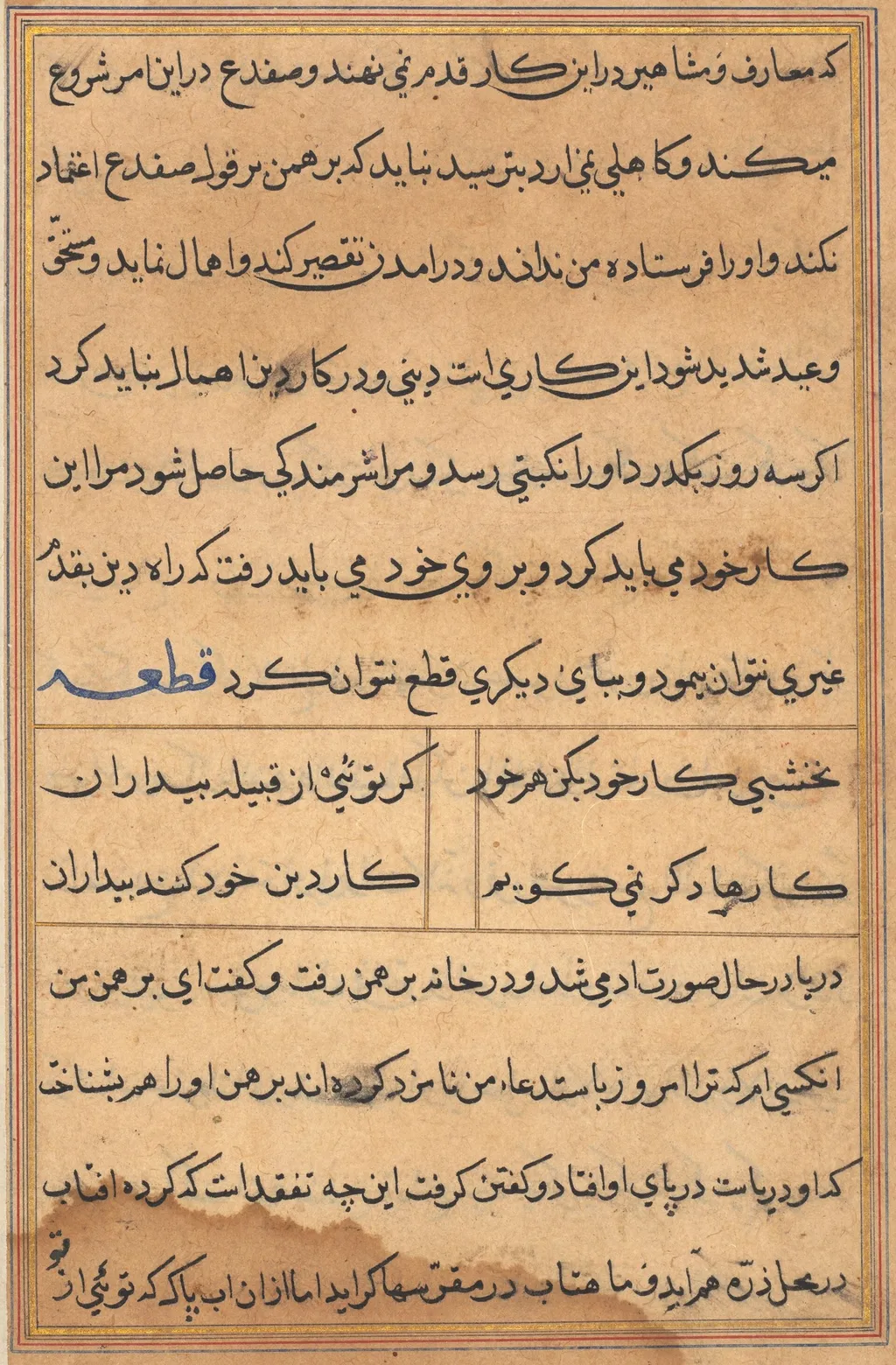
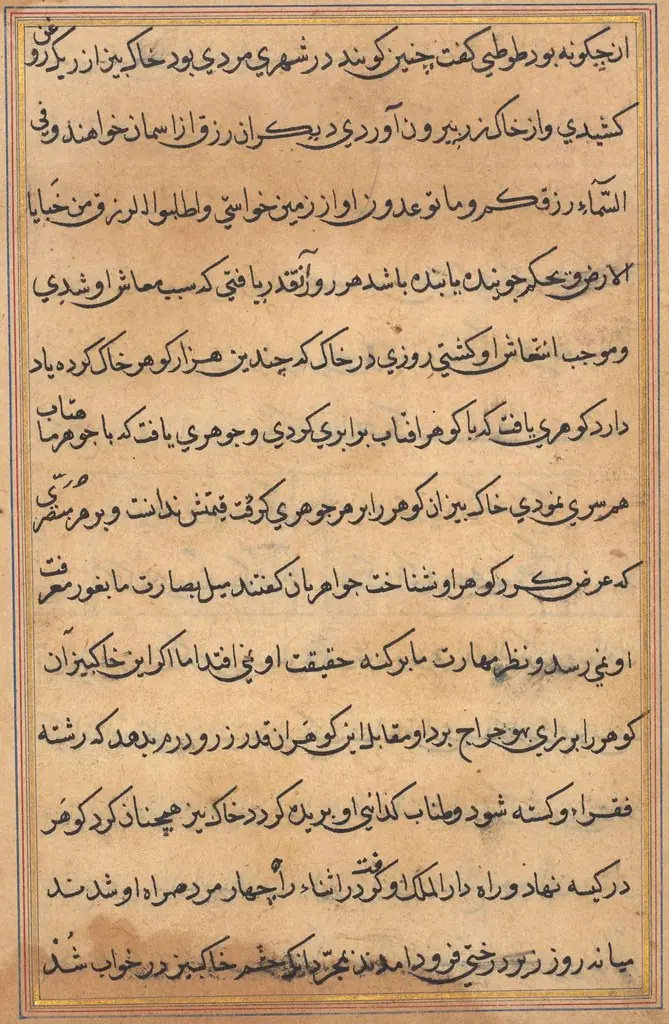
Page from Tales of a Parrot (Tuti-nama): text page is an unspecified painting. It dates from 1560 and is held in the collection of the Cleveland Museum of Art. This object is a painted page from the Persian manuscript known as *Tales of a Parrot* (Tuti‑nama).
About this work
Overview
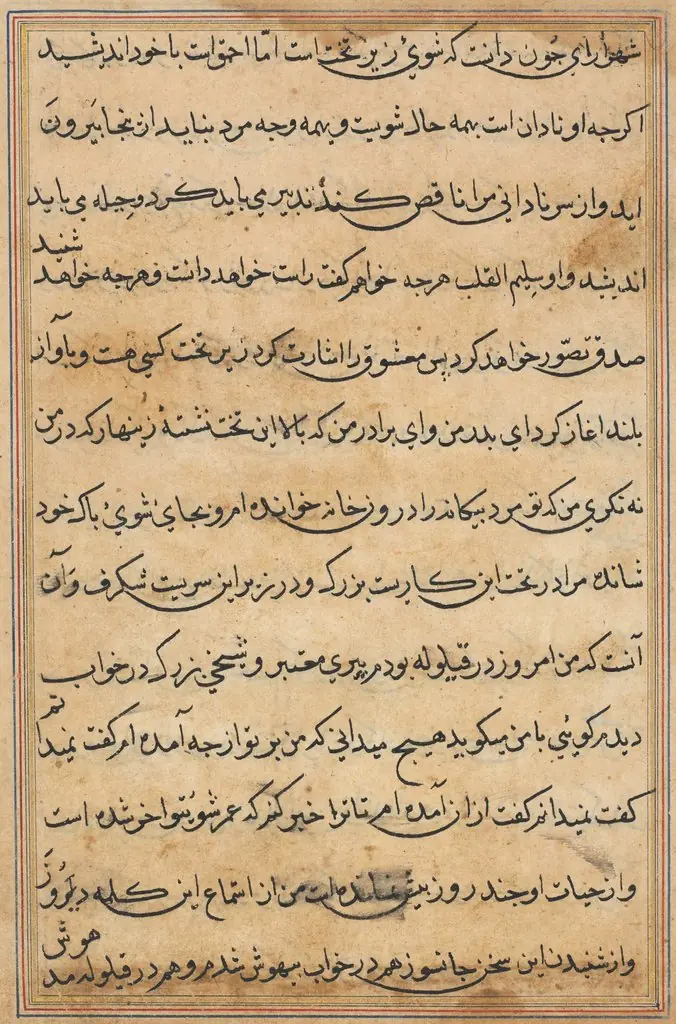
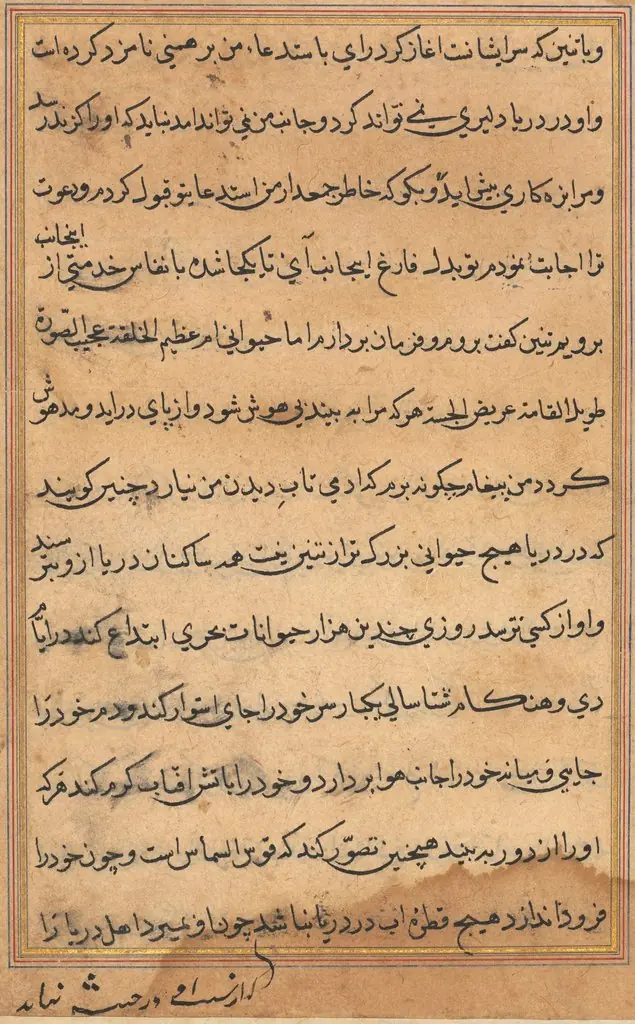
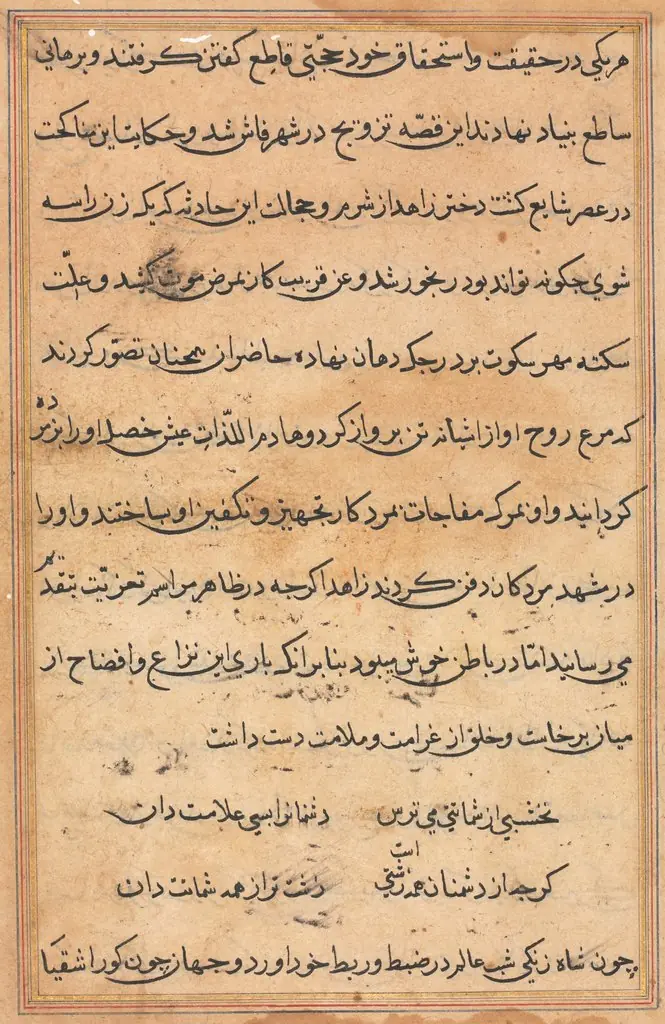
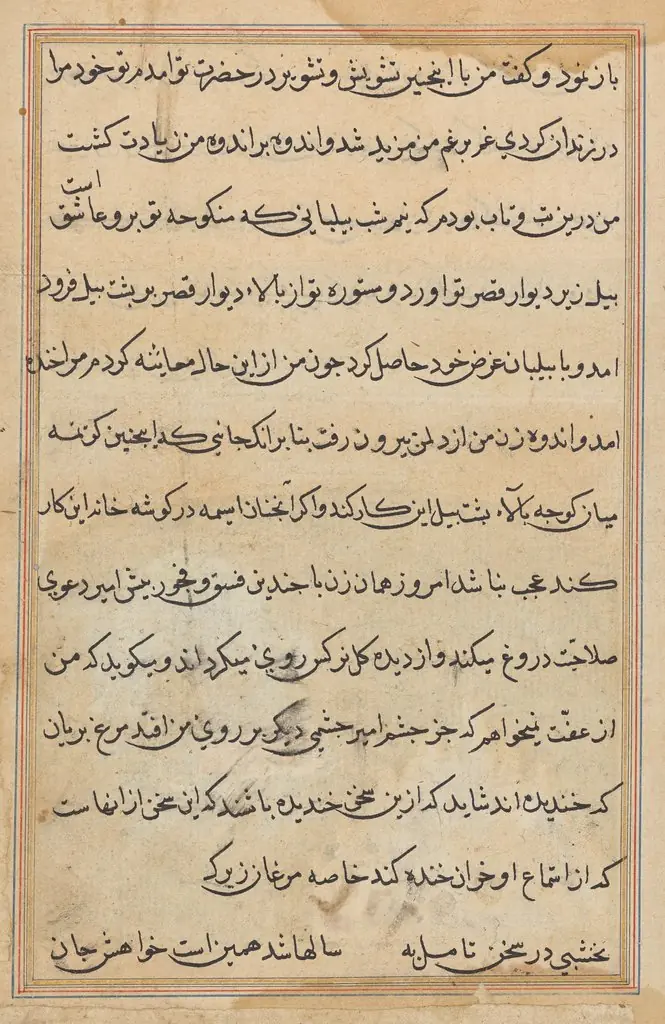
This object is a painted page from the Persian manuscript known as *Tales of a Parrot* (Tuti‑nama). Executed on a single sheet of aged, tan‑toned paper, the surface is covered entirely with calligraphic text, framed by a narrow red border that defines the page’s margins.
Subject & Meaning
The page contains a narrative segment of the *Tuti‑nama*, a collection of moral and didactic stories traditionally illustrated for courtly audiences. While the specific passage is not identified here, the text’s dense arrangement suggests a continuous prose passage rather than a decorative illustration.
Technique & Style
The calligraphy is rendered in flowing black ink, with occasional blue accents that highlight particular words or phrases. The script is organized in tight horizontal lines, demonstrating a disciplined hand typical of Persian manuscript production in the early modern period. The red border, painted with a thin brush, provides a subtle visual restraint.
History & Provenance
The page originates from a larger codex that was likely produced in Persia or a neighboring cultural sphere, where the *Tuti‑nama* was popular. The paper’s wear and the patina of the pigments indicate considerable age, though the precise date and ownership trail remain undocumented in the available information.
Context
Manuscripts of the *Tuti‑nama* were often commissioned for elite patrons and used as teaching tools, combining literary content with visual elegance. The use of colored ink within the script reflects a broader trend in Persian book arts to enhance readability and aesthetic appeal without extensive miniature illustration.
Legacy
Pages such as this illustrate the enduring value placed on literary transmission in Persian culture. Even in the absence of elaborate imagery, the careful calligraphic execution underscores the manuscript’s role as both a literary and artistic object, informing contemporary understandings of manuscript production in the region.
Artist & collection

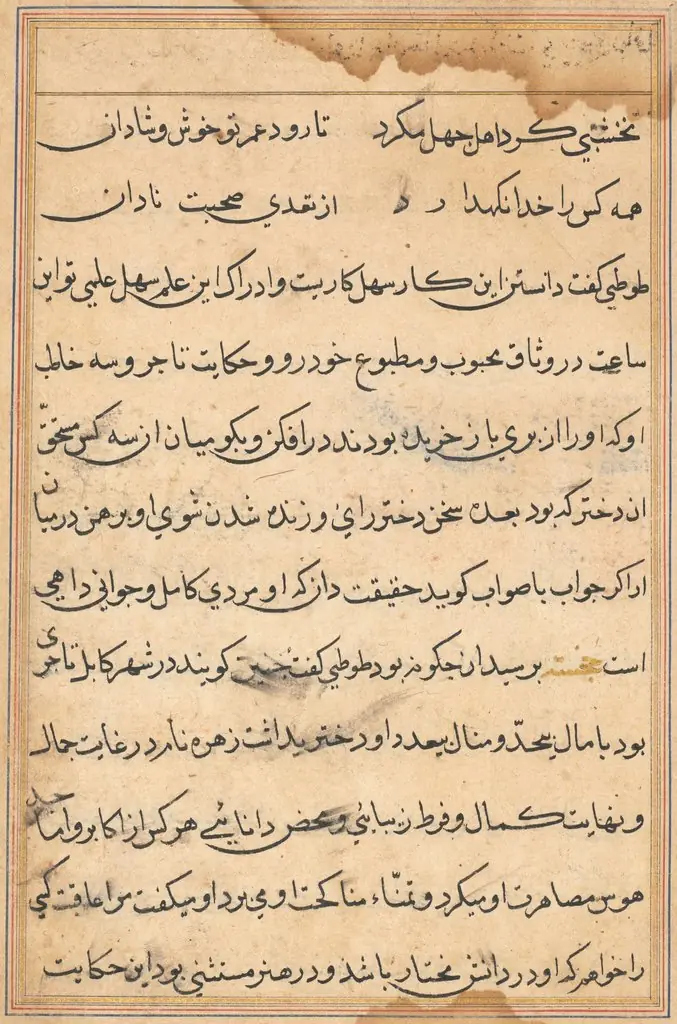 Page from Tales of a Parrot (Tuti-nama): text page
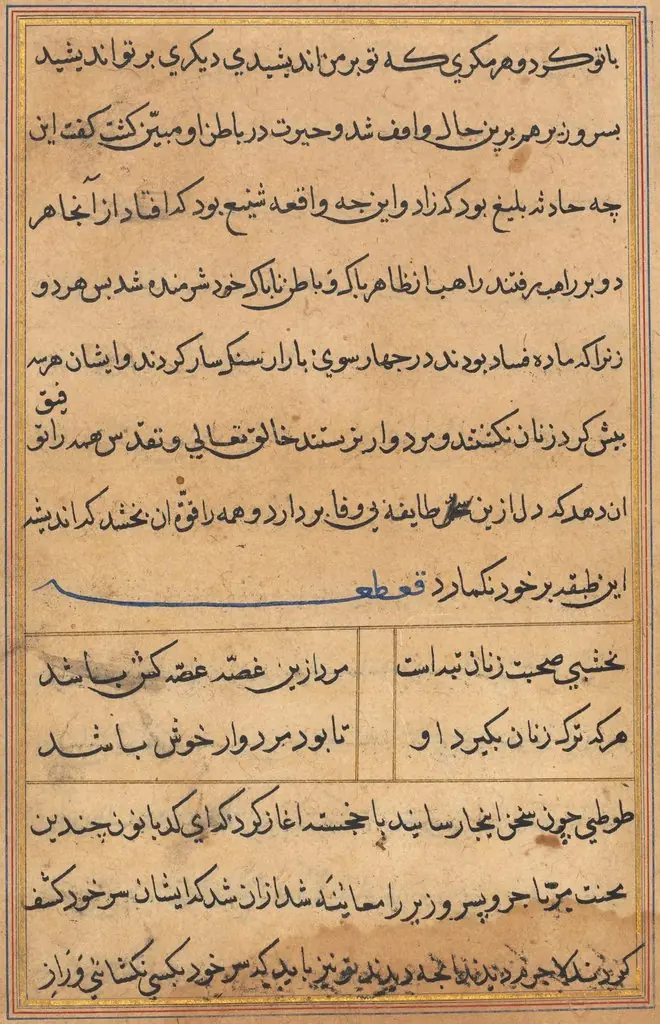 Page from Tales of a Parrot (Tuti-nama): text page
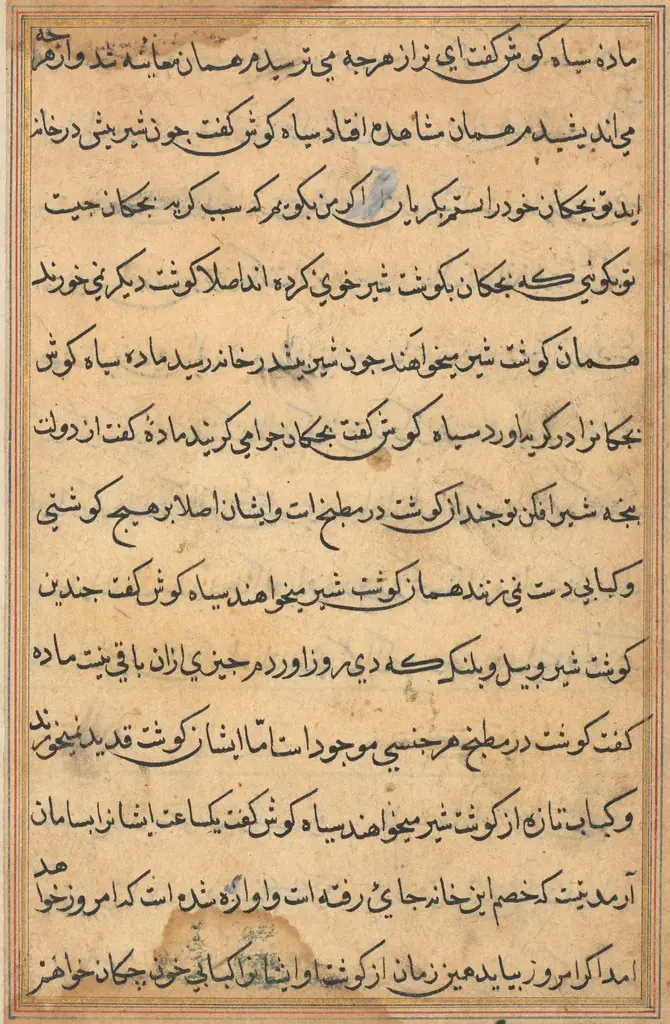 Page from Tales of a Parrot (Tuti-nama): text page
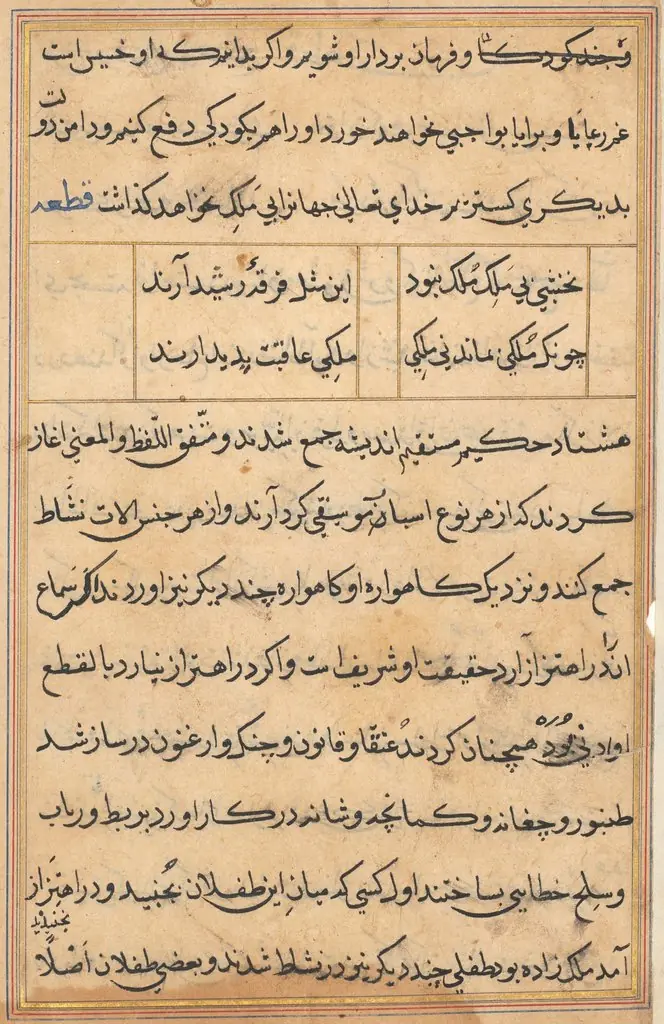 Page from Tales of a Parrot (Tuti-nama): text page
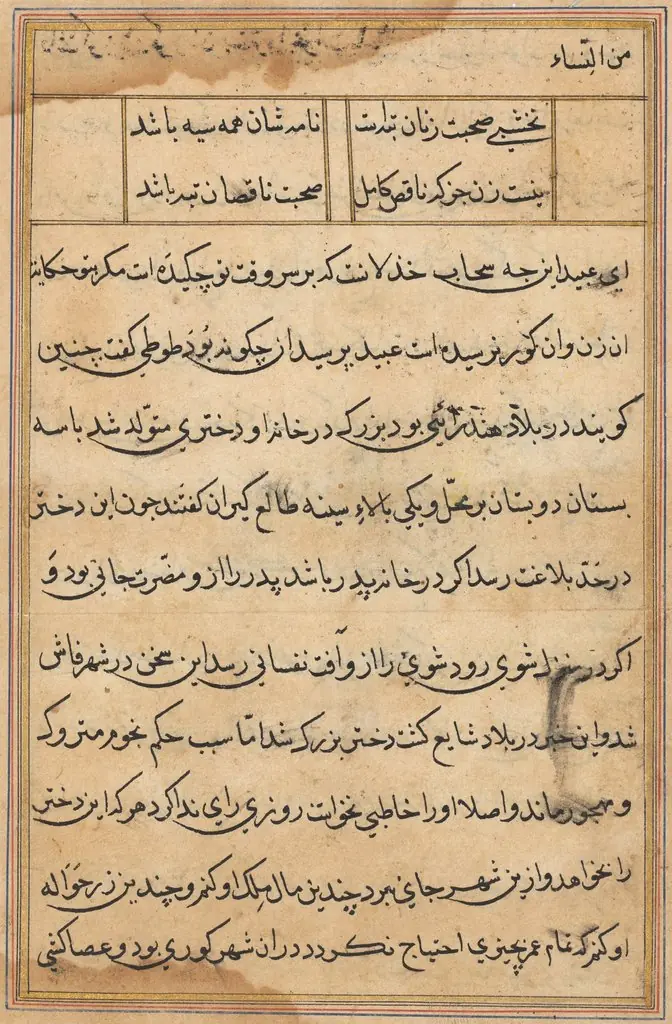 Page from Tales of a Parrot (Tuti-nama): text page
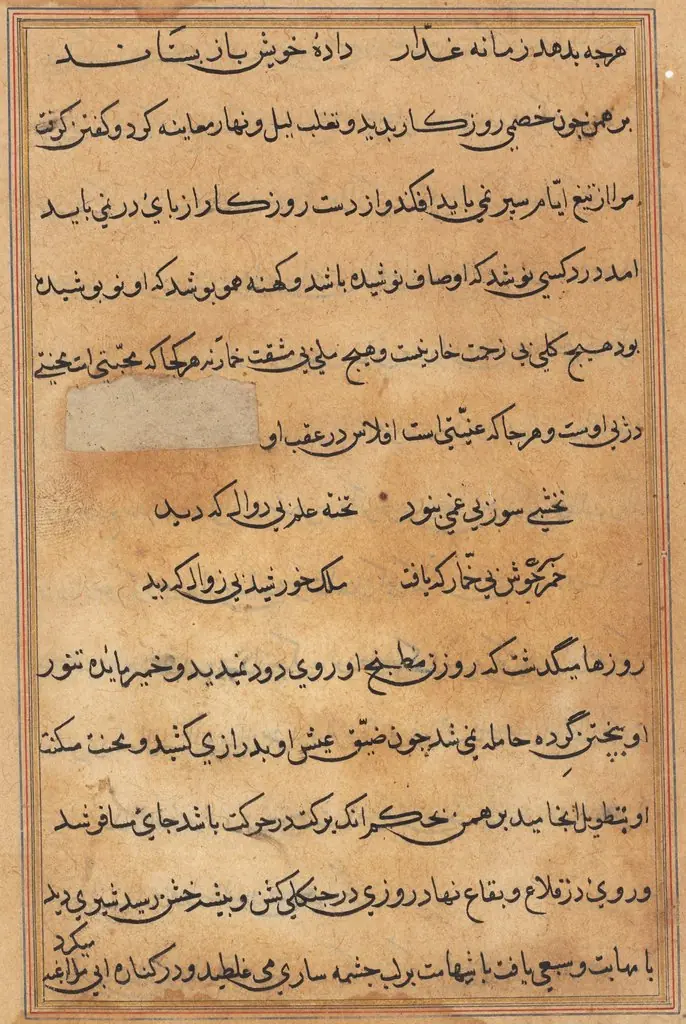 Page from Tales of a Parrot (Tuti-nama): text page
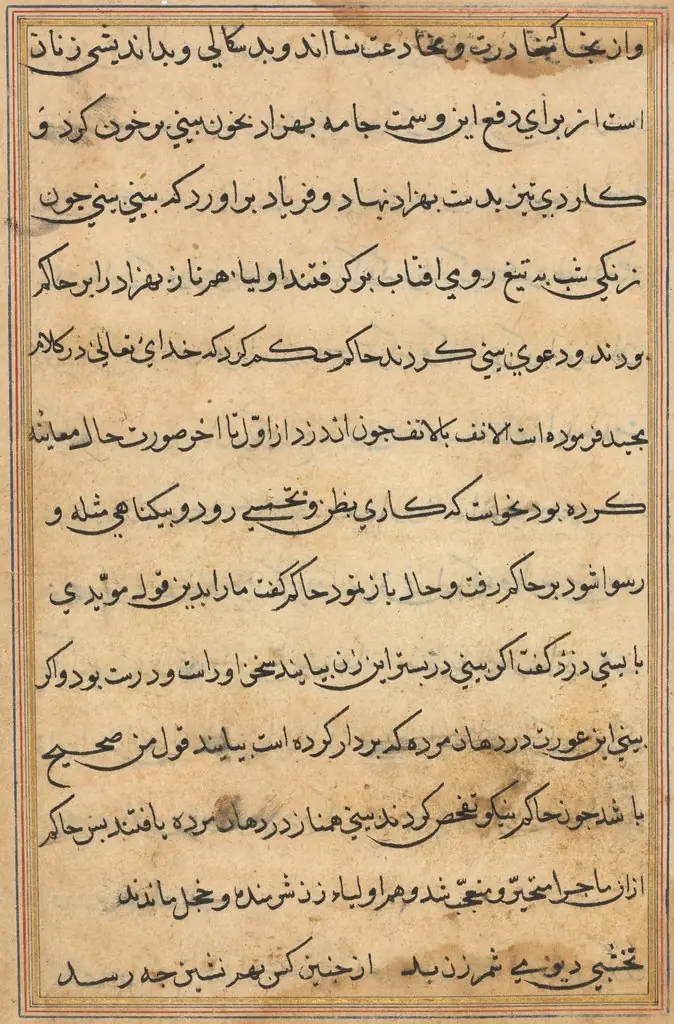 Page from Tales of a Parrot (Tuti-nama): text page
 Page from Tales of a Parrot (Tuti-nama): text page
 Page from Tales of a Parrot (Tuti-nama): text page
 Page from Tales of a Parrot (Tuti-nama): text page
 Page from Tales of a Parrot (Tuti-nama): text page
 Page from Tales of a Parrot (Tuti-nama): text page